Mukesh Ambani moves into media – Rajiv Bajaj plans a 4-wheel tuk-tuk
Last year may have been disastrous for politics, as I suggested in my blog last week, but India’s top businessmen weren’t wasting time while the politicians failed to govern effectively. This was shown yesterday when two of the country’s top industrialists, Mukesh Ambani and Rajiv Bajaj made announcements that could be game-changers. Both demonstrate the entrepreneurial drive that makes India a success, despite government failings.
.
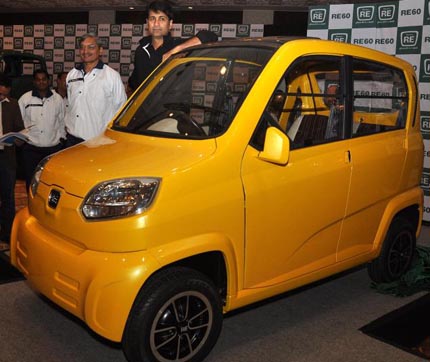
Both initiatives show lateral – or out-of-the-box – thinking. Bajaj (right) unveiled a smart little four-wheeler that side-steps Tata Motors’ over-hyped and small-sales Nano car by providing a new vehicle for auto-rickshaw (tuk-tuk) drivers.
His launch came just before the opening tomorrow of India’s biennial Auto Show which will demonstrate the international success of the country’s auto industry. Perhaps less desirably, it will also show how international manufacturers such as Lamborghini and Aston Martin, as well as older favourites Mercedes and BMW, are rushing into the country to sell unnecessarily large flashy cars to India’s status-conscious emerging middle class.
Ambani, who runs one of India’s two biggest groups, showed that he can still launch deals that catch people by surprise and extend his involvement over vast swathes of India’s economy – despite being hit by various setbacks that led me recently to suggest that his group had lost its sheen.

.
He announced an audacious move into the media business with a complex network of investments reported to be around $350m in the Network 18 television news and entertainment group, one of India’s largest (though currently debt-laden) media empires. The deal links up with another TV company Eenadu (ETV), in which Ambani earlier invested secretly.
This, according to reports, will provide him with preferential content for a new countrywide 4G data broadband network that he is launching later this year. It could also give him a professionally questionable hold over key parts of television news broadcasting. “Is Ambani the next media czar in our highly integrated future of information overdrive?”, the Business Standard asked this morning.
Indeed, the idea of Ambani as a media mogul has become a distinct possibility, adding to his clout within government and his large hold on industries ranging from oil and gas exploration to textiles and polyester. And it is not just one Ambani because Mukesh’s younger brother, Anil, also has media interests that include UTV (Bloomberg TV) and, according to rumours, parts of the India Today magazine-to-tv group. Mukesh Ambani is already believed to have a financial stake in another tv channel, NewsX, and there have been internet reports of more indirect investments , including ETV.
Not a Nano
.
“Our marketing position is anti-car, we make 2/3/4 wheelers that consume less resources, cause less pollution,” he told me today. He plans to launch the 200cc RE60 within a few months.
That is a smaller market of course than the world’s cheapest car, which was the Nano target. The Nano failed however to take off and only made approaching 100,000 sales in its first two years compared with a 500,000 a year target.
It was never the “one-lakh (Rs100,000) car” that Ratan Tata, who heads the group, envisaged, and it has few fuel-efficiency or design advantages over its nearest competitors. The branding was also wrong – Tata failed to remember that India’s image-conscious consumers do not buy-cheap but go for cost effective products. He also forgot that most of the families he was trying to rescue from motorbikes and scooters probably do not have parking space for a car, however small.
[[Jan 5: In Delhi for the auto show today, Ratan Tata told journalists that the company had “wasted an early opportunity” on the Nano, and added: “Whatever stigma is attached to the Nano, we will undo it….The basic concept is robust. This is not a ‘poor man’s car’. We have upgraded on the basis of market feedback. I believe we will see a resurrection of this product as we move forward.”]]
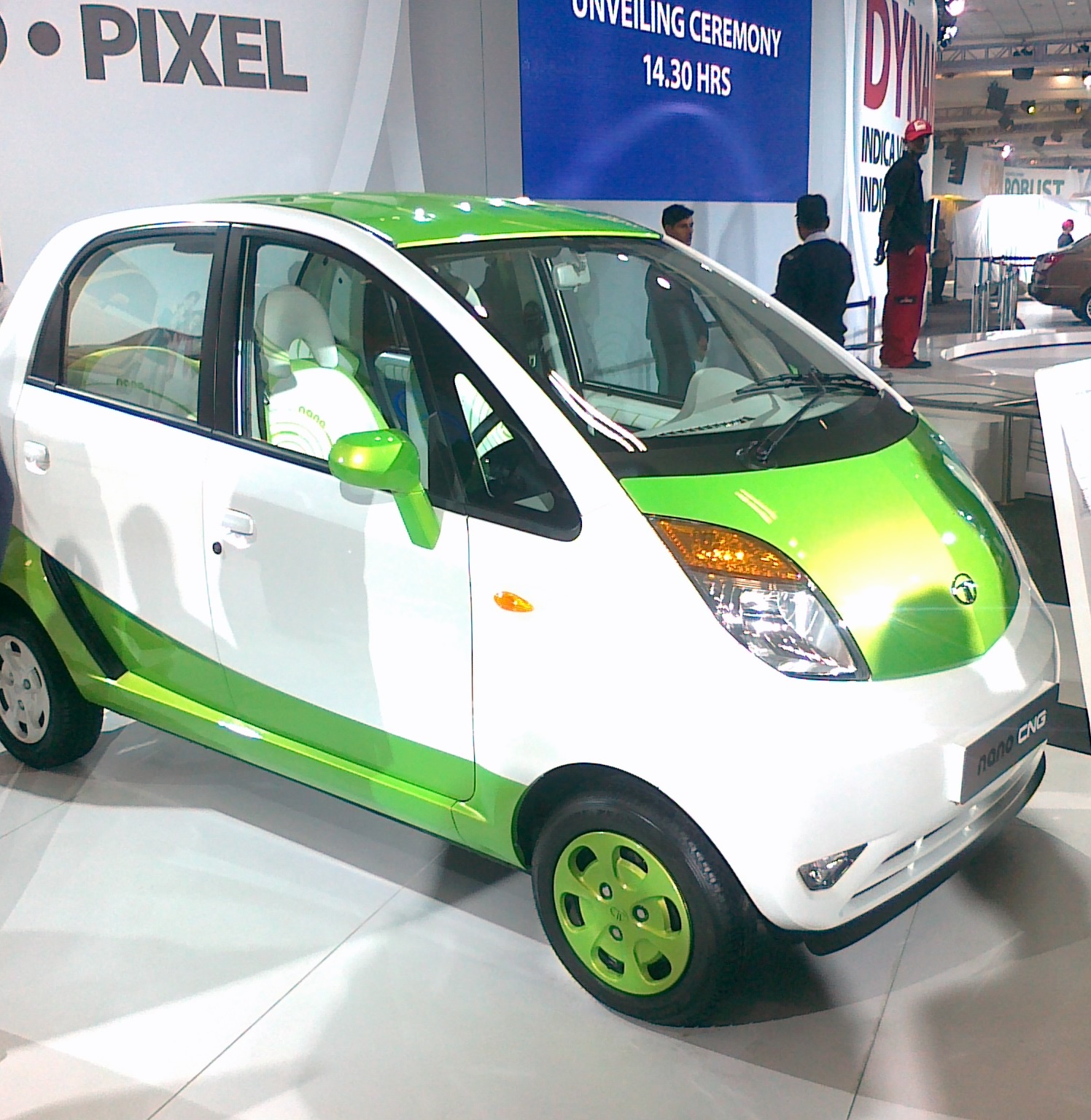
Tata is now repositioning the Nano (above, a CNG Concept version at the current auto show) as a smart almost iconic tiny car, both in India and abroad, and this is beginning to yield sales. Meanwhile Bajaj is providing something more socially useful – a four-wheeler mini-taxi to replace the tuk-tuk. The social significance of the Ambani move into tv and media has yet to emerge.
 Riding the Elephant
Bajaj’s small car is not a good choice for indian market as Tata Nano is also struggling to find its place in small car segment.
Only price is not the factor to attract customers, which is shown in case of Tata Nano, that it’s sales is not picking up.
With only 200cc engine, bajaj is trying to launch their car and with a plastic top. It’s look like a auto riksha rather then a car.
By: deepakjagetiya on January 5, 2012
at 10:12 pm
Bajaj should name its RE60 as ‘tuk tuk’ . It will give big boost to indian ‘jugad’ running in villages on pumpsets.
with regards
yk
By: yogeshksinghal on January 5, 2012
at 8:45 pm