Farmers defeat the Government after a year occupying highways
Protests to continue till laws repealed and prices guaranteed
India’s prime minister Narendra Modi likes to spring surprises, and he’s produced three in the past three weeks. The first two were at the COP26 climate conference when he reversed policy with a 2070 target for zero emissions and then scuppered a resolution on cutting coal usage.
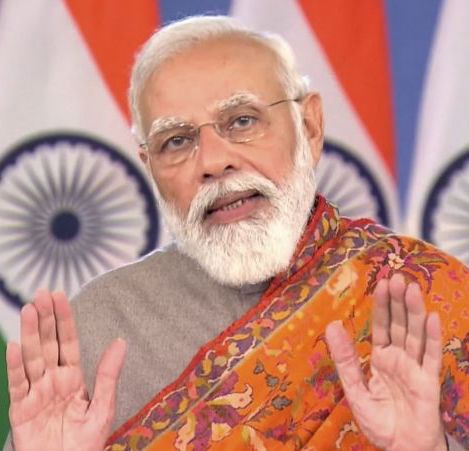
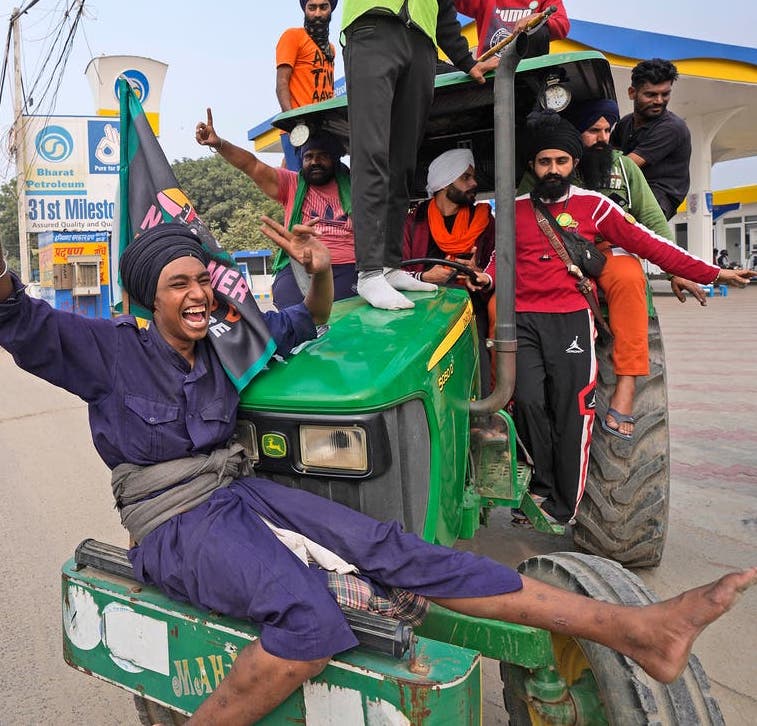
Today (Nov 19), in the third, he has announced that he is cancelling controversial agricultural laws that have led to 12 months of mass protests by farmers on highways around Delhi with violent police confrontations.
The farm decision is an uncharacteristic capitulation ahead of key state elections early next year, following poor results for Modi’s Bharatiya Janata Party in various recent by-elections. It undermines his political strong man image, but presumably he is confident that his national appeal will enable him to rid out the reversal.
Palaniappan Chidambaram, a former Congress government finance minister, made the primary political point when he tweeted, “PM’s announcement on the withdrawal of the three farm laws is not inspired by a change of policy or a change of heart. It is impelled by fear of elections!”
It was Modi’s personal arrogance that allowed the crisis to develop. He could have compromised after protests began to build up in November last year against the laws that had been suddenly rushed through parliament during the pandemic.
The laws were intended to enable farmers to sell their produce on the open market and also to become part of private sector contract farming. These arrangements operate in many parts of India, but had been resisted in the north where there are fears of contracts pushing down prices and of losing a government-backed minimum reserve price system.
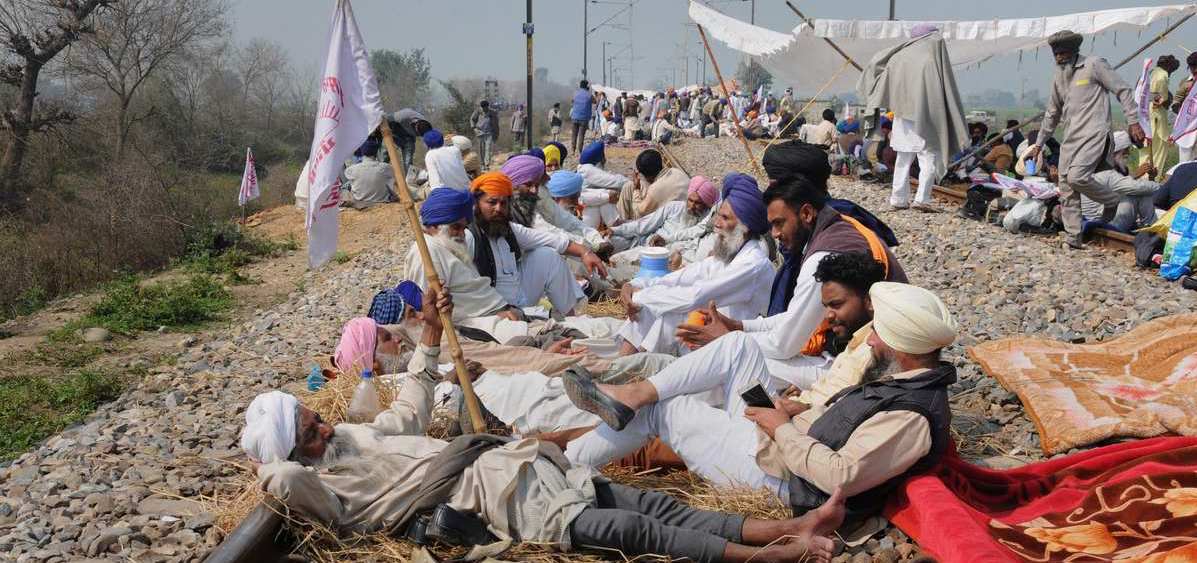
Farmers’ leaders have welcomed Modi’s move, but say they will not be ending their protests till the laws have been repealed and the government has agreed to maintain the reserve prices. A rally is planned for November 26 to mark the first anniversary of the protests.
Modi showed over the past year that he did not understand the distinctive unity and determination of the Sikh community, which has been at the heart of the protests. Sikhs do not naturally subscribe to his Bharatiya Janata Party’s aim of recreating India as a Hindu nation, and the events have sharpened a sense of Sikh identity that was dramatically evident in the 1980s when there was a rebel call for an independent state of Khalistan.
Modi chose the primary Sikh festival of Guru Nanak Jayanti to announce in a television broadcast that the laws would be repealed – and to apologise for introducing them.
“Today, while apologising to the countrymen, I want to say with a sincere and pure heart that perhaps there must have been some deficiency in our efforts, due to which we could not explain the truth like the light of the lamp to some farmers,” was how he worded it, speaking in Hindi.
State assembly elections are due to take place by March next year in Punjab, the Sikhs’ main state, and, more crucially, in the large state of Uttar Pradesh (UP) which has a population of over 230m. Along with neighbouring Haryana, both states have had mass protests on highways leading into Delhi.
A poor result in UP would be seen as a serious setback for Modi and his home minister Amit Shah, and for Yogi Adityanath, the state’s tough chief minister and a controversial Hindu priest-turned politician who is seen by some as a future national party leader.
In Punjab, the BJP is weak but could now build a new base with Captain Amarinder Singh, the state’s veteran Congress chief minister, who was recently sacked from his post by the Gandhi family that dominates the Congress party. Singh is looking for a new political base and has been urging BJP leaders to abandon the laws.
Rushed laws
The laws were rushed into force last year without any parliamentary debate. Ordinances were passed in June and confirmed as legislation in September as part of a Covid-19 economic recovery package. Modi and Shah ignored calls for the usual detailed consideration and debate, assuming that they would not face significant opposition.
Sporadic protests grew into mass sit-ins on highways approaching Delhi in November and eventually led to several hundred deaths. Eleven rounds of talks between farmers’ leaders and the government led to deadlock because the farmers demanded that the laws should be repealed but the government was only prepared to amend them.
On Republic Day in late January, farmers staged mass tractor rallies into Delhi that led to violence and the invasion of the city’s Mughal era Red Fort. According to widespread reports, the violence was at least partly escalated by government loyalists planted in the crowds, which opened the way for the police to attempt to close down the protests on the highways that had grown into small townships in many areas with canteens and even schools.
The supreme court suspended the laws in January but still has outstanding cases calling for their repeal. There have been demonstrations and criticism of the government’s tactics in the US, UK and elsewhere abroad.
Agricultural reforms are urgently needed and have been proposed by successive governments for some 20 years – the Congress Party, which has been supporting protests, included the current measures in its last general election manifesto.
The measures have been partially implemented in southern states, but there has been repeated opposition in the north because of the sensitivities of hundreds of millions of farmers, many with tiny holdings, and because of vested interests ranging from large farmers to government market agents that benefit from the current trading systems for produce.
More than half India’s 1.4bn people live in rural areas and are linked to agriculture, which needs far wider reforms than the government’s proposed new laws. Once renowned as the grain and food bowl of India, the plains of Punjab and Haryana have been over-farmed for decades, depleting water supplies and the quality of the soil. That is fuelling the farmers’ frustrations and needs to be addressed along with other measures to boost productivity, develop farm-to-shop supply chains and curb widespread wastage
Modi has today tried to regain the initiative two or three months before the state assembly polls, But, while there were widespread celebrations on the highways today, his problems are far from over and the unity against the government does not look like reducing.
This article is on the Asia Sentinel news website https://www.asiasentinel.com
 Riding the Elephant
Leave a comment