Rahul Bajaj, a tribute

Rahul Bajaj , a veteran Indian industrialist and the head of the Bajaj Auto group who died on February 12 aged 83, will always be remembered for standing up to power. At a business conference just over two years ago, he confronted Amit Shah, the Home Minister and Narendra Modi’s chief ally, and told him that the Bharatiya Janata government had created an “atmosphere of fear” which silenced critics and deterred investment (see article below). That was something his peers feared to say.
Known for decades of unguarded and often controversial public statements, Bajaj headed a family run group that was a world leader with its scooters, motorbikes and three wheeler auto-rickshaws. India has other industrialists who head bigger conglomerates and who may be regarded with awe, but Bajaj was proud, as he told me when I interviewed him for the FT in 1988, of his “family background of ethics, honesty and simplicity”. A fellow auto industry manufacturer described him as “intellectually honest, he spoke his mind and always thought about the nation.”
Modi pitches governance though Hindu nationalism is the creed
Lack of jobs an issue in state polls that continue till early March
Viewed from abroad, the best economic news out of India for some time has been the government finally privatising Air India, the heavy loss-making and inefficient national carrier that was handed over to the Tata group at the end of last month. There was also a constructive Budget on February 1 aimed at boosting infrastructure spending.
The major focus now is on assembly polls currently taking place in five states including Uttar Pradesh, India’s largest state with 105m voters. Prime minister Narendra Modi needs to curb his Bharatiya Janata Party politicians and activists propensity during elections to stir up their Hindu nationalist supporters, causing social unrest and generating fear among minorities, notably Muslims and Christians.
Taken together, the potential positive reform signal from the Air India sale plus the Budget’s growth potential and relative calm during the elections could help to improve India’s image abroad.

Investors look for positive continuity in economic policy and are deterred by some retrospective changes of recent years. They also look for stability in governance.
Modi appears to have accepted that he needs to pitch governance rather than the raucous nationalism he often projects at election rallies. He showed this in a 70-minutes Indian news agency interview on February 9 where he talked (in Hindi) about government achievements. He focussed on Uttar Pradesh, the BJP’s top-priority state election where voting started a day later. Arguably the timing so close to the polls breached electoral conventions, but Modi has ignored the rules in earlier years.
Budget boost
The Budget attempted to provide some continuity with few tax changes. The government expects GDP to grow by 9.2% in the year ending March 31, reflecting some recovery from the pandemic, and 8%-8.5% in the coming year. That would be faster than other major economies.
With a focus on infrastructure spending including national highways, the budget had a 35% boost for capital expenditure. The government’s privatisation drive might however not move ahead as quickly as had been hoped in the two years before the next general election, despite the Air India success. A plan announced a year ago to monetise government assets is moving slowly and the budget’s divestment target was halved by finance minister Nirmala Sitharaman from the (grossly unrealistic) $23bn pitched for the current year (2021-22) to $8.75bn for the coming year.
Positive moves like Air India and the Budget, and Modi’s calm but authoritative tv interview, together with the fading of the Covid threat that ravaged India, are not however sufficient to allay concerns abroad. There are widespread worries about social upheavals caused by the relentless drive for Hindu-based nationalism along with the government’s restrictions on freedom of expression.
This is reflected by international media coverage. My old newspaper the FT had a headline calling Modi a “textbook fascist” on a January 28 piece by its US columnist Edward Luce, who was the Delhi-based South Asia correspondent a few years ago. The New York Times ran a February 9 headline “As Officials Look Away, Hate Speech in India Nears Dangerous Levels” plus “calls for anti-Muslim violence – even genocide – are moving from the fringes to the mainstream”. The report included calls by Hindu activists and spiritual leaders last December for genocide against Muslims.
Restrictions on journalists are being criticised, notably the arrest on February 4 and imprisonment for ten days, of a prominent Kashmir journalist, Fahad Shah, who is the editor of The Kashmir Walla, an independent internet news site, and who has reported for international newspapers. The government has also in the past few days tightened its ability to cancel journalists’ official accreditation with new rules that the Indian Express said “intrudes on rights of free press” and “attempts to shrink space for dissent”.
State assembly elections
Two of the five assembly elections are important for the future direction of Indian politics. The BJP needs to win in UP in order to project Modi’s supreme vote-winning image forward to the next general election in two years’ time, though victory is not assured.
The other is in Punjab, a sensitive border state where there is a risk of interference from neighbouring Pakistan. The election result will probably underline the supreme vote losing ability of the Congress party, which currently runs the state government. The Gandhi family that controls Congress has failed to ensure an orderly succession to Amarinder Singh, the party’s veteran state politician and until recently the chief minister. This has led to splits in the party that could lead to the Aam Aadmi Party, which is in power in Delhi and has its roots in anti-corruption campaigns, increasing its significance..
The first of seven stages of voting began in UP on February 10 with Goa and Uttarakhand following today (Feb 14) and Punjab and Manipur later in the month. Voting continues till March 7 and the count will take place on March 10.
Modi usually makes Hindu nationalism the core BJP appeal, but he has to cope with rising unemployment and concern about a lack of effective governance on jobs and allied issues. Especially serious is the plight of micro, small and medium enterprises (MSMEs) that were worst hit by the pandemic and by his de-monetisation of bank notes in 2016 and a complex introduction of a new Goods and Services Tax (GST) in 2017. These businesses usually employ some 110m workers and many have been crippled.
In Punjab and UP there is also resentment about farming laws that were cancelled in December after more than a year of mass protests on highways approaching Delhi. There are therefore strong grounds for voting to swing away from the BJP.
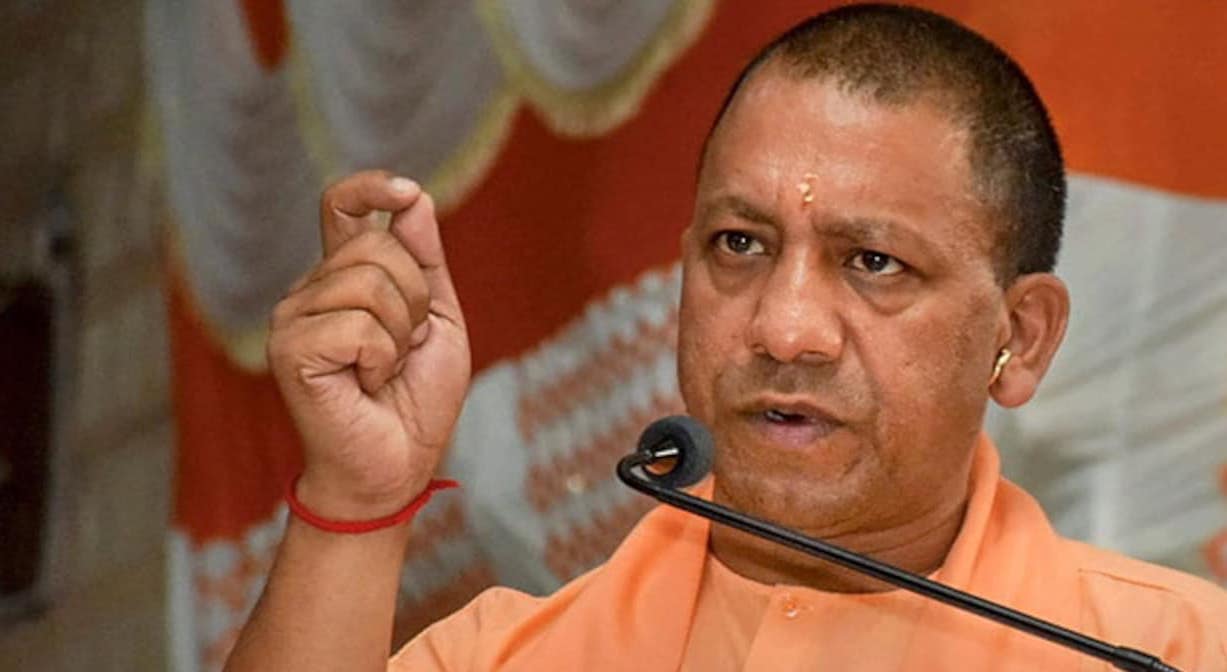
For Modi, UP is the prize he needs to win. In 2017, he installed a firebrand and ambitious Hindu priest-turned-politician, Yogi Adityanath, as chief minister, who regularly stirs anti-Muslim sentiment, as he has done during the election campaign. He is seen by some as a future national party leader who might eventually take over from Modi and become prime minister – a development that would cause apprehensiveness about tough pro-Hindu policies.
Modi and Adityanath are facing a determined challenge from the state-based Samajwadi Party led by Akhilesh Yadav, who was chief minister from 2012 to 2017. The BJP has not been sufficiently effective on the economy since it won power in 2017, despite substantial infrastructure spending, but it has reduced the widespread lawlessness that was a feature of the Samajwadi years in power.

The state’s per capita income in PPP terms remains lower than Zimbabwe’s and is barely higher than Haiti’s according to Mihir Sharma, a prominent commentator and Bloomberg columnist. The Economist compares UP with Afghanistan and Tajikistan, the only Asian countries below its $991 nominal GDP per person, which is less than half India’s average.
Yadav now has a chance to persuade the electorate that he has matured – aged 48 he is still young by Indian politics standards – and that he would lead a less harsh government than the BJP that would be more caring for the interests of minorities, and an effective provider of jobs.
Nationally, Modi remains the most popular prime minister since the Congress party’s Indira Gandhi half a century ago, and there is no national politician to challenge him. But his concern about losing ground is apparent from his relentless attacks on Rahul Gandhi, the ineffectual leader of Congress who could, were he more politically able and respected, lead a national opposition.
Modi wants to replace Gandhi’s grandfather, Jawaharlal Nehru, as India’s greatest leader by reversing what the BJP regards as centuries of decline and establishing a Hindu nation where minorities such as Muslims and Christians are accepted providing they recognise the overall nationalism.
A substantial victory in Uttar Pradesh would help him towards that goal, but defeat would encourage regional opposition parties, and maybe even the Congress, to mount a strong and unified challenge in 2024.
Defeat would also dent Modi’s supreme and powerful populist image. Voters of course often go for different parties in state and national elections, but he would need over the next two years to add positive policies that provide hope for the hundreds of millions of India’s poor. Focussing on defensive and negative attacks on the Gandhis and the disruptive rabble rousing of Hindu nationalism would not be enough.
 Riding the Elephant
The third picture is of Yadav, not Yogi.
By: Kartik on March 8, 2022
at 8:28 am
Many thanks Karthika. Copy pasting error! Amazing no one mentioned it before. Best wishes john
By: John Elliott on March 8, 2022
at 3:29 pm