Mistry “ably led Tata group” – Harsh Goenka
Victim of Ratan Tata boardroom coup in 2016
Cyrus Mistry, who was tragically killed in a car crash yesterday ,aged 54, will always be remembered as the competent and effective chairman of Tata Sons, India’s leading corporate group, who was ousted after four years in a 2016 boardroom coup because he had failed to please his predecessor, Ratan Tata. He fought his case through India’s courts and appeals procedures but failed to win significant victories, notably in the supreme court in 2021.
Many in Mumbai, India’s corporate capital, sympathised with him at the time, but the establishment gathered around Ratan Tata who had never been challenged in such a way before and is reputed never to forgive those who he feels have opposed him.
Mistry may have been ousted from the head of India’s most admired group, one of India’s top corporate jobs, and lost his subsequent legal battles, but tributes yesterday commented onhis role as a leading businessman.
Two respected Mumbai chairmen pointedly lauded him for his role as head of Tata Sons. Harsh Goenka of the RPG group said he was “a friend, a gentleman, a man of substance” who “ably led the Tata group”. Anand Mahindra of the Mahindra group said he “got to know Cyrus well during his all-too-brief tenure as the head of the House of Tata,” and he “was convinced he was destined for greatness”. Messages also came from leading industrialists Anil Agarwal and Gautam Adani.
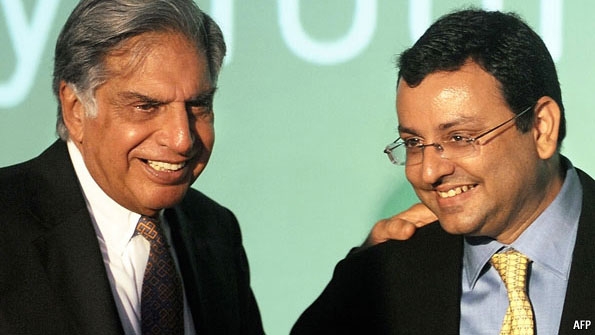
Other tributes came from the government minsters, including prime minister Narendra Modi who said he was “a promising business leader who believed in India’s economic prowess”. His death was “a big loss to the world of commerce and industry”.
Ratan Tata failed to issue any message of condolence, but N.Chandrasekaran, who he chose from inside the group to become chairman in 2017, said Mistry “had a passion for life and it is really tragic that he passed away at such a young age”. [Sept 6: While Tata remained silent, his stepmother Simone Tata attended the funeral along with business leaders.
Search for chairman
Mistry’s family is the only significant minority shareholder in Tata Sons, the group’s holding company, with an 18.4% stake dating back to the 1930s. The family played a low key role for many years, which ended when Ratan Tata failed to find someone to succeed him as chairman of Tata Sons and eventually lighted on Mistry, a non-executive board member, much to the surprise of India’s corporate world.
Mistry became the deputy chairman in 2011 and took over the top job in December 2012. He was reported to be a reluctant appointee, but was persuaded by Tata who said he had been impressed by the “quality and calibre” of Mistry’s work on the board, praising his “astute observations and humility”. Mistry was then managing director of the construction part of his family’s Shapoorji Pallonji group, named after his grandfather who founded the business 150 years ago.
Tata said later that he thought that any guidance he might have given Mistry would have been to “be your own man – you should take your own calls and you should decide what you want to”.
That is exactly what Mistry did, surrounding himself with a group executive council that included outsiders, one or two of who were too brash and lacking in humility for the courtly aura of Bombay House, the group’s headquarters. Neither Mistry nor the advisers showed due deference to Ratan Tata, who remained in a position of authority as chairman of Tata trusts that own 66% of the group. (Tata had previously headed both Tata Sons and the trusts, a controversial dual role that, coincidentally, was ended by the group a few days ago).
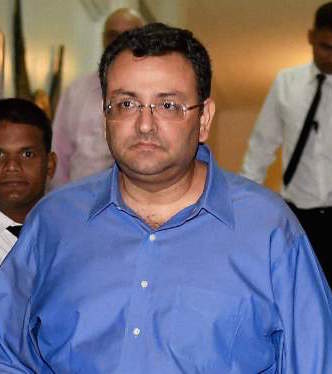
Tata left substantial problems for Mistry to tackle.
They included a debt-ridden £11bn Tata Steel investment in the UK’s loss-making Corus, poor performance and a dismal new product line at Tata Motors’ India business where he had focussed much of his time, unsatisfactory results at the group’s Taj hotels, plus other problem areas including telecoms.
Mistry was making good progress sorting out these problems, though his decisions were not always to his predecessor’s liking, notably over the group’s badly conceived Nano mini car and what to do with the Corus stake.
Tata decided to oust Mistry and built up a majority on the Tata Sons board to execute the coup, even though Mistry’s performance had only recently received positive reports from Tata operating companies that he headed. Nevertheless, complaints about him criticised his performance and his alleged negative impact on the group’s reputation.
Serious damage
Arguably however, his ousting seriously damaged the group’s reputation “The halo that once surrounded the Tata name has gone. The group looks like just one more conglomerate that has lost its way,” said Swaminathan S.A. Aiyar, a respected veteran commentator, in The Economic Times. “Most group companies have long been under-performers. And the manner of Mistry’s ouster falls short of the high standards the group boasts of”.
The group’s operating companies still face serious problems, but the Tata reputation has been restored under Chandrasekaran, who previously headed the highly successful Tata Consultancy Services business. Chandrasekaran knows, as a group insider, how to handle the patriarch and keep him involved.
As I discovered when I had a long conversation with Mistry, he was an approachable engaging businessman who had constructive and imaginative proposals about how to develop the Tata group.
He had great respect for the Tata name and it is sad that his forced departure in 2016, and now his untimely death, mean that he had little chance to establish an enduring legacy that would prove what he could achieve.
 Riding the Elephant
Leave a comment