Japan’s Yakuza gang wants to nuke disputed islands held by Russia
FT tracked “Triads, ghost ships and underground banks” on N Korea
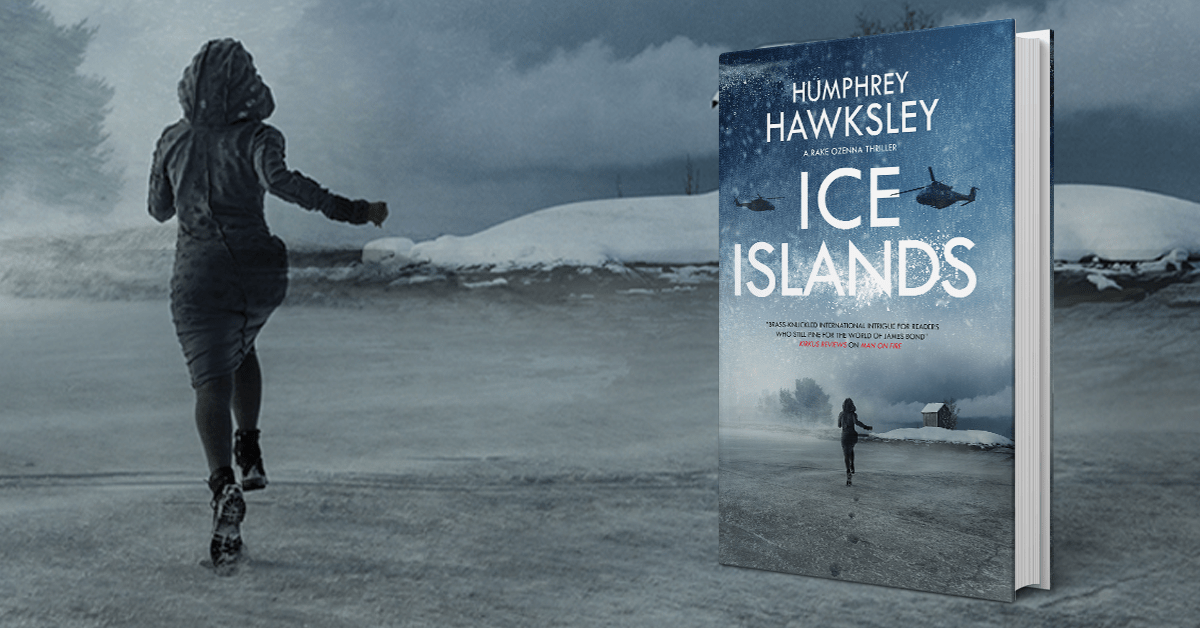
BOOK REVIEW – Ice Islands by Humphrey Hawksley, Severn House (Canongate Books), Edinburgh 2022
Humphrey Hawksley’s diplo thrillers, centred around the wild escapades of Major Rake Ozenna of the elite Eskimo Scouts, always stretch one’s incredulity as this junior James Bond character careers around the world. Sometimes he is a killer for a top Washington DC sleuth and sometimes he is rescuing women in crisis, but he always has a cause that is usually rooted in diplomatically sensitive remote islands like those in Alaska’s Bering Strait where Ozenna comes from.
In Ice Islands, the mistakenly-titled fourth and latest book in the Ozenna series, our hero is acting on behalf of the US as he tries, not quite single-handedly, to stop a Japanese Yakuza criminal gang exploding a nuclear device on the Kuril Islands in Russia’s far east.
The Soviet Union seized the islands in 1945 from Japan, which calls them the Northern Territories and wants them back. In Ice Islands, Japan’s prime minister bows publicly to the aged leader of the family-controlled Yakuza gang a few days before its planned nuclear strike, thus displaying his support for the gang’s reassertion of Japan’s military might and recovery of its lost territory, plus a possible end to its alliance with the US.
Hawksley’s plot is therefore soundly based. Japan going nuclear is an active current debate, but Ozenna’s drama-clad and often erratic adventures always look almost a stretch too far for the real world, thrilling and entertaining though they always are.
I was feeling that once again as I got to a crunch point half way through Ice Islands, but just at that moment the Financial Times endorsed the idea of such an unthinkable plot with a report on North Korea’s oil smuggling.
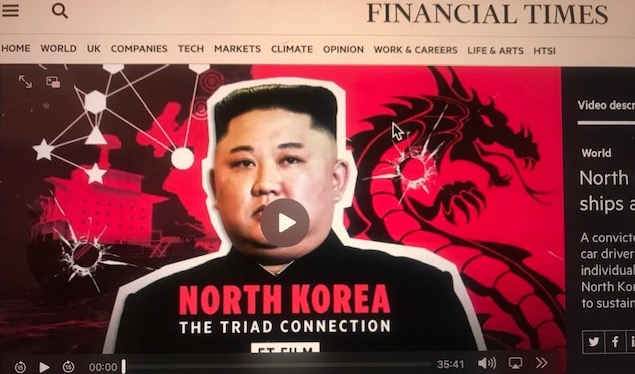
A mammoth expose of “North Korea and the triads: gangsters, ghost ships and spies” appeared in the newspaper and on line on March 30 with a Hawksley style cast – a convicted gambling tycoon, a Hong Kong gold trader, and a racing car driver from Macau along with Chinese criminal groups, North Korean oil interests and intelligence operations.
“Triads, ghost ships and underground banks: an investigation shows how regional business figures linked to organised crime have helped facilitate illicit deliveries of hundreds of thousands of barrels” to North Korea, said the FT.
This was the result of a long-running research collaboration with the Royal United Services Institute for Defence and Security Studies (RUSI), a revered London think-tank located in Whitehall that was founded by the Duke of Wellington in 1831. The cast they revealed were behind a network that helped to sustain North Korea’s military and nuclear weapons programme.
The story has been building for years. Back in 2017, the US Treasury imposed sanctions on Bank of Dandong, a small Chinese bank that had assets of $10.66bn, accusing it of facilitating millions of dollars in transactions for companies involved in North Korea’s weapons programme, the FT reported in a follow-up story.
What the reports (and a video version) have not of course told us is what the world’s intelligence agencies are doing deep in Hawksley-type undergrowth to interrupt the flow of oil. Imagine the novel that could be written around governments, secret service agents, business tycoons and rival international gangs from China, Russia, Iran, the US, UK and elsewhere meddling with North Korea in that pot.
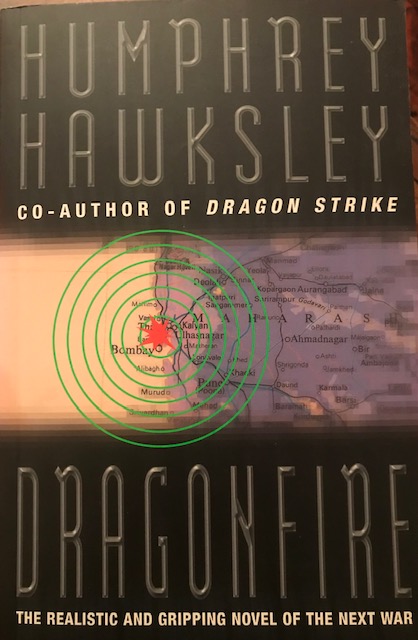
Hawksley was a BBC career foreign correspondent before he began as a novelist in the late 1990s. Dragon Strike and Dragon Fire came first with conflicts in Asia including a nuclear war triggered by a Chinese strike on Mumbai.
Other novels followed, leading to the launch of the Ozenna series in 2018 with Man on Ice based on Russian invasion of Rake’s Alaskan island home, Man on Edge involving naval secrets on the Norway-Russian border, and Man on Fire with an electro-magnetic pulse attack over Europe.
Ice Islands matches the Dragon titles because it deals with a major international issue. “Japan could have a nuclear weapon in a very short time,” says Hawksley, who I have known as a fellow-journalist for over 30 years. “The Trump presidency reinforced a view that it needs to have complete control of its defence and no longer rely on America. The push to change its pacifist constitution naturally ends with Japan as a nuclear-weapons state”.
The Kuril Islands issue is also live. The US said a year ago it backs Japan’s claim to the sovereignty, and Russia has been installing missile defence systems on the islands over the past two years.
In Ice Islands, a new inexperienced US president initially refuses to believe Ozenna’s Washington DC boss about the Yakuza gangland plan for a nuclear strike. Eventually he comes round, just in time for a Bond-style ending when, inevitably, good broadly prevails.
That’s a bland summary of the kernel of the plot which weaves much more violently through the 250 pages. Inevitably, Ozenna’s co-star is a troubled woman, part of the gangland family but appalled by its killings that begin the book. She is at a small peace conference on Aland Island in Finland’s Baltic Sea where the secret son of Russia’s leader is assassinated, and she’s centre stage with a risky future at the end. In between, she and Ozenna waver on their mutual attraction.
The only connection between the plot and any ice islands is the location of the peace conference. That does Hawksley no favours because it does not include the “Man” title of the first three Ozenna books. It is also irrelevant to the main plot, which is about the disputed Kuril islands – they also appear in the latest Bond movie – and Japan going nuclear.
Perhaps we could have a sequel with a title that better describes the plot – maybe bringing in North Korean oil as well as China, and testing how Vladimir Putin would react if his islands were hit in a nuclear attack while he is still preoccupied with Ukraine.
 Riding the Elephant
Leave a comment