Modi’s BJP will win when votes are counted on June 4
Do economic advances outweigh negatives of religious polarisation
As India enters the final stages of its general election with the expected Bharatiya Janata Party victory being announced when votes are counted on June 4, the questions whether Narendra Modi’s Hindu nationalist creed and authoritarian rule is good for India, along with the question “Where is India heading” will come into renewed focus.
It is assumed that Modi’s BJP will return to power with a comfortable majority, though it is less certain that it will achieve the 303 seats (out of a total 543) that it won in the last general election in 2019, let alone reaching Modi’s loudly proclaimed target of 370.
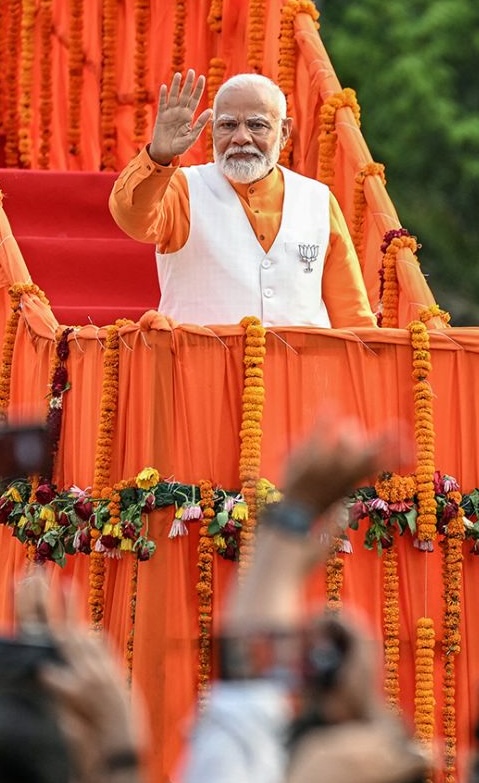
This is partly because there has been no clear focus in the BJP campaign, apart from the towering figure of Modi himself. Maybe more importantly, the Congress and regional opposition parties have come together in the Indian National Developmental Inclusive Alliance (I.N.D.I.A).
This is the first time since he entered national politics as the BJP leader ten years ago that Modi has faced a united opposition, and it has injected both uncertainty and aggressiveness into his campaign. The result will indicate how far the vast mass of Indian voters react to the question about Modi being good for the country.
There are those who believe his rule is necessary and has proved to be good because economic and social development, and opportunities for the poor, are enormously better than they were before Modi came to power in 2014.
On the other hand, others condemn the fact that India is becoming an authoritarian, Hindu-centric country with weakened national institutions and where democracy is, according to some critics, threatened.
It is however widely recognised (even by many Muslims) that Modi has led the country into years of economic success. Growth figures of 6 or 7 per cent may not be the highest ever, and many of the achievements like new sales taxes, bankruptcy laws and social development were begun before he came to power, but Modi and his government have, especially in the last five years, provided the environment, initiatives and drive that were lacking in the past. This will continue with a range of reforms planned for the coming months.
The Modi “package”
People in India talk about having accepted the Modi “package” of authoritarianism and Hindu majoritarianism because of the way the country is progressing. “It’s what we need,” a 40-something businessman from a traditional Congress-supporting family told me at a social gathering recently. He intended to vote BJP in the general election for the first time.
That partly reflects the failure in the past of the opposition parties to offer a viable alternative. But it also reflects recognition that India is an 80% Hindu country with a growing awareness of nationalistic pride as the country emerges on the world stage.
There is also a factor that is rarely mentioned – widespread antipathy among Hindus towards Muslims, not usually as individuals but in general. That sentiment has been exacerbated by what is called the “appeasement” of Muslims with favourable policies under past Congress governments.
I have heard many examples, in London as well as India, where Indian liberals are horrified that old friends, for example from university in Delhi or elsewhere, air views that were not apparent before, supporting Hindu nationalism and the Modi regime and openly revealing anti-Muslim sentiments. It is as if having Modi in power has released views that till now would have remained hidden.
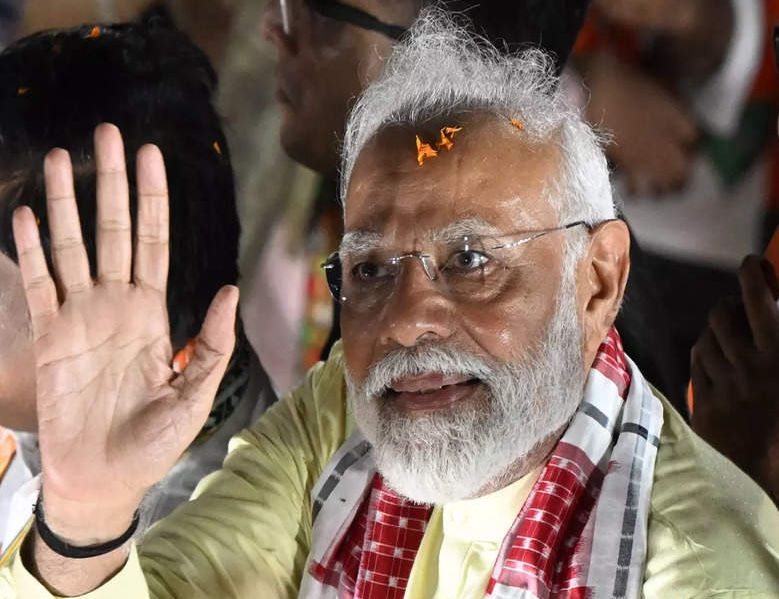
Even the harshest critics of the regime now acknowledge the achievements. An article in the Foreign Affairs journal by Ramachandra Guha, a widely respected commentator, in February was headlined “How Modi’s Supremacy Will Hinder His Country’s Rise”.
But it included acknowledgment for the government “supplying food and cooking gas at highly subsidized rates”, albeit branded as “Modi’s personal gifts”. Guha also mentioned promotion of digital technologies that “enabled the direct provision of welfare and the reduction of intermediary corruption,” plus substantial progress on infrastructure development “with spanking new highways and airports seen as evidence of a rising India on the march under Modi’s leadership.”
Narasimhan Ram, a well-known former newspaper editor and Modi critic listed the negatives in a recent article in the UK’s Prospect magazine. They included: “targeted assaults on freedom of expression, media freedom, media independence and other fundamental rights”; using “anti-terror, sedition and other draconian laws to incarcerate journalists, students, human rights defenders… and troublesome critics of the government, often without bail or trial”; introducing “religion as a criterion for citizenship”, deploying “brutal force to suppress democratic protests”; and misusing anti-crime agencies “to go after and arrest political opponents, including ministers, chief ministers and legislators”.
The early successes helped Modi to achieve a massive victory in the 2019 election when border conflicts and terrorist raids linked with Pakistan provided a vote-winning backdrop. Modi’s first victory in 2014 had been fuelled by a widespread desire for a change from the years of Congress rule.
Lack of clear focus
This time the focus is not so clear cut. Modi has personally towered over the election campaign with meetings virtually everywhere. His aim has been for his image to draw the votes, aided by his priest-like appearance that dominated the opening ceremony in January of the famous Hindu temple in Ayodhya.
But voter turnout over the past six weeks has been a few percentage points lower than in 2019, which has led to suggestions that Modi was failing to generate enough enthusiasm and that memories of his performance at Ayodhya were fading as a vote generator. “The temple issue peaked far too early and there is a law of diminishing returns when you repeat the same emotive issue in each election,” Coomi Kapoor, a columnist, wrote in the Indian Express.
Since voting began last month, Modi has sharpened his religious polarisation and Muslim rhetoric in campaign rallies, linking that with attacks on the Congress party. He has said that “Congress has hatched a deep conspiracy to snatch your property and distribute it among their special favourites”, by which he meant transferring wealth from Hindus to Muslims. He also said that Congress would “bulldoze” the new Ayodhya temple.
The aim of these clearly incorrect remarks was to harness support for the BJP among Hindu voters, but the extent of such blatantly false allegations has been widely criticised, including by the Election Commission. In an apparent attempt to soften his image, Modi has given a series of carefully managed television interviews, which he has hardly ever done in the past, seemingly indicating his concern about where the election was heading.
Apart from the overall totals of parliamentary seats, there are two specific results which could seriously undermine Modi’s success. One is the southern states where the BJP may not do well, despite Modi having spent a large amount of time trying to achieve a breakthrough.
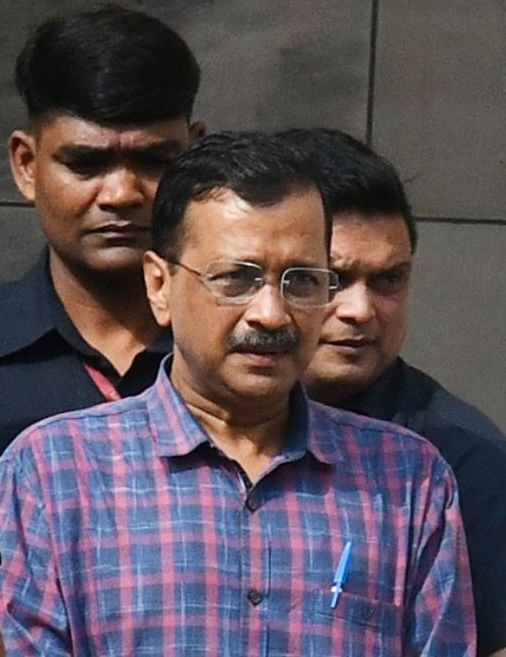
The other is Delhi where there may be an anti-BJP sympathy vote for the Aam Aadmi Party (AAP). A few days after the election dates were announced in March, the finance ministry’s enforcement directorate arrested Arvind Kejriwal, Delhi’s AAP chief minister.
The directorate was investigating long-running corruption charges on a liquor licence scam and had already detained the deputy chief minister. This was part of a Modi campaign to remove Kejriwal and break the AAP that dates back to the small party gaining power in 2015 when the BJP had expected to win.
The supreme court released Kejriwal on bail on May 10 so that he could take part in the general election amid widespread condemnation for the way that the government was using the enforcement directorate and other crime agencies to undermine non-BJP parties in various states.
What seems to be certain is that Modi will be forming a new government next week and that there is no prospect of the focus on establishing a dominant Hindu nation being reduced – indeed, the reverse is likely, for better or for worse.
 Riding the Elephant
While the results are awaited, it must be pointed out that they have to be taken with a lot of salt: The ruling party and the hijacked machinery of state will not spare any effort to manipulate the final outcome.
By: Kaushik on May 30, 2024
at 6:43 am