Modi says there is a “new normal” and warns ‘If there is a terror attack on India, we will hit back“
Pakistan’s army chief and Chinese technology emerge as new threats
Trump wants to mediate on Kashmir, but India resists such offers
After four days of escalating hostilities that brought India and Pakistan nearer to war than at any time since the Kargil border conflict in 1999, the ceasefire announced yesterday (May 10) halted the two nuclear-armed countries’ cycle of increasingly serious attacks and counterattacks. But it did little to improve diplomatic relations and does nothing to solve the basic problems of Kashmir.
Indeed, the risks of conflict may have worsened. Pakistan has for the first time been put on notice by India that any future terrorist activity would be seen virtually as an act of war. This was indicated by officials over the weekend and has been confirmed (May 12) by prime minister Narendra Modi in a tv address to the nation where he said “We have only kept in abeyance our operations against Pakistan; future will depend on their behaviour.”
“We have set a new normal,” he said. “If there is a terror attack on India, we will hit back. We will take stern action at every place from where the roots of terror spring forth. India will not accept any nuclear blackmail….We won’t see the government that sponsors terror and terror outfits as different.”
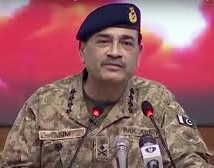
Pakistan has also been shown to be led by a powerful aggressive chief of army staff, General Asim Munir (below), who has more power than the prime minister, Shehbaz Sharif. He is blamed by India for triggering the crisis with the terrorist attack that killed 26 Indian tourists on April 22. And it has more advanced and effective Chinese-origin air and missile technology than had been realised.
Modi’s “new normal” means India would feel free to bomb military installations, as it has been doing in this crisis for the first time since wars in the 1970s, instead of merely striking at terror camps as it did after attacks in 2016 and 2019 and, initially, after the recent April 22 attack on tourists in Pahalgam. At a media briefing on May 11 a senior army officer said Pakistan had been told of India’s “firm and clear intent” to respond “fiercely and punitively” and with “decisive force”,
Neither government wants outright war, but these are serious potential escalations that will increase international concern about the risks of confrontation between the two nuclear-armed countries. Terrorist attacks emanating from Pakistan have been part of the relationship for decades.
Pakistan has a long record of sponsoring terror dating from its support of the militant Khalistani 1980’s independence movement in the Indian Punjab to support for the Taliban and harbouring the al-Qaeda leader, bin Laden.
There have been media suggestions that General Munir’s aim has been to disrupt Kashmir’s gradual return to some stability after decades of unrest. Unlike Pakistan’s previous army chief, General Qamar Javed Bajwa, who tried to normalise relations with India, Munir has strong religious and ideological beliefs that govern his nationalist approach. He did not seem to accept the positive progress.
Shekhar Gupta, a veteran Indian editor, has even suggested that the completion of a railway express service between Delhi and Srinagar in the Kashmir valley may have triggered Munir’s reaction and determination to act.
Shortly before that attack, Munir had spoken publicly, saying: “No matter where you live, remember – your roots lie in a high civilisation, noble ideology, and proud identity.” He added that Kashmir “will be our jugular vein, we will not forget it, we will not leave our Kashmiri brothers in their historical struggle”.
After India began to strike back at Pakistan with Operation Sindoor on the night of May 6, defence experts across the world began to monitor the action in the skies because this is the first time that Chinese fighters have been used in combat against advanced western hardware. This is especially important given the risk of China making a military bid to take over Taiwan and because of co-operation between China and Russia in Ukraine.
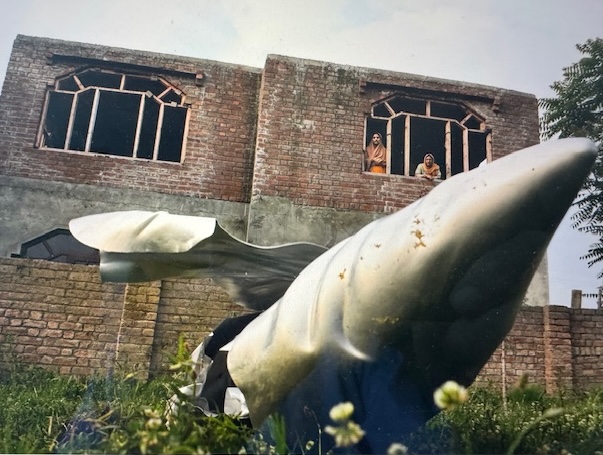
The extent to which Pakistan had been armed by China with advanced technology was not widely recognised till claims emerged that Chinese-origin jet fighters had been used to down India jets, probably a French Mirage and also a Rafale, India’s most recent high-profile acquisition.
Indian officials would not confirm or deny the reports, but admitted at the media briefing that “losses are a part of conflict”, though all its pilots had returned home. Loss of a Mirage was admitted later.The officials also claimed to have “downed a few Pakistani planes”.
Pakistan has only admitted “minor damage” to one plane and sees the overall result as having “shattered myths of Indian supremacy in tech, diplomacy, and warfare”.
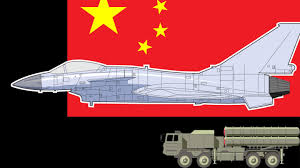
Pakistan’s use of the Chinese equipment highlighted the role of the Chengdu Aircraft Corporation, whose shares rocketed by more than 40% in just two days last week, the Financial Times reported on May 9. “Almost three decades after first taking to the skies, the Chinese plane-maker’s first fighter jet, the J-10 Vigorous Dragon, had finally seen combat — and survived.” The jointly developed JF-17 fighter and PL-15 airborne missiles were also used along with HQ-9 Chinese surface-to-air missiles, providing significant unexpected challenges to India.
“Aside from co-operation on nuclear weapons and ballistic missiles, a lot of what China supplied used to be low-end stuff – tanks, artillery, small arms,” a defence specialist told the FT. Pakistan was “becoming a showcase for some of China’s newer capabilities.”
This was also the first confrontation with drones – mostly Turkish by Pakistan and Israeli by India – which increased flexibility for cross-border assaults without the risk of losing expensive aircraft.
What happens next is not clear, apart from a meeting tomorrow (May 12 ) between the directors general of military operations (DGMOs). These senior army officers conduct the formal communications – and run a hot line – between the two countries since there has been no declaration of war.
The US would clearly like to use the crisis to try to tackle the two countries’ basic claims for Kashmir territory. It would probably argue that, after helping to broker the cease-fire, it has a role to play in trying to find a long term solution. Such offers have always been rejected by India.
America’s secretary of state Marco Rubio announced yesterday that India and Pakistan had agreed “to start talks on a broad set of issues at a neutral site”. London and Abu Dhabi were rumoured to be possible locations but, while this was welcomed by Pakistan, Indian officials said it was not part of the cease-fire agreement.
President Donald Trump, who stole the world headlines by announcing the ceasefire yesterday, followed up by offering to mediate in what he described as “1,000-1,500-year-old conflict”. India always refuses any international mediation, and its politicians quickly pointed out that the Kashmir issue that has led to the wars and terrorist activity dates from the partition of the two countries in 1947,not ancient history.
The ceasefire was agreed after extensive international contacts yesterday. The US was directly involved along with Britain and Saudi Arabia together with Iran, the UAE and Turkey. China’s foreign minister Wang Yi is reported to have spoken to India’s national security adviser Ajit Doval, calling for a ceasefire, and presumably was in touch with Pakistan.
Pressure for a ceasefire built up early yesterday after India accused Pakistan of multiple attacks on military and civilian sites using high-speed missiles, drones and fighter jets. India then responded with air-to-surface BrahMos cruise missiles (jointly developed with Russia) and other weapons, aimed at Pakistan’s military targets such as command centres and radar installations. This included three Pakistan air force bases away from border areas. There were also reports that Pakistan was massing troops near the border.
“It was at this juncture that Pakistan reached out to the US for urgent intervention,” reports India’s NDTV (a pro-government tv channel owned by businessman Gautam Adani, who is close to prime minister Narendra Modi). “According to government sources, US officials had already been in contact with both sides in anticipation of escalating tensions. But the alert around strategic assets led Washington to step in more decisively”. India then “signalled that the Indian armed forces were prepared for the next phase of escalation, which would have involved coordinated strikes on energy and economic targets, as well as deeper strategic command structures”.
Pakistan was also concerned about the future of two IMF support measures totalling $8.4bn, of which $1.4bn was agreed on May 9. There was increasing international criticism, including allegations that such funds were diverted to military activity and support for terrorism. The Islamabad finance ministry reportedly provided written assurances to the IMF that funds would not be diverted.
This has been a brief crisis following the terror attack last month. There is, so far at least, little hope that it will lead to any improvement in relations between the two countries.
 Riding the Elephant
Leave a comment