Historic distrust of the US being revived as Trump raises US import tariffs up to 50%
Trump says India, buying Russian oil, “doesn’t care” how many Ukranians are killed
President Donald Trump’s decision on August 6 to raise tariffs to 50% on many Indian imported goods from the end of August has seriously undermined work pursued with India by four earlier US presidents, starting with Bill Clinton 25 years ago and continued by Trump himself till a few weeks ago, The task has been to coax India gradually to move away from its historic Soviet and Russian allegiances and build lasting links with the US and other Western powers.
Trump’s move, triggered by India becoming the biggest buyer of Russian oil since the Ukraine war began, is reawakening and strengthening India’s instinctive distrust of America. Calls are emerging for it to stand up to his demands to cut the oil purchases, “Resisting the US might cause short-term pain, but not doing so will hurt India’s national interests,” was the headline on an article by Shyam Saran a former foreign secretary, who describes Trump as “a nightmare”.
The presidents have all considered their approach necessary in order to develop India as a buffer against the growing power of China – despite a general understanding that, with its developing policies, initially of non-alignment and now multi-alignment, the world’s fourth largest economy was unlikely to come fully on-side with the West.
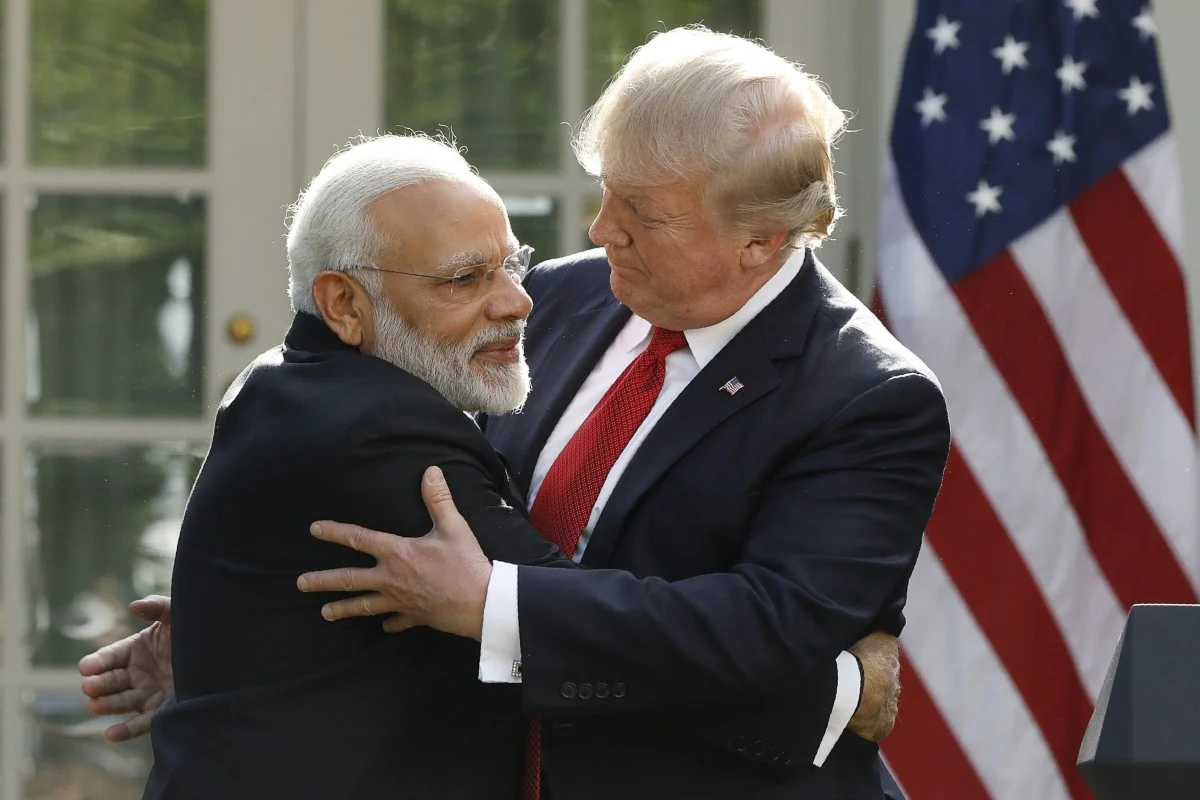
Good progress has been made by the US in terms of wide-ranging defence and other co-operation. Angry however that India is boosting Russia’s economy by buying its oil during the Ukraine war, Trump has disrupted the relationship along with his boosting trade tariffs first up to 25% and now to 50%. At the same time, he is sidling up to Pakistan and the country’s all-powerful army chief General Asim Munir as well as making aggressive remarks that are escalating the row.
The question now is whether this has done serious damage, not only to India-US relations but also to wider Indo-Pacific strategy, or whether it could be at least partially blown away once Trump’s battles with India over trade tariffs and Russian oil sales have been solved.
The extra 25% will come in to force on August 27, two days after trade talks planned, but not yet confirmed, to take place in New Delhi. It became clear on August 4 that Trump was not waiting for the talks to proceed because he had decided to make Russian oil his immediate goal. He has also said that there could be further secondary sanctions, which presumably could include electronics and pharmaceuticals that remain exempt for now.
India’s foreign ministry criticised the US tariffs “unfair, unjustified and unreasonable”. Its oil imports were “based on market factors and done with the overall objective of ensuring the energy security of 1.4bn people of India”. On tariffs, Modi said he would “never compromise on the interests of farmers, livestock owners and fishermen”.
Trump wrote on his Truth Social media platform on August 5: “India is not only buying massive amounts of Russian Oil, they are then, for much of the Oil purchased, selling it on the Open Market for big profits. They don’t care how many people in Ukraine are being killed by the Russian War Machine”.
That brought a quick uncompromising response from India, which Trump is targeting while not challenging China that is also a big oil purchaser. “The targeting of India is unjustified and unreasonable,” said Randhir Jaiswal, India’s foreign ministry spokesperson. “India began importing from Russia because traditional supplies were diverted to Europe after the outbreak of the [Ukraine] conflict, The United States at that time actively encouraged such imports for strengthening global energy markets stability.” India also alleges that the European Union and the US continue to actively trade with Russia in excess of India’s trade.
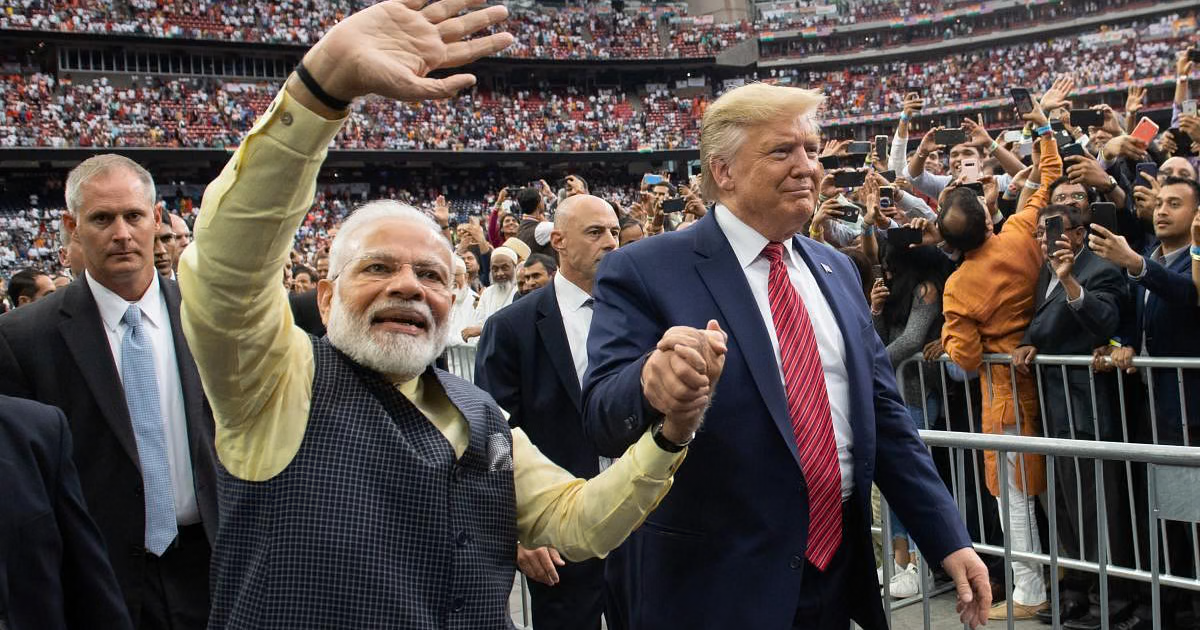
Prime minister Narendra Modi, who has flattered Trump at every opportunity, is inevitably undermined by his supposed international buddy suddenly turning on India. This was not expected, certainly not with the current persistent ferocity. The two leaders basked in triumphal joint “Howdy Modi” and “Namaste Trump” rallies when they visited each other’s countries in 2019 and 2020. When Trump was re-elected, there were signs that the close rapport would continue, even though his “America First” approach would lead to tougher trade demands.
One recent irritant in the relationship is that Trump seems unable to tolerate Modi and Indian officials persistently rebutting his repeated (and over-stated) claims that he personally ended the recent near-war between India and Pakistan. The US was involved in behind-the-scenes peace making along with other countries such as Saudi Arabia and the UK. India however is hypersensitive about outside interference in its Pakistan relations so resists Trump’s public claims.
Trump’s tirade began on July 30, when he announced that India’s imports would be hit with 25% tariffs from August 1, the deadline that had been set when he first announced (and then postponed) 26% tariffs on April 2, his trade war “liberation day” .
Trump is frustrated over what he sees as India’s slow moves on key tariffs, especially for US agricultural exports such as soya beans, dairy products and wheat where India’s import tariffs can reach as high as 40%. Trump’s electoral base needs access to these exports as well as other items where India has made concessions. But Modi cannot move far without upsetting farmers, many of whom are poor and make up 40% of the country’s workforce.
The Financial Times reports (Aug 5 print edition) that India was blindsided after it hired Jason Miller, a central Trump campaign adviser, to try to get the president’s ear: “New Delhi struggled to convince the US president it was doing enough to open its markets to US exporters. Each time Lutnick presented Trump with a new Indian proposal, the president sent him back to negotiate harder, people familiar with the matter said”. As the clock wound down, Trump launched his attack. (Miller has a chequered history).
Saying “India is our friend”, Trump then made his first threat of an additional undefined “penalty” because of the large oil and military equipment purchases from Russia.
“I don’t care what India does with Russia. They can take their dead economies down together, for all I care, their tariffs are too high, among the highest in the world,” he declared a day later in his late-night Truth Social posts, mixing the trade and oil issues. That hit international news headlines but, in typical Trump style, it ignored reality – India is a growing major world economy, its traded goods with the US totalled some $130bn in 2024, and the US is India’s largest trading partner.
The 25% tariffs were not a surprise. India had been preparing for trouble since a possible deal is said to have arrived on Trump’s desk a few days earlier. India’s official response has been that it is “studying the implications”, but ominously added it would “take all steps necessary to secure our national interest”. That seems maybe to have provoked Trump’s “dead economies” remark.
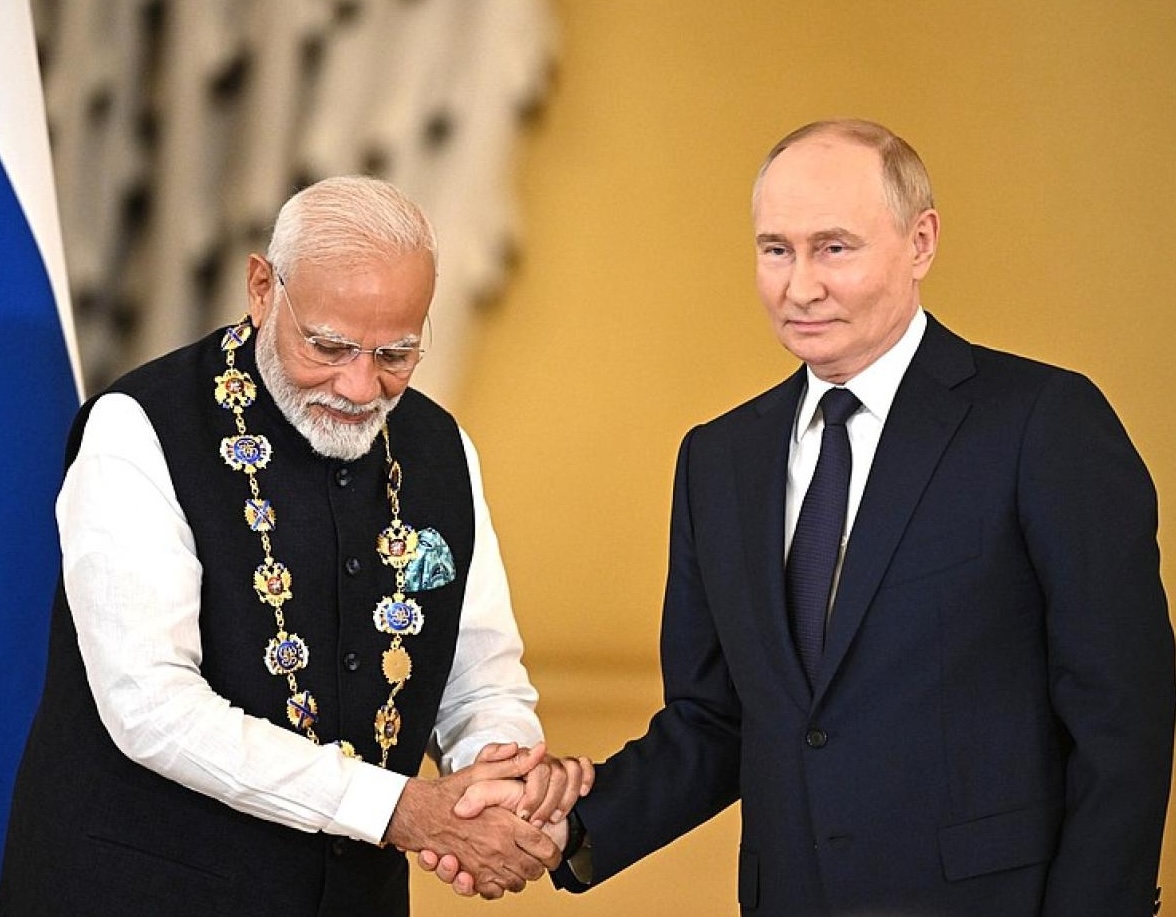
India’s role as the biggest purchaser of Russian oil is a key issue now that President Vladimir Putin is resisting Trump’s attempts to end the war with his imminent deadline of August 8. Since the war began, India has cited Russian low prices to justify increasing purchases that currently make up 35% of its total imports compared with 37% from Saudi Arabia and the UAE and 22% from Iraq. The US share has risen in response to Trump pressure from 3.5% in 2023-24 to 7.3% in April. Trump has said he will impose sanctions on Russia and countries that buy its oil including India and China if Putin does not agree to a ceasefire by August 8.
Stephen Miller, deputy chief of staff at the White House and one of Mr. Trump’s most influential aides, on August 4 warned that Trump had “said very clearly that it is not acceptable for India to continue financing this war by purchasing the oil from Russia.”
Trump had told reporters on August 1, “I understand that India is no longer going to be buying oil from Russia…. That’s what I heard. I don’t know if that’s right or not. That is a good step. We will see what happens.” The word from Delhi was that he was wrong. A climb down on buying from Russia indeed looks extremely difficult, given India’s robust stand on the issue so far. It does seem likely however that energy concessions will form part of the eventual trade deal, probably with India agreeing to step up its oil purchases from the US.
Oil has also figured in developing relationship between Trump and Pakistan, which has offered him an astonishing array of deals ranging from cryptocurrencies and artificial intelligence to hydrocarbons and critical minerals – plus nomination for the Nobel Peace Prize.
Asim Munir, Pakistan’s army chief, discussed trade and his country’s potential for mining bitcoin and exploring rare earth minerals in a surprise White House lunch last month that marked the beginning of the new relationship. Since then, Pakistan’s lobbying efforts have been stepped up in Washington, and it looks as if Trump has been hooked.
Last week Trump announced a deal with Pakistan to develop the country’s “massive oil reserves”. That surprised observers because Pakistan has only a low level of some 240m barrels. He even provocatively suggested Pakistan might one day “be selling oil to India”.
When he launched his tirade, Trump had just returned from a triumphal semi-private trip to Scotland, where he mixed visiting his two golf courses and opening a third with a visit from Sir Keir Starmer who flew with him in the presidential Air Force One passenger jet and helicopter. He also finalised an EU trade deal with Ursula von der Leyen, the European Council president who flew in from Brussels.
Gangster King Trump
That led Bill Emmott, former editor of The Economist, to dub Trump a “blend of gangster boss and Medieval king but adapted for our televisual age,” adding: “When the boss-king takes his court to Scotland, British and European leaders fly in to seek his favours, which he loves”.
Three days before Trump arrived, Modi had been feted on an official visit to the UK where he met King Charles as well as Starmer and signed an India trade deal. Maybe that provoked Trump to focus on what India had not negotiated with the US, tempting him to bring Modi down a peg or two.
In China, Xi Jinping is watching Trump’s moves against his large neighbour. How far this will drive Delhi closer to Beijing remains to be seen. India has many stable diplomatic and other links with the West, not least the Quad alliance with the US, Japan and Australia which is due to hold its annual summit in India later this year. There is also the BRICS grouping that Trump has decided to attack.
But even if the disputes over trade tariffs and oil purchase are resolved – and neither will be easy – Trump’s flirting with Pakistan will continue to make India unsure when dealing with unpredictable US presidents, now and in the future. It could also drive India back towards Russia, which is what all the presidents have been trying to stop for a quarter of a century.
 Riding the Elephant
[…] is usually a bilateral event of only modest international significance. If Trump had not upset 25 years of work by successive US leaders coaxing India gradually to move away from its historic Soviet and […]
By: Putin enjoys a glittering but short state visit to Delhi | Riding the Elephant on December 6, 2025
at 3:55 am