Posted by: John Elliott | December 4, 2017

Rahul Gandhi finally to be Congress president

The “pop-up” crown prince accepts his inheritance

First test is current election in BJP stronghold of Gujarat 

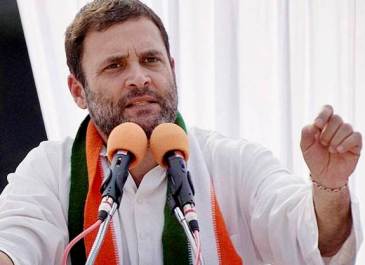
At last the years of waiting are over. Rahul Gandhi, the 47-year old “pop up” vice president of India’s Congress Party, is being elected – anointed would be more accurate – as the party president. Nominations for the post closed this afternoon with no rival candidate emerging and generations of top Congress politicians gathered in the party’s headquarters to congratulate the “young” Gandhi, who has been resisting his coronation for years.

Later this month, when the formalities are completed, Rahul Gandhi will succeed his mother Sonia, who will be 71 on December 9 and is not in good health. She has held the post for 19 years, waiting for him to be ready and willing to inherit the dynastic mantle of his father and her husband, Rajiv Gandhi, who was assassinated in 1991.

raga-president--story_647_120417122318

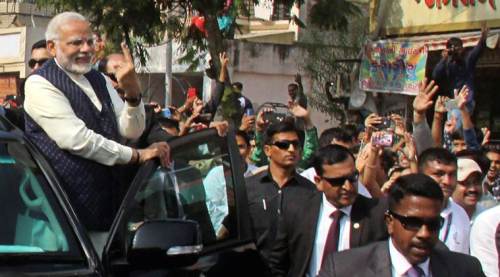
Rahul Gandhi signing his nomination with Manmohan Singh watching (left) and Jyotiraditya Scindia advising (right)

Rahul Gandhi’s succession has been widely mocked and criticised for its lack of democracy and the inevitability of his rise during a laborious and long-delayed country-wide candidate-selection process without any other contestants stepping forward. Prime minister Narendra Modi today congratulated the Congress on their “Aurangzeb Raj”, a caustic reference to the undemocratic succession of India’s Mughal rulers.

“Rahul has been the darling of the Congress men and Congress women and this is yet another step in his devotion to the Congress party and country,” former prime minister Manmohan Singh (above), 85, told a television reporter in a remark that seemed unnecessarily eulogistic but in fact echoed the views of most Congress politicians who believe the party would break up without a Gandhi at the top.

How well Rahul Gandhi does or does not do as party leader – and many expect a negative rather than a positive outcome – is of vital importance for the future of Indian politics and the country’s noisy and chaotic but effective democracy.

If he emerges from the ineffectual role he has played since he entered politics in 2004, the Congress could again become a major force, working with other mostly regional opposition parties to challenge the dominant Hindu-nationalist Bharatiya Janata Party. But if he fails, political opposition to the BJP and prime minister Narendra Modi will remain fragmented, and Congress itself could gradually implode.

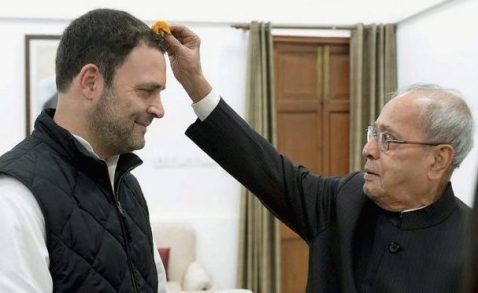
rahul-Gandhi-pranab-PTI-696x464

Rahul Gandhi being greeted before the nominations by Pranab Mukherjee, a veteran Congress politician and, till recently, President of India

Gandhi’s ascendancy should not therefore be dismissed as merely a questionable but inevitable dynastic inheritance in the family that has dominated the Congress Party since before independence in 1947 when Jawaharlal Nehru, Gandhi’s great grandfather, became prime minister.

A state assembly election now taking place in Gujarat, Modi’s home state, presents Gandhi with his first crucial test. An election has also recently been held in Himachal Pradesh, a small northern state currently run by Congress.

Voting in Gujarat, where the BJP has been in power continuously since 1995, is scheduled for December 9th and 14th, and the count for both states will be on December 18th.

The BJP is virtually certain to win in Gujarat. Gandhi’s success or failure will be judged on whether he has managed to work effectively enough with other opposition groups to reduce significantly the BJP’s number of seats from the 115 it won in the last election in 2012 to maybe 100 out of the total 182. That will be difficult, though BJP leaders appear resigned to losing some of their majority after 22 years in power.

Nationally, Congress is at its lowest point ever. Gandhi has had a series of election failures since he became vice-president in 2013, when he gradually took over some of the  party leadership from his mother.

Congress lost badly in the general election in 2014, after ten years in power, winning only 44 seats in the 543-seat Lok Sabha. It failed in a state assembly election in Bihar in 2015, and was routed earlier this year in Uttar Pradesh (UP). The BJP secured a landslide victory in UP and significantly won six out of ten assembly seats in the districts of Amethi and Rae Bareli, the Gandhi family’s traditional political base where Rahul and Sonia Gandhi are the members of parliament. Last week in UP civic polls. Congress lost Amethi’s two municipal board seats.

The BJP has been targeting the Amethi constituency with Smriti Irani, a fiery politician and government minister, standing against Rahul Gandhi in 2014. She cut his majority from 370,000 in 2009 to just 108,000, and is now aiming to humiliate him further by defeating him in the 2019 general election.

It may seem odd that the BJP is putting so much effort into attacking and ridiculing the hapless Gandhi. “Some people grow in age but not in understanding”, Modi said in parliament in May last year.

The reason must be that they realise the Congress Party cannot function effectively without a Gandhi as the leader. Mocking him and defeating him in key elections therefore weakens both him and the party. On the other hand, if he does emerge as an effective leader now that he is the party president, he could rally opposition and provide a significant opposition to Modi in 2019.

No leadership potential

Till recently, he has shown no leadership potential and has had no distinct political or economic message. He has taken no apparent interest in formulating and developing government policy beyond occasional bursts of noisy opposition and carefully scripted speeches and interventions in parliament. He refused when Congress was in power to gain experience as a minister, despite being urged to do so by Manmohan Singh.

He earned the “pop up” reputation because of the way he has suddenly taken up issues, or visited trouble spots, especially those affecting the landless poor, but has shown little or no further interest after a few loud and mock-angry performances.

Early in 2015 he literally disappeared from public life just before Budget Day and was away, presumably abroad, for 56 days without any explanation of where he was or why he had gone. Later it emerged that he had been pondering a major political role, maybe becoming party president – the post he is now accepting at he end of 2017.

Even Jyotiraditya Scindia (see top picture), one of the most competent and discreet Congress politicians of Gandhi’s generation, and a close adviser, said in a television interview that, while he accepted Rahul Gandhi’s (and Sonia’s) leadership, “the time for introspection is way over. I think the time for execution [of a new approach] should have started a couple of months ago”. That was in March 2015 and it has taken till now for the new approach to begin.

Re-energised campaigning

A re-energised Rahul Gandhi began to emerge in September when he visited the US and impressed audiences with his grasp of issues at the University of California in Berkeley and then in Washington and New York , though his answers to questions were not always impressive. This favourable view gained wide publicity in India, angled at the idea that he had progressed  from his earlier off-beat style. He was guided in the US by  Sam Pitroda, one of his father’s close advisers who first helped develop India’s telecom industry in the 1980s. Pitroda has stayed close to the family over the past 30 years and now has brought a fresh angle to Gandhi’s presentations.

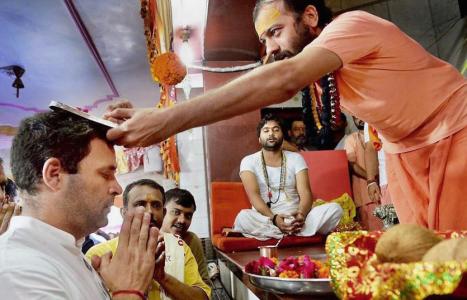
Gandhi has emerged further in recent weeks during the Gujarat election campaign where he has stayed the course with several day-long visits packed with election meetings. But his style is not subtle: for example, with the Hindu nationalists as his main opponents, he has suddenly made a series of visits to Hindu temples, which he has not done before. At one temple, he was reportedly entered in the visitors’ book in the “non-Hindu” list, which unnecessarily gave Modi and other the chance to question his religion. The report was denied, but the event revived memories of criticisms that Sonia Gandhi faced because of her Italian Catholic background.

He has also harried the government, especially over its controversial demonetisation and sales tax (GST) policies that have caused widespread disruption and hardship for very small traders and businesses. He can with some justification claim to have forced the government to introduce wide sweeping improvements to the GST.

There have been media reports that the Congress Party has been in touch with UK-based Cambridge Analytica, which helped President Trump win his election with closely focussed campaigns. It has also stepped up its Twitter and other social media campaigning, though that ran into problems with several thousand retweets on a @OfficeOfRG tweet from alleged ‘bots’ of Russian, Kazakh and Indonesian origin.

Rahul's PidiMore positively, he allowed his Twitter handlers to announce somewhat sarcastically, but with a sense of fun, that his pet dog ‘Pidi’ (left) was the mastermind behind his tweets. “People been asking who tweets for this guy… I’m coming clean, it’s me… Pidi. I’m way cooler than him. Look what I can do with a tweet… oops… treat!”, Rahul tweeted with a video of Pidi balancing a biscuit on its nose and then obediently, on Rahul’s command, eating it.
Perhaps his main failing is the sense of entitlement that he displays as the crown prince of the dynasty that has played a leading role in India politics for a century and has had a dominant role since independence. Although he can be a mild conversational individual genuinely interested in social and other causes, he has an air of superiority that is not acceptable to leaders of other parties.

Sitaram Yechury, a Communist party leader who has had good relations with Congress, said on television last month that “Sonia is the glue that binds the opposition”, adding “the united opposition will break if Rahul takes over.”

For that reason, reports suggest that Sonia Gandhi will continue to play a role on broader opposition issues, leaving Rahul to run the Congress Party. How well that will work remains to be seen. One of the reasons for Rahul declining to become president in recent years has been a clash between the older and younger generations of the party’s leaders, with Sonia Gandhi siding with those who want to minimise change.

That is a challenge that Rahul Gandhi will now have to grapple with. Much will depend on who he picks as his chief advisers, and how well he and they work with the older generation.

Later, there will be speculation about whether he ever wants to be prime minister and whether, if Congress emerged from a general election as the leading party (improbable though that seems today), he would hand the prime minister’s job to someone else, as his mother did with Manmohan Singh.

What is clear is that the Gandhi family is here to stay, with Rahul’s sister Priyanka, hiding for now in the background but possibly a potential player.

For many observers, as the Financial Times put it in an editorial a few days ago, Rahul’s presidency cements Congress’s “status as a hereditary anachronism”.

The reality however is that, while it may look anachronistic from abroad, it is not so in India where there are many political dynasties in the states.

The more important point is that, as a reluctant heir, Rahul Gandhi has been doing the country a disservice by not stepping aside because he has been blocking the evolution of the Congress Party, either under new competent leadership, or by allowing it to split and crumble and thus encourage new opposition alignments to emerge.

He now has a chance to prove the critics wrong.


Ivanka Trump “thanks” Modi for “bringing promise to millions”

Contrasting visits by former US president and president’s daughter

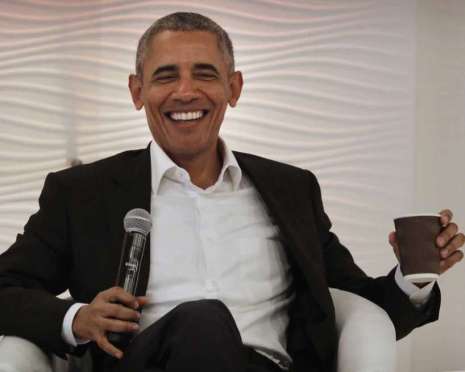
India’s politicians and media revel in making an enormous fuss of visiting foreign leaders, especially when they are flooded with compliments in return. This week there has been one American leader – former President Barack Obama who slipped in relatively quietly and made a powerful speech – and one leader’s daughter who was accorded such a head-of-state style welcome that India will find it difficult to surpass it when her father visits next year, the daughter being Ivanka Trump and her father the US president.

Obama picked up on India’s main current social issue when he said that, along with other countries (obviously including America), it should ensure that a Muslim population felt integrated. “That is something that should be cherished and nurtured,” he said.

Obama HT conf

In answer to a question this morning at a conference (above) organised by the Hindustan Times newspaper, he said he had told Narendra Modi, India’s prime minister, the same thing in private talks when he last visited India in February 2015.  “I think his impulses are to recognise Indian unity. I think he (Modi) firmly believes unity is necessary for the progress of the nation”.

Many of Modi’s critics, and of his Bharatiya Janata Party’s brand of strong Hindu nationalism, doubt that he recognises such a need for unity because of the way that the Muslim minority has been harassed since his government was elected in April 2014.

Obama had warned in February 2015, during a “town hall” meeting in a Delhi assembly hall, that India needed to be “unified as one nation” and that the country would “succeed so long as it is not splintered along the lines of religious faith”.

This was seen at the time as implicit condemnation of the pro-Hindu and anti-Muslim policies of hardliners in the BJP and its umbrella organisation, the Rashtriya Swayamsevak Sangh (RSS). It was not known however till today whether he had said the same thing in private meetings with Modi.

Obama, who is reported to charge up to $400,000 to speak on Wall Street, went on today implicitly to urge moderate Hindus to make their views heard because, he said that “politicians are often reflections of forces in the society”.

“If you see a politician doing things that are questionable, one of the questions you can ask yourself as a citizen is ‘am I encouraging this?’ If communities across India say they won’t fall prey to division, then it will strengthen the hand of politicians who feel that way”

“Thank you” prime minister

Ivanka Trump’s visit was more razzmatazz and far less profound. Narendra Modi looked grateful and happy than when she told an audience of 1500 entrepreneurs in Hyderabad on November 28, with him sitting in the front row: “What you are achieving here is truly extraordinary. From your childhood selling tea to your election as India’s prime minister, you’ve proven that transformational change is possible. And now you are bringing that promise to hundreds of millions of people across your country. Thank you.”

It was bemusing to watch Trump, age 36, praise 67-year old Modi and then thank him – on behalf of whom? Modi presumably thought it was for her father, but she didn’t say so, though she did repeat that India had a “true friend in the White House”, which President Trump told Modi in Washington earlier this year.

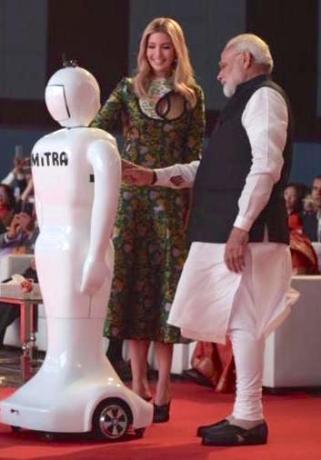
robot Ivanka ModiTogether the prime minister and the US president’s daughter and adviser (right) were opening America’s eighth annual Global Entrepreneurship Summit (something that Obama had started when he was president).
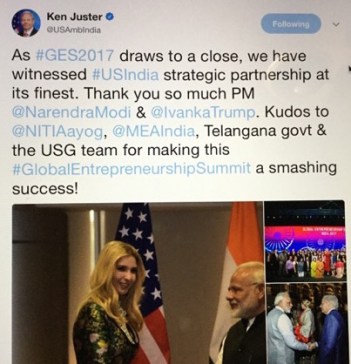
Hyderabad – dubbed “Ivankabad” by one eulogizing newspaper – is a leading information technology centre, as well as being famous for its food, which Ivanka Trump celebrated rather clumsily saying “now, your tech centres may, may, even outshine your world-famous biryani, maybe, ha-ha”.

She was the leader of he US delegation to the conference and switched style after all the praise and attempted laughter-generators to her main serious theme of encouraging entrepreneurs, especially women. The next morning she had a business-like approach with no-nonsense points at a seminar on the role of women in business.

She had been personally invited by Modi to come to the conference, and Hyderabad went to enormous lengths to clean up the city, clearing out hundreds (one report said 4,000) beggars from the streets (as it did for President Clinton in 2000), filling potholes and paving ceremonial areas, as well as parading 10,000 security personnel. There was a banquet the first evening at one of India’s most stylish palace hotels, the Falaknuma, with quests seated at what is said to be the longest dining table in the world that accommodates 101 people.

Cheap labour

The visit was slightly marred by criticisms that the signature clothing brand that she founded uses cheap labour in India and elsewhere, but this was a minor irritant compared with a trip to Berlin in April where she was booed. In Tokyo a month ago, the media made a fuss of her, but her speech at a conference drew a smaller audience than expected – and, according to reports, was partly recycled in Hyderabad.

There were also rumours that Rex Tillerson, America’s secretary of state (soon to be sacked according to media reports), had stopped his officials accompanying Trump because he was unhappy with her high profile.

Obama rose above such matters, referring only to the Hyderabad conference during a “town hall” meeting with young leaders, organised by the Obama Foundation, where he urged them to inspire, mentor and help others to improve society.  “There are so many different ways to bring about change, to do good, and to help people. No one should feel limited to one way of doing it,” he said.

Amb Ken Juster IMG_2504Tweeting inevitably came up during his session at the morning conference where, without actually naming Donald Trump, he said that such technology “can influence snap judgements about complex decisions…instead of deep analysis and evaluation”.

The most extraordinary tweet of the week came as the Hyderabad conference finished from Ken Juster, who arrived in Delhi two weeks ago as the new US ambassador. “We have witnessed #USIndia strategic partnership at its finest,” he said. It had been “a smashing success!”

It wasn’t clear what was “strategic”, except in the sense that Modi and his government had feted Trump’s daughter as if she was the president, presumably in order to please her father and boost the two countries’ relations.

Dec 2: “Strategic” has become clear today because President Trump has called Modi and, says a White House press release, “the leaders expressed satisfaction with the recent Global Entrepreneurship Summit” – which basically means that Trump is satisfied with Ivanka’s reception and Modi is therefore also satisfied.


Narendra Modi in talks this week with Prince Charles

Would like maybe to host the Trade and Investment Centre

There is a later version of this article on https://thewire.in/external-affairs/india-considers-leading-role-de-centralised-british-commonwealth

India is considering playing a leading role with Britain in revamping the Commonwealth when the international organisation of 52 countries holds its summit in London next April.

One idea being mooted is that administration of the grouping should be de-centralised with specific subjects being run from other countries, breaking the ponderous grip of the imperial style Marlborough House headquarters in London near the royal family’s homes of St. James’s Palace and Buckingham Palace.

Prime Minister Narendra Modi is believed to be interested in India taking on the larger role – and maybe responsibility for trade and investment. He is expected to discuss this with Prince Charles, who arrives in Delhi on Wednesday on a two-day visit.

The heir-apparent to the British throne has been invited to Delhi by Modi, and the agenda for their talks includes plans for what is traditionally called the Commonwealth Heads of Government Meeting (CHOGM).

Singapore_Britain_90878.jpg-d41ce

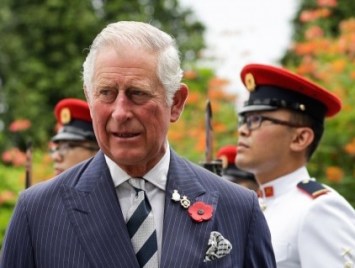
Price Charles in Singapore last week

Prince Charles will also follow up on a formal invitation for Modi to attend the summit that was sent to Delhi recently by his mother the Queen. Although India had not yet formally replied, Modi is expected to accept, combining that with a formal bilateral visit to Britain that will add substance to his trip.

Britain wants India to play a big role in revitalising what is formally called the Commonwealth of Nations (without the word British). Downing Street is therefore anxious that Modi should attend, not only to indicate India’s commitment to the organisation but also to take a lead.

Modi skipped the last gathering in Malta in 2015, and prime minister Manmohan Singh did not attend the previous two in 2011 and 2013 in Australia and Sri Lanka, missing the former because he had more pressing engagements and the latter because of regional sensitivities involving India’s Tamils and the island’s human rights record.

It is not yet clear whether India would be accepted by other Commonwealth countries as a leading player – though of course decentralisation would also lead to other countries taking responsibility for subjects such as security and climate change.

India has not proved itself adept at managing diplomatic relations even with its South Asian neighbours, which resent the way it exercises its clout. This has driven all of them (apart from Bhutan, so far) to respond positively to blandishments from China. Similarly, other smaller Commonwealth nations may resent India assuming a large role, though it does expect support from African countries.

Commonwealth-Logo

The Commonwealth logo.

Modi’s interest in the Commonwealth is partially indicated by the involvement of Manoj Ladwa, an Indian-born businessman and consultant based in London who is on the board of the Commonwealth Enterprise & Investment Council and is a high profile advocate of a significant India role. Ladwa was one of the top people in Modi’s highly successful general election campaign in 2014, and was also in charge of the prime minister’s triumphant mass rally in London’s Wembley Stadium in November 2016.

“The Commonwealth cannot continue to be London-centric and it is only right and proper for India, with 55% of the Commonwealth’s 2.3 billion population and 26% of its internal trade, to play a more frontal and central role,” he told me yesterday. “This could be done by India providing facilities for trade and investment”.

Continuing that theme, he added: “This is not a solution to all problems, but it is worth having a look at. The Commonwealth has remained relatively stable but has not done all it could because it is London-centric”.

Although the reorganisation ideas are at a very tentative stage, there is general acceptance that the Commonwealth, which embraces a third of the world’s population in English-speaking democracies spanning ethnic and religious boundaries, could play a bigger role as a significant international alliance.

This appeals to the UK, which is looking for new international post-Brexit links, though the Commonwealth’s limited record of past achievements has prevented this being treated very seriously. The idea was not helped earlier this year when someone in the British civil service dubbed its Commonwealth trade ambitions as Empire 2.0 (initially for an Africa free trade zone).

A strong Commonwealth also appeals to India because China could not be involved, unlike many other international forums where it is either a leading member or has managed to attach itself as an observer, for example in South Asia’s SAARC regional organisation..

At a time when China is pushing its One Belt One Road international initiative for economic and trade corridors linking Asia to Europe, a re-energised Commonwealth could provide a counterbalance for countries such as Australian, Malaysia and Singapore as well as India that are under Chinese pressure to co-operate. It would also fit neatly alongside a link-up being developed by the US, India, Japan and possibly Australia to counter China’s ambitions.

The aim therefore is to give next year’s summit a more radical purpose than is indicated by the traditionally bland theme, Towards a Common Future, which has been chosen by the Commonwealth Secretariat with subject headings of “prosperity, security, fairness and sustainability”. These cover boosting intra-Commonwealth trade and investment, increasing security cooperation on terror and cyber attacks and organised crime, promoting democracy and good governance, and dealing with the effects of climate change.

Manoj LadwaManoj Ladwa (left) produced an anthology of essays that included the Commonwealth ideas called Winning Partnership: UK Relations Beyond Brexit in July, where he advocated India becoming a Commonwealth “business hub”. He spoke about his ideas at a recent private conference in Delhi organised by the Observer Research Foundation in September. He is in the city this week for Prince Charles’ visit.
The idea of India and the UK teaming up to boost the Commonwealth first surfaced when C.Raja Mohan, a leading Delhi-based analyst and writer on international affairs who now heads Carnegie India, wrote about it in a similar anthology published in 2011. Called Reconnecting Britain and India, it was edited by Jo Johnson, a former Financial Times journalist and now a minister in the British government, and Rajiv Kumar, now head of India’s Niti Aayog (planning commission).

Raja Mohan had little time in his essay for the Commonwealth, which is valued by many member countries for the often low-key work that it does. He said it had been a “political bully that was incompetent at its best, impotent at its worst, and increasingly irrelevant on the economic front”.

But he suggested that India should take over some of the leadership role from London because, as a rising power, it could influence the Commonwealth’s economic prospects and emerge as a new influence countering China’s dominance.

Mohan’s words were prophetic on China but I found few supporters either in Delhi or London, for his ideas when I wrote about it on this blog. Mohan  acknowledged to me that the idea “is indeed new and does not have much currency at the moment”, but added: “A rising India must consider taking over the leadership of the commonwealth at some point of time”, working with English-speaking leaderships of Commonwealth countries in Africa, the Caribbean and the Pacific.

There were few supporters in Delhi in 2011 because the idea was not on the government’s agenda, but that has now changed with Modi’s positive interest in carving out new international roles for India. Similarly, Britain now has its post-Brexit motives.

Prince Charles and his wife Camilla are coming to India after pre-CHOGM visits to Singapore, Malaysia and Brunei. Part of the agenda, though this is not spoken about, is to build up the prince’s image so that his role as head of the Commonwealth is not disputed by other member countries after he succeeds his mother and becomes King.

The summit is taking place in London because Vanuatu, the South Pacific island, which was to have been the destination, suffered extensive damage in a cyclone at the end of last year. Locations for the official meetings will include Buckingham Palace, with a leaders’ retreat hosted at Windsor Castle, one of the Queen’s homes. In parallel there will be other events including a large business forum.

Delhi is awash with royals. The King and Queen of Bhutan have just left, and the King and Queen of Belgium are here this week at the same time as Prince Charles and Camilla.

The undeclared theme of next April’s summit will however, if the new ideas move ahead, be to move beyond royalty and turn the Commonwealth into a worthwhile international alliance, not just a post-imperial club with noble intentions and some good works.

Posted by: John Elliott | October 31, 2017

Tata emerges from its crisis a year ago but legal issues remain

Mistry family hit by attempt to make Tata Sons a private company 

Law tribunal hearing on Mistry complaints later this week

A year ago, the august Tata business group was in a crisis that threatened its reverential image and international credibility after Ratan Tata, the 78-year old veteran patriarch, forced the sacking of Cyrus Mistry who had succeeded him when he retired as chairman of the group in 2012.

In that sudden boardroom coup at India’s largest conglomerate, Mr Tata installed himself, with the help of allies on the board, as temporary chairman of Tata Sons, the holding company of the $103bn group.

The move sparked a dramatic and high profile public exchange of vitriolic and damaging allegations and counter-allegations between the two sides about business practices and the group’s alleged failures. Legal action was initiated and has moved slowly, though there is a hearing at the National Company Law Tribunal (NCLT)  later this week – November 3.

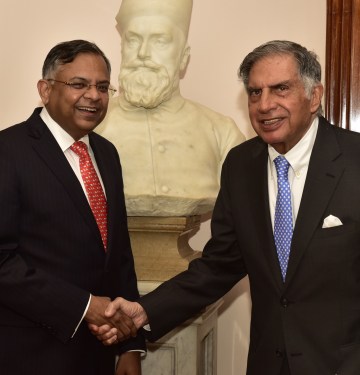
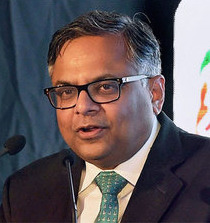
Tata Chandrasekaran - EcTCalm has now been restored to the group’s businesses under a new chairman, Natarajan Chandrasekaran, 54, (right) who previously headed Tata Consultancy Services, the group’s supremely successful information technology cash cow.
But, while the business brand of Tata companies has recovered from the crisis of a year ago, much remains the same and, crunching below the surface, is the fall-out from the way that Mr Tata removed Mr Mistry, aged 50.

Mr Tata now seems to many observers to be trying to punish the Mistry family with a legal manoeuvre that would reduce their voting power – the family has a 18.4% equity stake in Tata Sons and is the second largest shareholder after charitable Tata Trusts that have 66%.

The Mumbai business establishment rallied round Mr Tata a year ago with a mixture of loyalty and fear of the damage that the crisis could do to the image both of Mumbai and their own companies.

Mr Mistry was quickly removed from all Tata boards, including Tata Sons. Mr Chandrasekaran was announced as chairman on January 12 this year, and normal business was resumed after he took over a month later.

The Mistry family however started legal proceedings last December against Tata Sons at the NCLT, lodging a  344-page petition that alleged oppression of minority shareholders and mismanagement. It called for an administrator temporarily to take over the group’s affairs. It also lodged appeals at the NCLT, including one against the effective voting rights of its 18.4% stake being reduced to 2.17%, when (at the request of Tata) other investors’ preference shares were included. That 2.17% was below the 10% minimum required to file petitions, so Mistry’s petitions were blocked.

tata-mistry-2012

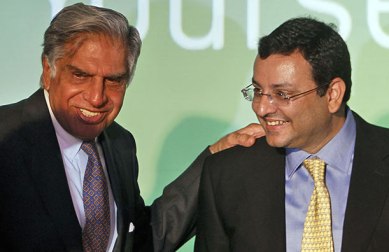
Ratan Tata and Cyrus Mistry in happier days

The tide turned however, at least a little, when the NCLT’s appellate board (NCLAT) in September over-ruled the stake-holding restriction on the Mistry petitions, which has led on to the hearing fixed for November 3.

Criticism of Tata also increased when, a day before that ruling, its annual general meeting on September 21 voted to seek official NCLT approval to convert Tata Sons from being a public limited company into a private limited company, changing its name from Tata Sons Ltd to Tata Sons Private Ltd. It also voted to give preference shareholders permanent voting rights (which they do not currently have) if there was a default in dividend payment for two years.

That would, reports suggest, raise Mr Tata’s voting power from 0.83% to 31.43%, and introduce other minority shareholders, thus restricting the Mistry family’s clout.

There was considerable public criticism of these moves, partly because they seemed contrived to reduce the Mistry power, and partly because the private company change would reduce the governance requirements and potential for public scrutiny at a time when the trend is for increased transparency.

Tata Trusts

The counter view is that the Tata Trusts, headed by Mr Tata, are anxious to ensure that other interests do not change Tata Sons to such an extent that it affects the flow of profits that are essential for their charitable work.

Either way, it appeared a clumsy move at a sensitive time. “By the look of things, the Mistry camp seems reinvigorated by its recent victory and appears charged-up to impose their renewed legal strategy on their corporate opponents,” Satvik Varma, a corporate lawyer, wrote in a newspaper article critically analysing the case.

Meanwhile Chandrasekaran has a difficult role to play at a time when loyalties of individuals at the group’s Bombay House headquarters in Mumbai are not always clear, especially after the recent legal moves.

chandra-rt-handover

Natarajan Chandrasekaran with Ratan Tata when he took over as Tata Sons chairman in February 2017

He needs to make the same tough decisions that Mr Mistry was tackling, while acknowledging Mr Tata both as his previous boss and as the powerful patriarchal mentor at the head of the Tata Trusts. He seems to be handling this skilfully, leaving Mr Tata space to shine – for example being the senior Tata figure at the Paris Air Show in June when the group signed up with Lockheed of the US to make F-16 fighter jets in India.

That was in stark contrast to the approach of Mr Mistry and his top advisers who aimed to sideline Mr Tata, asserting their own authority. Since Mr Tata was “convinced that he was irreplaceable”, as a colleague put it to the Financial Times, the showdown a year ago was inevitable.

In a series of media interviews over the past month Mr Chandrasekaran has laid out what he is doing, much of which was started during Cyrus Mistry’s chairmanship. The never-successful loss-making Tata Teleservices business is being taken over by Bharti Telecom  Tata Steel’s debt-ridden European business, including Corus in the UK, is being hived off into a joint venture with ThyssenKrupp. Some reports suggest that even Mr Tata’s favourite project, the unsuccessful Nano, looks like being reincarnated as a possible face-saving small electric car.

Overall, Mr Chandrasekaran wants to simplify the group’s extraordinarily complex company relationships and over-lapping interests – two airline joint ventures with just 15-20 aircraft each for example, and there might be a third if Tata decides to make a privatisation bid for the deeply loss-making Air India, which the group founded in 1932 and ran till it was nationalised in 1953.

Then there are four companies in defence manufacturing, and at least three in information technology.

Fewer companies

“I would like to see ourselves as 5,6,7 groups as opposed to 110 companies. The more we see ourselves as 110 or 120 companies, nothing will be done,” he told The Economic Times in a long interview.  No company, he said, could survive with “hundreds of subsidiaries and joint ventures”

He also needs to tackle loss-makers, especially Tata Motors which is currently kept afloat by its hugely successful Jaguar-Land Rover operation – buying what is called JLR from Ford Motor was one of Mr Tata’s most successful initiatives.

But he let Tata Motors’ Indian operations slide, and saddled them with the Nano car. “Our cost structures are out of whack. Every single car and model is losing money. It’s important to pick up volumes and try to become profitable,” said Mr Chandrasekaran.

Two books

Meanwhile the Tata and Mistry camps both have pending books that will no doubt cause more controversy when they appear.

A biography of Mr Tata is being written by Peter Casey, an Irish born Atlanta-based businessman who runs an executive search agency. He wrote a corporate hagiography, Tata – The World’s Greatest Company that was published by Penguin in 2014, and also backed Mr Tata in the row with Mr Mistry. Penguin Random House India is handling the biography which has yet to appear, though it was expected in the first half of this year and may, according to reports, be awaiting Mr Tata’s clearance.

The Mistry side of the battle is coming from Nirmalya Kumar, a Singapore business professor who was one of Mr Mistry’s closest advisers. He has described it as a “who-dunit on the whole affair” and says it is completed, though a publication date has not yet been fixed. In the past few days, he has been writing on his blog about what happened a year ago.

Clearly, there is a lot of mileage in this story. The best solution would be for Tata and Mistry to make a clean break, with Mistry selling their stake either to Tata or another investor. But, it seems, scores have to be settled before that could happen.

Rex Tillerson visits Delhi and is welcomed, as a “partner”

Increasingly wooed by the US as a buffer and ally against the growing might of China, India’s balancing act in relation to its bigger and more powerful neighbour has come into sharp focus in the past week.

Today, Rex Tillerson, the US secretary of State, has been in Delhi meeting Prime Minister Modi (below) and other top officials. He declared that India and US are “natural allies” standing “shoulder to shoulder against terror” with expanding economic and defence ties. “Terrorists’ safe havens will not be tolerated,” he added, reiterating what he had told Pakistan’s army and government during tough talks yesterday.

This echoed a key speech he made in Washington on October 18 setting out the Trump administration’s heavily pro-India South Asia policy. He was outspokenly critical of China’s “provocative actions in the South China Sea” which, he said,  “directly challenge the international law and norms that the United States and India both stand for”. The US would “not shrink from China’s challenges to the rules-based order”, or when it “subverts the sovereignty of neighbouring countries”.

That indicated support for India against China’s cross-border incursions on the Himalayas and for other countries’ freedom of navigation and maritime borders, though there were no specifics or indication of a realistic US response.

modi-tillersonA day before Tillerson spoke in Washington, China’s President Xi Jinping addressed the Communist Party’s five-yearly Congress in Beijing with a speech that lasted four and a half hours.

Declaring that the nation “now stands tall and firm in the east”, he set out a vision for the middle of the century with China becoming “a global leader in terms of composite national strength and international influence”. Key to that is development of Xi’s multi-billion dollar One Belt One Road economic trading, transport and pipeline corridor between Asia and Europe that India has boycotted.

And while Tillerson was jetting on from a visit on Monday to Saudi Arab through Qatar, Afghanistan, Iraq and Pakistan on his way to Delhi, Xi yesterday gained the ranking of China’s most powerful leader since Mao Zedong. That was confirmed when “Xi’s Thoughts on Socialism with Chinese Characteristics for a New Era” were written into the party’s charter.

How India’s Narendra Modi must envy Xi’s power and authority, which now stretches on to the next Congress in 2022 and possibly beyond, even if Xi then formally retires as president. Modi has to face a general election in 2019 but, before that, needs to ensure that his Bharatiya Janata Party wins regional elections including one in his home state of Gujarat – polling, it was announced today, will take place there in the middle of next month with the vote count on December 18.

Xi now has enhanced authority to continue his adventurist policies with his neighbours, including on the border with India. During the summer, the two countries’ armies had a ten-week confrontation with at Doklam, a remote plateau on the their borders with Bhutan. The face-off is officially over, but nothing has been settled and India, which was defeated by China in a brief border war in 1962, expects more incursions in the future.

This adds significance to America’s keenness for a close relationship. While that is useful for India, especially in terms of defence supplies, it also poses problems because it seems to increase the likelihood of aggression from China that openly resents the relationship.

Hesitations of history

India and the US have been drawing closer together since Bill Clinton was US president, but Modi began to pushed it further after he became prime minister in 2014, abandoning what he told the US Congress last year had been the “the hesitations of history”.

But, though he has used the word “allies” once, India prefers the less committed approach of a “strategic partnership”, with Modi embellishing it to the US being an “indispensable partner”. That means that India will not always toe the American line, as Sushma Swaraj, India’s foreign minister, showed in a press conference today when she rejected suggestions that India should close its small embassy in North Korea and end economic links. Such contacts, she said, were internationally useful as avenues open for talks.

“We’ll never have the same relationship with China, a non-democratic society, that we can have with a major democracy,” Tillerson said today, praising the growing triangular alliance with Japan – plus Australia, though it has yet to decide its position.

He also warned that the US was concerned about the threat that extremist groups pose a threat to the “stability and security” of the Pakistan government.

Overhanging the day however was the reality that the credibility of whatever Tillerson said was only a Trump tweet away from being undermined. India – and Pakistan and the other countries he visited – will therefore have taken what he said as the US line for today, with varying prospects of continuity in the future.

Equally, Tillerson was himself constantly aware of being a tweet away from being contradicted by his boss, who he reportedly dubbed a “moron” a few months ago. So he kept as far away as possible from US reporters travelling with him, fearing any off-the-cuff remark might land him in trouble.

Posted by: John Elliott | October 9, 2017

Modi, Shah and Jaitley are losing some of their bounce

Job losses as economic growth slows 

Demonetisation and GST hurt India’s vast informal economy

Narendra Modi’s BJP government is looking defensive and rattled, even jittery. For the first time since it swept to power in 2014 it has lost some the bombast and razzmatazz with which Modi has trumpeted countless development schemes with overly-ambitious targets, party president Amit Shah has allowed the extremes of Hindu nationalism to cause extensive controversy, and finance minister Arun Jaitley has blandly insisted with all the confidence of a leading lawyer that all is well with the economy.

Twice in recent weeks all three politicians, accompanied by other BJP leaders, have grossly over-reacted with media blitzes to what they saw as potential political setbacks. The first was last month after Rahul Gandhi, who is widely expected to become president of the Congress Party within a few weeks, had an unusually good reception for speeches he gave in the US.

The second was after Yashwant Sinha, who was a BJP finance minister at the turn of the century, wrote a newspaper article sharply criticising the government and blaming Jaitley for creating a “mess”.

Yesterday a new potential embarrassment emerged with a story on a prominent news website about the business dealings since the BJP was elected of Jay Amitbhai Shah, Amit Shah’s son. Indicating what could become a challenge to Modi’s claim of running a clean government, Kapil Sibal, a senior lawyer and Congress Party politician, accused those involved of “crony capitalism”. Jay Shah denied the accusations and said he is suing the website, wire.in, for Rs100 crores ($15.3m).

jay-modi-amit-shah-bjp-

Jay Shah (left), Narendra Modi and Amit Shah at Jay Shah’s wedding reception in 2015. Published: thewire.in  photo credit: BJP

Concern about the economy has arisen because growth has slowed progressively from an annual rate of 7%-8% or more during the last Congress government to 5.7% in the  quarter that ended on June 30. That is high compared to many developed economies’ lower growth rates, but it is not sufficient to tackle India’s poverty and other problems, and it does not fit with Modi’s election promises for the economy. It is the slowest since he was elected, though the Reserve Bank of India does expect it to improve in the coming months.

There are widespread reports of industries contracting and of companies shedding jobs, and of a failure to generate employment for 12m young people coming of age every year. An exporters’ organisation estimates that 40% of 100,000 small and medium sized exporters are facing difficulties.

This has led to the government is being criticised from within its ranks, and not just by Yashwant Sinha, whose article a less sensitive government could have virtually ignored (as could have happened on Rahul Gandhi’s US speech).

Mohan Bhagwat, sarsanghchalak (chief) of the Rashtriya Swayamsevak Sangh (RSS), the BJP’s extreme right wing umbrella body, has warned that “small, medium and handicraft industries, retail or small self-employed businesses, the co-operative sector, and agro and agro-allied sectors should feel the minimum heat” from economic change.

Econ stats

published on economist,com

The RSS has an extensive grass roots organisation, so its criticisms show its concern about the impact on the key BJP vote bank of small traders and other often tiny businesses such as textiles.

Their first hit came from Modi’s sudden demonetisation last November which, without warning, removed 86% of bank notes from circulation. This was followed on July 1 by a new Goods & Services Tax (GST) that was planned by successive governments for many years to unify the country. But Jaitley allowed his finance ministry to introduce it with five complicated tiers ranging from a 0%-28%, which were applied to even the smallest one-man businesses that had previously been outside the tax net.

The demonetisation project was praised by the poor who saw it as an attack on the rich and corrupt (which it did not become). The economic slowdown it generated because of a lack of cash, plus the mishandled GST, is now hitting what is called the unorganised sector that accounts for 90% of employment.

The basic problem is that Modi is expecting India’s slow-moving economy to adapt to new practices faster than is possible and, in so doing, is doing unnecessary harm to those who run their businesses without paperwork, formal reports, and taxation,

“My reckoning is that for a substantial number of SMEs, their margin was tax evasion,” Saurabh Mukherjea, chief executive of Mumbai-based Ambit Capital, told the Financial Times. “As the government steps up forcing people to comply with GST, a lot of small businesses that managed to stay in the shadows will find themselves sucked into the tax net. Either their profitability will be vastly diminished – or it will go away completely.”

Modi’s “early Diwali”

To tackle the problems, Modi set up a new economic advisory council at the end of last month reporting direct to his office, not to Jaitley. Then, following an emergency meeting between Modi, Shah and Jaitley at the end of last week, came a series of moves, notably easing GST tax levels and regulations and cuts in petrol and diesel excise duty. The finance  minister looked less than happy when he made the announcements, but Modi declared triumphantly that Diwali had “come early” – the annual Hindu festival of lights and present-giving is on October 19.

Inevitably major reforms such as GST cause economic disruption, and Modi has shown both with the tax and demonetisation that he does not shy away from such risks.

Ironically, at the same time he is being criticised for only tinkering with the economy in other areas such as state-owned banks and their bad loans, the inefficient and overmanned public sector – and for allowing his ministers to follow his own practice of issuing unrealistic completion targets on reforms such as housing for all, electricity for all, and now railway electrification.

Ministers and bureaucrats are also trying to obfuscate about the economic problems by talking unrealistically about young entrepreneurs and the role of the digital economy. Piyush Goyal, who recently moved from being minister of power to railways, even tried last week to rebut concerns about job cuts by saying “the youth of tomorrow is not looking to be a job seeker alone – he wants to be a job creator”.

bjp-ruling-states-27-1501130308None of this necessarily upsets the BJP’s expected victory at the next general election in 18 months’ time. It is however causing some concern for state assembly elections before then which include Modi’s home state of Gujarat before the end of the year – though opinion polls indicate that the BJP will win there comfortably.

The BJP has been progressively extending its reach across the country with state election victories plus new link ups, for example in Bihar. This puts it in a powerful position when it comes to organising arrangements for the general election.

It is now targeting southern India, where Shah has been embroiled in a battle in Kerala with the CPIM, India’s main communist party, that spilled over into street protests in Delhi today. It is seeking alliances in Tamil Nadu and hopes to win Karnataka from Congress in the middle of next year, as well as holding onto power at the end of next year in Madhya Pradesh and Rajasthan. It is also campaigning to win the small northern state of Himachal Pradesh from Congress at the same time as the Gujarat election.

But nothing is certain in politics and Modi and Shah urgently need to stem the currently growing evidence that the prime minister has not delivered on his 2014 election promises to create jobs with economic growth while transforming the way the country operates.

Posted by: John Elliott | September 24, 2017

Jaipur lit fest spreads its ‘joie de vivre’ to America

Boulder Colorado success last weekend after an evening in New York

  “What an industry these lit fests spawn,” a friend emailed when I told him last weekend that I was at JLF Boulder, JLF being the shortened name for India’s internationally famous Jaipur Literature Festival that has sprung up in London, Melbourne and New York as well as Boulder, Colorado. 

I initially resisted the thought that such fun-oriented literary and mostly free extravaganzas could be termed an industry but, on reflection, maybe they are. Though they are not driven by the publishing industry (that’s done at book fairs), they are part of the creative industries and JLF, like Britain’s famous Hay Festival, is becoming an increasingly recognisable international brand.

The branding is vitally important because JLF depends on sponsorship for 85% or 90% of its funding and therefore for each location’s survival. The primary title-named sponsor is now India’s Zee television and entertainment group, but many other companies are need to help finance individual platforms and sessions.

Get High Boulder

appropriate wording – possession of marijuana is legal in Colorado

There must of course to be something special to make a brand successful and in the case of the JLF it is primarily the wide range of authors and speakers from different parts of the world, different languages, ethnic groups and religions, all milling together on the stage and with audiences.

“We are recognised in the area of arts and literature bringing together the Orient and Occident and we try to make that the experience,” says Sanjoy Roy, managing director of Delhi-based Teamwork Arts that produces the events,

But the buzz which is at the heart of the Jaipur festival and erupted at Boulder comes from  more than that. 

“JLF still somehow has the feel of a bunch of friends holding a party rather than the more worthy feel of some of the other festivals,” says British author William Dalrymple, one of the festivals’ two co-directors. 

“That is why the best writers usually accept our invitations, if they are not deep in a book: because they know they will have a good time, be beautifully looked after, and meet other top flight writers”. (He added “and probably end up dancing with them,” because there are music sessions at the end of a day’s literary events). 

WD NG SR

William Dalrymple, Namita Gokhale and Sanjoy Roy

Dalrymple also says that the programming “is the best in the business”. He does that in constructive tension with Namita Gokhale, an Indian author. “I think there is a genuine joie de vivre about in the Jaipur team that manages to turn up the voltage wherever we pitch our tent,” he says.

 Gokhale focuses primarily on writers and speakers in Hindi and other Indian and South Asian languages as well as international languages, while Dalrymple attracts names from around the world. Together they provide a linguistic and ethnic mix on a scale that is not seen in other festivals.

 “It is one of the few festivals curated by two writers who bring a wide range of interests and sensibilities,” says Gokhale.

There is a strong emphasis on freedom of expression, which regularly infuriates extremists of various hues. 

Xiaolu Guo, a Chinese novelist and filmmaker, underlined that in 2014 when she said, during a Who Rules the World debate, that China could learn from the way that “everyone here is equal, everyone has the right to listen and to get information”. If China allowed that, she said, it would be a better country.

JLF tends to go where it is asked, rather than seeking destinations. It was invited to New York for the first time on September 10 by the Museum of Modern Art to stage an evening event titled “Patriot Games: Contextualizing Nationalism”. In London, it started four years ago as part of a South Asian festival on the South Bank and in May moved to the British Library. Audiences inevitably have a strong Indian and South Asian base but the reach is far wider to other nationalities. 

Visitors from Boulder who first went to Jaipur a few years ago asked Roy to bring the festival to their city. “We were attracted by the brilliant, accomplished, gifted writers who discuss their books….and the community of readers who come to the festival”, says Jules Levinson, a leading Buddhist studies academic.

The Boulder festival was spread over three days and featured more than 60 authors and other speakers from as far afield as South Korea, Australia, the UK, Mexico and Columbia as well as India and the US. Among the most famous was Anne Waldman, an American poet, Alberto Ruy-Sanchez, a Mexican poet and writer, and Akhil Sharma, an Indian author living in New York.

Presler session IMG_2395

Larry Pressler (centre) and Shashi Tharoor (right) on nuclear Pakistan

Books ranged from reporting the horrors of North Korea and sexual abuse in the American Catholic church to a thriller centred on the Everest mountain and Beat generation poetry.

In a session that I moderated (right), former US senator Larry Pressler rued the failure of his once-famous Pressler Amendment to stop Pakistan developing nuclear bombs.

Two top Indian diplomats talked about their double life as prolific authors. Vikas Sarup, High Commissioner to Canada, told the story of Q&A, the novel that became the highly successful Slumdog Millionaire film. Navtej Sarna, ambassador in the US, talked with me about his nine books, many centred around his home state of Punjab and his Sikh heritage and religion.

The lit fest in Jaipur began in 2006 in the grounds of the Jaipur’s Diggi Palace hotel, a charmingly faded pile built in the 1860s as a grand town house for a rural ruler. In 2008 it came under Teamwork, which has Ambit Pragma of Mumbai as its primary investor.

Since 2006, 115 lit fests have cascaded across India and the rest of South Asia, starting with Galle in Sri Lanka and including Karachi and Lahore in Pakistan, Kathmandu in Nepal, Thimphu in Bhutan, and Dhaka in Bangladesh.  Writers with new books to peddle often tour the circuit, taking in India’s Delhi, Calcutta, Chennai, Hyderabad, Bangalore, Goa and Mumbai in addition to Jaipur and more in the Himalayan foothills at Kasauli and Shimla.

Hundreds of thousands

The number of people attending Jaipur mushroomed from a few hundred in the early years to 27,000 in 2010, and 255,000 in 2015 (that’s the footfall count including repeat visitors). In January this year, there was an astonishing total of 400,000 footfalls over the five days with 80,000 registered visitors. 

It is free and open to all, though there is an option to become a delegate with access to authors’ lounges and various meals and events for between Rs6,000 ($92.5, £58.5) a day and Rs22,000 for the five days.   

It is the free aspect which is vital to Jaipur’s image and success with the general public, including hordes of school children, mixing with an eclectic selection of Indian and international writers and other public figures. There are complaints every year that it is too crowded but few people really mind the crush, which comes with the event’s success.

“Whether you want to hear about the provision of toilets and treatment of excreta in India or the life and times of a transgender, or listen to one of Britain most famous comedian personalities or a pressured Indian bureaucrat defending his patch, or how the US has caused chaos in the Middle East ousting established regimes, the Jaipur Literature Festival was the place to be last weekend,” I wrote on this blog last year

Margaret Atwood, the veteran Canadian writer, had opened the festival, saying “we become writers because we love to read”, and “the writer’s ‘other half’ is the reader”. She was followed by famous names such as novelists Colm Tóibín, Marlon James and David Grossman, and writer and television personality Stephen Fry.

Even in the early years there were top names. In 2010 there was a Nobel laureate as well as Booker and Pulitzer prize winners among the famous names that included Wole Soyinka, Roberto Calasso, Hanif Kureshi, Niall Ferguson, Roddy Doyle, Anne Enright, Tina Brown, Claire Tomalin, and Michael Frayn.  

JLF’s international reach has a benefit for India. Navtej Sarna described it in London last year as “the single most important part of our soft power”. In Boulder he said, “India is now known as a ‘literary destination’ and the Jaipur Literature Festival is the reason for it.” 

So whether it is or is not an industry, JLF is an international phenomena that has developed haphazardly over the years with the breadth of India’s culture as its springboard. 

That’s the basis for a successful brand that has no immediate plans for further expansion, though it has had approaches from Iceland to Canada and the Far East including Venice, Oslo, South Africa and Singapore.

New ministers – railways, defence, commerce, rivers, power, housing

Narendra Modi has today carried out his most significant government reshuffle since becoming India’s prime minister three years ago with ministerial moves that strengthen three top posts while at the same time balancing the political interests of different states and illustrating the limited talent available at senior levels.

The headline-grabbing appointment is that of Nirmala Sitharaman, 58, who has been a low-key commerce and industry minister of state since 2014, to be India’s first full-time woman defence minister – the post was held twice by Indira Gandhi when she was prime minister in 1975 and the early 1980s.

Reshuffle Sept 3 '17

Ministers at the Swearing In Ceremony by India’s president

Some observers thought Sitharaman might be dropped from the government, but instead she was promoted to the cabinet and then announced as defence minister, which makes her a member of the top-level cabinet committee on security. She succeeds Arun Jaitley, the finance minister, who has been looking after defence since March when Manohar Parrikar, the previous minister, resigned to become chief minister of Goa.

The three appointments that should strengthen the government include Piyush Goyal, 53, who has been a successful power and renewable energy minister, to be railways minister, succeeding Suresh Prabhu, 64, who replaces Sitharaman at commerce and industry.

Goyal, who keeps responsibility for coal (which depends on the railways for transport), will probably prove to be tougher than Prabhu in tackling the entrenched railways establishment. Prabhu offered to resign two weeks ago after a spate of railway accidents and will bring a new policy approach to commerce and industry. The third appointment is Nitin Gadkari, 60, who has added water resources and reviving the River Ganga to his highways and shipping portfolio.

India Prime Minister Narendra Modi greet

Narendra Modi at the Swearing In

The relatively limited talent pool hat Modi can call on to fill senior ministers’ jobs is illustrated by the appointment of four senior public officials without any political experience to be ministers of state, three of them with independent charge reporting direct to the prime minister. They all became active Bharatiya Janata Party members after retiring from public service and have been chosen because of their administrative ability and experience, not necessarily because of their past specialties.

This is graphically illustrated by Hardeep Singh Puri, 65, a former top diplomat known for his tough style, who retired as ambassador to the United Nations. He has become housing and urban development minister and will be tackling – on a steep learning curve – an acute shortage of viable homes and uncontrolled expansion of towns and cities.

A former home secretary, Raj Kumar Singh, 64, succeeds Goyal as minister for power and renewable energy and will be continuing his reforms, while a former Delhi Development Authority commissioner, Alphons Kannanthanam, 64, known as “demolition man” after clearing 15,000 illegal structures, is becoming minister of state for tourism, electronics and information technology. Satya Pal Singh, 61, previously a Mumbai police commissioner famed as a “top crime buster cop” has gone to the human resources and water resources ministries.

piyush_sep3_nirmala_sep3

Nirmala Sitharaman and Piyush Goyal

These moves come a few days after doubt has been cast on the success of one of Modi’s most high profile and dramatic initiatives – the sudden demonetisation of 86% of the country’s bank notes last November. The Reserve Bank of India has reported that 99% of the cancelled high value bank notes were deposited in banks. This undermines government claims that a third of the high value notes would be removed from the economy because holders of black money would not dare to try to bank them.

Economic growth has fallen to 5.7%, which is more than 2% below the figure a year ago and the lowest since 2014. It was hit by demonetisation and has also been affected by the introduction in July of a long-awaited goods and services tax which, while a much-needed reform, is far more complex and difficult to implement that was originally intended.

Such results sometimes lead to speculation that Arun Jaitley, who was responsible for demonetisation and the new sales tax, would be moved, but he remains at the finance ministry and is the most senior cabinet minister, sharing influence as a Modi adviser with Amit Shah, the party president.

The reshuffle was triggered by Prabhu offering to resign and being told by Modi “to wait” after three passenger trains derailed in the past two weeks, two of them in the space of just five days killing at least 20 passengers and injuring more than 200.

All were clearly failures of railways management – on one there was no warning of rail track works, while another happened when a truck overturned on the tracks. Since 2012, 60% of rail accidents have been caused by mistakes or the negligence of railway staff, according to a study by NITI Aayog, the government’s planning commission.

Suresh PrabhuManaging the railways that carry 23m passengers and 3m tonnes of freight every day on 66,000kms of tracks is a highly complex task, which is made worse by tensions and collusion between the various parts of the establishment that includes the ministry and a railways board.

Prabhu (above), who was the ninth railways minister in as many years, began in the three years he held the post to modernise many of the operations but some commentators say he was not tough enough with those involved.

Sitharaman faces an equally tough task at the defence ministry, where she has no prior experience (nor did her two predecessors in the past three years). The most urgent job is re-equipping the grossly under-prepared armed forces at a time when tensions are high with China and Pakistan.

This includes speeding up the award of new defence contracts, especially with Indian companies, which links with Modi’s well-marketed but under-performing Make in India campaign launched by her old ministry. Jaitley seems likely to be monitoring and encouraging this work, while Modi’s national security adviser and the cabinet security committee play a key role on the country’s defence.

Commentators have suggested that Sitharaman was given the post partly to raise the BJP’s profile and acceptability in Tamil Nadu, which is her home state in southern India where the party is not yet strong. Such regional considerations also affected the reshuffle elsewhere with the appointment of two new ministers from Uttar Pradesh and Bihar, which are key targets for the BJP in the 2019 general election.

So, as always, politics rather than ability plays a role in the selection of ministers, as it does in any democracy. But today’s appointments also show that Modi is trying to strengthen the effectiveness of his ministers and government for work that urgently needs to be done before 2019.

Posted by: John Elliott | August 25, 2017

70 years on, an outpouring of people’s stories on Partition

The British legacy – seven decades of unrest and border fighting

The history of the tortuous creation of India and Pakistan as separate countries 70 years ago has been written and recorded on a massive scale in the past two or three weeks on British television, along with other media on the Indian subcontinent as well as the UK and internationally.

The writers and speakers have not for the most part been politicians or historians, but ordinary people of all ages who have been telling their personal stories for the first time in public, stories about one of the cruellest and most vicious events in modern history, and how it affected them and their families.

The surge of coverage in the past few weeks is important because it is filling in gaps of history that has led to decades of fighting between what are now two nuclear powers. It is a history of countless tales of horror, suffering, death and unbelievable ethnic cleansing from an ageing generation, whose tales should not be forgotten any more than the horrors of the second world war’s holocaust.

This widespread focus on the Partition of Pakistan from India has side-lined the actual independence of two countries, whose 70th anniversary came on August 15. It has also side-lined what has happened since then to them (and Bangladesh, which separated from Pakistan in 1971). Ceylon, now Sri Lanka, that became independent six months later has been scarcely mentioned.

Mass migration

Estimates of the largest mass migration in history vary between 200,000 and over 1m for the number of people who died as 15m-17m Muslims, Hindus and Sikhs struggled across the border that was not formally fixed till the day after August 15. As many as 100,000 women are believed to have been abducted, raped, sometimes sold into prostitution or forcibly married, according to Urvashi Butalia, a Delhi-based Indian writer who is updating a book, The Other Side of Silence: Voices from the Partition of India.

Exous Krishen Khanna - Saffronart photo

Exodus by Krishen Khanna, a leading Indian artist, now 92, who crossed from Lahore at Partition

The Partition generation, now in their 70s and older, who suffered and survived, have not generally been prepared before to open up painful memories, in the same way that troops returning from battlefields bottle up their experiences of death and destruction. Now, with the distance of 70 years, they feel able to pour out their memories and, according to many accounts, are keen to do so.

At the same time, there is a new generation of their grandchildren who want to know their families’ histories and ask questions of their parents and grandparents that they have never wanted or been allowed to explore before. It is not part of British schools’  history curriculum.

“It’s often said that memory jumps a generation, so that could explain why younger people are becoming more interested in the stories of their grandparents,” says Butalia, adding that opening up is not something sudden. “It’s been happening for the last few years, I think it’s just that anniversaries become ways to talk about these things.”

This has been specially evident from many of the television interviews and radio coverage that has swamped the BBC in recent weeks. Many of both countries’ diasporas have influential positions in the media, academia and elsewhere. International interest in India has grown in recent years as it has emerged as an increasingly successful but far from efficient economy and as a controversial society.

In India too there has been a focus on the subject. A series of articles looking at “the weeks and months when entire geographies and histories changed forever”on the Wire.in news website even includes one on how “food cultures” were changed.

I became aware of this opening-up trend in February last year at a Delhi exhibition, A Brush with Life , showing works by Satish Gujral, now 91, a prominent Indian artist. The paintings included his little known but harrowing depictions of Partition (below). At a discussion during the exhibition, he talked emotionally about how, age 20, he had stayed on in Lahore to help his father evacuate refugees before leaving and saw “murder, rape, and other brutality”.

The next focus came with the opening of a Partition museum in the Indian city of Amritsar in Punjab, a state that was split in two and suffered some of the worst cruelty

BBC Radio - Partition Voices

BBC Radio – Partition Voices

And then I arrived in London a few weeks ago, readying myself to write a 70th anniversary piece on this blog and found the BBC’s saturation coverage of Partition. This link illustrates  how much (but not all) that the British broadcaster has done, ranging from reportage to interviews and historical flashbacks and including radio discussions and a radio dramatisation in seven parts of Midnight’s Children by Salman Rushdie , who was among those interviewed.

The BBC press office has not answered my questions about the total number of programmes that were aired, the number of viewers and listeners, and how co-ordinated it all was. Many tv viewers and radio listeners must have been turned off by the welter of coverage, but I have also met people in the UK with no India links who have drawn in by the stories they have been hearing and have wanted to know more.

“My father broke his silence after nearly 70 years to speak about what happened to him during the partition of British India. Seventy years. A lifetime,” says Kavita Puri, a journalist who travelled widely in Britain collecting BBC stories. Her father, a Hindu, has never been back to the place of his birth in Lahore, Pakistan, but he specially wanted to talk to her about was how Muslim neighbours there saved his family’s life.

There have been sometimes angry debates and articles arguing about who was to blame for such a catastrophe. Many Indians and Pakistanis resent that they are portrayed as rioting killers, without sufficient blame being attached to the British for rushing the handover and the designation of the disputed Line of Control between the two countries in Kashmir.

Flow India A Brush with Life 2

Schoolchildren look at paintings of Partition by Satish Gujral in Delhi

“That night ought to have been a moment of great joy for the people of the subcontinent”, says Shelina Janmohamed, a London-based Muslim writer and author of Love in a Headscarf. Speaking on BBC2 Newsnight, she said to loud applause that people talked as if it was the “problem of the colonised that made it all go wrong, when the seeds of this terrible man-made disaster was in the way that independence was granted”.

That man-made disaster and the way independence was granted has led to repeated fighting on the Line of Control for 70 years, with three wars and one near-war. Militants and terrorists have been injected with help from Pakistan’s ISI secret service and army to ferment unrest and killings in Indian Punjab in the 1980s and in Kashmir since then.

One can blame the Pakistan army for the militancy, which enhances its dominant role in the country, and one can also blame India for human rights atrocities in the Kashmir valley and for not trying harder to find solutions – solutions that are much more difficult now that China is stepping up its support for Pakistan.

Dysfunction

But maybe there had to be wider knowledge and understanding about how it all began 70 years ago before both countries could shed what Barkha Dutt, an Indian tv journalist and author, whose parents crossed over from Pakistan, describes as “our wariness of truthfully memorializing Partition”. That created “a permanent dysfunction between our nations”. In Pakistan, she says, “lamenting or questioning Partition challenges the very basis of the country’s existence” while, in India, ”we don’t want our proud dawn of independence to be eclipsed by its long shadows”.

Mark Tully, a veteran BBC journalist who has lived in India most of his life, travelled from the north of the country to the south, testing views on Partition. He found that people wanted to “close the chapter, end the bitterness and restore relations with Pakistan…. as two nations but one people”.

It would be good if the leaders in both countries acted on that, pressured by the younger generations who have heard and talked about personal histories over the past few weeks. Sadly, that seems unlikely now that China is playing a growing role in Pakistan’s economic and regional life, using the country as a pawn in its wish to contain India.

Posted by: John Elliott | August 20, 2017

India at 40 – my 1987 anniversary article

Nehru’s cry for “work and work and work”

“ ‘I want work and work and work. I want achievement. I want men who work as crusaders’, says a poster quoting an independence dream of Mr Jawaharlal Nehru, India’s first Prime Minister, above the dirty sluggish luggage conveyors at the unwelcoming Bombay airport”.

That was the introduction to an an article I wrote for the Financial Times on August 15, 1987, which I have just found in my computer. When I wrote last weekend about India’s 70th anniversary of independence, I said it was the third time that I had written an article marking a decade’s progress, the earlier ones being in 1997 and 2007. It was actually the fourth because this was my first.

In 1987, having been the FT‘s South Asia correspondent for four years, I vented the frustrations of a somewhat younger journalist about the failures and setbacks of a country that had so much potential yet was so self-destructive in what it achieved.

My views haven’t changed significantly down the years. There have of course been enormous changes and improvements, but much of the article sounds alarmingly familiar today.

I had just flown back to India from the UK, arriving at the old Bombay airport. I still remember standing waiting for my luggage and, looking up, seeing Nehru’s quotation (from a 1954 speech) and realising it would provide a graphic introductory paragraph for an anniversary article I was about to write.

I quoted Faiz Ahmed Faiz, a radical Pakistani poet, who answered the euphoria of Nehru’s “midnight hour” with a poem that declared “This is not the dawn we yearned for”. I wrote that “forty years on it is tempting to believe that Faiz’s gloom rather than Nehru’s hope is still valid”.

As I often did before writing a major article, I interviewed Manmohan Singh, later to be prime minister. He was then running the Planning Commission, having earlier been Reserve Bank of India governor. He talked about the “inherent good sense” of the Indian people holding the country together, but warned of an ‘identity crisis” brought about by economic development and education.

The full article is below:

Forty Years On – August 15, 1987

‘I want work and work and work.  I want achievement.  I want men who work as crusaders,” so says a poster quoting an independence dream of Mr Jawaharlal Nehru, India’s first Prime Minister, above the dirty sluggish luggage conveyors at the unwelcoming Bombay airport.

D 83362-01

Nearby, a tourist corporation official in his chair chats on the telephone, blocking the efforts of a ground stewardess to help hot and weary passengers.  It takes five customs officials to clear one person’s baggage and a sequence of 12 officials, police and hangers-on to hire a taxi.

Where is Nehru’s work ethic?  Where are his dreams of a new egalitarian, economic and social order in the world’s largest democracy?  Lost, maybe, in a tortuous, destructive mixture of bureaucratic corruption and inefficiency, caste pride and an over-riding fear of unemployment in a grossly over-populated country where status matters more than compassion.

Forty years ago today India became independent after 180 years of British rule, preceded by a couple of hundred years of rule by the Mughals.  “At the stroke of the midnight hour, when the world sleeps, India will awake to life and freedom,” proclaimed Nehru, hailing his people’s “tryst with destiny.”

Mahatma Gandhi, the leader of the freedom struggle, refused to join the celebrations.  He was praying because he had lost a crucial argument for a united India and the country had been arbitrarily – and perhaps unnecessarily – partitioned.  Pakistan (then including Bangladesh) had become a separate independent country the day before, setting the tone for lingering border, ethnic and linguistic divisions and battles.

Britain’s handover of power is widely seen as a model, not always followed in other countries’ colonies, but as many as 500,000 people are estimated to have been killed [Aug 20, 2017 edit: – estimates now go up to 1m] in appalling massacres when some 13m [ditto 15m-17m] people struggled across the many borders to live in Hindu-dominated India or Moslem Pakistan.

Faiz Ahmed Faiz, a radical Pakistani poet, answered the euphoria of Nehru’s “midnight hour” with a poem which declared “This is not the dawn we yearned for.”

Forty years on it is tempting to believe that Faiz’s gloom rather than Nehru’s hope is still valid.  It often seems as if the Indian sub-continent (including Ceylon – now Sri Lanka – which became independent six months later) is in constant self-destructive turmoil and political instability, rejecting work ethics and egalitarian policies and spurning the Mahatma’s creed of peace and non-violence.

In Sri Lanka last month a Sinhalese sailor in a guard of honour tried to wound and maybe kill Rajiv Gandhi, the Prime Minister of India , whose mother, Indira, was assassinated by Sikh security guards nearly three years ago.  Gandhi was trying to help end the island’s Tamil ethnic conflict which has claimed more than 6,000 lives in the past four years.

In Pakistan, which has yet to settle down to a stable form of government after years of military intervention and rule, car bomb blasts last month killed more than 60 people in Karachi.  In Bangladesh the military ruler, President Ershad, has been facing riots and the risk of a coup.

In India , the Sikhs’ Punjab crisis that led to Mrs Gandhi’s death remains unsolved, turning New Delhi into a suspicious city full of scruffy gun-toting security guards.  In other parts of India , Hindu Moslem riots have worsened dramatically and even the Gurkhas, loyal soldiers of the army of India as well as the British empire, have their own Sikh or Tamil style insurgency among the Darjeeling tea gardens of West Bengal.  And Gandhi’s stumbling political performance is putting at risk the future of the Nehru dynasty, started by his grandfather and continued by his mother.

Turbulent events

But these turbulent events, which some people believe mean India is on the brink of breaking up, overshadow a basic underlying stability which is not yet so apparent in Pakistan or Bangladesh, and which has been shaken in Sri Lanka during the past decade. India has had steady, if slow economic and social progress on a strong and durable democratic base.

MMS at PlC?“The tensions should not be underestimated, but predictions of India ceasing to be a nation have been wrongly made before and will be proved wrong again – the inherent good sense of the people ensures that,” says Dr Manmohan Singh, former Governor of the Reserve Bank of India and head of the Planning Commission, who this weekend moves from Delhi to Geneva to run the Non-Aligned Movement’s new South Commission.

“Economically and socially, small homogenous developing countries with less political democracy elsewhere in Asia move faster.  But some price has to be paid for political democracy, and the Indian experiment of developing economic and social policies with the consent of the people is unique.  I think it is the best,” he adds.

Those policies started with the job of combining into a single nation 360 kingdoms and provinces, many of them tiny, with a diverse population of 350 m.  Many observers overplay the numbers game, but the enormity of the statistics in the world’s second most populous nation cannot be overstated.  That 350m figure had more than doubled to 765m by 1985 and could now be as high as 800m.

The World Bank predicts a population of just under 1bn for the year 2,000, after which India might overtake China, already just over 1bn if its birth control campaigns do not improve.  Population control is one of India’s most important failures.  Another is the lack of universal education.  Literacy has risen from only 16 to 36 per cent, affecting economic growth and holding back development for lower castes and minority groups.

The early introduction of nationalisation and bureaucratic controls, partly inspired by British socialist policies and Russian attitudes to the development of heavy industry, contributed to decades of industrial inefficiency and losses of export markets.  This is still hitting the economy, although the policies of Mr Gandhi, plus a growing affluence which partly stems from a green revolution starting in the 1970s, have led to changes in recent years.  But deep-seated problems remain.

Social changes

Social changes such as land reforms and the ending of the Maharaja system led to new local and regional political interests emerging by the time of Nehru’s death in 1964 which upset the national consensus.  By the early 1970s Mrs Gandhi was asserting national authority and was not being tolerant of social and electoral diversity just as diversity was demanding attention.  “A lot of our difficulties have come from this problem” says Mr Pran Chopra, an Indian journalist who applies a similar argument to over-rigidity on economic policies which bred widespread corruption.

But above all this, the country’s greatest asset is its cohesion.  The Indian people were, and are, bound together by five centuries of imperial rule, by their ancient 2,000 year old civilisation with its dominant Hindu religion, and by their restrictive caste system which pervades all aspects of life, combining some of the taboos of apartheid with the snobbery of the British class system.

Cohesion has been helped by a variety of legacies from the British, including an established civil service which works, even though it has failed effectively to develop from a regulatory and tax collecting bureaucracy into positive policy development.  There is also a strong, well-regulated and non-political army; an established judiciary; and a free (though sometimes subdued) press.

Against this, the country is divided by distinct differences between the Aryans of the north and the Dravidians of the south, and by a patchwork of ethnic and cultural differences of 15 main languages, 1,650 dialects, and four main minority religious groups – Moslems, Sikhs, Christians and Buddhists.  There are tens of thousands of tribal people, many of them Christian, in the far north east of India , while others live pagan lives in remote primeval forests.  In central India tribal women wearing ornate saris and jewellery work on modern power stations and other construction sites.

There are 100m Untouchables (or Children of God, as Mahatma Gandhi called the bottom of the caste pile) who daily rub shoulders with blatant wealth and high technology.

At the top is the elite, old and new, but a smaller group than the 100m untouchables.  They include educated, cultured public servants and academics concerned for their country and its people, and a new generation, including technologically aware industrialists, anxious to build a better India .

Chasing prestige

There are self-seeking politicians, chasing power for the prestige and wealth it will bring in a corrupt and status-conscious society, and they have scant interest in public policies.  Older businessmen and their families thrive on the bureaucratic controls, corruption and protected economy, which have bedevilled the country’s development.

Finally there is perhaps the most dangerous group of all, the new rich middle classes, who either flaunt their wealth with garish lifestyles in the big cities, sparking new resentment among the poor, or who form the base of ethnic and religious extremist groups because they cannot find other ways of expressing themselves in an inflexible social and political system.

The social tensions and ethnic and linguistic ambitions are exacerbated by uneven economic development and the strains of an exodus from villages to urban areas.

This boils over in various ways.  It can lead to riots like the recent Hindu-Moslem clashes in the north Indian city of Meerut, where over 120 people have died; or ethnic and linguistic movements such as the Gurkhas; or it can turn into the violent extremism and seemingly unstoppable religious and political terrorism of the Sikhs.

No one is sure why there has been a sudden bunching of troubles in the past four or five years.  The most plausible explanation is that it has taken much of the 40 year span since independence for a number of factors to come together.  These include the fading of the unifying force of the independence struggle; the failure of the Nehru-Gandhi Congress Party, which has ruled for all but three of the four decades, to remain a unifying force, when regional demands are increasing; and the emergence of significant economic development, which sharpens disparities.

Mr Pai Pananadikar, director of Delhi’s Centre for Policy Studies, argues that “what seems to prove the instability of India is really a process of political evolution and social change.” He sees demands for linguistically-based states not as a disaster but as an integrating process.

Partition’s conflict

India’s Moslem-Hindu conflict has become steadily worse since the Partition massacres.  The poorer and less well educated Moslems were left behind in India.  So for decades they were dominated by Hindus.  Uneven economic development has made some of them feel more vulnerable, while others have become less willing to be downtrodden.

Hindus, hitherto dominant, resist changes in the social and economic structure.  Clashes and riots break out, fanned by local extremists and politicians.  These Hindu-Moslem tensions usually occur in urban areas, but in the villages and rural areas there are similar problems between different castes, especially the landless and the smallholders.

“A lot of our uneducated electorate are easily aroused on religious, ethnic, caste and similar issues,” said Dr Manmohan Singh.  “This is an age in which the identity crisis has acquired new meaning because of economic development and education.”

But despite these problems, India has emerged as a significant world power and a leader of the non-aligned movement, carefully balancing its relationships with the superpowers.  It tilts towards the Soviet Union and is deeply suspicious of the US which has taken over Britain’s role as suspect colonial power.

As its current peace-keeping activities in Sri Lanka show, it has ambitions to dominate its subcontinent where it constantly fears there are moves (mainly US-inspired) to destabilise its own internal unity.  It has fought four wars with its neighbours, winning three against Pakistan and losing against China.

Its foreign relationships with most countries, apart from the Soviet Union, are heavily influenced by pervasive national characteristics.  “There is a distrust of the external world, a Fortress India feeling that everyone is out to get you.”

This seems to stem partly from India’s pride at having eventually won independence, and partly from over-sensitivity about the country’s shortcomings – including more than a third of the people living below the poverty line.  Potential helpers are suspected of being over critical or would-be colonisers.

The history of the past 40 years shows India has reason to be less sensitive and more self-confident.  With skilful political leadership, which at present is sometimes lacking, it has enough cohesion and resilience to ride its internal crises and to develop at its own pace.  Given that, it should successfully continue to confound and infuriate its critics and charm and impress its friends.

Copyright 1987 The Financial Times Limited;   Financial Times (London, England); August 15, 1987, Saturday;

« Newer Posts - Older Posts »

Categories