Government uses on-line meetings to speed sensitive project vetting
Jairam Ramesh calls for moratorium on virtual conference decisions
Narendra Modi and his Bharatiya Janata Party government have been criticised for many things ranging from their Hindutva anti-Muslim agenda to a lack of urgently needed economic reforms since they were first sworn in six years ago on May 26, 2014, and then again a year ago today, May 30 2019.
One area that has largely escaped attention is the environment that has been plundered since 2014 by a government intent on promoting infrastructure and other development at the expense of forests, rivers, and wildlife. This has increased in the past year since Modi’s second general election victory.
“We need to promote human welfare, and not focus on economic growth alone. India has long championed such initiatives, ” Modi asserted at an international COVID-19 conference earlier this month in a speech that sounded as if it included concern for the environment but flew in the face of the government’s record.
The primary lesson of the coronavirus crisis – that nature hits back when the human race upsets the balance of the world’s environment – is being ignored. The government has failed to start any debate about whether a fresh balance needs to be struck.

Instead, under the cover of the lockdown, it has been using the absence of face-to-face official regulatory meetings to speed up the environmental approval process with reduced scrutiny and with inadequate opportunity for plans to be questioned and discussed. Experts’ appraisal meetings usually last an entire day but have been packed into two hours.
Jairam Ramesh, chairman of the Indian parliament’s standing committee on the environment, has called for “an immediate review and moratorium” of decisions taken during the meetings. The current health crisis “should be an opportunity to pause and reflect”.
It was clear in 2014 that the Modi government’s determination to be growth-oriented would have a price for environment protection. “Dirty growth is inevitable,” a leading Delhi columnist told me at the time.
The government quickly whittled down the power of various environmental agencies and eased the way for statutory approval procedures to be avoided for infrastructure and other projects. Independent specialists were removed from monitoring organisations and replaced by retired and other docile officials who would toe the line wanted by Modi via the centralised authority of his prime minister’s office (the PMO).

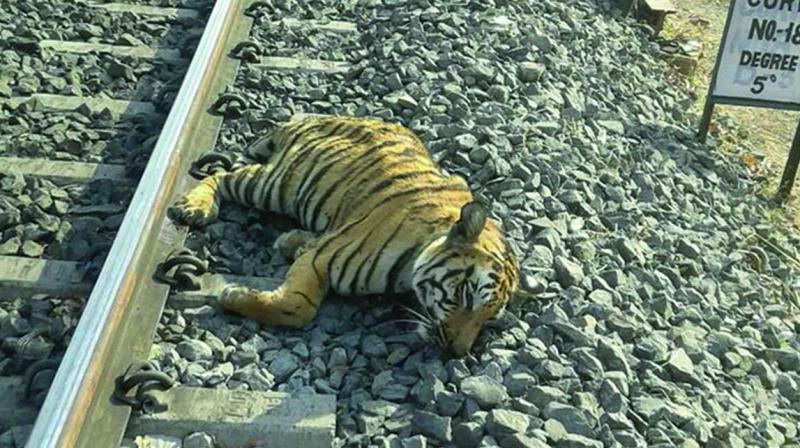
Last July the environment ministry exempted 13 railway projects costing Rs 19,400 crore ($2.8bn) spread over 800 hectares of land in four states from the process of seeking environmental forest permits. At least four of the projects would damage sensitive areas including a national park, a tiger reserve, a tiger corridor and wildlife sanctuaries.
India’s National Board for Wildlife (NBWL), a top-level advisory body that has the prime minister as its chairman and 47 members including 19 ex-officio, has not met since Modi’s 2014 election victory – it should meet twice a year.
Decisions and clearances have come through a standing committee of the national board, but the committee has no formalised policy role so acts as a rubber stamp for what the prime minister wants. Some critics say the NBWL did not have any real power under previous governments, but they acknowledge that it did meet and also acted as a forum for the independent voices that have been removed.
At the beginning of April, the standing committee held its first ever video meeting, followed by a similar virtual meeting of a key expert appraisal committee (EAC). The standing committee cleared over 30 projects in eleven states, 16 for highways, transmission lines and railway tracks through scheduled national parks, sanctuaries and tiger corridors. Other projects involved some 3,000 acres of land in eco-sensitive areas.
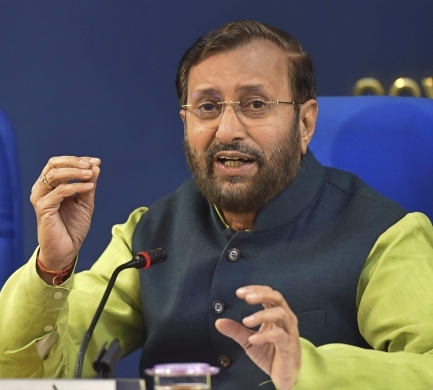
The environment minister, Prakash Javadekar, reported this in a series of tweets, boasting about how the projects would help develop tourism, infrastructure, employment and economic growth – all worthy subjects – but never once mentioning protecting wildlife or environmental issues, which is his ministry’s primary duty. Only minimal conditions were attached to most of the approvals.
“In a virtual conference, it’s difficult to scrutinise maps that show the location of the proposed projects. There was also no occasion to ask questions of officials for clarifications,” an expert who was involved told The Hindu newspaper last month.
During the lockdown, statutory public hearings have also been difficult to organise, and communities that are likely to be affected by the projects have not been able to give their consent officially. (How far current relaxations in the lockdown will lead to improvements is not clear).
Perhaps the most worrying rushed approval process has involved the 3,097 megawatt Etalin hydro-electricity project in Arunachal Pradesh, a mountainous Himalayan state bordering China in the far north-east of India. Located in the ecologically and culturally rich Dibang valley, this is one of the country’s largest proposed hydro projects and it came up for “green clearance” during a virtual session of the forest advisory committee (FAC) on April 23.
Hydro projects are always controversial because they are of huge benefit for those who use the electricity, but inevitably wreak environmental and social havoc.
The views of the Dibang residents are said to be split on the ecological costs with the construction of two large gravity dams and all the associated infrastructure including a road network of over 50 km, felling 280,000 trees and submerging over 1,178 hectares (nearly 3,000 acres) of land over seven years of mining, quarrying and other work.
A week after the minutes of the Dibang virtual meeting were released, a group of nearly 300 scientists and conservationist professionals wrote to Javadekar protesting about forest and environment clearances being granted across India during the lockdown. The group asked the Ministry to carry out its intended mandate – “the protection of India’s forests, wildlife and natural heritage and not fast-track clearance of projects.” Decisions should be delayed till the coronavirus restrictions were lifted.
Changing the balance
COVID-19 has been widely touted as a once-in-a-lifetime opportunity for the world to reverse the destruction of natural resources and change the balance between catering for ever growing human needs and protecting the environment. That should range from taking better care of wildlife habitats and curbing carbon emissions to changing people’s travelling and working habits.
On current form, it seems that much of the opportunity will be wasted as people rush back to their old ways. There are even suggestions internationally that car ownership looks like increasing because people will want to avoid travelling on potentially contaminated public transport.
Governments should be setting an example with changes on polices that they control – including environmental regulations for projects that eat into natural landscapes, destroy wild habitats, and damage the lungs that the modern world desperately needs.
It is clear that Modi’s government is doing the reverse, despite his fine statements. His call earlier this month, when he was addressing a Non-Aligned Movement (video) conference, for the world to focus on policies “to promote human welfare, and not focus on economic growth” is not the first time he has vapidly pronounced support for environmental protection.
“We have to create a healthy balance between sustainability and development. More roads and cleaner rivers, more homes for citizens and, at the same time, quality habitat for animals are necessary for a strong, inclusive India,” he said when proudly announcing an increase in the number of India’s tigers last July – shortly after the railway projects were exempted from scrutiny.
It would be good for India if the COVID-19 pandemic had converted Modi into believing rather than just saying such things. Unless he has forgotten to tell the environment minister and officials about a change of heart, nothing has been learned, and the government will continue on its current environmentally destructive path till the next general election in four years time, and maybe for much longer.
See also https://www.asiasentinel.com/p/indias-amazon-of-the-east-under-threat?





 They have also not met the need for an economic stimulus because they do little to accelerate demand. They ignore some key areas including the hard-hit tourism industry and private healthcare (though curiously there is a Rs500 crore allocation


 Tomorrow (April 5), Modi is trying to bring order to the potential devastation of the system caused by the coronavirus and by a consequential virtual economic shutdown that he ordered on March 24.

 In some homes, it was the staff who led the moves, going to the gates of homes. Indians living abroad who support Modi’s Bharatiya Janata Party also joined in. Some people, it seems, really believed Modi had found a way to defeat the virus.


 The highest price yesterday was achieved for a stylish 50 x 33in untitled oil on canvas by V.S.Gaitonde (left) with a winning $1.5m bid that matched the top estimate. Gaitonde was a member of the prominent group of modernist Progressives that began in the mid-20th century.
 The same collector (the paddle number was the same) bought a 47 x 35in oil on canvas board by Nasreen Mohamedi (left) at a record auction price of $437,500 including the premium ($350,000 hammer).
 The auction began unusually strongly with a 26 x 24in wood collage on board (right) by Zarina (Hashmi), an 83-year old Indian artist living in the US who is known professionally by her first name. The work fetched a hammer price of $70,000, nearly three times the top estimate – $87,500 including buyer’s premium.
 Christie’s South Asian auctions were scheduled for tomorrow (March 18), so it had more time than Sotheby’s to pull down the shutters, in line with the auction house’s other New York sales.

 The highlight of the visit was an astonishing rally (left) on February 24 of over 100,000 cheering supporters of Modi’s Bharatiya Janata Party, many sporting white caps with the words “Namaste Trump”. The crowds were mostly bussed into what is billed as the world’s biggest cricket stadium in Ahmedabad, the main city of Modi’s home state of Gujarat, to greet Trump and his wife Melanie a few hours after they arrived in India.


 Riding the Elephant
Recent Comments