Posted by: John Elliott | February 7, 2020

India Art Fair boosts the market after disappointing auctions

Auctions planned of works from three private collections

Jailed jeweller Nirav Modi’s art, watches and a Rolls Royce for sale

Sudhir Patwardhan retrospective displays life in Mumbai 

Indian modern art has received a boost in the last few weeks from Delhi’s successful India Art Fair, which was accompanied by auction previews including one by Christie’s with razor-blade etched works of Delhi-based Rameshwar Broota, and Mumbai’s annual Gallery Weekend that included an impressive exhibition of life in the city painted by a leading artist, Sudhir Patwardhan.

Neither Patwardhan nor Broota, both of whom are still actively painting,  get the attention they deserve in the upper reaches of India’s art auctions, where buyers mostly seek the safety of famous names such as Tyeb Mehta, M.F.Husain and S.Raza, now deceased.
Broota _MG_6315

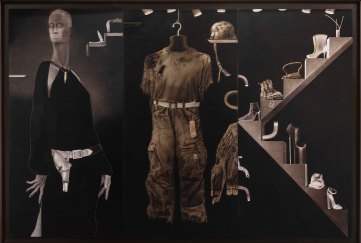
Untitled, a 80in x 120in oil on canvas scraped with a blade by Rameshwar Broota – ‘a satire on fashion and commercialism’ – on the Vadehra Art Gallery stand at the art fair

This will be tested in the coming weeks when, after dismal results at three South Asian modern art auctions in December, Christie’s, Saffronart and Pundole all have sales of single collections.

Two involve works from well-known private collectors. One (including Broota works) belongs to Dubai and London-based Kito and Jane de Boer and will be at Christie’s in New York, while works from Masanori Fukuoka’s Glenbarra Art Museum in Japan will be at Pundole in Mumbai.

The other auction, next month in Mumbai, is Saffronart’s second sale of impressive works owned by Nirav Modi, a former international jeweller now languishing in London’s Wandsworth prison. He is facing extradition proceedings, charged in India with money laundering and corruption.

The India Art Fair (IAF) was hailed as a success last weekend, run for the first time by London-based Angus Montgomery Arts, controlled by Sandy Angus, which boosted its minority stake when it bought out Basel’s MCH group last September.

04_.breath_Vipeksha_50.8x50.8cms_pencil on paper_2019

Vipeksha Gupta’s Breath, 50xmx50cm pencil on paper, (set against a large white background)

International and Indian art galleries of all sizes reported good sales and growing domestic and international interest. New York-based David Zwirner, returning for a third year, said it was the best so far.

The Aicon, also from New York, said it had a “great response across all of our price points and artist seniorities”.

The Akar Prakar Gallery of Kolkata and Delhi said European and American visitors purchased artworks within $30,000 range while high value works were bought by local Indian collectors.

Sales were especially strong on the first day, according to many galleries.

A young Delhi-based artist, Vipeksha Gupta, had a stunning success when all her 19 works (above) on the Gallery Blueprint12 stand sold within three minutes of the start of the private viewing. With prices ranging from Rs 95,000 to Rs380,000 for a set of six, the de Boers were among the buyers.

Gupta, who has been helped by Broota at Delhi’s Triveni School of Art,  says her “contemplative drawings” are based on “the exploration of my own breath” with each work being “indented 10,000 times with circular cells”.
Italian IMG_8506

The number of galleries with booths was roughly the same as last year at around 70, but they were more focussed on specific artists with less repetition of India’s old favourites such as the Progressives.

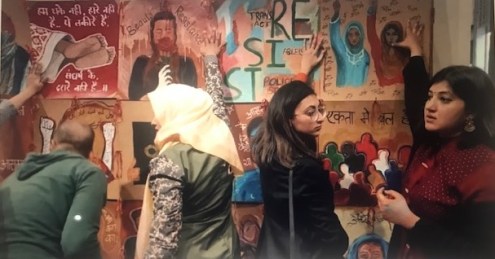
India’s politics and authoritarian rule under Narendra Modi’s Hindu nationalist government however intruded when police arrived to check allegations that an interactive work displaying the “strength of Indian women” (above) was opposing controversial citizenship law amendments. The work, on the Italian Embassy Cultural Centre stand, was withdrawn.

The Sudhir Patwardhan retrospective exhibition, Walking Through Soul City, is open in Mumbai’s National Gallery of Modern Art till February 12. Arranged with the Guild Art Gallery, it gives an overwhelming sense of Mumbai life as it is experienced by the vast mass of people in their homes, at work, and travelling and struggling in crowded streets.
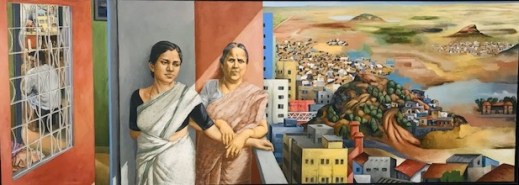
Nostalgia 2010 IMG_8155

Nostalgia by Sudhir Patwardhan, 2010

Painted over five decades, many of the works are of Thane where Patwardhan lived for 30 years in what became the suburbs with shantytowns and open countryside soon to be devoured by satellite cities.

Maybe reflecting his training as a radiologist, Patwardhan stands back from his subjects and sometimes divides a painting with a sharp line that gives two views of the same scene. “I distance myself,” he told me, “not projecting myself or my emotion”.
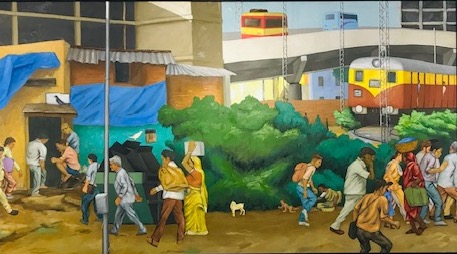
A Normal Day 2019IMG_8157

A Normal Day by Sudhir Patwardhan, 2019

The NGMA was one of about 30 galleries with special shows that began during Mumbai’s annual Art Weekend in early January.

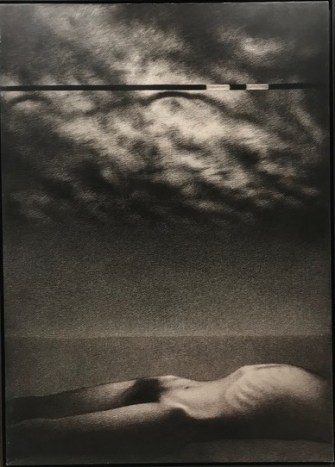
The Pundole Gallery had a striking show of Jogen Chowdhury’s figurative works from Fukuoka’s Glenbarra museum (bottom picture). This closes on February 7 and moves to Delhi’s Bikaner House on February 20.

Rameshwar Broota talked at a pre-auction reception in Delhi with Kito and Jane de Boer, who are two of his biggest collectors.
TheLastChapter 250-350k IMG_8483

The Last Chapter, a 70inx50in scraped oil on canvas  by Rameshwar Broota, from the de Boer collection – Christie’s auction estimate $250,000-350,000

Kito de Boer says they were “blown away” when they saw Broota’s large works of black and grey, or dark brown, shades, along with figurative and other studies. They found it was “not possible to turn away” from “works of such originality, purity and passion”.

They discovered the artist when they lived in Delhi in the mid-late 1990s and bought a vast triptych Traces of Man that hangs in their London home and is not for sale.

Broota says that a worn razor blade is essential for many of his paintings. He applies six or seven layers of paint, often thick black, and then, when it has dried, scratches with the blade to create the subject.

The de Boers are compulsive buyers of art and have a collection totalling about 1,000 works ,of which only about 250 are displayed in their London and Dubai homes – ranging from the Broota triptych to all the main Progressives, dating from the middle of the 20th century to more recent works by Atul Dodiya, Anish Kapoor, Chittaprosad Bhattacharya, Chittrovanu Mazumdar and Hema Upadhyay.

The rest are in store, which is why they are beginning to sell. “It seems wrong to keep them hidden,” they say. About 150 stored works will be offered at a single-owner Christie’s auctionin New York in mid March and in a parallel on-line sale. The collection was the subject of a book published last year.

Jogen-Chowdhury-Three-Women-Ink-pastel-on-paper-56-x-71-cm-1992 Pundole

Three Women, 56x71cm ink on paper in the Pundole Mumbai exhibition of works (moving soon to Delhi) by Jogen Chowdhury  from the Glenbarra museum

Saffronart held its first auction of Nirav Modi’s extensive collection in May last year when over $8m was raised for India’s tax revenue department.

The coming February 27 live auction is being held for the government’s Enforcement Directorate. It includes art works estimated up to $2.6m each by Amrita Sher-Gil, M.F.Husain, and V.S.Gaitonde along with watches that include a Jaegar-LeCoultre estimated at up to $100,000 and a 2010 Rolls Royce Ghost car with a $135,000 top tag.

All three single-owner auctions are significant because they involve works that are new to market, and thus have the distinction of being acquired by committed collectors from varied backgrounds.

The contest between the three auction houses is to attract the best buyers, who will take the bidding to high levels.

The market, and interest in modern Indian art, would also benefit from buyers taking more notice of artists like Patwardhan and Broota instead of the repetitive million-dollar-plus focus on the worthy Progressives.

Posted by: John Elliott | January 29, 2020

India’s mega lit fest risks losing its iconic Jaipur location

Passionate attacks on Modi government spark funding warning

Lit fests’ financial sponsors may worry about upsetting government

The internationally famous Jaipur Literature Festival, which has become the largest event of its kind in the world, may have to abandon its stylish pitch of the past 15 years in the Pink City’s Diggi Palace and search for a new location, maybe even in another city.

Always controversial because of its independence, the festival hit the headlines last weekend when its open celebration of books, ideas and the freedom of speech and debate led to frequent outspoken condemnation of India’s Narendra Modi government.

JLF 3 Puppets IMG_8313 copyMost lit fests are short of funds from sponsors, which recently caused two to be cancelled in Mumbai and Chennai. They might now find their problems increasing if companies want to avoid annoying what is a hyper-sensitive administration, as Swapan Dasgupta, a pro-Modi columnist and Bharatiya Janata Party MP warned at the weekend. 
The message that the government was creating conflict and divisions in society while brutally quelling the voices of opposition went out from the crowds of approaching 100,000 a day to Modi and his confrontational henchman, the home minister Amit Shah.

Albeit in only a small number of the total 220 sessions, they were told they should curb their anti Muslim policies and, specifically, cancel new constitutional amendments on citizenship as well as plans for a new National Register of Citizens.

There were several speakers who represented right wing ideology including Makarand Paranjape, a writer, poet and academic who had five sessions. He has written extensively on Hinduism and is known as a supporter of the lit fest. Also speaking was Hindol Sengupta, who recently wrote a biography of Sardar Patel and, like the others, is promoting a Hinduvta view of history. They were well received but not with the enthusiasm that greeted the critics.

The criticisms will not have pleased Modi and Shah who condemn opponents as “anti National” and “pro Pakistan”, but it should have pleased the Rajasthan state government that is run by the Congress Party. It is odd therefore that the government has backed a police demand that the lit fest must move because of traffic congestion, which has always seemed manageable. There have however also been concerns about safety inside the event if there was an emergency.

Diggi Palace is a charmingly faded pile built in the 1860s as a grand town house or haveli for a rural Rajasthan ruler. It became a small heritage hotel in 1991. The lit fest began there in 2006 as part of a broader arts festival and then started on its own in 2008, with just a few hundred people attending.

Over the years, the family that owns the palace, headed by Rampratap Diggi, has enlarged the areas available, eased congestion blockages, and found space for food and crafts stalls, while the organisers have restricted the total numbers attending. Last weekend all the venues were overflowing and circulation areas were packed with the young taking selfies.

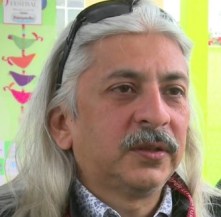
Sanjoy-Roy_Fotor1The festival needs a stylish location to maintain its image and attraction, so the organisers have rejected a soulless government convention centre 20kms away. “If the city doesn’t host it, we can look elsewhere. But if it is to be held in Jaipur, it has to be in a place which has an atmosphere that represents the city’s traditional architecture and its character,” said Sanjoy Roy (left), managing director of Teamwork Arts and the festival producer.
Firmly anchored in local Rajasthani culture and Mughal traditions, the festival began with massive puppets parading (above) through the central location on January 23, and it then spread out over five days to include writings from across India and the world.

AI, Brexit and Jesus

The opening session had Marcus du Sautoy, a leading mathematics and science academic and author, talking about how books could maybe one day be written by artificial intelligence. Fintan O’Toole, an Irish author and columnist, suggested that Brexit had given the English nationalism “narrative” that it had lacked, illustrated by prime minister Boris Johnson’s dream returning to the glories of a “Global Britain”.

Tom Holland, an author of prize-winning books on ancient and medieval history, described Jesus as a “shabby dreary figure”, whose victory over Roman power had come from the misery of his crucifixion. Holland somehow worked his way round to describing cricket as “an Indian sport perversely given to the English by God”.

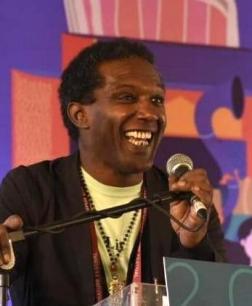
Lemn Sissay JLFDay3_socialglimpses-min copy 2Lemn Sissay (left), a poet and author, read passionately from the best selling story of his life, My Name is Why, asking why, after being shipped from Ethiopia to the UK, he was placed with a foster family and named Norman Greenwood after the name of the foster parent.

Then there was Manoranjan Byapari (below), a Dalit (bottom of the caste system) from Bangladesh who is now a popular writer and speaker, showing how an event like this can discover and encourage new talent, transforming lives.

Byapari grew up in Indian refugee camps in West Bengal, joined Naxalite (Maoist) rebels in his early 20s and was imprisoned, later becoming a rickshaw puller in Kolkata (Calcutta). While in jail, he learned to read and write and in 1981 began to produce stories of rickshaw pullers that were translated into English. He has now had ten novels and over 50 short stories published.

I was there in conversation with Benjamin Dix on his dramatic graphic novel Vanni about the plight of Sri Lanka’s Tamils in the early 2000’s with a tsunami and war with the island’s army

Namita Gokhale, co-director of the festival who encouraged Byapari, has written a fictionalised version of all that happens in Jaipur Journals that was launched last weekend. Her characters (some, she says, identifiable) range from a gay literary icon to a burglar with a passion for poetry, and an elderly lady who carries her unpublished novel around in a canvas bag.

JLF Byapari IMG_8321 copyThe organisers have usually managed to avoid extreme confrontational views that could trigger demonstrations, balancing political and other opinions, though sometimes that has not worked.
In 2012, the author Salman Rushdie was prevented from speaking at the festival, (and being interviewed by video link) because of opposition from Muslim organisations, which included threats of extreme violence both inside and outside the venue.

This time there was no violence, just determined and excited crowd-generated opposition to Modi and Shah, demonstrating the views of the young as well as liberals.

Roy set the tone when he said India’s current “narrative of hatred” could be countered through art and literature, adding: “We cannot afford to be silent any more. We must speak up with one voice for the common cause of humanity”.

The government’s citizenship and registration measures require people to produce papers and fill in forms to prove their right to be called an Indian, something many could not do because of the country’s notorious lack of official records. This has been opposed by masses of protests across India for six weeks, spearheaded by Muslims and students (as I reported here).

A call for civil disobedience 

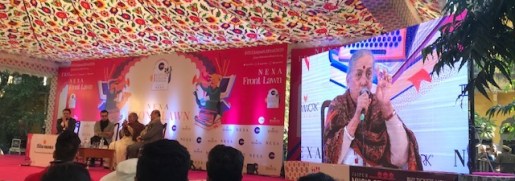
“If anyone comes to your house and brings papers, tear them up,” Margaret Alva, a veteran Congress Party politician, said to loud shouts and cheers on January 25 (below). This would be “civil disobedience” she added, raising the tempo by linking her call to India’s campaign for independence under the leadership of Mahatma Gandhi.

JLF Margaret Alva IMG_8362 copy

A few minutes earlier, there had been a raucous reception for Madhav Khosla, a constitutional academic, who said that the citizenship amendment was “completely unconstitutional” because it discriminated between religions.

Speakers on the anti-Modi/Shah theme were led by Shashi Tharoor, a Congress MP and former United Nations official, Pavan Varma, a former diplomat turned politician, and Rajdeep Sardesai, a prominent tv anchor and author of two books on Modi’s election victories.

Tharoor in particular appeared on stage so often that Swapan Dasgupta, a regular speaker at the lit fest (he interviewed Tom Holland last weekend) tweeted that the festival had “crossed the limits” and “the neutrality of the event is comprised”.

Problems for lit fests

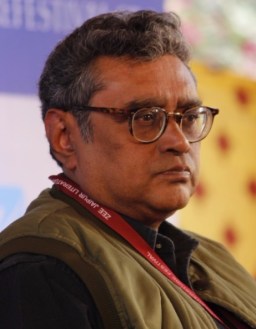
In a newspaper column on January 26 that could indicate more problems for lit fests in general when they are short of funds, Dasgupta (below) wrote, “the inclination of business sponsors to take a step back could also be the result of many festivals becoming echo chambers of Left-liberal activism, aimed at pandering to just one political ecosystem….the diversity of Indian intellectual opinion isn’t always fully reflected in the programmes….This partiality isn’t appealing to sponsors who are in search of potential consumers irrespective of their voting preferences.”

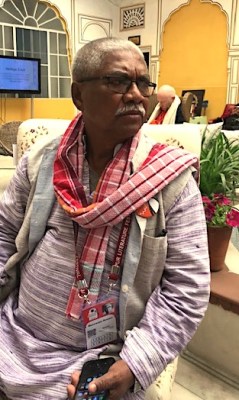
Swapan -2017-05-17-5Apart from that, there was scarcely any comeback from government supporters. It was quite different at the Raisina Dialogue international affairs conference in Delhi earlier in the month, where the external affairs ministry is one of the organisers.
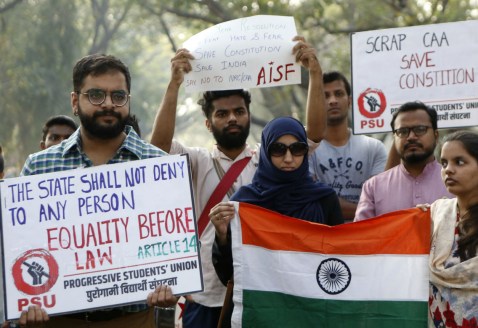
Two people in the audience immediately stood up and objected when the government was criticised. One of them, a young lawyer and activist in the Rashtriya Swayamsevak Sangh (RSS), the arch nationalist umbrella organisation that embraces the BJP, had gone to the conference specifically to counter criticism.

Navtej Sarna, an author and a former ambassador in the US and UK, described the Jaipur festival as “the single most important part of our soft power” in 2016 when he opened an offshoot of the fest in London. Under the banner JLF, similar events are now held in Belfast, Toronto, New York, Houston, Boulder, Adelaide and Doha.

That soft power has been projected well from Jaipur, with its mix of Mughal history, colour, crowds and traffic jams. It is never a good idea to tamper with a brand that works, so a solution needs to be negotiated that keeps the event in the city with at least the base at Diggi.

A solution is also needed for the worries that Dasgupta has written about before financial sponsors retreat in droves, fearing government reprisals.


Amit Shah pushes the Hinduvta agenda too far for many people

Modi wants to transform society – and has widespread support

Narendra Modi is facing the first major test of his political leadership, and of his image of apparent invincibility, since he became India’s Bharatiya Janata Party prime minister in 2014.

His authority is still intact but, largely because of the provocative actions of his henchman, home minister Amit Shah, he is being challenged by the biggest and longest-running country-wide protests for decades.

Demonstrations dominated by the young claim that the two Hindu Nationalist politicians have gone too far with their basically anti-Muslim drive since winning an overwhelming general election victory eight months ago. At the same time, Modi has failed to manage the economy effectively and create jobs.

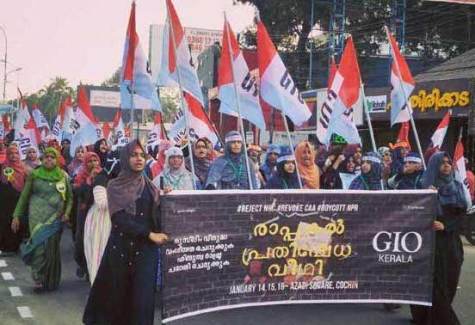
Muslim women protest in Delhi

The main target is an amendment to India’s citizenship laws launched in early December that discriminates against Muslims by favouring Hindus and other religions, plus an associated National Register of Citizens (NRC) promoted by Shah that could create social havoc as the minorities, the poor, and others without family documents struggle with corrupt officials to prove their rights.

Some states have refused to implement the citizenship legislation (though they may be constitutionally bound to do so), and there are rumblings of discontent among the BJP’s allies. The legislation is now being challenged in the Supreme Court.

There is a sense of a pending crisis in the country because of widespread concern and speculation about how far – and how forcefully – the Modi-Shah duo intend to go with their aim of creating a Hindu Rashtra (polity), and for how long they are prepared to be tolerant of dissent and protests.

Some critics suggest that, like populist leaders elsewhere, they welcome protests – or the prospect of them – because they can respond with repressive measures.

In Kashmir, when they cancelled the special status of the Muslim-dominated state in a constitutional coup on August 5, they imposed an unprecedented massive security shutdown with curfews, blocked internet and mobile telephones, and detention of political activists.

Internet and social media are still partially blocked, despite international protests and criticism by India’s supreme court, and leading mainstream politicians remain under a form of house arrest after almost six months.

ap_20001456451478-1

Significantly however, the change in Kashmir’s status, and the security action, has had widespread support across India, as did an earlier cancellation of the Muslim triple talaq method of instant divorce.

The citizenship legislation however went too far for large swathes of public opinion, Hindu as well as Muslim,  mainly because of the prospect of the NRC. There was extensive violence, burning of vehicles and attacks on shops that provoked tough repressive action. In Uttar Pradesh, where an extreme Hindu priest is the chief minister, there was extensive and brutal police repression, with reports of young protestors being assaulted by vigilante groups.

There are also reports of detention centres being built to accommodate those (Muslims) who fail the citizenship test, and the chief of army staff has talked publicly about de-radicalisation centres to deal with radicalised Kashmiri youth (later explained as “army goodwill schools” to avoid radicalisation) .

It is easy, as some critics have done, to relate this to China’s re-education camps that are used to stifle protests by a million Uighurs in the western province of Xinjiang, and it is equally easy to dismiss such a comparison as extreme for a democracy such as India.

Observers wonder however how far in this direction India will have moved by the time of the next general election in 2024, when Modi and Shah will want to inspire their party cadres and win votes. In last year’s elections, concern about the worsening economy was eclipsed by Modi campaigning on national security and on tough action against terror attacks emanating from Pakistan.

One contact in Mumbai even talks about the risk of “SRCC” – Strikes, Riots, Civil Commotion – being generated in order to justify clampdowns. Such extreme ideas raise memories of the two-year State of Emergency declared in 1975 by India Gandhi, then the Congress prime minister.

Modi restructuring society

Sources both within and outside the BJP suggest that Modi believes India needs an overhaul of how society works in order to meet his ambition of building a strong, successful and self-confident nation.

This would galvanise the 80% of Indians who are Hindus with a sense of nationalism, reducing the power of traditional elites (typified by the Congress Party and its Gandhi dynasty), strengthening the potential for the poor with a sense of empowerment, simplifying and improving the way that government works and impinges on people’s daily lives, and gaining respect abroad.

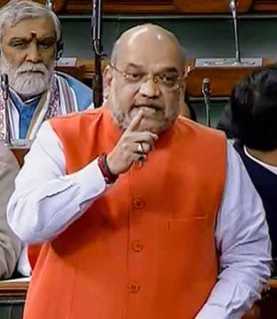
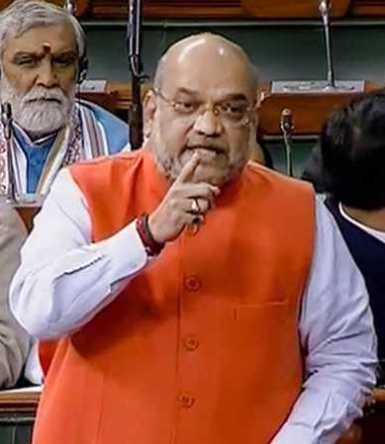
Shah (below) however, whose political role has escalated in recent months, seems to have little interest beyond establishing Hindu rule at the expense of minorities. There is considerable speculation about whether he and Modi are fully united and are playing a modified version of good-cop-bad cop, or whether Shah is going further than Modi would wish. What is clear is that Shah has none of Modi’s vote-pulling charisma as a populist leader.

The constructive aspect of Modi’s ambitions is rarely taken into account internationally by liberal opinion which is appalled by the seemingly anti-Muslim policies and does not appreciate that Modi is tapping into both a growing sense of national pride among aspirational youth, and a latent but easily aroused aversion to Muslims among a significant number of Hindus.

S. Jaishankar, the former top diplomat who is now the external affairs minister, has talked in Washington about a “new India” that his foreign audiences had been reluctant to recognise. “This new India is a different being, one that lives in second tier cities, and speaks and feels differently,” he said, referring without being specific to the base of Hindu nationalism.

Amit_Shah_PTIIt remains to be seen how sensitive Modi is to international criticism because he wants India to carve out its own form of society that does not conform to the west’s liberal norms.

His aim is to show off India as a successful economically strong and internationally important country, first in 2022 when it hosts the G20 conference, and then maybe the Commonwealth biennial summit in 2024 just before the general election.

Perhaps more ominously though, the Rashtriya Swayamsevak Sangh (RSS), the extreme umbrella organisation to which the BJP belongs, celebrates its 100th anniversary in 2025, which will require more Hindu nationalist-oriented achievements.

The immediate focus is how Modi and Shah handle the citizenship legislation, which Shah says will go ahead.

Then there is the bigger question about the National Register of Citizens that Shah originally said would be in place by 2024. It is currently not clear how far he will push this, but Swapan Dasgupta, an MP and prominent Modi-supporting columnist, indicates that it might not go ahead for some time.

“The architecture of any proposed register is not yet clear,” he says. “It has to be designed and there needs to be a wider understanding in society about what to do with those who are declared illegal”.

That indicates the need for a national debate on the issue, but neither Modi nor Shah have shown any interest in public debate, or tolerance of criticism which is usually rejected as being “anti national” or “pro Pakistan”. This makes people extremely cautious about what they say, even in private, for fear that someone will report back to Modi or Shah.

There is also deep dissatisfaction about the government’s focus on religion-based divisive policies while failing to arrest a decline in economic growth, which has fallen to an 11-year low of 4.5-5%, and a failure to generate jobs promised by Modi.

Prospects of a good rabi (spring) harvest indicate the decline in growth might have bottomed out and Modi is expected to spring some surprises via his unimpressive finance minister, Nirmala Sitharaman’s annual Budget speech on February 1.

BJP would not win a majority today

This is reducing support for the government. An opinion survey published in this weekend’s edition of India Today found that, if there were a general election now, the BJP’s seats in the Lok Sabha would fall from the 303 won in last year’s general elections to 271, one seat short of a simple majority. But Modi’s personal rating has only dropped slightly  by 3% to 68%.

The February 1 Budget is one of three significant dates for Modi. The second, on February 8, is the election for Delhi’s assembly, which will test the BJP’s popularity and could lead to victory for the local-based Aam Aadmi Party.

Later in February, the Supreme Court is expected to rule on the constitutionality of the citizenship legislation.

It is tempting to wonder whether it would suit Modi, if not Shah, for the court to rule against it, or at least demand some changes. That would be one way of curbing the current protests, giving Modi and Shah time to reassess what to do next.

Posted by: John Elliott | December 24, 2019

Merry Christmas!

To all of you who follow my blog, seasons greetings from Kipling Camp in Madhya Pradesh with this splendid elephant painting by a Gond tribal artist…….

use Untitled-2 copy 2

India’s economic gloom dampens sales

Sotheby’s, Saffronart and AstaGuru fail to sell top names

India’s economic woes and civil unrest appear to have had a negative effect on Indian art auctions, with three sales organised by Sotheby’s, Saffronart and AstaGuru producing unexpectedly poor results and failing to meet targets. Works on the front covers of two of the auctions failed to sell.

This is a significant setback because the artists were leading names such as Tyeb Mehta, S.H.Raza and M.F.Husain from the Bombay-based Progressives Artists’ Group of the late 1940s and 1950s, who dominates the top end of the Indian art auctions.

Gaitonde Sotheby's IMG_7484Only Pundole, a long established Mumbai gallery, has had a successful auction, which it achieved by restricting the number of lots and prices and by choosing works that have not been offered at auctions recently.
Such a slump has not been seen for some years. Part of the reason will have been India’s declining rate of economic growth, which now stands at 4.5% compared with 8% last year, and the failure of the Narendra Modi government to provide the necessary boost while at the same time driving divisive Hindu nationalist policies that are causing unrest across the country.

Sotheby’s was the first to hit problems in Mumbai on November 15 with a live auction that failed to gain momentum as the evening proceeded.

Bidding on the top lot, a 60in x 40in abstract oil on canvas by V.S.Gaitonde (above), stopped at Rs14 crore ($2m), well below an estimate believed to be around Rs21 crore. This seemed surprising, coming after a successful Rs26.9 crore ($3.79) sale, including buyer’s premium, of a Gaitonde in a Saffronart live Delhi auction in September.

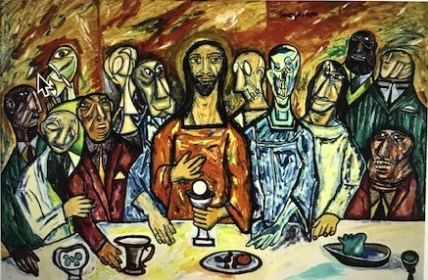
The best result came for a depiction (below) by F.N.Souza of The Last Supper (a favourite subject for Indian artists) that was sold for a hammer price of Rs6.86 crore ($960,000), well above the top estimate of Rs5 crore – though there was a dispute over whether Souza was the sole artist and the sale did not go through.

Souza last supper IMG_7494

The auction’s sales totalled only Rs23.8 crore ($3.36m) compared with estimates of around Rs37 crore, and twelve of the 61 lots failed to find a buyer. That was far below the result of Sotheby’s first Mumbai auction in November last year when it notched up a total of $7.9m.

The sharp drop illustrates the vagaries of showpiece auctions in Mumbai – Christie’s withdrew from its pre-Christmas sales after a poor showing two years earlier.

Pundole came next with a live Mumbai auction on December 5. It had sensed about three months earlier that the market was weakening, so it reduced the number of lots it was offering to 40 compared with 88 in its previous sale four months earlier. Only two of the 40 had been seen in recent auctions. The prices were also lower than usual with a top estimate of Rs3 cores ($420,000) compared with four times that amount in August.

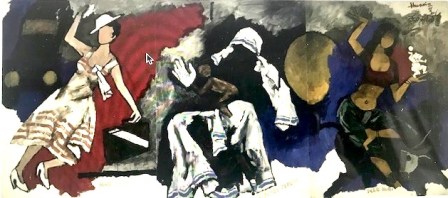
MMM Husain Pundole IMG_7482

That work, an 82in x 176in acrylic on canvas by M.F.Husain (above) titled 3Ms (Mad Onna, Mother Theresa, Mad Huri), was being sold by a member of the artist’s family so was being offered for the first time. It beat its top estimate with a hammer price of Rs3.5core, while a 38in x 23in oil on board by F.N.Souza sold for Rs3 core, double its middle estimate.

The total for the auction, with all 40 lots sold, almost doubled the estimate of Rs21.01 (Rs 24.17 crores including a 15 % Buyers Premium).

Tyeb AstaGuru IMG_7486Next came a more ambitious two-day on–line auction by Mumbai-based Saffronart, the current market leader in South Asian modern and contemporary art, that closed on December 10 with four of the top six lots failing to meet their reserve prices.

The two that did sell were both by S.H.Raza, the best being $462,000 (Rs3.23 crore), but works by M.F.Husain and Bhupen Khakhar, a currently fashionable gay artist, failed. Saffronart’s auction total was $1.8m (Rs12.66 crore) with 76% of lots sold that contrasted with previous better results.

Finally in this run of auctions, Mumbai-based AstaGuru’s two-day on line sale ended on December 20, having failed to sell its catalogue cover work, a striking 59in x 35.5in acrylic on canvas (above) from Tyeb Mehta’s Rickshaw Puller series with an estimate of Rs20 to 25 crore ($2.88m-£3.6m).

Successful bids included an unusual view of the Last Supper by M.F.Husain (below) that fetched Rs3.45 crore ($499,999). The top sale, Man in City by Akbar Padamsee, went for Rs3.62 crore ($524,999), well above the Rs2-3 crore estimate.

Husain AstaGuru last supper IMG_7493.jpgThe auction houses are hoping that these results have been caused more by over-ambitious pricing than by deeper economic or other worries, and that interest and sales will pick up at the annual India Art Fair at the end of January and then with sales in the spring.
Posted by: John Elliott | December 10, 2019

India’s government launches anti-Muslim citizenship legislation

Coincides with failure to tackle declining economic growth

Follows removal of Muslim Kashmir’s special status   

The Narendra Modi government’s relentless drive to turn India into a Hindu-dominant country has been given fresh impetus with the introduction of a parliamentary Bill that discriminates against illegal Muslim immigrants over their rights to citizenship, while favouring people from other religions.

The highly divisive Citizenship (Amendment) Bill, which is creating concern among India’s 200m Muslims about their future, was passed by the Lok Sabha late last night, having been launched earlier in the day by Amit Shah, the arch Hindu-nationalist home minister and president of the Bharatiya Janata Party.

Amit_Shah_PTIShah revealed his party’s religion-based aims and its angst about India’s history when he angrily shouted, to roars of approval from BJP MPs (left), that the Bill “would not have been needed if the Congress had not allowed partition on basis of religion” – a reference to the creation of Muslim Pakistan when India became independent in 1947 under a Congress government.
The proposed legislation follows repressive action over the past four months in Muslim-dominated Kashmir where the (widely supported) removal on August 5 of the state’s special status under Article 370 of the constitution was accompanied by a massive security clampdown that has still not completely ended.

It also follows another Hindu nationalist victory when the supreme court last month cleared the way for the construction of a Hindu temple on the highly controversial and contested site of a mosque at Ayodhya in Uttar Pradesh that was demolished in 1992.

These and other actions are revealing an authoritarian and sometimes brutal side of India, which is losing its image internationally as a tolerant, all-embracing and welcoming society. This is lowering the attractiveness of the country as a business and tourist destination and could also affect its international standing.

Focus on Hinduvta not economy

There is criticism that Modi has focussed government attention on the Hindutva political agenda, ignoring till recently the signs of a slowing growth rate. Consequently, the government failed to act early enough to arrest a decline in the country’s economic growth rate, which has slumped over the past 18 months from around 8% to 4.5%, despite recent policy initiatives. During the general election campaign, Modi diverted voters’ attention from the economy by focussing on the risks of terror attacks emanating from Pakistan.

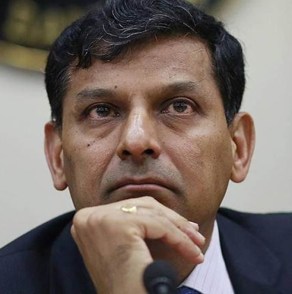
Raghuram-Rajan-1Raghuram Rajan, a recognised international economist (left) who has become one of the government’s sternest critics since he was not reappointed in 2016 for a second term as governor of the Reserve Bank of India, attributes part of the problem to Modi’s centralised rule.

“Not just decision-making but also ideas and plans emanate from a small set of personalities around the Prime Minister…..That works well for the party’s political and social agenda….which is well laid out, and where all these individuals have domain expertise,” he wrote recently in India Today magazine.

“It works less well for economic reforms, where there is less of a coherent articulated agenda at the top, and less domain knowledge of how the economy works”.

The developing economic crisis has also brought out the authoritarian side of a government that regards any criticism as anti-national and lacking in patriotism.

Rahul Bajaj, the 81-year old doyen of India’s industrialists and the chairman of Bajaj Auto, a leading two wheeler manufacturer, was quickly rebuked by Nirmala Sitharaman, the finance minister, after he criticised the government for creating an “atmosphere of fear” that silenced critics and deterred investment.

Amith Shah, who was at the event where Bajaj was speaking, said the government was open to all views, but Sitharaman declared such public criticism, “can hurt the national interest”.

Bajaj has been known for years for his unguarded public statements and what he said would have quickly vanished from the headlines but for Sitharaman’s criticism that helped to trigger a storm of claims and counter-claims. Sitharaman was appointed after the election and is reported to take policy orders from Modi’s prime minister’s office (PMO).

National Register of Citizens

The citizenship bill provides for the creation of a National Register of Citizens (NRC). All India’s 1.3bn people having to produce documentary evidence that they are legitimate Indian citizens before the next general election due in 2024.

The fear is that the BJP would use the survey needed to set up the register to harass Muslims across India. Many of the country’s poor do not have adequate proof of their birth and ancestors, and there is a serious risk that Hindu nationalist extremists would use the legislation to create communal unrest.

The existing citizenship law prohibits illegal migrants from becoming citizens, but the new legislation would grant Indian citizenship to Hindus, Buddhists, Sikhs, Christians, Parsis and Jains who sought refuge in India before 2015 from persecution in predominantly Muslim Pakistan, Afghanistan and Bangladesh.

Opponents criticise the Bill for aiming to marginalise Muslims by breaching India’s constitutional requirement that there should be no discrimination against any citizens.

Yesterday Shah stressed the positive side of the legislation, claiming it “does justice” to the six religious minorities in the three countries by offering them sanctuary in India.

Bangladeshi “termites”

Earlier this year however he referred to Bangladeshi (Muslim) immigrants as “intruders” and “termites” and has promised that, once the national register is set up, “every infiltrator in India will be shown the door”,

The development of the legislation began earlier this year in Assam, where there were mass demonstrations yesterday because of a fear that large numbers of refugees from neighbouring Bangladesh will be allowed citizenship.

The government failed to implement the legislation before the recent general election. The Lok Sabha, parliament’s lower house, cleared the bill last night with a large majority of 311 for and 80 against. It will need backing from other parties to build a majority in the Rajya Sabha, which it will probably manage within the next couple of days.

The fate of this legislation, and the way that Shah implements it, will have a significant impact on how the Hindu nationalist agenda plays out in the next four or five years.

BOOK REVIEW

“VANNI: A family’s struggle through the Sri Lankan conflict” by Benjamin Dix and Lindsay Pollock

Benjamin Dix felt it was “a failure of the international system” when he was forced to abandon his job with the United Nations in northern Sri Lanka helping some of the thousands of Tamil people made homeless by the massive Indian Ocean tsunami of 2004.

It was July 2008, and the UN was closing down its humanitarian work in Vanni, the north eastern part of Sri Lanka, because the army’s attacks on Tamil Tiger rebels were getting too close for it to guarantee the safety of its staff.

Vanni front cover“It was the abandonment of the people screaming at my office gates, people I’d got to know, that was the trauma,” says Dix. He went on to work in the Sudan after the liberation movement’s victory in 2005, but the trauma lasted for several years.
This has led him to produce a graphic novel, VANNI: A family’s struggle through the Sri Lankan conflict, which covers the human horrors of the tsunami and the stories of people caught in conflict at the end of the island’s civil war in 2009, with tens of thousands homeless and dead.

The book has just been published in India as well as the UK and US – see below for links – and a Tamil edition is envisaged for Sri Lanka.

Since 2012, Dix has run Positive Negatives, a not-for-profit organisation based at SOAS in London University, that uses the graphic novel cartoon strip approach to produce literary comics, animations and podcasts about social and humanitarian issues. “We combine ethnographic research with illustration, adapting personal testimonies and academic work into art, education and advocacy materials,” he says. “PhDs get excited about finding audiences for their work”.

Vanni family copy

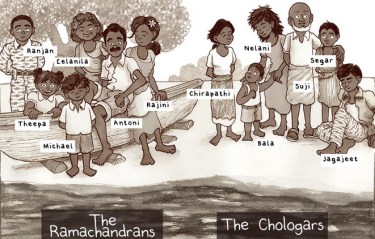
The main family, the Ramachandrans, and their neighbours the Chologars before they were hit by the 2004 tsunami and rebel war

Projects have included some 50 stories viewed by more than 90m people such as a Syrian’s journey escaping to Europe as well as other refugee experiences.

Now there is a £20m commission from the UK’s Department for International Development (DFID) to track various population migrations across the world. Also planned is a film for illiterates explaining how to fill in often bewildering consent forms.

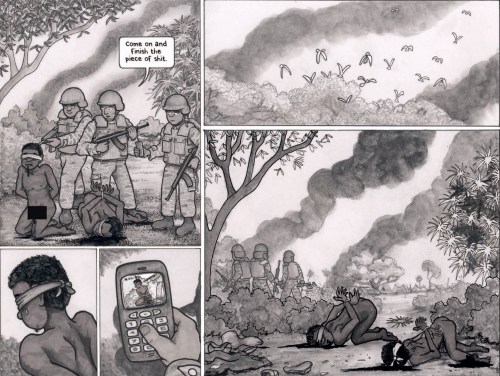
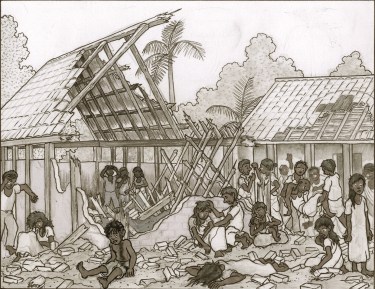
Graphic novels recount horrific events in a way that prevents a reader’s attention being turned off by, for example, a whole page depiction of Tamil refugees being blown up by a bomb explosion, or a mother crying “let me grieve my son” as rockets hail down on her camp.

Such violence in the cartoons does not repel people to anywhere near the same degree as photos or a film, so they keep reading. It is also much more attention-grabbing than mere text and a few photos, and it makes the subjects feel more secure when they are being interviewed.

PTSD

“It’s very difficult to absorb people’s pain, but converting it into pictures means you don’t need to intrude into people’s privacy,” says Lindsay Pollock, Dix’s co-author who has drawn minutely detailed pictures across 250 pages of the book.

Pollock’s drawings bring to life the horrors of the attacks, and the fear and panic of civilians as they run with their belongings in search of safety. He depicts young men being made to kneel before they are shot, and of a young woman being raped. People drown in rivers, are crushed by collapsing buildings, and are blown apart by bomb blasts.

The idea of Vanni started in Dix’s mind when he left Sri Lanka and later took off as a PhD project. “It grew into a long story and morphed and could have continued to grow, but we needed it to be finished for the 10th anniversary of the war,”says Dix, who initially thought that the seven-year project, part-funded by a £30,000 Arts Council England grant, would be done in six months.

Hispital sheeled

a hospital bombed

His PhD thesis dealt with “how to take traumatic testimony and turn it into sequential art”, which Vanni does, dramatically.

It tells the story of a fictitious family, the Ramachandrans, and their neighbours the Chologars. They live in Chempiyanpattu, a small village on the northern Sri Lankan coast in the Tamil Tiger controlled area known as Vanni. First their homes are swept away by the tsunami and then their lives are threatened by the growing Sri Lankan assaults on the rebel Liberation Tigers of Tamil Eelam(LTTE).

Together there are twelve adults and children in the two families, but by the end many have been lost or killed, reflecting the plight of 300,000 refugees, some 70,000 who died (according to the UN), and 140,000 who went missing (testified by the Catholic Bishop of Mannar).

Dix calls the book “non fiction fiction” because it recounts real life experiences fictionalised into the stories of the Ramachandrans, Chologars and others. With Pollock, he travelled by motorbike through Tamil Nadu meeting families. Pollock studied and sketched Tamil features and homes for use in his extremely detailed pictures.

12-Vanni 4 killing

They avoided going to Sri Lanka because they did not want to draw the government’s and security agencies’ attention to people they interviewed. They met Tamil refugees in Geneva, the UK and elsewhere – the 600,00-800,000 diaspora created by the disasters is spread across the world. Dix draws on stories from the time he was living in Vanni, and they studied official reports and talked to experts.

It is clear from the start of the book that the Tamil rebellion, which started in a major way in 1983, is deeply engrained into peoples’ lives. The father of the Ramachandran family had been killed in July 1983 riots in Colombo and a picture of Velupillai Prabhakaran, the Tamil Tigers’ leader, hangs ominously in pride of place on the wall of their home.

There is strong community support for the Tigers and, though they are also feared, there is peer pressure to be recruited and get involved. Young men who return from the rebel front lines in uniform are admired in the village, especially by younger relatives who want to be part of the glory, even though parents fear they will be killed.

Refugees driven on - from net“Our stolen Tamil land will be redeemed by our troops – Sea Tigers riding on the sea waves – We are uncontrollable human spinning bombs,” says Jagajeet, one of the Chologar’s sons, as he dons his Tiger uniform. Soon after, he steps on a land mine and loses a leg, the first of many casualties as the story unfolds, gradually revealing the hopelessness of Jagajeet’s dreams.

Ben and Lindsay

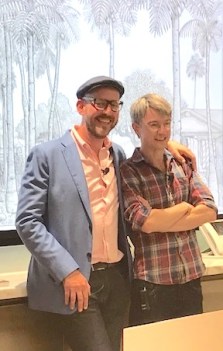
Benjamin Dix and Lindsay Pollock at the book launch in London, relieved a seven-year project is complete

To begin with, there is hope that cease-fire talks would resolve the Tamils’ demands for more regional autonomy in the Sinhalese-dominated island.

Then disaster strikes in the form of a new Sri Lanka’s hard line president, Mahinda Rajapaksa, and his brother, Nandasena Gotabaya Rajapaksa, the defence minister (who is a candidate in presidential elections in November).

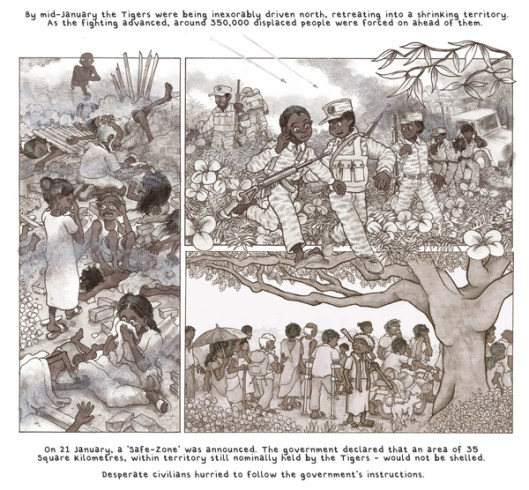
The Rajapaksas opposed the peace process and eventually drove thousands of Tamils to their death in alleged “no fire zones” that were heavily shelled. Their aim was to ensure that every Tamil Tiger was killed, even though that meant the death of thousands of civilians.

That is the story told in this book. The pictures and the narrative are so graphic that readers will not be able to forget what they have seen and read. That of course is Dix’s aim, and he has succeeded.

Publishers 2019 (paperback):

UK: New Internationalist, London £16.99 ISBN 978-1-78026-515-5 https://newint.org/books/new-internationalist/vanni

USA: Penn State University Press $19.95 ISBN 978-0-271-08497-8 https://www.psupress.org/books/titles/978-0-271-08497-8.html

India: Penguin Random House Rs799 ISBN 13 9780143449713 https://penguin.co.in/book/graphic-novel/vanni/

Posted by: John Elliott | October 24, 2019

Modi’s BJP fails to meet expectations in two state elections

Kashmir 370 does not work as a BJP rallying cry

Congress recovers in Haryana and ally improves in Maharashtra 

India’s democracy is often criticised for being corrupt and unrepresentative, but it has proved again this week that it works with voters reacting against a dominant power that is not delivering what they need.

This has happened in the important Haryana and Maharashtra state assembly elections where Narendra Modi’s Bharatiya Janata Party juggernaut, fuelled by exaggerated fears of war with Pakistan and by anti-Muslim policies, has been disrupted because of voter dissatisfaction over a lack of jobs, the plight of poor farmers, inadequate infrastructure and other regional issues.

Votes counted yesterday (Oc 24) shows that the Congress Party, which has been in decline since its heavy defeat in May’s general election, has done far better than expected in Haryana, while its ally, the regional Nationalist Congress Party, has gained significantly in Maharashtra.

results

NDTV/24×7 graphic when the trends were clear, awaiting the final figures

The BJP has lost its overall majority in Haryana, having won 40 seats in the 90-seat assembly, seven less than in the last assembly elections five years ago. Congress has won 31, up 16. The recently created Jannayak Janta Party (JJP), which is linked to the Chautalas, a leading Haryana political dynasty, holds the balance of power with ten seats along with nine others. [Oct 27: The JJP joined up in a coalition with the BJP, giving it a majority – independents will also support it.]

The results are a serious blow to Modi and his party president, Amit Shah, the home minister, because the elections have been the first test of the BJP’s hardline Hindu nationalist policies since the party’s overwhelming general election victory in May. As opposition politicians have been saying since the results emerged , it has been shown that Modi and Shah are not invincible.

The setback comes a day after heavy criticism in the US Congress over the government’s controversial removal of the state of Jammu and Kashmir’s special status under article 370 of the constitution. The criticism focuses on the continued security clampdown in the state with internet access suppressed, and politicians under house arrest for well over two months.

Campaigning in both Haryana and Maharashtra, Modi focussed almost exclusively on the removal of 370, claiming this would increase the country’s security and make it stronger against Pakistan.

Muslim discrimination

He and Shah also trumpeted their Citizenship Bill and National Register of Citizens (NRC) that discriminate against Muslims when assessing potentially illegal immigrants.

They hoped that this would deflect voters’ attention from their failure to tackle India’s worsening economic problems with GDP growth down to 5%, rising unemployment and a lack of fresh investment.

There appears to be widespread support in India for the Kashmir initiative, but this was not an effective campaign issue. Modi and Shah will now have to rethink their strategy before state assembly elections in Delhi next February, where the BJP are determined to reverse their defeat by the regional Aam Aadmi Party (AAP) in 2015.

It had been widely expected that the BJP would improve its position this week in Maharashtra and Haryana, and this was supported by most exit polls published on October 21 evening when voting ended.

While it has lost its sole power in Haryana, it remains the government in Maharashtra in coalition with the state-based Shiv Sena Party, though with only 104 seats in the 288-seat assembly, 18 fewer than in the last election.

The regional NCP is increasing its tally by 13 to 54, a higher total than Congress’s 42, even though the BJP persuaded some NCP leaders to defect, and government investigation agencies launched high profile corruption charges against Praful Patel, one of its top leaders.

Congress could have won Haryana

Congress has lacked effective leadership nationally since Rahul Gandhi resigned as the party president after the general election. He was eventfully succeeded, supposedly on a temporary basis, by his mother Sonia Gandhi, but neither of them made many appearances during the election.

Rival Congress political factions have emerged in various states, including Haryana where Sonia Gandhi changed the leadership, replacing a Rahul Gandhi nominee with someone close to her.

As a result, the Congress lost a major opportunity to defeat the BJP in Haryana. More effective leadership (probably not by Rahul Gandhi) over the past five months could have led to an outright Congress victory there and could have also won more seats in Maharashtra.

The results do not mean that Congress has recovered from its downward slide nationally. It did well at the end of last year, defeating the BJP in state elections in Rajasthan, Madhya Pradesh and Chhattisgarh, but then did badly in those states in May’s general election.

Nor does not mean that there is a significant swing against Modi and the BJP nationally. Voters make different choices in national and local elections, but this has been a warning that the government needs to get the economy and job creation moving, which it has so far failed to do.

Explains the rationale for ending Kashmir’s special status

Gives a finely tuned BJP politician’s account of events

India has conducted an unprecedented diplomatic campaign in America over the past ten days to try to win international understanding and support for its controversial announcement on August 5 that it is cancelling Jammu & Kashmir’s special status and imposing a state-wide security clampdown (that is now being eased).

Following prime minister Narendra Modi’s mega rally with president Donald Trump in Houston on September 22 and his speeches at United Nations meetings, Subrahmanyam Jaishankar, the foreign minister, has had an astonishingly large number of public appearances with virtually all the top foreign affairs think tanks, plus other audiences, in New York and Washington.

Formerly a top diplomat who retired as foreign secretary in January 2018, he has been spelling out how an increasingly strong and confident India is adopting its own style of foreign policy – and how the much criticised Kashmir move fits in with India’s continuing development because it was an attempt to solve a 65-year old problem.

jayshankar-CFR-khaskhabarJaishankar’s foreign policy statements emphasised India’s “multi-alignment”, which meant “you keep your relationships well-oiled with all the major power centres”. The country “which does that best actually has political positioning in the world which may be superior to its actual structural strengths,” he said at the Council on Foreign Relations (CFR) in New York (above).
Thatmay not please Trump or China’s Xi Jinping – Trump wants exclusivity and Xi does not want India getting close to the US – but it is a notable updating of India’s Cold War policy of non-alignment.

“World affairs will see a proliferation of ‘frenemies’. They will emerge in both categories: allies who publicly turn on each other, or competitors who are compelled to make common cause on issues,” he told the Centre for Strategic and International Studies (CSIS) in Washington. “The game has now become one of positioning and optimizing”.

The remarks put the Trump-Modi Houston extravaganza in a non-aligned perspective, especially because, just three weeks after that event, Modi will be feting Xi – surely India’s leading “frenemy” – in the Tamil Nadu temple town of Mamallapuram on October 12-13.

Jaishankar confirmed while he was in America that India is buying a large-scale S400 missile defence system from Russia, despite strong objections from the US. He said he hoped to persuade the US not to retaliate and impose sanctions on India.

Sovereign rights

“We have always maintained that what we buy — the sourcing of military equipment — is very much a sovereign right,” Jaishankar told reporters just before he met Secretary of State Mike Pompeo. “We would not like any state to tell us what to buy or not to buy from Russia, any more than we would like any state to tell us to buy or not buy from America”.

Jaishankar was not shy of going public with his think tank events – at least one of the host organisers was asked to turn what was to have been a background session into a filmed on-the-record open occasion. (Several of the events are available on YouTube, and some on the organisations’ websites). The Times of India has reported that Jaishankar’s other engagements included, nearly 100 diplomatic meetings.

Modi brought Jaishankar back from retirement to perform this role, spelling out India’s emerging foreign policy with jargon-free analysis while also explaining – extolling – Modi’s domestic policies and achievements.

Jaishankar set the tone for talking about the controversial cancelling of J&K’s article 370 semi-autonomous status when he said: “What we have presumed to be intractable challenges will have to be addressed, not ducked”.

“You had a state which was socially increasingly less aligned with the rest of the country….pretty much every progressive legislation in the country over the past twenty years did not get to be enacted and applied in Kashmir. And all of this really contributed to our political security challenge” he said at the CSIS.

J&K had not had the rest of India’s “economic activity and economic energy” which meant “less job opportunities, more sense of alienation, a sense of separatism, and therefore a climate for terrorism from across the border”, was how he put it at the CFR. It did not have India’s “progressive legislation” such as rights to work, education, and information, nor laws on domestic violence, juvenile-protection, representation of women, equal property and between men and women.

jaishankar swearing in

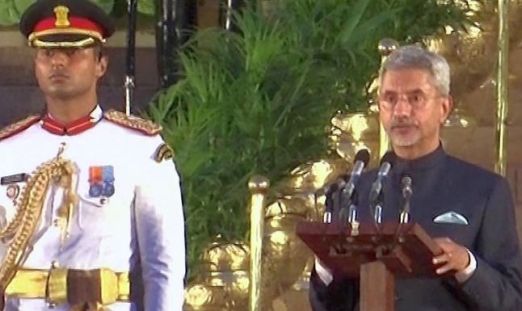
S.Jaishankar being sworn in as a minister in the Modi government

This “allowed really sort of a narrow elite to arbitrage this 370, to monopolize political power, to create a sort of a closed-loop politics” with a “vested interest in keeping alive separatist sentiment”.

Ignoring the primary fact that ending the special status fits the BJP’s over-riding aim to end Muslims’ special privileges, Jaishankar said  “Our expectation today is….that we will be able to push investments, economic activities, into Kashmir, that we will be able to frankly change the economic landscape, change the social landscape”.

Jaishankar put an even more optimistic spin on the heavy security clampdown with mass house-arrests and restrictions on communications that has horrified international opinion.

“Our challenge today is ….to ensure that this works on the ground” and  to “manage this transition situation without loss of life” by restricting “gathering of people and communication”. He justified the closing down of internet and social media because in the past they had been “used to radicalize and to mobilize”.

Amit Shah NRC

Amit Shah in West Bengal on the National Register of Citizens earlier this year

India needed that message to be spelt out because there is growing international concern about the restrictions on freedom of movement and communications.

Frank Wisner, a former US ambassador to India and long-time advocate for the country, reflected this when he closed the CFR session:

“Well, I think you’ve sensed, since you’ve been here, a very high degree of concern…..The responsibility lies with India to achieve the goals that you’ve set out tonight. And we all wish Kashmiris well and you well in re-finding stability in that state, building a different future”.

Jaishankar had even managed to deflect a question about “the erosion of the constitutional commitment to a secular state and the rise of a very politicized Hindu nationalism”, which is central to the BJP ethos.

“I don’t accept that secularism is under threat….secularism was not promoted by a law or by a constitutional belief,” he said.

“It was promoted by the ethos of the society [which] was not secular. No law, no constitutional provision, would have ensured it. And I don’t think the ethos of the society has changed. I think the ethos of India and the Hindu ethos of India is actually very secular. It’s very pluralistic”. What had changed was that economic power had moved from urban centres to Hindi-speaking rural areas.

With that last answer, Jaishankar’s presentations lost some of their overall credibility.

He had delivered an expert view on India’s foreign policy stance and a rational analysis of the Kashmir policy, but he took no account of the fact that Amit Shah, the home minister, BJP president and Modi’s closest ally, is certainly not behaving as though the Hindu ethos is very secular and pluralistic.

Currently Shah is stirring up emotions against Muslims with a Citizenship Bill and National Register of Citizens (NRC) that treats Muslims differently from other suspected illegal immigrants.

Jaishankar was demonstrating that he has moved on from being a respected foreign affairs expert and has become, as a member of the BJP government, a full time politician.


Posted by: John Elliott | September 23, 2019

Trump and Modi bond to woo some 50,000 Indian Americans

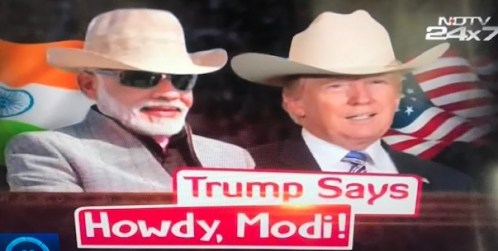
“Howdy Modi” says Houston at joint jamboree with Trump

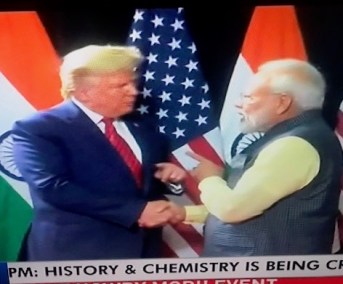
Hugs and walking hand in hand after Trump arrived late 

Two of the world’s most powerful orator politicians bonded yesterday (Sept 22) to woo an audience of tens of thousands of Indian Americans for their support and votes.

Narendra Modi, the Indian prime minister, and the US president, Donald Trump, were greeted by an ecstatically cheering crowd at a rally in a massive Houston football stadium

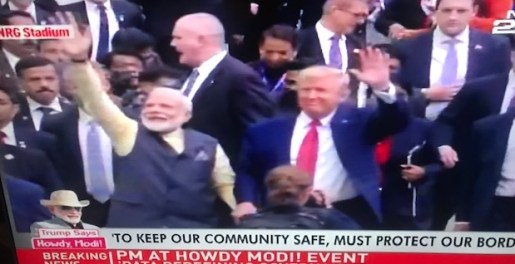
Billed as “Howdy Modi! Shared Dreams, Bright Futures”, and with 50,000 people registered to attend, this was a remarkable performance by the two leaders. After Trump had spoken for 25 minutes and Modi for 50, the Indian prime minister led the American president hand in hand round the stadium acknowledging the cheers.

IMG_6519

They will meet more formally in the next few days for talks that will try to solve a serious trade dispute between their two countries. At the end of May, the US cancelled India’s beneficial status under a trade preferences scheme. And yesterday, among the smiles and hugs, Trump warned that he was determined Indian people would have access to “products stamped with the beautiful phrase Made in the USA”.

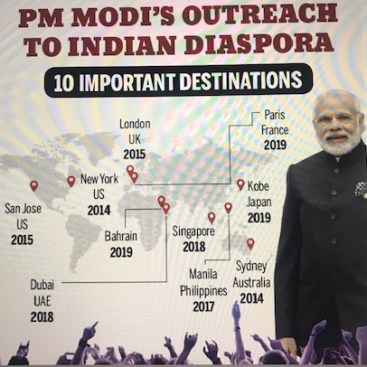
Modi is used to such Indian diaspora events – he has appeared at ten around the world since he was elected in 2014, most memorably at the first in New York’s Madison Square Garden a few months after he became prime minister. A year later he was in London’s Wembley Stadium where David Cameron, then the prime minister, introduced him to a 60,000 audience.

IMG_6532But yesterday was the first time an American president had shared such a rally with another country’s leader. It was also the largest audience in the US for a foreign leader, beaten only by Pope Francis in 2015.
The programme did not however begin quite according to plan. After a 90-minute warm-up session of music and dance by 400 artists that was greeted with frenzied applause, Modi walked dramatically on stage, met leading politicians and made his opening remarks. But Trump was nowhere to be seen – he’d decided to spend 30 unscheduled minutes with local coast guards and holding a press conference.

All was well when he eventually arrived and made his speech. It was, he said, a “profoundly historic event”. Modi was “great man and a great leader”. He spelt out how he has improved job opportunities for Indian Americans and got loud applause and a standing ovation, with Modi and his officials taking part, when he pledged to rid the country of “radical Islamic terrorism”. There was also sustained applause for him to “protect America’s borders”.

IMG_6498-1

Times of India graphic

Modi spelt out his government’s economic and other policies. He summed them up (probably fairly) when he said, “Today, India is challenging those who believe nothing can change.”

For Trump, it was a way to connect with some of America’s four million people of Indian origin ahead of next year’s presidential election.

He showed them his closeness to Modi and displayed a connection with India that many regard as their home country.  According to a 2018 survey, Indian Americans were more disapproving of Trump’s presidency than the average Asian Americans. On several key policy issues, they identified with Democratic Party policies.

For Modi, it was chance to woo people who may have a vote back in India, and who have money to donate to the BJP. They can also influence families back home, saying how impressed they were when they heard Modi speak. Diasporas are usually more intensely patriotic than people in the home country, and this makes many of them natural BJP supporters, especially now that Modi is driving a nationalist agenda.

IMG_6494

a pre-event poster

Modi also gained internationally from appearing alongside Trump. He said that Trump had introduced him to his family “and today I have the honour to introduce you to my family — over a billion Indians and people of Indian heritage around the globe”.

Such closeness is specially significant at a time when there has been some international criticism of Kashmir being deprived of its special status, along with an extended massive security clampdown on the freedom of movement and communications.

Modi’s main problem at home is that economic growth rate has fallen to 5%, but he attempted to deal with that last week by cutting corporate tax rates from 35% to 25%, the lowest since India became independent 72 years ago. That enabled him to make a positive economic pitch at the rally.

Both leaders will have gained from yesterday’s performance that was timed to be watched by evening television viewers in India. It now remains to be seen how long Trump can sustain the mood and resist his characteristic tendency to send disruptive tweets.

« Newer Posts - Older Posts »

Categories