Significant criticisms as Boris convalesces and edges back to work
High Covid-19 death rate and a lack of essential equipment
Diagnosed with coronavirus at the end of last month and hospitalised on April 5 with three nights in intensive care, Boris Johnson is edging back to work as Britain’s prime minister just as criticism of his government’s handling of the Covid-19 crisis is escalating.
Although the National Health Service has functioned effectively, there are glaring gaps in the delivery of equipment to hospitals and care home staff, and seriously inadequate testing of individuals.
There are also misleading overstatements by cabinet ministers on targets and achievements. And there is no government-led public debate about how the current shutdown could be eased, though there are warnings that this could take a year or more.

Boris Johnson joining people across the UK applauding NHS workers shortly before he was admitted to hospital
Britain’s record is poor with deaths reaching 41,000, twice the official figures, according to a Financial Times analysis published on April 22.
The good news is that it looks as though the death rate peaked on April 8. Deaths outside hospitals in the week ending April 10 were 75% above normal in England and Wales, the highest level for more than 20 years. The figures are high compared with France’s 20,800 and far higher than Germany’s 5,000.
Human trials of a vaccine start at Oxford University today (April 23), but the government’s top scientist has warned that an effective one might not be available for a year. Social distancing would be needed till that happened.
The high rate of deaths and the government problems would normally be a political disaster for a prime minister. Boris’s charmed life (from school at Eton to Oxford University and Downing Street) however is continuing, despite criticism that he set his government on a muddled path and failed to focus in the early weeks of the crisis.
His mind at the time was on achieving and celebrating Brexit on January 31, and then, during a 12-day break in mid February, announcing that he was engaged to his partner, Carrie Symonds, and that she was pregnant, while also finalising his divorce.

Part of a series of emergency hospitals being built across the UK
The Sunday Times published a devastating critique of the government’s failings on April 19 headed, “38 days when Britain sleepwalked into disaster”. The subhead said “Boris Johnson skipped five Cobra [top security committee] meetings on the virus; calls to order protective gear were ignored; and scientists’ warnings fell on deaf ears. Failings in February may have cost thousands of lives”.
The Sunday edition of The Guardian (The Observer) ran a similar story. Two days earlier, the Financial Times nailed the government’s procurement programme of ventilators that are still not adequately available. The FT quoted sources saying that the programme “was plagued by disjointed thinking that sent volunteer, non-specialist manufacturers down the wrong track, designing products that clinicians and regulators so far have deemed largely unsuitable for treating Covid-19 patients.”
Yet the prime minister, having presided over all this before he became ill, is being welcomed back from convalescence, even though his popularity is waning – 47% of respondents in a recent survey said they had a negative opinion of him and a further 17% had a “neutral” opinion.

Rishi Sunak at the Covid-19 daily on-line media conference in Downing Street
The country is desperate for some sense of leadership at the head of a rudderless, divided and squabbling cabinet that he packed after December’s general election with obedient Brexit-loyalists.
The government’s undoubted current star is Rishi Sunak, the chancellor of the exchequer (finance minister), one of three cabinet members of Indian origin in the cabinet – his Punjabi grandparents moved to Britain from East Africa in the 1960s.
He is not quite 40 – his birthday is on May 12 – and he has only been an MP since 2015, yet this wealthy former banker and son-in-law of Narayana Murthy, the co-founder of the Infosys IT company, is already being tipped as a future prime minister. Boris appointed him chancellor – to do as he was told by Downing Street – two months ago, replacing Sajid Javid who had refused to kow-tow to Boris and Dominic Cummings, the prime minister’s disruptive chief adviser.
Since then, and with Boris away ill, Sunak has emerged as one of the most competent of seven cabinet ministers who appear at daily-televised press conferences. He has a modest but forceful way of delivering facts and appealing for co-operation on matters such as social distancing.
He was even given glowing praise by his department’s bureaucrats in an FT profile published on April 2. Currently he is being praised for handing out billions of pounds, but must know that his popularity will be tested in the future when he has to manage the mountains of debt, curb spending, and raise taxes.

Priti Patel and Sir Philip Rutnam who she effectively ousted from his job as the home ministry’s top civil servant
The non-performer among the Indian-origin trio is Priti Patel, 48, the home minister, who has only appeared once at the tv conferences.
Once a high profile star (and reportedly a friend of Indian prime minister Narendra Modi), she is being kept out of the front line because her extremely aggressive style of dealing with bureaucrats had put her political future at risk just as the Covid-19 crisis was emerging.
It looked as if she might have to resign till the virus swept negative stories about her from daily media headlines. This week however she is back in the news because Sir Philip Rutnam, the home office’s top bureaucrat who she effectively forced to resign in February, has accused her at an employment tribunal of unfair dismissal and whistle blowing.
The third in the trio and a rising star is Alok Sharma, 52, secretary of state for business, innovation and skills. He is leading the support for companies including small businesses (and also has climate change responsibilities), and appears calm and purposeful at the media events.
All three are close to Boris (as he is generally known) but none is the official stand-in prime minister. The logical choice for that role would be Michael Gove, 52, by far the most experienced senior cabinet member, but he tripped Boris up in an earlier Conservative Party leadership contest and is not trusted.

Dominic Rabb
Instead, Dominic Raab, 46, a controversially blunt and not very respected foreign secretary who has limited ministerial experience, was named first secretary in the last reshuffle. That makes him the de facto deputy, which Boris confirmed – with limited scope – when he asked him to stand in “when necessary”.
The rest of the cabinet do not rate Raab and he has little if any authority at a crucial time.
Other much more capable and experienced politicians have been banished to the parliamentary backbenches, or even expelled from the party, because they opposed Brexit. Boris is surrounded by people who are loyal to him and none of them dares step out of line, except perhaps Gove who must realise that loyalty is essential, for now at least, if he is to survive.
The Sunday Times article explained how the UK, unlike Asian countries, treated the virus from January as a pandemic form of flu without an appropriate vaccine, so rejected a lockdown that was being introduced in other countries. Instead it followed the usual flu route of accepting widespread illness that would generate immunity (known as herd immunity). Later, it reversed that policy and introduced the current shutdown, now running for six weeks,
There was a lack of focus on building stocks of testing equipment, with the diagnostics’ trade association saying it was not formally approached for help till April 1. There was similar failure to build stocks of gowns and masks for health and care workers in February when they were and still are, urgently needed.

Matt Hancock
The government is now facing heavy criticism about the lack of equipment with Matt Hancock, 41, the supremely self-confident secretary for health, in the firing line.
There has been confusion over production of ventilators and he has failed to make enough progress on a target he unwisely set for achieving 100,000 Covid-19 tests a day by the end of this month. Boris last month even talked about 250,000 daily tests. The current figure is around 23,000 even though there is capacity for 50,000, which indicates a double failing on provision of facilities and access to them.
It may seem unfair to criticise the government at a time when every country is facing crises, but Britain has been a leader in medical care, especially pandemics, so should have been better prepared.
Years of Conservative Government austerity with budget cuts, coupled with Boris’s lack of focus and leadership, have led to the failure to perform.
Boris is now convalescing at his official country home, Chequers, about 40 miles outside London. He is not yet chairing meetings, even remotely, though he is contacting people and has had a conversation with his admirer President Donald Trump.
What is sure is that he will give the National Health Service a top priority when the crisis is over because, as he has said, it saved him from possible death during his time in hospital.
But he is not the prime minister for a crisis. He hates detail and likes to appoint competent advisers and ministers, leaving them to get on with their jobs while he deals with broad-brush issues, presentation and public appearances.
The question now is whether this crisis, and his own personal experience of Covid-19, will turn him into a focussed prime minister who governs. He has the brains, but does he have the stamina?
This article first appeared on the Indian Wire.in news website https://thewire.in/world/boris-johnson-uk-coronavirus





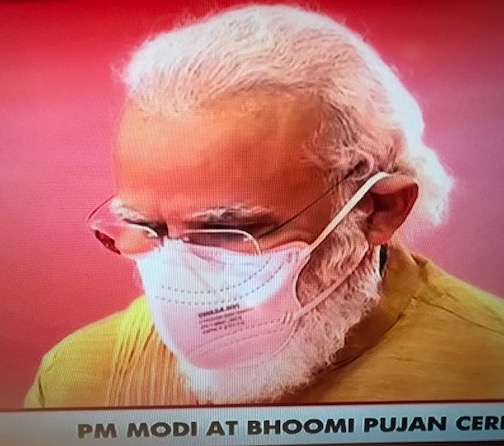 He was the central figure of the ceremony, establishing Hinduism’s historical role and its dominance at the expense of other religions, notably Islam.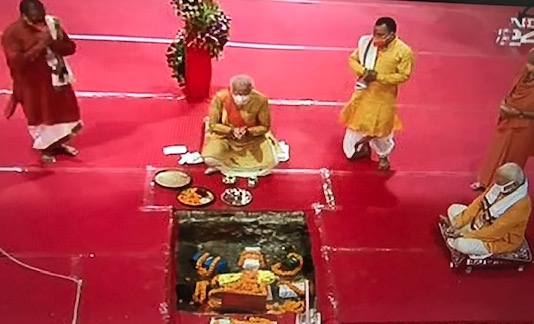

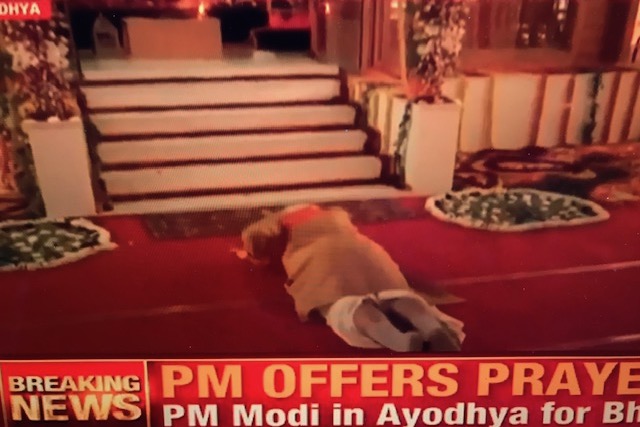




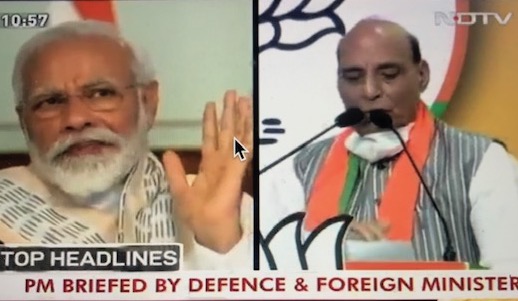
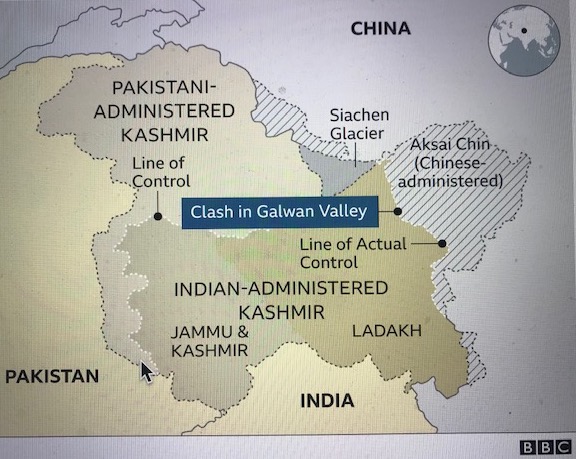 This was not a war situation between the two nuclear powers, nor were shots fired, but urgent diplomatic and military talks have been held between the two sides in an attempt to avoid further conflict.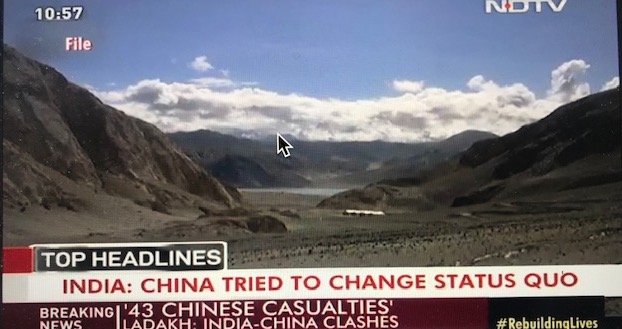







 They have also not met the need for an economic stimulus because they do little to accelerate demand. They ignore some key areas including the hard-hit tourism industry and private healthcare (though curiously there is a Rs500 crore allocation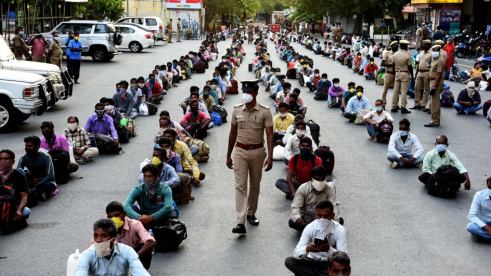

 Tomorrow (April 5), Modi is trying to bring order to the potential devastation of the system caused by the coronavirus and by a consequential virtual economic shutdown that he ordered on March 24.

 In some homes, it was the staff who led the moves, going to the gates of homes. Indians living abroad who support Modi’s Bharatiya Janata Party also joined in. Some people, it seems, really believed Modi had found a way to defeat the virus.


 Riding the Elephant
Recent Comments