Strong list of schemes with varying rates of success
Archbishop sets the tone for criticisms
The Catholic archbishop of Delhi spoke for many of India’s minorities as well as a broad spectrum of liberal opinion earlier this month when he controversially asked priests to lead a prayer and fasting campaign ahead of next year’s general election. The aim was to save India from the “turbulent political atmosphere which poses a threat to the democratic principles enshrined in the Constitution and the secular fabric of our nation”.
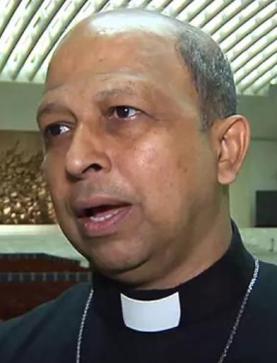 As Narendra Modi’s government approached the completion this weekend of four years in power, the message was clearly against the re-election of his Bharatiya Janata Party.
It was underlined by a more senior Catholic church figure, Cardinal Oswal Gracias of Mumbai, who criticised the Delhi Archbishop (right) Anil Couto’s timing, but said there was “growing anxiety” among minority communities “because the government is not acting enough” to protect them.
This minorities point is perhaps the most significant criticism of Modi’s four years in power.
One can argue about how far his numerous foreign forays and myriad of high profile domestic economic and other schemes and announcements have led to real achievements, and whether he has or has not begun to tackle India’s job creation crisis.
Rahul Gandhi, the Congress president, has given one view with a report card that awarded Modi an ‘A+’ grade for slogan creation and self-promotion, but an ‘F’ for agriculture, foreign policy, fuel prices, and job creation. His overall verdict was “Master communicator; struggles with complex issues; short attention span”.
That was ironic because Gandhi has till recently had the shortest attention span of any top political leader – and people I have spoken to who have attended meetings with Modi are impressed by the length of time that he listens and focuses.
What cannot be refuted however is that Modi has condoned, or at least has allowed, a deterioration in the social fabric of the country that has been engineered by more extreme elements in the fiercely Hindu nationalist Sangh Parivar (family of organisations), which embraces the BJP and the Rashtriya Swayamsevak Sangh (RSS), the right wing umbrella organisation that has direct influence on government policy.
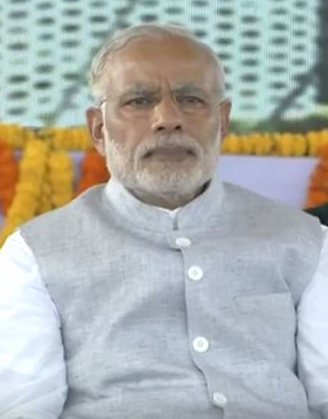 At the same time, Modi (left) has led a presidential-style attempt to centralise power and control the judiciary, civil service and media, while encouraging a weakening of the institutions that are essential for India’s noisy and turbulent but open democracy to continue to run the country.
Examples include the undermining of the revered Election Commission during the Gujarat state election last November, and the encouragement of bribing to swing the result of Karnataka’s state election earlier this month. His approach has been so authoritarian that a well-designed identity card scheme called Aadhaar that was introduced by the last Congress government has been seen as an instrument of state control.
The overall aim is widely seen to be the imposition of an authoritarian Hindu doctrine and culture across India to replace the long accepted diversity of religions, languages and life-styles with intolerance and even violence against minority communities and dissenters.
That leads to Muslims being seen as an over-cosseted minority that needs to adapt to a new reality in which, to quote one staunch BJP supporter, they are regarded as “aliens”. They have been harassed, and beef-eaters have been attacked and even killed by vigilante enforcement gangs that cause communal unrest and extort bribes from those they target. In Uttar Pradesh, where such events have been most prevalent and a prominent Hindu priest has been made chief minister, there were police crack-downs last year both on slaughterhouses (mostly run by Muslims) and on the freedom of young people to meet in public.
Freedom of speech
Freedom of speech and expression has been curtailed and there have even been killings of anti-Hindutva rationalists and independent journalists. Hindu nationalist activists have been appointed to many academic, educational and cultural institutions and other organisations so that current and future generations are imbued with the doctrine. Recently, there was a proposal to delay the posting of young bureaucrat recruits till after they had been assessed during an induction course, which would enable those who support the BJP and RSS ideology to be picked for the most influential ministries and other public service organisations.
The treatment of women has worsened and the official tolerance of rape, often with Muslims as the victims, has increased. Following the rape last month of an 8 year old Muslim child by men associated with the BJP in a Hindu temple in Kashmir, 49 top retired police and government officials bureaucrats wrote to Modi saying that the “bestiality and the barbarity” of the crime reflected “the depths of depravity” into which India had sunk. “In post-independence India, this is our darkest hour and we find the response of our government, the leaders of our political parties inadequate and feeble”.
The broad trend began to emerge in the first few months of Modi’s government in 2014 when a minister implied that everyone apart from Hindus was born illegitimately. There were mass conversions of Christians and others to Hinduism, and a government minister turned the December 25 traditional Christmas religious and public holiday into a working day for many bureaucrats.
Modi and his hard-line ally Amit Shah, the BJP president, cannot be personally accused of ordering such excesses, and many members of his cabinet are appalled by the authoritarian and violent trends. This is however what happens when extreme elements feel free to indulge in excesses because their government is in power, which means that Modi and Shah can be blamed for not restraining their followers.
Modi was not elected to introduce such a society. He won a landslide result in the 2014 election by appealing to the frustrated aspirational young who wanted him to change the way that India had been run for most of the years since independence by the Gandhi dynasty’s Congress Party.
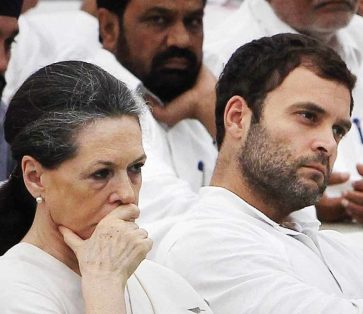 The young wanted job opportunities and the poor wanted to move on from Congress’s sops and corrupt aid schemes that were targeted by Sonia and Rahul Gandhi (left) more at enshrining poverty and sustaining the status quo than generating change and personal advancement for the 50% of the population who are under-educated, under-nourished and have poor (if any) public health facilities.
The question now is whether Modi’s government has done enough on the broad economic front to have a plausible general election platform, and to win, despite promoting increasingly intolerant and authoritarian Hindu nationalism. Much will of course depend on whether the opposition, comprising the fading Congress and Communist parties plus regional parties, manage to sustain a new unity they forged to unseat the BJP after the recent Karnataka state election.
From a longer term perspective, the key question is whether the future of India and its 1.3bn people spread across 26 states and as many languages and dialects, with a variety of religions, is to be a Hindu-centric authoritarian and often intolerant country. Or can Congress and the other parties carve out an alternative vision of a more relaxed and all-inclusive government that drives change – which has begun to happen in the past four years.
150 schemes
The government has announced about 150 schemes and slogans (according to a list in the Mint business newspaper), often revamping existing plans with new branding and apparent energy. Often there have been high profile launches that are inadequately followed-through, giving the impression that Modi has not been able to adapt the administrative style that won him praise as chief minister of Gujarat and develop as prime minister into a national leader rather than a ruler of ministers and bureaucrats.
If even only a few of these schemes were successful, Modi would justifiably be able to claim that he had begun to change the way that India is run. But he spoils his case with exaggerated claims about what has been achieved, and by ordering officials to generate evidence that over-state statistics.
A report published a few days ago from the rural Madhya Pradesh district of Mandla on the Scroll.in news website illustrates the intrigues and mismanagement that go into manufacturing statistics, and how tribal villagers in particular are frustrated and angry about what they see going on around them. “Incomplete houses, broken toilets, Adivasis (tribal people) anger in one district of Madhya Pradesh,” reads the headline.
‘Cultural aggression’
The report also point to the regime’s determination to spread Hinduism. “The BJP has ruled Madhya Pradesh for 15 years, but Modi’s ascendance has accelerated the Sangh Parivar’s cultural agenda,” said a tribal student leader. “The Congress looted us. But the BJP is worse, it is carrying out cultural aggression…they want to make us Hindus.”
In 2015, Modi promised country-wide electrification within 1,000 days – roughly by the end of this year. Last month he announced that all villages had been electrified, but that only means that 10% of local households have a connection along with some community buildings. It ignores the fact that many villages cover wide areas, parts of which will not have electricity. The government admits that 14% of households still need to be connected and the real figure is almost certainly far higher.
On Swachh Bharat (Clean India Movement), which aims to install toilets in all households and end widespread open air defecation, official figures show that 72.6m household toilets have been built in rural areas since 2014 making 366,000 villages “defecation-free”, though 95m households still do not have toilets. There are however many many local reports of toilets not being used and not being properly equipped, and there has been no independent verification of the figures. Last year the government claimed that the number of people defecating in the open had dropped from 550m to 320m which, if true, is significant in a country where 100,000 children die each year from diarrhoea related diseases.
One of the highest profile campaigns is Make in India, which has become an internationally recognised brand name but has failed to create the manufacturing jobs for which it was designed, despite a substantial increase in foreign direct investment. Its most serious and visible failing is in defence procurement and production were Modi has failed to implement existing policies to switch to domestic manufacturing and cut the total of more than 60% of purchases that come from abroad.
The same story of unrealistic launch claims and exaggerated reports of achievements extends to other schemes including the Jan Dhan Yojana bank accounts campaign where the number of accounts has reportedly jumped from 125m in January 2015 to 316m this month, though there are doubts about how many are actively used.
Steady growth
On the economy, which is growing at a steady but unremarkable figure of just over 7%, the two most potentially promising but controversial and badly implemented policies have been the demonetisation of 86% of bank notes in November 2016 and the introduction of a long-awaited general sales tax (GST) last year. In the longer term the GST will yield dividends, further expanding the number of taxpayers that has risen significantly. Other positive moves have included a new bankruptcy code and an attack on banks’ non-performing assets.
Highway construction is one of the government’s biggest achievements, driven by Nitin Gadkari, the road transport and shipping minister, who is close to the RSS and is rumoured as a possible successor to Modi should the prime minister fail at the general election. Construction of national highways hit a record of about 10,000km in 2017-18, or 28km a day, up from 8,231 km in 2016-17. The target this year is constructing 40km a day.
On corruption, which demonetisation was intended but failed to address, enough has not been done. Modi claims his government is corruption free, which it is not, judging by reports I have heard – and of course, all political parties need to raise funds.
Corruption
The government is enormously cleaner than the corruption-ridden 2009-2014 Congress administration, but that was not hard to achieve and does not mean it is corruption free. Improvements among top ministers and bureaucrats in the central government do not run far down through the system, nor do they impact state governments which have a mixed record. The encouragement of bribing after the Karnataka election shows that the ambition to form BJP governments is more important than stopping corruption.
Corruption is far too deep-seated to be tackled quickly as has been illustrated by a sting reported a few days ago on Cobrapost.com about top newspaper owners, including the Jain family that heads the Times of India group, discussing biased pro-Hindutva coverage in exchange for large payments.
On foreign policy, a senior retired diplomat has told me that “Narendra Modi has a sense of the manifest destiny of India in the world” as it moves up the league of top countries by population and the size of the economy. That is the positive spin on Modi’s series of flashy excursions around the world, wooing both foreign leaders and the Indian diaspora, and announcing many billions of joint projects and investments.
Modi has undoubtedly raised the country’s international profile and strengthened its relations with countries ranging from the US and Australia to Japan and Vietnam, while boosting its involvement in international organisations that include the London-based Commonwealth.
Junior neighbour
With China, India remains, perhaps inevitably, the junior neighbour that always reacts and can rarely take the initiative. With its other immediate neighbours, Modi has run what many critics see as an erratic policy with Pakistan that has worsened rather than improved relations, while China has been able to increase its influence in the Maldives, Sri Lanka, and Nepal.
Yet despite the shortcomings, and the concern over the general Hindutva direction of the government, Modi has begun the job of making India function better, and he remains the most popular potential leader for the future, with 72% favouring him if the general election was held today according to the latest opinion poll.
India will never change quickly whoever is in charge. But there is always room for optimism about the future, as the Delhi archbishop showed in the prayer that he urged his priests to recite:
“Let the poor of our country be provided with the means of livelihood. Let the tribals, Dalits and marginalised be brought into the mainstream of nation building. Protect our legislature as a place of discerning minds; raise our judiciary as the hallmark of integrity, prudence, and justice. Keep our print, visual and social media as the channels of truth for edifying discourse. Protect our institutions from the infiltrations of the evil forces.”
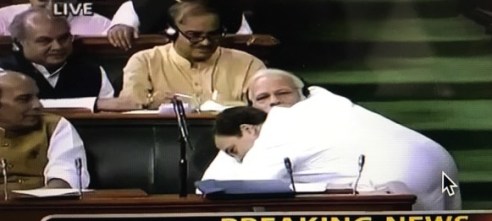
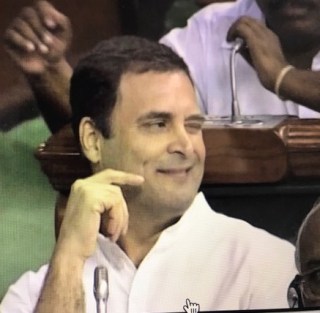 The no-confidence motion was tabled by the Telegu Desam Party (TDP), an Andhra Pradesh regional party, that recently broke away from the BJP’s coalition because the government has not delivered on an election promise to give the state special development-enhancing status. (The BJP’s second largest coalition ally, the Maharashtra-based ultra nationalist Shiv Sena, significantly did not support the government and abstained from voting).
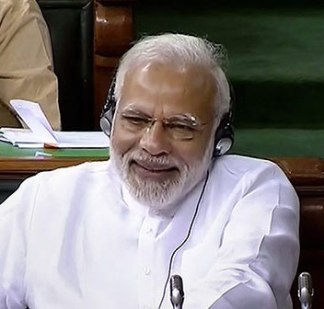 Criticising Modi’s record on stemming corruption, which the prime minister portrays as a major success area, Gandhi said that Modi worked for “10-20 big businessmen” and had “no place in the heart for weak people”.
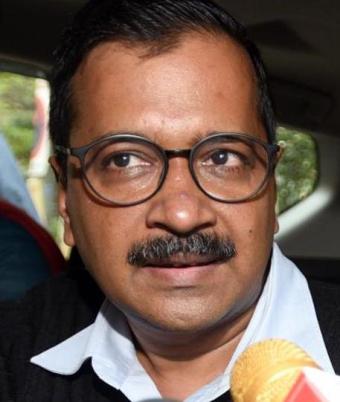 The Supreme Court today has ruled that, while the central government is responsible as it has always been through the lieutenant governor for land, law and order and the police, the elected government has the power in all other areas. The chief justice said that the lieutenant governor does not have independent decision-making powers and, while the government should consult him on decisions in other areas, he cannot interfere.
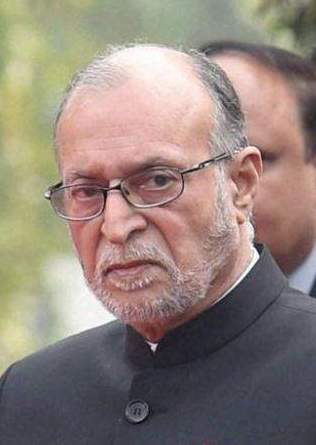 Last month Kejriwal and other ministers occupied a waiting room in the lieutenant governor’s house and refused to leave for nine days as a protest against what they dubbed a strike by uncooperative bureaucracy. “It is obvious that your only intention is to paralyse the elected government of Delhi,” Kejriwal told Modi in a letter as the sit-in ended.
 But Christie’s produced the surprise result of the week with an astonishing hammer price of £450,000 – 15 times the £25,000-35,000 estimate – for Abhiman (Wounded Vanity), a sensual female figure (left) by Hemendranath Mazumdar (1894-1948), whose works were often bought by India’s old maharajas in the last century.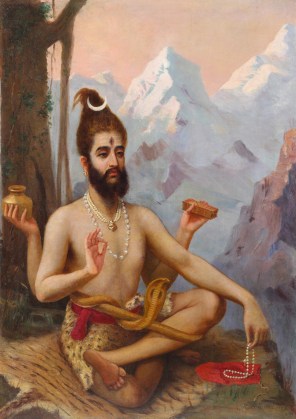
 The hammer price for a medium sized 39in x 30in saffron coloured oil on canvas (left) by Vasudeo S. Gaitonde (1924-2001), which was on the front cover of the auction catalogue, did not even reach the low estimate and sold after just a couple of desultory bids for £850,000 (£1.3m including buyer’s premium).
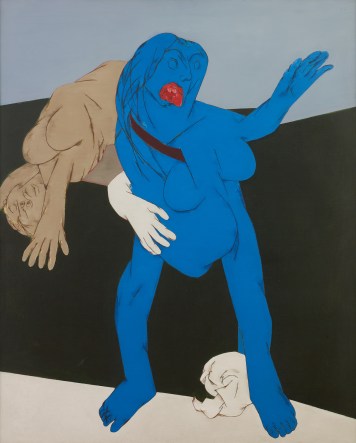 Offsetting that low result for what most buyers would see as an iconic but difficult work, was the record price achieved by the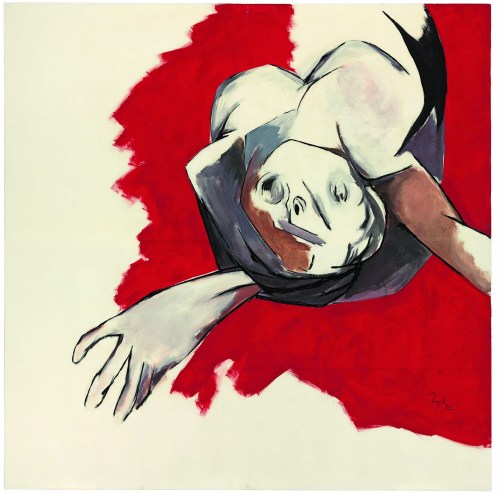


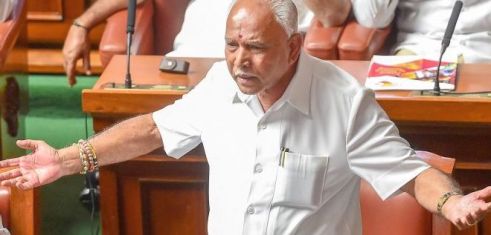

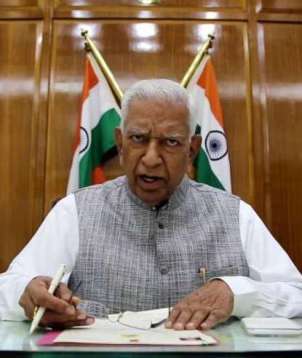 Also significant is the determination with which the till recently ineffectual Congress and the JDS corralled their MLAs and bussed them to luxury resorts so that they could not be seduced by the BJP and its emissaries.


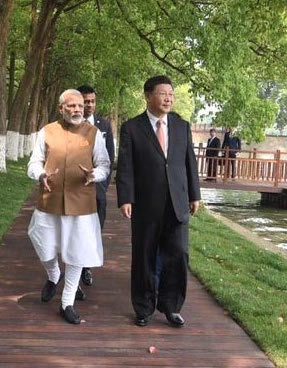 Nothing specific of long-term significance was immediately evident, though good sounding words were exchanged about “peace and tranquillity”. There were none of the multi-billion joint agreements and memoranda of understanding that usually accompany summits – a fact that may point to the seriousness of the get-together.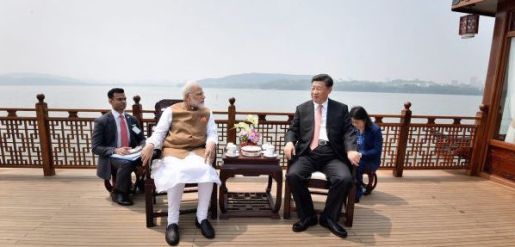


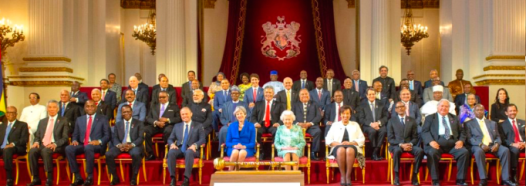
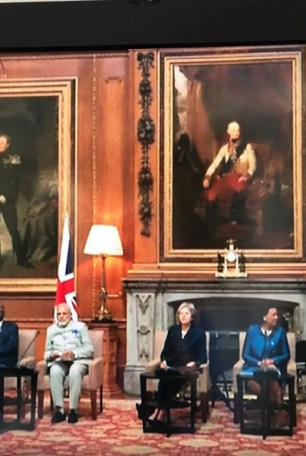
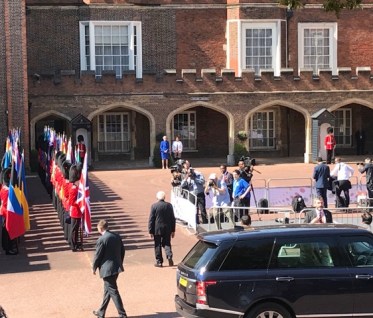
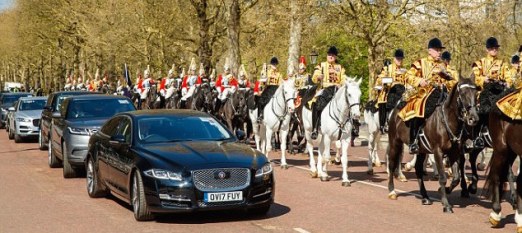
 He had an ego-boosting day yesterday, having flown in from Sweden the night before. He was met at the airport by Boris Johnson, the foreign secretary.
 The meeting with Theresa May capped off a number of deals and agreements covering terrorism, cyber and other international crime, space, technology sharing through a hub at the UK high commission in Delhi, cleaning the Ganges, and skill development – said to total £1bn .
 The event went on for two hours and will have won over the Indian audience, who will be telling their relatives back home what a nice gentle man Modi really is.
 Riding the Elephant
Recent Comments