Target to clear out the Nehru-Gandhis and end secular traditions
Symbolic of Modi’s earlier supreme leader phase as prime minister
Narendra Modi likes to think big, to cut a dash and stage mega events. At the same time, he and his Hindu nationalist stalwarts want to end India’s secular traditions embracing all religions that were set by the Congress leader Jawaharlal Nehru in the early years after the country’s independence seven decades ago.
This all came together yesterday when Modi unveiled a mammoth and highly controversial 182-metre statue of Sardar Vallabhbhai Patel, a prominent Congress independence leader, in his (and Modi’s) home state of Gujarat.
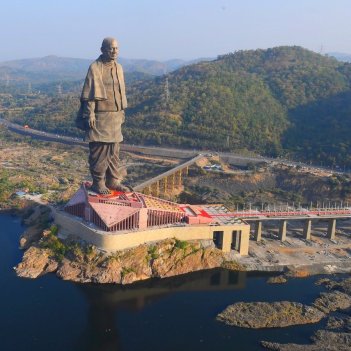
The statue stands alongside the reservoir of the Sadar Sarovar dam that has controversially displaced many tribals
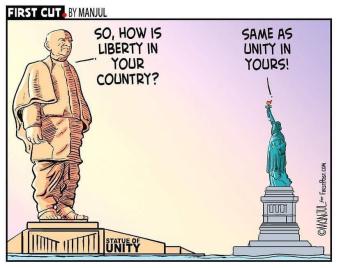
Twice the height of America’s Statue of Liberty and 20% taller than a 153-metre Spring Temple Buddha in China, it has been mocked by some for the audacity of its size. Critics point to the cost of Rs. 2,989 crore ($407m/£314m) – and the way that tribal land has been seized.
“These forests, rivers, waterfalls, land and agriculture supported us for generations,” said a letter sent to Modi by the tribals. “If Sardar Patel could see the mass destruction of natural resources and injustice done to us, he would cry. When we are raising our issues, we are persecuted by police. Why you are not ready to listen to our plight?”
Many political dictators erect massive statues in their own image. Displaying not dissimilar ego, Modi hopes that the giant Patel will stir emotions in India’s democracy and help to rewrite India’s post-independence history, eclipsing the Nehru-Gandhi dynasty – not only for short term political gain in the coming general election, but also to replace Nehru’s secularism with his Bharatiya Janata Party’s Hindu nationalism.
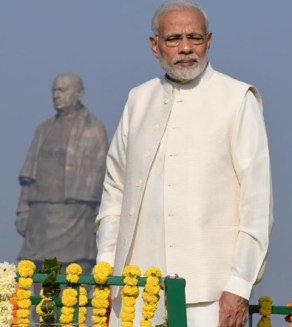 Patel, whose birth anniversary was yesterday, was responsible for uniting disparate provinces and princely states, some by force, after independence in 1947. He was Nehru’s rival for the prime minister’s post, but became deputy prime minister and home minister, even though he opposed Nehru’s left-leaning centralist economic policies.
Modi now wants to build up the memory of Patel as the politician who should have got the top post, even though Patel banned the Rashtriya Swayamsevak Sangh (RSS), the BJP’s umbrella organisation, after one of its members assassinated Mahatma Gandhi. Modi argues that India would not have lost a large part of Kashmir to Pakistan if Patel had become prime minister.
Modi said yesterday that the Statue of Unity, as it is called,was “an answer to all those who question the existence of India”. Its height was intended “to remind the youth that the future of the country will be as huge as this”.
Strangely, since the theme was unity, official guests at the elaborate unveiling ceremony, which included an Indian Air Force fly-past, were predominantly from Gujarat and there were no Congress or other non-BJP politicians .
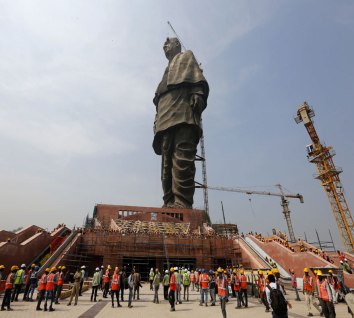
 The statue was also symbolic of India’s “engineering and technical prowess”, said Modi. Executed by Larsen and Toubro, the country’s leading structural engineering company, the project used tens of thousands of tonnes of Indian steel and hundreds of tonnes of zinc. Bronze cladding had to be imported from China, which did not fit with Modi’s Made in India campaign.
Conceived in 2013 and begun when Modi became prime minister in 2014, the project reflects his early self-confidence when he seemed to think that, with him as the supreme leader, anything and everything was possible.
In 2015 he went to Paris along with Anil Ambani, one of India‘s less successful top businessmen, and defied India’s defence procurement procedures by ordering 36 Rafale fighter jets that are now haunting him with allegations of cronyism and corruption.
Later, with similar gusto, he announced the debilitating demonetisation scheme that failed to curb corruption but decimated small businesses. His ego also led to him addressing tens of thousands of adoring overseas Indians in mega rallies as he toured foreign capitals.
 Today the Modi magic has faded, at least in the more urbanised parts of the country, and he and his ministers are having to explain away their failure to fulfil promises of curbing corruption, creating jobs, and reforming the way the government is run.
The question now is whether the statue will be seen by the mass of people in rural India, and by the BJP’s cadres, as a symbol of a Modi-led prosperous future, eclipsing Nehru and defeating Congress in elections, or as an unwarranted mega folly.
“It is hard to argue that this is the most important priority for a cash-strapped government (when) the money spent on the statue could instead have funded several modern institutes of higher education; or, for that matter, irrigated several tens of thousands of under-productive agricultural land,” the Business Standard newspaper said this morning. “There is little doubt that Patel himself would have preferred one of the latter uses,” .
The sculptor, Ram V. Sutar, age 93, was also responsible for extravagant statues built by Kumari Mayawati, when she was chief minister of Uttar Pradesh, as celebrations of the Dalits who formed her political base at the bottom of India’s caste ladder.
The statues were however also seen as examples of her egotistical extravagance, and she was voted out of power. Modi must be hoping that the giant Patel does not foretell a similar fate for him.
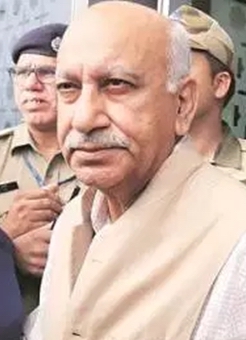

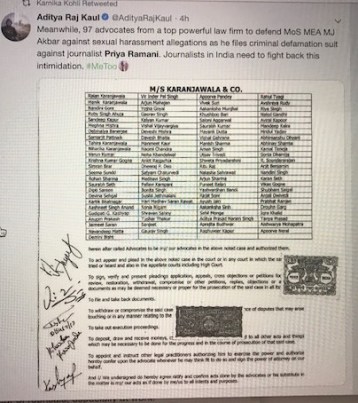 Akbar and the others presumably hope that the legal action will deter other women from going public with fresh accusations against him and others. If so, they were wrong because (updated Oct 16) artist
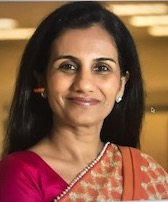 “Almost all the leaders we have picked have succeeded and most have been women,” K.V.Kamath, then ICICI’s (male) managing director and ceo, told me
 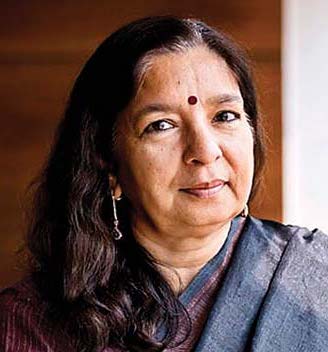 More intriguing is the RBI saying that Yes Bank, the fourth largest, should not renew the contract next January of its chief executive, Rana Kapoor, 61, who was one of the bank’s two founders in 2004. His co-founder, Ashok Kapur, was killed in the 2008 Mumbai terror attacks. Again, bad loans were the problem – the RBI said that Yes Bank had under-reported its bad loans for two years.
 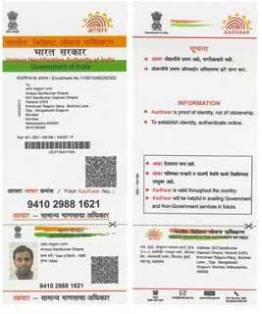 The supreme court neatly straddled that divide this week (Sept 26) when, by a majority of four to one, a five-judge bench ruled that Aadhaar (left) is constitutionally valid and could be mandatory for tax registration and returns and for obtaining welfare payments, but restricted its use elsewhere.
 “Hindu Rashtra [nation] doesn’t mean there’s no place for Muslims. If we don’t accept Muslims, it’s not Hindutva. Hindutva is Indianness and inclusivity,” he asserted to the amazement no doubt of RSS members as well as critics. “Hindutva binds us together and our vision of Hindutva is not to oppose or demean anyone”.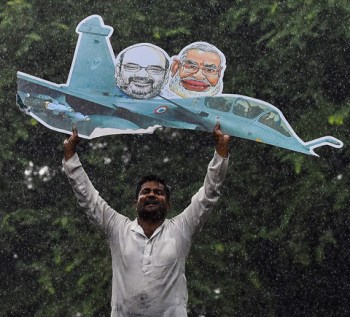
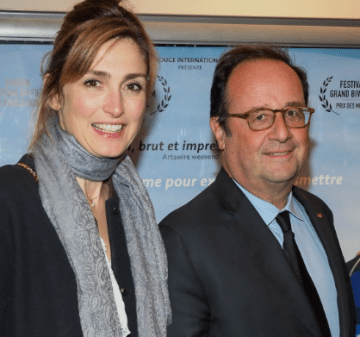
 That has now changed with Mediapart taking up the story. Interested because of the French political implications of Hollande’s involvement, it says the funds from Reliance were handled by Visvires Capital, an investment fund with offices in Paris and Singapore founded by Ravi Viswanathan, a French-Indian former banker who had previously provided services forAmbani.
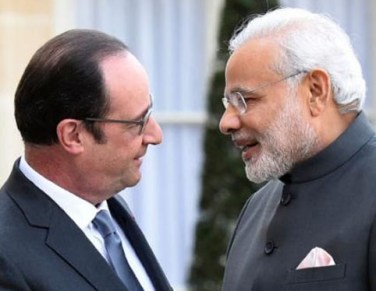 In its attempt to fight off the Congress assault, the government is now alleging corruption involving the last Congress-led government, which struck an earlier deal for 126 Rafale jets in 2012. Reliance Industries run by Anil Ambani’s brother Mukesh would have been involved in that deal, which was never finalised and was cancelled by Modi when he went to Paris.
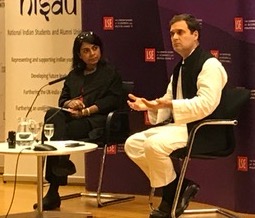 The Muslim Brotherhood barb had clearly struck home because the spokesman unusually clubbed the RSS and BJP together and said, “India is asking you ‘is some terrorist organisation ruling India?’ It is a democratically elected government. Is this government, is this choice of people of India for a terror organisation?”.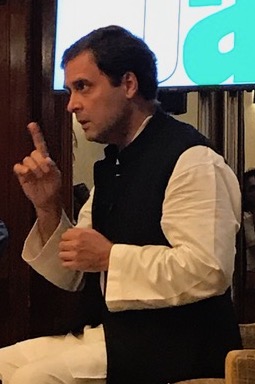
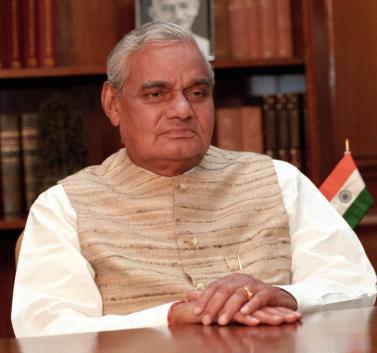 Tributes today from all sides of the political spectrum have talked with admiration and sincerity about his ability to handle ideological differences without personal animosities, and how he reached out to opponents as well as difficult coalition partners – all sharp contrasts with the Modi and Shah autocratic style that instils fear but not loyalty.
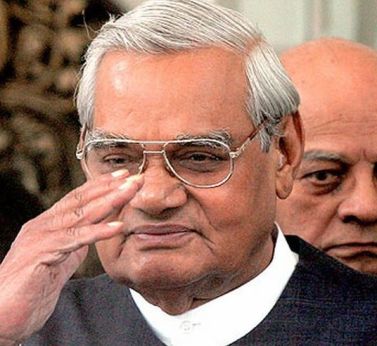 Although he led a coalition, Vajpayee’s government achieved some notable advances, especially on
 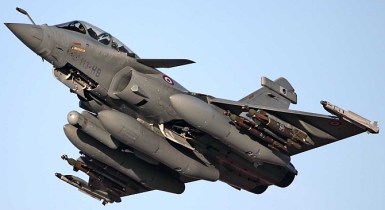 Modi’s first move came in Paris when he unexpectedly announced that he had personally asked for
 Sitharaman interrupted Gandhi’s speech to reassert the confidentiality point, and a statement was issued a few hours later by the French embassy in Delhi (presumably at Sitharaman’s request), which the government (also presumably) hoped would confirm the need for secrecy under a 2008 agreement.
 Riding the Elephant
Recent Comments