Pakistan blamed for not curbing terrorist leader
Incident exposes failings in Modi government policy
A devastating suicide car bomb attack at Pulwama in Jammu and Kashmir yesterday that killed some 40 Indian paramilitary personnel in the area’s worst terror incident for decades has today united India’s political leadership in tributes to the victims at the same time as the government starts to consider what action to take against Pakistan.
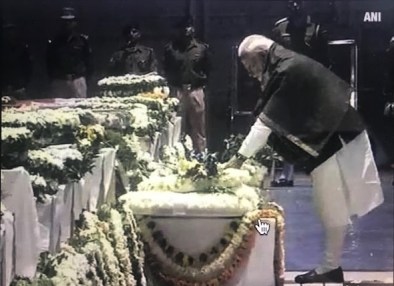
Narendra Modi, the prime minister, led government and opposition leaders including Rahul Gandhi, Congress president, at an airport ceremony evening, paying respects as coffins were flown into Delhi. Modi and Gandhi cancelled other public appointments, as did Priyanka Gandhi on her first press conference as a party general secretary. “We will stand with the government,” said Rahul Gandhi.
While the country mourns, questions are being asked about how the incident at Pulwama was allowed to happen, which is significant because the devastating attack highlights failures in the Indian government’s policies on Pakistan and Kashmir, plus inadequate security planning.
Modi now has an opportunity to act tough with Pakistan in the run up to India’s coming general election due in the next two months. There has been speculation in Delhi for many months that he would find a way to ratchet up tensions in order to win votes. Yesterday’s suicide car bomb attack, with the Pakistan-based Jaish-e-Mohammad (JeM) terror group claiming responsibility, has triggered such an opportunity.
Modi dominated the tribute ceremony (above) for several minutes, standing bowed in front of the coffins and walking alone around them with hands clasped as in prayer. A more modest leader might have taken at least one top military or cabinet leader with hm, but Modi chose to be the focal point of the ceremony during prime time evening television,
In an earlier televised address, he said that “the terrorists have made a big mistake and they will have to pay a very heavy price”. Referring to Pakistan, he added, “We will give a befitting reply, our neighbour will not be allowed to de-stabilise us.” He said he had given the army “a free hand”.
The government has cancelled Pakistan’s most favoured nation trading status, which has existed since 1996. Formal trade between the two countries only amounts to about $2.4bn (there is far more via Dubai), but the move is symbolic because it marks a new low point in bilateral relations and is intended to send out an international signal. Arun Jaitley, the finance minister, told reporters that India would work to ensure the “complete isolation” of Pakistan.
A military strike on terrorist bases across the Line of Control (LoC) between the two countries is one of the options being considered. In September 2016, ten days after 18 Indian soldiers were killed in an attack on an army camp at Uri – the last major incident in Kashmir – India conducted a “surgical strike” against terrorist locations in Pakistan.
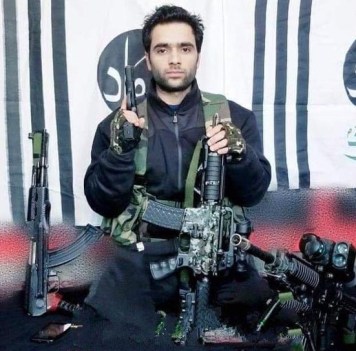
19-year old Adil Ahmed Dar in the video made before the suicide bomb blast
Modi has repeatedly played this up as a major initiative to impress his Hindu nationalist electoral vote bank, culminating with a leaked video of the action, and celebrations of the second anniversary last September.
There are also implications for India’s relations with China, which protects Pakistan and has repeatedly blocked India’s request for the United Nations Security Council to list Masood Azhar, leader of the JeM, as a ‘global terrorist’.
Today a Chinese foreign ministry spokesman in Beijing expressed shock and sympathy over the attack, but failed to indicate that China would support India at the UN over Azhar, who has complete freedom of movement in Pakistan.
Intense diplomatic activity is under way with the Indian government meeting ambassadors of some 20 countries in Delhi today, calling for pressure on Pakistan. India’s high commissioner (ambassador) in Pakistan has been recalled to Delhi for consultations.
There are reports this evening that top US officials are talking to Beijing, urging it to withdraw its UN objections. That would lead to Azhar being listed by the UN and to China putting pressure on Pakistan to take action against him which, in turn, would reduce the risks an escalation of hostilities on the LoC.
While the JeM has claimed responsibility for the attack, the car carrying the bomb was driven by a 19-year old Indian boy, Adil Ahmed Dar (above), from the Pulwama district. The JeM released a pre-recorded 10-minute long video statement by Dar in which he says, “By the time this video reaches you, I will be in Heaven”. He criticised India saying, “your oppression fuels our jihad”.
This illustrates how the Modi government’s aggressive military-oriented policy on Kashmir, and its failure to engage in dialogue with local interests, has increased the alienation of Kashmiri youth since 2014. While not condoning terror atrocities, there have been constant criticisms for many years of the security forces’ tactics and their impact on successive generations of young Kashmiris.
Dar’s family told the Scroll.in news website that they regarded their son, who had joined the terrorist group nearly a year ago, as a martyr. “Nobody talks about the daily blinding of civilians, killings and encounters,” said his father referring to the security forces. “Why don’t these politicians invite all the parties and find a solution to Kashmir issue?”.
Radicalised son
Discussing why his son had been radicalised, Scroll reports that Dar talked about an incident in 2016. “One day, he was returning from his school and men from the STF [security forces] stopped him and made him rub his nose on ground”. The men had forced the boy to make a circle around their jeep with his nose, his father said: “He kept mentioning this incident again and again.” His son “wanted to become a cleric and had already memorised eight chapters of the Quran”.
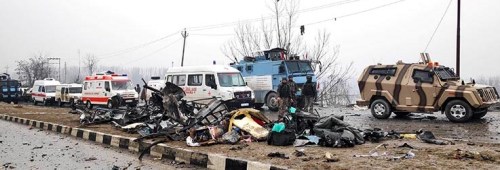
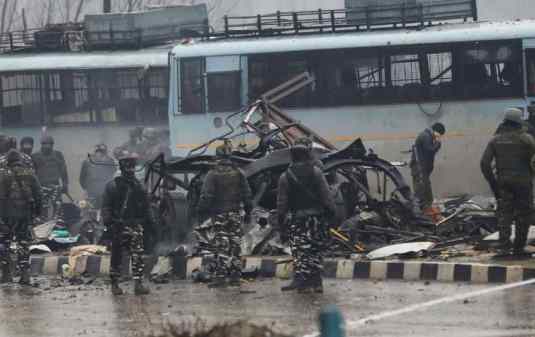
Dar drove a car with 60kg of high explosives which caused a massive blast when it hit and demolished the bus (pictures above) that was part of a convoy of 78 vehicles carrying over 2,500 troops.
While security operations had been carried out to ensure there were no landmines or terrorist preparations to fire on the unusually large convoy, no preparations had apparently been made to block or check road vehicles, even though the highway had been opened to civilian traffic – enabling Dar’s vehicle to have access. This is the latest of a series of security lapses in recent years under the Modi government.
Modi’s policy in relation to Pakistan has been erratic since he was elected in 2014 and he has become increasingly aggressive, playing to his nationalist vote bank in India. The deteriorating relations with Pakistan have worsened the situation in Kashmir where killings and violent confrontations with security forces in the Srinagar valley have increased in a revival of . Home ministry figures show that the number of terrorist incidents have risen from 222 in 2014 to 614 last year while the number of security force personnel killed has gone from 47 in 2014 to 80 in 2017 and 91 in 2018.
The central government has made no significant moves to stem this decline, and is unlikely to do so until after the general election. This indicates a fraught and dangerous two to three months, both in Kashmir and on the Line of Control.







 On the economy, Modi will be looking to
  This is significant because it is yet another example of the Modi government’s persistent attempts to undermine the independence of India’s respected institutions such as the Election Commission and the judiciary including the Supreme Court.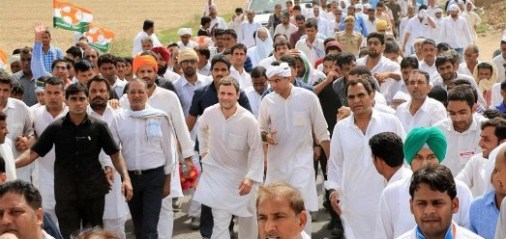


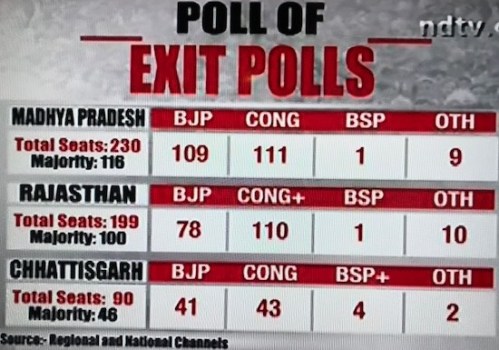
 If this is correct, the Bharatiya Janata Party could emerge from the current polls in a strong position to be re-elected nationally next year, the question then being how big a majority it could secure.
 The economic failures were graphically demonstrated last week when tens of thousands of farmers marched through Delhi (left), Mumbai and Kolkatta protesting against the low prices they receive for their crops under government-controlled systems that push them into debt and suicide. The farmers were demanding better prices and wavers on bank loans. This is a potent issue in the states now having elections, but the government has done little to offset the problems.
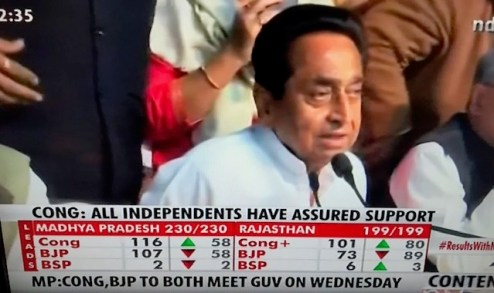
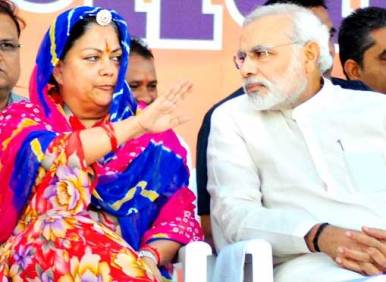 In the current elections, the key contests are in Madhya Pradesh, where the BJP has been in power for 15 years with the same chief minister, Shivraj Singh Chauhan, and in Rajasthan and Chhattisgarh. The other states are Mizoram in the north-east India where Congress rules, and Telangana that used to be part of Andhra Pradesh where a regional party runs the government.
 Theresa May has said she
 Riding the Elephant
Recent Comments