Narendra Modi plans measures to isolate and hurt Pakistan
India has launched a series of moves against Pakistan in the past few days that culminated this morning in an announcement that the Indian army conducted “surgical strikes” last night against alleged terrorist locations across the disputed Line of Control (LoC) border in Kashmir.
This is the first time that India has publicly declared such military action inside Pakistan for many years. Previous governments have followed what is called “strategic restraint” and rejected such a response to terror attacks, or kept those that did happen secret (like these in 2011), because of the risks of escalating military retaliation between the two nuclear-armed neighbours.
The attacks were based on “very specific and credible information” that “some terrorist teams” had positioned themselves to infiltrate into India, the director general of military operations, Lt. Gen Ranbir Singh (below) said today. “Significant casualties have been caused to the terrorists and those who were trying to support them”. No further details have been released, but media reports suggest that the attacks involved ground troops operating one to two kilometres inside Pakistan territory in up to seven locations where “launch pads” were located.
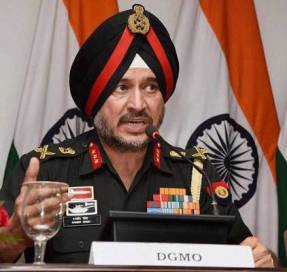
Pakistan has however played down the significance and denied heavy casualties, apparently to avoid the need for immediate escalation. Its army denied that there had been “surgical strikes”, and said there had only been heavy Indian firing.
A stronger line was taken yesterday by Pakistan’s defence minister, Khawaja Muhammad. He warned that, if attacked, Pakistan would respond with nuclear weapons “to annihilate India”. That was interpreted in India not so much as a real threat, but as an attempt to ratchet up international concerns about a nuclear war so that the US and other countries increased pressure on Modi not to escalate anti-Pakistan initiatives.
India’s action was a direct response to an attack on an army base at Uri in Kashmir on September 18 that killed 18 Indian soldiers and led to intense media and public pressure for retaliation. Pakistan has denied responsibility and accused India of organising the attack for internal reasons and
This afternoon, the government has briefed opposition politicians and international diplomats about the situation, including an escalation of tension on the border where villagers have been evacuated. Its line is that it is targetting terrorist preparing to attack India, not the country of Pakistan, and that it will do so again if and when it finds terrorists gathering in “launch pads” close to the LoC.
Isolating Pakistan
Narendra Modi, the prime minister, has also taken other initiatives in the past few days that over-turn decades of India’s regional diplomatic policy, and could change the alignment of countries in South Asia.“We will leave no stone unturned to isolate Pakistan in the world,” he said last weekend, responding to public demand that has been fuelled by intense media coverage for some form of retaliation..
His mostly co-operative approach to Pakistan since he was elected in April 2014, and especially personal approaches to the prime minister Nawaz Sharif, have failed to stop the attacks. He has been widely criticised for lacking focus and consistency. The aim now, which fits with his hard-line image, is to weaken Pakistan to such an extent that it stops the militancy, say well-informed diplomatic observers.
Declaring that “blood and water cannot flow together,” the prime minister held a meeting on September 26 with senior officials of the water resources and external affairs ministries to discuss limiting the flow of rivers from India under a 1960 India-Pakistan Indus Waters Treaty. It was decided at this stage only to increase India’s take-off from rivers flowing through Jammu & Kashmir to the maximum allowed under the World Bank-brokered agreement. That would reduce what is available to Pakistan without breaching the treaty.
India has also pulled out of a big South Asia co-operation (SAARC) summit that was due to be held in the Pakistan capital of Islamabad in November. Bangladesh, Afghanistan and Bhutan have also withdrawn (Oct 2 insert: now joined by Sri Lanka and the Maldives), citing terrorist activity. This unanimity is significant because it shows an unusual alliance with India over Pakistan. Next week these and other countries belonging to a regional grouping called BIMSTEC, which excludes Pakistan, will be meeting in India to push trade and other ties that have been largely stymied by Pakistan since SAARC was set up in 1985.
Today Modi was to have considered taking action over Most Favoured Nation (MFN) trading status that India gave to Pakistan in 1996. India could possibly cancel the status on the grounds that it has not been matched by Pakistan, but this would only have a limited effect because indirect informal trade via countries such as the UAE far exceed some $2.6bn annual formal trade. Discussion on this was deferred, maybe to next week, because of Modi’s preoccupation with the army strikes.
Balochistan stir
India has also opened up a new pressure point with Pakistan over the country’s south-western province of Balochistan, which borders Afghanistan, Iran and the Arabian Sea. In response to Pakistan alleging Indian army human rights violations in Kashmir, Modi has publicly lined up with Balochistan separatists to accuse Islamabad of atrocities in the impoverished province that has been crippled by tribal wars as well as an independence movement for decades. Sushma Swaraj, India’s foreign minister, told the UN General Assembly on September 26 that Pakistan’s action in Balochistan was the “worst, form of state oppression”.
India has for many years been accused by Pakistan of fomenting trouble in the province, and it is widely believed that its RAW secret service is active there. Now the area is specially sensitive because of disruption to China’s planned Pakistan economic corridor (CPEC), which runs from the two countries border at the northern end of the Karakoram Highway in the Himalayas down through Balochistan to the port of Gwadar that it is building.
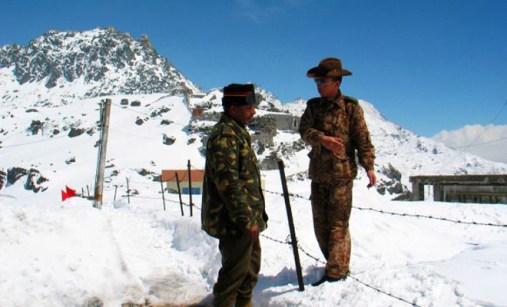
China’s reaction to last night’s attack will be significant. While it backs its close ally Pakistan causing disruption on the LoC, it has never wanted that to escalate into a border war. There were reports today that it is appealing to both countries to tone down the confrontation. Last week officials said it was concerned about the risks of an economic spin-off from the Uri attack. It has its own separate differences with India over their Himalayan border and also over other issues including the South China Sea.
Modi’s new aggressive stance ends the pattern under previous governments where a terrorist attack would lead to a heightening of border tension and empty Indian threats against Pakistan that would be replaced with US-encouraged bids for fresh co-operation after a few months or a year or so. Modi criticised such an approach before he became prime minister and has now taken the tough military line he promised. Internationally there will be critics of such a line but domestically Modi will have widespread support. How Pakistan responds has yet to be seen.
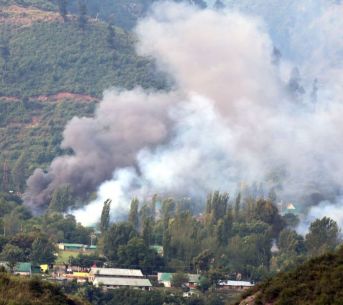
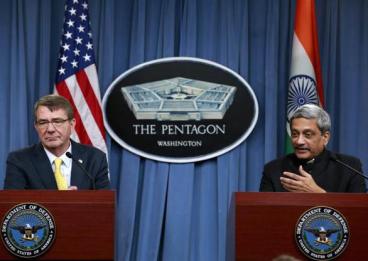
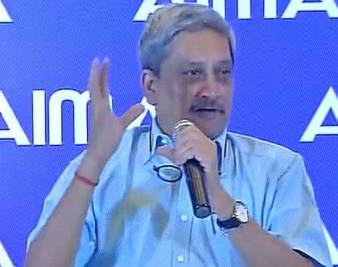 Manohar Parrikar, India’s defence minister, admitted that
 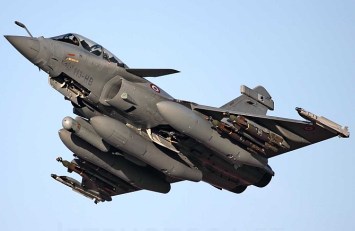 The main point here however is that the jets (right) will do little to solve the air force’s overall shortage of fighters, despite their superior capability and advanced missiles, because they will add only two squadrons to the current total of 32 when 42 are needed. The Rafales will also complicate maintenance and support services because there will be seven different types of aircraft from various countries. The air force’s concerns have been spelt out in the Shukla article, including worries that the Rafales cost twice as much as Russian Sukhoi jets that are already in service.
 The US see India primarily as a buffer against China and would like to build a closer relationship as allies, but India is prepared to go no further than being a partner on various fronts while pursuing its own independent interests. In the past that has included refusing to join US-led boycotts of Iran and Myanmar.
 The business welcome was well summed up by Chanda Kochhar, ceo of ICICI, a leading private sector bank. She has
  The BJP however refused to support Manmohan Singh, the Congress prime minister from 2004, when he tried to push the measure with a 2010 target implementation date. It then changed tack when the Modi government was elected two years ago, but that was met by obstruction from Congress, which wanted to build up its credibility in opposition. The Modi style was arrogant, which made co-operation with other parliamentary parties, as well as Congress, virtually impossible
 This means that old assumptions about how the government will react and about who matters around town have to be re-calibrated.
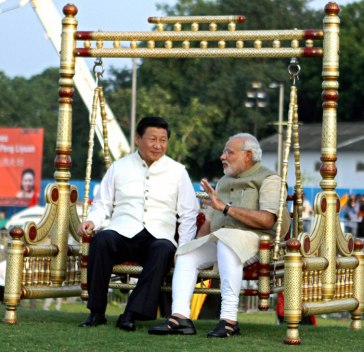 May has risked upsetting both President Hollande of France and China’s Xi. They will no doubt both understand that, having been in office for just two weeks, May needs time to approve such a massive project for which she will now bear prime ministerial responsibility.
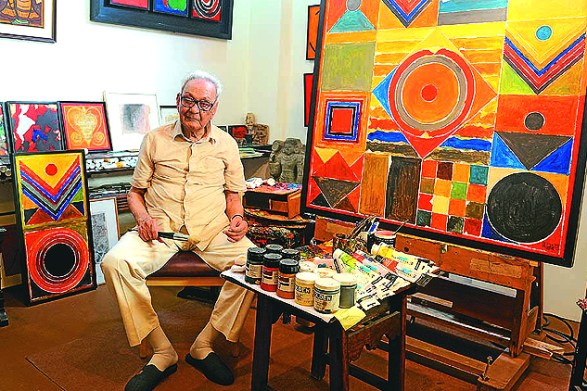
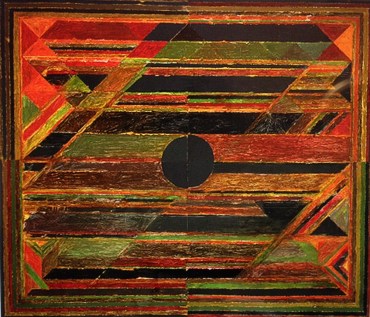
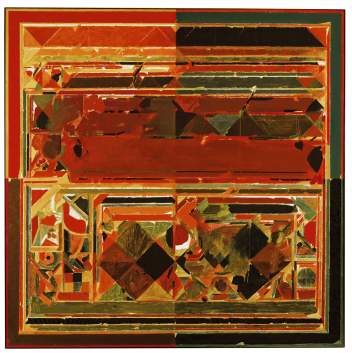 In June 2010, his massive 79in x 79in acrylic on canvas, Saurashtra (right), painted in 1983, hit a record price for Indian works at a Christie’s London auction.


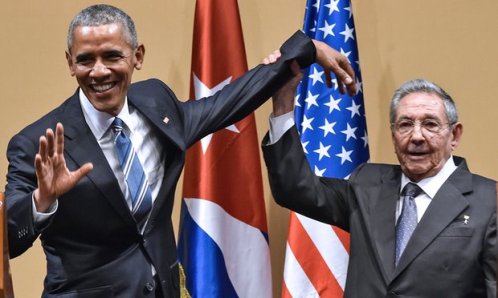


 Another indication of growing American links is a bank credit card for Cuba (left), with both countries’ flags, that is being issued by Florida-based Stonegate Bank for US citizens to use for withdrawing cash. We carried British pounds and a few US dollars that were easily exchanged in banks – my Indian government press card was, amazingly, accepted as proof of identity when I wasn’t carrying my passport. Some hotels (we were told only the military-owned ones) accept European credit cards and there are a few ATM machines.
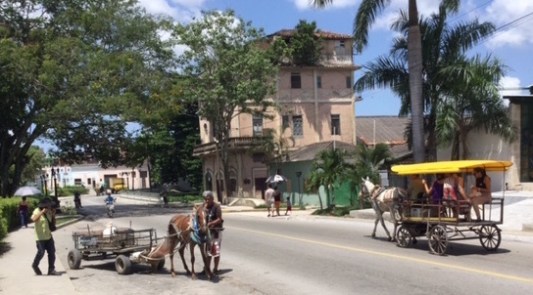
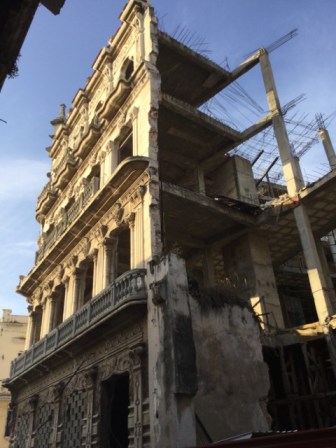 There’s money to be made from the expected flush of tourism and the insides of old buildings are being torn out and rebuilt. Old Havana, as the cobbled area of the capital is known, has dozens of building sites but, so far, most keep their imposing exteriors (right).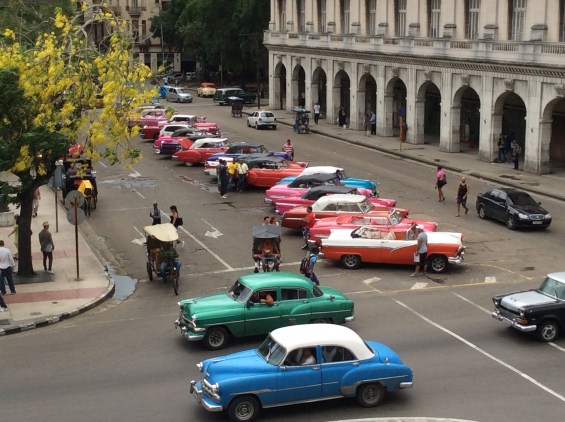

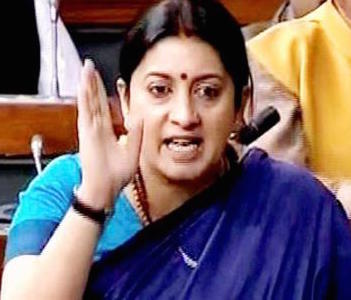 An equally unexpected but constructive
 Her successor is Prakash Javadekar (right), the minister of state in charge of environment, forests and climate change since 2014. He has been promoted to the cabinet having, with relatively little controversy, boosted infrastructure development by reducing the effectiveness of environmental protection laws and regulations in line with Modi’s wishes.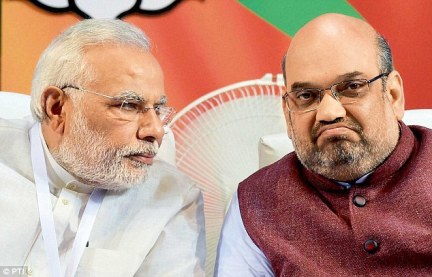
 Riding the Elephant
Recent Comments