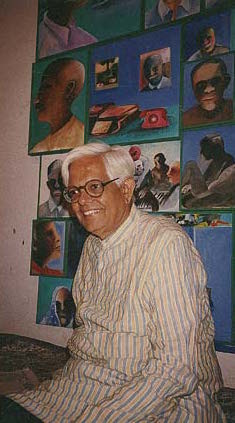
 LONDON: June is usually the month when London auctions of modern Indian art hit the headlines with dramatic million-pound sales, but this year they have been unremarkable and have been overshadowed by the opening at London’s Tate Modern gallery of a fascinating retrospective exhibition, called You Can’t Please All, of figurative works by Bhupen Khakhar (right), a provocative Indian artist who died in 2003.
Khakhar is less well known than names such as V.S.Gaitonde, Tyeb Mehta, M.F.Husain, F.N.Souza, and Amrita Sher-Gil who dominate the auctions, but he is regarded highly by other Indian artists for his iconic, pioneering narrative paintings. He tells stories with humour depicting ordinary middle class life in the late 20th century, especially in his Gujarati home city of Baroda – but not always so ordinary because Khakhar was gay in a country where homosexuality was (and still is) illegal, and male nude figures appear frequently in his works.
“In the late 1960s, he was the first Indian artist to combine traditional art, Indian popular culture, and Western pop art,” says a foreword to the exhibition’s catalogue. He “turned the cultural establishment on its head” with portraits of hairdressers and tailors, and with “sad, angry affectionate pictures” of middle-class life.
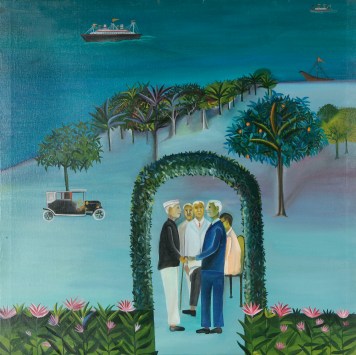
Man Leaving (Going Abroad) 1970, Courtesy Tap Collection, copyright Estate of Bhupen Khakhar
In the 1980s, he was courageously the first homosexual Indian artist to come out. The exhibition graphically illustrates that period as well as his later problems with cataracts in his eyes, which led to a blurry brushwork (masking some suggestive same-sex scenes), and then to his struggle with prostate cancer from 1998.
Some of the most appealing however are early quirky studies such as Man Leaving (Going Abroad) (above) painted in 1970, and others depicting a watchmaker and a tiger chasing and mounting a stag (both below) and strike pickets at a factory gate. Khakhar’s inspiration is said to have come from a wide range of sources varying from pre-Renaissance painters to the India’s colonial Company style, and from post-Impressionists like Henri Rousseau to West Bengal’s 19th century Kalighat style.
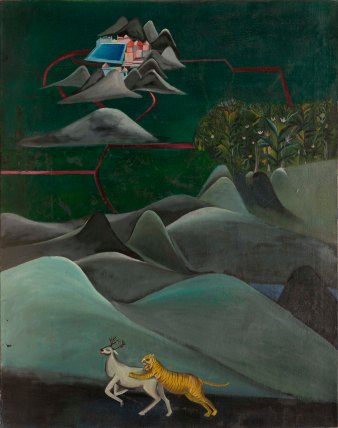
Tiger and Stag 1970 Estate of Bhupen Khakhar/NGMA, New Delhi, copyright Estate of Bhupen Khakhar
His works have appeared in a few earlier exhibitions internationally, including one at the original Tate Gallery in 1982 along with five other Indian painters including Rabindranath Tagore and Jamini Roy, and at the Tate Modern along with others in 2001. Such shows help to boost sales, as has happened for example with Gaitonde after a notable exhibition in New York’s Gugggenheim Museum in 2014.
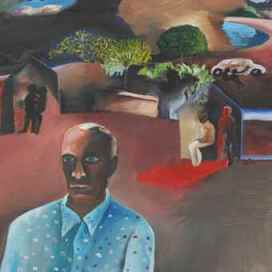
Both Christie’s and Saffronart auction houses have managed to include Khakars in their sales over the past month. A small 24in x 24in overtly gay oil on canvas, At New Jersey (below), went at Christie’s for £134,500 ($197,715) including buyers’ premium, which was more than double the $87,500 that it fetched at Christie’s in 2014 .
 There have been questions about whether the paintings – done between 13 and 50 years ago – fit the Tate Modern’s ultra contemporary image. Nada Raza, the exhibition’s co-curator with Chris Dercon (till recently the gallery’s director), points out that the Tate Modern shows art from 1900, and argues that the definition of modernism needs to be expanded when it is applied outside the US and Europe because the experience of modern life, and artistic and cultural responses, can be vastly different. Artists elsewhere resist and change the forms and rules of modern art to reflect their own experiences, often in relation to colonial or imperial powers – and that is what Khakhar did.
Some UK critics do not agree. Both The Guardian and its associated Sunday newspaper, The Observer, have slammed Khakhar and his paintings at the Tate as “incredibility unimpressive”, a “waste of space”, “uneven, garrulous, puzzling, opaque” and, having “no fluency or touch with the brush, he moves the paint around with laborious difficulty”. Those rather mindless reviews have been rightly criticised by art curator and critic, Geeta Kapur along with others including Salman Rushdie, for whom Khakhar illustrated two books.
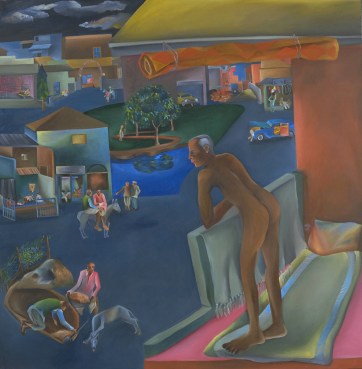
You Can’t Please All 1981, Tate, copyright Bhupen Khakhar
But The Observer does maybe strike a chord when it says that the exhibition fails “to give sufficient context for viewers who have no knowledge of India in the 1960s and 70s”. There are the usual notices on the theme of each room and individual works, and a neat pocket-size pamphlet that everyone is given, but more explanation could help visitors meet the challenge of understanding and appreciating what they are viewing, as I discovered when talking to Nada Raza. There is a splendid hard-backed catalogue with very informative essays, but that does not cater for everyone.
Perhaps the most important work in the exhibition is You Can’t Please All (above), which gives the exhibition its title. This 5ft9in x 5ft9in oil on canvas illustrates how Khakhar was “both voyeur and participant” because the artist has said that he is the naked man leaning on the balcony and it was interpreted as marking his coming out. He is watching a street scene based on an adaptation of an Aesop’s fable about a man, his son and a donkey – the man mounts and dismounts from the donkey, trying to please passers-by who make comments, but eventually the donkey dies.
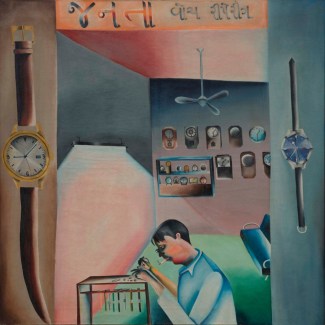
Janata Watch Repairing 1972 Vivan Sundaram and Geeta Kapur, copyright Estate of Bhupen Khakhar
Khakhar was born in Bombay (Mumbai) in 1934 and qualified as an accountant, which Nada Raza says pleased his mother who hoped he would climb the heights of the city’s business districts.
Instead, though continuing to work as an accountant, he went to Baroda to study painting in 1962 where he was taught and influenced by artists such as Gulam Mohammed Sheikh and K.G.Subramanian.
He came to the UK in 1976 (via the then USSR and Yugoslavia), and again in 1979 as an artist in residence at the Bath Academy of Art. He found Britain alienating because of the lives of working class people and lists, in notes that are displayed at the Tate, “total distrust for foreigners” as an Englishman’s qualities . 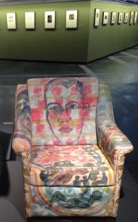 Writing about winter, he says: “You are not allowed to smile during this season, which lasts for ten months of the year. If you are sensible, then try to look as grumpy as possible. English people appreciate sulk”.
The exhibition is sponsored by Deutsche Bank which will be taking it to Germany later. It is also financially supported by Delhi’s Kiran Nadar Museum of Art.
The National Gallery of Modern Art in Delhi has a current exhibition of the Khakhar works that it has in its collection – including this painted chair, which neatly illustrates the range of the artist’s work, and humour.
Also see this review http://forbesindia.com/article/think/bhupen-khakhar-and-the-art-of-criticism/44007/1
Sept 9 ’16: A Mumbai gallery, Chatterjee and Lal has an exhibition open till Sept 24 of 29 drawings and watercolours from a sketchbook titled ‘Government Servants Society’. Dating from 1973, they are being exhibited for the first time. See on line: http://chatterjeeandlal.com/shows/the-government-servants-society-sketches-from-the-edge/
- ** Visiting the Tate Modern also enables one to look at the stylish Switch House extension (rising on the right behind the end of the old power station in the picture below) that was opened last week. This is a significant contribution to London architecture because of the way, after plans for the external cladding were changed from glass to specially designed brickwork, the structure blends with the gallery’s original brick power station and contrasts with nearby glass-clad buildings.
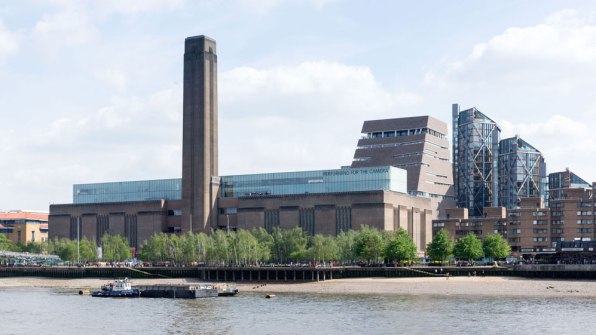
copyright Iwan Baan – frieze.com

 It has led to relaxation and removal of old restrictions on doing business that will gradually yield benefits, but it has failed so far to deliver much in terms of foreign direct investment (FDI) in manufacturing industry, and there is little evidence of jobs being created.
 He has managed to have bills passed in areas like coal mining, insurance, real estate, and bankruptcy, and has adopted the previous government’s highly successful Aadhaar electronic identity scheme that opens up a wide range of facilities, especially for the poor. He has also managed to reduce corruption, though mostly only at the top levels of the central government.
 Two days earlier,

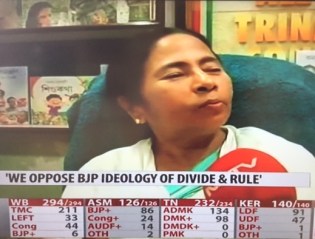
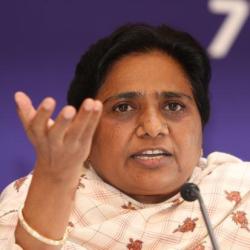 Today’s results will lead to speculation about whether regional leaders such as Banerjee and Jayalalitha will link up with others like Chandrababu Naidu of Andhra Pradesh and Nitish Kumar of Bihar to form a third front, maybe associated with Congress, to try to stop Modi winning the next general election in 2019.

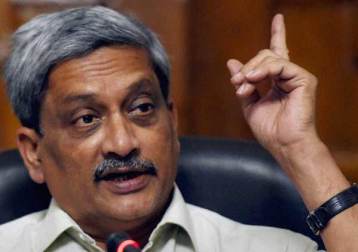

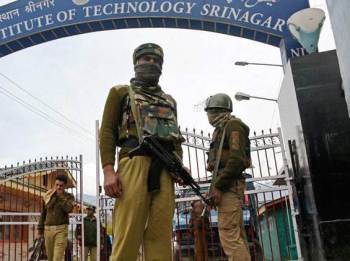 One came after Kashmiri students at a National Institute of Technology (NIT) college in Srinagar in the politically sensitive Kashmir valley defiantly celebrated the West Indies defeating India on March 31 in a T-20 cricket World Cup semi-final. That triggered pro-India protests by the college’s students from other parts of the country who were then attacked with lathi (long bamboo stick) charges by Kashmir police. In the days that followed, the college became a fortress guarded by para-military forces (above).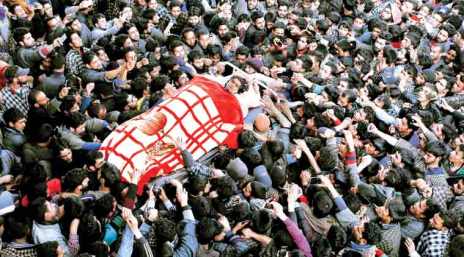
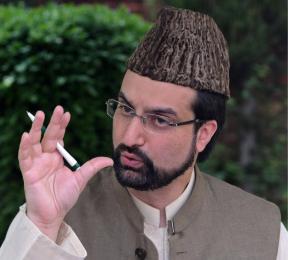 Such is the fragile situation in the apparently idyllic surroundings of the Kashmir valley, where tourists last week dodged the rain to enjoy boat rides on Srinagar’s Dal Lake, and travelled 50kms to the 2,650m (8,530ft) high Himalayan ski resort of Gulmarg to be pulled by local ski-wallahs on toboggans and ride to 4,200m on a cable car called the Gondola (below).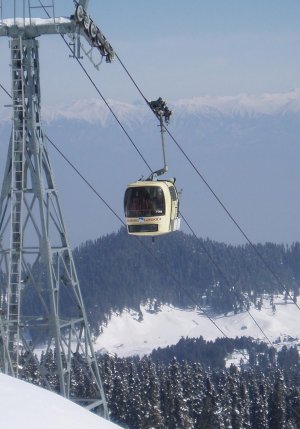
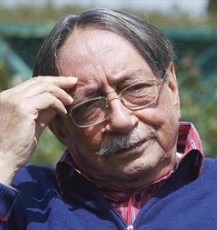 “The status quo has gone on a long time, with a lot of vested interests having been developed: the army, the police, the paramilitary, the bureaucracy, and politicians of every hue. Even separatists….obstinately cling on to the rebel identity because they are unable to grow” he says, pinpointing the different groups (he should have included the media) that enjoy consequential wealth, prestige, business opportunities and life-style in Kashmir (as they do in such situations elsewhere in the world).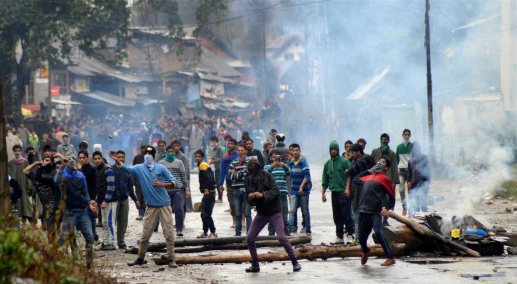
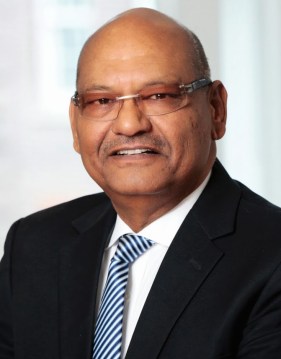
 The Corus decision, which is triggering a political row in the UK, is a blow for the prestige of both Tata, one of India’s largest and most respectable conglomerates, and its former chairman, Ratan Tata, who drove the $13.6bn acquisition in 2007 despite opposition from some colleagues.

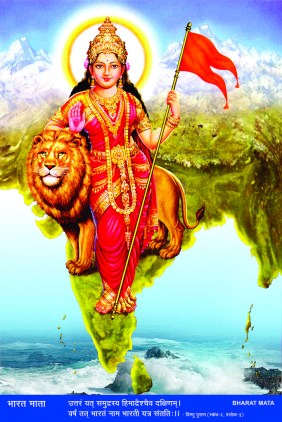 Originally triggered a couple of weeks ago when a Muslim member of a regional assembly refused to recite the line, this is really a non-issue because a wide spectrum of the population (including some Muslims) have no problem with saying it (nor with others not saying it). It is also the slogan used by the Indian army.

 He c
He c Riding the Elephant
Recent Comments