India’s finance minister Arun Jaitley is the calm voice at the top of Narendra Modi’s Bharatiya Janata Party-led government. His role is usually not to worry so much about the economy, but to try to present a sense of sanity and reasonableness as the government’s spokesman and information minister, while Modi avoids making many comments apart from mega rally speeches, and Amit Shah, the party’s president, exudes fear-inducing Hindu nationalism.

Jaitley has performed both the economy and information functions today with his annual budget speech that ran for just over 90 minutes. He focussed heavily on helping the rural poor with schemes that aim to begin to double farmers’ incomes by 2022 (an over-optimistic and probably unachievable target), and on accelerating investment in infrastructure, especially irrigation.

That should, the government hopes, increase consumer demand and economic growth, while also (though Jaitley of course did not say so) conveniently countering the Congress Party’s opposition line that the government is “not pro-poor” at a time when state assembly elections are looming.
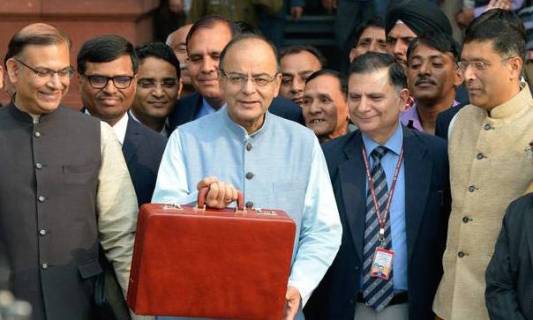
arun-jaitley-5-story_647_022916020019

Arun Jaitley and his team leave the finance ministry for parliament

Three days ago, Jaitley was performing the same calming role in an often screamingly angry two-day parliament debate after caste-based riots in the nearby state of Haryana had led to widespread violence and looting that cut water supplies to Delhi. The previous week had been dominated by clashes and protests in Delhi’s Jawaharlal Nehru University with rough police action and court cases, encouraged by government ministers, that irrationally accused students of sedition.

Image low

Today’s budget has therefore come when the image of India and the 22-month old Modi government has been damaged, and something is needed to revive confidence. Jaitley’s speech of course dealt with economic confidence, but it is really more important for the government to boost confidence in its politics and to show that it is not following a pre-planned policy of social divisiveness and restrictions on the freedom of speech aimed at strengthening Hindu nationalism and at enhancing the BJP’s Hindutva appeal..

Two friends visiting Delhi in the past week from the UK and US have told me how, viewed from abroad, India looks the best hope among major economies with its 7.6% growth at a time when other countries have problems. But, they both added, the social unrest and the divisive Hindu nationalist and repressive image of the government, was worrying investors.

It is against this background of social unrest and the government’s image problem that Jaitley made his speech today. His most important macro economic announcement was that he has not relaxed the government’s target of reducing the current 3.9% fiscal deficit to 3.5% of gdp in the coming year, despite being given conflicting advice that stimulating growth was more important.

Jaitley’s economic advisers, who produced the finance ministry’s annual economic survey at the end of last week, are suggesting that this year’s official 7.6% (some critics say inflated) growth figure might drop to 7% in the coming year instead of rising.

Nine pillars

Jaitley presented what he called a “transformative agenda”, with “nine pillars” covering benefits for farmers, rural communities, social issues such as health care, industry and skills, infrastructure, financial sector reforms, and governance and ease of doing business.

Proposed spending included $2.5bn in 2016-17 on delayed irrigation projects, $32bn on rail, road and other infrastructure. Another $3.6bn was announced to begin re-capitalising financially crippled state banks that have been hit by their often politically-inspired largesse of allowing massive bad loans to over-leveraged Indian companies.

But there were few significant economic reforms in the speech. Foreign ownership through direct investment is to be allowed in food processing and marketing businesses. The foreign portfolio investment limit in public sector corporations (apart from banks) is to go up from 24% to 49%, and 15% foreign investment will be allowed in stock exchanges, up from 5%.

Various measures were aimed at improving the ease of doing business in India’s rule-bound heavily bureaucratic environment, and a proposed bankruptcy code will ease the closure of bankrupt financial firms.
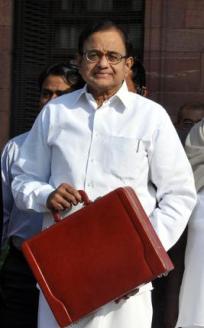
Chidambaram budget 2013

Palaniappan Chidambaram with his budget speech in 2013

Also included were a complex array of tax measures including some relief for small businesses, and an attack tax avoidance, plus a fresh effort (following a largely unsuccessful scheme last year) to persuade tax-payers to reveal undeclared assets.

Jaitley said that companies would not be hit, as was done in the past, by retrospective tax demands. He agreed to waive penalties and interest on outstanding payments, but failed to reassure companies such as Vodafone that are involved in outstanding multi-billion dollar cases.

Overall, the budget sounded like a long list of worthwhile innovations and incentives, though critics said it lacked an overall big idea, and that it would be difficult if not impossible to implement projects fast enough to use all the funds, especially in areas such as irrigation. Palaniappan Chidambaram (above), the last Congress government’s finance minister, noted that there had been no mention of (declining) exports, which was certainly odd. There was also virtually nothing to encourage private sector investment in manufacturing, and no mention of spending on defence where there was only a marginal budget increase despite inflated pension and pay commission costs.

Exports and the private sector however were not the targets of this politically targeted budget, which was aimed, as I have said, at shifting the government’s image from being pro-corporate to caring for the rural poor.

Now Jaitley’s job is to show, and to persuade his prime minister to show, that the government also cares for India being an open and free society without the repressive Hindu nationalist overtones.
Sometimes it seems as if Narendra Modi’s government just does not want to succeed with its economic policies – or at least that it gives a higher priority to pushing repressive social actions favoured by its arch Hindu nationalists and their often-violent supporters than it does to achieving business reforms and attracting foreign investment.

Dramatically conflicting events in the national capital of Delhi and the commercial capital of Mumbai in the past few days have illustrated this point.

They raise the question of whether Modi is in charge, or whether forces and rival factions within his Bharatiya Janata Party (BJP) government, plus some bureaucrats and other officials, undermine what he is trying to do.

The alternative view is that he approves of the ultra-nationalist approach, even though it might undermine his ambitions for the economy, especially at a time when state assembly elections are once again looming in the coming months.

IMG_5286

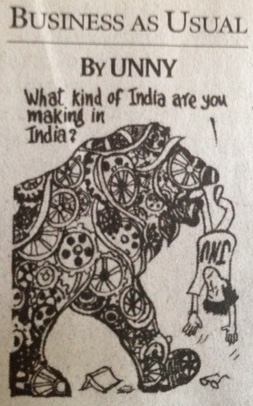
A cartoon in the Indian Express showing the Make in India brand’s symbol of a lion carrying off a university student

In Mumbai, a massive Make in India promotional week was opened by Modi on February 13. It has been aimed at attracting foreign investors into job-creating manufacturing industry with a vision of India as an open and liberalising economy. Visitors have included the prime ministers of Sweden, Finland and Poland, together with top international industrialists.

Meanwhile in Delhi, the city’s police and Rajnath Singh, the home minister, triggered escalating violent and repressive clashes with students and the media that have continued till today over an issue which need never have become important outside the gates of the leftward-leaning Jawaharlal Nehru University (JNU), one of the country’s leading educational institutions.

The clashes have dominated the newspapers and television, almost eclipsing the Make in India events – apart from a few hours on February 14 when a massive fire at a prestige cultural evening blazed for a few hours across the tv screens.

Foreign visitors to Mumbai might regard the students’ problem and subsequent violence as something that happens in most countries from time to time, and therefore not significant to any investment plans. But if they have inquired further, they will have discovered a government that has repressive overtones and that restricts freedom of expression more oppressively than past governments have done, while allowing its extreme wings to create social unrest.

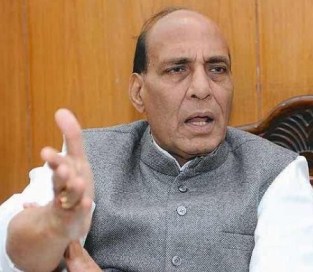
Rajnath-Singh-558x395

Home minister Rajnath Singh

The way that the clashes with the students have been handled is also souring the political climate and is giving the Gandhi family-led Congress Party fresh excuses to obstruct parliament’s Budget Session that begins next week. This will not block finance minister Arun Jaitley’s Budget speech due on February 29, but it could upset new measures including a fresh attempts to pass urgently needed sales tax legislation.

Meanwhile, in the world of business, Modi’s Make in India message has also been undermined by finance ministry bureaucrats who have warned Vodafone, the British mobile phone company which is one of India’s biggest foreign investors, that the company’s assets might be seized if it failed to pay Rs 14,200 crore ($2.1bn) in disputed tax. This case is in arbitration, so there should be no threats, and Modi said in Mumbai that such tax demands were a thing of the past. As Vodafone put it yesterday, “In a week when Prime Minister Modi is promoting a tax-friendly environment for foreign investors, this seems a complete disconnect between the government and the tax department.”

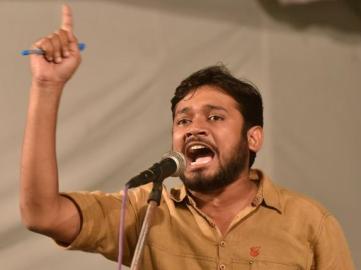
Kanhaiya_Kumar_2734474g

student leader Kanhaiya Kumar

So who is setting the agendas? Was Rajnath Singh, who has sometimes been side-lined by Modi, not aware that that the escalating students’ row, and behaviour of the Delhi police who come under his charge, were undermining the prime minister’s investment pitch – and did the prime minister mind?

On a different level, the Vodafone warning raises a question about Jaitley’s control of his ministry’s bureaucrats because he was in Mumbai for the manufacturing promotion and would presumably not have wanted to see it undermined – he is also Modi’s chief spokesman and the minister for information.

The students’ crisis began on February 12 when Kanhaiya Kumar, president of the JNU student union, was arrested and other students were suspended after an annual protest against the 2013 hanging of a convicted Kashmiri terrorist. Rajnath Singh condemned the students for “anti-national” activities and called for tough police action.

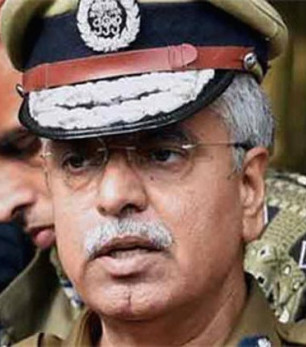
bs-bassi-m

Delhi police chief B.S.Bassi

“If anyone shouts anti-India slogan and challenges nation’s sovereignty and integrity while living in India, they will not be tolerated or spared”, the home minister tweeted provocatively shortly before the arrests. “I have instructed the Delhi CP [chief of police] to take strong action against the anti-India elements,” he added, and repeated the remarks on television. The police gained unrestricted access to the university premises and Kumar was arrested on charges of sedition amid protests and scuffles.

The home minister must have realised that, by sending the police into the JNU and making such remarks, he was escalating what could have been an internal disciplinary matter into a headline-grabbing issue. He then went further and, on apparently weak evidence, suggested on February 14 that the student protest has been supported by Hafiz Saeed, leader of the Pakistan-based Lashkar-e-Taiba terrorist group who is on India’s “wanted” list.

The minister’s mission was carried out by the Delhi police chief, B.S.Bassi, who adopts what is widely regarded as a pro-BJP line on many issues, ranging from this case to hassling the popularly-elected Aam Aadmi Party state government in Delhi that has just successfully completed its first year in office. Bassi retires on February 29, when he might enter politics or be given another job in the gift of the government.

Singh’s statements and Bassi’s actions were in effect curbing the freedom of expression and the right to protest, while supporting the BJP’s extreme and violent right-wing student organisation, the Akhil Bharatiya Vidyarthi Parishad (ABVP) that led the unrest. The ABVP rivals other student factions, including the far left Democratic Student’s Union (DSU) and a Democratic Student’s Front that was involved in February 12 protest.

JNU-Students-Journos-attacked-in-Pattiala-Court-min-400x230

Singh’s “anti-national” allegation and the use of a sedition law dating from the days of British rule has been widely criticised, while a claim by the human resources minister, Smriti Irani, that the nation would never tolerate any such “an insult to Mother India” was widely mocked for being out of proportion to what was happening. Both Congress and BJP governments have attempted to use the old sedition law to curb dissent, but there has never been a successful legal case and the supreme court ruled in 1962 that it could only be applied where there was “incitement to violence” against the government.

Bassi’s bias became evident when, having arrested Kanhaiya Kumar before carrying out any investigations, the police did not arrest lawyers (some with strong BJP connections and maybe also ABVP activists dressed up as lawyers) who have stormed Delhi’s Patiala House district court (above) where Kumar’s case is being heard, attacking students and journalists over the past three days. Bassi said he was investigating allegations, even though the actions of identifiable lawyers were being shown on television. A transcript of Kumar’s speech shows he was not inciting violence.

The violence and attacks on journalists have continued today and there have been reports that Kumar was assaulted inside the court. The supreme court has stepped in ordering the police to take action, make some arrests, and clear the Patiala court of protestors. Pointedly, it asked Bassi if he was able to maintain law and order. The government has also shown some signs of trying to calm the political mood, promising at a meeting of all parliamentary parties presided over yesterday by Modi to allow full debates on the events next week.

Kumar’s detention in jail was extended today by the Patiala court till March 2, which seems unnecessary, given that the student leader’s speech is fully available and he has told police he has not voiced anti-national views. His detention underlines concern that the government, and especially its right wing ministers and violent allied organisations, have no tolerance for students’  anti-establioshement views and are bent on restricting the independence of academic institutions and curb the freedom of expression, which has been seen on many other occasions since the general election in 2014.

The escalating crisis of the past six days need never have happened, and could have been ended on any one of the days by competent political management, unbiased and measured policing, and a respect for the rights of individuals – if the government had wanted to do so. The question that has been raised, as the Indian Express cartoon above asks, is what kind of India does Modi and his government think they are making?

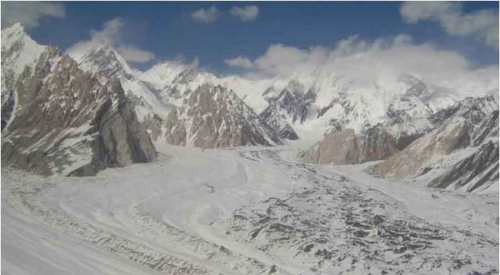
It seems the most pointless military exercise in the world. Yet in the days since February 3 when ten Indian soldiers were hit by an avalanche and killed on the Siachen glacier some 20,000ft up in the Himalayas, it is clear there is no prospect of the 32-year old stand-off in the area between India and Pakistan ending in the foreseeable future.

Five days after the avalanche, one of the soldiers was discovered still alive under 35ft of snow. He died in hospital yesterday, after a national outpouring of grief and a visit to his bedside by Narendra Modi, the prime minister.

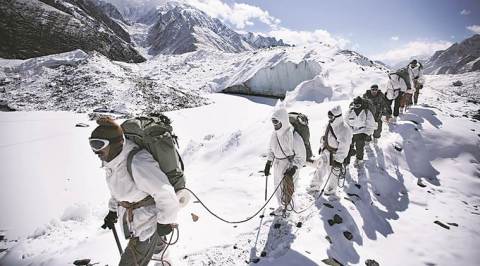
siachen759

Along with the grief and extensive media coverage saluting India’s “brave hearts”, military voices have emerged arguing that the emotion should not lead to calls for India’s troops to be withdrawn – basically because Pakistan has not agreed a line for the border, and because relations with China are making the area increasingly sensitive. Pakistan reacted to the deaths by saying that a settlement should be reached quickly, but Manohar Parrikar, India’s defence minister, said today that “holding our presence in Siachen is very important”.

No shots have been fired since a ceasefire was agreed between India and Pakistan in 2003, but soldiers continue to die because of the conditions. With temperatures averaging minus 24 degrees centigrade and dropping sometimes to minus 50, they suffer from hypothermia and frostbite and, till relatively recently, the Indian troops were ill equipped to cope. India has lost 33 soldiers since August 2012 when parliament was told that the death toll was 846 since action began in 1984. In 2012, 129 Pakistani soldiers and eleven civilians were buried in an avalanche at a camp near the glacier.

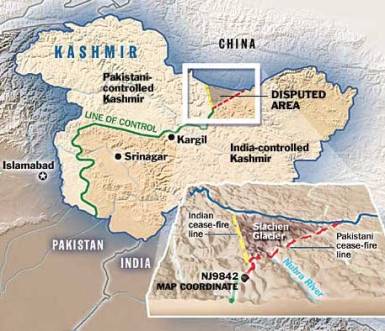
siachen mapThe financial price is also high – about Rs7 crore (just over $1m) a day for India, according to reports, because of the high costs of air-lifting supplies by helicopter.
Indian politicians have often talked about ending the impasse. Manmohan Singh, the former prime minister, visited the glacier in 2005 and suggested – unrealistically – making it a “mountain of peace”.

Proposals have emerged at various times from “track two” behind-the-scenes consultations for a settlement as a “confidence building measure” between the two countries, which would also include resolving a disputed section of coastline know as Sir Creek between India’s state of Gujarat and Pakistan’s province of Sind. There were formal talks on Siachen in 2012 after the Pakistan avalanche, but the defence establishments objected – in India saying, as they still do, that the cause which led to such sacrifices cannot be thrown away.

“Siachen has become embedded in the Indian public consciousness as a symbol of national will and determination to succeed against all odds,” a retired Indian general said this week. “Siachen has acquired a sanctity of its own, which is part folklore, part military legend, part mythology, and a substantial measure of national pride.”

Barren_land

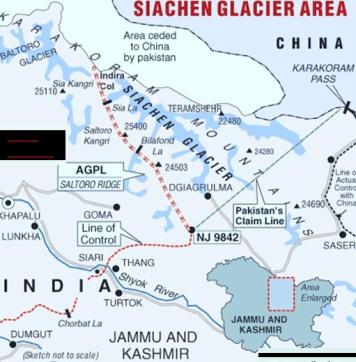
This is the only undemarcated area between the two countries (along with Sir Creek). There is a defined but disputed 776km Line of Control (LoC) in Kashmir. This is administered as a long-term though temporary arrangement, and there is regular firing between the two countries and loss of life. South of that is an undisputed 2,308km formal international border running down to the Arabian Sea.

The LoC was drawn on the basis of land occupied by both countries, but neither side had any presence in the uninhabited area further north up to Siachen, so this was not demarcated. Pakistan (and apparently the US) thought the line would continue eastwards to the Karakoram Pass with China (not to be confused with the quite separate Karakoram Highway to the west that links Pakistan with China across the Khunjerab Pass). That would have taken Siachen away from India, which, along with the joint Indo-Pak LoC demarcation process, thought the line should go northwards, thus officially giving it the glacier.

Siachen-mapThe trouble started in 1984 when Pakistan was dispatching groups of Japanese and other mountaineers to the area. India suspected Pakistan’s motives and mobilised its army, as did Pakistan – I was on holiday in the Pakistan’s Northern Areas during the summer of 1984 and saw helicopters flying off to the glacier from Skardu in Gilgit-Baltistan.
India is holding the dominant Saltoro Range to the west of Siachen, which gives it control of the glacier. Understandably, from a military point of view, it does not want to abandon that position without Pakistan agreeing to a demarcated line, which Pakistan, presumably encouraged by China, refuses to do.

To a bystander, it seems a pointless confrontation on the world’s highest so-called battlefield. And so it would be if China was not increasingly showing interest in the area, including the disputed territory of Aksai Chin that was part of the two countries’ brief 1962 border war, when India was defeated.

India and Pakistan have been at loggerheads ever since partition in 1947, when they became independent of Britain. They have fought three wars and one near-war (at Kargil in Kashmir in 1999). Successive prime ministers have dreamed of settling the differences, but have failed. Modi’s recent attempts with Nawaz Sharif the Pakistan prime minister, have floundered following last month’s terrorist attack on India’s Pathankot air base.

Pakistan’s army does not seem to want a settlement of the issues and the Islamic terrorist organisations based there certainly do not. Neither does China, which has a considerable hold over what Pakistan does.

The Siachen glacier stand-off is a significant part of that puzzle, so there is no chance that the Indian troops can leave any time soon.

Posted by: John Elliott | February 4, 2016

Street art adds drama for Delhi’s annual fair

Delhi’s annual India Art Fair that took place last weekend had style and crowds, but there was more artistic spontaneity on display a short auto-rickshaw ride further to the south of the city, where street artists were painting railway containers at a cargo depot in the shadow of a mountainous rubbish dump.

IMG_5096

This is the fourth year that the artists have been active around Delhi, painting buildings in an attempt to liven up urban areas. Arjun Bahl, one of the organisers, talks about the art “giving people a sense of pride” in places where they live and work. He sees it as part of prime minister Narendra Modi’s Swachh Bharat (Clean India) campaign that generally arouses more scepticism than support.

These are not the sort of random unsanctioned graffiti works seen elsewhere, but a more formalised arrangement carried out – however improbable it may seem – in co-operation with India’s Ministry of Urban Development that runs the Swachh campaign and the government-owned Container Corporation of India (Concor).

Elephants-2015-5-x-5ft-by-Artist-Senaka-Senanayake-presented-by-Grosvenor-Gallery-@-India-Art-Fair

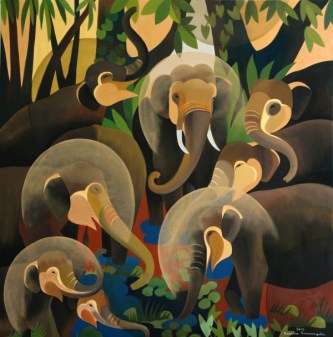
Elephants by Senaka Senanayake

Now in its eighth year the Indian Art Fair (IAF), which also aims to spread knowledge about art, is establishing itself as an important regional venue for both established and new art collectors. For the biggest international galleries and collectors, it does not rival the annual Art Dubai fair that takes place next month, but it does attract a sprinkling of foreign buyers and institutions, though some galleries said they had seen fewer top collectors. It also generates a wide range of other activities in the capital,

This year’s overall quality of art on show was somewhat better than in the past. The organisers said this partly stemmed from 35% of galleries that applied being rejected by a selection committee, which reduced the total number from around 90 to 70. But there was little on show that was specially original or memorable, with few eye-catching installations, though the spacious layout of booths in large exhibition tents on the Okhla site was an enormous improvement on previous years.

Installation by Thukral and Tagra, Nature Morte, IMG_5103

With security guard, Nature Morte installation by Thukral and Tagra

The fair organisers have refused, for the first time, to announce attendance figures and indications of sales, even though many galleries said they had good results. This suggests that the attendance was not much higher than last year’s 80,000 visitors, though Neha Kirpal, the founder and director of the fair, talked without being specific about 100,000. Last year, the sales were said to be 25% above 2014’s (undisclosed) value, with the top 2% of collectors together spending “over Rs30 crore” (Rs300m, then $4.8m) 

The actual totals however need not be so sensitive as the public relations black-out makes them seem because the fair is successfully consolidating its position as an annual focal point for art activity.

Galleries that reported successful sales, or potential sales, included the London-based Grosvenor with paintings by Senaka Senanayake (above) from Sri Lanka. South Asian art was a special focus area for the fair, which could help to compensate for some European galleries that have stopped attending because of a lack of sales of foreign art plus Indian customs’ complex import and export regulations.

Also reflecting regional interest was the Hafez Gallery of Saudi Arabia, which might indicate that India’s collectors are broadening to Middle East art. Nature Morte, the pace-making Delhi contemporary gallery, also had good sales, as did the Experimenter from Kolkata that had one of the more innovative and interesting stands.

Raza IMG_5151The biggest display was staged by the Delhi Art Gallery (DAG) with two large spaces, one devoted to its impressive collection of Indian masters. The gallery ran its own lectures and school visits, separate from those organised by the fair, as well as a daily newspaper, firmly establishing it as the biggest spender among India’s galleries. It even had a Raza painting reproduced in a pattern of lines and grids on acrylic (left and below) for blind people to be able to explore the work, along with a description in Braille. 

Raza for blind IMG_5149Curiously however it did not show it’s latest prize purchase – a large F.N.Souza, Man and Woman Laughing, which it said would be on show after it bought the work at a Saffronart auction in Delhi last September for Rs16.84 crore ($2.59m), displaying financial muscle that took the art world by surprise.

Fringe events included India Today magazine’s Art Awards that honoured elderly veteran painters S.H.Raza and Krishen Khanna and, among others, the Experimenter Gallery. Continuing exhibitions include a show of works at The National Gallery of Modern Art by Bhupen Khakhar, a modern painter whose works will be at London’s Tate Modern gallery in June. The Devi and Gujral art foundations have an abstract exhibition on 1947 partition, This Night Bitten Dawn, in a Jor Bagh house curated by Salima Hashmi from Pakistan.

paint-silverleaf fibreglass bull by Arunkumar HG below an M.F.Husain - Crayon Gallery

paint-silverleaf fibreglass buffalo by Arunkumar HG below an M.F.Husain – Crayon Gallery

Among others. collector Kiran Nadar’s museum in south Delhi features Himmat Shah, and Vijay Kumar’s archive in the satellite city of Noida is showing a collection by Jamini Roy, while a 50th anniversary exhibition of works is on at the Kumar (no relation) Gallery in Sunder Nagar. The British Council is displaying work by 55 Indian and British painters on playing cards. Last month, Mumbai’s India Art Festival held a much smaller event at the National Stadium in the centre of Delhi, catering for less significant galleries and art shops.

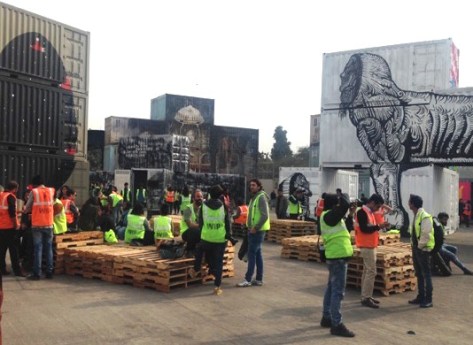
The street art has mostly appeared on government buildings, including some office blocks and the Lodhi Colony residential area in central Delhi, using paint supplied free by Asian Paints, India’s biggest manufacturer. The container initiative started when Sanjay Bajpai, the manager of the Concor container terminal at Tughlakabad, heard about Arjun Bahl’s St+art Foundation and offered a group of 100 ventilated food containers that might later travel together as a cargo train. 

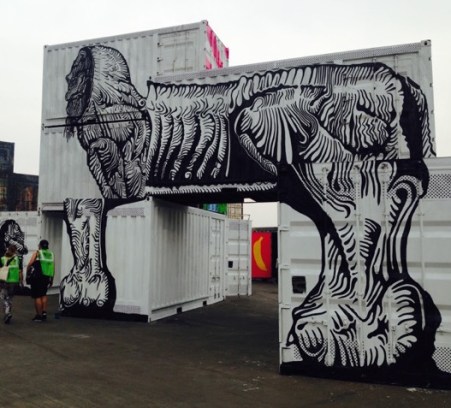
IMG_5076Last weekend, 24 Indian and international artists included Amitabh Kumar from Bangalore, who was painting five containers (below) with a massive beast that was headless, he said, to mark the (not yet confirmed) death of the nearby rubbish mountain. For him, street art “spreads the perception of art to a wider audience”. That neatly fits with Neha Kirpal’s concept for the art fair, which has a big out-reach programme to local schools.

So it doesn’t really matter if there are 80,000 or 100,000 people at the fair, nor whether a large number of famous London and New York galleries have stands. More important is that the fair continues to pull in the most significant Indian galleries and collectors, plus others from the region,and that it remains a focus for other events and generates a wider awareness about art in Delhi – and in Mumbai, if one day it moves there.IMG_5090

Posted by: John Elliott | January 28, 2016

Crowds and personalities throng to the Jaipur lit fest

Whether you want to hear about the provision of toilets and treatment of excreta in India or the life and times of a transgender, or listen to one of Britain most famous comedian personalities or a pressured Indian bureaucrat defending his patch, or how the US has caused chaos in the Middle East ousting established regimes, the Jaipur Literature Festival was the place to be last weekend.

IMG_5028Thronged with a record 330,000 “footfalls” (a definition that includes repeat visitors) over five days, the festival, now inelegantly known as JLF, continues to grow and defy the stresses and strains of crowd control by absorbing the thousands of people without disturbances.

It is billed as the world’s largest free lit fest and, in the eleven years since it began as part of a broader arts festival, it has spawned more than 100 others around India and the rest of South Asia. Writers with new books to peddle travel along with established big names from Delhi to Calcutta and on to Chennai and Bangalore and from Goa to Mumbai and Hyderabad while there are more in the Himalayan foothills at Kasauli, Shimla and elsewhere – plus Lahore in Pakistan, Thimphu in Bhutan and Dhaka in Bangladesh.

None of these other locations however measure up to the sheer size and spread of the Jaipur fest which benefits from the colour and traditions of taking place in the capital of the desert state of Rajasthan with excitement of the crowds and vast mixture of speakers in English, Hindi and other regional languages.

Margaret Atwood, the veteran Canadian writer, launched the festival, saying “we become writers because we love to read”, and “the writer’s ‘other half’ is the reader”. She was followed by famous names such as novelists Colm Tóibín, Marlon James and David Grossman, and writer and television personality Stephen Fry.

Rachel Kelley, a writer and journalist, talked about using poetry to overcome depression while Tristram Hunt put aside his role as a Labour Party member of parliament in the UK to talk about his book on “ten cities that made an empire” – including Mumbai and Calcutta as well as Cape Town and Hong Kong.

Ruskin-Bond-1453440565Ruskin Bond (left), an India-based veteran in his early 80s, seemed to hanker for the days before television and literary festivals when writers could ”remain anonymous and not be known as a face”.
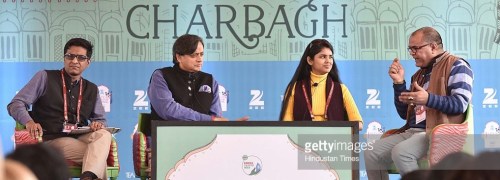
Tell that to three voluble writers in their 50s who revel each year in popping up repeatedly on various of the festival’s five stages – Shashi Tharoor, a former senior United National official and now an erudite Congress Party politician, William Dalrymple, a historian writer and the festival’s ebullient co-director, and Swapan Dasgupta, a widely-read Anglophile columnist with strong Bharatiya Janata Party links.

All three were involved in sessions and writings that, among other things, are gradually lifting the lid on the horrors of India under British rule, especially the marauding East India Company with its early versions of crony capitalism. Dasgupta and Dalrymple discussed all this in one session with Ferdinand Mount, a British writer whose book The Tears of the Rajas traces his Scottish family’s involvement in, to quote the subtitle, “money, mutiny and marriage in India 1805-1905”.

The excreta and toilets were discussed in a session titled Swachh Bharat: The India story. Sanchaita Gajapati Raju, aged 30, talked (below) about her voluntary organisation that brings sanitation, toilets and clean drinking waster to villages in Andhra Pradesh. This was one of several sessions that aired complaints and frustrations about the government of Narendra Modi, and especially about his high profile but yet-to-be-effective schemes, one of which is called Swachh Bharat or Clean India.

Anustup Nayak (L), Shashi Tharoor (2L), Sanchaita Gajapati Raju (2R),  story writer, novelist Desraj Kali (R) - Getty Images

Amitabh Kant, a top industry ministry bureaucrat who runs two government schemes, Make in India and Start-Up India, showed how stressful it is making the most of such endeavours for the prime minister when I questioned him on progress during a session last Friday. He didn’t seem to realise the strength of widespread criticism about the Modi approach and about how little has been done to ease the path for businessmen who run into constant bureaucratic blockages, accusing me of being “frozen in time” `and “anti (all) governments” when I challenged his forceful assertions. The frustrations however came out clearly when I talked a couple of days later with a business panel who tried not to be too critical of the government but were clearly less than impressed about what has been achieved.

To begin with, it looked as if the festival would not take place, or at least not in the ever-expanding stylish surrounding of the Jaipur’s Diggi Palace. A dispute in the family that own the palace triggered a court case last week that was loosely based on fears of a terrorist attack as well as filial jealousies. But after a stubborn police chief had been shunted out of his Jaipur post, a local judge wisely delayed hearings on the case till after the festival was over, avoiding the chaos that would have been caused by changing the arrangements and travel plans of some 380 visiting speakers as well as tourists and local visitors.

Meanwhile some of the best news at the festival was that Delhi’s Full Circle book shop was back running the book store, having been ousted last year by Amazon.in that used its multi-national muscle to outbid it with a big financial down payment. Amazon turned out to be more interested in selling its Kindle book-readers than actual books, and this year the festival organisers responded to popular pressure and went back to Full Circle – a small victory for Riding the Elephant because I campaigned on this blog a year ago for Amazon to go.

Throughout, there was the backdrop of an on-going debate in India about freedom of expression and how that has been coming under attack under the Modi government. Karan Johar, a popular film producer said that freedom of expression was the “biggest joke” and that “saying something in Jaipur” could lead to court action against him elsewhere.

Curiously a noisy debate at the end of the festival accepted that freedom of expression could be “conditional” and chanted “Modi Modi Modi” when Anupam Kher, a popular actor (awarded the  Padma Bhushan honour by the president of India the next day) disagreed with the mass of the literary fraternity by arguing that freedom did exist. It seems unlikely that most of the crowd agreed with him, though the vote went in his favour – and that I guess is freedom of expression, however transitory!

Narendra Modi often hands out a sop or two during his mega speeches – announcing for example direct flights from foreign capitals to his home state of Gujarat, which pleases overseas Gujaratis in his audience. 

On January 16 in Delhi however he went far further and, in a speech to a big audience of mostly young entrepreneurs, announced a swathe of much-needed incentives for new business start-ups, including tax breaks, an app that could register a new company in one day instead of several weeks, a five-year Rs8,000 crore ($1.2bn) credit guarantee scheme and a four year Rs10,000 crore ($1.5bn) investment fund.

Modi StartUp Selfie

So detailed were his announcements that he had to abandon his usual impromptu style of Hindi oratory and read the details from a prepared script. “The less the less government is involved, the greater the progress,” he then said. “Please tell us what not to do”.

The audience was ecstatic, combining some of the “Modi Modi” chanted fervour of overseas Indians in the US and UK and elsewhere, with appreciation that the government is at last about to tackle some of the basic problems that eager entrepreneurs run up against with India’s slow moving but usually persistently unhelpful bureaucracy. Currently, many start-ups go abroad because of the hassle in India.

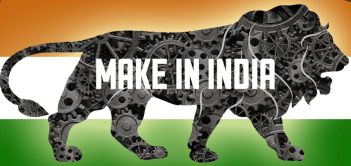
Called the Startup India Movement, this is the latest of a series of branded schemes launched by Modi. They include Make in India (aimed at job creation in manufacturing industry), Swachh Bharat Mission (Clean India including rural toilets,) Pradhan Mantri Jan-Dhan Yojana (financial inclusion and universal banking), and Digital India (e-governance and countrywide access to internet). 

make-in-indiaCritics often say that these are primarily publicity stunts to boost Modi’s image – typified by him wielding a broom for Swachh Bharat, and being lauded by a long line of top businessmen with adulatory speeches at the launch of Make in India.
That they are stunts is beyond question – such events at home and abroad are central to Modi’s style of prime ministership. 

The main point however is whether the schemes will gradually transform the way that India is run by providing access for the poor to toilets and banks, providing jobs in a revived manufacturing industry, making the internet universally accessible, and opening way for India’s many budding entrepreneurs to start companies – and quickly close them when they fail.

modi-swachh bharat .jpgIf these things happen, and progress so far has been slow, Modi will have begun to achieve his aim of changing the way that India is run, opening up fresh opportunities for economic growth, job creation and poverty reduction.

The evidence so far however is that he is not focussed enough to make these changes happen. In particular, he has not begun to change the way that most bureaucrats work at all levels. On Startup India, this means that civil servants and others will no doubt continue to extort bribes and raise petty problems whenever possible – despite Modi’s claims to the contrary, corruption continues at all levels of government, apart maybe from the top ranks in Delhi where it does appear that bribes are rarely paid.

Modi’s speech came at the end of a day-long conference in Vigyan Bhavan, Delhi’s official conference centre, and was notable for the absence of India’s business establishment. Instead, there were founders of start-ups such as Uber, the app-based taxi service (and Ola, its Indian equivalent), Flipkart which is India’s answer to Amazon, InMobi, a mobile advertising firm, and a host of others.

Everyone called Modi “Sir”, but that seemed to be youthful respect rather than middle-aged businessmen’s fawning, and everyone spelt out the problems of starting-up new businesses in India. The complaints included complicated taxes, archaic regulations (such as having to keep records on employees on paper and not just in a computer), difficulties in quickly opening and closing a start-up.

That he, and Amitabh Kant, a top industry ministry bureaucrat and branding expert who organised the event, had listened in advance was shown by the string of some 20 announcements.

However, as always happens in India, the effectiveness of what Modi announced will depend on regulations and other details that have yet to be drafted, and how they are applied in practice. For example, the application of a definition of a start-up is not clear. Whether the app-based registration of a new company will actually deliver in one day seems problematic. A three-year tax exemption also looks odd since most new businesses do not make profits in that time.

As usually happens, the ideas are good – and there has been a general welcome that a government has formally recognised start-ups as a category of business needing encouragement.

But Modi and Kant and other supporters of the announcements will have to focus more than is usual on implementation, now the adrenalin rush of the launch event is over.

JAN 11: Narendra Modi visited Pathankot with Ajit Doval, the National Security Adviser, on January 9 and praised India’s response to the raid. The attack was condemned in Pakistan by both the civilian and military leadership – the first time this has happened. The US put pressure on Pakistan to speed up its promised investigation into the identity of the organisers. Doval said this morning that the planned talks with Pakistan would go ahead  “only if Pakistan takes action” against those responsible.

_________________________________________________________

When Narendra Modi was elected India’s prime minister, the main hope was that he would transform the muddled and inefficient way that many of the country’s institutions and organisations are run. Economic reforms, which dominate media and parliamentary debate, are also important, but Modi was primarily seen as a capable regional politician and leader who could wreak administrative change nationally.

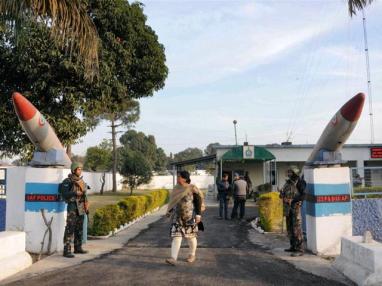
Twenty months after last year’s landslide election victory, his failure to make significant  changes was graphically demonstrated by a terrorist attack last weekend on an Indian Air Force base at Pathankot (below) in the state of Punjab.

Pathankot HTThe base was not properly protected and defended against such terrorism, despite being just 25 kms from the border with Pakistan, and the response by security forces was muddled and badly organised, though the attackers did not manage to destroy any aircraft. There are also suggestions that India’s border paramilitary forces may have been involved in drug smuggling from Pakistan that was linked with the terrorists.
The event threatens to undermine Modi’s more innovative approach to foreign affairs that led him on Christmas Day literally to drop in on Pakistan prime minister in Lahore for a few hours when he was flying back to Delhi on from Russia and Afghanistan. Though sourly criticised by the opposition politicians for being more a photo-op than measured diplomacy the visit, which was the first by an Indian prime minister to Pakistan for 11 years, could potentially help to improve the two countries’ tortuous relationship.

PM Modi in Russia

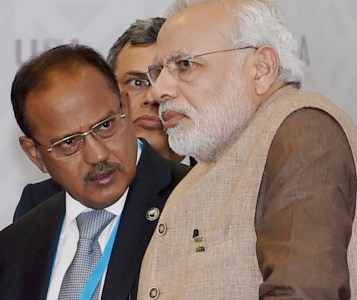
Ajit Doval with Narendra Modi

The attack is seen in India as an attempt by extremists, probably supported by Pakistan’s military and ISI secret service, to undermine progress that the Modi visit might generate. It coincided with an attempted raid by gunmen on the Indian consulate in the Afghan city of Mazar-i-Sharif. The Pakistan-based Jaish-e-Mohammad (Army of Mohammad), an Islamist group close links to the Pakistan military, is believed to have been responsible and, significantly, Pakistan has not tried to deny that the terrorists crossed from its territory into India.

The Pathankot attack began on Saturday January 2 after six terrorists had crossed the border in an area used for decades by drugs and other smugglers and, in the 1980s, by Khalistani (Punjab independence) fighters trained in Pakistan. They broke into the air base, which was not equipped with protection against terrorism, in one case reportedly climbing and swinging in from trees on the 24-km perimeter. Border patrols and thermal imaging were inadequate and the initial police responses were confused and slow. Floodlights were not working in some areas and buildings are located against perimeter walls, making access easy.

Complicating the story, the India Today website has reported suspicions that arms and ammunition used by the Pakistani terrorists were part of a drug consignment that was concealed by smugglers, and that the terrorists crossed the border separately using the same route, possibly with the connivance of Indian officials.

raidpathankot AFP photo

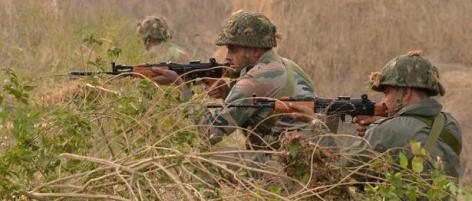
troops take positions at the Pathankot base

Criticism has built up over the last two or three days, especially on social media, blaming Ajit Doval (above), the national security adviser, who is a former spy chief and one of Modi’s most trusted and empowered officials. Based in the prime minister’s office with executive authority for security (as opposed to just an advisory role), he was in charge of the response and claimed it an intelligence success just two days into the three- or four-day operation. The buck stops with him before it reaches the prime minister.

The sharpest and most targeted criticism has come from Ajai Shukla, a former army officer and now one of India’s leading defence journalists and commentators. Writing in the Business Standard on January 5, he said “National Security Advisor (NSA) Ajit Doval’s inept handling has transformed what should have been a short, intelligence-driven, counter-terrorist operation into something that increasingly seems like a debacle.”

At the end of a discussion on India Today Television last evening the anchor, Karan Thapar, concluded that the response had been handled “ineptly” – none of the former generals and analysts on the programme disagreed. Manoj Joshi, a leading commentator, calculated there had been five serious incursions and terrorist raids in the area since 2013, the last just six months ago, but security had not been improved.

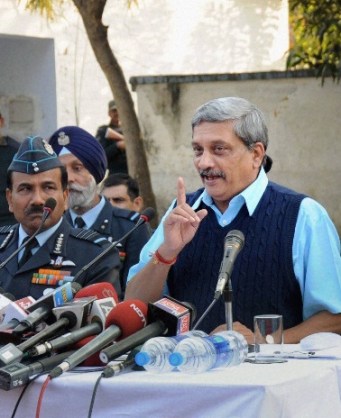
Parrikar PathankotManohar Parrikar, India’s defence minister, who was not in charge of the operations, seemed uneasy and ill-prepared when he (not Doval) was paraded at a media conference (right) on January 5.
He even said that five of the Indian casualties had died because of “bad luck”. They were members of the low-key Defence Security Corps (DSC), made up of retired armed forces personnel who guarded the base. Their “bad luck” was that they were shot by terrorists firing into buildings. An officer in the crack National Security Guard (NSG) died while handling a dead terrorist’s unexploded grenade. There has been criticism – by Shukla and others – that Doval flew in 160 NSG commandos with little Punjab experience to lead the attack on the terrorists instead of drawing on 50,000 army troops stationed nearby.

Pathankot is significant not just for India-Pakistan and defence reasons but because it illustrates how appallingly so much of the country’s government agencies work. It smacks of the jugaad (fix it) and chalta hai (anything goes, or it will all be alright on the night) approach that I highlighted as a serious national failing in my book IMPLOSION: India’s Tryst with Reality.

Modi has told the defence establishment that it needs to shed its “chalta hai” approach, but he has failed to push through changes there or elsewhere.

Modi_sharif_meet_2671114g

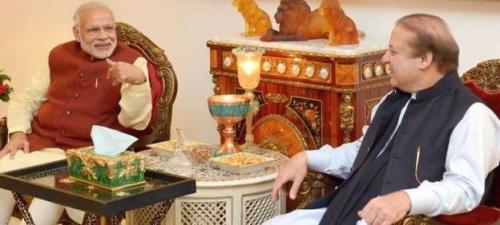
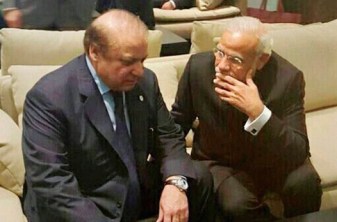
Modi’s Santa Claus type appearance (above with Sharif) in Lahore on Christmas Day built on a rapprochement between the two countries that first appeared when he and Sharif were photographed chatting at the opening of climate change negotiations in Paris on November 30.

This began to unravel blockages to talks that had been caused both by both countries. A week later, the national security advisers and foreign secretaries met on neutral ground in Bangkok. Overall this marked an attempt by Modi to reverse a belligerent and aggressive stance he and Doval had adopted a year earlier.

Now they have to decide whether talks planned next week between their foreign secretaries should go ahead. India’s foreign ministry spokesman, Vikas Sarup, said this afternoon that the government has asked Pakistan to take “prompt and decisive action” against handlers of the attack. “The ball is in Pakistan’s court. We are waiting for Pakistan’s action on actionable intelligence… we are not giving any time frame… prompt means prompt,” he said.

“Prompt and decisive action” are the words that Sharif has also used, saying it would happen. But the military and not the politicians call the shots in Pakistan, so action is not certain.

India’s first priority however should be to equip sensitive bases against terrorists, and to force the somnolent defence establishment and security forces literally to smarten up.

Posted by: John Elliott | December 24, 2015

Merry Christmas!

Untitled4

unknown_1512ant_25674_bigMUMBAI: Christie’s and Saffronart have this week established Mumbai as an internationally significant centre for Indian art auctions with record prices being achieved, not just for established modern artists, whose prices have been steadily climbing with three overall world records in the last three months, but also for classical miniature painting and sculptures that are now attracting new collectors.

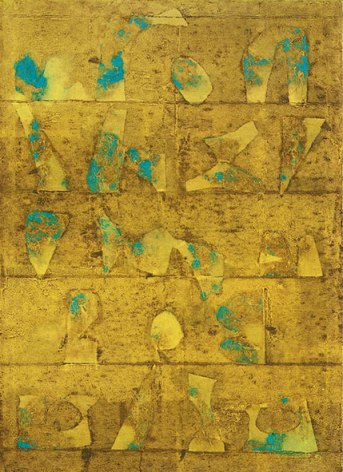
Last night, at the Christie’s auction, an untitled 55in x 40 in oil on canvas (below) by Vasudeo Gaitonde, who died in 2001, was sold for a total of $4.38m including buyer’s premium (Rs29.3 crore on a hammer price of Rs25.5 core). Well above the estimate of $1.9 to $2.3m, the $4.38m was both a world auction record for the artist, beating an earlier Rs23.7 crore ($3.8m) record, and also the highest auction price achieved for any modern Indian work of art. It was bought by an international collector telephoning in from outside India in a keenly fought bidding contest.

The Christie’s sale totalled Rs97.7 crore ($14.7m), the highest for any auction held in India, beating the previous record of Rs96.5 crore that was set by the auction house at its first Indian sale two years ago. This is the result of careful selection of works that have not been trailing round the auction circuit, backed by intensive international marketing and the buzz of an auction in Mumbai’s iconic waterfront Taj hotel.

The night before, Saffronart which is the leading Indian auction house, staged its first sale of classical Indian art (which cannot be exported), and had the rare achievement of a 100% sale of the 70 lots on offer.

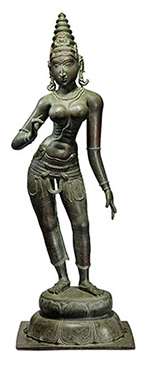
The overall sales total of Rs16.4 crore ($2.5m) included a record total price of Rs6.5 crore ($981,000), four times the estimates, paid it is believed by  a Delhi collector, for an elegant 15th-16th century 33in high bronze statue of the Hindu goddess Parvati (above) from the collection of a famous Bombay architect. Though below prices achieved abroad, Saffronart said this was the highest auction price paid in India for any classical work of art.

vs-gaitonde-untitledIt was the result of persistent bidding by two collectors who, coaxed slowly in very small $5,000 steps by Hugo Weihe, Christie’s former auctioneer for India sales and now with Saffronart, brought the hammer price up from Rs4.5 crore, where it could have rested, to the final Rs5.4 crore. Weihe later said it felt like the moment in 2005 when he brought the hammer down in New York on a $1.45m bid for a Tyeb Mehta work, marking the beginning of a boom in modern Indian art auction prices.

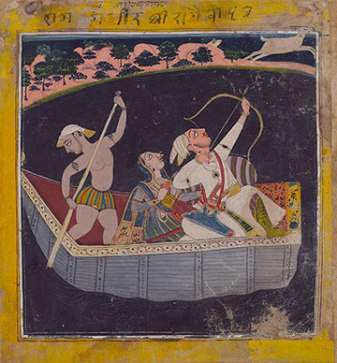
Saffronart also set a new international benchmark for Basohli miniature paintings that were done in the Himalayan foothills in the 1700s. Out of a set of four, two (one of them below, 6.25in x 6.25in) produced a new joint record Indian price for a Pahari (from the mountains) work of Rs96 lakhs ($145,455). That was on a hammer price achieved by both works of Rs80 lakhs.

In line with other recent auctions, these results show that good prices are being paid by serious collectors for the best works, especially for those with good provenance, a point that both auction houses have stressed this week.

unknown_1512ant_25389_bigSaffronart’s miniature paintings came from a famous collection made in the mid-1900s by a British army officer, Colonel R.K.Tandon, triggering rival claims of the relative superior provenance virtues with Christie’s, which had a classical section in its auction for the first time. This included miniature paintings from the collections of the Maharajas of Bikaner in Rajasthan, with members of the family in the auction room, possibly marking  a new departure for these families selling their old collections.

Till now, the main collectors of miniature paintings, especially Mughal works which fetch higher prices, have been in the UK and US, plus the Middle East, buying and selling works that were taken abroad many years ago and thus were not caught by the current ban on the export of antiquities. Indian collectors have been more rare. Specialists however believe that this now could be changing as Indian collectors of the modern art realise the attractiveness and prestige of the best miniatures and sculptures, many of which can be obtained for around $10,000. That is far less than they might pay for the best modern works, and is also lower than prices being paid abroad.

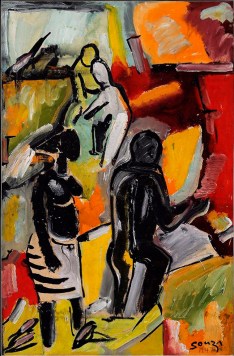
Souza top price lot 41 SaffronLast week, Saffronart also had a successful sale of works on paper by F.N.Souza, one of the country’s most famous artists, with 83 (98%) of the 85 lots on offer going for a total of Rs5.6 crore ($846,182). Peasants in Goa, (left) an early (1947) 20in x13in oil on paper, fetched the top price of Rs24 lakhs ($36,364).

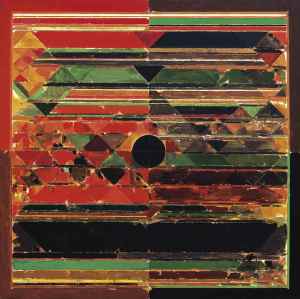
The Christie’s auction was slightly blighted by an allegation from a Dubai gallery owner that two works, including a major one, Bindu (below), by Syed Haider Raza that was estimated to fetch up to Rs15 crore ($2.3m) were not genuine. Christie’s rejected the allegation and said Raza himself had recently been photographed with the work at a preview of the sale. Bidding however stopped at Rs7.5 crore, which was below the reserve price, so the work did not sell.

syed_haider_raza_bindu_d5959044gThe previous record price for Indian modern art was paid achieved at a Christie’s auction in New York in September when $3.5m ($4m including buyer’s premium) was bid for Birth, a monumental 8ft x 4ft oil on board by Souza. The previous record price of $2.6m for a work by Souza, who died in 2002, was set just a week earlier at a Saffronart auction in Delhi. His  5ft x 4ft Man and Woman Laughing went to the Delhi Art Gallery for a hammer price of Rs14.6 crore (Rs146m) – Rs16.8 crore ($2.6m) including the premium.

Taken together these results, with high prices for the top works and high percentages of total sales, confirm that collectors react to strong marketing by the auction houses and are willing to pay substantial prices for the best works.

In Delhi after a series of foreign trips, prime minister Narendra Modi has trying to plug some of the gaps that have emerged in his and his government’s performance in recent months. Japan’s prime minister Shinzo Abe and the Pakistan government have played ball with potential deals and talks, but Rahul Gandhi and his mother Sonia have been unwilling to let their Congress Party co-operate in parliament, despite the damage that they are doing to the Indian economy.

There has been considerable criticism that the implementation of Modi’s foreign policy has not matched the razzmatazz of his many high profile visits abroad. In particular, announcements of deals that now total over $100bn have not made much progress, and his approach to relations with Pakistan has had little coherence.

Both these issues have been at least partially addressed in the last week or two. Shinzo Abe has just been visiting India for a constructive high profile visit, and relations with Pakistan have been eased.

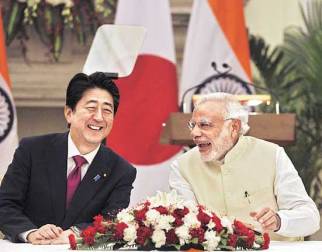
Abe Modi Delhi Dec 12 '15 - Business StandardAbe’s talks with Modi yesterday (Dec 12) produced a string of deals carrying, unsurprisingly, a billion dollar tag – this time $35bn, which is the same figure that was attached to announcements (some different, some the same) when Modi visited Japan in September last year.
Judging by their body language (above), there is greater warmth and understanding between these two prime ministers than between Modi and other world leaders, apart possibly from President Obama. Certainly the warmth looks more spontaneous than the reserved smiles that Modi had in the UK for David Cameron last month.

Real progress has been made with Japan after five years of negotiations on a civil nuclear deal that would allow Japanese companies to build nuclear plant rectors in India and also to make parts for US and French (GE, Westinghouse and Areva) companies’ Indian projects.

Japan has in the past been wary because India has nuclear weapons, and the proposed deal will now have to go through various legal and possibly difficult parliamentary procedures in Tokyo, as well as finalisation of technical details. But the progress is significant, not least because it emphasises co-operation between two countries that regard China as a sometimes hostile neighbour.

Japan has also beaten China on co-operation with India for the development of high speed “bullet” trains, which significantly comes just after China defeated Japan on a similar project in Indonesia. It has agreed to make a $12bn 50-year loan at just 0.1% interest for a high speed train to be completed (supposedly) in seven years between Ahmedabad in Modi’s home state of Gujarat and Mumbai. This forms part of a plan for bullet trains connecting the major metros.

The rest of the $35bn is more tentative and problematic – a $12bn “Make in India” fund for Japanese investments in India that will only happen when India’s procedures are eased, $5.5bn for a projected Chennai-Bangalore industrial corridor, and $5bn for other projects. Other agreements included defence liaison on the South China Sea where China is making territorial claims, and on defence manufacturing.

Tokyo had been disappointed by the last of progress made since Modi’s visit to Japan 15 months ago, and it now remains to be seen whether Abe’s visit will change that.

Modi-Sharif-Paris climate talks - Nov 30 '15 PTIThe rapprochement between Pakistan and India first appeared when the countries’ two prime ministers were photographed chatting intensely (left) at the opening of climate change negotiations in Paris on November 30. This began to unravel blockages to talks that had been caused both by India over whether Pakistan should talk to separatist leaders from Indian Kashmir, and by Pakistan wanting the sovereignty of Kashmir to be included in any agenda.
A week later, the foreign secretaries and national security advisers of both countries met on neutral ground in Bangkok for talks that were only publicised after they had taken place. They agreed to carry forward their “constructive engagement” and that led to a visit by Sushma Swaraj, India’s foreign minister, to Pakistan, ostensibly to attend a conference on Afghanistan. She met Pakistan’s prime minister Nawaz Sharif and, in a nice touch, his daughter. The next step is for the two countries’ foreign secretaries to meet again to revive a broad-based dialogue

Modi was probably motivated on these initiatives partly because he was being widely criticised for allowing good relations, which he established with Sharif when he first became prime minister, to crumble, and partly because he should attend  a South Asia regional cooperation (SAARC) conference in Pakistan next year so needs to remove diplomatic blockages.

This does not mean that the talks will get anywhere, though Indian analysts are suggesting there might be more hope of progress because Pakistan’s new national security adviser, Nasser Khan Janjua, a retired army general, has been picked by Pakistan’s army chief, Raheel Sharif (no relation to the prime minister), who controls what happens on the relationship. This means that India will be negotiating with the army chief’s representative instead of politicians who lack final authority.

Meanwhile on domestic issues, Rahul and Sonia Gandhi have been stopping proceedings in the Rajya Sabha, the upper house of parliament, and have thus stalled progress on important general sales tax legislation, which the government hoped to pass in the current session that ends on December 23.

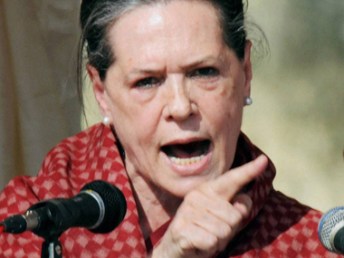
Sonia-Gandhi_Gumlal2_PTIThe Gandhis have been protesting because they were ordered on December 7 to appear in a Delhi court on December 19 to explain alleged irregularities in financial dealings involving a defunct Congress newspaper, the National Herald that owns valuable properties in Delhi and elsewhere, and a company, Young Indian, controlled by them and two other Congress officials.

It seems highly improbable that the Gandhis had any intention of personally benefiting from the financial arrangements, but it does appear that they regarded the newspaper and its properties as, to quote Outlook magazine this weekend, “their personal fiefdom”, and maybe allowed some irregularities in the company dealings.

The summons certainly seems to have destabilised Sonia and her fellow party leaders, who reportedly met till 3am one night last week to discuss the implications. Sonia even told reporters (above), “I am the daughter-in-law of Indira Gandhi. I am not scared of anyone. I am not disturbed”, as if invoking the name of India’s former prime minister would somehow gain public sympathy.

The court action has been initiated by Subramanian Swamy, a maverick politician and former minister, who has been running a vendetta against Sonia Gandhi for some years, even alleging she has had financial support from the Russian KGB and secretly exported valuable antiques to shops owned by her family in Italy.

Instead however of dismissing Swamy’s National Herald accusations as they have his other stories, and dealing with the court summons as a legal matter, they organised protests that stalled the Rajya Sabha for four days and disrupted the Lok Sabha (lower house). They claimed that it was a political vendetta by the government, which in other circumstances could well be true because governments in India regularly initiate and then slow down legal actions against rivals and wayward supporters for political ends.

This time however it is unlikely that the Modi government organised the court decision. In the previous week, parliament had been making unusual progress with constructive debate and Modi was trying to build bridges with the Congress leadership.

There is still time for parliament to pass the sales tax legislation if the Congress dynasts behave like ordinary citizens and sort out the National Herald muddle in court, negotiate as responsible politicians with the government on some amendments and allow parliament to do its job.

« Newer Posts - Older Posts »

Categories