Posted by: John Elliott | May 26, 2008

Indian rivalry ousts Bharti from South Africa telecoms deal

A six-year battle for supremacy in India’s telecommunications industry between the country’s two main private sector operators, Bharti AirTel and Reliance Communications, last week spilled over into South Africa and led to the collapse on Friday night of takeover talks between Bharti and MTN, a South African-based telecoms group. Strong Indian and South African nationalist sentiments also contributed to the sudden ending of the talks

During the week, Reliance – which today started formal talks – had secretly made a tentative offer to merge its operations with MTN. This appealed more to the South African company’s nationalist-oriented board than the Bharti takeover negotiated over the previous few weeks. MTN then proposed that Bharti should become its subsidiary – and that, maybe by design, led to Sunil Bharti Mittal, Bharti’s founder chairman, walking out.

MTN’s offer would have given Mittal’s family, together with SingTel, a minority shareholder in the Bharti group, a controlling stake in MTN, so they would have been the ultimate owners – but of a South Africa-based business. Mittal dismissed that as a “convoluted way of getting an indirect control of the combined entity” that “would not capture the synergies of a combined entity.” More important, Bharti’s “vision of transforming itself from a home-grown Indian company to a true Indian multinational telecom giant, symbolizing the pride of India, would have been severely compromised”

The takeover failure is a personal blow for Mittal who has been looking for a way to expand his group and saw a Bharti-led tie-up with MTN as a way of building one of the world’s largest mobile phone operators with 130 million subscribers and considerable potential for expansion in Africa and Asia. Some analysts in India say the merger was more about Mittal’s wish to establish himself internationally than about synergies, but most in the Indian business world supported his effort to build India’s first multi-national telecom company.

The collapse of the talks has done no good to MTN’s image, with jokes doing the rounds in India about politicians on its board being reluctant brides unable to consummate relationships. MTN has been courted in the past by China Mobile, Emirates Telecommunications (Etisalat) of Dubai, and Vimcom of Russia, as well as having a brief flirtation with Vodafone of Britain. Each time, MTN’s board has shied away, often on the brink of consummation, as it did last week.

But in abandoning Bharti for Reliance, MTN, which has a market capitalization of $38 billion, has made a bigger switch than it might realize in terms of business personalities. Mittal believes in building strong long-term businesses, as he has shown with Bharti Airtel. Anil Ambani, who controls Reliance Communications is a consummate deal-maker and that might lead to him accepting the reverse take-over terms rejected by Mittal. He has yet to prove himself as a long-term builder and operator of a major company, though his Anil Dhirubhai Ambani Group (ADAG) has a market capitalization of $75 billion.

Reliance’s telecoms business was started by his elder brother, Mukesh Ambani, before the two men split the Reliance Industries (RIL) group three years ago. Since then Anil Ambani has expanded the business, which is doubling its 65,000 kilometers of undersea cable linking India through the Middle-east and Europe to the US, and last month bought eWave World, a UK-based wireless broadband company. But he has no long-term track record

He has also hit the headlines for other reasons. In January Reliance Power, which he controls, raised $3 billion in India’s biggest ever initial public offering, even though the company has no completed projects and no income stream. A month later, after the shares crashed, he gave shareholders three additional shares for every five they’d bought, in an attempt to prop up the group’s investor reputation. Last week he announced he was looking at entering the U.S. movie industry by financing and developing Hollywood film deals that some reports put at a total of $10 billion.

Analysts are now asking whether Anil Ambani is simply looking for publicity with this bid, as he was suspected of doing when he bid unsuccessfully against Vodafone last year for control of India’s Hutchison Essar telecoms group. He has booked 45 days of exclusive negotiations with MTN, so the market is watching to see whether the company again becomes a reluctant bride.

Posted by: John Elliott | May 20, 2008

Bangladesh waits for political stability – and tourists

“Visit Bangladesh before the tourists come” says a poster at Dhaka airport. It is the slogan of the Bangladesh tourist association and it’s not much of a come-on, but it is apt. Who could contemplate going on holiday to one of the world’s poorest countries, known less for sunny beaches than for devastating coastal cyclones, growing Islamic fundamentalism, and instability?

The answer, now, is me. Tempted there last week to stay with a friend working in Dhaka, the capital, I found that, though unsure of where it is heading politically and economically, Bangladesh is even more welcoming than India where I live. It has magnificent scenery and a thriving modern art scene.

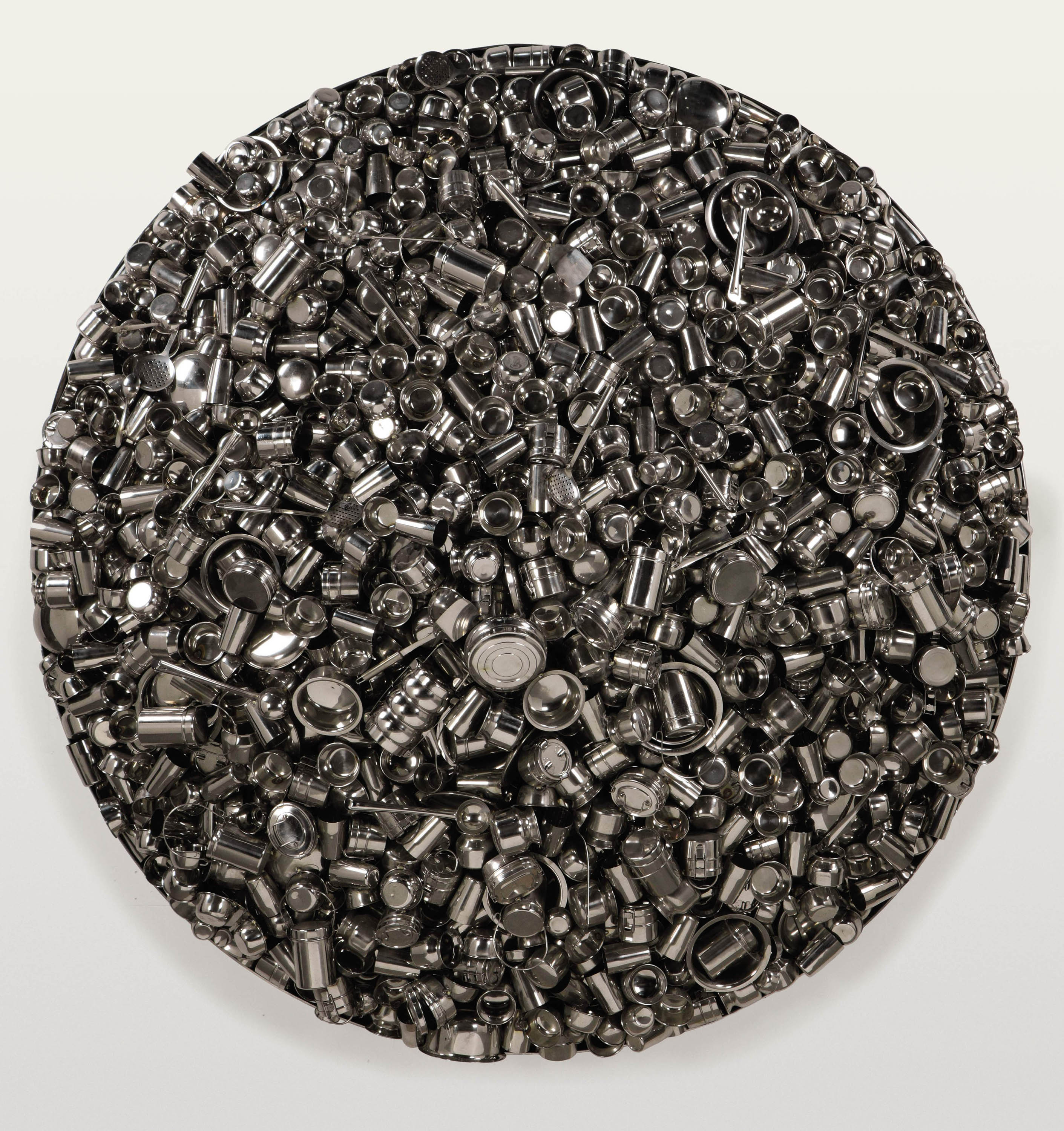
untitled by Mahmudul Haq

untitled by Mahmudul Haq

Alongside devastating poverty, Dhaka is full of prosperous garment exporters who double (everyone assumes through massive money laundering) as real estate developers. There was general agreement that investment had slumped since a military-controlled caretaker government ousted the country’s appalling politicians in January 2007 and declared a state of emergency – but not about why.

“The government has tightened up on investment regulations and it’s more difficult now for the businessmen to bring in funds,” said a veteran expatriate. “The government is so corrupt that it’s impossible to do business here so I’m going back to the U.S.,” said a rich garment and real estate businessman, less plausibly, but very revealingly.

The generals took control so quietly 16 months ago that western countries ignored what was basically a military coup, hoping it would led to better government than two warring political begums, Sheikh Hasina Wajed of the Awami League and Khaleda Zia of the Bangladesh Nationalist Party, had provided in the previous 20 years, when both had been prime ministers.

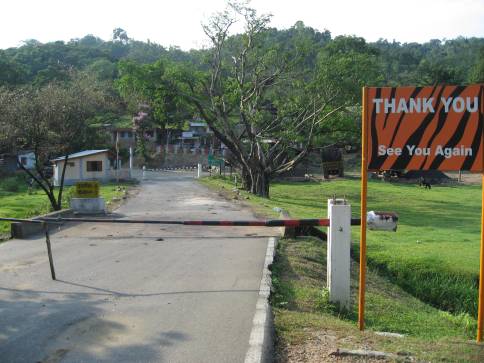
across to Meghalaya, north-east India

across to Meghalaya, north-east India

So low-key was the takeover that The Economist ran an article headed “The coup that dare not speak its name.” Gradually the generals got tougher, locking up the two begums on corruption charges, but failing either to send them into exile or mount viable legal cases against them. Earlier this month, formal legal charges were brought against Zia and other officials, for alleged corruption on gas exploration contracts awarded in 2001 to Niko Resources Ltd (NKO.TO), a Canadian oil exploration firm.

Now there is a growing food crisis, which was started by floods and a crippling cyclone last year and is now being fuelled by escalation in global prices for rice – the staple diet for at least a third of Bangladeshi’s 160 million population. Inevitably the generals are being blamed, and the politicians are saying they would have managed things better.

Calls are growing for the political leaders to be released from jail so they can participate in delayed elections that have been promised for December. It is beginning to look as if this will be yet another example – seen recently in Pakistan – of military leaders failing to change the democratic landscape and, consequently, having to hand control back to the same political leaders whose earlier shambles provoked the military intervention.

In 1971, when Bangladesh won independence from Pakistan, Henry Kissinger famously said “the place is and always will be a basket case.” He now avoids questions about that petulant remark, made at a time when the U.S. had been opposing the independence, but he must know that he was wrong – even though the country’s development has been stymied for decades by the warring political parties and an interfering military.

Now there is so much potential just waiting for positive and sustained political leadership. There is the highly successful garment industry and large coal and natural gas reserves. Then there is low-cost tourism, as well as a thriving modern art scene in Dhaka that has developed separately from the more prosperous art market in India’s neighboring state of West Bengal.

Modern Bangladeshi artists focus on strongly colored abstracts and landscapes because of a taboo on idolatry that leads them to avoid portraying people’s bodies and faces. Their prices are much lower than those in India because there are very few rich Bangladeshis living abroad to escalate prices in international markets, and works by well-known artists can be bought for $1,500 or less.

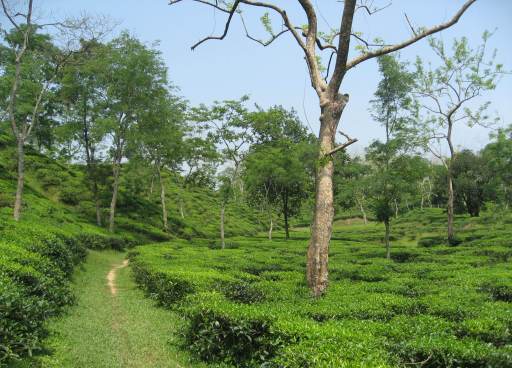
tea gardens near Sylhet

tea gardens near Sylhet

I went to the tea estates area in the north-east, on the border with the Indian state of Meghalaya. This is near the city of Sylhet, which has grown prosperous (and ugly) because it has for several decades provided Britain with most of its curry house owners and cooks.

I stayed in one of the Bangladesh’s first resorts, in the middle of rolling hills covered with tea plantations near the Surma River that flows from India through Bangladesh into the Bay of Bengal. Here there were plenty of opportunities for hiking and biking and boating on the Surma up to the Indian border – an area waiting for the tourists that are yet to come.

Posted by: John Elliott | May 7, 2008

Indian telecom giant returns to his roots

Sunil Bharti Mittal, founding chairman of Bharti Airtel, India’s largest mobile phone operator, needs a new personal challenge. And he has found it with the $19 billion informal bid that he is reported to have made, or at least is considering, for MTN, the South African-based telecoms group.

 Last week Mittal finished a year as president of the Confederation of Indian Industry (CII), a leading business federation. That was a time-consuming post that tied him up in tedious committee work, which he disliked. His group is also partnering with Wal-Mart (WMT) in a slow-developing retail and cash-and-carry business, but that is primarily being looked after by one of his brothers.

 So Mittal, one of India’s richest men, needs a new challenge. He also needs to catch up with Tata, Birla and other Indian companies that have been tying up big foreign takeovers while he has been presiding over the CII.

 Having started in 1976 as a 19-year old engineering graduate making bicycle parts in his north-Indian home town of Ludhiana (with $1,500 borrowed from his father), Mittal is now India’s most successful first-generation businessman to emerge outside the field of information technology since the country’s economic opening up began in 1991. (His internationally-known Indian-born namesake, Lakshmi Mittal, who is not a relation, built his LNH Holdings steel empire outside of India.)

 India’s media is convinced that one day he will enter politics – reporters were pushing him on that last week when, a couple of days after finishing his CII post, he announced a Bharti telecom link-up with IFFCCO, an agricultural co-operative, to target India’s 750 -million rural population and bring Internet links to farmers.

 He says that “transformational activities” motivate him. “Public life still excites me,” he told me early last year. “But will I cross the line and become a full time politician? I think it is unlikely, having seen the transformation that I can achieve here,” he added, referring to the Bharti Foundation, a $50 million charity that sets up village schools and other initiatives.

 He tried transforming Indian fruit and vegetable production a couple of years ago by growing produce for export; but could not sustain sufficiently high standards for western markets, so he turned that business into a food processing joint venture with Del Monte (DLM).

 His link-up with Wal-Mart – aimed at playing a leading role in the current transformation of India’s retail industry – is moving far slower than he hoped when the joint venture was agreed at the end of 2006. And he bid unsuccessfully three years ago to privatize and rebuild Delhi’s international and domestic airport.

 So he has returned to the industry he knows best for his next challenge: telecom. Bharti and MTN are roughly the same size – they both have 60 to 70 million customers and market capitalizations of around $30-$40 billion – and they are both experienced at providing telecom services across vast countries. Bharti is growing the faster – adding 2 million new customers a month – and is cash-rich. But it has only two small telecom operations outside India – in the Seychelles and the Channel Islands (Jersey and Guernsey) – plus one about to start in Sri Lanka.  Now Mittal is attempting to become a significant international player, but looks like he’s facing strong opposition from nationalist fervour in South Africa and competition from other telecoms.

 He has succeeded in India by beating competition with strong marketing and consumer service and by outsourcing Airtel’s information technology activities and network management four years ago to IBM (IBM), Ericsson (ERIC) and Nokia (NOK). Critics said he was giving away his technology “lifeline” to suppliers, but, he says: “Our lifeline is how to get and retain the customers – technology for a telecom company is just an enabler which we buy to sell to our customers.”


Posted by: John Elliott | April 30, 2008

How the FT has been blocked by India’s media industry

If anyone doubts the ability – and determination – of Indian companies to block foreign investors when they sense unwanted competition, the experience of the Financial Times newspaper demonstrates the reality in what is still a partly-controlled economy.

Just over 20 years after first eyeing the Indian market, the FT has failed to obtain permission to print the newspaper in India and has, in the past few weeks, walked away from a joint venture that had gone sour with the Business Standard, one of the countries leading business dailies.

The FT is now looking at a new venture with Network 18, a television-based group that has successful joint tv channels with CNN and CNBC and is partnering with Forbes to produce a business magazine in India.

Network 18 is expected to launch a new business newspaper which would have pages devoted to FT syndicated stories and would probably have an FT equity stake – though the FT is also focused on developing its online audience with Network 18, and is primarily interested in printing its international edition in the country.

It is just over 20 years since the FT started trying to get a toehold in India’s newspaper market after it was approached (while I was its Delhi-based South Asia correspondent) by two Indian business families – the Delhi-based Modis and the London-based Hindujas– to print the paper in India.

Those approaches did not lead to a deal, nor did talks with the Bennett Coleman group, which owns the Times of India (circulation 2.8 million) and Economic Times (over 750,000), India’s leading general and business titles. Bennett Coleman has, since then, been blocking the FT’s entry, fearing the competition mainly in terms of staff salaries and quality. It registered Financial Times as a Bennett Coleman title, started protective legal cases around the country, and publishes a weekly inconsequential-looking four sheet supplement called “Financial Times” to underpin its rights.

About 15 years ago the FT joined up with the Business Standard, then owned by ABP, a Calcutta-based publishing house run by Aveek Sarkar, who has a successful and happy 50-50 publishing joint venture with Penguin Books and is talking to Time Warner, which owns Fortune, about launching a monthly business title. In the early 1990s the FT posted an associate editor into the Business Standard for three years, who helped raise editorial standards. Five years ago it bought a 13.85% stake in the paper, which it expected to raise to 26%, the maximum foreign direct investment (FDI) allowed in newspapers.

The FT quickly found it had run into more opposition. The Business Standard had by then sold by Sarkar to a group of Mumbai financiers, led by Uday Kotak, a leading banker, and the FT’s bid to boost its equity stake was turned down by the government because FDI in Kotak’s businesses allegedly pushed the total in the paper above 26%. Later the FT found its views were not listened to by people running the paper, and that it was receiving no help arguing with the government over the equity stake.

Sensing that it had found another opponent rather than a partner, it eventually decided to pull out – which it has now done, selling its stake to Kotak interests. T.N. Ninan, editor and publisher of the Business Standard, would not comment on these developments when I telephoned him, though he did say his newspaper was doing well with daily circulation rising near 200,000, and he seemed unconcerned that he will not be able to use FT syndicated articles from the end of this year.

Over the years the FT has secured the support of some government ministers but not enough for a majority in the cabinet, and no prime minister or finance minister has felt it a big enough issue to make it worth challenging their colleagues.

Meanwhile the Wall Street Journal has a partial presence through a (non financial) partnership with the Hindustan Times group in Mint, a one-year old business newspaper. Mint is raising the standards of accuracy, in-depth reporting, and quality in a branch of the media where such standards are rare.

Rupert Murdoch has talked since he bought the Journal of starting a paper in India, and could invest in Mint.  There are also two other local companies entering a booming but crowded market that already has six English language business dailies, some of which, including the Economic Times and Business Standard, are launching Hindi and local language editions.

And the moral of the story? Someone once said (about joint ventures in China, I think) that “your worst enemies are your partners” – to which one could add “and allies in their industry.” Only two foreign newspapers are currently published in India. One is the International Herald Tribune, which has successfully defied a government ban on foreign papers printing a special Indian edition. The other is the Daily Mail, whose UK publishers, Associated Newspapers, have a 26% stake in a look-alike semi-tabloid Mail Today which is also raising standards and seems to have escaped opposition from vested Indian interests because none of them saw it as competition.

Posted by: John Elliott | April 22, 2008

Reliance cuts role in retail partnerships

Reliance Retail, India’s fastest growing retail company, has set up joint ventures with two big names in international retailing. Today it announced a partnership with Office Depot [ODP], one of the largest U.S. office supplies companies, and last week there was a similar deal with Marks & Spencer, the leading British retailer.

In both cases Reliance has, for the first time in its 50-year history, agreed to be a minority partner. It will hold 49% equity stakes, while the foreign companies will be in control with 51%. It has also agreed that both Office Depot and M&S should appoint one of their own executives to head the businesses – another first.

This marks a huge change of attitude for the parent company, Reliance Industries (RIL), which yesterday announced net profits of $3.8 billion for the year ended March 31, 2008, up 28% on the year. Turnover was up 18% at $34.7 billion.

Reliance has always insisted that it does not need foreign business partners to show it how to run companies – it set up 100% Reliance-owned insurance and telecom businesses a few years ago, hiring foreign executives and consultants to provide the expertise.

Mukesh Ambani, RIL’s chairman, heralded the change in a speech at the company’s annual meeting last October, when he said that accepting partnerships with other companies would be one of five “fundamental strategic shifts” in approach. “Reliance envisages an ecosystem of partnerships with global companies that can be hugely value accretive,” he said. (The other shifts included inorganic growth and investing in innovation).

But this does not mean that Reliance will be agreeing to minority stakes in other areas where it is already strong – for example its core businesses of oil exploration and refining, petrochemicals, and textiles. It will also prefer partners to take minority stakes – such as Chevron Corporation’s (CVX) 5% stake in Reliance Petroleum – or a 50-50 split, which it has with Pearle Europe for opticians’ shops.

In retail, it recognizes it needs to acquire expertise quickly – and to secure brands that its competitors might otherwise take.

The 50 stores that M&S plans to open with a $29 million equity joint investment will be significant for the British retailer, which has failed to make a dent in India with 14 franchise arrangement already run by Planet Retail, a smaller Indian company. Similarly, the Reliance deal opens up a largely unexplored market for Office Depot. The joint venture has launched itself by buying eOfficePlanet, one of India’s largest office product suppliers to corporate customers.

The 51% foreign direct investment (FDI) in the M&S joint venture is allowed under India’s restrictive investment rules because it involves only a single brand. The Office Product business will not have retail shops but will operate on a business-to-business basis, supplying contract customers. This is classified as wholesaling, where 100% FDI is allowed.

These joint ventures will be relatively small speciality businesses for Reliance Retail, which already has nearly 600 stores covering a total of 3.5 million square feet and ranging from neighborhood shops to an Apple specialty store and hypermarkets.

So while accepting minority stakes is a major change of approach for Ambani, it will not change the broad shape of the group – though it might help to soften Reliance’s image as one of India’s toughest and most ruthless groups.


Posted by: John Elliott | April 17, 2008

New Delhi in lockdown over Olympic torch run

More than 15,000 police and paramilitary security forces today patrolled the center of New Delhi and successfully protected the Olympic torch – and China’s sensibility – from interference and upset as the flame passed briefly through the capital on its way from Pakistan to Thailand.

Under intense pressure from China following the Olympic protests elsewhere, the Indian government sealed off a large part of central Delhi. No spectators, apart from small groups of school children and invited guests, watched the torch being carried along the grand Raj Path processional avenue.

A rival pro-China march was allowed a couple of miles away, but the torch itself had a cocooned and sanitized – and uninterrupted – journey. That may be contrary to the Olympics’ traditionally inclusive spirit, but it pleased China.

India has been wary of upsetting China since it was defeated in a border war amid the Himalayan mountains in 1962. That is the only time India has lost a war since independence in 1947 (it has defeated Pakistan three times) and it has been wary since then of upsetting its larger neighbor.

That virtual fear has been more evident in the past four weeks than for many years, with parts of New Delhi being barricaded to defend China’s embassy against Tibetan protestors. Delhi has not seen such a progressive lockdown – at least since the early 1980s – not even to protect a visiting head of state or to fend off terrorist attacks.

The nearest equivalent is the annual Republic Day parade of massed bands, guns, missiles and dancing children, when Raj Path is closed and nearby buildings emptied – but with a much smaller police presence than was deployed today.

The boundary wall of the Chinese embassy compound has been surrounded with huge rolls of barbed wire and masses of police since Tibetan protestors scaled the wall on March 21. Roads around the embassy have been partially closed for four weeks, including an entrance to Malcha Marg, an elite housing area. From yesterday afternoon, 1,100 security forces guarded the embassy perimeter.

No other country has such a tortuous relationship with China. Many nations try to please the emerging superpower for commercial reasons – to ensure their companies have access for major contracts and trade, and so that they can try to influence China’s economic policies. India mixes a continued stand-off on the disputed Himalayan border with rapidly expanding trade and economic links.

Two-way trade is currently worth over $30 billion, and China has overtaken the United States as India’s biggest trading partner. Cross-border business investments are also increasing – Chinese telecom companies like Huawei and ZTE have made substantial inroads into the Indian market.

But India has never been comfortable about allowing Chinese investments in sensitive areas such as ports and high technology, and has frequently delayed Chinese business visas and investment permissions.

The fraught relationship was demonstrated after Manmohan Singh, India’s prime minister, made what appeared to be a successful and friendly visit to Beijing in January. Two weeks later, he visited the state of Arunachal Pradesh, in the far northeastern corner of India that China still regards as disputed territory. He described Arunachal as “our land of the rising sun,” which immediately brought diplomatic rebukes from Beijing.

Regular talks are held between the two countries on the border issue. India knows China has no intention of reaching a settlement, but plays along with Beijing’s tactics.” India gets nowhere in these talks,” a former Indian participant told me recently. “We make our presentations in detail. China listens impassively, and concedes nothing, and we issue a joint statement saying progress is being made. India is soft and China knows it.”

Posted by: John Elliott | April 15, 2008

India’s savers mean big bucks for insurance companies

India is a country of big savers but meager investors. While more than 80% of the population of 1.1 billion save regularly, one-third prefer to keep money at home and over 50% opt for local bank deposits. As a result, two-thirds of savings are kept in safe liquid assets, while less than 25% is put into stock markets, insurance policies and other financial instruments.

These findings, reported recently in a study by an Indian life insurance joint venture run by New York Life and Max India, illustrate the country’s vast potential for structured savings’ plans and life insurance when risk-averse attitudes change.

Unlike most countries, India has no state-supported social security to provide safety nets for the aged, sick and needy – so, says Max New York Life, there is “potential for life insurance as a risk-mitigating tool”.

But why do Indian people seem happier with their money under their mattresses than in insurance and other financial instruments? A foreign banker will probably put it down to India’s position as an emerging economy with a predominantly poor population that is not yet sophisticated enough to understand the benefits of other forms of savings. But that is only part of the story.

Most families want to have their savings ready for emergency and other immediate use and are not saving for old age. More than 80% of 63,000 respondents covered in the survey, which was run by Delhi-based NCAER, a leading economic policy center, said they saved for emergencies, children’s (usually extravagant) marriages, and other expensive social events, plus children’s education.

There are also other reasons, not mentioned in the report. Women often do not trust the men either to save or invest wisely, so they keep the family’s money at home. There is also a huge underground economy, so many people might be shielding their savings from financial reporting and controls.

The result is a precarious situation in which few families can provide sufficiently for the future. The study found that 96% of households cannot survive beyond a year on their current levels of savings, if they suddenly lose their chief earner. Yet a majority “expressed confidence in their financial well-being” says the report, because they expect to find new jobs, or obtain loans from friends and relatives.

Families have traditionally assumed that they will be looked after by younger generations as they get older, but that is being upset by two social changes. First, life expectancy is now over 65 years (with many living far longer). That is more than 15 years higher than in 1970 and more than double the level at India’s independence in 1947. The young do not have sufficient funds to look after both parents and grandparents.

Secondly, the tradition of extended families, with several generations living under the same roof, is breaking down, especially in urban areas where many younger family members move out after marrying – or even before, which was very rare until the last few years.

There is a sharp divide between the rural areas, where 70% of the population live, and those in urban areas. Cash savings predominate away from the big cities, while knowledge about financial instruments such as life insurance policies is more common in urban areas.

But overall, the message is the same. There is huge business for life insurance and other savings instruments as attitudinal changes accelerate. The report says that the average household in India has an annual income of $1,626 and expenditure of $1,222, leaving $404 to save and invest – with urban incomes being 85% higher than those in rural areas (though there are wide regional disparities). Mutual funds’ assets under management have grown by nearly 800% in the past four years, though the growth slipped last year as India’s 8-9% economic growth has slowed.

Yet only 24% of households have life insurance coverage, and the report estimates that there are immediately 21 million households “that could be a lucrative target for life insurance marketers.” That is attracting foreign companies such as AIG (AIG), Metlife (MET), and Prudential Financial (PRU) as well as New York Life and others that include Allianz (AZ), ING (ING) and Standard Life from other countries, with more queuing up to enter.

Posted by: John Elliott | March 26, 2008

Tata buys into 40 years of trouble

Ratan Tata, who runs the Tata group, one of India’s two biggest conglomerates, is buying into a history of trouble with his $2.3 billion cash deal, announced today,  to acquire the Jaguar and Land-Rover companies from Ford (F). Transfer of ownership to Tata Motors is due to be completed by the end of June, and the  question is whether Tata can then break a cycle of decline.

It’s been 40 years since the British government, in a bid to rebuild the country’s automobile industry, cobbled together ailing car brands such as Jaguar, Rover, Austin, Morris and Riley into a giant called British Leyland. BL, as it became known, was a failure, mainly because of endemic labor problems, uninspired products and poor quality.

[Added Dec 10 ’08: See http://justbritish.com/2008/12/10/auto-industry-bailout-lesson/ for more details of the history, including  how the British government had committed £11bn at today’s prices by the 1970s to save BL, and Ford spent another $10bn later]

Since 1968, there have been many rescue attempts, but only rare short bursts of success. Several of the once proud names are long forgotten and none is British-owned; the iconic MG brand was bought three years ago by China’s Nanjing Automobile to make sports cars in China and the U.K., and the Morris Mini cult car is with BMW.

So could Tata succeed where others have failed? Market and industry analysts have their doubts, fearing the companies do not fit and that Tata’s optimism about growth could be hit by worsening economic problems in the United States and elsewhere. Tata Motors shares lost 4.4% on the Mumbai stock market today as brokers awaited the announcement.

But there is some reason for optimism. Ratan Tata isn’t expected to treat Jaguar and Land Rover like a traditional takeover: He says he’s not planning to overhaul senior management, close factories in Britain, or cut workers.

He said today: “We have enormous respect for the two brands and will endeavour to preserve and build on their heritage and competitiveness, keeping their identities intact. We aim to support their growth, while holding true to our principles of allowing the management and employees to bring their experience and expertise to bear on the growth of the business.” Ford will continue to supply Jaguar and Land Rover with powertrains and other components, in addition to a variety of  environmental and other technology and support services.

Tata also doesn’t seem all that concerned about instant profits – just as he doesn’t expect instant returns from the tiny Nano car he hopes to launch by year’s end. Instead, he is expected to use the brands and their U.K. plants, executives and labor to help build Tata Motors, which had $7.2 billion sales in fiscal 2007, into a global car company. He’s been on this mission for several years, buying Britain’s Tetley Tea in 2000, a Korea-based Daewoo truck plant in 2004 and steel giant Corus (previously British Steel) last year.

Ratan Tata’s hands-off ownership could win him crucial support as he tries to fold the Jaguar and Land Rover brands into Tata. Mark Norbom, the head of General Electric in Japan, wrote recently in the Financial Times about the importance of the “soft side” of a takeover deal. The “look in the eyes that (the buying) company is worthy” has special value, said Norbom, and is something that “does not come naturally to the typical western-trained dealmaker.” Well, it seems to come naturally to Tata and his people. It was evident in the Corus deal, and it seems to be at work again in their Jaguar and Land-Rover plans.

This could, of course, mean that Tata is seen – especially by British trade union leaders – as a soft option who will let workforces carry on as usual. Land Rover has had three years of record sales for Tata to build on. But there’s no telling how long the status quo can last, especially if demand slackens in the United States and elsewhere and Ratan Tata has to institute cutbacks at the luxury car makers.

Tata has said that Land Rover and Jaguar will benefit from India’s low-cost design and IT ability – and boost sales in Asia. His company will “add value in co-operating on engineering and development which are considerably cheaper (in India) than in the West,” he said. Tata Technologies, the group’s advanced industrial design house, is based in Pune and operates in twelve countries, with international headquarters in Singapore. It has been involved in the design of Tata Motors’ cars and vans, but does about 75% of its work for foreign clients, including Chrysler, General Motors (GM), Boeing (BA) and Airbus.

There’s another question hanging over the deal: Tata’s future once its 70-year old patriarch retires. He is not due to step down until he’s 75 – in December 2012 – but has said he would like to go earlier, and there are rumors it could be at the end of this year.

That seems unlikely, if only because there is no clear successor. From inside the Tata family there is a reclusive cousin, Noel Tata, who runs some of Tata’s retail businesses, but there is no sign of him being groomed for the corporate and public life that goes with the top job. One or two top executives from outside the family, and even outside the Tata group, have also been rumored, but none has been publicly held out as a successor.

It is Tata who has provided the personal drive and leadership to turn Tata Motors into a business that can produce the Nano and buy two world famous brands – in the same year. There’s a big job waiting for someone – and Tata is not yet saying who. Until it does, the era of uncertainty at Land Rover and Jaguar won’t be over.

Posted by: John Elliott | March 25, 2008

Tata buys into 40 years of trouble

Ratan Tata, who runs the Tata Group, one of India’s two biggest conglomerates, is buying into a history of trouble with his $2.3 billion cash deal, announced today,  to acquire the Jaguar and Land-Rover companies from Ford (F). Transfer of ownership is due to be completed by the end of June, and the  question is whether he can then break a cycle of decline.

It’s been 40 years since the British government, in a bid to rebuild the country’s automobile industry, cobbled together ailing car brands such as Jaguar, Rover, Austin, Morris and Riley into a giant called British Leyland. BL, as it became known, was a failure, mainly because of endemic labor problems, uninspired products, and poor quality. Since 1968, there have been many rescue attempts, but only rare short bursts of success. Several of the once proud names are long forgotten and none is British-owned; the iconic MG brand was bought three years ago by China’s Nanjing Automobile to make sports cars in China and the U.K., and the Morris Mini cult car is with BMW.

So could Tata succeed where others have failed? There’s reason for optimism. Ratan Tata isn’t expected to treat Jaguar and Land Rover like a traditional takeover: He says he’s not planning to overhaul senior management, close factories in Britain, or cut workers. And he doesn’t seem all that interested in instant profits – just as he doesn’t expect instant returns from the tiny Nano car he hopes to launch by year’s end. Instead, he is expected to use the brands and their U.K. plants, executives and labor to help build Tata Motors, which had $7.2 billion sales in fiscal 2007, into a global car company. His been on this mission for several years, buying Britain’s Tetley Tea in 2000, a Korea-based Daewoo truck plant in 2004, and steel giant Corus (previously British Steel) last year.

Ratan Tata’s hands-off ownership could win him crucial support as he tries to fold the Jaguar and Land Rover brands into Tata. Mark Norbom, the head of General Electric in Japan, wrote recently in the Financial Times about the importance of the “soft side” of a takeover deal. The “look in the eyes that (the buying) company is worthy” has special value, said Norbom, and is something that “does not come naturally to the typical western-trained dealmaker.” Well, it seems to come naturally to Tata and his people. It was evident in the Corus deal, and it seems to be at work again in their Jaguar and Land-Rover plans.

This could, of course, mean that Tata is seen – especially by British trade union leaders – as a soft option who will let workforces carry on as usual. Land Rover has had three years of record sales for Tata to build on. But there’s no telling how long the status quo can last, especially if demand slackens in the United States and elsewhere and Ratan Tata has to institute cutbacks at the luxury car makers.

Tata has said that Land Rover and Jaguar will benefit from India’s low-cost design and IT ability – and boost sales in Asia. His company will “add value in co-operating on engineering and development which are considerably cheaper (in India) than in the west,” he said. Tata Technologies, the group’s advanced industrial design house, is based in Pune and operates in twelve countries, with international headquarters in Singapore. It has been involved in the design of Tata Motors’ cars and vans, but does about 75% of its work for foreign clients, including Chrysler, General Motors (GM), Boeing (BA) and Airbus.

There’s another question hanging over the deal: Tata’s future once its 70-year old patriarch retires. He is not due to step down until he’s 75 – in December 2012 – but has said he would like to go earlier, and there are rumors it could be at the end of this year. That seems unlikely, if only because there is no clear successor. From inside the Tata family there is a reclusive cousin, Noel Tata, who runs some of Tata’s retail businesses, but there is no sign of him being groomed for the corporate and public life that goes with the job. One or two top executives from outside the family, and even outside the Tata Group, have also been rumored, but none has been publicly held out as a successor.

It is Tata who has provided the personal drive and leadership to turn Tata Motors into a business that can produce the Nano and buy two world famous brands – in the same year. There’s a big job waiting for someone – and Tata is not yet saying who. Until it does, the era uncertainty at Land Rover and Jaguar won’t be over.

Posted by: John Elliott | March 20, 2008

Tony Blair joins Al Gore on climate change bandwagon

Former British Prime Minister Tony Blair plans to build on what former U.S. Vice President Al Gore has achieved on climate change and pull governments together in a global deal. “Al Gore’s persuaded everyone that it’s a big problem and now we need to find a solution to it,” he told me in Delhi this evening, at the end of a six-day Asian tour launching an initiative called “Breaking The Climate Deadlock.”

Blair and Gore both recognize that there is deep skepticism in India, and in China, about the developed world’s intentions on climate change. These countries suspect, understandably, that western countries will try to force them to slow their economic growth while doing little themselves to stem emissions.

Al Gore was in Delhi a week ago – sounding much better briefed on detail than Blair’s broad political sweep. He dismissed the idea that “saving the environment slows growth.” Speaking at a conference organized by India Today, a news-weekly, he said that the U.S. had in the past given a world lead in rebuilding Germany and Japan after the Second World War; now it needed to do the same on climate change. But it needed to be able to tell its people “that India and China are doing something.” India should for example switch subsidies it gave coal to solar energy.

“The India position is understandable,” Blair told me after a day meeting political and business leaders in Delhi. “They say, ‘Yes it’s a big problem but don’t just tell us we can’t grow – if you tell us to stop growing, forget it.’ So we must give them a reasonable sense that the West is going to table an action plan.” That meant the developed nations taking action themselves, while also ensuring that developing countries accelerated the use of advanced technologies that could be transferred from the west.

This was the basis, he said, of the “global deal” he wants to construct around “common but differentiated obligations” that recognize the different imperatives and needs of rich and poor nations. He had pushed the same agenda in Japan, where he felt there was a growing awareness that action had to be taken.

Both Gore and Blair know that converting Indian politicians and business leaders must be a prime target because of India’s growing world importance – and because, currently, it has a sympathetic prime minister in Manmohan Singh. Both men met Singh, and today Blair also met Rahul Gandhi, the 38-year-old heir to the Nehru-Gandhi dynasty who is being groomed to be a future prime minister. Gandhi was also no doubt sympathetic to what Blair was saying, but he has little chance of converting many Indian political leaders who, having escaped from British colonial rule just 61 years ago, are deeply distrustful of pressure groups from the west.

On his Asian tour, Blair has been launching his new initiative, “Breaking The Climate Deadlock,” that he will run alongside his role as an envoy to the Middle East. About six months ago, not long after finishing as British prime minister, he approached an organization called The Climate Group and asked if it would provide him a platform to develop his global deal. The group works internationally with government and business leaders to push climate change and encourage low carbon emissions. It has brought together a group of experts to try to work out the framework for Blair’s deal.

The Climate Group was formed in 2004 and is based in the United Kingdom, the United States and Australia. Its members include companies ranging from Goldman Sachs (GS), J.P.Morgan Chase (JPM), HSBC and AIG (AIG) to Bloomberg, Dow Chemical, Starbucks (SBUX) and Tesco. It includes the municipal authorities of New York City and Greater London, plus regional governments from America, Canada and Australia. It is working with the HSBC Climate Partnership, which has set up a $100 million fund to encourage action by individuals, businesses and governments.

It’s easy to be skeptical about former world leaders who latch onto big issues that give them a role with wide publicity, especially when they are as role-conscious as Blair, who thrives in the limelight. But Blair does have some track record on climate change, having forced it onto the world agenda at a G8 meeting in 2005. Now he needs to show he is not just riding a bandwagon – “until he becomes the European president,” as one cynic put it this evening.

« Newer Posts - Older Posts »

Categories