Kashmir 370 does not work as a BJP rallying cry
Congress recovers in Haryana and ally improves in Maharashtra
India’s democracy is often criticised for being corrupt and unrepresentative, but it has proved again this week that it works with voters reacting against a dominant power that is not delivering what they need.
This has happened in the important Haryana and Maharashtra state assembly elections where Narendra Modi’s Bharatiya Janata Party juggernaut, fuelled by exaggerated fears of war with Pakistan and by anti-Muslim policies, has been disrupted because of voter dissatisfaction over a lack of jobs, the plight of poor farmers, inadequate infrastructure and other regional issues.
Votes counted yesterday (Oc 24) shows that the Congress Party, which has been in decline since its heavy defeat in May’s general election, has done far better than expected in Haryana, while its ally, the regional Nationalist Congress Party, has gained significantly in Maharashtra.

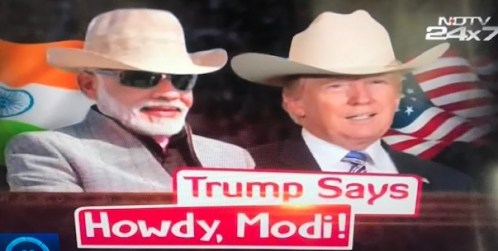
NDTV/24×7 graphic when the trends were clear, awaiting the final figures
The BJP has lost its overall majority in Haryana, having won 40 seats in the 90-seat assembly, seven less than in the last assembly elections five years ago. Congress has won 31, up 16. The recently created Jannayak Janta Party (JJP), which is linked to the Chautalas, a leading Haryana political dynasty, holds the balance of power with ten seats along with nine others. [Oct 27: The JJP joined up in a coalition with the BJP, giving it a majority – independents will also support it.]
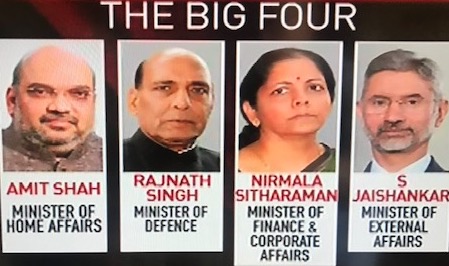
The results are a serious blow to Modi and his party president, Amit Shah, the home minister, because the elections have been the first test of the BJP’s hardline Hindu nationalist policies since the party’s overwhelming general election victory in May. As opposition politicians have been saying since the results emerged , it has been shown that Modi and Shah are not invincible.
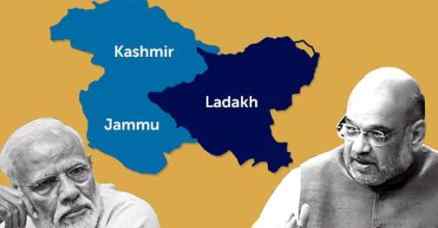
The setback comes a day after heavy criticism in the US Congress over the government’s controversial removal of the state of Jammu and Kashmir’s special status under article 370 of the constitution. The criticism focuses on the continued security clampdown in the state with internet access suppressed, and politicians under house arrest for well over two months.
Campaigning in both Haryana and Maharashtra, Modi focussed almost exclusively on the removal of 370, claiming this would increase the country’s security and make it stronger against Pakistan.
Muslim discrimination
He and Shah also trumpeted their Citizenship Bill and National Register of Citizens (NRC) that discriminate against Muslims when assessing potentially illegal immigrants.
They hoped that this would deflect voters’ attention from their failure to tackle India’s worsening economic problems with GDP growth down to 5%, rising unemployment and a lack of fresh investment.
There appears to be widespread support in India for the Kashmir initiative, but this was not an effective campaign issue. Modi and Shah will now have to rethink their strategy before state assembly elections in Delhi next February, where the BJP are determined to reverse their defeat by the regional Aam Aadmi Party (AAP) in 2015.
It had been widely expected that the BJP would improve its position this week in Maharashtra and Haryana, and this was supported by most exit polls published on October 21 evening when voting ended.
While it has lost its sole power in Haryana, it remains the government in Maharashtra in coalition with the state-based Shiv Sena Party, though with only 104 seats in the 288-seat assembly, 18 fewer than in the last election.
The regional NCP is increasing its tally by 13 to 54, a higher total than Congress’s 42, even though the BJP persuaded some NCP leaders to defect, and government investigation agencies launched high profile corruption charges against Praful Patel, one of its top leaders.
Congress could have won Haryana
Congress has lacked effective leadership nationally since Rahul Gandhi resigned as the party president after the general election. He was eventfully succeeded, supposedly on a temporary basis, by his mother Sonia Gandhi, but neither of them made many appearances during the election.
Rival Congress political factions have emerged in various states, including Haryana where Sonia Gandhi changed the leadership, replacing a Rahul Gandhi nominee with someone close to her.
As a result, the Congress lost a major opportunity to defeat the BJP in Haryana. More effective leadership (probably not by Rahul Gandhi) over the past five months could have led to an outright Congress victory there and could have also won more seats in Maharashtra.
The results do not mean that Congress has recovered from its downward slide nationally. It did well at the end of last year, defeating the BJP in state elections in Rajasthan, Madhya Pradesh and Chhattisgarh, but then did badly in those states in May’s general election.
Nor does not mean that there is a significant swing against Modi and the BJP nationally. Voters make different choices in national and local elections, but this has been a warning that the government needs to get the economy and job creation moving, which it has so far failed to do.
 Jaishankar’s foreign policy statements emphasised India’s “multi-alignment”, which meant “you keep your relationships well-oiled with all the major power centres”. The country “which does that best actually has political positioning in the world which may be superior to its actual structural strengths,”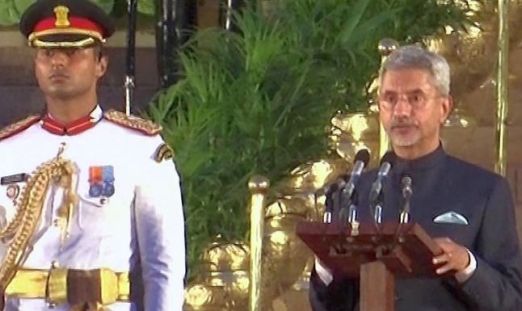

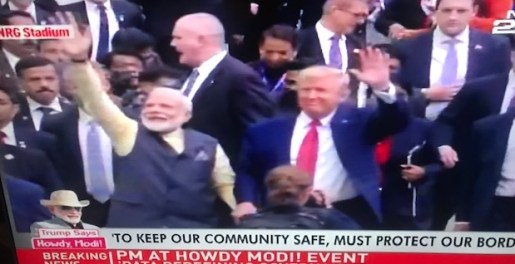
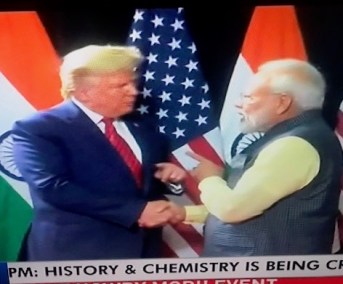 But yesterday was the first time an American president had shared such a rally with another country’s leader. It was also the largest audience in the US for a foreign leader, beaten only by Pope Francis in 2015.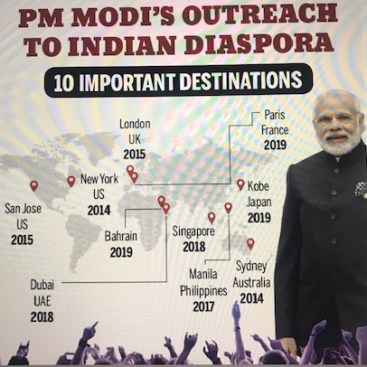
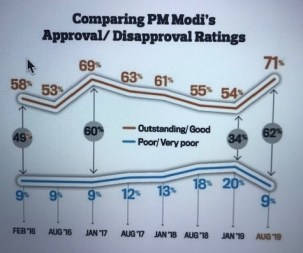
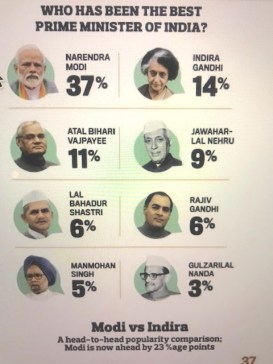 Such figures contradict Modi’s claims in the election campaign that his government was producing the country’s best ever economic figures. The figures also cast serious doubt on his target for India to have a $5 trillion economy by 2024, up from $2.7 trillion currently that the government has been hoping would rise to $3 trillion by next March.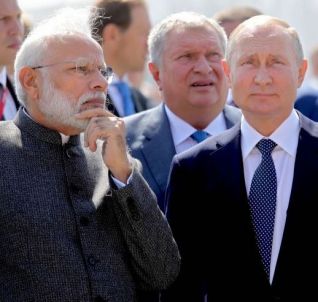
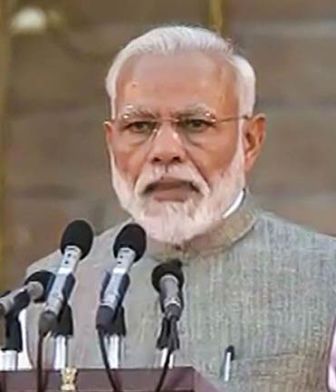
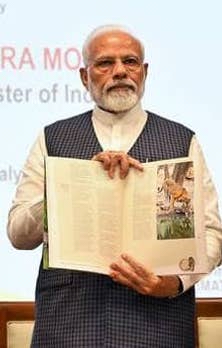 Always keen to claim credit for what is achieved, Narendra Modi, the prime minister, personally announced the figures (left) yesterday (July 29) and said India is “now one of the biggest and most secure habitats of the tiger”. He is also boosting his image by appearing in the
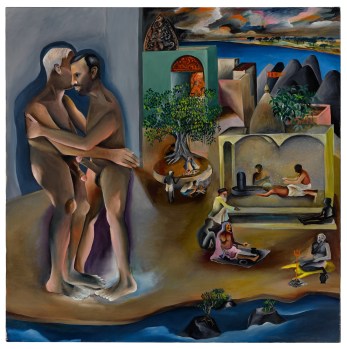
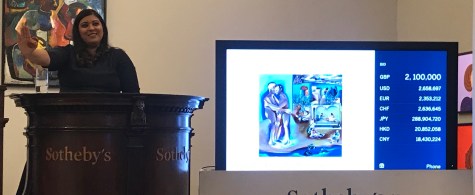
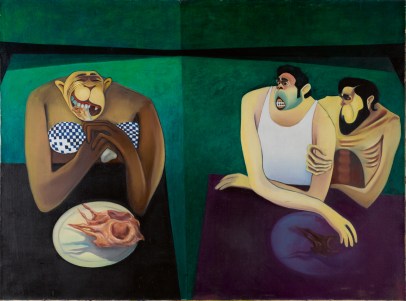 Helen Barbier, who was in London for the sale, said Khakhar’s Benares work was one of their favourites because it was a powerful spectacle of village life and humanity.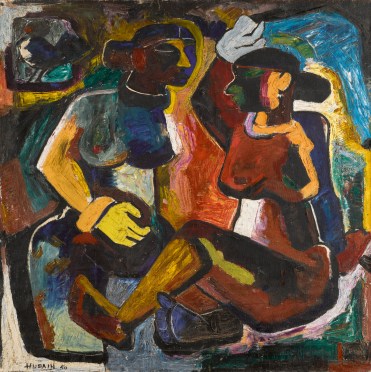



 Riding the Elephant
Recent Comments