India wants Pakistan to be marked out as a terror state
Risk of war between the nuclear powers after future terror attacks
With no prospect in sight of a permanent solution between India and Pakistan over the disputed territory of Kashmir, nor any sign of a reduction in tensions, both countries have despatched delegations abroad with the aim of winning support from foreign capitals on their basic demands and their focus on terrorism. This follows military action taken by India earlier this month against Pakistan after gunmen shot and killed 26 people, mostly tourists, in the Indian Kashmir resort of Pahalgam on April 22.
India was the first of the mark, sending seven delegations of members of parliament to 32 countries to win international support for condemnation of Pakistan as a terrorist state. The delegations are warning that India will respond militarily if Pakistan-originated terror attacks occur again on its soil.
Pakistan has followed India’s initiative with a delegation headed by Bilawal Bhutto, former foreign minister and son of the country’s president, which is in the US denying that it is responsible for the attacks. Bhutto will be in London next week. A separate mission has gone from Islamabad to Moscow to offset Russia’s historical closeness to India.
India responded to the killings in April by attacking terrorist installations inside Pakistan, which then hit back at India’s military locations. That led to four days of sharply escalating tit-for-tat aircraft and missile battles. Hostilities stopped on March 10 after diplomatic intervention by the US, UK, Saudi Arabia and other countries that feared the two nuclear armed countries could tip into a full scale and possibly catastrophic war.
Bilawal Bhutto (left) and Shashi Tharoor, leaders of the Pakistan and India delegations to the US (Hindustan Times montage)
Narendra Modi, India’s prime minister, has said that there was now a “new normal” that any future terrorist activities would be regarded as a Pakistan military attack, to which India would respond militarily.
This virtual threat of war has caused alarm internationally, but India is concerned that it does not have support in foreign capitals for its claim that terror attacks staged every few years in Kashmir, and occasionally elsewhere, are organised and supported by the Pakistan government, or at least by the heads of the army and security services, notably the ISI.
That is why the message is blunt. “India stands for peace, but if terrorists shed the blood of innocents, they will be held accountable,” said Ravi Shankar Prasad, a former BJP cabinet minister, who is heading the Europe delegation that has been in London this week. If terrorism was “aided by state actors — as in Pakistan — it must be treated as war”.
The Pahalgam attack that targeted Hindus was “ideological religious fanaticism sponsored by a proto-military state”, M.J. Akbar, a member of the delegation and a former newspaper editor and government minister, told me. That was why the country had united, including Muslims as well as Hindus, to support the government in its military response and in its attempt to win over international opinion.
Some critics in Delhi suggest that, aside from the mass of activity on social media, Pakistan was more successful at influencing the international press and foreign opinion during the four days of fighting, partly because the Modi government does not bother to deal with the foreign media constructively..
“The Pakistani intelligentsia with aristocratic bloodlines and Oxbridge backgrounds have significant clout in Western liberal circles, including think tanks, NGOs, universities and diplomatic parties,” Coomi Kapoor, a veteran columnist, wrote recently, reflecting a feeling common in Delhi that, as a country, India is frequently misunderstood abroad. “Modi’s India, painted by Pakistan as an illiberal democracy encouraging Hindutva zealots, is not a favourite in such company.”
The India delegation to the UK at a meeting in the Parliament
India’s delegations each include seven or eight politicians along with a former senior diplomat. Demonstrating the rare country-wide support for action against Pakistan, the politicians include at least one Muslim and come from all political parties, though the government rejected a mostly low-level list of names proposed by the Congress Party and picked representatives with foreign policy experience including Shashi Tharoor, a former senior UN official, to lead the delegation to the Americas.
Rahul Gandhi, the Congress party leader, is campaigning in Delhi to undermine the unity, despite the national mood. He is attacking the Modi government for allegedly bowing to a trading-linked demand by President Trump that the fighting should stop. “Trump gave just a signal, picked up the phone and said, ‘Modi ji, what are you doing? Narendra, surrender,” Gandhi alleged recently. “Narendra Modi obeyed Trump’s signal”.
India is specially targeting countries that are current members of the United Nation Security Council, where Pakistan is currently a member, but India is not on the council’s revolving membership system. On the list are small countries that it rarely bothers with diplomatically such as Denmark, Colombia, Panama, Liberia and Congo.
But the list does not include South Asia countries – Bangladesh, Sri Lanka, Nepal, the Maldives and Afghanistan – where one might expect an initiative to begin. “If our neighbours are not persuaded, what hope is there of distant Panama even beginning to understand our argument?”, asks Mani Shankar Aiyar, a former diplomat and Congress government minister.
Pakistan is trying to whip up international support for the Indian military action, dubbed Operation Sindoor, to be examined and condemned by the UN unless India can prove (which would be difficult) the direct involvement of the Pakistan government.
Ravi Shankar Prasad and Baijayant Panda, leaders of India’s teams to Europe including London and to the Middle East including Algeria
Significantly, Bhutto has admitted in the US this week that it lacks support for its claim that Indian Kashmir should be part of Pakistan, which is the primary issue generating the hostilities. “As far as the hurdles we face within the UN and in general, as far as the Kashmir cause is concerned, that still exists,” he said in New York.
The Indian delegation that has been in London this week has been talking to parliamentarians, policy think-tanks, the media, the Indian diaspora and other groups as well as second-ranking politicians in the British government and parliamentary opposition. The two countries’ prime ministers, foreign ministers and top diplomats are regularly in touch, so the job has been to canvas opinion more widely.
India’s warnings do not however mean that a war between the two nuclear neighbours is imminent. There is no chance of military action until there is another terror attack. The last attacks were in 2019 and 2016 so, on past performance, they might not happen again for three or four years or even longer. Some security specialists however fear that Modi’s threat might increase the risk of an earlier attack because terrorists will want to seize the chance of creating major conflict
India is now the world’s fourth largest economy and Modi’s primary economic and diplomatic focus since he came to power in 2014 has been to build the country’s status as a peaceful and stable major power that welcomes foreign trade and investment.
The Kashmir attack and India’s military response is a major setback to that aim, which is why the government believes it needs to win world opinion to stop Pakistan avoiding, in the UN and elsewhere, being marked out as a terrorist state.
Whether the delegations have had any success in influencing governments’ opinions is open to question. They generated news back in India and Pakistan but made few waves at their destinations.
Modi says there is a “new normal” and warns ‘If there is a terror attack on India, we will hit back“
Pakistan’s army chief and Chinese technology emerge as new threats
Trump wants to mediate on Kashmir, but India resists such offers
After four days of escalating hostilities that brought India and Pakistan nearer to war than at any time since the Kargil border conflict in 1999, the ceasefire announced yesterday (May 10) halted the two nuclear-armed countries’ cycle of increasingly serious attacks and counterattacks. But it did little to improve diplomatic relations and does nothing to solve the basic problems of Kashmir.
Indeed, the risks of conflict may have worsened. Pakistan has for the first time been put on notice by India that any future terrorist activity would be seen virtually as an act of war. This was indicated by officials over the weekend and has been confirmed (May 12) by prime minister Narendra Modi in a tv address to the nation where he said “We have only kept in abeyance our operations against Pakistan; future will depend on their behaviour.”
“We have set a new normal,” he said. “If there is a terror attack on India, we will hit back. We will take stern action at every place from where the roots of terror spring forth. India will not accept any nuclear blackmail….We won’t see the government that sponsors terror and terror outfits as different.”
Pakistan has also been shown to be led by a powerful aggressive chief of army staff, General Asim Munir (below), who has more power than the prime minister, Shehbaz Sharif. He is blamed by India for triggering the crisis with the terrorist attack that killed 26 Indian tourists on April 22. And it has more advanced and effective Chinese-origin air and missile technology than had been realised.
Modi’s “new normal” means India would feel free to bomb military installations, as it has been doing in this crisis for the first time since wars in the 1970s, instead of merely striking at terror camps as it did after attacks in 2016 and 2019 and, initially, after the recent April 22 attack on tourists in Pahalgam. At a media briefing on May 11 a senior army officer said Pakistan had been told of India’s “firm and clear intent” to respond “fiercely and punitively” and with “decisive force”,
Neither government wants outright war, but these are serious potential escalations that will increase international concern about the risks of confrontation between the two nuclear-armed countries. Terrorist attacks emanating from Pakistan have been part of the relationship for decades.
Pakistan has a long record of sponsoring terror dating from its support of the militant Khalistani 1980’s independence movement in the Indian Punjab to support for the Taliban and harbouring the al-Qaeda leader, bin Laden.
There have been media suggestions that General Munir’s aim has been to disrupt Kashmir’s gradual return to some stability after decades of unrest. Unlike Pakistan’s previous army chief, General Qamar Javed Bajwa, who tried to normalise relations with India, Munir has strong religious and ideological beliefs that govern his nationalist approach. He did not seem to accept the positive progress.
Shekhar Gupta, a veteran Indian editor, has even suggested that the completion of a railway express service between Delhi and Srinagar in the Kashmir valley may have triggered Munir’s reaction and determination to act.
Shortly before that attack, Munir had spoken publicly, saying: “No matter where you live, remember – your roots lie in a high civilisation, noble ideology, and proud identity.” He added that Kashmir “will be our jugular vein, we will not forget it, we will not leave our Kashmiri brothers in their historical struggle”.
After India began to strike back at Pakistan with Operation Sindoor on the night of May 6, defence experts across the world began to monitor the action in the skies because this is the first time that Chinese fighters have been used in combat against advanced western hardware. This is especially important given the risk of China making a military bid to take over Taiwan and because of co-operation between China and Russia in Ukraine.
A fighter jet fuel tank near the scene of a reported crash in Wuyan Pampore, South Kashmir– Daily Telegraph photo
The extent to which Pakistan had been armed by China with advanced technology was not widely recognised till claims emerged that Chinese-origin jet fighters had been used to down India jets, probably a French Mirage and also a Rafale, India’s most recent high-profile acquisition.
Indian officials would not confirm or deny the reports, but admitted at the media briefing that “losses are a part of conflict”, though all its pilots had returned home. Loss of a Mirage was admitted later.The officials also claimed to have “downed a few Pakistani planes”.
Pakistan’s use of the Chinese equipment highlighted the role of the Chengdu Aircraft Corporation, whose shares rocketed by more than 40% in just two days last week, the Financial Times reported on May 9. “Almost three decades after first taking to the skies, the Chinese plane-maker’s first fighter jet, the J-10 Vigorous Dragon, had finally seen combat — and survived.” The jointly developed JF-17 fighter and PL-15 airborne missiles were also used along with HQ-9 Chinese surface-to-air missiles, providing significant unexpected challenges to India.
“Aside from co-operation on nuclear weapons and ballistic missiles, a lot of what China supplied used to be low-end stuff – tanks, artillery, small arms,” a defence specialist told the FT. Pakistan was “becoming a showcase for some of China’s newer capabilities.”
This was also the first confrontation with drones – mostly Turkish by Pakistan and Israeli by India – which increased flexibility for cross-border assaults without the risk of losing expensive aircraft.
What happens next is not clear, apart from a meeting tomorrow (May 12 ) between the directors general of military operations (DGMOs). These senior army officers conduct the formal communications – and run a hot line – between the two countries since there has been no declaration of war.
The US would clearly like to use the crisis to try to tackle the two countries’ basic claims for Kashmir territory. It would probably argue that, after helping to broker the cease-fire, it has a role to play in trying to find a long term solution. Such offers have always been rejected by India.
America’s secretary of state Marco Rubio announced yesterday that India and Pakistan had agreed “to start talks on a broad set of issues at a neutral site”. London and Abu Dhabi were rumoured to be possible locations but, while this was welcomed by Pakistan, Indian officials said it was not part of the cease-fire agreement.
China’s J-10 ‘Dragon’ shows teeth in India-Pakistan combat debut – FT graphic
President Donald Trump, who stole the world headlines by announcing the ceasefire yesterday, followed up by offering to mediate in what he described as “1,000-1,500-year-old conflict”. India always refuses any international mediation, and its politicians quickly pointed out that the Kashmir issue that has led to the wars and terrorist activity dates from the partition of the two countries in 1947,not ancient history.
The ceasefire was agreed after extensive international contacts yesterday. The US was directly involved along with Britain and Saudi Arabia together with Iran, the UAE and Turkey. China’s foreign minister Wang Yi is reported to have spoken to India’s national security adviser Ajit Doval, calling for a ceasefire, and presumably was in touch with Pakistan.
Pressure for a ceasefire built up early yesterday after India accused Pakistan of multiple attacks on military and civilian sites using high-speed missiles, drones and fighter jets. India then responded with air-to-surface BrahMos cruise missiles (jointly developed with Russia) and other weapons, aimed at Pakistan’s military targets such as command centres and radar installations. This included three Pakistan air force bases away from border areas. There were also reports that Pakistan was massing troops near the border.
“It was at this juncture that Pakistan reached out to the US for urgent intervention,” reports India’s NDTV (a pro-government tv channel owned by businessman Gautam Adani, who is close to prime minister Narendra Modi). “According to government sources, US officials had already been in contact with both sides in anticipation of escalating tensions. But the alert around strategic assets led Washington to step in more decisively”. India then “signalled that the Indian armed forces were prepared for the next phase of escalation, which would have involved coordinated strikes on energy and economic targets, as well as deeper strategic command structures”.
Pakistan was also concerned about the future of two IMF support measures totalling $8.4bn, of which $1.4bn was agreed on May 9. There was increasing international criticism, including allegations that such funds were diverted to military activity and support for terrorism. The Islamabad finance ministry reportedly provided written assurances to the IMF that funds would not be diverted.
This has been a brief crisis following the terror attack last month. There is, so far at least, little hope that it will lead to any improvement in relations between the two countries.
Next move awaited after India struck terrorist camps – as guns blaze on the LoC
Pakistan claims India lost five modern jet fighters
The bombing by India on May 6 of its “Operation Sindoor” targets in Pakistan was politically inevitable following the terror attack on April 22 that killed 26 holiday makers in a Kashmir meadow at Pahalgam. It was similarly virtually inevitable that, in order to limit the risk of an outright war which neither country really wants, alleged terrorist camps would be the primary targets rather than military installations.
Pakistan said the next morning that at least 26 people were killed and 46 others injured in the Indian attacks, ominously accusing New Delhi of committing an “act of war,” to which Rajnath Singh, India’s defence minister, responded: “We only hit people who killed innocents and made them pay,” Reports suggested that in India at least eight people were killed by Pakistani shelling.
Pakistan is claiming that it shot down three French-made Rafale jet fighters and two Russian-made planes – an MiG29 and a Sukhoi-30. India initially said all its planes returned safely but later reports said one or two had been downed.
If irue, the losses would be a major blow to India’s military pride, questioning its real expertise. The Rafales are new aircraft and are seen as the peak of India’s air capability.
It is a tragedy that, while other countries are marking the 80th anniversary of the end of World War II, in which some 74,000 Indian soldiers died and a total of 1.3m served, India and Pakistan are risking another conflagration, one that is the latest result of undefined borders left behind by Britain in 1947.
“The unfortunate coincidence highlights the enduring tension between India’s global possibilities and its regional constraints in the eight decades since World War II, decolonization, and Partition,” wrote C. Raja Mohan, a Delhi-based columnist and strategic specialist this morning.
India’s prime minister, Narendra Modi, has recently been sidelining Pakistan diplomatically, having failed twice to develop co-operative relations soon after he became prime minister in 2014. The primary dispute between the two countries over Kashmir is not solvable in the foreseeable future but Modi, like other prime ministers before him, had hoped to improve relations on trade and other issues.
His primary focus now is to build India’s economy and its international status as a peaceful and stable major power, while growing closer to the US and trying, in recent months, to improve relations with China. The Kashmir attack is a setback to that approach both in terms of India’s stable image and its need to deal actively with Pakistan.
The Islamic Resistance Front, an offshoot of the Pakistan-based Lashkar-e-Taiba, has been named by India, which accuses – without evidence – Pakistan military of being behind the attack. India sees as significant a speech made by Pakistan’s army chief, General Asim Munir, delivered just a few days before the attack, which referred to Kashmir as the “jugular vein” of Pakistan.
As prime minister of a proudly nationalist government, Modi has had no option but to strike back after the April attack, even though there is no immediate need to show strength in order to win votes for his Bharatiya Janata Party government in a general election, as there was after 2019 terror attack. Indian aircraft then crossed into Pakistan air space for the first time since a war in 1971. That led to an aerial engagement where an Indian MiG-21 was shot down and its pilot captured.
It would have been totally inadequate for Modi to have just massed troops on Kashmir Line of Control (LoC) that marks the defacto border between the two countries, as happened after an attack in December 2001 on the Indian parliament. The Congress government that was then in power responded by moving troops to the Line of Control. As many as a million troops eventually faced each other across the LoC in a crisis that led in June 2002 to foreign nationals being advised by western governments to move out of Delhi.
Despite belligerent war talk in both countries during recent weeks, including reference to their nuclear weapons, they are both assumed to want the conflict to be limited, if possible, to Indias’s strike and the inevitable response that Pakistan has said it will deliver.
Whether that is possible remains to be seen, though Pakistan is coming under intense pressure from the US, UK, Saudi Arabia and other countries to restrict its reaction. It has been carrying out heavy shelling against India across the LoC, and India is attacking back. There might also be a risk, if India really has lost aircraft, that Modi will feel he needs to reassert supremacy by striking again.
The possible loss of aircraft raises the question of the two countries’ relative military strengths. “If it escalates to all-out war, then Indian superiority will come into play and it will be very strong,” retired Lt Gen Rakesh Sharma, now at a New Delhi-based security think-tank, told the Financial Times. “But in case of limited offensives, they could be close to parity”.
Pakistan’s military is half the size of India’s, and its defense spending was a tenth of India’s US$74.4 billion last year, according to the UK-based International Institute for Strategic Studies quoted by the FT. India’s total was Asia’s second largest after China and the world’s sixth largest. Both countries have a nuclear capability. with between 160 and 170 warheads each according to the Arms Control Association
India obtains 40 percent of its defense equipment from Russia, down from 70 percent a decade ago with the US becoming a major supplier. Pakistan gets 80 percent from China – including more than half its 400-strong fighter and ground attack aircraft – according to the Stockholm International Peace Research Institute, having switched away from less reliably friendly Western sources.
If India goes further in attacking Pakistan than the US wishes, it risks a boycott that could slow down delivery of new orders but would not affect its fighter aircraft and much of its other equipment that are not of US origin.
Of the two countries, Pakistan, which is unstable politically and weak economically has more to lose from a sustained confrontation, though its military would probably welcome an opportunity to justify its overwhelming role in the country’s economy and government.
India is currently talking up the confrontation, as it has been doing for days, even ordering civilian drills on what to do in time of war – from turning lights off at night to hiding under school desks – and advising people to stock up with food supplies.
But its government wants peace – providing it is seen to have dealt with those responsible for the terror attacks and any subsequent military action, and that could lead to dangerous escalation.
Two exhibitions track stresses and tensions in India and across South Asia
Auctions hit records with new wealthy Indian buyers bidding $millions
Six months after an exhibition was held at London’s Barbican Centre showing India modern art from the end of the last century, a retrospective has opened in a Hyde Park gallery of works by Arpita Singh, 87, a respected but under-recognised Indian artist whose large oils on canvas portray the complex crosscurrents of Indian life.
A poster at a London tube station based on “Man on Tiger with Clay Bird”, a 1991 oil on canvas
Staged in the Serpentine Gallery North till July 27, this is Singh’s first solo show outside India.
“Arpita talks about violence, wars and aggression, and all sorts of injustice, while using the language of play, always humour jest and wit,” her friend and fellow artist Nilima Sheikh told me earlier this year. “She’s reluctant to talk about the content of her art, instead she talks about the process, the way she uses oil on canvas”.
This coincides with another exhibition – (Un)Layering the Future Past – at London University’s SOAS of 26 young artists (most born in the 1980s) from across South Asia.
The aim here is to spread artistic awareness of different South Asian countries’ social and other issues such as the region’s ecology, gender, migration and political unrest with a mix of paintings and drawings, textiles and installations.
A detail from “The Longest Revolution”, an embroidery at SOAS by Nagpur-based Varunika Saraf. (c Chemould Gellery Mumbai)
Sponsored by Delhi’s Dhoomimal Gallery memorial trust, it is on show till June 21 and has been co-curated by Salima Hashmi, a veteran Pakistani artist and professor based in Lahore (FT profile 26/4/2025 here) .
“We come back to the old colonial capital to talk to one another,” she told me, lamenting Pakistani artists’ lack of visa access to India and other restrictions on freedom of expression.
“Artists have to be first responders,” she says. Recent generations of artists in India had been more focussed on galleries’ requirements than on issues. “In Lahore we question everything”.
Though Hashmi doesn’t approve of the commercialisation of many artists younger than Arpita Singh and her fellow Baroda school, both exhibitions are significant at a time when the Indian art market is growing rapidly with record multi-million-dollar auction prices.
London is becoming a focal point for exhibitions. Sculptures by Homi Bhabha, a Pakistani-American, will be on show at the Barbican next month, and an exhibition centred around the Indian sculptor Mrinalini Mukherjee will open at the Royal Academy at the end of October.
It is tempting to describe Arpita Singh’s large oils as cluttered or as a cacophony, but that would be too negative for her complex rendering of Indian life with a seemingly unstructured array of women and men standing, lying, or sitting among almost map-like landscapes and townscapes that include cars, buildings and (almost always) disconnected aircraft.
“My Lollipop City: Gemini Rising” 2005, one of Arpita Singh’s most well known works. Agents of bureaucracy in black jackets had taken over Delhi, says the catalogue, and “gradually dissolved the bonds that her generation had fought to build” – courtesy Arpita Singh and Vadehra Gallery
“The power of her narrative is how the world becomes a quilt of characters who play their own parts,” says Uma Nair, a leading art critic. “The beauty is how she weaves violence and chaos and patriarchal mores all so softly”.
The exhibition is titled Remembering, which led The Guardian newspaper to headline its review “Beautiful chaos reigns in India’s tumultuous past”. My main memories seeing the works at various times in India has been of a recurring sky-blue colour with the small aircraft appearing in most works, replaced later by guns, military figures and fighters. Nilima Sheikh told me the aircraft were to create a “sense of wonderment” for children.
The artist’s more approachable smaller watercolours and seminal ink line drawings are closely packed at the Serpentine with scarce description in two under-lit corridors that straddle the gallery. These are worth an exhibition of their own. More easily accessible interpretation is specially needed for people who drop in on an afternoon’s walk across Hyde Park and Kensington Gardens, to begin to appreciate the artist’s messages. Even experts find that challenging.
Munna Apa’s Garden, a 1989 oil on canvas – photos (above and below) courtesy Arpita Singh and Serpentine Gallery
“Look for secret trapdoors and open sesame codes if you like, but mind you, if you begin to think the meaning is more important than the game….you may well trip up,” warns Sheikh in the catalogue.
A 1989 oil, Munna Apa’s Garden is one of the most puzzling works (above). It looks at first like a random mix of homely scenes till one spots a body lying in the middle, which everyone seems to be ignoring. “Scales and perspectives don’t entirely make sense, as cars and airplanes are superposed onto a bed of flowers. Nor does one entirely understand what has gone wrong in this enchanting setting,” says the catalogue.
Devi Pistol Wali, 1990
Even more puzzling is Devi Pistol Wali where the supreme Hindu goddess Devi stands on a man in the style of the goddess Kali who’s sometimes depicted standing on the chest of Lord Shiva. Devi is pointing a pistol at a man with a sword accompanied by the usual aeroplane car and a turtle.
Other works seem to reflect a change of mood down the years from a relatively gentle interpretation of Indian life to despair if not anger at developments of heavy government and bureaucracy, violence and wars.
Exhibitions usually increase auction interest so it’s quite likely Singh will hit new records soon. Her highest dollar price of $2.24m was achieved at a Saffronart sale in December 2010 for a large 16-panel canvas titledWish Dream (essay here by Uma Nair). That was the dollar equivalent of the Rs9.6 crore (Rs96m) auction price at the then exchange rate. It was beaten by Rs11 crore (Rs110m) paid in a Pundole (Mumbai) auction in August 2023 for Watching, by which time the rupee had fallen in value, so it translated as only $1.33m.
Wealthy bid $millions
Recent auction records have been for works by the renowned Progressive group who began painting in the middle of the last century. At the Saffronart auction earlier this month, a record Tyeb Mehta, Trussed Bull, (below) had eight bidders up to nearly $4m, after which two fought it out to reach a total of $7.2m, twelve times the top estimate. The auction had record $25.2m total sales.
That followed a totally unexpected record of $13.75m for a memorable work by M.F.Husain, another member of the Progressives, that was taken so far above the expected $4m-$5m by two bidders that it may take some time to beat.
Tyeb Mehta’s 37in x 41in oil on canvas
“There’s a mindset change with the wealthy of India finally accepting art as the best legacy to leave behind, the legacy of culture,” says Dinesh Vazirani, co-founder and director of Saffronart which is India’s leading auction house. “New buyers are coming in at serious values that I’ve not seen before with budgets of £2m to $5m – individuals as well as museums”.
In July, a London exhibition aimed at these rich buyers will have works for sale by more than 40 of South Asia’s top artists. It is being staged by the London-based South Asia-oriented Grosvenor Gallery with Phillips, a leading auction house that does not usually handle Indian art. It is carefully timed to coincide with the Wimbledon tennis tournament and India-England Test match at Lord’s. “Everyone will be in town,” says Conor Macklin, founder director of he Grosvenor.
UnusualM.F.Husain work, not seen for decades, sets personal record
Two determined Indian buyers drove price to four times estimates
The top auction price ever paid for modern Indian art almost doubled yesterday (March 19) to $13.75m at a Christie’s sale in New York. This totally unexpected price, approximately four times estimates, was achieved for a rare painting by M.F. Husain, one of the country’s most prominent modern artists (below). The previous Indian art record was $7.4m, while the record for a Husain painting was $3.1m, set last year.
The “Volodarsky Husain” also known as “Gram Yatra” – 35in x 166in oil on canvas. Women play a central role – milking cows, milling grain, riding carts and caring for children — symbolising fertility, creation, and renewal
The surprising price was achieved because there were two (Indian) bidders, both determined to win, without whom the work would have sold for around $4m. It is very large 14ft-long painting (above and below) – known as the Volodarsky Husain – and it has a rare provenance, having been hidden away in Norway and scarcely ever seen in public since it was painted in 1954.
Kiran Nadar was determined to bring the work back to India and won it for her famous New Delhi art museum known as KNMA. It was highly predictable that she would be determined to obtain this important work by such a leading modern Indian artist as Husain. It is also quite likely that this was realised by her rival, who is believed to have been Shankh Mitra, ceo of Welltower, a US real estate investment trust.
Yet the two pursued each other and pushed the price up to what seemed unbelievable levels, topping $10m and stopping at a hammer price of $11.6m when Mitra gave up. The two bid against each other for other works in both the Christie’s auction and one that Sotheby’s held in New York on March 17.
The painting has remained largely unseen since it was bought in 1954 by a Ukrainian-born, Norway-based doctor, Leon Elias Volodarsky, who was in Delhi to establish a thoracic surgery training centre for the World Health Organization. Volodarsky took the work back to Oslo the same year and bequeathed it to Oslo University Hospital in 1964. Proceeds from the sale are going to support the training of doctors at the hospital.
All images of the Husain painting are courtesy Christie’s
Christie’s South Asian team first learned of the painting over a decade ago when they received photographs of it hanging, little noticed, at the hospital.
“This is a landmark moment and continues the extraordinary upward trajectory of the Modern and Contemporary South Asian Art market,” said Nishad Avari, head of Christie’s South Asian art.
I interviewed M.F.Husain in his London studio two years before he died in 2011,. He has painted far larger works than Gram Yatra, but this work is important because of the number of separate compositions and because it brings together aspects of art that he learned while travelling to Europe and China. (He painted a similar work, Zameen, in 1955)
The work consists of 13 scenes, each providing views of Indian village life, influenced by his travels. In 1952 he went on his first international trip to China, where he met artists and was impressed by the vitality of their paintings and calligraphic brushwork. A year later, he travelled to Europe, where he saw works by Pablo Picasso, Henri Matisse and others.
Both this week’s New York auctions have produced results far exceeding estimates, with a total of $24.9m at Christie’s and $16.8m at Sotheby’s.
Record prices at Sotheby’s included a Jagdish Swaminathan triptych Homage to Solzhenitsyn (1973) that sold for $4.68m, far exceeding both $1m–$2m estimates and the artist’s previous auction record set in December 2024 at Bonhams of $987,600. It is believed that the high price was the result of another Nadar-Mitra contest which Mitra lost.
In the Christie’s auction, a notable townscape by S.H.Raza,sold for a total of $2.3m against low $300,000-4000,000 estimates.
Indian modern art has been relatively slow to grow in value since prices first started to rise 20 years ago. Since then, top auction prices have been dominated by Husain and other members of the mid-20th-century Bombay-based Progressives group such as Raza and Tyeb Mehta, though Husain has lagged behind the others till now
But prices have been largely stuck in the $4m to $6m mark – far below, for example, Chinese art that easily passes $20m and has a record of over $40m.
That now seems to be changing. “The Indian economy is stirring and growing, so one sees these benchmarks in auctions that illustrate the spending power,” says Conor Macklin, who runs the Indian art-oriented Grosvenor Gallery in London.
“It feels like another seismic moment, as we last experienced in 2005, when Tyeb Mehta‘s Mahisasura first crossed $1m for a work of Indian modern art,” says Hugo Weihe, who was then in charge of Christie’s South Asian art. “That triggered a giant leap of confidence and recognition for the Indian modern masters.”
Bids however only go high when the person who is determined to acquire a work has one or more determined rivals. If what has happened in New York this week continues, there may indeed be the sort of boom that developed after 2005.
This is an extended version of an article titled “Modi, Good or Bad” that was commissioned in December 2024 by “The Round Table Journal of Commonwealth and International Affairs and Policy Studies” (where I am an Editorial Board member). It has just been published on-line in the February issue as part of a special South Asia section.
The balance between driving the country forward….
.…and Hindu nationalism’s impact on a range of freedoms
Will history look back on Narendra Modi’s years as prime minister of India as a time when the country was launched into a proud and successful nationalist future? Or will it be seen as a time when the bedrock of India’s secular democracy was riven by Hindu nationalism and by challenges to its essential institutions?
Discussing this involves a far more detached assessment than is usual in much of the debate on Modi’s rule, which needs to be seen in its immediate historical setting.
Modi’s national political emergence filled leadership vacuums, first in the Bharatiya Janata Party (BJP) when he became the party’s prime ministerial candidate in 2013, and then in the country when he won the 2014 general election. Effective leadership had been collapsing in the Indian National Congress government, where Sonia Gandhi was the power behind the prime minister, Manmohan Singh, and her dynastic heir-apparent son, Rahul.
Victory in 2014
Economic reforms begun under an earlier Congress government in 1991 had lost momentum.
For too long, the Nehru-Gandhi dynasty and its fellow elite had focussed on protecting the thousands of millions of poor with what were often corruptly administered welfarism sops and support programmes. What they had not provided was real hope of a better future with jobs and improvements in basic services such as houses, electricity, gas, health and other services.
Modi filled that policy vacuum when he swept to power in 2014 with the promise of a better future for all including economic growth and development. Since then, he has dominated Indian politics and there seems little prospect of him abiding by the BJP’s retiring age of 75 (which he introduced to remove one or two party elders) on his birthday in September.
His principal political aim has been to build a stronger India and ensure continued rule by the BJP. That includes eclipsing the India National Congress’s Nehru-Gandhi dynasty from the country’s story since independence so that he replaces Jawaharlal Nehru as the greatest prime minister.
At the same time, Modi’s significantly more controversial ideological aim has been to restore India to the perceived Hindu supremacy that existed before it was conquered and colonised by Muslim Mughal and Christian British invaders. In this scenario, India is seen to have now resumed the path of its historical destiny as a Hindu nation, which was left behind when Nehru and Congress adopted tolerant all-religion secularism after independence. That decision followed intense debate among the country’s leaders about the direction in which the Hindu-majority country should go after Pakistan became a separate Muslim nation. Modi’s and the BJP’s current approach is therefore embedded in the Hindu nationalist historical line.
Modi is a polarising figure abroad as well as at home, but he has successfully promoted India internationally as a growing world economy open for investment, and as a leading member of international alliances such as the G-20 and BRICS. No longer does the country punch below its weight, which it did for decades.
He has established strong (and heavily publicised) relationships with world leaders, especially but not only with President Donald Trump – a connection now reaping some benefits for India. Such high profile signs of importance boost Modi’s political image back in India and enable him to tie the widespread Hindu diaspora into his political fold.
Victory 2019
Modi’s critics rarely acknowledge his plus points. Occasionally, however, there is recognition, as Ramachandra Guha, a historian and prominent social commentator, showed in a critical Foreign Affairs essay headed India’s Feet of Clay, published just before the 2024 general election:
“Although his [Modi’s] economic record is mixed, he has still won the trust of many poor people by supplying food and cooking gas at highly subsidised rates via schemes branded as Modi’s personal gifts to them. He has taken quickly to digital technologies, which have enabled the direct provision of welfare and the reduction of intermediary corruption. He has also presided over substantial progress in infrastructure development, with spanking new highways and airports seen as evidence of a rising India on the march under Modi’s leadership.”
The key point here is that Modi has introduced and implemented far more effective initiatives for the poor than previous Congress governments that were weak on implementation. That has transformed lives with improved services, especially in deprived areas. Low-income families have been provided with funds to build ‘pucca’ (permanent) homes to replace or extend traditional rural and slum dwellings.
Modi’s Swachh Bharat Abhiyan (Clean India Mission) programme has improved sanitation by building tens of millions of toilets for the poor. There has also been provision of gas cylinders, electrical connections and more than 500 million bank accounts. On a broader front, there are the highways that Guha mentioned and a mass of other infrastructure schemes.
Inevitably, implementation has been far from perfect. Toilets have lacked water or drainage and many are not in use. Concrete homes are often inadequate in ultra hot weather, while gas and electricity supplies are unreliable. There has been inevitable corruption as well as poor delivery, but Modi is credited for bringing hope, and for at least doing far more than previous governments.
On the macro-economic level, there have been significant reforms since 2014, some of which had been initiated with less follow-through by Congress governments. Regulations for big business have been dramatically eased (but not sufficiently to meet what is needed to drive sustained growth); and India is now regarded internationally as a desirable though difficult investment location at a time when companies are seeking alternatives to China.
Corruption however is still rife at all levels throughout India and continue to be a serious issue, despite Modi claiming to the contrary. The government’s appetite for reforms seems to have faded and lost drive after the 2024 general election that drastically reduced the number of the BJP’s parliamentary seats. Economic growth at around 6% is laudable, but not sufficient to reach Modi’s target of India being a developed economy by the 2047 centenary of independence.
‘Truly’ Indian Hindus
Religion plays a major role in the country – over 80% of Indian adults “consider religion is very important in their life” and 60% pray daily, according to a 2019-20 survey report by the respected US-based Pew Research Centre. Nearly two-thirds of Hindus (64%) said it was very important to follow their religion to be “truly” Indian, so it is not surprising that Modi finds it easy to link religion with nationalism and the BJP.
With its young and aspirational population, the country has seemed ready for the past decade to respond to the nationalist approach. For many in India’s upper classes, Modi has generated a feeling of self-worth and national pride, while the aspirational middle classes see chances of advancement in an increasingly strong nation. For the poor, he remains a paternal figure and for everyone he has provided national stability at a time of traumatic change in most neighbouring countries, compounded now by the Trump presidency.
That nationalism and re-injection of national pride does not need however to go anywhere near the current authoritarian extremes of Hindu majoritarianism where Muslims and other minorities (including Christians in some areas) feel persecuted and vulnerable second-class citizens. That is prevalent in BJP controlled states such as Uttar Pradesh, but is far less evident in the south. The Pew research found most respondents said it was important to respect all religions, which indicates that there are limits to how stridently Hindutva can be pushed.
Image building 2024
Many Hindus however do harbour anti-Muslim sentiments. In the past, such views were mostly suppressed, or self-censored, but they are now aired increasingly openly, sometimes viciously against those who disagree.
As a reviewer of a recent powerful book The Identity Project: The Unmaking of a Democracy wrote about the impact on normal social or family life, many people have “had to mute family or school WhatsApp groups or even exit them, unable to stand the poison unleashed against minorities. Family ties have been soured in this othering project.”
The Hindu nationalist (Hindutva) doctrine stems from the Rashtriya Swayamsevak Sangh (RSS), the umbrella organisation that embraces the BJP and promotes extreme views on India being a Hindu nation.
Modi’s implementation has however been harsher on Muslims than even the RSS appears to like. Mohan Bhagwat, the RSS’s leader, has indicated this and has also implicitly criticised Modi for his egocentric behaviour, using the word ‘ahankara’ (arrogance). That was after Modi combined religion with politics to boost his image as a supreme leader. It was most evident when he cast himself ostentatiously in the virtual role of a Hindu priest at the opening of a major temple at Ayodhya in north India that had been built on the site of a former mosque.
Some observers thought Modi would tone down the Hindutva focus after last year’s general election where he failed to achieve his aims. The relatively poor result drove him into an active coalition with other parties that might have wanted a less controversial approach. Instead, after a pause, the BJP has increased the majoritarian rhetoric, as was evident in the Maharashtra and Jharkhand state assembly election campaigns later in 2024. In Maharashtra there was a rallying cry “if you are divided, you will be killed”, which was seen as a call to militant Hinduism.
Attacks on mosques have continued, and there are confrontational calls for Hindu authorities to reclaim some prominent sites that the places of worship now occupy, following the example of what happened at Ayodhya.
A controversial citizenship law that offers amnesty to illegal immigrants from neighbouring countries, excluding Muslims, has already been enacted. BJP-controlled state governments have also begun introducing the Uniform Civil Code that outlaws Islamic and other personal laws, But there is no movement yet on an even more confrontational National Register of Citizens that could make Muslims and other minorities vulnerable to discrimination and harassment.
Like Donald Trump in the US, Modi’s populist aim has been to “clean the swamp”. The aim is to enforce his supremacy while entrenching the Hindu doctrine and establishing a new elite.
Political dominance has been partly secured institutionally by appointing supportive and malleable top bureaucrats to the Election Commission of India, while sidelining and sometimes harrassing those who do not fall into line. This has been done to a much greater extent than under previous non-BJP governments. It is not clear how much this has seriously affected polling results, though it has ensured favourable timings of elections and flexible administration of regulations. There have been allegations of electoral rolls being rigged, for example in recent Delhi and Maharashtra state assembly elections.
Other institutions have been the target of Modi’s Hindutva drive. Wider control and influence has been established through the appointment of well-disposed candidates to be the Supreme Court of India’s chief justice and to occupy the court’s other (maximum 33) judicial posts. All governments do this, but it is currently being taken to an extreme.
The decline of the Election Commission’s and Supreme Court’s independence can of course be fairly rapidly reversed by a future government making fresh appointments. After Modi’s poor result in last year’s election, the Supreme Court even felt emboldened to take contrary decisions and make independent statements. These included rulings against “bulldozer justice” where state governments demolish homes and properties of people, especially Muslims, accused of alleged crimes.
More insidious and long lasting however is the politicisation of academia through the appointment of pro-Hindu nationalist administrators and academics at all levels of university life, reducing scholastic autonomy and freedom for research. Changes in curricula and rewriting of textbooks have reinterpreted history with Hindu-centric narratives that also influence the arts. There has also been suppression of student protests, sometimes with harsh police action and particularly in leftward-leaning institutions such as Delhi’s Jawaharlal Nehru University (JNU) and also in the city’s Jamia Millia Islamia.
There has been some impact in the armed forces where Modi has linked Hindu nationalism with patriotism, drawing senior officers and others towards the BJP. That leads to higher ranks of the military growing compliant with current Hindutva political thinking, potentially reducing the values of an apolitical, secular and professional army.
Attacks on dissent and freedom of speech have led to journalists, editors, activists, and academics critical of the government facing violence including killings, arrests, harassment, and legal action with sedition and defamation laws treating dissenting voices as anti-national and unpatriotic. Much of the media is owned by Modi-supporting tycoons, notably Mukesh Ambani, and there is extensive self-censorship. Some papers like the Indian Express and the India Today group do run critical pieces, but that is carefully balanced by other coverage.
It is important to note that none of these institutions is yet in operational crisis, though they have lost independence and considerable public respect. Despite its bias and lower-level allegations of corruption and vote rigging, the Election Commission presided over last year’s general election, which was judged to be reasonably fair, though there were opposition claims to the contrary. The Supreme Court remains the unchallenged pinnacle of the justice system, and universities continue as places and spaces of learning, discussion and debate, and political challenges.
In the final analysis, Modi’s government has succeeded in transforming India’s economy and global stature and boosted development and social services, but it has also sowed and cultivated deep division and undermined democratic freedoms and institutions.
For some, the economic and other positive reforms are enough to consider Modi’s tenure positive. For others, the erosion of democratic norms, the social divisions, and the undermining of religions and other freedoms overwhelmingly overshadows the achievements and puts India’s future as a secular open democracy at risk.
Nevertheless, with India lacking any other viable national leader or governing political party, there is a growing feeling that Modi’s government is better than the inadequate alternatives, especially at a time of international turmoil.
Chance for Commonwealth to test whether soft power still works
King Charles challenged Trump by meeting Trudeau (and Zelensky)
Does soft diplomatic power have any role in a world hit by President Trump’s brutal and transactional ambitions? If it might, the Commonwealth should try after years of declining importance and significance to assume a global role by collectively opposing Trump’s threats to annex Canada as America’s 51st state.
The threats, which began on February 9, test the ability and willingness of the Commonwealth to stand up for one of its members. Trump may of course only be aiming to win trade and other concessions from Ottawa – he’s just imposed heavy metal tariffs. But that surely should not be taken as a reason for the Commonwealth to stay on the sidelines.
A US take-over, unlikely though it is (not least for constitutional reasons), would also presumably mean the end of British sovereignty over Canada. That would challenge King Charles in his role as Canada’s constitutional (though largely ceremonial) head of state.
The King demonstrated support by meeting Justin Trudeau, Canada’s outgoing prime minister (below), on March 4 at his Sandringham House retreat in eastern England. (A day earlier, he met Volodymyr Zelensky, the Ukrainian prime minster).
The King is also head of the Commonwealth of Nations, which used to be called the British Commonwealth and has 56 widely diverse member states. On March 10, which was Commonwealth Day, he issued a telling statement appealing “in these uncertain times” for the organisation’s nations to “come together in the spirit of support and, crucially, friendship”. There was nothing more important than “to restore the disrupted harmony of our entire planet”.
The relatively short statement was given considerable advance publicity in the British media, indicating that the King wanted his remarks to be interpreted as relevant for Canada and Ukraine.
The visits to Sandringham were robust declarations of opposition to Trump, not just by the British monarch, but also the UK government that has so far done little to support Canada. For prime minister Keir Starmer, staying on good terms with Trump seems a higher priority.
There are all sorts of ramifications here, not least what happens to the King’s invitation to Trump to make an early state visit to the UK. That invitation was delivered ‘personally by Starmer when he visited the White House on February 27 on a please-be-gentle-with-us mission. But opinion polls have opposed the visit ever since Trump and his vice president ambushed Zelensky a day later.
Trump gets on well with the King (seen together above), and with his son and heir-apparent Prince William. He can scarcely have been pleased when his royal friend showed such diplomatic opposition.
Since Trump made the Canada claim along with threats to take over the Panama Canal and Greenland, attention has focused on the Canadian reaction from prime minister Trudeau, who Trump sarcastically dismissed as Governor Trudeau.
Mark Carney (below), former governor of both the UK’s and Canada’s reserve banks, is now taking over as prime minister. With considerable international experience, he is expected to be an equally robust defender of Canada’s interests and might even gain some respect from Trump.
The Commonwealth could step in to present a unified opposition. This would enable it to heal internal rifts that have existed since 2013 when it went ahead with its biennial summit in Sri Lanka. Canada had unsuccessfully led protests that this would implicitly endorse the then cruel and corrupt regime of President Mahinda Rajapaksa.
But the Commonwealth has not been seen as a major international force since the 1980s when it played a leading role with a series of declarations and other actions that helped end apartheid in South Africa.
It has hit the headlines when it has suspended countries such as Nigeria, Fiji and Pakistan from membership after they became dictatorships, but there is little evidence that this hastened returns to democratic rule.
It has mostly stood aside from disputes such as Diego Garcia, a small island and key US defence base that is part of the British Indian Ocean Territory (BIOT). After years of resisting international pressure, the UK is trying to return the island to Mauritius, which is part of the Commonwealth, but the terms have been challenged by Trump.
The basic problem is that its members do not want it interfering in their affairs and do not see it as an organisation with any potential. They go along with soft power declarations on laudable subjects ranging from human rights and social well-being to inclusive growth and climate change. These are hotly debated to reduce their impact and are then frequently ignored to varying degrees by member countries.
The biggest members such as Australia and Canada pay the Commonwealth little attention and are more concerned with internal pressures to declare themselves republics, while remaining a member as India has done. (Royal tours to most member countries face increasing risks of being blighted by sovereignty demands).
There was talk in 2018 of India taking a more active role and possibly setting up a Commonwealth business and investment hub in Delhi. That was part of a move to devolve management of the organisation from London’s stately Marlborough House.
The idea appealed at the time to prime minister Narendra Modi, who was looking for multi-lateral organisations to raise India’s profile. China not being a member was a bonus, but Modi has achieved his desired status elsewhere, notably through India’s chairmanship last year of the G20 grouping and its membership of BRICS.
India and other big countries do contribute to Commonwealth funding and activities, but the organisation is primarily of benefit to its 33 designated small states that have populations under 1.5m or are vulnerable due to their size, geography, or economies. They gain by having access outside their usual areas of influence, along with help on a variety of activities such as dealing with climate changes.
Unless something changes, that looks like being the Commonwealth’s most practical central role, alongside good works pursued by the myriad of well-meaning soft-power organisations totalling maybe 70-100 that come under the Commonwealth umbrella.
Trump’s attack on Canada however provides an opportunity for something greater. The member countries’ wide variety of interests may make a fully unified approach difficult. Many countries like India will not want to upset Trump, but that need not stop a Commonwealth-based approach.
A leader would be needed to initiate action. The King is ruled out for constitutional reasons, and his prime minister has other Trump priorities.
That probably leaves it to the new secretary general, Shirley Ayorkor Botchwey (above), who has been Ghana’s foreign minister, and takes over next month. Maybe she could harness a strident leader from one of the Pacific Islands or other small states to help corral members.
It is easy to suggest that Trump would just laugh and get his vice president J,.D.Vance to make a withering speech.
But would he really be able to ignore a declaration from most if not all of 53 nations telling him to withdraw his Canada threats? Sure that’s a tough call, but if the Commonwealth does not rise to this challenge, it is difficult to see it ever rising to anything else.
‘You have to enter his paintings through many doors’ – Nilima Sheikh
International and local visitors flock to art fair and the Jaipur lit fest
Delhi was awash with culture earlier this month when the 16th annual India Art Fair brought international visitors, collectors and many others to the capital, shortly after the Jaipur Literature Festival had attracted even larger local and international crowds to the pink city just three or four hours away on a splendid new highway.
Gulammohammed Sheikh in front of his massive “Kaarawaan” painting (seen in full below)
There were many individual exhibitions around Delhi during the fair with one drawing most attention – a spectacular retrospective at the Kiran Nadar Museum of Modern Art of the 88-year-old veteran artist Gulammohammed (GM) Sheikh with more than 190 works painted over six decades.
The fair was a success with a record 120 exhibitors including 15 international galleries, strong sales that reflected the buoyancy of the market, and such large crowds that entry was blocked for a time on two of the four days.
Galleries like India’s Nature Morte and Vadehra did well selling the majority of their works within 24 hours. From abroad, David Zwirner, Lisson Gallery, Galleria Continua and Aicon said they were happy, though Lisson and Continua failed to sell two of Anish Kapoor’s archetypal colourful conclave mirror sculptures. According to the fair organisers, sales for individual works ranged up to $450,000 reported by Zwirner.
‘Of worlds within worlds’
Aptly titledOf worlds within worlds, the KNMA exhibition reflects Gulammohammed Sheikh’s wider interests as an art historian and a poet with highly colourful complex works.Sheikh doesn’t paint basic figuratives, abstracts or landscapes but merges all styles, drawing thoughts and experiences from memories of his own life mixed with his immediate surroundings, plus current issues and wider themes that include Mahatma Gandhi, the mystic poet Kabir and the Mahabharat Hindu epic.
“You have to enter his paintings through many doors,” his wife Nilima Sheikh, who is also a famous artist, told me. “Yes, his concepts are complicated”
Kaarawaan, a massive 80in x 257in acrylic on canvas brings together all aspects of the artist’s life with countryside, towns, a tree of life and friends clustered on the right. It is his latest work and is in the KNMA collection.
I had just walked with Gulammohammed round the exhibition and heard about his strict Muslim family upbringing in a Gujarati village and his entry into a “whole new world” of liberal attitudes at the state’s Baroda art school, and then in 1966 at London’s Royal College of Art. In an emotional speech at the exhibition opening, he said that the family didn’t understand but tolerated his new life, adding, in the context of his works, that “the past is always in the present”.
I asked him about a massive painting (above) called Kaarawaan (journey) that dominates the exhibition entrance with a stunning flash of colour – a 257in long and 80in high acrylic on canvas with 2019-2023 as the date. He explained that sometimes he moves on without completing works. “If a painting is not resolved, I come back to it later,” he says. “No painting is ever complete, there is always another one waiting in the wings”.
Kaarawaan is his latest major work. It highlights factors in his life with trees, urban areas and famous artists, who he says have been part of his journey, all together in a massive ark. “There is a time in the life of everyone when you think ‘let me take it all with me and move on’,“ he said. He borrowed the idea of the ark-like boat from 18th century folklore ‘A Boat Adrift’, a work by his favourite painter, the famous Indian miniaturist Nainsukh.
“City for Sale”, painted after riots in his home town of Baroda, G.M.Sheikh wrote: ‘Our rich and valuable experience of diversity of faiths, ideologies, attitudes, has been brutalized by successive bands of mafiosi“. The oil on canvas is in London’s V&A collection.
“I do respond to contemporary events like the [India’s 1995] Emergency, the rise of communalism etc.,” he says. One of the most dramatic examples is City for Sale (above) painted in 1981-84 when he was appalled by the horror of riots that arose in Baroda over a controversial film. Another work deals with the demolition of the Babri mosque at Ayodhya in northern India. “The intention is to make the viewer contemplate on the events to find ways of dealing with them.”
He had been “looking at my own life, painting my own story” when he began one of his famous works (below on the right) called Returning Home after a Long Absence (1969-73) that graphically demonstrates his mixed themes. He says it had “earlier versions”, but eventually showed a collage of houses where the family lived, a mosque, an image of the Prophet drawn from Persian painting in the night sky, a tree from a Mughal miniature, and his mother added in the foreground.
“Returning Home after a Long Absence” is on the right oif this line of townscapes
Nilima Sheikh told me about her husband’s paintings’ “many doors” when we met to talk about her friend and fellow artist, Arpita Singh, whose first UK solo show, Remembering,opens at the Serpentine Gallery in Hyde Park next month.
The Sheikhs are often grouped with their friend Bhupen Khakhar, India’s most well-known gay artist who had a big exhibition in London’s Tata Modern in 2016. All three studied at the Baroda (Gujarat) art school in the 1960s, where Sheikh also taught.
Part of the G,M.Sheikh’s ‘The Mappamundi Suite” (2004) reimagining the 13th century Elstorf map with a digital collage of gouache on inkjet
The group developed narrative-oriented and often deeply personal art that broke away from the older and better-known Bombay-based Progressives such as M.F.Husain, Tyeb Mehta, S.H.Raza, and F.N.Souza who were inspired by modern European art. They also avoided the the Bengal school’s traditional Indian approach.
Arpita Singh, who studied in Delhi, had links with Baroda. They were all appropriately included in the London Barbican’s 1975-1998 exhibition late last year that aimed to shift the focus of collectors, auction houses and a wider audience on from the Progressives, who for years have dominated public attention and auctions with top prices rising over $6m.
Sheikh’s highest auction price is $2.5m paid for Ark: Kashmir in 2023 at Saffronart in Mumbai. Bhupen Khakhar’s explicit Two Men in Benares sold for a personal record of $3,2m at Sotheby’s London in 2019.
Sheikh says he painted this untitled oil on canvas, described in the catalogue as evoking “haunted twilight”, in the style of Bhupen Khakhar because “I wanted to know how Bhupen managed with light!”
Unlike some artists, Sheikh does not produce a continuous stream of paintings. I asked him what he is painting now and he vaguely answered that he was doing “some drawing”, which his wife said probably means he is probably focusing on his writing.
Illustrating the massive range of his activity, the KNMA exhibition includes gouaches, pen and ink drawings, graphic prints, digital collages, accordion books (unfolding sheets of paper), plus poems, photographs and sculptures. There were none of his large works for sale at the art fair after sell-out Delhi and Mumbai exhibitions last year, though Gallery Sumukha had examples of his printmaking practice from 1950s.
“Kingdom of Earth”, stainless steel and fibreglass by Subodh Gupta at the Jaipur exhibition entrance
The exhibition continues till June 30 at the south Delhi museum which Kiran Nadar has built and expanded since 2010. Over the years, she has become India’s most important and influential collector of modern and contemporary South Asian art, playing a pace-making role at major auctions and staging regular significant shows of leading artists and other events.
Completing the scene is the fifth edition of Jaipur’s Sculpture Park organised by Peter Nagy of Nature Morte at Amer on the city’s outskirts. It is open till October 15, laid out this year in Jaigarh Fort, which is believed to have been a medieval prison before it became an ammunition storehouse. Located moistly in rooms off a central courtyard, there are more than 25 sculptures by 16 artists using bronze, stainless steel, ceramics, fibres and other materials.
AAP that won power in 2014 is defeated by voters wanting change
Boost for Narendra Modi after last year’s poor general election result
Narendra Modi’s political position as India’s prime minister received a significant boost yesterday (Feb 8) when his Bharatiya Janata Party won a resounding victory in polls for Delhi’s state assembly.
This is the BJP’s third state assembly election victory since last April’s general election, which forced the party into an active coalition with smaller parties. That was a serious personal setback for Modi and led to rumblings about his future, especially since he will be 75 in September, the assumed retiring age for BJP officials.
Unexpected BJP election victories last October in the Haryana and Maharashtra state assembly restored much of Modi’s authority, which is now strengthened by the party winning power in the city for the first time since 1998 – just a few days before he goes to Washington to meet President Trump.
AFP photo
The result is also significant because it punctures the national ambitions of the populist Aam Aadmi Party (AAP) that won in 2014 and 2019. And it is another dismal failure for the India National Congress whose leader, Rahul Gandhi, has failed to capitalise on gains made in the general election and emerge as a viable top politician.
The BJP won 48 seats in the 70-seat Delhi assembly, while the AAP won 22, down 40 from its 2019 score. The Congress failed to win any seats for the third time, having earlier ruled the city from 1998 to 2014. This will lead to grumbles about the Gandhi family dynasty’s leadership, but there is no prospect of any change.
There was little difference in the vote share however with the BJP winning 45.56% and the AAP 43.57%. Congress is now being attacked by opposition parties, which united in last year’s general election, for not working with the AAP, though Kejriwal apposed a link-up. This split the anti-BJP vote, but Congress leaders say that they did not trust the AAP to be a reliable and honest ally. Unity might have made a difference to the result in 13 seats where Congress won more votes than the BJP’s majority, which could have been enough to lead to a hung assembly.
The AAP grew out of a nationwide anti-corruption movement in 2011. Arvind Kejriwal, one of the leaders, broke away to enter active politics and led the party to its 2014 Delhi victory as the chief minister. This shocked and infuriated Modi, who had expected to win Delhi less than a year after he had swept to power nationally.
Arvind Kejriwal
Since then, the Modi government has relentlessly taken measures to undermine Kejriwal, whose powers have been restricted because Delhi is a union territory, not a full state. This means that the chief minister shares power with a lieutenant governor who is appointed, not elected, and constitutionally takes his orders from the home minister – currently Amit Shah, Modi’s closest ally.
One of the issues that swayed some Delhi voters was the way that this political rivalry and administrative conflict harmed the city’s development and governance. The AAP had a good record on public health and education, but the central government runs policing and land. The lieutenant governor has also undermined the general operations of the government.
Presumably, Modi and Shah will now ensure that Delhi is run constructively on all fronts for the first time in ten years. Modi said yesterday that the BJP would “make Delhi a modern city”. Pointing out that the BJP is in now in power in all the National Capital Region that includes the states of Rajasthan, Uttar Pradesh, and Haryana, he said the governments would “focus on mobility and offer the youth new avenues for development”.
The election campaign was notable for the mass of “freebies” offered by all three political parties ranging from the BJP’s gas cylinders, financial assistance during pregnancy, and increased pensions to the AAP’s free student bus travel, free healthcare for the elderly and financial aid for priests.
Ironically since it grew out of an anti-corruption movement, the AAP has been riddled with allegations of widespread bribes and extortion on liquor procurement and licences, though none of these have yet been tested against detailed evidence in court. That led Kejriwal and his highly competent deputy, Manish Sisodia, to spend time in jail pending investigations and fresh charges. Both men lost their seats in the election, though by small margins that might have been reversed with Congress support.
More important for the middle-class voters, which make up a significant part of the population, were prices and taxation. Fortuitously, the annual budget that was announced on February 1 introduced tax breaks for middle income earners and small and medium sized businesses, just four days before voting on February 5.
Election rules
This arguably breached Election Commission rules that there should be no government announcements that could swing votes, yet the commission fixed the date of the polls and knew that February 1 is the traditional date for the Budget. (The Reserve Bank of India has just cut interest rates to boost growth, but that was on February 7, two days after the voting.)
The result raises questions about the future of the AAP, which has ambitions to be seen as a potential national party. It won power in Punjab with a resounding victory in 2022 and needs to win there again in 2027 to bolster its position after the Delhi loss.
For Kejriwal, the overall result and loss of his seat is a personal blow. He was seen when he came to power as a new style politician with no political baggage, a professional background (qualified mechanical engineer) and civil servant as well as a campaigner. That made his emergence a danger for both Congress and the BJP, but his reputation as a credible leader has declined, worsened by the corruption allegations.
The AAP has been increasingly seen as a nationalist party without the BJP’s dominant Hindutva overlay and standing for what some have called progressive patriotism. That made it a special threat to the BJP which gains backing for Hindutva from a growing nationalist mood as modern India produces new generations of aspirational middle class consumers.
Both for party political and personal prime ministerial reasons, Modi now needs to show Delhi – as well as voters across the country – that he can deliver on economic growth, inflation and jobs. That is a tough challenge.
India’s foreign minister’s seat at inauguration caused surprise
Test now for Modi to find ways to meet some of Trump’s demands
Positive news is rare these days from Washington DC but India scored when President Trump invited India prime minister Narendra Modi earlier this week to visit him soon, probably in February. This puts Modii at the top list of favoured country leaders – the first to visit will be Israel’s Benjamin Netanyahu who is due there on February 4.
Modi’s invitation allays Indian concerns about whether Trump, in his second term’s more focussed but unpredictable approach, would continue to offer the close relationship with the Indian prime minister that both men enjoyed in his first presidency.
S.Jaishankar in the front row just below Donald Trump and facing Melania Trump at the inauguration
Modi was not invited to the inauguration on February 20, though Mukesh Ambani, India’s top tycoon and one of the world’s richest men, was there with his wife.
That however was not a slight, as became clear when India’s well connected external affairs minister, Subrahmanyam Jaishankar, was given a prime position in the front row at the inauguration ceremony, just below where Trump stood to make his speech. The Australian and Japanese foreign ministers, whose countries form the Quad defence alliance with the US and India, were in rows behind.
Jaishankar’s pole position showed that sustained lobbying by him and his fellow diplomats had paid off. Of special significant, close relations have been gradually established since 2022 with Michael Waltz, the new National Security Adviser, and also with Marco Rubio, the new Secretary of State
The India-US relationship has been growing without interruption since President Clinton began positive moves with a visit to Delhi in 2000. It had been generally assumed, till Trump’s recent victory, that this would continue whichever party won the presidency.
Relations will however now become far more transactional. The fact that the two leaders basked in triumphal joint “Howdy Modi” and “Namaste Trump” rallies when they visited each other’s countries in 2019 and 2020 provides a good starting point, but Trump’s determined “America First” approach is set to demand more from India.
India made a sensible move when it reacted positively to Trump’s recent announcement that he wanted countries to take back illegal immigrants. India said it would do so for those whose nationality was verified. According to the Pew Research Center, there were an estimated 725,000 undocumented Indian immigrants in the US in 2024.
“India will do the right thing,” said Trump after a phone call with Modi on January 27, though vetting and despatching immigrant returnees could pose problems.
Hand in hand, parading around the Gujarat stadium at a mega rally in February 2020 (and below)
A read-out issued by the White House after the call said the talks had been “productive” with Modi focussing on two points – India should be increasing its “procurement of American-made security equipment and moving towards a fair bilateral trading relationship”.
Shortly after that, in an address to Republican lawmakers, Trump threatened tariffs against India, clubbing it with China and Brazil in the BRICS club of countries that “mean the US harm” and exploited the US market.
Trump called India a “very big abuser” on trade during his re-election campaign last year. The US is India’s second-largest trading partner after China, with India recording a $35bn trade surplus with Washington between January and November 2024.
The US has gradually become a major supplier of defence equipment worth a total of over $20bn since 2008, accounting for 10% of the total purchases. But Russia, which dominated India’s purchases with 70% or more for decades, still accounts for nearly 40% of the total, a figure which Trump will want to see reduced. The war in Ukraine has slowed Russian supplies, which might make it easier for Trump’s demands to be at least partially met.
During the Biden regime, Jaishankar and Modi successfully persuaded the US and other western powers to accept that the country’s historically close relationship with Russia meant it would ignore Ukraine war-generated trade boycotts on oil as well as defence purchases.
Hardeep Singh Puri, India’s petroleum minister, was reported to have said last week that the country’s Russian oil purchases had risen from 0.2% in 2022 to 30% because of available discounts. He echoed Jaishankar’s message over the past two years that India would buy oil at the lowest available prices. “If it’s available at good discounts, we will buy it,” he told reporters. Trump aims to boost America’s oil exports with his “drill baby drill” call to US companies but India will demand competitive prices.
During Biden’s presidency, India also managed to deflect criticisms of the BJP’s Hindu nationalist approach to Muslims and other minorities, and its curbs on media and other personal freedoms. These issues will presumably be of less concern to Trump.
Modi will be meeting Trump at a time when he has regained most of his prime ministerial image and authority after poor results in last year’s general election that forced his Bharatiya Janata Party into an active coalition with smaller parties,
He faces a key test however on February 5 when assembly elections will be held in Delhi. Since 2015, the BJP has failed to wrest power from the relatively new Aam Aadmi Party (AAP). Modi’s government has continually tried to undermine AAP’s success, including jailing its leader Arvind Kejriwal and other ministers on corruption charges. Modi’s standing will be weakened if those jailings and other attacks fail to unseat the AAP and give the BJP victory next week.
In a social media post on January 27, Modi called Trump a “dear friend” and said they were “committed to a mutually beneficial and trusted partnership”. Modi’s visit to Washington will test how much Trump is prepared to allow that co-operative approach to continue for the next four years.
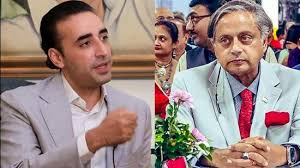

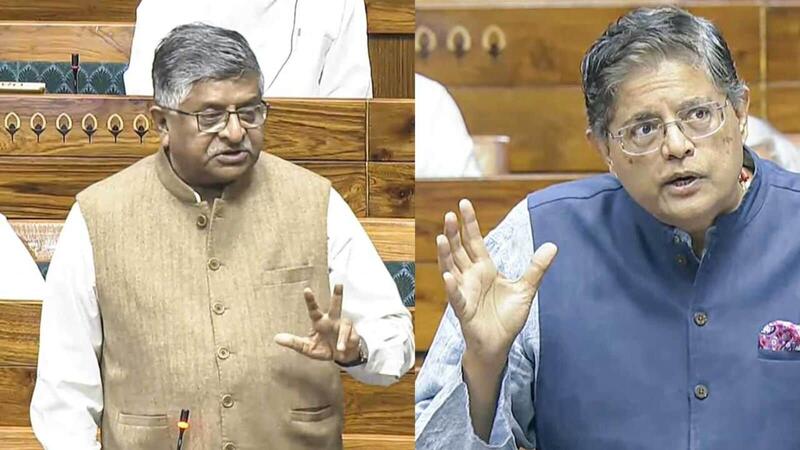
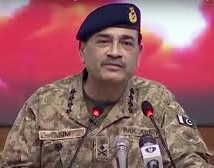
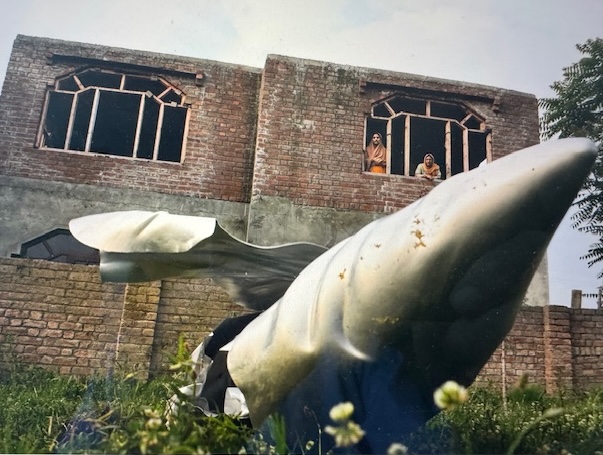
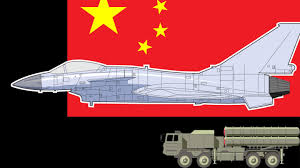
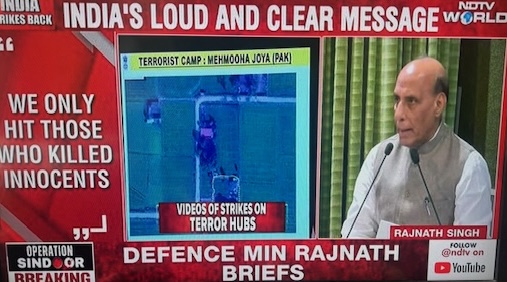
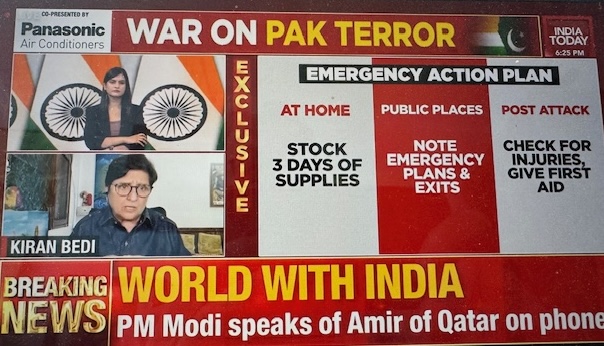
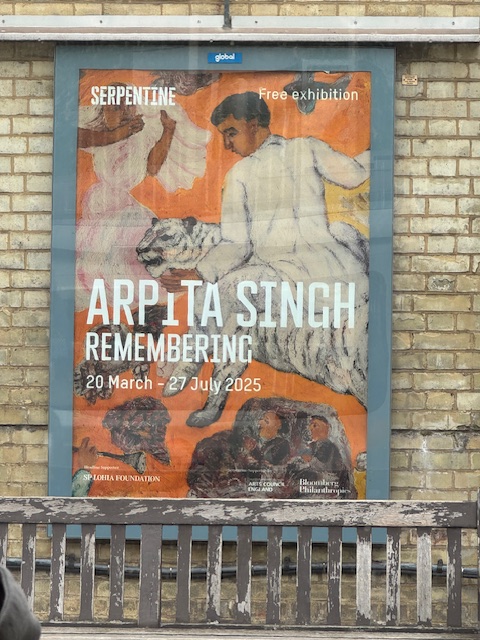
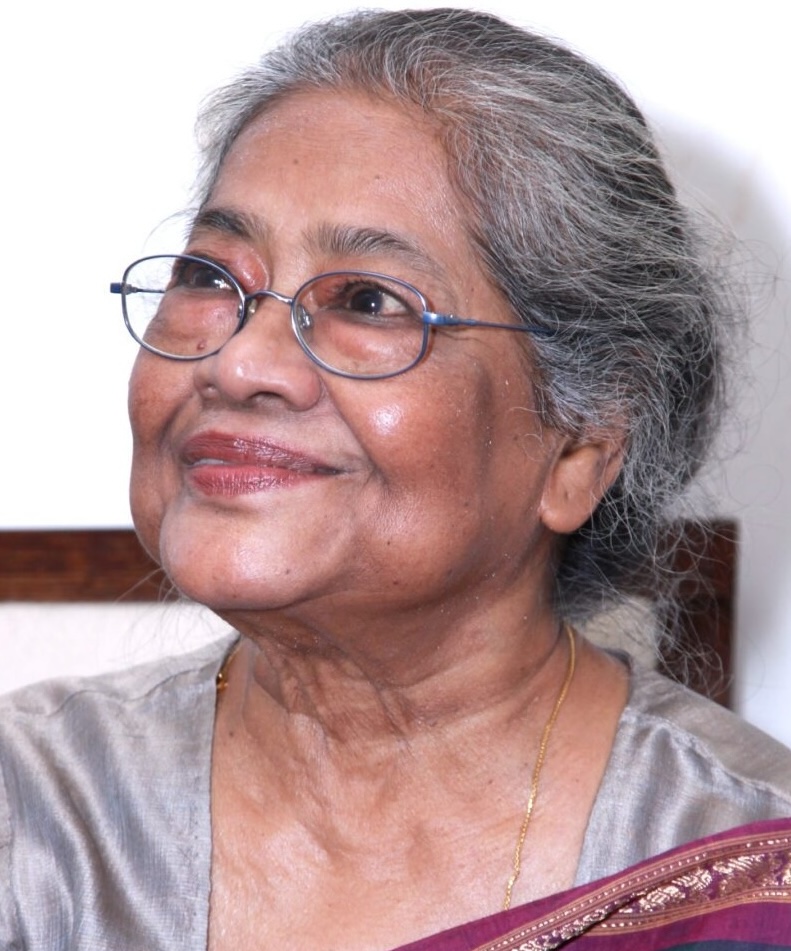
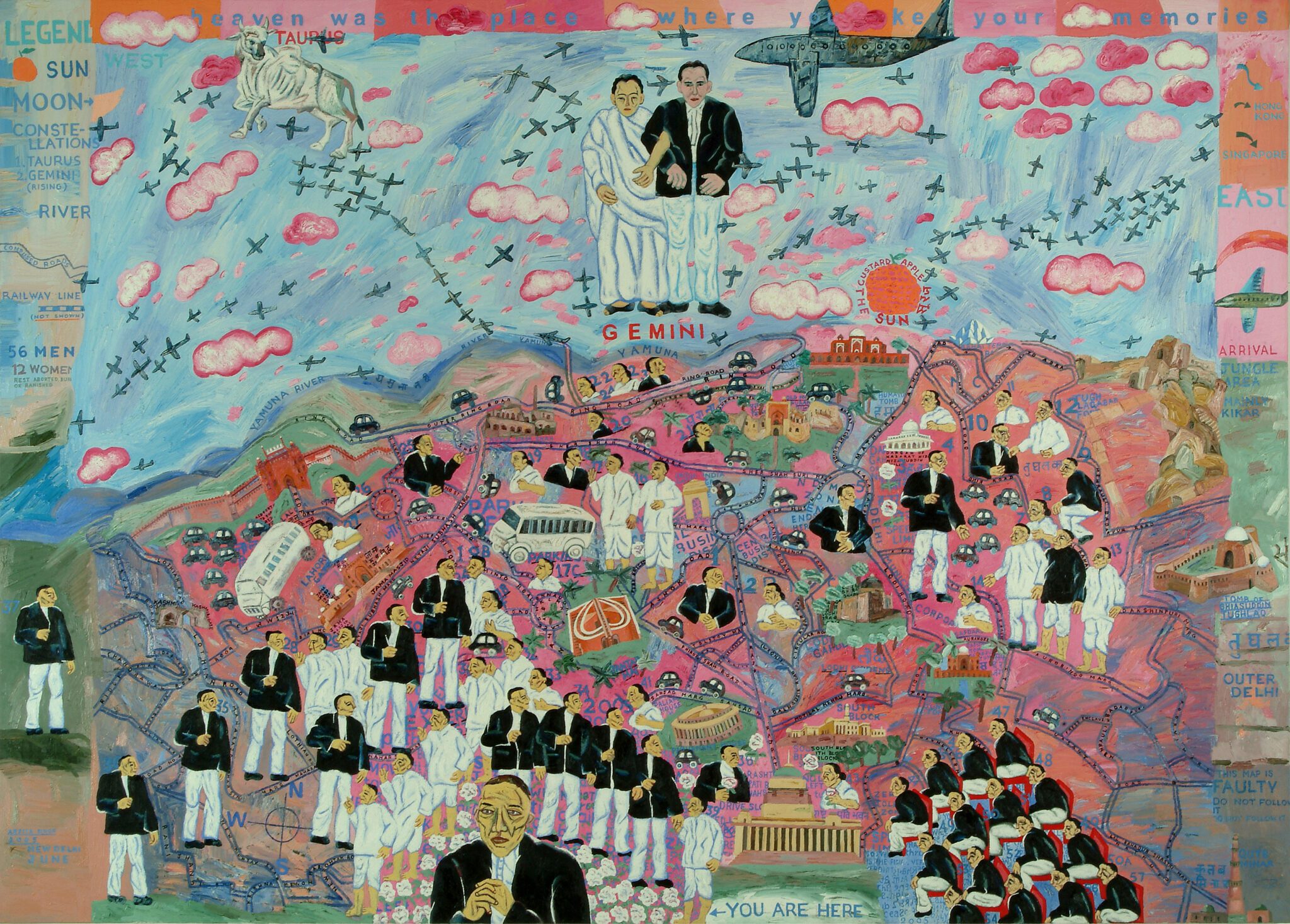
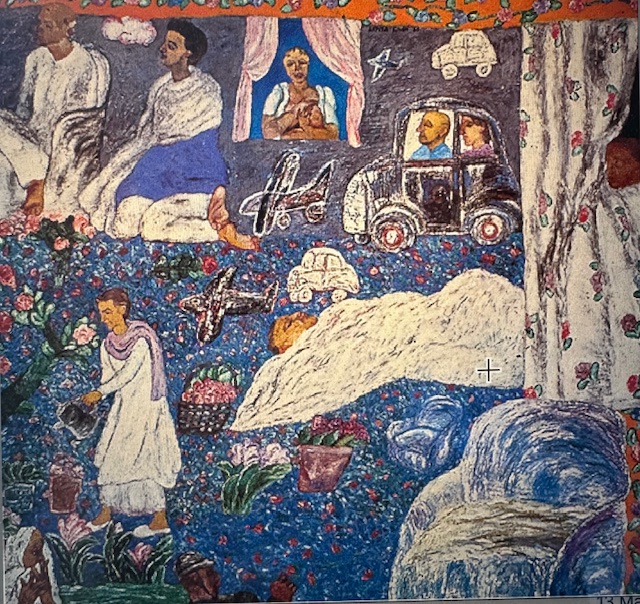
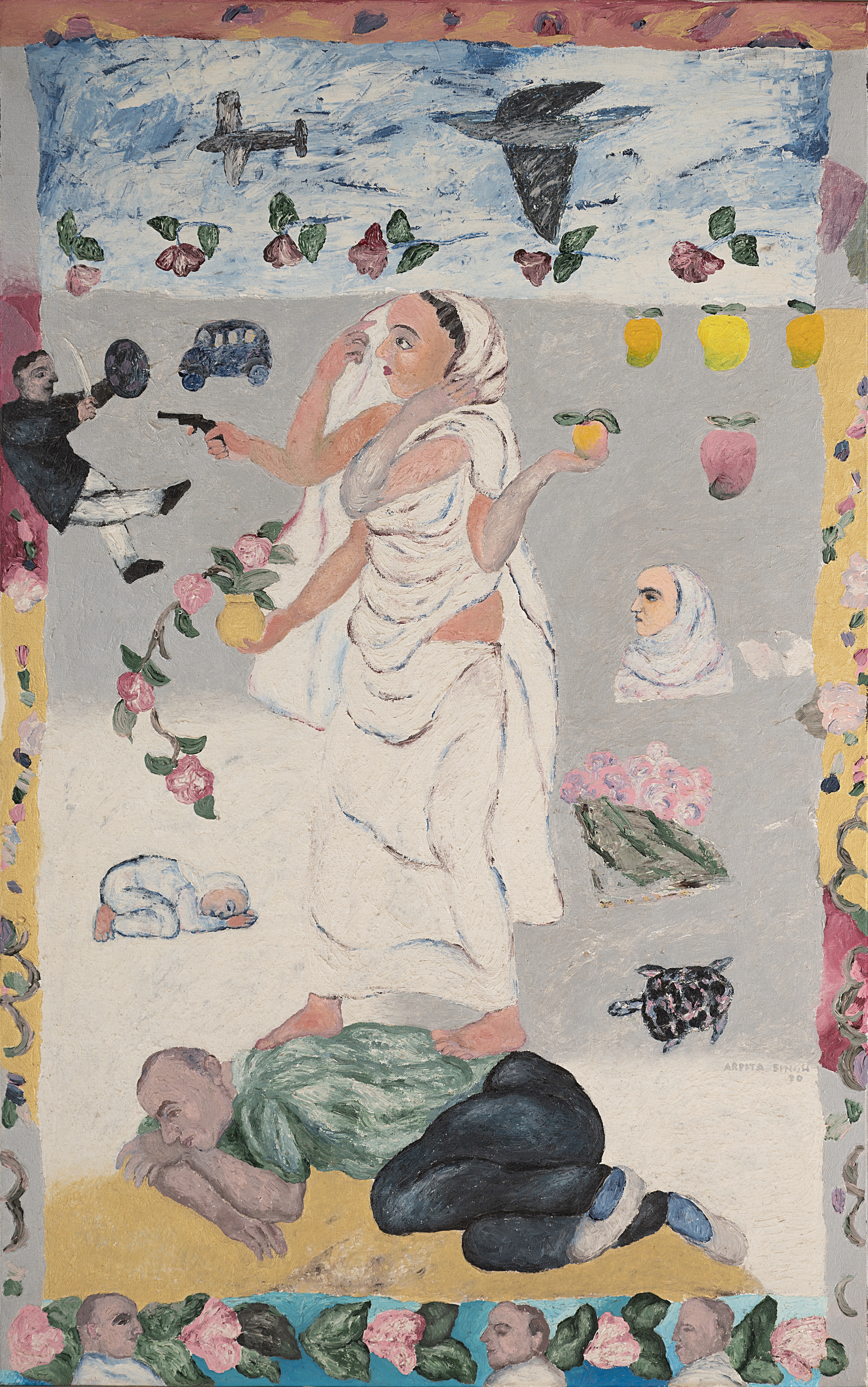

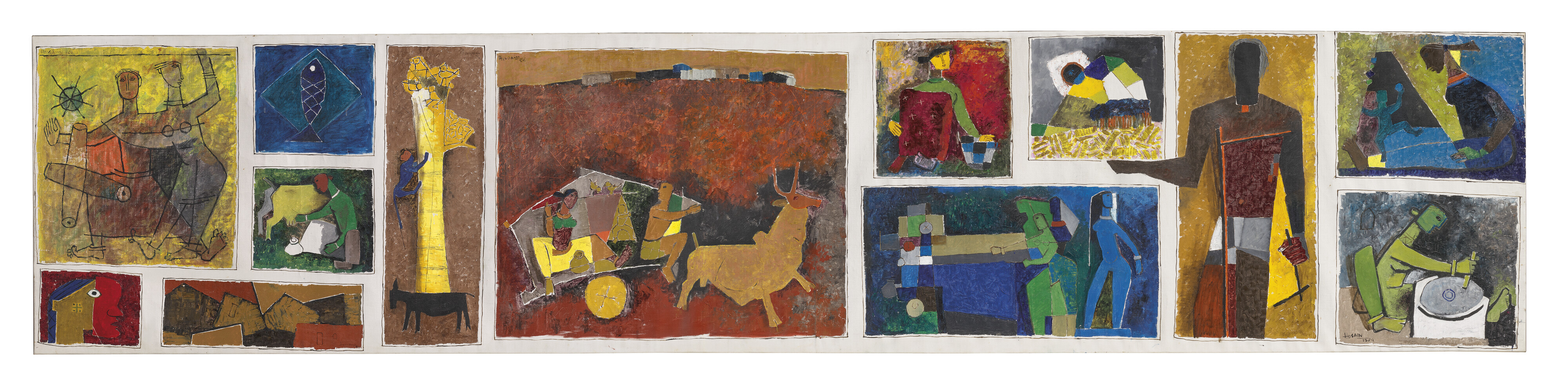
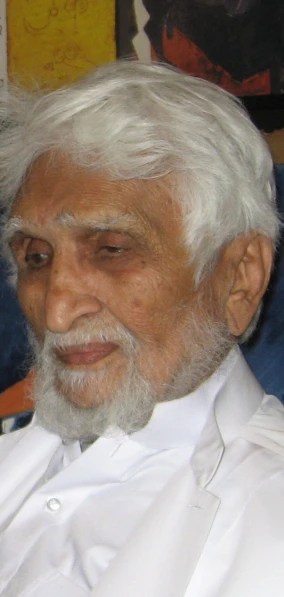
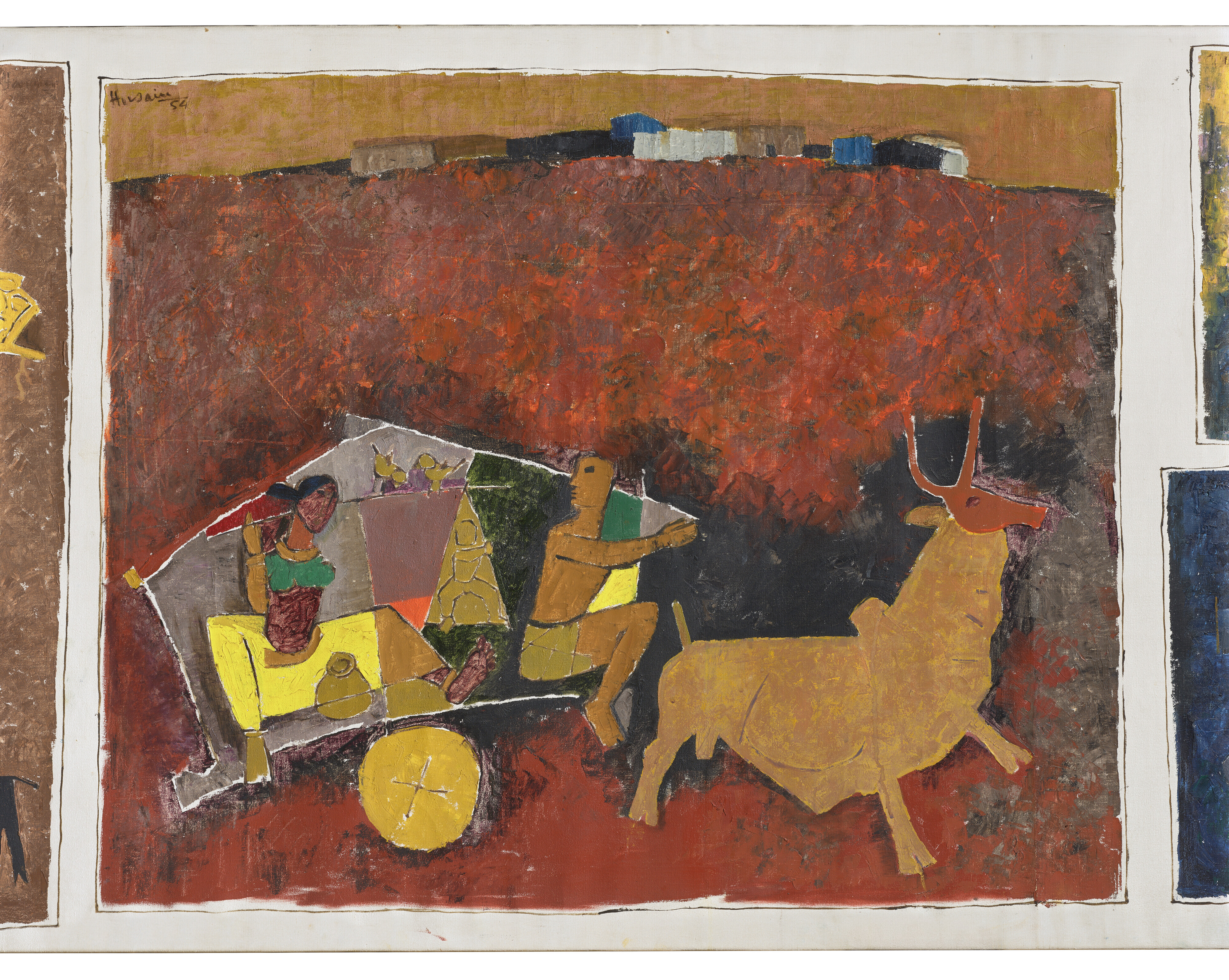
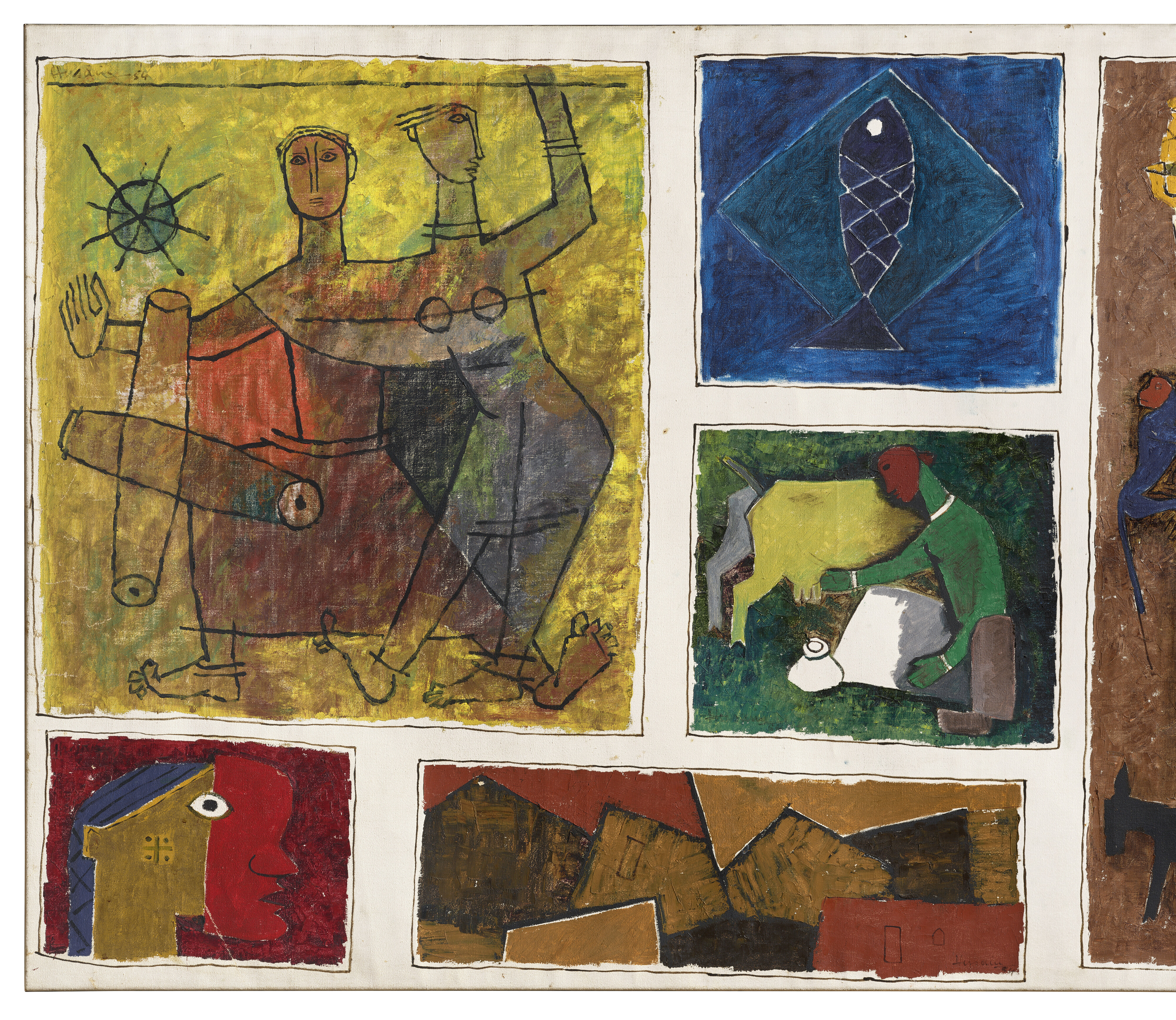
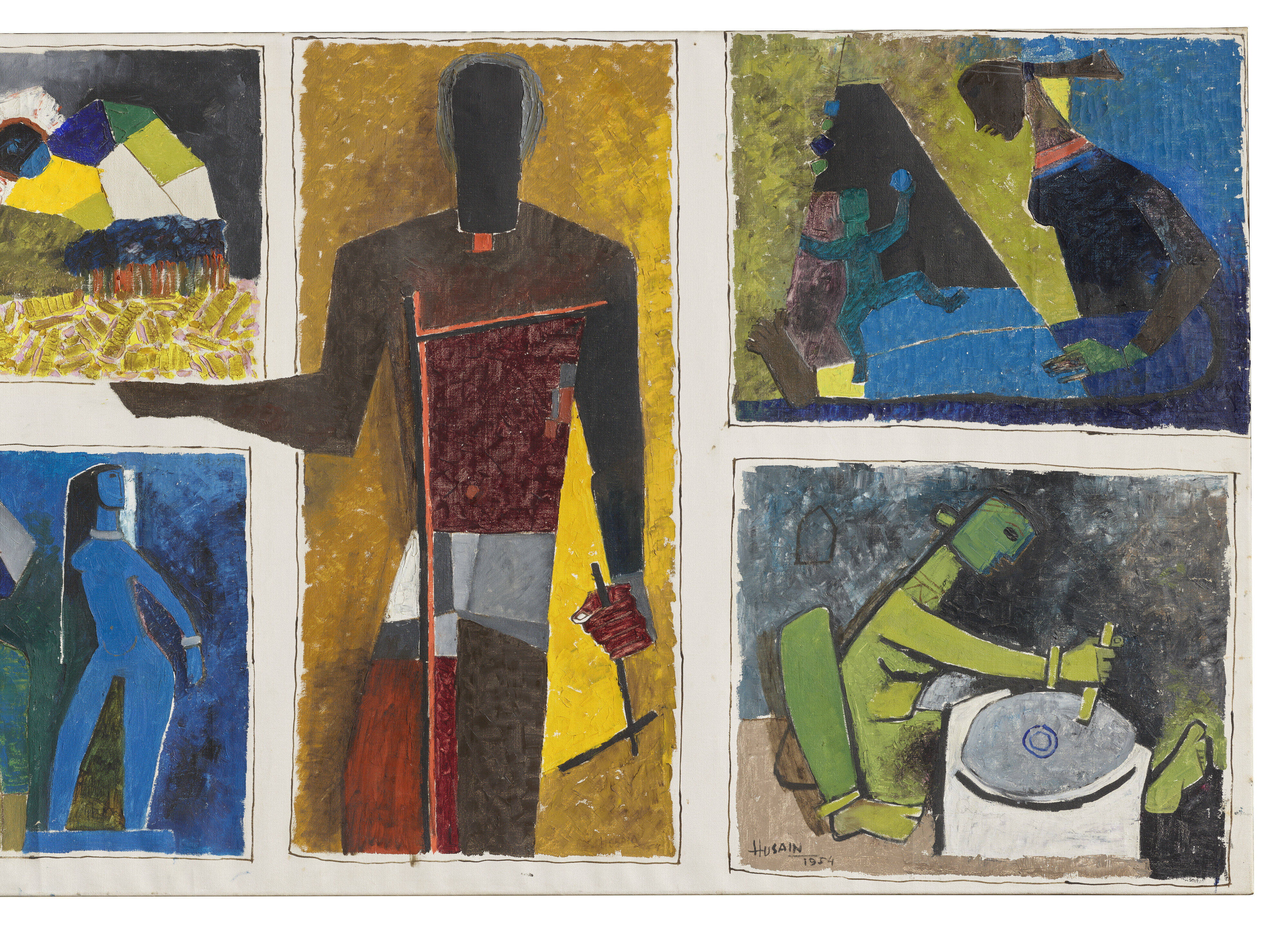
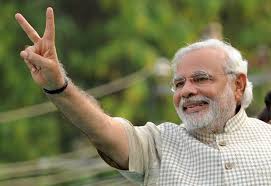

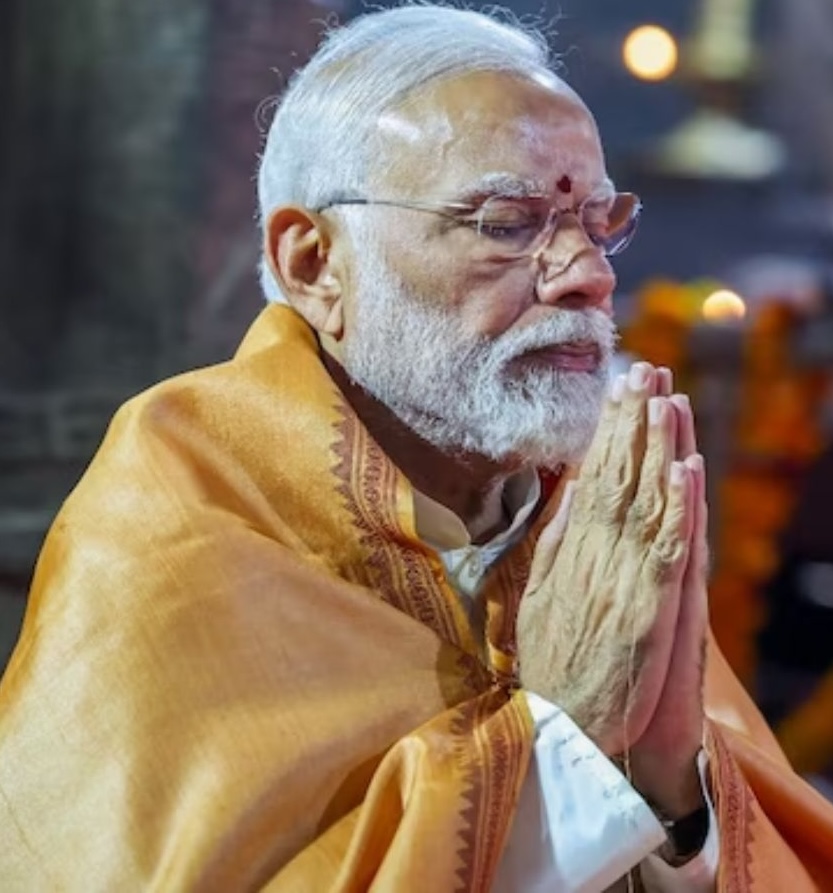
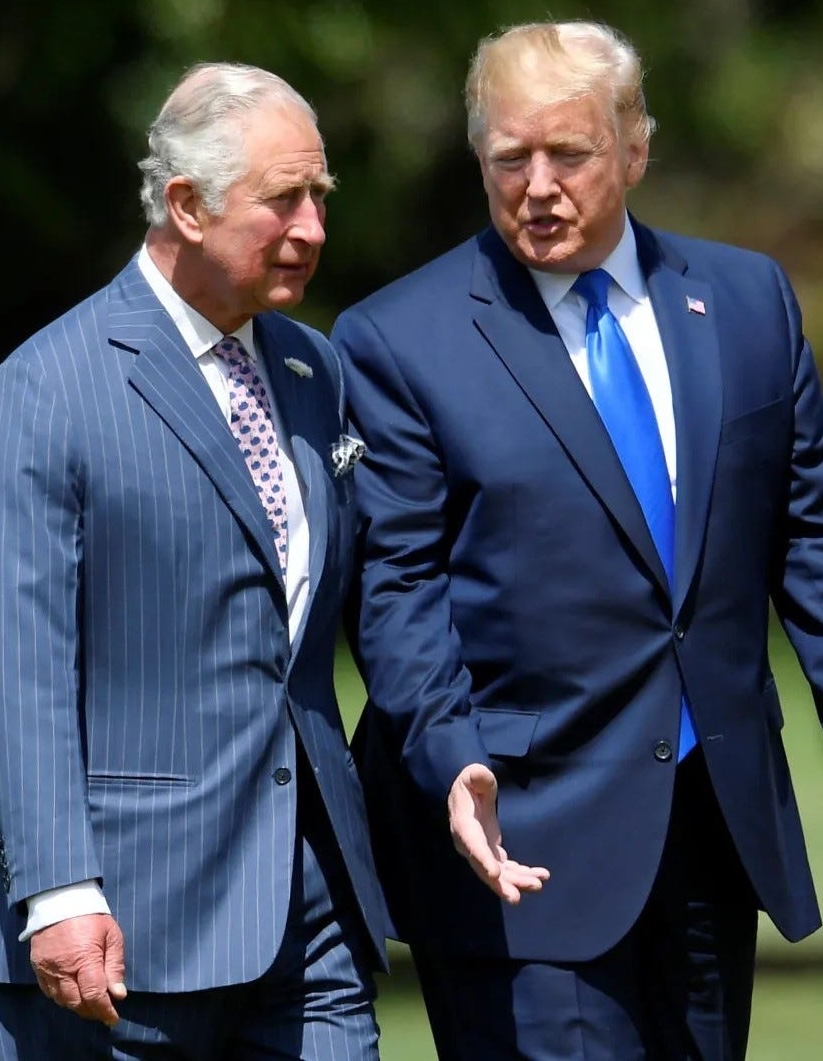
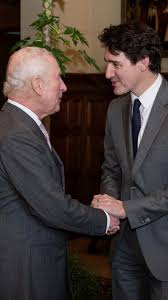
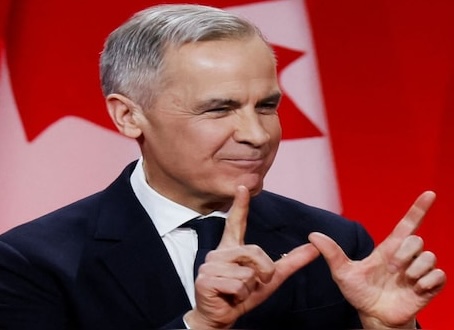
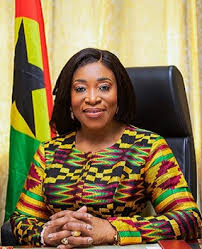
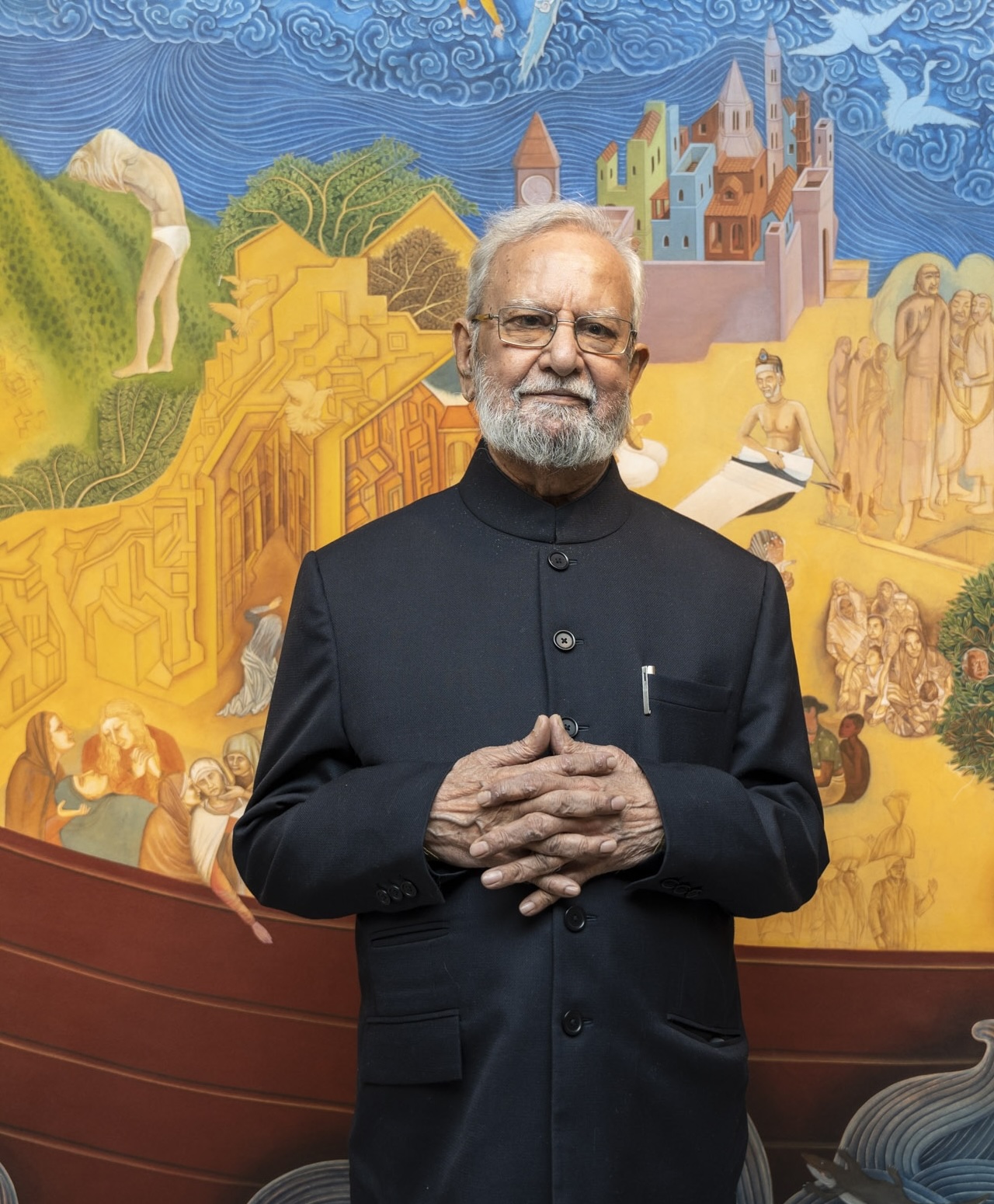
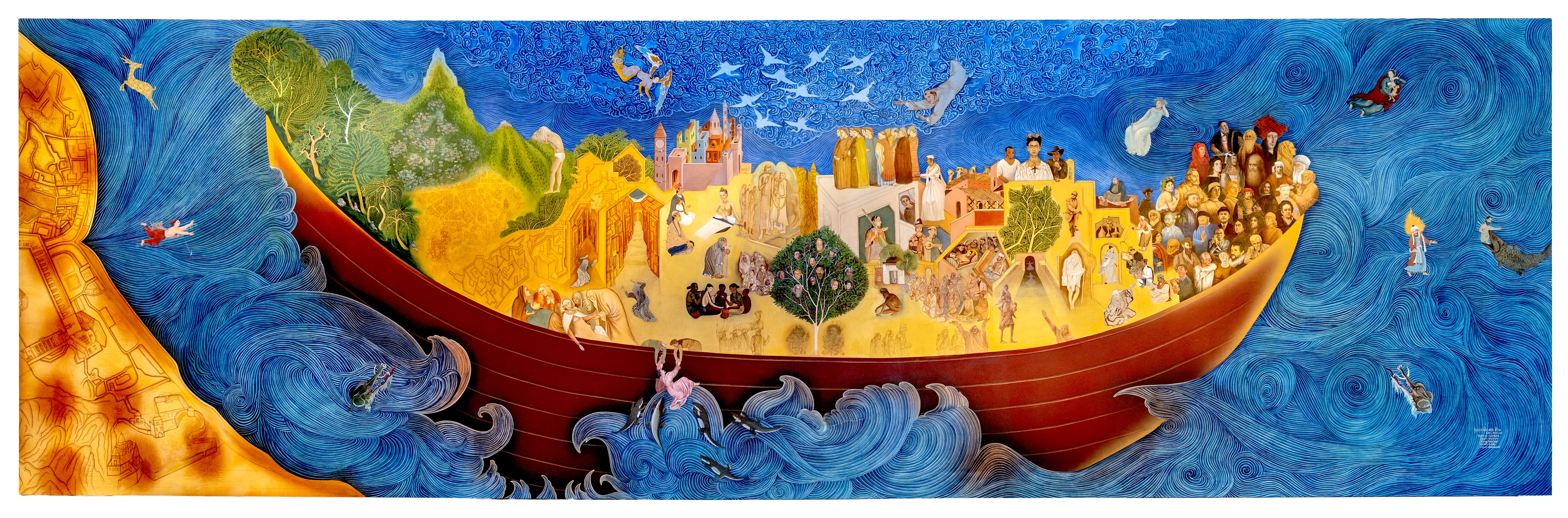
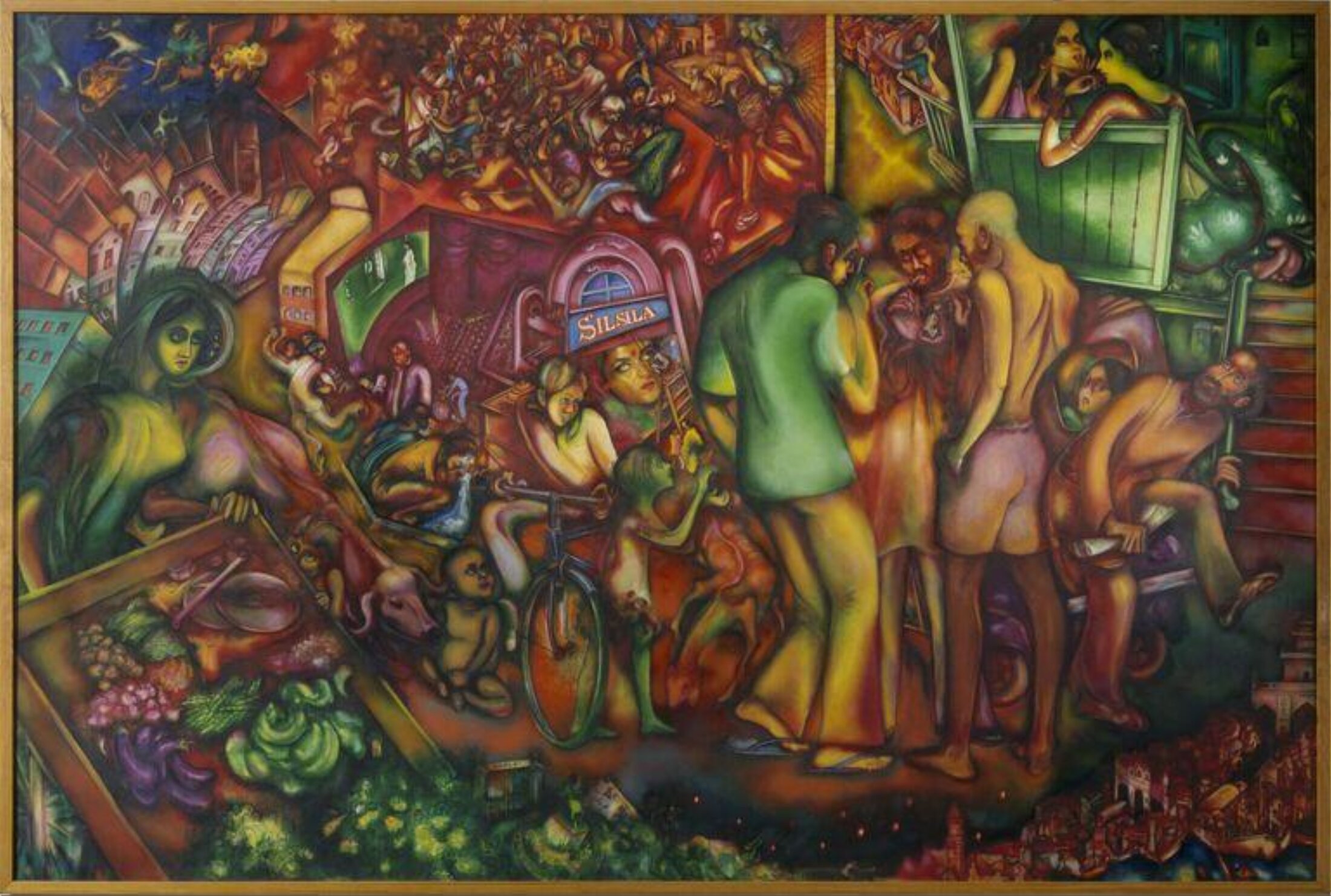

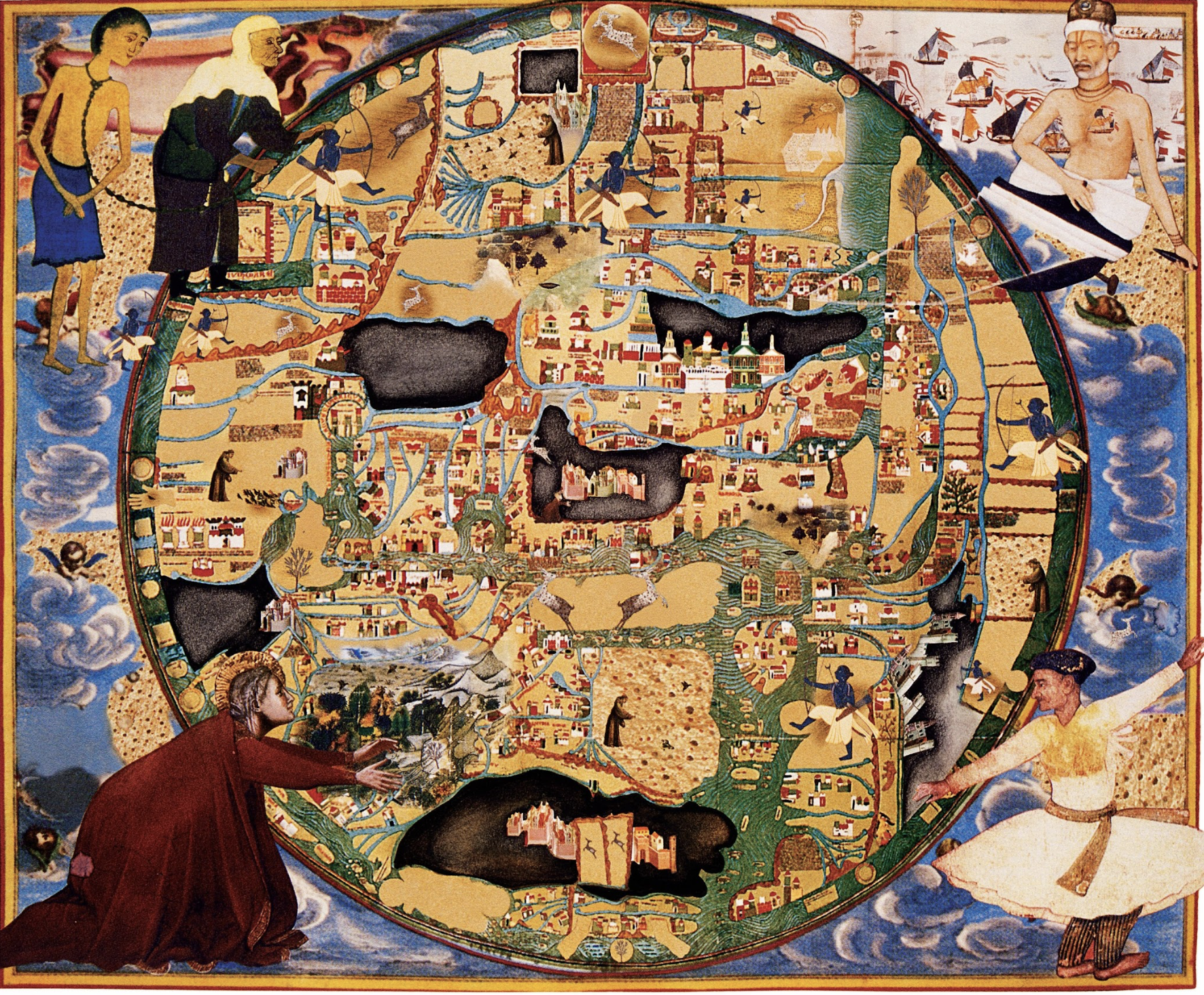
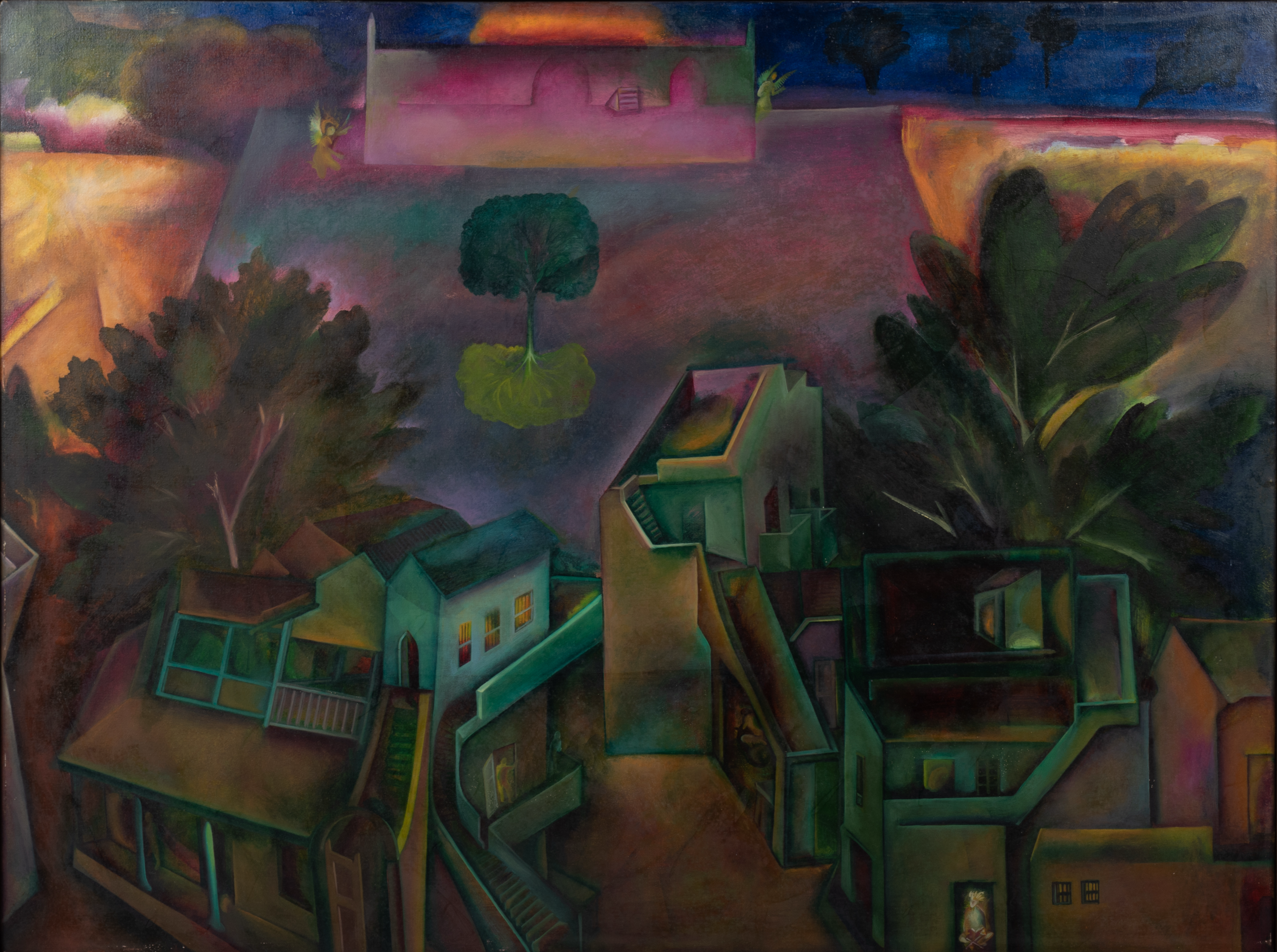

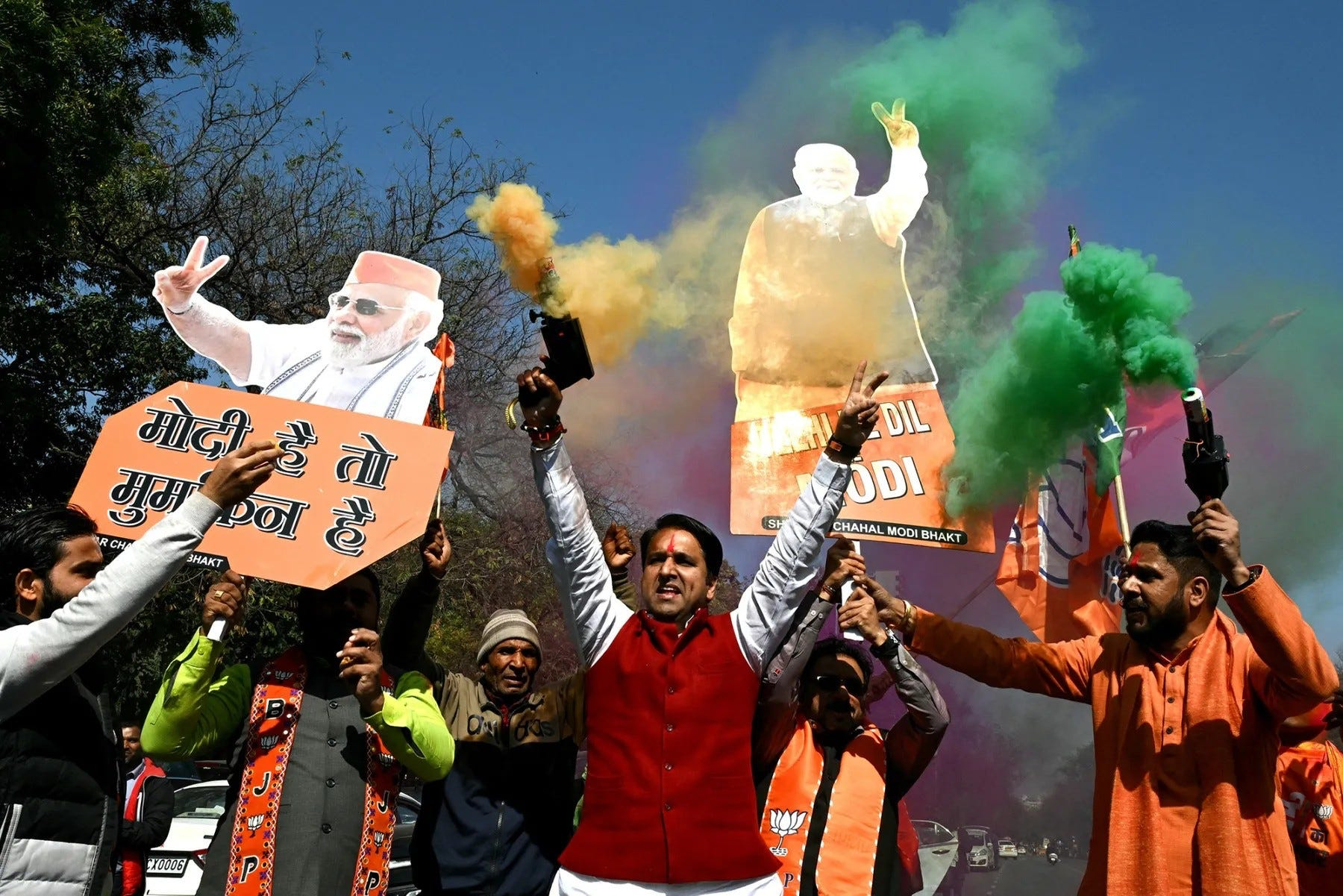

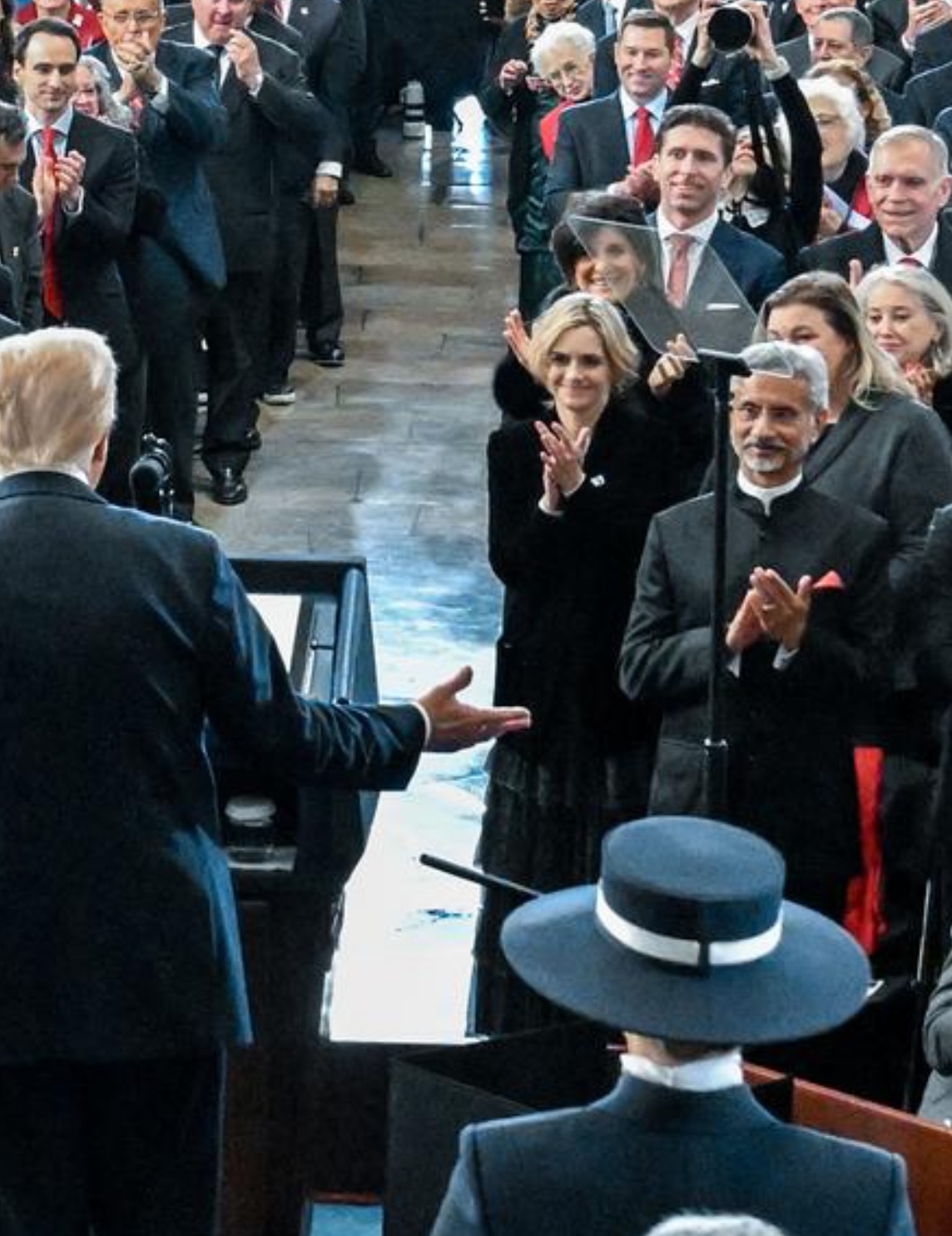
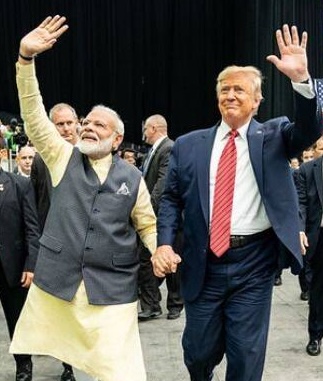
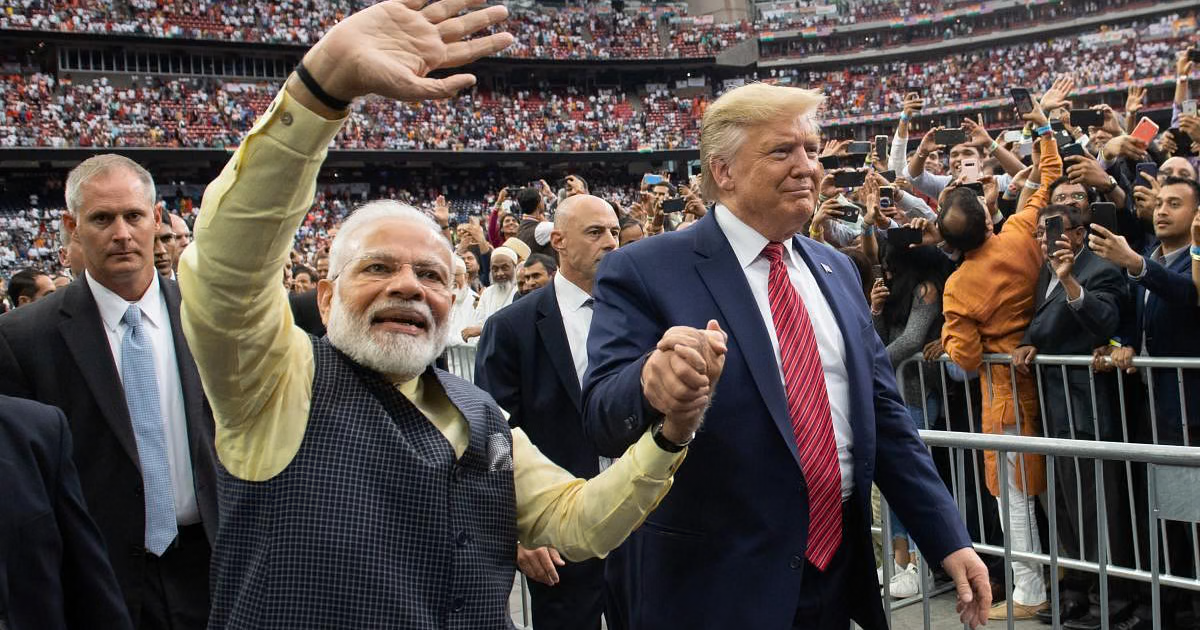
 Riding the Elephant
Recent Comments