Posted by: John Elliott | August 5, 2011

Chittaprosad, the artist – a voice of protest from the past

.

In 1943 or 1944, India’s British rulers burned Hungry Bengal, a book on the Bengal famine that contained drawings and writings by a Communist Party follower who became one of India’s most important but under-celebrated artists.

After nearly 70 years, that book by Chittaprosad Bhattacharya (right) has been reproduced by the Delhi Art Gallery, which is currently showing the first retrospective of an artist who, collectors say, deserves enormously more recognition than he has received since he died in 1978, aged 63.

Chittaprosad, as he is generally known, is significant not only for the events he chronicled in drawings and words, but because he broke away from the British-influenced sentimentality of the traditional Bengal School of artists. He also did not fall in with the mostly international-oriented Bombay-based Progressives such as M.F.Husain, F.N.Souza and Tyeb Mehta, who now dominate the international Indian modern art market with prices exceeding £2m.

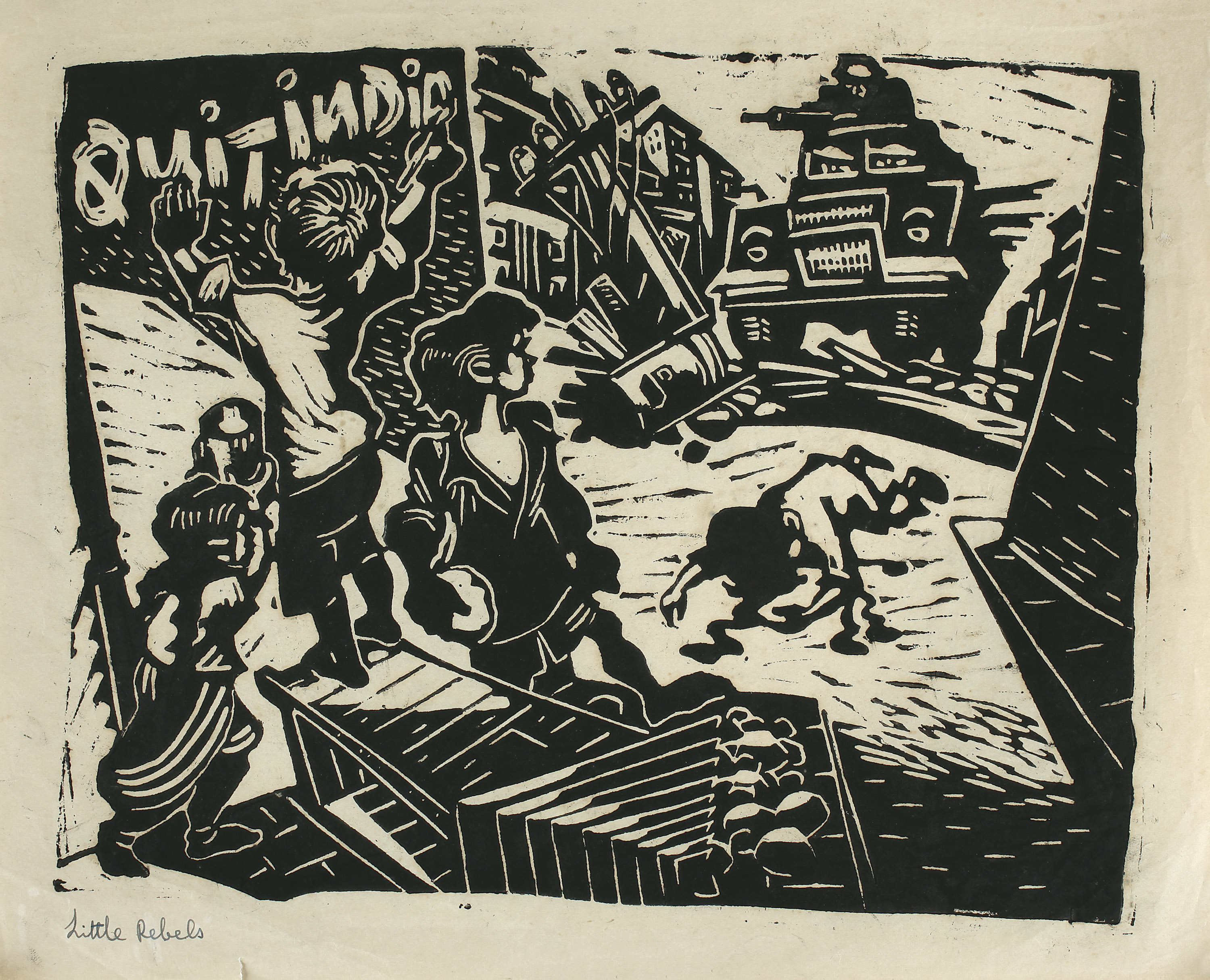
Instead, as an illustrator and reporter in his late 20s and early 30s, he brought social consciousness and campaigning themes to his art, covering in particular the horrors, poverty and cruelty of the final years of British rule (picture at the end, below) with harrowing drawings, plus articles, for two Communist party magazines, People’s War and People’s Age,.

.

While Souza fought the internal devils, as he saw them, of his Roman Catholic upbringing in Goa, and Mehta portrayed the poor in large stylized paintings, Chittaprosad plumbed the depths of despair and anti-British feeling with graphic drawings. He had no adulatory art market to greet his new works, nor the sort of dealers who now escalate prices of new young artists.

“Here is a man fired by passion to record the pain and turmoil that surrounded him,” says Kito de Boer, a McKinsey director who, with his wife Jane, is a leading international collector of modern Indian art.

In the preface to a book that accompanies the current exhibition, de Boer brackets Chittaprosad with “sensitive and thoughtful” artists such as Ganesh Pyne, Prokash Karmakar and Somnath Hore, and writes: “His ability to combine sensitivity for the suffering, and raw anger at the elite, set him apart as a distinctive talent…..His fury and empathy flows on the surface for all to see but runs deep with the power to slice into the viewer’s consciousness”.

.

The exhibition, which runs till August 20 and then goes to Kolkata, contains about 150 works, mostly fine drawings with some lino-cuts (I have bought an iconic Quit India – above).  The works have been assembled over several years by Ashish Anand, who runs the gallery. He has bought two collections, one of them from Chittaprosad family and the other from a Czech collector.

 He also persuaded the artist’s niece to part with what is believed to be the only copy of Hungry Bengal, which has now been reproduced and is available for sale along with five other books by art historian Dr Sanjoy Kumar Mallik.

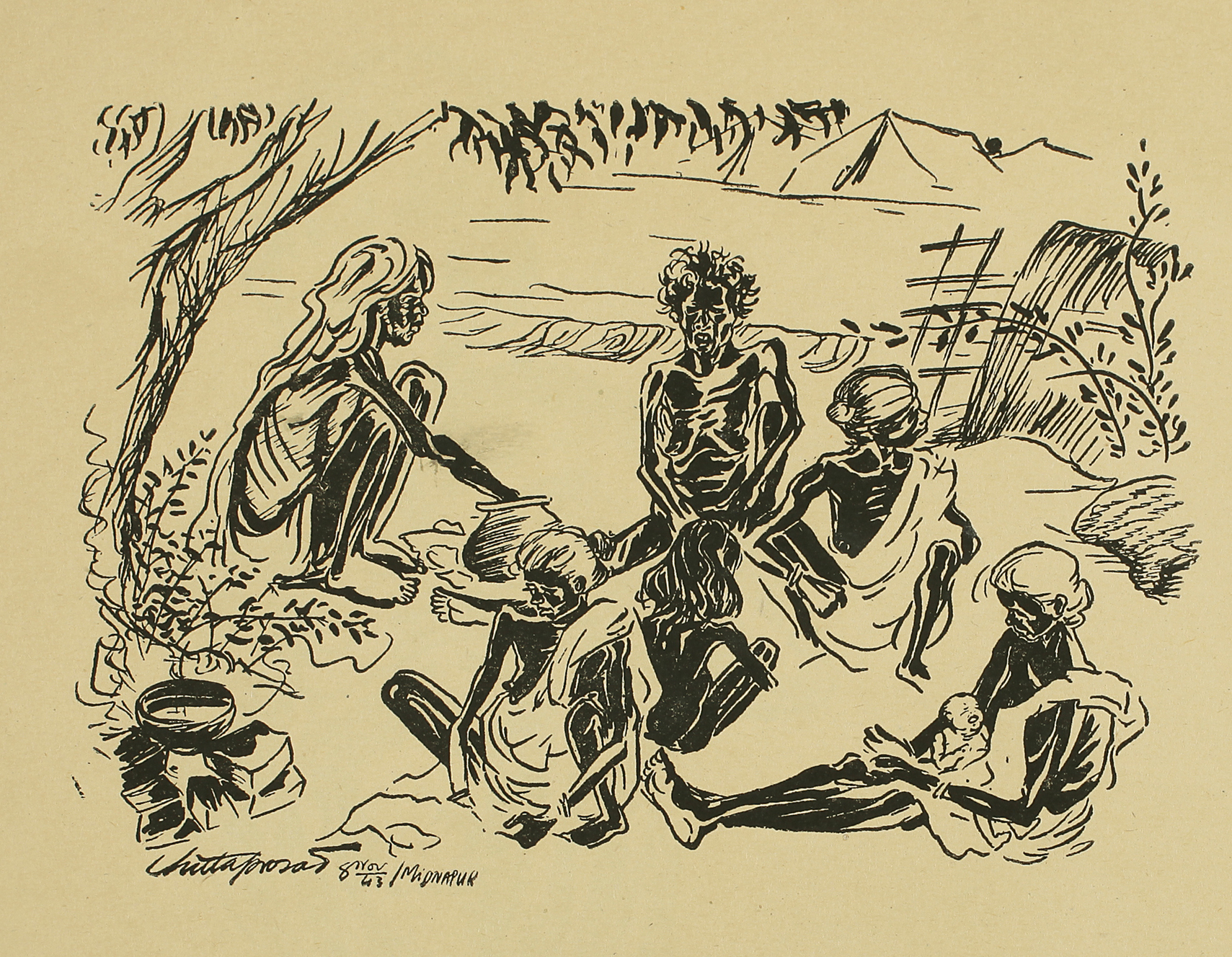
Hungry Bengalis an illustrated report of a tour in 1943 of the Midnapur district of Bengal during the appalling famine which claimed some 3m lives and is now seen as one of the most inhumane disasters of British rule. Travelling by bus, boat and on foot, Chittaprosad reported and drew pictures of hunger, illness, forced prostitution, abandoned villages, and uncaring corrupt officials.

.

His caption on one picture (above) talked about women whose poverty gave them no option but to turn to prostitution.  On another (right) he wrote:  “The dacoits carried away the half-boiled rice, the last two pieces of brassware that the unfortunate victims still had, and even the dirty rags they had on them. The woman had nothing to cover herself with for two days”.

The exhibition ranges across his work that includes – in addition to the famine and protests against colonialism – economic exploitation, urban poverty, and the 1971-72 Bangladesh war. There are also drawings and scraperboard illustrations he made for children.

“His images take you on an accelerated journey into the epicentre of the revolt that started with the Mutiny and would have exploded into revolution had the colonialists not withdrawn,” writes de Boer. With the eye of a management consultant (who lived in India in the 1990s and is now in Dubai) he adds: “As a colonial administrator I would have looked at these images with fear – sensing that the game was over.”

.


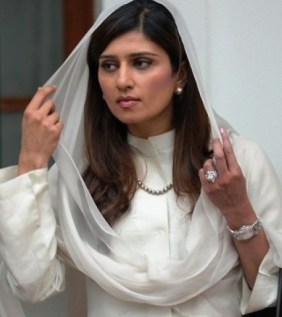
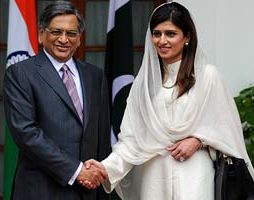
There’s a new smiling face in the tortured relationship between India and Pakistan. Hina Rabbani Khar, Pakistan’s 34-year old fashion-conscious and personable new foreign minister, made her first major public appearance yesterday (right) when she held constructive talks in Delhi with her Indian counterpart, S.M.Krishna.

Appointed Pakistan’s youngest foreign minister just a few days ago, Khar spoke of a “mindset change” in both countries, and of a new generation that saw the two countries’ relationship differently from past generations. “It is our desire to make the dialogue process uninterrupted and uninterruptible,” she said after meeting Krishna.

Whether or not Khar regarded Krishna , who at 79 is far more than twice her age, as a past generation, she had a point based on her comparative youth. The fractious relationship is run by people in both countries with long, sometimes life-long, memories of their three wars, one near war, near-nuclear confrontations, and multiple deaths in both countries mostly caused by Pakistan-generated terrorism.

Comments last night on television as Indian pundits tried to come to terms with a fresh and friendly face illustrated the generational problems. They talked of there being no real change in the Pakistan approach to India, especially over terrorism, and complained that India was going along with a more co-operative approach without enough in return from Pakistan. Behind these comments lies growing concern about Pakistan’s internal crises of Islamic terrorism, a collapsing economy, an ineffectual legal system and an army that has lost its élan following the killing of Osama bin Laden by US troops three months ago.

Khar was right when she said that people on both sides of the border have had enough of the confrontation and, as individuals, would like to move on. However it would only take a terrorist attack in India with clear links to Pakistan for the mood to change and for national anti-Pakistan feelings to supplant the more personal longing for peace.

Khar comes from an privileged feudal family background at the top of Pakistan’s society. Yesterday she was demurely dressed in white, with fashion touches that included a Hermes black Birkin handbag, a string of pearls and high black heeled shoes.

She is the daughter of a prominent Pakistani politician, Ghulam Noor Rabbani Khar, who persuaded her to abandon a hotel job to enter politics, and the niece of Ghulam Mustafa Khar, a former governor of the Pakistan province of Punjab. One of Mustafa Khar’s ex-wives, Tehmina Durrani, described her unhappy and traumatic married life in a controversial novel, My Feudal Lord, that lifted the lid on Pakistani society. A review in the Far East Economic Review said it exposed “sex, incest, child abuse, kidnapping, sado-masochism, political betrayal and treason”. Originally published in 1991 by Durrani herself, the book later became an international best seller.

With such a family background, it is not surprising that questions have been asked in Pakistan as well as India about how serious a politician Khar is, and which faction of Pakistan establishment she represents.

Was she was speaking yesterday just for politicians or was her positive approach supported by the Pakistan army, which wields ultimate political power? Some observers thought that Pakistan, whose relationship with the US and other countries has worsened recently, might have decided to court international support by taking a co-operative line with India.

It certainly seemed unlikely that a new minister with limited political experience would have spoken with the confidence and poise that Khar displayed yesterday. This gave  her positive remarks added importance.

I suggested to her at a dinner hosted by Shahid Malik, Pakistan’s high commissioner in India, that it had been a “good day”, to which she replied that it must have been good if the media was willing to suggest so. When I asked her what would come next, she said that the significance of this round of talks would depend on progress made during the coming months before the next ministerial meeting is held early next year.

Various cross-border initiatives were agreed at the meeting with Krishna (seen together above – both photos by AFP). This followed useful talks between the two countries’ foreign secretaries the day before, and between their home ministers last weekend during a South Asia regional conference in Bhutan. This continues a five-month trend begun in February, again at a regional conference in Bhutan, which ended a stand-off imposed by India after terrorist attacks in Mumbai killed over 160 people in November 2008. It is significant that this week’s talks have taken place despite 22 people being killed in Mumbai blasts earlier this month (for which no group has claimed responsibility).

The day ended unexpectedly at the dinner with the events being put in context by Ram Jethmalani, 87, one of India’s top lawyers. In an inappropriate but accurate impromptu speech, he said that China was an “enemy” of both India and Pakistan. That was an oblique reference to China becoming Pakistan’s biggest and most influential provider of military and other support, the point being that Pakistan will never be able to make much progress with India unless China agrees. China is unlikely to agree however, because its basic approach is to destabilise India’s economic growth and international power wherever possible.

So major progress on peace between India and Pakistan is out of reach, but that still leaves room for Khar’s constructive day in Delhi to ease relationships and increase cross-border contacts.

Posted by: John Elliott | July 23, 2011

India lost for words 20 years after its 1991 reforms

Twenty years ago tonight, three top Indian officials burned the midnight oil tearing up old import controls and preparing a package of economic reforms that would slowly lead to the booming India that is widely admired today, with growth of 8-9%, 300-350m people enjoying the benefits of a consumer economy, a strong rupee, and businessmen operating internationally.

But India seems to be in no mood to celebrate that momentous event, just as it wasn’t at India’s 50th anniversary of independence in 1997 when the feeling was downbeat. People then were unsure of what to celebrate, since so little had been achieved in terms of economic development, care for the poor and industrial efficiency since the British left in 1947.
Ten years later, that had changed because of the economic boom of the intervening years. But the 1997 mood is now back again. People are aware that, despite all the economic and business successes, 800m people are still desperately poor and under-nourished, with poor access to clean water and health and education services. Public infrastructure and services are crumbling, national security and defence preparedness is woefully inadequate, and governance is sliding into a greedy, corrupt and inefficient abyss with no bottom in sight.

No 20-year celebrations or major events have been planned, though the Confederation of Indian Industry is next week beginning to pull together some conferences to examine what has been achieved and look ahead. Apart from occasional references to the reforms by prime minister Manmohan Singh, the government is mostly silent – possibly, one frustrated leading economist suggested to me, because Sonia Gandhi, leader of the coalition, and her son and heir Rahul, do not favour tough reforms. A National Advisory Council (NAC) that she heads is populated by soft liberals who prefer expensive and often wasteful pro-poor aid schemes.

Finance minister Pranab Mukherjee has been briefing journalists this week on what he sees as signs of success (more pending than completed), though this has received a mixed reaction, including a damning piece on the Wall Street Journal’s India web page that lists what has not been done.

Yesterday, in an apparently desperate effort to show some signs of activity, the government approved a $7.2bn investment by BP in Mukesh Ambani’s Reliance Industries’ (RIL) oil and gas business, and moved a little closer approving contentious foreign direct investment in general retail stores.

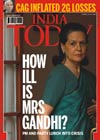
But that was offset by a cover story in today’s India Today weekly news magazine  (below)headed India goes global as government chokes economy – an over-stated reference to Indian companies’ big investments abroad at a time when Indian projects are being slowed down by government controls (often justifiably, in order to follow environmental regulations). Listed there are the mass of bills on land, mining, pension funds, banking, insurance, tax codes that India’s unruly and protest-prone parliament has failed to pass in recent sessions

Popular contrasts of India’s elephant and China’s tiger economies are being trotted out in various articles and studies, as they have been for 20 years. When this blog was created by Fortune magazine, it already had a China blog called Chasing the Dragon, so I was asked to ride the elephant.

But the contrast is simplistic because India has its tiger industries such as information technology (IT), autos, pharma, and mobile telecoms that have been spurred by entrepreneurial drive and technological change. There are also rapidly industrialising states – notably Gujarat and Tamil Nadu (despite its political corruption). These are taking the place of India’s earlier internationally lauded cities, Bangalore and Hyderabad, the capitals of Karnataka and Andhra Pradesh that have been swamped by the greed and corruption of politicians and businessmen in areas such as land acquisition, mining and real estate. (The Karnataka chief minister is this week accused of facilitating multi-million dollar illegal mining).

India’s blundering elephant is the government establishment that has refused over the past 20 years to change the way that the country is run. The July 1991 reforms removed trade and industrial licensing controls and opened India up to foreign investment, but this whittling-down of the government’s role has not been followed through.

The government still controls the mostly unreformed banking and defence sectors as well as a vast array of public sector industries and, in various ways, land useage and licensing, especially in the corrupt telecom sector. Such government controls skew development. As a simple example, with 70% of banking still government-owned, 20 banks have sought to please Pranab Mukherjee by opening branches in his Jangipur (West Bengal) constituency, even though most do little business there. Banks did the same in Palaniappan Chidambaram’s constituency when he was finance minister.

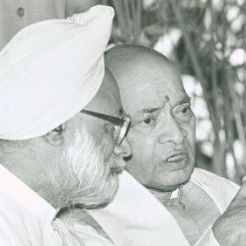
The reforms that were announced in a budget speech on July 24, 1991 by Manmohan Singh, then the finance minister, had been ordered by Narasimha Rao, the prime minister, who a  month earlier had formed a new government in the midst of a critical foreign exchange crisis. Singh had already devalued the rupee in two stages and dramatically flown 47 tonnes of gold to the Bank of England to cover a desperately needed bridging loan. The July 24 reforms had been prepared along with Chidambaram, then commerce minister and now home minister, and Montek Singh Alhuwalia who was then commerce secretary and now runs the Planning Commission.

The road to reforms had begun at least a decade earlier when, towards the end of her prime ministership, Indira Gandhi started to decontrol cement prices (1982) and commissioned L.K.Jha, a veteran bureaucrat, to loosen many of India’s tough economic controls that he had helped put in place. This trend was continued by Rajiv Gandhi when he was prime minister in the mid-1980s, but he faced too much opposition to make much progress, as did Narasimha Rao and Manmohan Singh by 1994, when Rao became politically nervous and slowed progress.

Rao told Gurcharan Das, for India Unbound (published in 2000), that India had had “the right pace of reform and a faster pace might have led to chaos”. He was also not in favour of wide-ranging privatisation, telling Das: “You don’t strangulate a child to whom you have given birth”. And he favoured pro-poor and politically useful employment schemes like those that Sonia Gandhi’s NAC now advocates, even though they are often corruptly and wastefully administered. “Growth was not enough. We had to attack poverty directly through employment schemes,” said Rao.

No reforming zeal

Singh did not demur about the slowdown. Despite his image as the “architect” of the 1991 reforms, he has never been an enthusiastic liberaliser, and India has not been subject to the sort of reforming zeal and leadership shown by Margaret Thatcher in the UK ten years earlier. But the Soviet Union, which had always supported India, had just collapsed, economic reforms had begun in China – and then the financial crisis made instant action essential.

Singh however was always – and still is – more worried about the effects of change on the poor, as he used to tell me in the 1980s, when he was the Governor of the Reserve Bank of India and I was the Financial Times’  correspondent in Delhi. When the United Progressive Alliance (UPA) came to power in 2004, led by Sonia Gandhi and Manmohan Singh, reforms were initially held back by the Communist-led Left Front that supported the government. Since the 2009 general election, many reforms have been blocked by the disproportionate power of other small coalition partners that have 20 or fewer MPs out of the coalition’s total of 262.

The main problem however is that Sonia Gandhi is not a firm enough believer in reforms to push Singh and his government into a tougher line. Consequently, a raft of reforms have been delayed including divestments of stakes in public sector businesses, increasing FDI in various sector such as defence, insurance and retail, and – most important of all – curbing subsidies

Energy, water and urbanisation

Montek Ahluwalia, whose Planning Commission is currently finalising a new five-year plan to start next year, recently argued in a lecture to the ICRIER policy think tank that there is too much public focus on FDI and divestments as the touchstones of liberalisation achievements. The focus for future should, he said, be on three urgent areas that would otherwise block economic progress.

One was the use of energy, with India importing 80% of its oil, and with coal prices and the need for imports rising. Next came water, whose supply (unlike energy) could not be increased despite current inadequate polluted supplies and growing demand. Third was urbanisation, with only 150m of 300m people currently in urban areas receiving adequate municipal services, while another 300m are expected to arrive in cities within 20 years.

These areas need changes of approach and implementation by the central government, and even more by state governments, that have eluded India for the past 20 years.

Expanding and controlling energy and water supplies means, Ahluwalia says, that states must accept realistic pricing so that users pay – both in order to finance development and to curb unnecessary useage. That however is the same sort of problem as curbing subsidies for the poor, which no government has dared attempt.

Coping with urbanisation – and the use of land – needs new laws and regulations at both central and state level to avoid the corruption and crony capitalism that is currently evident across the country at all levels.

Basic reforms in governance are needed – the scale of the problem is illustrated by 150 out of 542 seats in the 2009 general election being won by politicians with criminal records, and by the corruption stories involving politicians and bureaucrats that daily fill the newspapers.

It is hard to see how India can tackle these issues, given that it has failed to do since 1991. People who are well off will of course do better, and the 300-350m people now enjoying varying levels of consumerism will increase in number and satisfaction. Companies will become more profitable and will become more internationally active. But social tensions will increase, with growing battles over the use of land and other scarce resources, and it will take major reforms to reverse the trend of bad governance and corruption.

It is an irony that, though the past 20 years began and now end with Manmohan Singh, he was neither in charge at the beginning, nor is he at the end. That is not a  criticism, but in the early 1990s he could only do what he did courtesy of Narasimha Rao, and now he cannot do what he doesn’t do courtesy of Sonia Gandhi and the UPA’s coalition partners. Something surely needs to change.
Posted by: John Elliott | July 21, 2011

Wait for the aftershocks from Murdoch’s earthquake

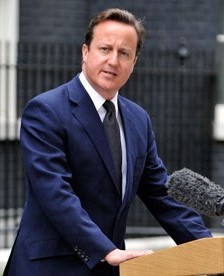
British members of parliament have gone into their summer recess and Rupert Murdoch flew home to the US yesterday after being grilled by a parliamentary committee. He left the country while David Cameron was doing an amazingly robust job in the British parliament, defending his far from transparent role in the media-police-government crisis that has engulfed his administration and Murdoch’s empire.

Anti-Conservative Party 2010 General Election poster

Neither man’s job is entirely secure. Cameron obfuscated enough in parliament yesterday to indicate that he is hiding something sensitive about his conversations with Murdoch over the tycoon’s (now withdrawn) bid for control of the UK’s BSkyB television business.

It is also inconceivable, despite Cameron’s protestations, that his former press spokesman and former News of the World editor, Andy Coulson, did not know about the newspaper’s phone hacking that led to the crisis – and that Cameron did not know this.

So Cameron will be pursued as more facts emerge from the astonishing total of ten  police and other inquiries that are under way. The opposition Labour Party sees a chance severely to weaken him and his government, and maybe, improbable though it seems, force him to resign. What Cameron did do yesterday, however, was win the support of his own party, which was beginning to doubt whether he had a grip on affairs – though there are still some who would like him to have to resign.

Murdoch, aged 80, must surely be on the brink of being eased into a graceful gradual retirement, even though the group is producing record returns from a complex network of holdings. When he appeared at yesterday’s parliamentary committee in London, he demonstrated that he has not got a grip on his worldwide News Corp’s affairs – unless he was play-acting and feigning ignorance of events that he should have known about.

His departure will be welcomed by journalists across the world, even though it is sad for someone of his age. While he has brought some good to media organisations that he has acquired, and to newspaper industries, he led the decline in British newspaper standards and has been brutal is his commercial operations. He also acquired an excessive influence over governments and their presidents and prime ministers around the world.

Only in Beijing did he fail to bully his way into the top echelons of government and did not get the market openings he has tried to obtain for some 20 or 30 years – for once, the intransigence of China’s leaders has to be admired.

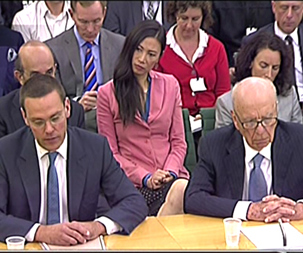
There have been some suggestions that his 42-year old Chinese-born wife, Wendi Deng, (middle of this photo, with James and Rupert Murdoch, at the parliamentary committee hearing) might have been able to help with lobbying. However, she does not come from an elite or well-connected background, so seems unlikely to have had the status to gain top-level access in Beijing on her own account .

Sadly, Murdoch was feted whenever he visited India, having instant access to the prime minister and others, even though foreign control of newspapers is not allowed.

It is appropriate that it is his domineering power that has exposed him across the world in the past few days as a weakened tycoon. If he had not been so assiduously courted by Cameron and two Labour prime ministers (Gordon Brown and Tony Blair), who were all in thrall to his power, it is arguable that this crisis would not have escalated so far.

I was on a television panel in India last night where we discussed all these issues. We  had heated arguments about the possible impact on India’s far from perfect media, which has not, experts say, hacked phones – though there was a massive scandal last year over publication of leaked official tapes containing private phone conversations of politicians, journalists and others.

It would not surprise me if hacking did start here because there is a deplorable line of thinking among some editors and journalists that they are above the law and that the end justifies the means when stories are being pursued.

I don’t see the current crisis leading to significant and long-term positive changes in the way that the media operates, even though an important inquiry has been set up in Britain.

Restrictions are needed in the way that a prime minister and others handle bullying intrusive Murdoch-style pressures from media owners.

But a free media needs to be free, and that would be at risk if there were government-linked controls on editors and journalists. There should however be a strengthening of the way that the media regulates itself, with powers to curb excesses such as phone hacking – and secret “stings” that are used too widely in India to obtain stories.

Murdoch’s media empire needs drastic governance reforms, both in terms of its corporate ethics, and the action it takes when problems arise. Evidence of phone hacking emerged years ago but was not acted on – either because Murdoch thought it a minor problem that had the benefit of attracting readers or, more probably, because executives down the line in the UK (maybe including Coulson) were able to bury the problem.

That, in lawyers’ terminology, is wilful ignorance and makes both father and son culpable. There also seem to be governance lapses in other areas  that might now gain fresh attention.

The most significant result of the crisis should be that the Murdoch dynasty no longer dominates the News Corp group. The positive spin that News Corp has received on the New York stock market in the past couple of days is more to do with stopping a share crash and looking forward to Rupert Murdoch’s departure than confirming his position and that of his son James, whose  handling of the crisis has shown that he is not a viable successor. Public opinion is building up against both men in the US.

This surely means that professional executives will gradually take over, despite the family’s effective shareholder control. Dynasties, in business life as in politics, thwart the development of an organisation and block able people from promotion to the top. And it will be good if a man who exerted such excessive power, and his son who allowed appalling journalistic ethics to bloom in the UK, move aside.

Posted by: John Elliott | July 12, 2011

Jairam Ramesh ousted from Environment in India reshuffle

Government’s image and top leadership problems remain unsolved

Two years of radical reforms aimed at protecting India’s depleted environment and changing the balance between rampant economic growth and sustainable development came to an end today when Jairam Ramesh (below), Minister for Environment and Forests since May 2009, was moved to another ministry in a government reshuffle.

This is a victory for businessmen and other government ministries that have objected to Ramesh’s often brash, but nevertheless well-intentioned, blocking of mining, infrastructure and other projects that breached hitherto largely ignored regulations.

He has put the environment firmly on India’s political agenda and has begun to clean up a previously highly corrupt ministry , setting up new environmental and conservation institutions, and transforming India’s impact on international climate change negotiations. In recent weeks, he has compromised on environmental approvals, particularly over coal mining projects, but that does not seem to have been enough to save him, with his often provocative decision-making and manner, from being moved.

His successor at environment and forests is Jayanthi Natarajan, who is an able Congress Party spokesperson. Though sometimes combative in television debates, she is expected be far less confrontational and more pragmatic than Ramesh. She will probably be less reform minded and will have to strike a balance between the often-conflicting demands of Prime Minister Manmohan Singh’s desire for projects that boost economic growth, and the more environment-oriented Sonia Gandhi, leader of the Congress Party and the coalition.

Ramesh has been appointed Minister for Rural Development and has been compensated for the move by being promoted to the cabinet – previously he was a minister of state. He can also console himself with the thought that he said when he first took the job that he would want to move on after two years.

Rural development is not usually a high profile post, but it is a high priority for Rahul Gandhi, heir to the Gandhi dynasty and who is seen as a future prime minister, as well as for his mother, Sonia Gandhi. Ramesh is thought to be close to them and can be expected to adopt a high profile and energetic approach to the needs of the rural poor.

That includes reforming often-wasteful and hugely expensive rural employment job and other aid schemes – his ministry has a massive Rs87,800 crore ($19.5bn – £12.2bn) budget this year, mostly passed on to the states to spend. He will also be involved in new controversial legislation on the use of land for industrial purposes – the issue that led to his clashes with companies at the Environment Ministry – and has said he intends to focus on developing areas controlled by Naxalite rebels.

Lacklustre reshuffle

Today’s otherwise rather lacklustre reshuffle follows an earlier one in January. It was partially necessitated by two ministers being sacked from the cabinet over a long-running telecoms licence scandal, and two others indicating they wanted to leave their jobs.

Notable among the appointments are Salman Khursheed, a leading Congress politician as Law and Justice Minister, replacing M.Veerappa Moily who was not a success. Dinesh Trivedi, an experienced politician from the Trinamool Congress takes over at Railways, succeeding Trinamool leader Mamata Banerjee who became chief minister of West Bengal in May. Two fatal rail crashes earlier this week underlined the need for improved top-level management of the railways.

The reshuffle has come at a time when the government seems to have lost its way amid a series of corruption scandals and poor administration. As I wrote last week, India’s reputation for relatively good top political leadership and governance, together with gradual economic reforms and sustained economic growth, has taken a beating under the dual leadership of the rarely-seen Sonia Gandhi and the reticent Manmohan Singh.

The media has been preoccupied over the past few days about whether what it calls the “top four” in the government would be changed, sparked partly by Singh promising a significant reshuffle after the last one in January.

It had become clear however that there was virtually no prospect of any move for Finance Minister Pranab Mukherjee, who is the government’s leading political manager, nor Defence Minister A.K.Antony, nor Home Minister Palaniappan Chidambaram who, though controversial, has transformed his ministry. Gaffe-prone foreign minister S.M.Krishna also looked safe, probably because it would be difficult to find a senior-enough replacement who would bow to the wishes of Manmohan Singh in the one area where the prime minister can make a personal mark.

Problems are at the top

But this focus on the “big four” ignores the point that they are part of a “big six” and the government’s real top-level problems stem from the other two, Sonia Gandhi and Manmohan Singh.

When Gandhi refused the prime ministership after the 2004 general election and put Singh in the job while retaining the leadership of the Congress Party and the governing United Progressive Alliance (UPA) coalition, it looked as if a good balance had been struck between dynasty and administration.

But the double act is no longer working well. Singh is taking the flak for presiding over a corrupt government with many poor-performing ministers. He is however severely limited in what he can do both by the constraints of Sonia Gandhi being in overall charge and by the demands of coalition parties that have little concern for national policies. He has little direct authority over ministers, especially those from coalition partners – a railways minister of state from the Trinamool Congress refused his instruction to visit one of the two crash sites.

The prime minister is also limited in what he can say publicly because of how it might be misconstrued by Gandhi and her courtiers, and in any case, he is not a good public performer.

Sonia Gandhi should therefore logically step forward and become the public front of the government, defending its policies and providing national leadership. But she is not willing to do this and remains, for the most part, hidden behind the walls of her central Delhi house. Her son and heir, Rahul Gandhi, makes forays into the state of Uttar Pradesh, where there are crucial assembly polls early next year, but has not developed a sustained public profile.

Arguably, therefore, the government’s image will not improve overall until either Sonia Gandhi or Manmohan Singh move on, and there is no prospect of that happening.

Could India and Britain jointly revive the Commonwealth, not only to boost their own co-operation, but to form a significant international alliance of English-speaking democracies that span religious and ethnic boundaries? If they did this and brought the organisation’s other 52 member countries into an active association, could the Commonwealth emerge as a new influence in a world that will be increasingly dominated by China and sternly Islamic nations?

These ideas, which contrast with earlier suggestions (usually negative) about what to do with the largely ceremonial and British-dominated Commonwealth (logo, right), have been put forward by C.Raja Mohan, one of India’s leading strategic and foreign affairs analysts, in a book of essays by Indian and British writers.

Mohan has little time for the Commonwealth as it is now, saying it has been a “political bully that was incompetent at its best, impotent at its worst, and increasingly irrelevant on the economic front”. But he suggests that India should take over some of the leadership role from London because, as a rising power, it can influence the Commonwealth’s economic prospects, offering technical, economic and security aid to the smallest states.

“If Delhi and London don’t act together and decisively, they will soon find that China, whose commercial and strategic presence across different regions of the organisation has grown, will turn the Commonwealth into an historical footnote,” he says.

The book, Reconnecting Britain and India , was launched last month at a reception in London’s Downing Street. It has been edited by Jo Johnson, a former Financial Times India-based correspondent and now a Conservative MP, together with Rajiv Kumar, secretary general of FICCI, a leading Indian business federation.

It marks the first anniversary of a heavyweight ministerial visit to India led by David Cameron. That visit achieved little in real terms, and Cameron has complained in recent months (with little effect) to India’s prime minister, Manmohan Singh, about British business problems in India, notably Vodafone’s mobile phone tax liabilities and Cairn Energy’s delayed sale of gas assets.

The book lists more points that are currently wrong with India than it does about faults in Indo-British relations. This is not surprising at a time when India’s reputation for relatively good top political leadership and governance, together with gradual economic reforms and sustained economic growth, has taken a beating under the dual leadership of Sonia Gandhi, who heads the current governing coalition, and the reticent Manmohan Singh.

India foreign policy

Jo Johnson and Rajiv Kumar, in a joint introductory chapter, argue that India’s government should shed its complacency about the benefits of its young “demographic dividend” and that the private sector can thrive “despite the government”. They touch on the foreign policy theme that lies behind Mohan’s Commonwealth idea when they say that India will have to shed its “historically evolved self-perception of being a member of the ‘have-nots’ and allocate sufficient resources to the design and execution of a foreign policy commensurate with its newly acquired status”.

Manmohan Singh writes, somewhat grumpily, about “there always being room for improvement” in bilateral relations, calling for closer attention (implicitly by the UK) to areas such as fighting terrorism, and British investment in India.

More has been said about Indio-UK relations at other events in London over the past week that have included a visit by S.M.Krishan, India’s foreign minister, and Nirupama  Rao, the foreign secretary. Unsurprisingly, Rao did not even mention the Commonwealth during a speech on India’s foreign policy at London’s International Institute for Strategic Studies.

The last time that the role of the Commonwealth was debated in India was late last year when there was a row about whether Prince Charles, representing the Queen as the head of the Commonwealth, or India’s president, should perform the formal opening of the at the Commonwealth Games in Delhi – ultimately a compromise solution involved both people, but not before the future role of Britain’s monarch at the head of the Commonwealth was questioned.

I have found few supporter’s for the Raja Mohan (left) Commonwealth idea, but he is regarded as a serious down-to-earth policy analyst who would not idly fly kites, so I asked him to expand on what he had written. He acknowledges that the idea “is indeed new and does not have much currency at the moment” but says that, having studied foreign policy during the years of British rule, he sees it in the context of “the power calculus of a rising India”.

“I believe if and when India becomes a great power, its foreign policy might look a lot like that of the [British] Raj in terms of providing security to weaker states and preserving regional order,” he says. “A rising India must consider taking over the leadership of the commonwealth at some point of time”. At a time when it is competing with China around the world, it could work with English-speaking leaderships of Commonwealth countries in Africa, the Caribbean and the Pacific.

This links with an essay in the book by Sanjaya Baru, editor of the Business Standard, who was Manmohan Singh’s prime ministerial spokesman. He picks up a statement made at Oxford University by Singh in 2005 when the prime minister (controversially) acknowledged that there are some “beneficial consequences” of the former British rule, and added: “The sun may have set on the British Empire, but it shines continuously on the world of English-speaking peoples, thanks to India and the Indian diaspora spread across all continents and all oceans”.

Baru, who wrote the prime minister’s speeches in 2005, says that the two countries’ post-colonial relationship is remarkable for “the complete absence of rancour and obsession with past prejudices”. He notes that “the most powerful axis of this new world will, for a long time, be the world of the English speaking peoples”.

Two hurdles

There are of course two main and maybe insuperable hurdles for India to cross before it could be accepted as a leader of English speaking peoples, possibly through a rejuvenated Commonwealth. Firstly, the Commonwealth is moribund and inadequately led – in political terms by Britain and organisationally by a low profile retired Indian diplomat. Alongside its ceremonials, it has little more than some useful technical aid functions, and there seems to be little interest in changing that.

More importantly, India is dreadful at handling diplomatic relations and it is surely inconceivable, at least at present, that it has the diplomatic skills needed to become accepted as a leader by other Commonwealth countries. India is generally known for ineffectual heavy handedness on the world stage, perhaps stemming from its “have-not” instinct mentioned above, and for bullying its neighbours (apart from the tiny kingdom of Bhutan, it has good relations with none of them though there are improvements currently with Bangladesh).

Some individual Indian diplomats are of course admired, and the country does important work in the United Nations, including manning international security operations. But it hesitates to take firm lines, and rarely rises effectively to international challenges. Nevertheless, the ideas of trying to revive the Commonwealth, and unite English speaking peoples, as a new international force must be worth exploring even if, as seems likely, India fails to rise to the challenge.

* Reconnecting Britain and India – Ideas for an Enhanced Partnership. Edited by Jo Johnson and Rajiv Kumar. Published by Academic Foundation, Delhi, with FICCI

.

It looks as if the top end of the Indian modern and contemporary art market is wobbling. Recent auctions in London and on-line have shown mixed results, with works by recognised modern masters such as M.F.Husain, who died earlier this month, and F.N.Souza sometimes not selling well, while demand for Subodh Gupta, an Indian contemporary poster boy, has slumped.

On the other hand, Tyeb Mehta, a top member of the Husain and Souza-led Progressives’ group, hit a record sale price of £1.97m ($3.24m) including buyers’ premium at Christie’s in London earlier this month for an untitled figure on rickshaw (above), and also did well elsewhere.

A different sort of record was set last week by Mehta with Kali (below), which received a bid of $1m (on its way to a $1.31m sale) through a mobile-phone bidding application on Mumbai-based Saffronart’s on-line auction. Bids (successful and unsuccessful) totalling $3.86m were received on this mobile route, which Saffronart says is unique among leading auction houses.

Saffronart also reports new Indian buyers are emerging for works in the lower ranges around $150,000. Higher up the price ladder however, the news is not so good. Indian modern and contemporary art boomed in the early and mid-2000s, then slumped and began to recover two years ago.

Art Tactic, a London-based analysis firm, says that auction houses responded to disappointing results in this year’s March auctions by lowering estimates “to try to re-ignite buyer interest”. However the market is now moving on a “negative trend as other global markets are on the rise”, and the London auctions came in 21% below estimates and 18% below the March results.

.

This underlines the fact that, despite its earlier boom, Indian art has never captured China’s level of international attention. A China record of $10.2m, more than three times India’s highest-ever price, was paid at a Sotheby’s Hong Kong auction in April for a three-panelled (triptych), Forever Lasting Love (below), by Zhang Xiaogang, a top contemporary mainland Chinese artist.

By contrast, Subodh Gupta, who leapt to the forefront of Indian contemporary artists in the mid 2000s with paintings and installations of shiny pots and pans and other apparent aspects of modern Indian life, has not done well. Last year in London an untitled 67x90in oil on canvas of an airport luggage trolley fetched only £180,000 ($250,000) at Sotheby’s, which was about a fifth of a 2008 price for a very similar trolley.

This year at Sotheby’s there were no bidders for a vast 16ftx12ft Gupta installation of stainless steel pails (estimated at £300,000-£400,000). An oil painting of saucepans pitched around last year’s trolley price also failed to sell. Two more works did not get buyers at Christie’s, while Saffronart wisely did not include him. Other Indian contemporaries however did better. A large Atul Dodiya painting of the artist’s father in Dodiya’s early photo-realist style fetched £265,250 at Christie’s. Jitish Kallat also sold at Christies and Sotheby’s but failed with one work at Saffronart

.

Buyers have been nervous about India’s contemporary artists since the end of the boom and Art Tactic says that about half the works offered at Christie’s, Sotheby’s and Saffronart failed to sell.

The main recovery has been among the moderns, with India’s record price of £2.4m ($3.5m) being achieved by Syed Haidar Raza, another leading veteran Progressive, at Christie’s in London last year. It is here that warning signs are emerging, with top names such as Raza, Souza and Husain sometimes failing to sell for works that are either not regarded as being an artist’s best or are over-priced. Prices for Husain, who died on June 9, the day of the Christie’s auction, are likely to be tested in New York auctions in September.

Hugo Weihe, who runs the Christie’s auctions, says that the results shows that it is “necessary to get the quality and the price right to achieve sales”. That of course is the usual line from auction houses when faced with mixed results, but it does look as if it is apt in the current market. Dealers talk about difficulty finding and persuading buyers to offer good works that will fetch top prices, partly because many have already been sold in recent years, and because of current economic uncertainty, especially in India with high inflation and a threatened slow-down in growth.

.

The market has been flooded with works by Husain and Souza in recent years, which has affected demand. Last summer, Christie’s had a spectacular sale of Souza drawings and paintings that were being sold by his family’s estate. This year there were more works owned by the family, but they did not generate the same excitement or prices.

A splendid but somewhat over-priced Souza 1958 landscape (right) reached only £280,000 against a £300,000-500,000 estimate, but a pair of doors with his works inlaid as panels sold for £80,000, which was the bottom end of the price range.

Tyeb Mehta, who died in 2009, continues however to score well, partly because his works are so distinctive, often reflecting with strong shapes and colours the hard life of India’s poor, and partly because he was not nearly so prolific as other Progressives. In addition to the Christie’s record price for a rickshaw puller reclining on his handcart, and Saffronart’s fierce green Kali, Christie’s sold an untitled figure after the auction for a price near the bottom estimate of £180,000 ($280,000).

This is not a market for investors looking for quick profits, but it is good for committed collectors, newcomers and established buyers, with the best works selling well if offered at sensible prices. The market is waiting to discover what happens now to Husain – there are many of his works waiting to be sold but it is not clear yet when they will emerge, nor what the appetite will be.

While India’s politicians squabbled about the perceived rights and wrongs of M.F.Husain’s virtual exile from India, the country’s most famous and prolific artist was quietly buried in the UK on Friday, and then remembered yesterday at a London teatime memorial meeting – both events attended by relatives, friends and admirers of his work. The family plans more memorial meetings in the next week or two in Delhi, Mumbai and Dubai.

Namaz-e-Janaza (prayers) took place at a modest Idara-e-Jaaferiya mosque off Tooting Broadway in south London on Friday morning, calmly and serenely, far away from the senseless noise in India.

MF, as he was known lay in an open simple coffin on the floor of the Shia mosque, surrounded by nearly 100 mourners – his family, including sons Shamshad, Mustafa and Owais and daughter Raisa, friends and people from the art world. The coffin was then driven to be buried at Brookwood Cemetery in Woking outside London, which has a dedicated area for Muslims.

Yesterday afternoon, at London’s Dorchester Hotel, tributes were paid by his son Owais and by friends who included London-based businessmen Lord (Gulam) Noon and Anwar Siddiqi, former tennis player Naresh Kumar, and N. Ram, editor of The Hindu. MF had suffered at least one recent “silent” heart attack in Dubai before being hospitalised in London, but and just a few hours before he died was telling Owais how he planned a family visit to Venice next March.

He was remembered at the meeting for the vast span of his life through most of the 20th century and into the 21st – from “bullock cart to Bugatti” as one family friend put it (there is a Bugatti Veyron 16.4 in his famous Dubai collection of cars). People noted his energy, which he passed on to those around him, and his general enthusiasm for life.

There has been some doubt about his age, with most reports saying he was 95, but his family tells me that he was 97 because he was born in September 1913 and not 1915 as is shown in his passport. According to the Muslim calendar, he was 100 last year.

Meanwhile people in India could still not make up their minds whether to honour this great painter or leave him forever exiled their minds. Manmohan Singh, the prime minister, who did little if anything during MF’s lifetime to encourage him to return home and defy right-wing Hindu fanatics who were attacking him and his paintings, had the gall to talk about the “national loss” of an “iconic artist….whose genius left a deep imprint on Indian art”.

Too late, the government offered to facilitate the return of the body. Right-wing political leaders, who had helped to keep him in exile while he was alive, also said controversies should now be forgotten and he should be brought back to India, but more fanatical voices continued to attack him on the internet.

An untitled work of a favourite subject – a horse and a woman – sold at Bonham’s last week

Friends of MF tell me that he definitely wanted to return to India – though he acknowledged that his wealth had grown substantially in recent years when news of his exile spread his fame and boosted his prices.

His family momentarily thought, just after he died in London last Thursday morning, of taking his body to Mumbai, but then decided to honour his specific wish to be buried wherever he died. How much better to be surrounded by family and genuine well-wishers in London than be flown into controversy in India!

But what will India do now about the memory and artistic legacy of this legend? There are three partly completed series of works. There is an Indian history – the Indian civilisation from the Maharabharata to Manmohan Singh as MF described it to me in an interview (pictured top) two years ago.

This has been commissioned by Lakshmi Mittal, the Indian-born London-based steel tycoon who was at Brookwood cemetery and at yesterday’s tea meeting. There is also a series on the Arab civilisation, commissioned by the ruling family of Qatar where MF took nationality last year, and a history of Indian cinema.

Can the India now rise above its feeble responses of recent years and recognise India’s most famous modem artist with a museum that will house his work? It gave Anish Kapoor, the Anglicised India-born artist a rousing welcome last year and Sonia Gandhi, leader of the governing coalition, said she hoped that “we may one day see Anish Kapoor’s installation in one of our cities”.

Rather more urgent than a Kapoor sculpture, surely, is an M.F.Husain Museum in Delhi or Mumbai.

June 13: Ideas for a museum are already developing. Mustafa Husain is quoted in the Hindustan Times this morning saying that the family is considering one in Mumbai, as is a local businessman. There are moves in Hyderabad too.

__________________________________________________________________________

see also MF Husain dies – lauded in exile by India’s artistic fraternity https://ridingtheelephant.wordpress.com/2011/06/09/mf-husain-dies-%e2%80%93-lauded-in-exile-by-indias-artistic-fraternity/

It was a sad beginning to Christie’s annual auction of Indian modern and contemporary art in London’s Old Brompton Road this afternoon. Maqbool Fida  Husain, the doyen of that world, was not there to take his usual seat and see how his works were doing. MF, as he was known, died of a heart attack this morning in a London hospital, at the rich old age of 95, robbing the Indian art world of its oldest and most famous and prolific painter.

Obituaries will inevitably focus on Husain’s virtual exile from India for the past five years, following his controversial depictions of Hindu deities which led to death threats from right-wing Hindutva political groups as well as lawsuits and physical attacks on his paintings.

The contribution to Indian art, and to its image abroad, of this former movie billboard painter, who was sometimes dubbed the Picasso of India has however been far greater than that. At the auction, there was a minute’s silence after Hugo Weihe, a Christie’s director and today’s auctioneer, read a tribute that described Husain’s influence as “immeasurable” and said that his leadership and contribution to the art world could not be overstated. “He lives on forever in his art”.

There were two Husain works in this afternoon’s auction, and one of them – depicting the mythological Sita from the Ramayana (Christie’s image right) was the last item to be offered for sale. This was not a typical work and just exceeded the modest £50,000 low-end estimate to sell at a hammer price of £58,000.

Three of his works were sold in London last week at a Bonham’s auction for a total of over £300,000 (Rs 2.32 crore) including buyers’ premium. One (Bonhams image below right) was of a favourite subject – a horse and a woman – and it fetched £168,000 (Rs 1.23 crore).

The threats against him inIndia closed some exhibitions, and caused his works to be withdrawn or closely protected at other events. This led MF to live mostly in Dubai. He also had a base in Qatar, where he took nationality last year and was painting a mega series on the Arab civilisation for a new museum.

He was producing three series of works, some as large as 12ft x 4ft. A history of “Indian civilisation from the Maharabharata to Manmohan Singh” would, he said then, take two years to complete. Next was the Arab civilisation series commissioned by the ruling family of Qatar, plus a history of Indian cinema.

Amazingly Husain said he could sketch a new work in a few hours and add colouring equally quickly, completing a 6ft x 4ft painting in less than a day – “though not every day”! Explaining the speed, he told me that “after 50 or 60 years experience, my vision is there and I know what I want to paint”.

On his absence from India, MF said: “If I was 40, I’d have fought, but at my age I have an urge to create, so let them do what they like……..They have said I am a traitor because I painted the map of India in the shape of a woman” (left).

It was, he said, “purely party political” – not a single religious head had spoken a word against him. “They are extremists who want an agenda”.

MF said he had been used to opposition and criticism from the time when he and other members of the 1940’s Progressives group such as the late F.N.Souza and Tyeb Mehta “were not allowed to meet students because it was said we were a foreign influence”.

Both artists had works in today’s auction where sales totalled £4.3m. A Tyeb Mehta portrayal of a figure on a rickshaw (Christie’s image left) far exceeded the £800,000-£1.2m estimate to create a record price for the artist of £1.7m ($2.8m, Rs125m) or £1,97m ($3.24m) including the buyer’s premium. Husain’s highest ever price was $1.6m, achieved in New York in 2008 (when it was also an all-India record) for a monumental work, Battle of Ganga and Jamuna.

“The critics had wanted us to paint like the Bengal school” Husain told me, instead of breaking from tradition into new European-influenced after he and others spent time abroad.

Husain would have liked to return to India, but not with the risk of attacks on his work. “At this age, I’m happy and I’m working. What I plan to do is not possible in India…. “.

He will be buried in the UK near London tomorrow. There have often been criticisms of some of his works, and suggestions that he was too prolific, but no-one will question Husain’s enormous contributions to India’s artistic heritage. It is a condemnation of the influence that politically-inspired fanatics have in India that he never returned and that he died, and will be buried, in virtual exile.

Posted by: John Elliott | May 29, 2011

Bhutan climbs a learning curve for happiness

Jigmi Yoeser Thinley, the 58-year old prime minister of Bhutan, (below) says he was rebellious when he was young with “hair below my shoulders”. In 1974, he even wore jeans to a royal coronation that took place in front of a golden Buddha in Thimpu’s majestic Tashichhodzong.

“Now I am a soldier of tradition” he says proudly – arguing, as do many Bhutanese of his generation, that the remote Himalayan kingdom’s unique traditions will not be undermined by consumerism, satellite television and other diversions that are currently spawning violent teenage gangs on urban streets with drug and other problems.

“Youth must be given an opportunity to experiment and have our support and tolerance for what may be worrying signs that what we value may be lost,” he told visitors to an India-Bhutan Mountain Echoes literary festival a few days ago. “Our youth are having their fling, but they will return”.

That optimism is based on the experience of the prime minister’s generation, who initially rebelled against their homeland’s traditions when they returned from education in neighbouring India and elsewhere abroad 30 or 40 years ago (Bhutan’s schools then were inadequate).

The outside pressures are now enormously greater, challenging the basic precepts of Gross National Happiness (GNH) that were first mooted more than 30 years ago by the then King Jigme Singye Wangchuck to initiate broader national priorities than economic growth-oriented GDP.

The GNH principles, which include maintaining traditional culture, good governance, and a sustainable environment, give a perspective and a policy framework for Bhutan’s parliamentary democracy that was introduced by the king three years ago. They are however being challenged, and not just by the young, as economic growth (mainly based on exporting hydroelectric power to neighbouring India) and prosperity breed corruption and greed that threaten to reduce the priority of GNH’s basically Buddhist values.

Bhutan’s new parliament will also inevitably become more party-political, with politicians looking for way to maintain their power and be re-elected rather than caring for tradition, and there will be large population movements from placid rural communities to tougher competitive urban centres.

Squeezed in the Himalayas between India and China, Bhutan and its tiny population of under 700,000 are on a steep learning curve, which would challenge the most sophisticated societies, as the country adapts and its rulers learn new roles.

“We are moving from being subjects to being citizens responsible for governance,” says Kinley Dorji, a prominent journalist who is now the government’s secretary for information. “Everyone is trying to figure out how we relate to each other,” says Pek Dorji, who runs the Bhutan Centre for Media and Democracy.

This was illustrated by 31-year old King Jigme Khesar Namgyel Wangchuck when he opened parliament (and announced his plan to marry) on May 20 (above, with his fiancée, Jetsun Pema, later that day).

He told the ministers to “work together, not in competition” and asked them “to establish the practice of meeting regularly, sitting face to face every now and then, so that you will always be in collaboration as you carry out your separate responsibilities”.

Occasionally the learning goes awry, as it has just done over a ban on smoking and owning tobacco. Banning smoking appears to have popular (and Buddhist) support, even though it is described by the prime minister as “the tyranny of the majority”, but the law’s implementation is not popular. You can own tobacco and smoke it (privately), providing you declare where you bought it and don’t import too much from abroad, and smoke it quickly enough (import receipts are only valid for as month).

Those who get caught in the ill-thought-through and badly implemented Tobacco Control Act (TCA) could end up in jail – as a 23-year old young monk has done, sentenced to three years’ imprisonment for owning a small quantity of chewing tobacco (worth about £1.30 or just over two US dollars). He has recently lost an appeal against the sentence, and three more men have been similarly sentenced to jail in the past few days for smuggling a few packs of cigarettes.

Social media

This has unleashed a torrent of complaints on blogs, Facebook and Twitter.  Tshering Tobgay, the parliament’s opposition leader, spoke about the growing role in Bhutan of social media – including 43,000 people on Facebook – at a session I moderated during the Mountain Echoes festival.

There are only two opposition MPs in parliament, but Tobgay is emerging as a serious voice of constructive opposition, partly through his blog http://www.tsheringtobgay.com/  and Twitter http://twitter.com/#!/tsheringtobgay  activities. “I called the Tobacco Control Act draconian. It’s much worse. It’s utter madness. Amend the Tobacco Control Act. And stop this madness before our people go out of control,” Tobgay wrote this week.

On Twitter, maybe significantly, Dorji Wangchuk, director of the king’s Royal Office for Media, has backed the complaints. He runs a Royal Twitter page http://twitter.com/#!/RoyalBhutan , but a few days ago he said on his personal page : “I have written to my MPs to revisit certain provisions of the TCA. Wish I could also make my letter public”.

It looks as if this will be sorted out soon because the law is a muddle and the sentences excessive. The prime minister is likely to tidy up the border controls, and King Jigme, who appears to believe the penalties are far too harsh, could encourage legislative amendments and even pardon those jailed under his constitutional rights to command legislation and reduce sentences.

The significance of the saga is that it illustrates the hazards of the country’s learning curve. If such legislation were introduced in India, I would instantly assume that it had been designed to benefit specific tobacco companies, plus border officials who could take bribes for bending the rules. I don’t know enough about Bhutan to make such a judgement but, whatever the intentions, complex laws breed corruption.

Foreign investment

There are more problems looming. Tobgay has just tweeted on planned laws that would strangely give foreign investors bigger stakes (51%) in financial services than the (20%-30%) stakes allowed for Bhutanese individuals and companies. Looked at through my Indian prism, who is that supposed to benefit?

Tourism is planned to more than triple from 30,000 to 100,000 visitors annually within two years. That includes Indian visitors who have visa-free access, but it runs counter to Bhutan’s restrictive past GNH-oriented policies and is presumably intended to help hotel owners who have opened far more facilities than are needed.

There is also concern about growing traffic congestion, especially in Thimpu, the capital, but the government seems loath to regulate car buying through adequate taxation. An initial taxation proposal has been delayed because the government tried to introduce it without going to parliament. Tobgay (who is in favour of the tax) appealed to the supreme court that ruled against the government – another step on the learning curve.

The pressures on Bhutan to give up its traditions, sliding southwards to be subsumed in the Indian subcontinent’s social, environmental and other failings are therefore immense. As the king told parliament; “If even a small fraction of the problems that plague other nations appear in Bhutan, our small society will be forever afflicted and we may never regain our jewel of a nation”.

There is however one basic reason why this Buddhist country seems to have more hope than the rest of the subcontinent. Elsewhere – especially in India – governments fail even to bother to try perform, hoping that jugaad (‘we’ll manage’) and  kaam chalao ( “make do”) will carry them through – which they don’t.

Bhutan, on the other hand,   does seem to be positively planning for the future, debating (though maybe not yet widely enough) how the over-arching happiness creed should be adapted to modern life. The challenge is for the King to steer the government and the country on its learning curve.

* See http://www.bhutannewsservice.com/the-man-who-scooped-the-gnh-story/ for an interview last week in Bhutan’s Kuensel newspaper on my 1987 Financial Times interview with the then King on GNH

* I also wrote about that 1987 visit here – Bhutan’s king told me about his plans for Gross National Happiness

« Newer Posts - Older Posts »

Categories