Posted by: John Elliott | September 27, 2010

Reliance and Oberoi – an unlikely duo for India’s best hotels

Is Mukesh Ambani, one of India’s top entrepreneurial businessmen, reaching a new level of acceptance and respectability that will gradually subsume the more negative aspects of his family’s Reliance group history?

.

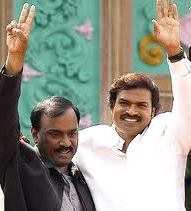
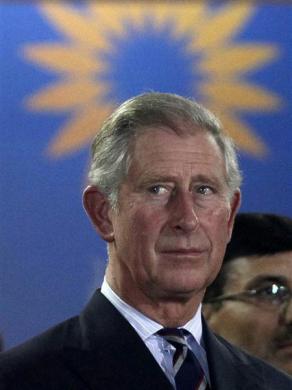
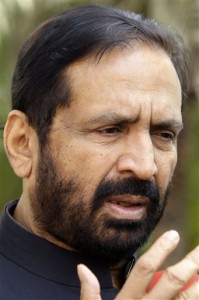
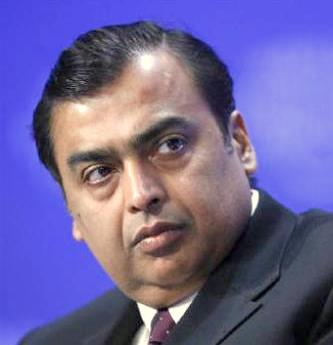
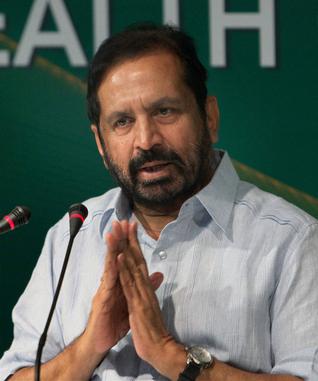
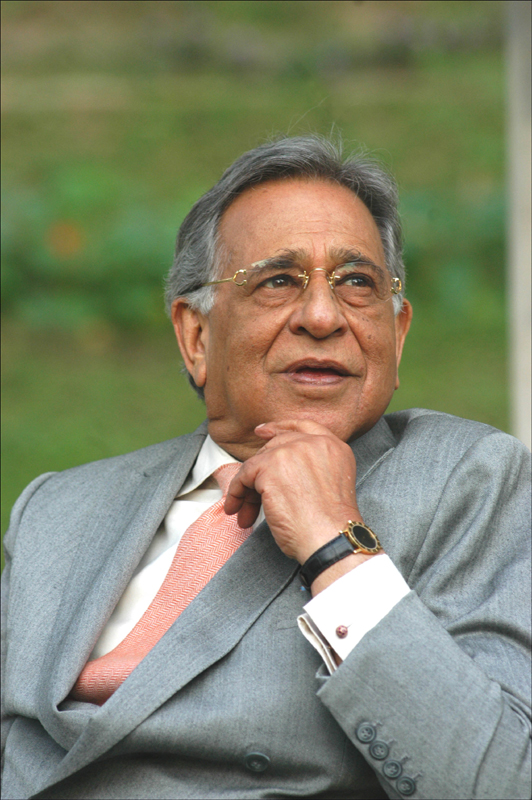
The question stems from two recent events. The most important is Mr Ambani (left) being picked as a cash-rich and apparently benevolent financial partner by P.R.S. ‘Biki’ Oberoi (below). At the age of 81, Mr Oberoi controls and personally runs India’s best hotel group of the same name with the vision and energy of someone half his age, but he needs outside support to keep up the momentum and plan for the future.

“He will be a strategic investor,” Mr Oberoi told me over the weekend when I asked him about Mr Ambani’s role following the Oberoi family’s recent sale to Reliance Industries’ (RIL) of a 14.2% stake in East India Hotels (EIH), the Oberoi parent company.

.

“He has financial strength and contacts and can help us in many ways, especially with our international expansion. I’ll be meeting him soon to discuss this”.
 
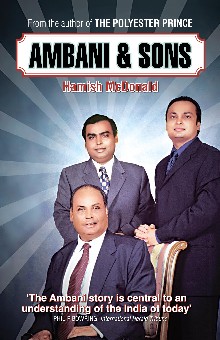
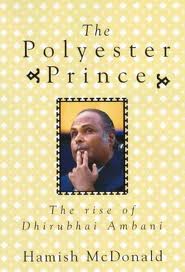
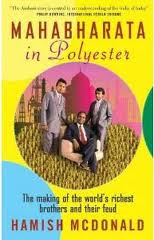
The second event is the publication last week of Ambani & Sons*, by foreign correspondent Hamish McDonald, that traces the group’s history from its founding by Mukesh’s late father, Dhirubhai. The significance is that when Mr McDonald’s first book on the family, The Polyester Prince, was published in 1998, the family forced cancellation of the Indian edition. The new book includes 16 marginally sanitised chapters from 1998 plus more recent history, yet Mukesh and his younger (and estranged) brother Anil are turning a blind eye. This seems to indicate that they feel they have grown to such a level of acceptability that they do not need to try to bury and silence uncomfortable history.

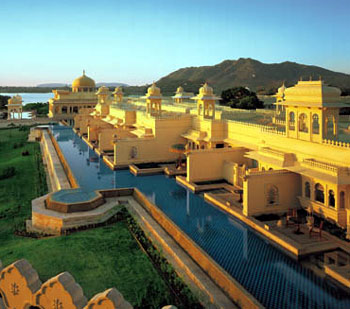
The Oberoi Mumbai

Mr Oberoi has for many years been looking for a way to secure the future of his hotel group. His son Vikram and nephew Arjun are both top executives and board members, but are not seen as long-term successors. He therefore needs to plan for future control, management and family wealth – a problem faced generationally by all family-controlled businesses.

Mr Oberoi also has a more immediate ambition to find funds that will enable him to expand the Oberoi brand abroad. He told me that he would like to start hotels in London, Paris, New York, Shanghai and Singapore – home cities for the group’s India guests. Currently there are only six Oberoi hotels abroad – in Egypt, Saudi Arabia, Mauritius and Indonesia.

Mr Ambani can meet that need because Reliance is cash rich, generating more than $5bn funds a year. His current Rs1,000 crore ($220m) investment in EIH is, as one analyst put it to me, “just 15 days of cash”. So he could easily afford to a few more days’ cash to help set up some hotels.

The bigger question is whether this means that, sometime in the future, Oberoi hotels will be controlled and run by Mr Ambani. The answer, though no-one is saying it now, seems to be ‘yes’. It does look as though Mr Oberoi has chosen Mr Ambani not only to support him and let him run the hotels himself for the foreseeable future, but also as the businessman most likely to sustain and build the brand in the longer term.

Mr Ambani would not be making this investment simply as a white knight, though Mr Oberoi did need one to ward off unwelcome advances from the ITC, the Indian cigarettes-to-hotels group that owns 14.98% in EIH and might have had its eye on some of the family stakes.

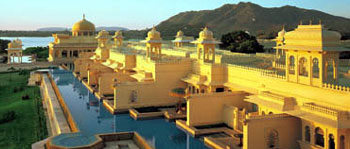
Oberoi Udaivilas in Udaipur

He wants to get into the Indian services and consumerism sector, where RIL has no in-house professional expertise and no significant stakes apart from retail shops and stores. Buying into a top well-managed brand like Oberoi is exactly what RIL needs – and being chosen by Mr Oberoi enormously boosts the Ambani image.

Till now Mukesh Ambani he and younger brother Anil (who runs a separate group, Reliance-ADAG) have not been seen as wise choices for companies seeking joint ventures and investment partners in India. There was surprise two years ago when Marks & Spencer agreed a joint venture for stores, even though it secured nominal control with a 51% stake.

Mr Ambani will now have to be on his best behaviour because the business world will be watching. He is most unlikely to throw his weight around. RIL and EIH will probably each buy their full allocations of a planned $288m rights issue, leaving RIL with almost 15% and EIH with 32% (or slightly more if it mops up some surplus).

A report in the Business Standard that two EIH companies are to be formed, one controlled by RIL for the Oberoi assets, and the other running the hotels and controlled by Mr Oberoi, looks highly improbable, given RIL’s minority stake. “Absolute speculation,” Mr Oberoi told me, adding “We have never thought of it” when I pointed out that saying “absolute speculation” to a journalist usually means “yes”.

There have been reports that Nita Ambani, Mukesh’s wife, might join the EIH board at some stage. It would be logical for Mr Oberoi to invite someone from Reliance, now it has a strategic stake, and she would be the logical choice. Whether she’d be made vice chairman, which the Business Standard also suggested, is I sense probably a long way off.

All this is the story as the two sides would I guess, from their different vantage points, like it to be seen. [added October 8:  ITC it seems might have different ideas. It says it is keeping its stake. Gossip in Kolkata, where ITC is headquartered, suggests the company might be hoping for an eventual bidding war against Reliance]

Mr Oberoi gets what he needs in terms of control, management, and wealth because he stays in control and will continue managing the business, but now has a partner who could move into control much later and provide for family wealth by buying any available stakes, thus warding off predators.

Mr Ambani gets a fabulous brand and potentially added respectability, as well as the fun of opening up another competitive front with the Tata group that controls the bigger but less suave Taj hotel group.

Such partnerships do not however always lead to harmony. Both Mr Oberoi and Mr Ambani are famous for the single-minded personal determination with which they run their highly successful but very different businesses. It may be a marriage made in heaven, but whether it is or not, it will certainly be worth watching.

*My review of Ambani & Sons is on a later post – http://wp.me/pieST-14M

India is famously a country of contradictions where one can safely say that everything and its opposite is true. Rarely can that have been more evident than it is today, with India’s poor reputation for inefficiency, bad governance, shoddy work and corruption being demonstrated by international rejection of conditions at the Commonwealth Games village, just 13 days before the games are due to begin with 8,000 athletes – and by the collapse of a new steel arch footbridge at the main Nehru Stadium’s car park, injuring more than 20 people.

At exactly the time that this news was breaking, the stock market’s main Mumbai index breached 20,000 for the first time since January 2008, and it was reported that a US-based think tank has rated India the third most powerful country in the world after the US and China.

“Indian mujahideen issue a warning & despite that, stock markets climb to new highs. Indian resilience continues to astonish,” wrote Anand Mahindra, a leading and ever-optimistic industrialist (on Twitter), taking another slant by referring to the terrorist shooting of two Taiwanese in Old Delhi on Sunday.

The collapse of the footbridge is presumably (it is too soon to be sure) a result of India’s shoddy workmanship, especially in construction. There have been many reports in recent months of poor work at various venues, with parts of structures and finishes collapsing, and there has been a real fear that there could be a construction failure during the games.

My last piece on this blog was a spoof on the situation in India, as if I was visiting another country. But today’s contradictions beat my tale because here we see India’s huge commercial and international success and importance clashing with the corrupt governance and muddled indolent administration that has led to the disastrous run-up to the games.

This has ruined what was supposed to be a showcase event that would pitch India alongside China following the spectacular Olympics last year, and a month before the Asian Games in southern China in November.

Responding to the spoof, an old contact wrote from his retirement hideaway in the Himalayan foothills that “we have muddled through for sixty years and remain one nation in spite of the fissiparous pressures from within and without.” I emailed him a reply saying, “come down from the hills and drive round Delhi as I have this afternoon and see the mess that ‘muddling through’ has created!”

The mess in Delhi is indeed appalling with sidewalks and markets partially dug up, sports venues uncompleted, decorative placards being vandalised, and condemnation of the conditions at the games village that was opened with much self-congratulation last week, and the bridge collapse.

The bridge that collapsed today is one of a pair being built across parking areas and access roads near the main Nehru Stadium. The second bridge is only half built, so both were way behind schedule.

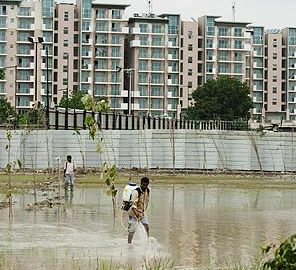
Anti-mosquito spraying by games village (Getty Images)

The city is being hit not just by threats of terrorism, demonstrated by Sunday’s attack, but also by the heaviest monsoon rains and floods for 30 years. Those rains, and pools of water on open construction sites, have led to a serious plague of mosquito-spread dengue fever – vividly illustrated last week by the FT’s Delhi bureau chief whose children became ill.

It is indeed beginning to look as if India’s ability to “muddle through” is collapsing. The government is of course not responsible for the rains, but it can be faulted for agreeing to hold them at the end of the monsoon season. “No worry, we’ll muddle through,” the politicians and bureaucrats no doubt said when they were bidding for the games to come to Delhi.

The authorities can also be blamed for not providing adequate drainage, and for ludicrously digging up huge swathes of Delhi’s roads, side-walks and markets  for beautifying “street scaping”, which has been an unmitigated disaster. Scarcely any completed area looks better than it did before, some are worse, and much is unfinished. “No worry, we’ll muddle through,” the politicians and bureaucrats no doubt said, as they eagerly collected contractors’ hefty kickbacks, with the prospect of more rewards when remedial digging begins after the games.

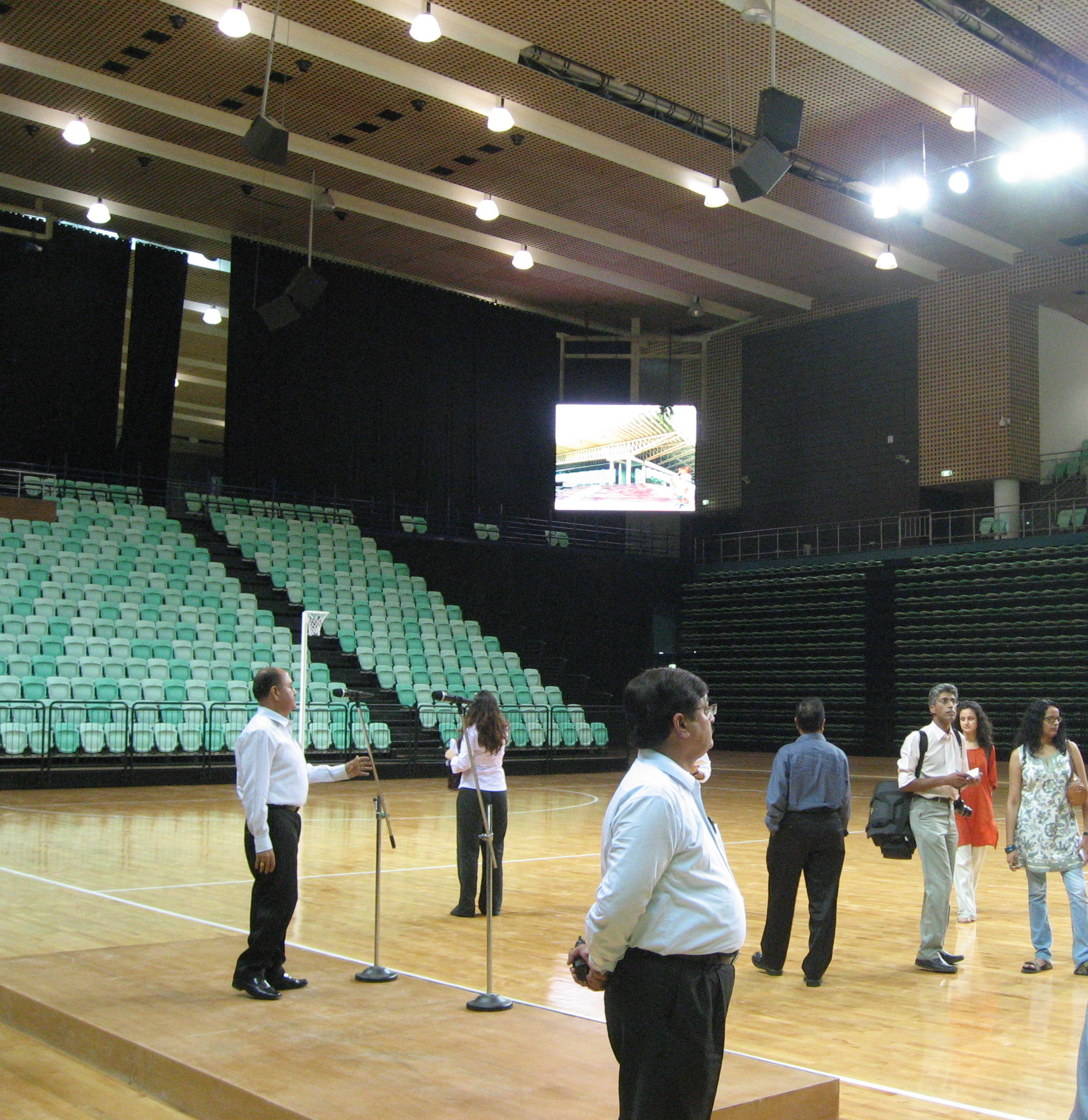
an excellent new state-of-the-art multi-purpose stadium – for netball in the games

Some of the venues are excellent – I saw three of them last week – but the authorities are responsible for the corruption and general mismanagement of the games’ facilities. “No worry, we’ll muddle through and not get caught,” the politicians and bureaucrats no doubt said.

And they are still saying it today, in slightly different words, after being lambasted over conditions in many of the games village’s 34 residential blocks by foreign teams, led by New Zealand and Scotland, and by the Commonwealth Games Federation.

England has also said that, though some general areas in the village are good,  the quarters it was offered were just not acceptable – some were flooded by monsoon rains.

Mike Hooper, the federation’s ceo, said that many of the residential towers were “filthy and uninhabitable”, a point echoed by others.

The problem is that the flats are either incomplete, or suffer from new buildings’ usual electrical, plumbing and woodwork snags, or have quickly become dilapidated. Bedrooms and bathrooms have not been cleaned after being invaded by construction workers (and stray dogs) seeking refuge in torrential rain from their own grossly inadequate labour camps.

Hooper said the village had the potential to be the best ever provided for the games, but some blocks were “so filthy you can’t occupy them”. The Scottish team said when it arrived that its flats were “unsafe and unfit for human habitation”.

“Are the Commonwealth Games falling apart,” asked a tv channel this evening. It’s a good question.

Would it be better for India if they were postponed, rather than the competitors having to face the problems of incomplete facilities, potentially dangerous construction, terrorism threats, incessant rain and flooding, and dengue fever?

It would probably only take one leading country to withdraw to create a landslide exit. Will that happen? India could blame the rains and terrorism. Or will everyone continue to suffer and muddle through for the next two weeks, and then for the ten days of the games?

Posted by: John Elliott | September 10, 2010

India as it is – a spoof eye view

“Imagine we’re sitting in, let’s say, a large country somewhere else in the world (other than India) that is attracting lots of foreign investment attention and plaudits for its emergence on the world’s economic and diplomatic scene. We’re on our first visit, and haven’t had time to learn much before we came – and now we’re wondering why we’re here.”

That’s how I started a talk at a dinner last night, when I had just got back to Delhi after six weeks away, observing India and all its troubles and contradictions from afar. Here’s what I said:

We’ve only been here a day or two, and already we’ve discovered that a quarter of the country we are visiting is controlled by left-wing rebels bent on gradually decimating democratic rule and established government structures as we know them. There is also occasional devastating religious terrorism by opposing faiths, plus a province in the north that is on the brink of its second foreign-backed insurgency.

There are two tiresome neighbours, one riven with religious-based terrorism that its extremists want to export. The other far bigger neighbour is a long-term threat, and has for years been encouraging the smaller neighbour to do its worst. The larger neighbour, by the way, is thought to be planting bugs in the country’s telecoms (and probably also defence) software systems, but our hosts don’t seem too worried.

We can’t travel very much round the capital because most roads and markets have been dug up by corrupt contractors feeding the greediness of municipal politicians and bureaucrats.

The prime minister is a nice well-meaning elderly guy, but he’s run by a foreign-born lady whose main interest is said to be to make sure her son becomes prime minister one day – or her daughter if he refuses to knuckle down and get married – that’s vital for dynasties.

The PM can’t control many of his ministers, who mainly want to make money for themselves and or their regional parties, thus undermining key areas of the economy such as airlines and airports, telecoms, and mining, and sometimes industrial and other policies such as foreign direct investment, special economic zones, petroleum, agriculture and food supplies

Most parliamentarians – a meaningless title we’ve discovered since most of them do little that’s constructive in parliament – are dynastically getting their sons, daughters, wives and even mistresses into politics. Somehow we can’t believe that’s done for the good of parliament or the country.

Elsewhere personal greed seems to govern sport, ranging from chaotic preparations for some imminent regional games to an astoundingly successful and lucrative private sector cricket league, plus illegal betting (along with the smaller neighbour) on cricket matches. Businessmen and politicians are also conniving to plunder the country’s mineral wealth with scant regard for the environment or the law.

And you can’t even believe what you read in the newspapers – well you can’t anywhere can you, but here the country’s biggest and most famous newspaper prints what it’s paid to print and also gets commercially involved with its advertisers by investing in their stocks and managing their advertising budgets. Paid News it’s called, and if you don’t pay when they want you to, then watch out for unpaid bad news about you.

Oh, and I almost forgot, the capital is wracked by a mosquito-spread deadly fever that’s sprung out of all those construction works I mentioned earlier.

And the other thing I almost forgot is that a few months ago everyone was worried about a terror attack next month during those regional games, but now they’re more worried about all the pot holes and collapsing venues and traffic chaos. Odd isn’t it how priorities change. Let’s hope the terrorists have left, deciding it’s not worth trying to break through all the bedlam – after all, could anyone ever do more damage to the country than it’s doing itself?

But it’s odd, the people living here don’t seem too worried about all this chaos and, even more surprisingly, nor do investors. After all, we haven’t yet fled.

That was the end of my caricature of today’s India, and I balanced it by saying that there is of course good news. There’s a growth rate nearing 9 or 10%, an increasingly capable and internationalising manufacturing industry, and a highly competitive software and IT industry. India is a brainy country with huge human potential, amazingly achieving what it is with only about a third or so of the population actually contributing much to the growth.

Manmohan Singh, I said, is a caring thoughtful prime minister who tries to do good wherever he can. Italian-born Sonia Gandhi, despite her dynastic preoccupations, has done an outstanding job in transforming herself from a housewife into a national figure, saving the Congress Party and leading it to election victories.

There are also some excellent ministers genuinely trying to make India a better place – notably Palaniappan Chidambaram, Jairam Ramesh, and Kapil Sibal, all trying to overcome a decade of mostly poor performance in their ministries, while Pranab Mukherjee manages the stresses and strains of a mixed economy and an even more mixed coalition.

No one at the small dinner I was addressing (in the luxurious cocoon of a private dining room at China Garden in Delhi’s Hyatt Hotel) attacked my spoof. They all – Indians and expats – knew it was valid. We discussed the need for better more focussed politicians, the real causes of corruption and Naxalism, and the over-riding need for dramatic improvements in education.

The sad thing though was that my spoof could not be challenged. That is India as it is today!

India does not want a surge of foreign direct investment (FDI) in the country’s defence manufacturing industry. That long-held basic view has become clarified and reinforced during the past few weeks in three statements – one from A.K.Antony, the defence minister, and the other two from the country’s leading private sector industry federations, FICCI and the CII.

This is a good and sensible stance for India to take, despite intense pressure from the US, UK and other defence supplier countries for more FDI access. India’s private sector needs a chance to develop its own defence manufacturing capability before foreign investment rules are significantly relaxed.

The least interesting statement came from Antony, who has merely restated the government’s current policy of generally limiting FDI in joint ventures to 26% equity stakes. His remarks reflect the defence establishment’s wish to keep that figure unchanged, but he failed to mention that the government is currently reviewing the figure. This review follows the Ministry of Commerce’s industrial policy department (DIPP) publishing a discussion paper that suggested 74%-100% figures – with July 31 as a cut-off date for comments. The government is now examining the responses and a Group of Ministers (GoM) is expected to be appointed to reach a final decision on what to do.

Constructive ideas

The two industry federation comments are far more constructive than Antony’s because they stem not from the defence establishment’s wish to continue its old inefficient ways, but from the ambitions of private sector companies such as Larsen & Toubro (L&T), Tata, the Mahindra group, plus many medium sized and small firms, to develop their own defence manufacturing expertise.

Till recently, the Indian private sector was only allowed a peripheral role, but that is now changing and the companies deserve a chance to prove themselves.

The question is basically whether the limit should be kept at 26%, or raised to 49% which would increase foreign defence manufacturers’ exposure to India, or go above 50% so that the foreign firms could gain controlling interests.

There has been a tough debate in FICCI, and even more so in the CII where foreign companies started a rear-guard action towards the end of July, pushing for at least 49% and possibly above 50%. That sparked understandable protectionist sentiment and some suggestions that the 26% should maybe be lowered to 25.5% so that foreign companies could not have the statutory veto power gained at 26%

The basic argument for a high figure is that it would increase a foreign company’s commitment to India, bringing in large financial investments and transfer of high technology, as well as managerial expertise.

Doubts on technology transfer

FICCI, and to a more muted extent the CII, however has argued that “raising FDI is no guarantee for true transfer of technology”. This line is pushed by foreign companies such as Lockheed, BAE Systems, EADS and others that either have already set up a joint venture at 26% or are waiting to see how the policy develops.

However, Indian industry doubts whether high FDI levels would necessarily bring in top-level technology and fears that 49% would allow foreign companies’ to dominate joint venture boardrooms and change the management style and culture of the businesses

“The fact is that leveraging latest technologies from overseas suppliers would be difficult even if the FDI ceiling is raised as the OEMs [foreign companies] exercise no control over the release of technology which is exclusively under their governments’ control,” says Amit Mitra, FICCI secretary general. Consequently, he adds, “we are absolutely clear that FDI should not be more than 49 per cent”.

India has always been very lax in the way it has opened up FDI, usually responding to foreign and Indian vested interests and welcoming the financial inflows’ contribution to the country’s economy, but without really ensuring that foreign companies bring in useful top technology.

The new FICCI and CII policies sensibly address this. FICCI points out that countries like Germany, China, South Korea, and Canada have revised their FDI policies in defence “making the policies much more stringent [with] methodologies to punitively scrutinize FDI inflows in this sensitive and strategic sector”.

 “It must be kept in mind that [defence] FDI will be directed for the purposes of making [foreign] companies money, not for the development of private Indian firms or industry. The global players would not be too keen to encourage competition so the aim would be to drown out Indian companies,” says the CII.

There is also a view, held by ambitious Indian private sector companies, that many of India’s defence needs – especially in the army – do not involve the sort of top technology envisaged by proponents of high FDI limits. “Our technology needs are quite different from western countries,” says one defence executive. “Foreign soldiers grow up with computer games – here they come straight out of the villages. We are still in a post-second war situation in many areas and that won’t change in technology terms for 20 years so let’s not get into technology-yielding levels of FDI that we do not need”.

49% with restrictions

After their long debates, both FICCI and the CII acknowledge FDI could go up from 26% to 49% (but no higher) if various conditions are met – they include: the joint venture is Indian managed and produces full defence platforms (not just components) with a minimum capitalization of US$100m; the technology involved is needed by India and can be developed indigenously; the foreign company’s government approves the technology transfer in advance, without any risk of retrospective cancellation, and also sanction global sales from India; 50-70% of components and subsystems will be made in India and  exports will amount to ten times the equity investment within ten years.

This is good constructive stuff and should be seen by foreign critics for what it is – a genuine wish by India’s private sector to grow in the defence field. It is quite different from the protectionist public sector’s opposition to any policy change and, indeed, could help to generate improvements in the public sector.

So let’s hope that Antony and the rest of the government give the private sector the stimulus it wants and allow strictly conditional 49% FDI. The risk is that Antony will not want to do anything, and that will help no-one apart from India’s lazy public sector-dominated defence establishment and the foreign defence companies that supply India’s increasingly obsolete defence preparedness with as much as 85% (the official figure is 70%) of its current defence purchases.

Viewed from the UK, where I’m currently travelling, David Cameron’s visit to India looks like a public relations stunt gone wrong, mainly because the British prime minister fell into the trap of meddling in India-Pakistan issues while travelling on the subcontinent.  

Some 13 years ago the then Labour foreign secretary, Robin Cook, helped to muck up a royal visit to India by backing Pakistan during a visit to Islamabad just before he and Queen Elizabeth arrived in Delhi. Then, in January last year, the by-then Labour government foreign secretary David Miliband was rebuked when he lectured prime minister Manmohan Singh on how to handle Kashmir – remember Britain’s handling of Northern Ireland, Miliband was gently told. 

.

Cameron said on his first day in India – in Bangalore – that “We should be very, very clear with Pakistan that ……we cannot tolerate in any sense this idea that the country is allowed to look both ways and is involved in promoting terror in any way in India, in Afghanistan or anywhere else in the world.” 

Cameron was of course on target with his criticism of Pakistan, but India was not the place to say it because it diverted attention from his investment-oriented visit – unless you take the Machiavellian approach that it increased media coverage of a trip that might have otherwise made few headlines.  It was also unwise to make such a snap remark without planning for the downside – in this case endangering Britain’s links with Pakistan’s intelligence services.

But what can Cameron or Britain do to show it “cannot tolerate” Pakistan’s decades-long “facing both ways” over terrorism? The answer of course is nothing – and nor can the US, despite its current breast-beating over recent Wikipedia leaks that document the Pakistan defence establishment’s support for the Taliban. So it was futile of Cameron to say it.  

One might have guessed Cameron would get it wrong because of the way he wrote in The Hindu newspaper a day or two earlier that he was going to India in a “spirit of humility”. This ex-public relations executive is hardly a humble politician, even though the Daily Telegraph this morning managed to rake up a story from Bangalore  – headlined “Mahatma Cameron” – about a hotel butler who was pleased he’d been thanked for his work.  

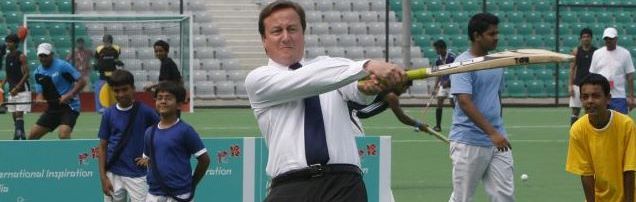
Apart from that, the British media stayed focussed on the Pakistan gaffe plus Cameron’s display as a batsman (above) and a wriggle when he was asked whether Britain would return the Koh-i-Noor diamond.   

There was little humility in the size of Cameron’s entourage – six government ministers and what the Financial Times called “a posse of business leaders, university chancellors and sporting heroes”. Britain was fighting far above its weight with such a delegation but, despite that and accompanying hype, there was some substance.  

A £700m Indian order for 57 Hawk jet trainers to add to its existing fleet was fixed just in time to be announced , and there were agreements on tackling terrorism and British exports of civilian nuclear technology. There are to be more education and science exchanges, a new business forum has been set up to link top executives from the two countries, and so on.  

All that of course could have been done without all the razzmatazz and, dare one say it, maybe even without Cameron being there. But at least he has done better than Tony Blair, who never bothered to make a dedicated trip like this one to India and only popped in on the back of some other world errand.  

John Major was the last British prime minister to be keen on the country. He was drawn by a love of cricket and curry – and on one visit chased Hawk orders, signed educational etc agreements, and set up a forum to link top executives and others from the two countries.  

Cameron’s aim with his big delegation has been to demonstrate that he is making India a priority, hoping to tap its potential for trade and for investment into the UK. This of course is not new – despite Blair’s lack of personal interest, there have been many British ministerial visits to India in recent years. But it was a good stunt to pull early in his prime ministership – it would have looked like a catch-up exercise if he had done it in a year or so’s time.  

What Cameron now has to do, apart from continuing with efforts he has already started to mend fences with Pakistan, is to show that the substance that was hidden behind the headlines really can produce increased trade and investment – and that will be much more difficult.

 
Delhi, indeed India, faced a crisis 30 years ago. The Asian Games were to be held in the capital in 1982 and little had been done. Indira Gandhi, then prime minister, appointed her son Rajiv Gandhi, who had just entered politics, to take charge of organising the stadiums, hotels, highways and flyovers – which he did successfully, albeit at some cost to the city
 
For the last two years India has needed a “Rajiv Gandhi” to take charge of the Commonwealth Games (CWG) that are to be held in just over 70 days in Delhi, a city which is literally crumbling in monsoon floods, incomplete highways and metro railways, broken roads and pavements, collapsing drains, and unfinished and fault-hit sports facilities. 

Hindustan Times front page this morning

The best that can happen when the games are held in early October is that the city is patched up enough for the players and VIPs to be transported along barricaded roads to stadiums where slipping ceiling tiles and other building faults will be quickly rectified day by day. There is currently no guarantee that food will be served, not in any organised way, nor that the security services will operate effectively.

But who is in charge? Not it seems prime minister Manmohan Singh; not Sonia Gandhi, leader of the coalition and the Congress Party; nor any other national ministers – not even M.S.Gill, the distinguished bureaucrat turned politician who is sports minister and on Saturday berated the Commonwealth Games Federation (CGF) chief Michael Fennell for allowing several leading international athletes not to attend the games.
 
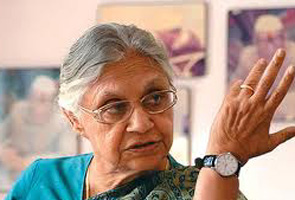
Also not in charge is Sheila Dikshit, an elderly-auntie political figure who is Delhi’s chief minister and seems to have neither the constitutional authority nor the stamina, muscle, guile and managerial ability needed to control Delhi’s rival and highly corrupt authorities.
 
Rahul Gandhi, Rajiv’s son and dynastically in line to become prime minister one day, might have been an good candidate, as his father was 30 years ago, because he would have had the authority, vested by his mother Sonia Gandhi, to over-ride the authorities and bureaucrats and force progress. A general secretary of the Congress Party, he has been holidaying abroad in recent weeks and is today in his Uttar Pradesh constituency of Amethi. 
 

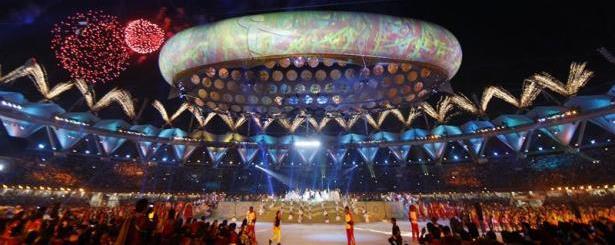
Jawaharlal Nehru Stadium - venue for opening and closing ceremonies

Contrast the chaos with China’s stunning Olympic Games in 2008 or, as an example more in India’s league, look at South Africa where the brilliant FIFA World Cup ended triumphantly eight days ago.

“Pride for Africa as Spain strikes Gold” was FIFA’s website headline after the final in Johannesburg just over a week ago. “You have shown the world that you can achieve anything,” said FIFA President, Sepp Blatter. The Wall Street Journal wrote that South Africa defended itself against criticism about violent crime, disruptive labour strikes, and lacklustre organization ahead of the 2010 World Cup. “Now the country is winning widespread praise after a successful tournament, boosting its ambitions to host other major sporting events”.
 
There is no chance of such tributes being paid to India at the end of the Commonwealth Games.

unfinished Racecourse Station on Metro railway - today's picture

There are four main areas of concern:

1. incomplete stadiums and other infrastructure such as highways and metro lines, some already developing construction faults – leaving little time for test runs.

2. poor quality infrastructure construction – how much will fail during the ten days of the games?

3. dug-up roads, pavements, drains and cable ducts in the name of “street scaping” that cripple many roads and markets in the centre of the city – there is no question of these projects being properly completed, so will patching-up be sufficient for the Delhi to look more or less orderly?

4. the administration of the city during the games – can effective security can be put in place and some sort of steady traffic flow be organised?
 
The financing of CWG is in a mess – recent reports say sponsorship is falling far short of targets. Two months ago an independent report The 2010 Commonwealth Games: Whose Wealth? Whose Commons? – found that:

– “The budget for the CWG has risen from an initial projection of Rs1,899 crore [$422m at current exchange rate] to an official figure of Rs10,000 crore [$2.2bn] and independent expert estimates of Rs. 30,000 crore [$6.6bn].
– “The expenditure on sports infrastructure is already 2,160% of the initial projected budget.
– “The increase in the Union Budget allocation for the CWG from the Ministry of Youth Affairs and Sports rose by 6,235% from 2005-06 to 2009-10.
– “Total expenditure on infrastructure, beautification projects, and security is unknown but likely to be hundreds of crores.
– “Funds from the 2009-10 Scheduled Caste Sub Plan (Special Component Plan) in Delhi have been diverted to cover CWG related expenditures.
– “Over one lakh [100,000] families have already been evicted due to CWG related projects. 44 more JJ clusters [slums] are to be removed before the Games and an estimated 30,000-40,000 families will be displaced.
– “There is rampant exploitation of workers at CWG construction sites, including low pay, inadequate living conditions, and lack of safety equipment.”

.

As long ago as 2008, stories were beginning to do the rounds in Delhi (and abroad) about massive corruption and confusion at high levels in the games organization – I heard some first-hand from foreign visitors.

Not only were funds being creamed off contracts but, ironically, anti-corruption vigilance systems were adding to normal bureaucratic hassle because officials were scared not only to sign off on decisions but even to write notes on files.

Construction work on some stadiums is complete but on many it is still continuing, even on external structures. Aquatic and weightlifting events organised to test facilities have been cancelled in the past few days because arenas are not ready.

 The Hindustan Times this morning reports  (front page, top) that the main swimming events stadium (above), officially opened on Saturday with much fanfare, is incomplete and has some flooding. Embankments on a shooting range have collapsed, a false ceiling has fallen in another venue, and there is water seepage in a boxing stadium.
Such flaws are commonplace in India where construction firms have little notion of quality  and frequently bribe officials to accept poor work so that they can use below-standard material and fittings and make more money on repairs.

A crossing near Khan Market - has been in this state for months - today's photo


Bidding that started last year for catering contracts has just been cancelled and currently there appear to be no caterers, which means that some lucky well-connected firms will cream off huge profits (and pay huge bribes) on account of late ordering.

Corruption is at its most visible at streets and markets that have been “street scaped”. Connaught Circus at the heart of the city has been dug up for subways, only a few of which will be completed – the rest will be boarded up until later. The pavements of popular Khan Market are being dug up for a second time because highly polished granite that was laid a few weeks ago was too slippery.
 
Double-height grey kerbstones have been laid along all central Delhi roads. They are too high for slightly lame pedestrians to tackle but looked quite smart – until they were badly painted with black and yellow stripes that are now dirty (right). Central reservations have been dug up and similarly raised in height, adorned with metal fencing, and paved with fancy stones (below). Roads that have been completed are lined with rubble – not just small stones but sizeable lumps of granite. August 31 is the latest deadline set for a clean-up.
 
The quality of design is appalling. Uniform signage imposed on shops in a market off central Delhi’s Lodi Road looks like badly painted British design of the 1950s. The paved areas have ludicrous polished marble.
.

Few people know precisely why all this has happened, but everyone is actually sure of the reasons. Contractors and suppliers have bribed officials to commission over-egged projects, and no doubt accept over-invoicing, so that both officials and companies benefit – and benefit all over again when slipshod work has to be replaced, and again when boarded-up incomplete work is completed.
 
It’s a sad case of history repeating itself because, though Rajiv Gandhi got the Asian Games facilities complete in time, the problems caused were very similar, as Ved Mehta recounted in a biography Rajiv Gandhi and Rama’s Kingdom. As now, there were vast numbers of overlapping government committees and over-spends, with construction workers leading miserable underfed lives.  
 
“The whole exercise is being transformed by unscrupulous entrepreneurs with political pull into a money spinning operation,” wrote The Hindu newspaper, quoted by Mehta. “It has led to widespread hoarding and black-marketing of construction material. pushing up costs and, in the process, filling the pockets of the privileged few……”

India may seem to have changed a lot since 1982 but the basics have not really changed at all – as will be seen in early October.

SRINAGAR: There is virtually no prospect in the foreseeable future of long-term peace coming to India’s disputed state of Kashmir, where the army has been called in today to quell a month of clashes between security forces and stone-throwing, mostly young, demonstrators

Kashmir mourners – Reuters July 6 ’10

The past month’s cycle of “bullets for stones” violence, has led to 15 people – most aged between nine and mid-20s – being killed in outrageous over-reactions by security forces.

The violence has been stalled by the army’s presence and a curfew, but there is no prospect of long-term peace. Local demands for some form of autonomy from India are unachievable till an overall agreement is reached by India with neighbouring Pakistan – and that will not happen any time soon, despite the current efforts of Manmohan Singh, India’s prime minister.

Kashmir therefore seems doomed to many more years of uncertainty, with periods of violence alternating with relative calm. That means that prospects for the state’s youth are bleak, while the prospects of them becoming increasingly militant are considerable.

After two decades of troubles, generations of youth have grown up in a stone-throwing culture where baiting and attacking security forces, and being viciously attacked and killed in return, is part of regular life from the age of nine or 10.

There is a declining work culture, and job prospects are poor because there is no significant private sector investment. Most companies will not consider investing in an area plagued with such uncertainty. Unemployment is high – 50,000 educated youth registered as unemployed in 2007 and the total figure now will be much higher.

These are the gloomy conclusions I have reached after two visits to Kashmir in the past three months.

Srinagar’s Dal Lake – last Saturday evening

On my first visit in April, the mood was hopeful because there had been relative peace since state assembly elections in January last year. I was told everywhere that the time was ripe for Delhi to try to revive informal talks, stalled earlier this year, with leaders of Kashmir’s Hurriyat separatist movement about some form of autonomy.

“It is an ideal time because the government at the centre was elected only last year and the people here endorsed democratic processes (in the state election) so hope for a solution,” said Omar Abdullah, the state’s minister.

It was clear that such talks would not go far because the Hurriyat leaders would insist on including Pakistan in any formal discussions. Just having talks however would have been a positive development and could have led to confidence building measures, though Mirwaiz Umar Farooq, a leading Muslim cleric and Hurriyat moderate, told me that he realised there was little chance of Delhi making significant moves such as repealing a despised special police powers act.

Yet hope was in the air and tourists – who have fled in the past few days and weeks – were flocking to Srinagar’s lakes and nearby mountains.

I visited an energetic and thriving school – DPS Srinagar (above) – that was opened in 2003 by the Dhars, a prominent Hindu family in Srinagar. Overcoming local opposition, they have demonstrated what can be achieved despite the backdrop of violence and uncertainty. There are now 3,800 students keenly learning in facilities as good as any in India.

Now DPS along with other schools is closed, as they have all been intermittently for weeks. It did not take long for the hopes of late April to be dashed by clashes between young demonstrators and the security forces, as I saw on my second visit last  weekend.

Kashmir roadblock – AP July 6 ’10

The current crisis began to escalate from June 11 when a 17-year old youth walking home past a demonstration was killed by a tear-gas shell. That triggered a cycle of events with protests, shootings, lathi charges and firing of tear gas shells, plus curfews, bandhs (political strikes that close down whole cities) and local leaders being put under house arrest.

This week’s violence started (after a quieter Saturday evening and Sunday – see Dal Lake picture above)  when a young man was drowned trying to escape from security forces, and a 25-year old woman was hit by a stray bullet at her home. There were then two more deaths, after which the army was called in and staged “flag marches” through key areas of Srinagar – the first time this has happened on the streets of the state capital since 1989-90.

The appalling excesses by security forces were underlined on Monday when cities across India were shut down by bandhs against petrol and other price rises. Buses were set on fire, police attacked, and politicians provoked security forces to arrest them. Yet nowhere in the country was anyone killed – though people were the next day in Kashmir.

Go India Go Back – Reuters July 1 ’10

The Kashmir police and India’s paramilitary Central Reserve Police Force (CRPF) are behaving as though they are still dealing with the Pakistan-backed insurgency and terrorism that hit Kashmir 20 years ago and died away towards the end of the last decade. They have received no training in how to deal with civilian street protests and thus treat them as threats that can be eliminated.

This points to the basic problem affecting the state. The mind-set of both the Kashmir and Delhi governments is still rooted in the days of the insurgency and neither politicians nor officials have adjusted to the fact that they are now dealing with protestors who have, to coin phrase, given up the gun and resort instead to stones. Yet the official response is still the gun.

It is scarcely surprising that “Go India Go Back” has become a current slogan, newly scrawled on walls and printed on banners.

Some facets of the Pakistan-backed insurgency of course continue. Pakistan is still allowing militants to cross its border into Kashmir. Officials say that the infiltrators carry money to help and encourage organisers of the demonstrations. There are also continuing military clashes on the border – two Indian troops were killed in the past couple of days during exchanges of fire in Jammu, south of the Kashmir valley.

In Pakistan yesterday, militant groups held anti-India protests. “I want to assure my brothers in Indian-occupied Kashmir that we will continue to support you until we liberate every inch of our motherland from Indian subjugation,” said Syed Salahuddin, a leader of the Hizb-ul-Mujahideen.

A weak Jammu & Kashmir government is also contributing to the problems. Abdullah, aged 40, has failed to live up to hopes that he would bring new energy and direction to the chief minister’s job. He has failed both to assert his authority and to strike a chord with the Mirwaiz, who is 37, and Mehbooba Mufti Sayeed, 51, the leader of the opposition who is more interested in undermining him.

Kashmir street battle – Reuters July 1 ’10

A few years ago, I was told by a senior British diplomat that peace could never come to Kashmir till the Indian government acknowledged, to itself and publicly, that its security forces had been involved in appalling human rights abuses. That, said the diplomat, was the lesson of Northern Ireland where London only made progress on a settlement after it made that acknowledgement.

Sadly, the behaviour of the security forces in just the last few days, let alone the last 20 years, shows that neither the current Kashmir government nor India’s Home Ministry is prepared for such a mea culpa on human rights abuses.

What hope is there then for the state’s youth? And what will they be throwing in the future if stones prove useless – grenades and bombs again, with Pakistan eagerly feeding their needs?


Tagores hit record prices with works going to Pakistan, Bangladesh and UK

Tagore – portrait of a woman

It was never going to be easy for last week’s buoyant Sotheby’s and Saffronart modern South Asian art auctions to match up to the excitement of Christie’s Souza retrospective sale a few days earlier, but they certainly did well with prices which showed that the top end of the modern Indian art market is firmly on the rebound after the 2008-09 crash.

Sotheby’s scored with twelve rare offerings by Rabindranath Tagore and, together with Saffronart, made some notable sales of works by leading veterans, especially Syed Haidar Raza.

With many lots going well above modestly-priced estimates, Sotheby’s raised £5.5m ($7.9m, Rs375m) and Saffronart went to Rs300m ($6.7 million). Together with Christie’s two-day figure of £12.5m ($18.1m), this brought the total for June’s mainly-Indian sales by the three auction houses – two in London and one on-line – to £22.5m ($32.7m).

This was a considerable improvement on results achieved for India’s leading modern artists a year ago after prices had crashed in the previous year. The main buyers were serious collectors, along with leading galleries and dealers who expect prices to improve further.

In a bullish analysis of the three auctions published today ArtTactic , a London-based analysis firm, says that average auction prices (left) and volumes for modern Indian art “are now back to levels seen at the peak in June 2008”.

Prices had dropped 46%, and volumes 63%, between September 2008 and March 2009. Anders Peterson, who runs the firm, adds that “the return in confidence is at the high end of the market.”

ArtTactic also sees a recovery in Indian contemporary art where average prices dropped 85%, though that was less evident on the auction floors. Previously popular contemporary artists such as Subodh Gupta and Jitish Kallat are still lagging far below 2007-08 prices.

Raza’s Rajasthan

The stars of the three auctions were Souza for the Christie’s auction and subsequent sales, Tagore for the interest and prices achieved for his mostly figurative and small works from the 1930s, and Raza who hit an all-India record price at Christie’s and then topped the bidding at both Sotheby’s (right) and Saffronart.

This makes Raza, with his brightly coloured reddish-orange works that appeal especially to Indian buyers,  the most sought-after member of India’s 1950s Progressive group of artists. Also in the group are other big names such as Souza, M.F.Husain and Tyeb Mehta.

The twelve paper works by Tagore, a renowned poet and philosopher as well as an artist, who died in 1941, were special because he is one of nine “national treasure” artists whose paintings are not allowed to leave India, so are rarely available abroad. This collection had been held by the UK’s Dartington Hall Trust since it was received as a gift from Tagore in 1939, and it was being sold by the trust to raise funds.

Inevitably there was a rather sanctimonious furore and media frenzy in India before the auction, with the government being urged to buy the works so that they could return home – except of course that India never was their home because they were painted and gifted in the UK. But the extensive publicity was good both for Sotheby’s and Dartington, because the twelve realised £1.6m (including buyer’s premium), with most of the lots going for three or four times top estimates.

Tagore – portrait of a woman

Two of the works did even better and exceeded estimates six-seven times. Possibly the most appealing lot (top)– described by experts as a typical (13x9in) Tagore face and eyes – went for a hammer price of £185,000 (£223,250 including premium) against an estimate of just £25,000-£30,000.

The highest bid of £260,000 (£313,250 including premium) was a Tagore auction record and went for a 20x16in work (left) that had been estimated at £30,000-£40,000.

These were not just records for Tagore; they also set new records for any Indian works on paper of this size, says Siddhartha Tagore, owner of Delhi’s Art Konsult gallery and a great grand-nephew of the artist.

The buyers, both at the auction and bidding anonymously by phone, included two Bangladeshi and one Pakistani collectors, and a London-based Indian cardiologist, Abhijit Lahiri, who was in the hall and bought at least one lot. When pressured by reporters, Lahiri said he might take his collection to India one day – but not yet!

Vikram Bachhawat, who runs Kolkata’s Aakriti gallery and an auction house, says that most India-based collectors would have been reluctant to buy because of customs and other regulatory complications involved in bringing such categories of art back into the country.

Husain, unsold

Ten of the lots totalling Rs42m ($934,272) in the Saffronart auction were sold using the on-line auction house’s mobile phone system, via iPhones and Blackberrys. They included a $235,750 Husain. Saffronart says this is the world’s only live mobile bidding run by a major art auction house.

Dinesh Vazirani, who runs Saffronart, agrees with Art Tactic’s line on modern art and says auction prices are “reasonably close” to their 2008 peak. “Serious collectors are there and this is backed with confidence in the Indian economy, and with people investing as a hedge against inflation”.

As has been happening for the past year or so, the results show however that not all famous artists’ works do well. For example, a few Husain’s and Souza’s did not sell in these auctions – including, perhaps surprisingly, a rather striking 48x47in acrylic on board (above) by Husain, depicting human and animal figures, that Saffronart estimated at around $180,000-$200,000.

a Subodh Gupta luggage trolley

Illustrating the slump in contemporary prices, an untitled 67x90in oil on canvas by Subodh Gupta of an airport luggage trolley (right) fetched only £180,000 ($250,000) at Sotheby’s, which is about a fifth of his record price paid for a very similar trolley in 2008.

But he did better in the Saffronart sale, where a possibly more socially-conscious similarly sized study (below) of hardworking  doodwhalas – cycle milk sellers – doubled top estimates to fetch $494,500m (Rs2.2m) including premium.

“Auctions are now a filtered version of the reality in the art market,” says ArtTactic’s Peterson. “Lots that are likely to sell are works of high quality, rarity and outstanding provenance. Works that do not demonstrate these qualities are still selling at lower prices or not at all. Therefore the return in confidence is at the high end of the market.”

Subodh Gupta’s doodhwalas sold well


I was there in Bhopal on December 7,1984, when Warren Anderson, then the chairman of Union Carbide, was whisked away from the stricken city to Delhi and back to the US – and we all knew that it was happening with the help of Rajiv Gandhi, then India’s prime minister.

Since then Anderson has been protected by the US business-political establishment from being extradited to India to answer for the appalling human and environmental damage wrought by his company’s gas leak in Bhopal a few days earlier. That was one of the world’s worst industrial disasters,  leading to the death of over 5,000 people and continuing ill-health of over 500,000. (See my last visit and report six months ago).

Now that same American establishment that has protected Anderson has been pillorying Tony Hayward, BP’s chief executive, following BP’s oil leak in the Gulf of Mexico. The tirade has been led by President Barack Obama, who has been behaving like a spoiled child for the past 50 or so days, casting around for someone to blame when it is his own officials who are primarily at fault.  

The wrecked Bhopal plant, Nov 2009

  These two man-made catastrophes have generated mega outbursts of irrational media coverage in India and the US in the past week, both fuelled by political cant.    

In Delhi, politicians and media have been in a frenzy over the Bhopal gas leak following a court judgement last Monday that eight Indian former Union Carbide executives should serve two-year prison sentences and be fined about $2,000 (subject to appeals that could take years).     

In neither case are the main political players really focussing on the primary issues – the appalling damage and threat to the environment in the Gulf, and health problems in Bhopal where thousands of people have suffered for over 25 years.     

In both cases it is the US that is making sure its interest are protected. On Bhopal, Anderson was airlifted out of India when he could have been detained, and has been protected ever since by the American business-political establishment. On the Gulf spill, it is America that has decided that BP and Hayward, not its own officials and companies, should be the target for abuse and penalties.  

“Who’s ass to kick?” 

Obama is frightened politically about the damage the spill will do to him and the Democrats. Consequently, he has been stoking anti-BP sentiment instead of steadying it, when the real culprits are officials in various US government organisations that for years have allowed oil companies to negotiate exceptions on environmental and safety procedures.   The New York Times explained this on June 6. It started by talking about the managerial muddle on the BP rig, with unclear lines of authority and control, but it then went on to report how US officials had allowed the catastrophic situation to develop. :    

 “Deepwater rigs operate under an ad hoc system of exceptions. The deeper the water, the further the exceptions stretch, not just from federal guidelines but also often from company policy. So, for example, when BP officials first set their sights on extracting the oily riches under what is known as Mississippi Canyon Block 252 in the Gulf of Mexico, they asked for and received permission from federal regulators to exempt the drilling project from federal law that requires a rigorous type of environmental review, internal documents and federal records indicate.”  

So when Obama said last week that he wanted to know “whose ass to kick”, the answer should have been American officials in the regulatory authorities. Sure, BP is massively responsible for what has happened, but for Obama to have personally attacked its chief executive, Tony Hayward, is mean and pathetic – and the president has ended up demeaning himself. 

On Bhopal, the court sentences passed on the eight men are of course ridiculously small – and 25 years late. But the Indian media, egged on by politicians, has gone off chasing who it was who allowed Anderson to escape instead of focusing on Indian and Bhopal authorities that allowed a potentially unsafe chemical plant to be built so near the city, then allowed slum housing to mushroom nearby, and then failed to carry out regulatory checks.  

Of the eight, the only well-known figure is Keshub Mahindra, chairman of Mahindra & Mahindra, one of the most respected and “clean” Indian groups. He was non-executive chairman of Union Carbide India at a time when such posts had no real corporate responsibility and were mainly involved in helping the company operate in the country. The other seven (including one who has died) were victims of an American management that had effectively walked away from the investment and wanted to dump it.

On the escape of Anderson, I was there in Bhopal at the time – December 7, 1984 –  and later learned about what happened from both government and company sources. 

Arjun Singh, then the chief minister of Madhya Pradesh (Bhopal is the state capital) heard that Anderson was flying into Bhopal from Bombay on a flight that stopped in Indore. So he ordered his police to the airport without (fearing leaks) telling them why, till the plane had taken off from Indore, when he told them Anderson should be arrested on arrival.

Anderson had planned his visit as some sort of mercy and goodwill mission. As the plane landed in Bhopal, he looked out of the cabin window and saw the police cars, so said to Mahindra, who was sitting beside him, how good it was of the state government to provide him with an escort. 

He was immediately arrested and taken to the Union Carbide guest house on a hill overlooking the city. Along with a crowd of Indian and foreign journalists, I stood that afternoon at the guest house’s front gates waiting for Anderson to emerge. Shame on us all, he was whisked out of the back gate without most of us seeing him, and was released on bail after being held for just six hours. He was put on a government plane to Delhi, and then flew to the US.

Although we did not know that afternoon whether Anderson was being flown to Delhi to be detained there, we had no doubt that Singh, a leading Congress politician, was acting on the orders of – or at least with the approval of Rajiv Gandhi, the Congress prime minister. The government is now saying that Singh sent Anderson out of Bhopal because he feared civil unrest if the executive was seen in the city. But that does not explain why, presumably at the behest of the US, Anderson was then allowed to leave the country.

But whether Singh or Gandhi were wrong to have done that is not now relevent. The real crime has been committed by the Indian and American authorities, and by Union Carbide and Dow which has now taken over the company, by not punishing the right people and cleaning up the health hazards in Bhopal.

Now there’s a cause where President Obama could usefully “kick ass”.

LONDON JUNE 9: It could have been a sad and depressing occasion, with the eldest daughter in a debt-ridden squabbling family quickly disposing of the estate of one of India’s greatest artists – and doing so with such a massive sale that the auctioneers anxiously set estimates unusually low in order to attract bidders and keep them motivated.

But it didn’t happen like that, and today’s mammoth London auction of brilliant works by F.N.Souza, who died eight years ago, was a triumph for the artist, whose entire range of work sold well – from gentle village scenes and landscapes painted in his mid teens through decades of tension, love, anger and frustration to his final years.

This possibly unique example of an auction doubling up as a retsospective exhibition reflected the words of one of his three wives, Barbara, who said he painted “sex, violence and the mind”.  

Red Curse

It was a considerable success for Christie’s, the auction house, which was faced with so many works that it marked many estimates 40% below market prices, and had to group 25 or more drawings into single lots in order to avoid auction fatigue.  

As one specialist put it, to have offered each work individually would have “strained buyers patience and gone on long into the evening” – as it was, bidding continued for over four hours. The sale was the result of a court order that Souza’s estate should be wound up, despite objections from some of his offspring (four daughters and a son).

There were 152 lots – paintings, drawings, collages, watercolours and prints plus ten sketch books. Amazingly, all were sold apart from five minor items, and many went at twice the highest estimates or more. The auction produced hammer sales totalling £4.4m, which more than doubled the average of £1.6m-£2.3m estimates and, together with buyers’ (12-25%) premiums, realised a final total of £5.4m ($7.9m). 

A large and violent 1962 work, Red Curse (above), got the highest hammer price of £750,00, triple the highest estimate for the work. That yielded £881,250 ($1.3m) including buyers’ premium. “I would like my paintings to disturb the calm, the smug,” Souza once said, and he certainly does that here in this 70x45in work that was painted for special effect in oils on black satin.

Red Curse went to an anonymous buyer, one of many who bid from places as far afield as Taiwan, Hong Kong, California and Washington DC – two-thirds of the lots received on-line bids using Christies’ internet system and many bids were phoned in.

“This shows that the market for the Indian Progressive movement is strong,” said Hugo Weihe, Christie’s international director of Asian art . “This is a fantastic testament to the legacy of Souza who himself was a trailblazer within the Indian Progressives”.   

Goa village scene

 Most buyers were private Indian collectors and dealers, and many left with far fewer works than they expected because of the high prices. One prominent Delhi gallery owner took away five or six works, having expected far more, and at least one established collector ended with nothing.

I was unsuccessfully interested in four or five paintings at the lower end of the price ranges – aiming especially for a jolly 22x12in untitled nude (below right) painted in gouache on card in 1950 that was estimated at £2,500-3,500 and went for a hammer price of about £13,000 (£16,250, $23,595 including the premium).

.

 The beat-the-estimate trend was set with the first lot, a happy Goan village scene (above -gouache on paper 10x15in) painted by Souza when he was 21. That was estimated at £4,000-6,000 and shot up to £22,000 (£27,000, $39,930 incl premium).

Soon after that, a Roman Catholic Phantom (below -polyvinyl acetate on canvas 32x22in) more than doubled its top estimate and achieved a final price with premium of £55,250, and a face of Christ 27x20in (oil on board) estimated at £50,000-£80,000 went for a final price of £349,250. Later a typical nude (oil on board 48x32in) from Souza’s 1960s period more than doubled estimates to finish up at £169,250.    

The auction came at a good time when the Indian modern art market is recovering from the crash of 18-20 months ago, especially for the best works, with serious collectors paying good prices. That reflects an international trend with a new world auction record of $106.5m (₤70.3m) being set for a Picasso at a Christie’s New York auction in May.

The record price for a Souza was set at Christie’s in June 2008, just before the crash, when Birth, a 1955 work, sold in London for £1.3m  (then $2,5m).  That was an exceptionally high price and yesterday’s auction results do not compare badly, given that prices are now beginning to recover. 

Roman Catholic Phantom

Strong results have been recorded in recent auctions in New York and Hong Kong, with a 1955 untitled painting by M. F.Husain, who ranks alongside Souza as one of India’s greatest modern painters, being sold at Sotheby’s in New York in April for $1m, over five times a very cautious estimate. 

In Mumbai, another market leader from the Progressives group, Tyeb Mehta, did well in March when one of his Mahishasura series fetched Rs40.56m ($900,000). That was well below his 2008 record of £982,000 (then $1.9m) achieved at Christie’s in London, but a valid example of good prices being paid for good works.

These auction results have been backed up by ArtTactic, a London-based analysis firm, which said last month that market confidence in modern Indian art was continuing to improve strongly. However Indian contemporary art, whose prices slumped by as much as 80% for some top over-exposed artists, was not doing so well and the gap between modern and contemporary was widening.

Mehta’s works will be tested tomorrow (June 10), along with Husain and another Progressive, Sayed Haider Raza, when the Christie’s annual London Indian art auction continues for another day. 

 But today was Souza’s and, although the reason for such a rare auction devoted to just one artist arose out of of family problems, it brought new stature and acclaim to one of India’s leading masters.

LONDON JUNE 10: A new record auction price for modern Indian art was set at Christie’s in London today when Saurashtra, a massive 79x79in acrylic on canvas by Syed Haidar Raza, one of India’s veteran masters, was bought for a hammer price of £2.1m – £2.4m ($3.5m) including buyer’s premium.  

Saurashtra

This beat slightly lower records set in the past two years by F.N.Souza, M.F.Husain, Tyeb Mehta and Raza – all prominent members of Bombay’s Progressive artists’ group of the 1940s and 1950s. Experts say this demonsrates that top collectors are prepared to pay very high prices for the best examples of modern Indian art. 

The work (right) was bought – along with Falling Bird, a 59x47in acrylic on canvas byTyeb Mehta that fetched £1m ($1.5m) – by Kiran Nadar for a Museum of Art she has built in Noida on the outskirts of New Delhi.

Nadar’s husband is the founder of HCL, one of India’s largest computer software companies and she has been paying top prices at several sales. Yesterday she was the runner up bidder for Souza’s Red Curse (image above). After today’s sale, she said both of her purchases were “seminal works of top quality”, but she also told me she was concerned from a market point of view, whether such high prices could be sustained.

Christie’s two-day auction of South Asian art realised a total of £12.4m which was a record for the region. This has set new benchmarks for a Sotheby’s annual South Asian London sale next week, which includes rarely seen works by Rabindranath Tagore, and an on-line SaffronArt auction.

ALSO SEE: An epic Souza exhibition begins to open up the elite world of modern Indian art -April 14 ’10    http://wp.me/pieST-Yq

« Newer Posts - Older Posts »

Categories