India’s business media thrives on reporting possible changes in foreign direct investment (FDI) limits that range over legally significant figures from nothing to 26% and 49%, and on to 50%, 51%, 74% and 100%. The figures give foreign companies varying degrees of control, and each level provides easy media stories and catchy headlines – and simple facts for sources to plant with minimal briefings on gullible journalists.

In the past the debates – or, rather, the pushes and pulls of (often suitcase-carrying) vested interests – have been invisible behind the headlines. But that has now partly changed. The Commerce Ministry’s industrial policy department (DIPP) has publicised a debate about whether FDI should be raised in defence production by issuing a discussion document that covers all the issues. More discussion documents are planned on FDI in retail and low cost housing and other subjects.

This is surely good. I wrote here in February last year that one of the biggest weaknesses affecting India’s economic liberalisation was the way that industrial and allied policies are made and changed without apparent reasoned analysis and debate. The biggest-ever changes in assessing foreign control for as FDI had then just been announced, leaving virtually everyone totally confused. The general conclusion was that the changes were designed to facilitate specific big company deals – and that big funds had accordingly flowed into the Congress Party’s election coffers. No-one denied it – how could they – but the then commerce minister Kamal Nath extolled the changes’ virtues without much clarity.

The government’s defence manufacturing discussion paper has raised the basic question of whether FDI is needed and, if so, how much. This is a good question, and it has rarely been asked on any Indian FDI in the past.

Responding to vested interests

Instead, responding to vested interests, the government has gradually opened the floodgates – for example in telecoms, but only after Indian companies such as Bharti AirTel had had time to establish a leading Indian presence. It has blocked it in general retail because of pressure from big Indian companies such as Reliance, Tata and the Future group, though Kishore Biyani who runs Future is believed to be changing his mind. It has also blocked it at 26% in insurance because of public sector resistance to a higher limit even though many private sector insurance companies urgently need foreign funds, and at various levels in media to please influential media interests such as the Times of India group.

Some of these decisions were surely sensible. Indian companies need time to establish themselves before FDI is allowed at such high percentages that foreign companies swamp the market and make India in effect a virtual subsidiary of powerful developed economies.

That is the issue now in defence – is it time to open up and how far? Currently the FDI limit is 26%, apart from a very few higher exceptions, and it is generally accepted that this is not enough to attract commitment, top executives and high technology from most foreign defence companies. A notable exception is the UK’s BAE Systems, which has a 26-74% joint venture with Mahindra & Mahindra (M&M ) for products (land systems to use the jargon) ranging from trucks to guns, which I mentioned about four months ago.

It is now fashionable to argue that it is illogical to restrict defence FDI because foreign companies from Russia, Israel, Europe and the US control the market by supplying about 70% of India’s defence equipment, as they have done for years. If there is already such foreign control goes the argument, why not let the suppliers into India with higher FDI. This would boost India’s auto industry-based and high-end manufacturing industry, generate employment, and enable the country gradually to become a defence equipment exporter.

Strengthening that argument is the government’s evolving “offset” policy that requires foreign defence suppliers to spend 30%-50% of a contract’s value on defence equipment investment and purchasing in India. This is making it more attractive for the foreign suppliers to set up joint ventures here, and is correspondingly leading to increased foreign pressure on the government for FDI above 51%.

CII-KPMG Defence FDI survey

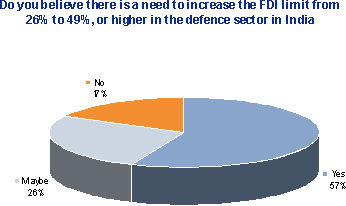
The domestic industry, led by companies such as Larsen & Toubro (L&T), M&M and various Tata group businesses, however wants the limit raised only to 49% so that they maintain control and have a chance to grow, having been restricted till relatively recently from doing more than supply components. This view has been backed by a recent Confederation of Indian Industry-KPMG survey with 57% of respondents saying “yes” to a higher FDI limit and 26% more saying “maybe”.

There have been various unsuccessful attempts in the past ten years to reform India’s slothful defence manufacturing capability, which is dragged down by public sector corporations (DPSUs) and ordnance factories that dominate production, generally perform badly, and block change along with trade unions and the defence ministry. Currently, they are opposing any increase in the 26% limit.

India’s armed forces are however becoming tired of being saddled both with poor domestic equipment and by the defence ministry’s failure to award foreign contracts on time. As the government’s FDI consultation paper says, “only 15% of equipment can be described as ‘state of the art’ and nearly 50% is suffering from obsolescence”.National security coindserns

National security concerns

There is some concern that India’s security interests will be endangered if FDI is raised, but most of these can be dealt with by detailed regulations. For example, India will presumably pick and choose which countries to admit  – presumably not China, despite that country’s invasion of India’s telecoms equipment market. It will also need to insist (as it has done with media FDI) that Indian nationals hold top managerial posts, and that it also controls export destinations and have some influence over changes in foreign management control. (The US allows 100% FDI in defence but imposes security-related restrictions, including an ability to block takeovers).

There is also concern that a foreign-invested defence company might be forced by its owner to stop production, or not receive components from its home country, if India was involved in a war or other activity that did not get international backing. The US has blocked supplies, most recently after India’s 1998 nuclear tests. That risk however would presumably be no greater than it has been in the past with foreign supplies, and might turn out to be less serious.

The Commerce Ministry DIPP discussion document firmly recommends 74% – and does not oppose even 100% – in order to “have state of the art technology”. Raising it only to 49% might, it says, lead to accusations “by posterity of doing too little too late”.

Personally, I don’t agree with this. Indian companies need time to grow, as they have in telecoms and insurance, so the limit should be raised to just 49%. That would, I believe (having talked to many contacts), be sufficient to bring in commitment, management expertise and technology, despite foreign companies’ protestations to the contrary.

Unfortunately this seems unlikely to happen. The Commerce Ministry has started a public debate on the issue with a spectacular attempt to crack the defence establishment’s luddite grip on policy – but the decisions will be still dominated by the defence ministry cabal. I guess that means we can expect no more than a fudge of 49% in “special cases”, which will help a bit but lead to confusion and manipulation.

Whose fault is it if a press conference billed in advance as a major event is a muddled flop? Blame the person giving the press conference? Or his advisors, or the media for not asking perceptive questions? 

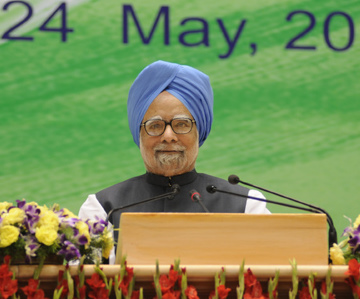
That question has being doing the rounds here since Manmohan Singh, India’s prime minister, (below) gave mostly dreary answers for more than an hour on Monday at what was supposed to be an important media event to celebrate the first anniversary of the coalition government that he heads. 

.

 He said virtually nothing new and developed no themes on major issues – not on talks with Pakistan (which he is pushing), economic policy (he is a professional expert), nor on dealing with Naxalite rebels (he has for three years billed this as India’s major internal security problem). He thus failed to put his personal stamp of authority on a fragmented government. 

While his media and other advisers should certainly have made sure he was better focused and prepared, the real problem is Manmohan Singh’s own political nervousness and lack of authority over ministers who, for better or for worse, follow their own lines of thought and behaviour. 

The prime minister of course is not a natural politician. Some 25 years ago, I used to visit him for the Financial Times in Mumbai when he was the Reserve Bank of India’s governor. Always interesting, he would talk, among other things, about the challenges of trying to benefit everyone when developing a poor country. That helped me, as a new foreign correspondent, to grapple with this vast country, including the militant Khalistan campaign then raging in his home state of Punjab. Then he came to Delhi to run the Planning Commission and was equally discursive. 

Later, when I returned to India in 1995, I caught up with progress on economic liberalisation that had started in 1991 by listening to him make brilliantly argued, and sometimes even passionate, speeches about the need for India to open up. He was then finance minister, and he and Montek Singh Ahluwalia, then finance secretary and now head of the Planning Commission, were interchangeable as worthy speakers. 

Then Congress lost power and I found him gradually less and less open as he shrank back into the reticence of a guarded politician. Sadly, I went to see him less. 

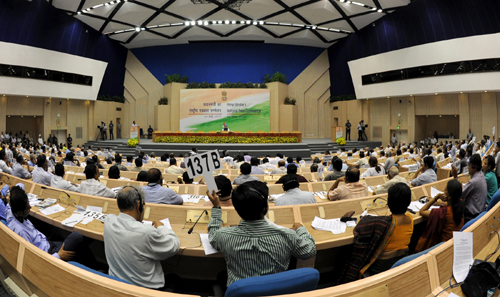
That is the man who last Monday sat bizarrely alone on a huge stage at the government’s Vigyan Bhawan main conference hall (below), facing several hundred journalists in tiers of seats so remote that it was impossible to generate the mood of a participative press conference. Very few ministers turned up to support him, though he brought some top advisers from his office. 

‘Singh adds econ logic to Pak peace bid’ 

His most interesting remark was when he linked, publicly for only the second time I believe, the idea that India “cannot realise its full development potential unless we have the best possible relations with our neighbours – and Pakistan happens to be out largest neighbour”. He should have explained this thought in order to give shape and logic to his highly controversial policy of opening talks with Pakistan, despite its role as an anti-India terrorist base. 

Imagine the headlines – “Pakistan peace will boost India to 12% growth”, or “Singh adds econ logic to Pak peace bid”. That would have made international headlines. There might have been one or two negative pitches such as “Singh admits Pakistan stunting India’s economy”, but who’d care when the positive message would have been out. We might have all understood, at least partly, why the prime minister is so keen.

Singh does not have full party support for this initiative, and Sonia Gandhi has not spoken out on it in the supportive way that she did when he pushed through last year’s nuclear deal with the US. For some reason, the Gandhi’s were keen on that deal, but do not seem to see the same benefit in the Pakistan initiative, which of course has scarcely any chance of achieving much in the foreseeable future.

.

 His worst answer was when he virtually condoned the widely recognised corruption of A.Raja, the telecoms minister, quoting Raja’s implausible defence that he was following government policy when handling suspect telecom licence auctions in 2008. Since he cannot sack Raja because of coalition priorities, this indicated that  the prime minister did not have the guile or courage to deal with such a sensitive issue with the media.

His most revealing remarks were when he said that questions of his retirement did “not arise” because of he had unfinished tasks to tackle – and then later agreed with a questioner that sometimes “younger people should take over”. In that context, he said he would be “happy to make way” if  and when the Congress Party decided he should. (The “young”  there of course was Rahul Gandhi, and “Congress” was his mother Sonia who heads the party). That showed how deeply conscious Singh is of being prime minister only at the pleasure of the Gandhi family.

He failed to develop themes on tackling Naxalite rebels at a time when his government is split about whether they should be seen as terrorists or a developmental problem. He also dodged questions about massive illegal mining in Orissa, government splits over whether people should have to declare their caste in a new national census,  and state-level disputes over scarce water resources.

The question on mining gave Singh a marvellous opportunity to give a broad-based answer publicly supporting Jairam Ramesh, India’s first non-corrupt policy-oriented environment minister for a decade. Ramesh is trying to stop illegal mining in several states. He is facing stiff opposition from politicians both within and outside the coalition, not only on mining but also other projects – many illegal and involving corrupt vested interests. He should have been given vocal prime ministerial support.

These omissions were significant because they are almost all issues that divide the government, where Singh does not have the political will or freedom to take the lead. This is  partly because Sonia Gandhi is in charge of party and coalition politics, and partly because, as I wrote last week, he does not dare (nor has the authority) to risk upsetting coalition partners.

When asked about his differences with ministers, he replied “It would not be proper for me to, I think, discuss these issues in broad public daylight” – sitting in the brightly lit the conference hall. “Then turn out the lights”, laughed one journalist. 

The government is of course functioning adequately despite all the policy problems, corruption, and lack of prime ministerial drive and authority. From Sonia Gandhi’s and the party’s point of view, keeping the coalition intact is a primary issue till the next general election due in 2014. What a lot India is missing as a result! 

“If wishes were horses even beggars would ride”, said the prime minister with a rare flash of whimsical humour when asked if he would rather have the more structured relationship of his 2004-09 Left-supported coalition than the current hotch potch of parties. 

If only they were……….. 

Posted by: John Elliott | May 24, 2010

The Ambani brothers’ cold war is over, let battle commence

Anyone who thinks that Sunday’s announcement of a so-called peace deal between India’s warring Ambani brothers, Mukesh and Anil, signals a family love-in must surely be mistaken.

The two extremely high profile businessmen split the massive Reliance Industries empire in 2005, three years after the death of their father Dhirubhai who originally founded what had become one of India’s biggest groups. They have been fighting each other ever since – until Sunday’s apparent truce.

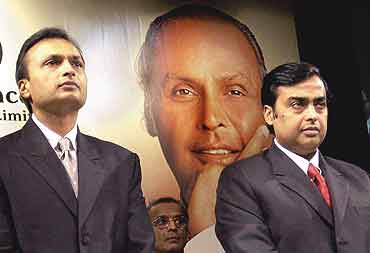
Anil (left) and Mukesh, tense in 2006, with their father's picture

Now their rivalry can move openly into the marketplace because the gist of Sunday’s announcement was that they have cancelled non-compete agreements reached after their 2005 split.

These agreements, instead of keeping the brothers peacefully apart, led to many squabbles and bitter infighting. The worst upset was when Mukesh scuppered Anil’s plans two years ago for a share-swap merger with MTN, a large African telecoms company, saying he had first right to shares in Anil’s Reliance Communications.

The incentive for the brothers to sort out their troubles was a Supreme Court judgement earlier this month on a dispute over the supply and price of gas from one of Mukesh’s Reliance Industries (RIL) offshore fields to a power plant planned by one of Anil’s Reliance ADAG companies. The judgement favoured RIL on the price of gas and on its freedom to choose its customers, but also said a quick agreement should be reached by the brothers that would also protect the interests of ADAG’s shareholders.

Freedom to enter each other’s business areas will of course lead not only to visible competition but also no doubt to a continuation of the ruthless behind-the-scene influence seeking and peddling for which they are both renowned (as was their father). That could also hit other companies in areas that they target.

The two groups said on Sunday that the announcement would “provide enhanced operational and financial flexibility to both groups, and greater ability to participate in high growth sectors of the Indian economy, such as oil and gas, petrochemicals, telecommunications, power, and financial services”. There was an added line about RIL not entering into ADAG’s key area of gas based power generation until 2022.

Mukesh Ambani’s most successful business areas are oil and gas exploration and refining, textiles, and petro chemicals. He has been less successful with retail stores, petroleum retailing, and special economic zones, but all these businesses have growth potential, along with life sciences, and an investment in one of the controversial IPL cricket league teams. He has ample investment funds, and will almost certainly want to move into highly lucrative financial services plus infrastructure, media (where he is already active), and maybe telecoms.

Anil has had most success in financial services, where he has a $24bn mutual fund, India’s largest, but is facing tough competition in his other main area, telecoms that was originally started by Mukesh. He also has substantial plans in infrastructure, power, media, films, and healthcare, and might look at moving into oil exploration, which he was personally involved in before the split, and retail.

The eventual winner will be almost certainly be Mukesh, 53, who has more business acumen, managerial expertise, and political clout, and is more of a strategist, than Anil, 50. He has a head start because the $70bn-plus market capitalisation of his RIL group is three times the size of Anil’s ADAG.

Saturday’s statement said the two brothers were “hopeful and confident that all these steps will create an overall environment of harmony, co-operation and collaboration between the two groups”.

Maybe I’m being too cynical, but I don’t see that happening, though future clashes will probably not invade government policy as damagingly as they did over gas pricing.

Mukesh is never content unless he dominates whatever he is involved in, especially his core industries. On a personal level, Anil is part of his core family, so there is no way that Mukesh and his wife Nita would ever allow Anil to gain precedence. As the younger brother, Anil is of course always trying to be a player in the same big league.

Like so much in India, this is good theatre, and the country also benefits if corporate rivalry leads to two able entrepreneurs building empires faster than might otherwise happen.

But there is downside because the brothers’ extremely active political lobbying can upset the development of government policy. One senior civil servant said to me recently. “People are scared to take policy decisions because they might upset one of the brothers which will bring misery when they move against you”.

It’s amazing how a tiny public event in a complex and corrupt political and business society like India can have utterly unpredictable and wide-ranging domino effects.

A tweet on Twitter early last month by Lalit Modi, founder of cricket’s notoriously successful  India Premier League (IPL), has in a few weeks triggered a series of events that have laid bare how Manmohan Singh, India’s prime minister, and Sonia Gandhi, head of the coalition and of the Congress Party, are unable to sack or even control government ministers responsible for policies ranging from telecoms and aviation to railways, agriculture and fertilisers.

Modi’s tweet, which was directed at Shashi Tharoor, a gaffe-prone minister of state for foreign affairs, not only led to Tharoor losing his job and Modi being suspended, but quickly escalated into revelations about government phone tapping of businessmen and politicians.  

That led to a report (in Delhi’s Pioneer newspaper) on Nira Radia, the head of public relations firms that handle the country’s two biggest groups, Tata and Reliance (RIL) and who works closely with their two chairmen, Ratan Tata and Mukesh Ambani. The report, quoting phone-taps, said she had been involved as a “wheeler dealer” on controversial telecom licence allocations in 2008 and other political decisions. 

Nira Radia

Radia started legal action against the Pioneer. Her colleagues, who include influential senior retired telecom and other bureaucrats in three pr and lobbying firms, Vaishnavi, Neucom and Noesis, point out that she is a telecoms consultant, so it is hardly surprising that she talks to a telecoms minister.

The story led to extended media coverage on several leading lobbyist-fixers, questioning their propriety (my word-check neatly turned that into ‘prosperity’!), and revealing details that Radia and many others would rather have kept well below the radar. Photostats of secret and other government documents that allegedly detail Radia’s activities on behalf of Tata and others – many stemming from the phone taps – have been posted on the internet.

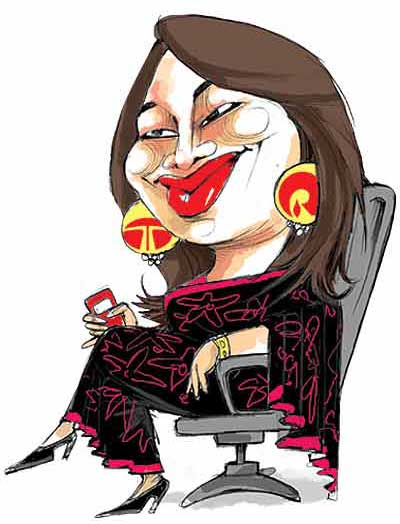
The Outlook news weekly magazine devoted ten pages to the subject, with profiles and caricatures of the main players (right). Some of them prefer to operate well below the radar, and Radia was expert at that, as are one or two others in Outlook’s article. Others profiled there mask their behind-the-scenes lobbying work with a smokescreen of high profile appearances on tv, in the social media, and around the party circuits of Delhi and other cities. 

 The Delhi-based Mail Today, which has delved far more persistently into the Radia story than most other newspapers, even dared cheekily to start an article with a spoof intro saying:  “The joke doing the rounds is that the other day Parliament was evacuated because of a suspicious package, but it was ok, it turned out to be a bag of cash dropped off by Nira Radia”.  

Radia first became known in Delhi about ten years ago as an aviation consultant. She was close to a Bharatiya Janata Party politician, Ananth Kumar, who was successively aviation and tourism minister, and she advised Tata on its unsuccessful bid with Singapore Airlines to privatise Air India. Her role in Tata, especially with Ratan Tata, expanded to such an extent that she even persuaded him in 2008 to let her take on Reliance (RIL), a Tata rival in many areas, as a client. Last month, Tata’s and Radia’s roles as client and publicist were amazingly reversed when Tata issued a statement recognising their “long and fruitful association”. 

 This has all been good theatre, annoying for those who would rather not be written about in such a way, but good fun for the rest of us, and  no doubt useful information to have out in the public arena. There is of course nothing new in all this. Fixers have existed for centuries across the world, and in some places, like Washington DC, they are institutionalised.  

But more importantly, the theatre has dominated much of the analysis of the government’s year in office since it was elected last May. It has focussed attention on how Singh and Gandhi cannot control cabinet ministers belonging to coalition parties because they need to keep these parties content. In most cases the parties virtually nominate who should be appointed and sometimes even what job they should have – targeting posts that generate large scale kickbacks, which has for many years meant ministries ranging from finance and defence to telecoms and aviation. 

A.Raja with Manmohan Singh

The list of ministers who thus cannot be removed starts with A.Raja, India’s notorious telecoms minister from Tamil Nadu’s DMK party who, the tapes revealed, has links with Radia. He survives in his job, even though he was a candidate to be sacked as along ago as 2008.

There was even a story circulating a year or so ago that Raja, when questioned by the prime minister about the way he was corruptly fixing  a 2G telecom auction for his friends, replied that he worked for his DMK chief minister. If the prime minister had any complaints, he should contact him. I believed the story when I heard and do so now, especially after the way that the government has failed to act recently. 

The government has worked round this by closely monitoring and switching responsibilities for some issues such as an auction for 3G licences, which has this week doubled expectations by raising $14.5bn, as well as controversial licence plans proposed by India’s telecom regulator. But that is a unsatisfactorily haphazard way of running policy.

Little wonder that Vittorio Colao, ceo of Vodafone, said publicly earlier this week, when referring to the company’s problems in India, that “there is a need for political leadership in shaping the industry”.

Also outside the Singh-Gandhi control are Sharad Pawar and Praful Patel, the under-performing agricultural and aviation ministers from the Maharashtra-based Nationalist Congress Party, who were named in the IPL scandal and for a time looked vulnerable. [M.J.Akbar, a veteran Delhi-based editor, on May 23 described India’s civil aviation as “the epitome of waste, glad-handing, smarmy middlemen and self-destruction“]

Aside from IPL and the tapes, non-performing figures include Mamata Banerjee, the railways minister, who is leader of the Trinamool Congress of Kolkata where she spends most of her time playing state politics, and M.K.Alagiri, the fertilisers minister from the DMK party who rarely comes to Delhi. 

There is nothing unusual of course in a prime minister having to cosset his coalition partners – watch how David Cameron, Britain’s new prime minister, handles his government’s Liberal-Democrat coalition ministers in months and maybe years to come. Cameron will however get Nick Clegg, the Lib-Dem leader, to agree to them being replaced if they under-perform – and even more so if there is corruption. 

But that is not the case in India, which tolerates an outrageously corrupt and inefficient polity. For many politicians, public office primarily means tapping the gravy train and its flow of illicit funds, partly for themselves and partly for their political parties. The prime minister does not dare impede the flow, fearing he will lose coalition partners.

This post is also on the FT website at
http://www.ft.com/cms/s/0/af445328-6563-11df-b648-00144feab49a.html
and a Hong Kong-based news website
http://www.asiasentinel.com/index.php?option=com_content&task=view&id=2482&Itemid=404

.

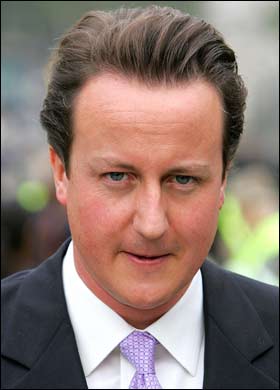
I can’t see how anyone could want David Cameron (left) and his elitist, neo-con, anti-Europe and inexperienced tribe to win today’s British general election. He’s inherited the self-superior look and style of the British shires – imagine what it will be like if this guy, who’s only ever worked in public relations and politics, becomes prime minister tonight! 

Britain certainly needs a change, and Tuesday’s Financial Times’ pro-Conservatives editorial neatly summed that up, starting with the point that Labour is tired and needs a rest. 

Basically the FT wants less government and state intervention, which it believes Cameron will give and Labour would not. It also wants political renewal which Cameron surely will not give, and economic and public sector reform and spending cuts. The FT hopes Cameron would do this, but I doubt he could without extensive labour and possibly social unrest. 

At the end of a long editorial, it says that “on balance”, the Conservative Party “fits the bill”. “On balance” are the most significant words in the editorial. They mean that the FT really wants none of the three main parties on offer, but has to choose one. Labour needs a rest, the Liberal-Democrats’ policies are an “uneasy mix of sanctimony and populism”, so what to do? On Balance Vote Conservative. What an unenthusiastic endorsement! 

The Economist was little more enthusiastic last weekend. It gave Brown long-overdue credit for his economic management last year, though tempered that since he helped to create the mess when he was Chancellor the Exchequer. Saying, like the FT, that Labour is “tired”, it believes a change of government “is essential”. 

.

Nick Clegg, the Liberal-Democrats leader (left), is described as “clever and charming”, but The Economist rightly points out that Lib-Dem policies are muddled. So, it says with little apparent enthusiasm, “that leaves the Tories……who plainly have faults”, including their “Europhobic fringe” and overstatements about Britain’s “broken society”. Cameron, however, “would get our vote”. 

Both the FT and The Economist have backed Labour in the past. Both believe in open markets, social justice and small government. Both, to varying degrees, like Gordon Brown, though both say it is time for him to go. Clegg is not a realistic alternative, so vote Conservative! 

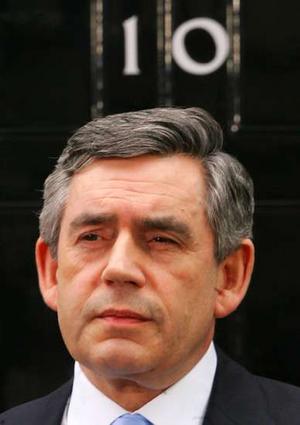
However, anyone who saw the tv debates between the party leaders over the past three weeks must surely have been impressed by Gordon Brown’s (below) grasp of economic issues and ability to govern. These prime ministerial talents are usually hidden behind his often grim looks and style, but he should be respected in the UK, as he is around the world, for his handling of last year’s international financial crisis. 

In my opinion (though I’m in a small minority here), he clearly outshone Cameron’s bland generalisations in the debates, though Clegg’s cheeky new guy on the block approach was harder to put down. 

.

Brown’s appalling gaffe (rather Shashi Tharoor-ish!) last week when he said Gillian Duffy, a Labour supporter, was “bigoted”, has been unfairly used against him by virtually everyone. The actual gaffe was committed not by him, but by his staff who allowed him to be driven away with a live tv-linked microphone attached to his jacket. 

Geoffrey Goodman, a veteran political and industrial reporter who covered elections years ago, tells me that the things politicians said then would have finished many a career if they had become public: 

“In the old days when political leaders made nasty side comments no one was aware—or if they were the political reporter would discreetly make a note and not use it (except in his memoirs !!!). Not now.  Modern communications means instant disaster —or fame. Nothing in between.

“I recall the 1964 general election when I was with Harold Wilson for the whole campaign —  along with a Fleet street army that included Peter Jenkins (Manchester Guardian) who got smashed every night so he missed Harold’s comment about:  “those f…ing reporters from the Manchester Guardian—can’t even keep sober or write proper shorthand”.  Or for that matter Winston during the war who, Iam told, was constantly berating the generals behind their back but nobody would ever dared reporting it. I am also reminded of George Brown [dear old George] with whom I covered the 1970 election. He made comments about everybody that would have destroyed him on the spot in the present media culture.”

Brown was of course on the ropes long before the Gillian Duffy episode, and he has lost ground in the last two weeks. And in many ways I would agree with the FT and The Economist that it is time for Labour to be replaced in government. 

But that is surely not wise at a time when there is a need for capable and experienced handling of Britain’s growing economic problems. Today’s riots in Greece show the depth of unrest that is threatening mainland Europe. Personally, I’d rather have anyone but Cameron as prime minister in such a crisis. 

If I had a vote (which I don’t because I’m not registered in the UK), I would vote either Lib-Dem or Labour in order to defeat the Conservatives.

My ideal would be a Gordon Brown-led coalition government, with the Lib-Dems as a significant partner providing several Cabinet ministers to replace many of Labour current listless team. It probably won’t happen, but we’ll regret it if it doesn’t.

Posted by: John Elliott | April 24, 2010

India’s scam-ridden IPL cricket is a national celebration

India is of course a country of scams. To many abroad it is seen sentimentally as Mahatma Gandhi’s country of khadi cloth, good ethics, and care for the poor. To some it is an economic miracle and a future super power, while to others it is an unkind cruel place of caste, ethnic and rich-poor divisions and violence. Above all however, and not far below the surface, India is a maze of unethical, unlawful and illegal swindles that link most politicians, many bureaucrats, and a large number of businessmen and others.

It is scarcely surprising therefore that there is a scam surrounding the IPL, which has grown in just three years to a massive $4bn wealth-creating package of sponsorships, broadcasting and other franchises, fees and other takings.

Cricket is not just a national sport in India but also a passion, and people have watched in awe as the rupee and dollar figures have grown to such an extent that over $300m has recently been bid for new franchises, raising the total from eight to ten teams.

A lot of the IPL activity has been alleged in the past week or so to be unethical, unlawful and sometimes illegal. Politicians and others are said to be laundering black money via Mauritius and other tax havens which, though officially recognised, hide investors’ identities through shell companies and benami (false) names. There are suggestions that matches and bids for team franchises have been fixed, and that there have been bribes, tax evasion, illegal betting, and breaches of foreign investment rules.

At the centre of the growth, and the controversy, is Lalit Modi (above), creator and chairman of the IPL and vice president of the highly politicised Board of Control for Cricket in India (BCCI), who is facing calls for his resignation [and was suspended on April 24] .

“Overlord of a national passion” was the headline on a Financial Times profile of Modi two years ago. More details of his business career appeared in the India’s Mail Today newspaper a few days ago headlined “Modi and controversy go a long way back”.

The national celebration of the lucky few getting rich in a poor country is one of India’s many curious contradictions. The poor have (up to a point) always admired the massive illicit personal wealth of some politicians, such as chief ministers Mayawati and Jayalalitha in Uttar Pradesh and Tamil Nadu, because it shows what can be achieved from a deprived background. Similarly, the successes of the IPL organisers, cricketers, and the business and film star cricket team owners, have been enjoyed as a symbol of hope for what might be, as well as a spectator sport (now switched to tracking the leaks and scandals).

Earlier scams and political corruption have also been celebrated to a lesser extent, and some have even done the country good for a time. While stock market fraud primarily makes the price-fixers rich, it also benefits private investors and boosts company capitalisations, and the country has revelled when the Bombay Sensex has soared in past scams. Also, as an ex-army friend has reminded me, the Bofors gun at the centre of 1980s corruption allegations won India a border war with Pakistan at Kargil in 1999 – though it has also stymied defence purchases for 20 years.

This celebratory reaction probably partly explains why the workings of the IPL were not looked at earlier by the government’s financial and criminal investigations agencies, nor the media, even though rumours of illicit deals and links between politicians and investors have been around for some time. It was just too big a tamasha (party), with too powerful hosts, to be interrupted.

Club of friends

As one of those involved said to Tehelka weekly news magazine last week, “It’s common knowledge that ….politicians running across aviation, agriculture, road transport and the Opposition, are minting money and have undeclared stakes in every cricket pie”. Last September, Outlook weekly news magazine noted that “the IPL is largely a club of friends with mutual interests, and often conflicts of interest”.

The main reason for the lack of investigations is of course that, as in virtually all scams (not just in India), politicians are so deeply involved that few officials would dare start inquiries. And most of the Indian media does not begin to investigate until it is fed information.

This suddenly came unstuck earlier this month because of the involvement of Shashi Tharoor (left), an ambitious former top United Nations official who last year became an MP and a gaffe-prone external affairs minister. Tharoor helped a consortium based in his home state of Kerala to bid for one of two new IPL franchises on offer this year, and a woman friend, Sunanda Pushkar, was promised a $15m sweat equity stake on account of future consultancy work.

Known as Kochi, the consortium put in the highest bid of $333m, which apparently upset Lalit Modi’s plans for who should win. The consequential row went public on Twitter and exploded in the past two weeks into a scandal that has led to a stream of media leaks, presumably from the government and political parties and mostly directed against Modi. There have been rows in parliament, tax and other raids, and calls for an official inquiry. Tharoor has been forced to resign from his minister’s post, and Pushkar has given up her $15m.

Companies involved

Anyone looking at some of the leading businessmen and companies involved in the IPL would surely have noted long ago that virtually all of them are at the wrong end of India’s corporate respectability spectrum. There is Vijay Mallya of United Spirits and the Kingfisher beer and airline businesses, infrastructure operator GMR that has grown miraculously fast in recent years and grabbed massive land holdings along with airport franchises in Delhi and Hyderabad, and the secretive Subrata Roy of the Sahara group that is famous for its chit (small savings) fund and real estate activities.

Also owning a team is Mukesh Ambani of Reliance Industries (RIL) who has been a strong Modi supporter from the beginning of the league. Those trying to win teams this year include commodity trader Adani, which has been in legal trouble over non-payment of customs dues and monopolising coal imports, and the Videocon electrical white goods and oil exploration company run by Venugopal Dhoot.

Lalit Modi comes from the Delhi-based Modi family business group headed by his father, K.K.Modi. Lalit Modi was not regarded as a success until he started the IPL, and his earlier business ventures include a controversial lottery franchise in the north-eastern state of Manipur.

Modi’s friends and relatives

His relatives crop up as both IPL stakeholders and franchisees. His brother-in-law is a part-owner of the Rajasthan Royals team, which has several shell company investors plus Lachlan Murdoch, son of Rupert Murdoch, the international media tycoon. His step son-in-law, Gaurav Burman, runs Elephant Capital, a private equity company, along with brother Mohit Burman who is also an investor in the King’s XI Punjab team. Elephant has a stake in IPL’s on line and broadcast licensee Global Cricket Ventures. (The Burman family control the Delhi-based Dabur health care and food company).

Bharatiya Janata Party (BJP) politicians are deeply involved. Lalit Modi has close links with Vasundhara Raje, the BJP’s former Rajasthan chief minister, which are now being challenged on the fringe of the IPL story by Congress politicians. Modi faced tax and other charges after Raje lost power last year. He has sought help from Narendra Modi (no relation), the BJP chief minister of Gujarat. Adani is based in Gujarat and Lalit Modi reportedly wanted it to win the Kochi bid that was secured by Tharoor’s Kochi team. Kochi was allegedly offered a $50m bribe to back off by Lalit Modi (who has denied the charge), so that Adani could take over.

Patel and Pawar

Praful Patel, India’s urbane but under-performing aviation minister, who I described as the government’s “Teflon man” in an earlier blog, has also been a target of leaks to the media. He frequently issues smooth denials of any problems, and of his own lack of responsibility for the worsening state of Air India and India’s over-crowded and potentially dangerous skies and airports.

This week he was rebutting leaks by denying any involvement in the IPL, even though his 24-year old daughter works for the league and, with him, reportedly sent an e-mail to Tharoor about cricket teams’ potential profitability. “Children should not be targeted,” said Patel a few days ago. He is closely involved with India’s cricket in other ways because he is a senior member of the Nationalist Congress Party, which is led by Sharad Pawar, once one of India’s most powerful politicians but now a not very effective agriculture minister. Pawar is former president of the BCCI and is at the centre of a row over what should happen to Modi. He is in line to become president of the International Cricket Council.

It is not clear whether Pawar and Patel are being targeted by the Congress Party as a warning not to upset the stability of the governing coalition, or by the opposition BJP to embarrass the government.

A writer in the Indian Express the other day said that “in many ways, the IPL is a confirmation of what India really is – an emerging economy”. He is correct. The scandal shows how far the country has to go before it can claim to have moved on from being under-developed in terms of market regulation and ethics.

As the economy has been liberalised over the past 20 years, brilliant entrepreneurship has been generated, but unparalleled greed has grown at all levels of society. People from the top of the government down to a village headman use cronyism, patronage, bribery, coercion and generally low ethics to build status and wealth. That looks like continuing for generations because there are still some 700m or more people clambering to enter the economy and reap the benefits of new riches.

On the IPL, the current furore will no doubt lead to one or two resignations, but inquiries will be controlled to protect many of those involved. Some new regulations might be introduced to control the league. The flow of news leaks that is fuelling blanket media coverage will slow down soon and the fuss will almost certainly die away, maybe in a week of two, when it will be neatly swept from headlines by other news.

A controversy currently raging in India over whether the growing problem of Naxalite (Maoist) rebels should be tackled with force or through development of the tribal areas involved is unnecessary. The answer is clearly both – at the same time, and with equal energy and commitment, by both state governments which have constitutional responsibility for security, and by the central government which should give a national lead.

The fact that this dual approach is not happening, and that there are splits within the governing Congress Party, is an indictment of the government’s weak  leadership, notably by Manmohan Singh, the prime minister, and Sonia Gandhi, the leader of the Congress Party and of the coalition, plus at a different level her son and heir Rahul Gandhi.

The situation is now dire. The Naxalites recently killed 76 paramilitary troops in an ambush, and their activities now cover nearly a third of India’s 600 administrative districts. They control large swathes of remote and often densely forested areas – especially where tribal people risk losing land to development projects – that stretch from the Nepal border down through West Bengal, Jharkhand, Chhattisgarh, Orissa and Andhra Pradesh. They are also now moving towards more urban areas of some states, notably Bengal, and their long-term aim eventually is to encircle strategic districts and urban centres.

Because of the lack of government leadership, Palaniappan Chidambaram, the home minister who has brought focus and order to the ministry since he took over at the end of 2008, has been publicly attacked from many quarters. The most recent – and serious – attack came two days ago in a newspaper article written by Digvijay Singh, a senior politician and a general secretary of the Congress Party who is close to the Gandhis and has a political base in Chhattisgarh, one of the Naxalite-ridden states.

Digvijay Singh wrote in the Economic Times that “we should be paying more attention to their (tribal peoples’) livelihood and governance rather than converting the serene and calm environment of Bastar (one of the Naxalite areas) into a battleground”. He criticised Chidambaram for his “intellectual arrogance” and for being “extremely rigid” though admitting he is also an “extremely intelligent, articulate, committed and sincere politician”.

The key words the quote above are “more attention” because they amount to a criticism of Chidambaram’s security-oriented paramilitary approach. They are especially significant because Digvijay Singh works closely with the Gandhis. An article about him in the India Today weekly news magazine recently (Feb 22 2010) said that he is “sharp enough to gauge the mood of the leadership and he would never speak without first clearing his lines with the famed high command” – which means Sonia Gandhi.

He is therefore presumably reflecting Sonia and Rahul Gandhi’s unease about Chidambaram’s hard line. I heard yesterday they were anxious to stop the article triggering a pubic row, but Rahul Gandhi did make similar remarks about the need for development some weeks ago.

They and Digvijay Singh are of course right because Chidambaram is being unbendingly single minded in his approach – and his arrogance is widely recognised and tolerated. But, as home minister, Chidambaram is only doing his job to try to mobilise the states’ security operations and support them with the central paramilitary, while trying to turn the ramshackle ill-trained, ill-equipped and often undisciplined troops into fighting forces.

He is criticised by Singh and others for not at the same time focussing on development and, as a result, alienating tribals and others who get caught up and killed in the fighting. He says that development is the job of the states, not his.

Up to a point he is right. But it is the job of the government as a whole to mobilise development through various ministries such as human development (education, rural development, environment and others.

That this is not happening is the responsibility of Manmohan Singh as prime minister and Sonia Gandhi as party leader. They should months ago have set up a group of ministers, led by the home ministry, to galvanise the central government, and the states into parallel security and developmental operations.

That has not been done, so it is grossly unfair to blame Chidambaram for the current security focus and to allow him to become the scapegoat for attacks by soft liberals such as Arundhati Roy, the novelist and campaigner, who has ludicrously accused the government of fighting the Naxalites in order to protect mining companies’ leases.  Mining companies frequently operate illegally in tribal areas, with scant regard for local people, and several mining projects are held up because of tribal and environmental objections, but that does not justify Roy’s linkage of the security operations with leases.

India’s tribals are the innocent victims in the middle of this verbal and military war. They have been abominably treated – or ignored – for decades by central and state governments that have done virtually nothing to protect their remote habitats and encourage sympathetic economic and social development.

This has opened the way for the Maoist-inspired Naxalites to move in as the tribals’ saviours. However, the Naxalites are not primarily interested in helping the tribals: their primary aim is to overthrow India’s established parliamentary democracy.

Chidambaram has unrealistically said that security operations can clear out Naxalites within two or three years, with development taking place as they are defeated is unrealistic. As has been seen in places as far afield as Iraq, Afghanistan, Pakistan and the Indian state of West Bengal Andhra Pradesh, defeated rebels and terrorists re-occupy areas once troops move on, thus preventing follow-on development.

Indeed, it looks more like a battle that will last decades rather than two or three years, and the only way to tackle that it surely for the government to adopt a three-pronged approach – tough security operations, widespread developmental work, and continual attempts to open behind-the-scenes talks with Naxalite leaders at all levels.

That is the job of the government as a whole, led by Manmohan Singh and Sonia Gandhi, working with Chidambaram instead of letting their colleagues snipe at him from the columns of a daily newspaper.

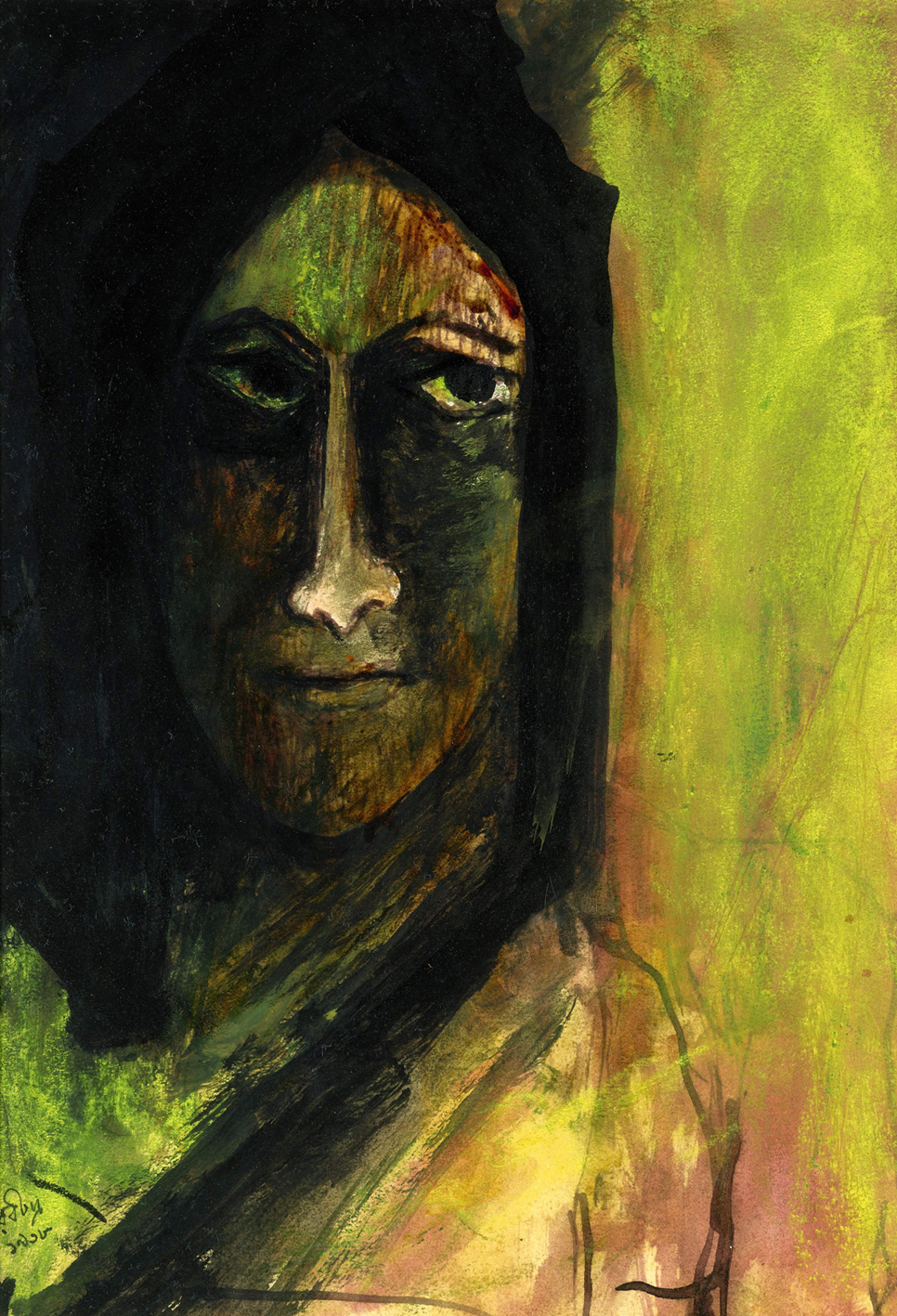
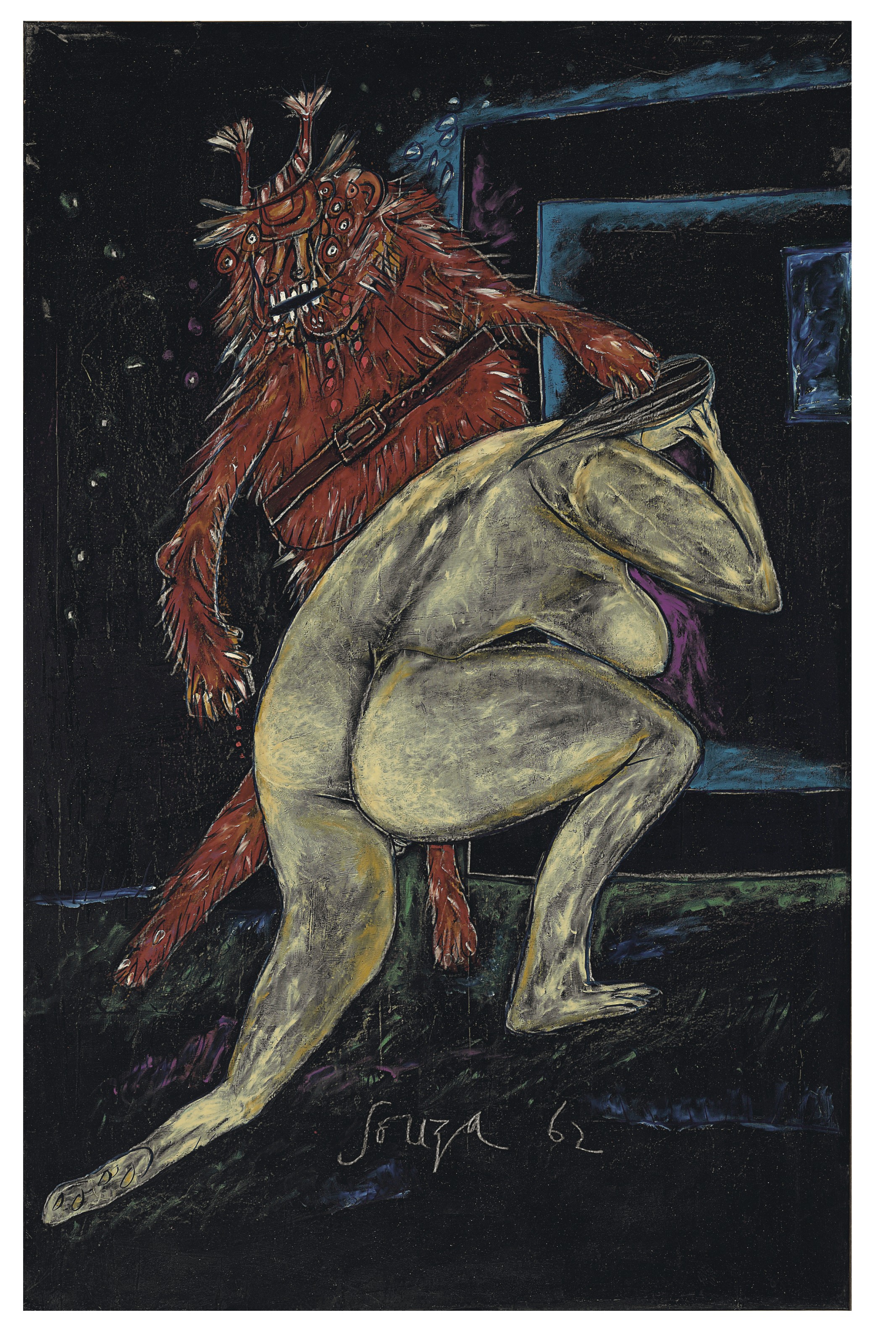
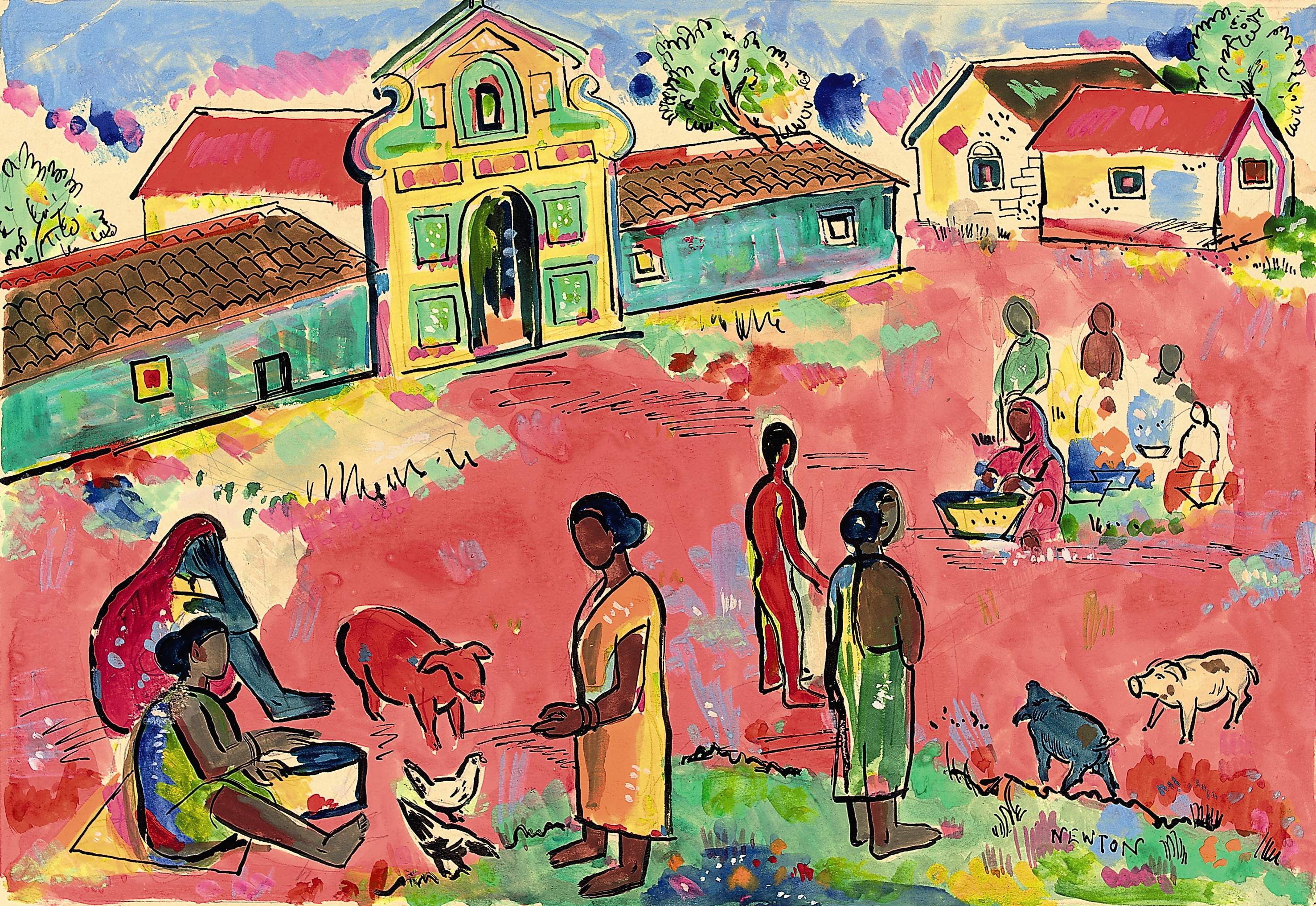
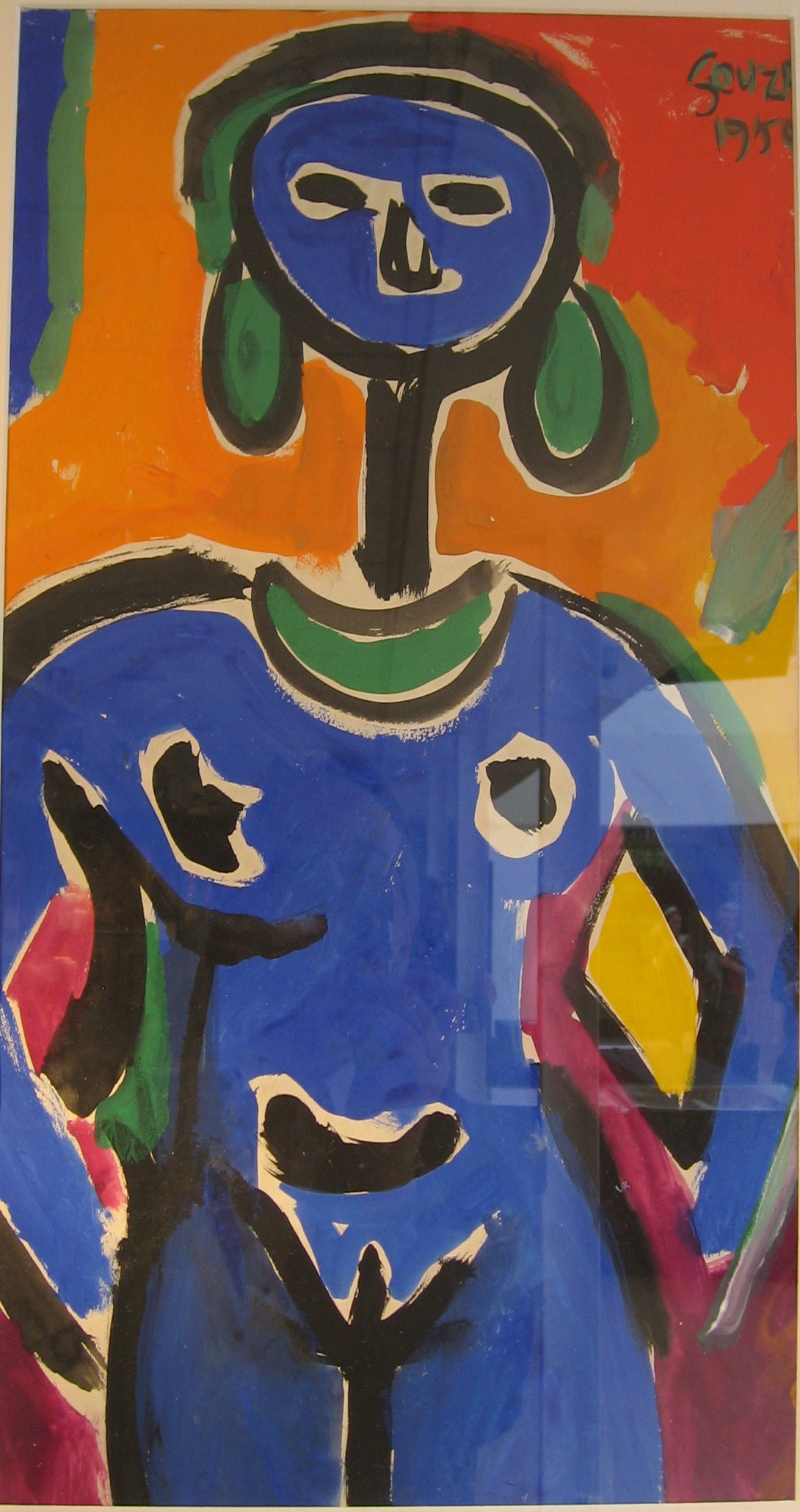
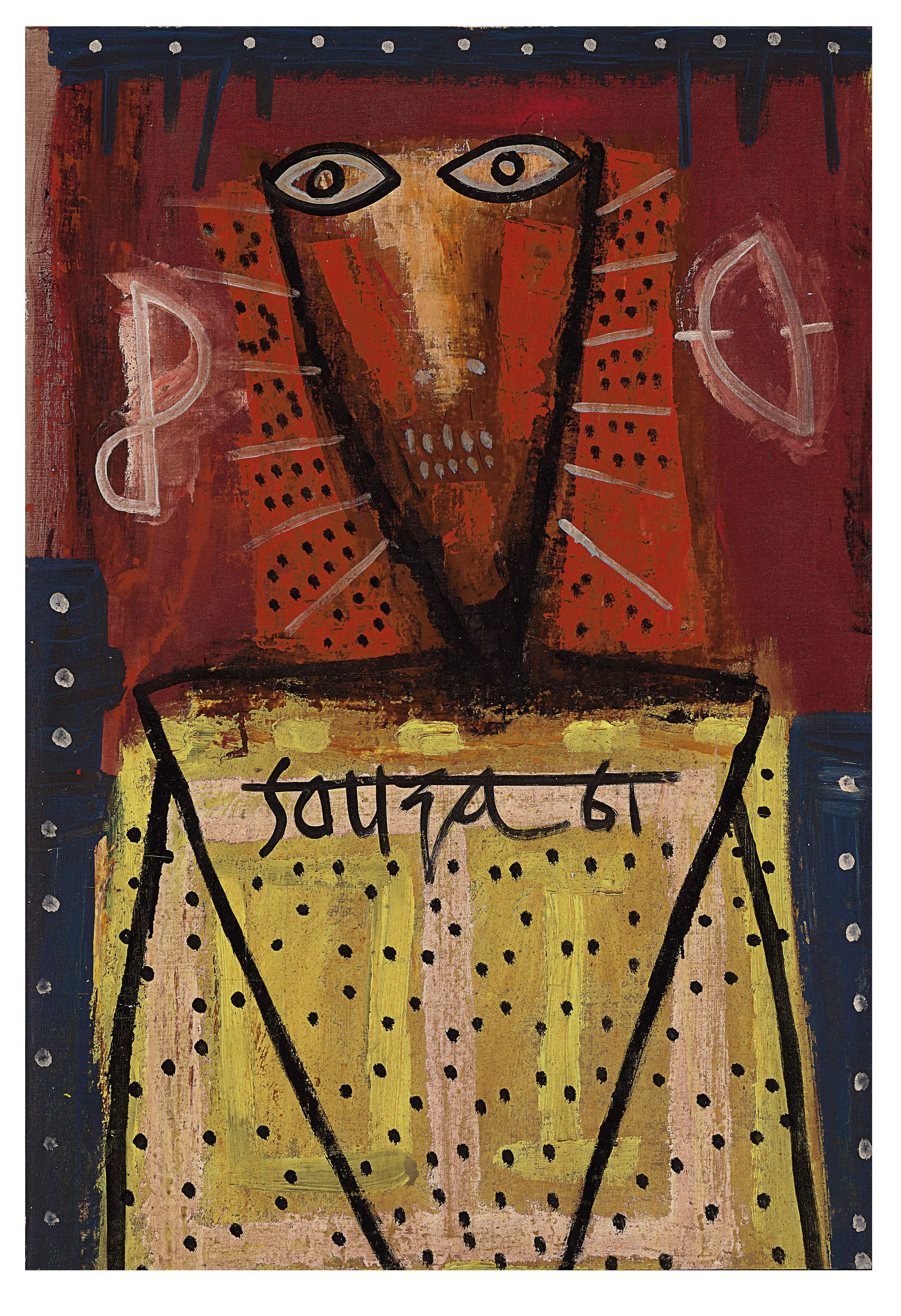
One of Delhi’s oldest galleries, the Dhoomimal, is this week staging an impressive and exciting exhibition of 200 works by Francis Newton Souza, one of India most famous and successful modern artists who died in 2002.

More importantly, the Dhoomimal has linked up with Fourth Dimension, which ran last August’s highly successful Art Summit in Delhi (later renamed the India Art Fair) to make the show more accessible and relevant than is usual in this city where the cultural elite rarely show much interest in widening access to art events.  

‘Head’ – 1964

Dating from the 1940’s to the 1990’s and demonstrating the dramatic range of Souza’s moods and art, the works have mostly been hidden away in the collection of the Jain family who run the Dhoomimal.

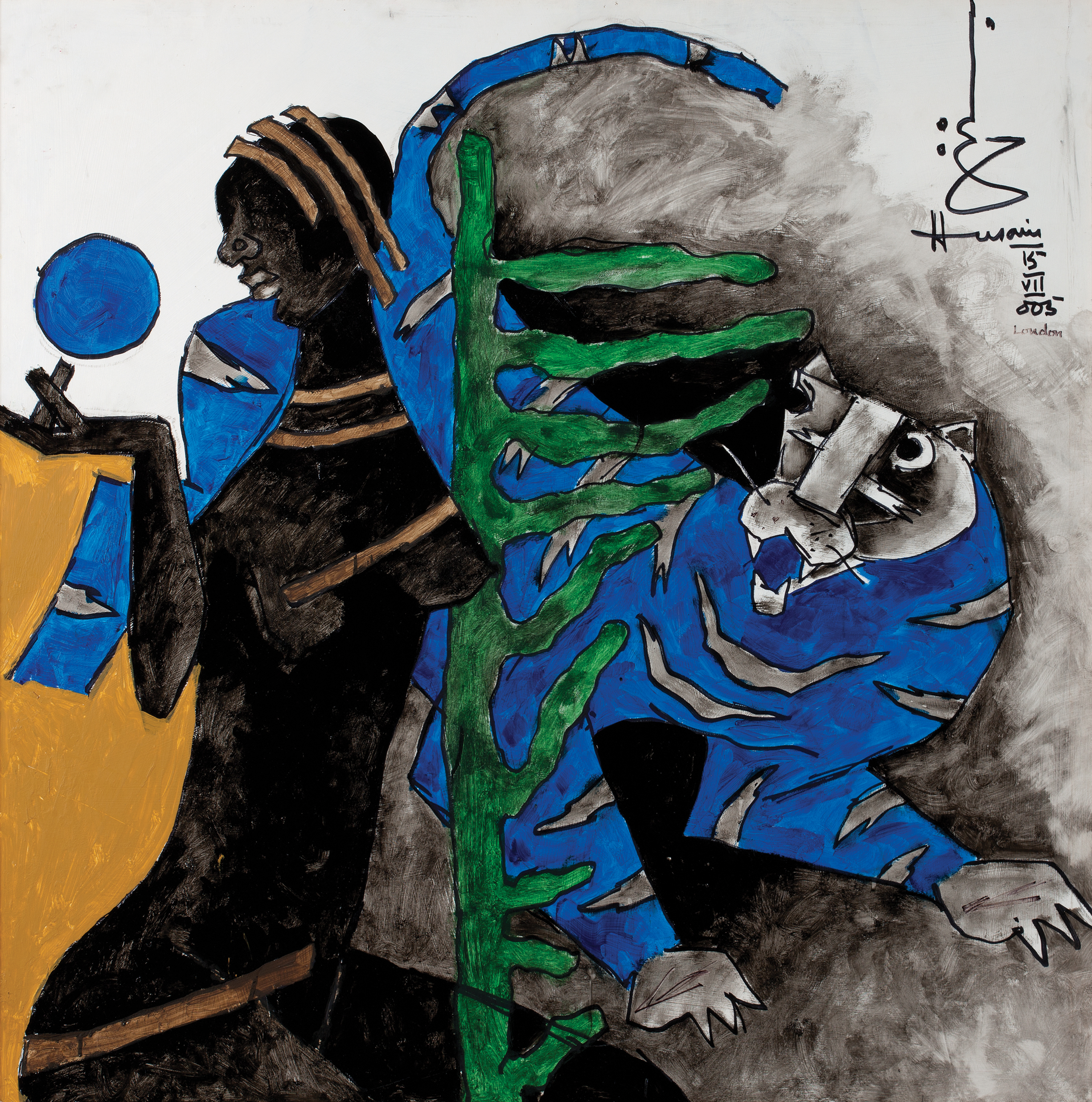
Like other collectors, the family acquired many works decades ago from Souza and other members of the 1950s Progressive Group such as M.F.Husain and Krishen Khanna, often as gifts or for miniscule prices compared with the hundreds of thousands of pounds realised today.  

Uday Jain and his mother Uma plan to build a museum behind their gallery in Delhi’s Connaught Circus, where the Souza’s and more of family’s total of 2,000 works will eventually be on display. In the meantime, a taste of what will be available can been seen with this week’s show at Delhi’s Lalit Kala Akademi, curated by Yashodhara Dalmia. With Fourth Dimension, the Jains organised events around the launch at the end of last week, plus walks round the gallery, a poetry session and talks.  

a very early water colour – 1944

This evening Ebrahim Alkazi, a veteran art historian and theatre director, and Krishen Khanna talked about their memories of Souza and his often angry and tortured paintings and drawings, along with another modern artist, Anjoli Menon.  

Alkazi remembered Souza “seemed quite destructive because he couldn’t come to terms with society”, and wondered if he would have felt “more at home” in his native Goa rather than moving to New York where he was far from successful or happy. Khanna said Souza had explained to him that artists “gravitate to where the money is”. When Menon once asked him why he stayed in New York where he lived in a tiny scruffy flat, Souza replied: “I have a bordello upstairs and a sandwich bar below so never need to leave the building!”  

Few public or privately run museums try to broaden the appeal and appreciation of modern art with such conversations. The Government’s National Gallery of Modern Art does little, even though it opened a new extension a year ago that is crammed full of exciting modern and contemporary works, while the Ministry of Culture adds little beyond official prestige. There are hundreds of privately owned art galleries in India’s major cities, but scarcely any do much more than stage shows and focus on ramping up prices.  

another early work – 1951

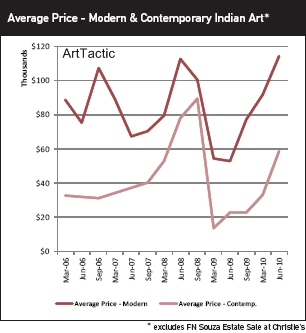
Consequently, little if anything has been done to widen public appreciation of modern and contemporary Indian art, which became internationally recognised by collectors and investors during the past decade’s boom with auction prices peaking in 2008 at $2.5m for a Souza painting.  

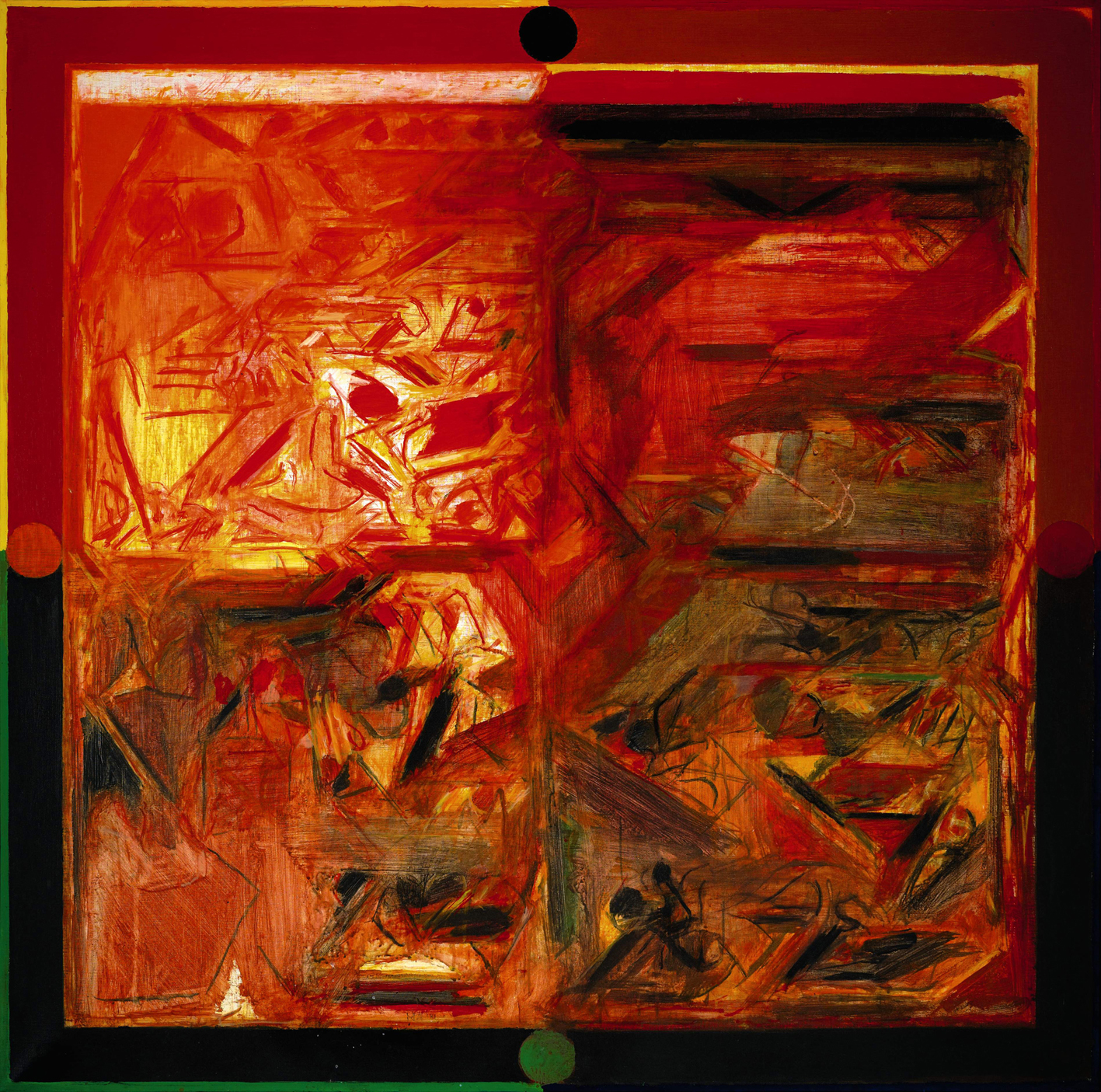
The best work by artists such as Husain, Tyeb Mehta and S.H.Raza, as well as Souza, are now again fetching good auction prices from top collectors. General and sustained growth in the market however needs a much broader base of potential buyers, and therefore of public understanding and interest.  

That is why the Art Summit, which  is to be repeated next January, and this week’s Dhoomimal show are important. Other initiatives have included FICA, an arts foundation and reading room launched by Delhi’s Vadhera gallery, and a foundation and photographic collection developed by Alkazi. Osian’s, an auction house that diversified into other activities, has built an enviable art collection, but now has financial problems and its works are not easily accessible.

a typical Souza head – 1995

One of India’s leading collectors, Anupam Poddar, runs the Devi Art Foundation with his mother Lekha. Devi has outreach programmes but the gallery, which houses an impressive collection of contemporary art, is remotely located in the concrete canyons of Gurgaon, a satellite city on the edge of Delhi. Similarly Kiran Nadar, whose husband founded HCL, a leading software company, has recently opened a museum of modern and contemporary art, but that also hidden away in the satellite city of Noida. 

Religare Arts Initiative , founded two years ago by Malvinder Singh, an art collector whose family used to control Ranbaxy pharmaceuticals, has a gallery that is better located near the Dhoomimal in central Delhi. Singh now runs Fortis and Religare healthcare and financial services businesses, which include investment advice on the art market

A quieter mood in 1982

 Mukesh Panika, Religare Arts’ director, is planning a series of events to coincide with Delhi’s Commonwealth Games in October.

“The process of public engagement in art has scarcely begun,” says Panika. “We need to build participation by more people, including public displays of art in streets and on the metro, as well as inter-active projects”. 

Centred around a first-ever show of India’s top 20 contemporary artists, there will be symposiums and talks, and a book of the artists’ work. Panika hopes to co-operate with the cultural centres of the UK, US and German embassies that are located nearby, possibly including street displays. 

Opening up the elite world of India’s modern and contemporary art has therefore begun. But there is a long way to go before it becomes significant and involves more than a lucky few.

India loves icons and Delhi loves visiting celebrities, and if they come from neighbouring Pakistan and are opposed to the government in power, then they are really feted. It’s happened in the past to the late former prime minister Benazir Bhutto when she was at her least-significant politically, and it happened to former president General Pervez Musharraf, who was hailed as some sort of sub-continental power guru once he was out of office. 

This weekend it’s happened to Fatima Bhutto, 27-year old niece of the former Pakistani prime minister. She has been was in Delhi to promote her new book, “Songs of Blood and Sword, a daughter’s memoir”, which traces the country’s blood-letting and appalling governance as it tells the story of the assassination 14 years ago of her father, Murtaza Bhutto – in which her uncle Asif Ali Zardari, Pakistan’s current president, was allegedly involved.  

.

A highly self-confident journalist, the vivacious and attractive Fatima Bhutto (left) has wowed newspaper and magazine editors in the US, UK and elsewhere for several years with the same ease that Benazir Bhutto charmed the same people.

Benazir conned them, along with many politicians, into accepting her as a significant political figure when she was out of power, even though her reputation as a capable politician was near zero. 

Fatima’s success – and she is a capable writer – has been to persuade editors ranging from Tina Brown’s Daily Beast website in the US to the New Statesman in London to run her articles highly critical of Pakistan’s rulers as if she was an independent journalist, which she is not. What she is, understandably, is a committed campaigner out to avenge her father’s death and, therefore, to damn Zardari who, as Benazir Bhutto’s husband, is her uncle by marriage. 

This hefty 450-page book is part of that campaign. It tells of a traumatic family history. Her grandfather, prime minister Zulfikar Ali Bhutto, was hanged in 1979 by a military dictator, General Zia-ul-Haq. Both her father and his brother died violently, and Benazir Bhutto was assassinated. 

The physical similarities with Benazir Bhutto, who I first knew in the mid-1980s, are amazing. Watching and listening to Fatima on television the other evening as she fenced in lilting tones with her interviewer, it was if I was listening to her aunt protesting her and Zardari’s innocence of corruption, murder and other allegedly “trumped up” criminal charges. 

Fatima, understandably, hates the comparison, which she says has been made since she was a child. “I was told I was much like my aunt, both as a compliment and as an admonishment. Now the comparisons are grating,” she says. 

She certainly is much more directly focussed on detail than her aunt, who generally dealt in slogans and platitudes. This was evident at two book discussion sessions in Delhi where, in a more Americanised accent than on television, she dealt with questions openly and directly. “She doesn’t seem so much like a convent girl,” commented the wife of an admiring Indian politician, caustically. 

I had planned to write this blog post on dynasty, noting how both Pakistan’s and India’s established ruling families now have relatives ready to challenge them. I would have set Fatima up as a future political challenger to Zardari’s and Benazir’s 21-year old son, Bilawal, in the same way that Varun Gandhi, a nephew of Sonia Gandhi, the current head of India’s Nehru-Gandhi dynasty and the Congress Party, has become a general secretary of the Hindu-fundamentalist Bharatiya Janata Party and thus a political opponent of Rahul, Sonia’s son and heir. 

But Fatima Bhutto, who lives in Karachi where her book (amazingly) was launched a few days ago, will have none of it. She has denied political ambitions many times in the past, and repeated that when I spoke to her on Saturday evening. Might she be tempted, I wondered, if Pakistan were one day to return to some sort of peaceful politics? 

“Definitely not!” she replied, adding that there was a need to “break the musical chairs” sequence of Pakistan’s feudal and military governments being passed from the Bhutto’s to the family of Nawaz Sharif and then to the army, and back again, as has happened for the past 40 years. 

That certainly needs to be done – but I wonder whether one day, if or when Pakistan emerges from its current turmoil, she will be hoisted into politics as a new face with a new style, even if not a new name.

Posted by: John Elliott | March 21, 2010

China out-guns the US in friendliness at a Delhi conference

China has managed to present a surprisingly more friendly and forward-looking face than the US at an Asia Society conference in Delhi, where the theme was “India – Powering Asia’s Ascent”.  

You’d have expected the US to be the cheer leader for such a theme, but it was Victor Zhikai Gao, a westernised Beijing adviser, who enthusiastically called yesterday for China and India to see their disputed Himalayan mountain border “not as an insurmountable barrier” but as a “bridge linking these two ancient civilizations together, for mutual benefit, and for mutual enrichment” – while a senior US official merely recited a years-old list of economic reforms that American business wants India to implement.  

Gao (below) appeared to be sticking to Beijing’s firm negotiating stance on the border dispute, but his remarks nevertheless contrasted sharply with a warning on a Beijing website last year that “China and India cannot really deal with each other harmoniously”. So today I emailed Gao, now back in Beijing, asking him to repeat and expand on what he said yesterday.  

Explaining the context of his remarks, he replied that Chinese people came to India “many many centuries ago …. as eager and humble students in search of enlightenment and spiritual richness…and brought Buddhism back to China”.:  

.

“To the extent that Hinduism and Buddhism share many basic tenets and principles today, the Chinese and the Hinduists in India are more or less soul-mates, or at least quasi soul-mates to say the least,” he added.
 
“For me and many Chinese, coming to visit to India is the equivalent of a spiritual pilgrimage. From the Chinese perspective, India still remains a land of saints and a plethora of gods and divinity, and we see from all the faces among the multitudinous crowds the shadows of those Buddhist monks who have been immortalized in numerous Chinese Buddhist temples and Chinese minds”.  

Coincidentally, links between the two countries were also extolled by Jairam Ramesh, India’s environment minister and India’s chief international negotiator on climate change issues. He told the conference about “remarkable co-operation” between the two countries in climate change negotiations at Copenhagen last December, and on studying shrinking glaciers.  

He admitted that both countries were using each other for their own reasons, but added: “Partnership with China is a strategic message that we can collaborator and co-operate,” even when the media was polarising differences. “Negotiating with China is a headache for the United States. But negotiating with both India and China together is a nightmare”, he added with a grin.  

Gao had the same theme. “Rather than confronting each other, we need to find ways to work together,” he said, adding (without actually mentioning the US) that “India and China should avoid being used as pawns by forces from outside the region”,  

Compared with that, the US contribution was unimaginative. Robert Blake, America’s assistant secretary of state for South and Central Asia, made a speech that could have been delivered any time in the past 15 years, focusing on economic reforms that would benefit American companies. He also notably avoided mentioning Wal-Mart, the US retail group that engenders opposition in many countries, and used instead its Indian joint venture name of Best Price when calling for India to open up its supermarkets to more foreign direct investment.  

Timothy J. Roemer, the US ambassador, had made a more substantive speech earlier in the conference about education and how much he loved India, but memories of that were outweighed by Blake’s shopping list which ended with the hackneyed cry: “India should continue to increase market access for American businesses, finance, and people”, dangling the lollipop that “the United States will do the same” (which, as everyone knows, would never happen).  

Note that he was not preaching how India would benefit from opening its economy to the world, but just to the US. Nor, more importantly, did he show any awareness of the pushes and pulls of Indian democracy, which he does in fact know well and fully understands, having been a well informed and involved deputy ambassador in the mid 2000s. Such, apparently, is American public policy today.  

Deng Xiaoping’s former interpreter  

But to return to Gao, should India see what he said as a serious message from Beijing, or was it simply an instinctively effusive line from a man who runs private equity funds, is as well connected in capitalist Hong Kong as he is in communist Beijing, and is a member of the US-centric Asia Society’s global council?  

Gao’s base however is more than that. He has a direct link with the Chinese government because he runs a Foreign Ministry-sponsored policy think tank, the China National Association of International Studies. He also worked in China’s foreign ministry in the 1980s when he was a translator for former Chinese leader Deng Xiaoping.  

Last August, the belligerent piece on a Beijing website gained considerable traction because it seemed to fit the mood of the times, when China was confronting India on several fronts including the two countries’ mountainous border.  

“There cannot be two suns in the sky. China and India cannot really deal with each other harmoniously,” said the article, adding that China could “dismember the so-called ‘Indian Union’ with one little move”. That was seen as reflecting Beijing thinking, even though the founder of the website claimed the writer had no known government links.  

The author of that message remained anonymous, but now we have a very different line from a far from anonymous source, and one directly linked with the foreign ministry – so does this also fit the mood of the times? Though it is unthinkable that China has changed its long policy of encircling and containing India, does it indicate a change of tack when its relations with the US are souring?  

When I asked Gao at the conference yesterday how he could be so positive, he avoided detail and took me to see a satellite photograph that was on display of China and India with the high Himalayas between them. How, he asked, could a war could be fought in such steep terrain?  

Easily, I said, by air over the mountains peaks. And anyway, China was constantly crossing the border in moves that reminded India uncomfortably of its humiliating defeat in a 1962 border war. Gao reminded me that China had retreated to its pre-war positions, but I countered that by pointing to China refusing to recognise India’s sovereignty over its border state of Arunachal Pradesh – a problem that Gao indicated should not be taken too seriously.  

The McMahon Line  

“We should refuse to be held hostage by some recent unfortunate events for which neither China nor India should be held responsible, since they originated in the British rule of India before,” he said in his e-mail today. He was referring, without naming it, to the McMahon Line that was set in 1914 by the British long before India’s independence. India now regards the line as its rightful border but China disputes it.  

That statement reduces some of the diplomatic significance of Gao’s remarks because it seems in effect to be asking for the McMahon Line to be ignored, which India will not do. It reinforces the general view of people I spoke to at the conference that he was not indicating a dramatic change in Beijing’s approach.  

But his friendly message was surely not without significance, so let’s give him the last word. 

The Chinese, he said, “share a collective sense of gratitude for India for having provided the spiritual richness which has so splendidly filled the spiritual void in the traditional Chinese civilization. This should be the foundation upon which China-India relations should be built upon and thrive”.

Earlier posts on India-China issues: 

China aims to block India’s place in the sun Aug 13, 2009 

New Delhi in lockdown over Olympic torch run April 17, 2008 

Demand from China kills India’s vanishing tigers Feb 13, 2008

« Newer Posts - Older Posts »

Categories