In a week that has shown India at its violent uncaring worst, with a near-riot in parliament over an historic bill on women’s rights, and a supposedly peace-loving guru calling for “a limit to tolerance” over painter MF Husain’s new nationality, it is good to be able to write about some theatre awards which illustrate the inclusiveness that holds together India’s basic unity with its dozens of national and regional languages. 

On Sunday night, while film stars in Los Angeles were preparing for the Oscar film awards, a modest but elegant ceremony was held in the gardens of Delhi’s Taj Mahal Hotel. The occasion was the fifth Mahindra Excellence in Theatre Awards (META), with winners chosen from ten plays short listed out of 233 entries submitted from around India. 

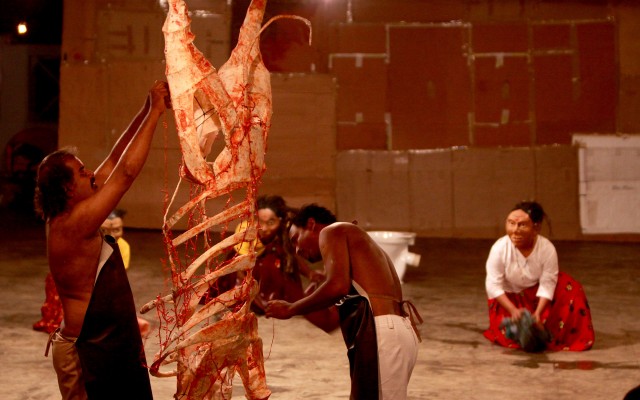
The play that carried off most prizes was “Spinal Cord”, performed by the Oxygen Theatre Company from the southern state of Kerala. Inspired by Gabriel Garcia Marquez’s “The Chronicle of a Death Foretold”, it was a harrowing and often violent story (below) of an honour killing, recounted through the memory of an 80-year old mother. 

.

 But the most significant point for me was that none of the six judges could speak Kerala’s language of Malayalam in which the play was performed, nor were there any sub-titles to help them through the plot. 

They had a detailed synopsis to read in advance and that, coupled with the power of the drama, was sufficient for them to give the play ten awards – including best actor and best supporting actor – in preference to the other plays, six of which were in India’s official languages of Hindi and English and in Marathi, the language of Maharashtra, spoken by one of the judges. 

“I can’t see Robbie Burns being made poet laureate,” commented a friend from Britain, suggesting that judges in London would not so happily tolerate a broad Scottish accent. Ravi Dubey, a former hotel executive who created and runs the META awards for Anand Mahindra, the sponsor, diluted the point somewhat by pointing out to me that poetry travels across languages and dialects less easily than theatre, where the drama is all important. 

.

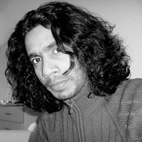
 Deepan Sivaraman, the Keralite director of the play, had however refused an English sub-title screen that had been used by the other plays because, he told me, “it distracts from the flow of the plot” – and that call proved to be right. Trained as a theatre director and designer, Sivaraman (right) is currently doing a PhD in theatre and drama and India’s popular theatre forms and rituals at Wimbledon College of Art in London. 

He himself won three META awards for best stage design, choreography, and director, and “Spinal Cord” won the best production. The production was indeed unusual because Sivaraman blocked-off the main seating area in the theatre and placed the audience on the stage in specially constructed seating in a “U” shape around the action. 

This no doubt helped, but it does not distract from the significance of judges in Delhi, who could not speak Malayalam, giving  it so many awards. 

.

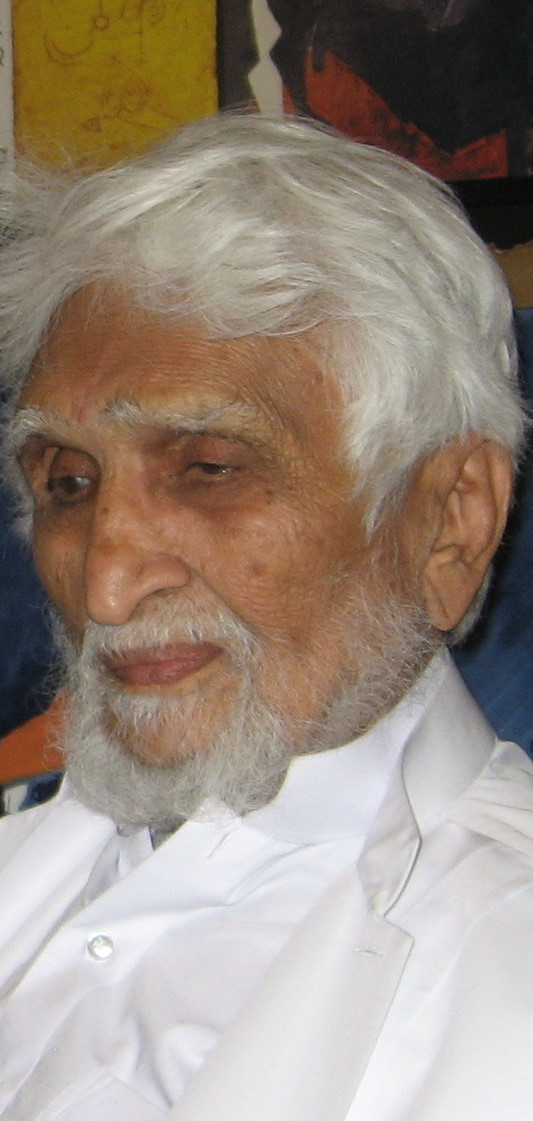
 Wouldn’t it be good if Sri Sri Ravi Shankar (left), a high profile globetrotting guru, who adds the prefix His Holiness to his name and portrays himself as a man of peace, was able to show the same sense of inclusiveness over M.F.Husain, India’s most famous veteran painter. As I wrote last week, Husain has opted for Qatar citizenship because of the harassment he and his work has received in India from Hindu demonstrators. 

Yet just as the furore over Husain’s decision was dying down, the guru’s Art of Living office issued a damning statement that accused him of “double standards, bias and hatred” because he depicted Hindu gods in the nude. “One cannot accept blatant insult to the heroes of its land….. It is the intention behind a man’s creativity which is questionable…..his intention is to humiliate…… there is a limit to tolerance and taking insult,” it stated.
 
This flies in the face of a seminal judgement from the Delhi High Court in April 2008 which dismissed cases against Husain. The judge noted that nudity is part of contemporary art and plays a significant role in India’s cultural heritage, adding that India should resist conservative extremists misusing the law to harass artists. “Pluralism is the soul of democracy,” said the judge. 

That surely calls for the sort of inclusiveness shown by the META judges for the Malayalam play – and it totally rejects Sri Sri Ravi Shankar’s view of “a limit to tolerance”.

Previous posts on Indian modern and contemporary art:

Two icons in their 90s – Michael Foot has died but MF Husain paints on March 5, 2010

Enthusiastic literary and art events celebrate India’s success Jan28, 2010

Big sales and big attendance at India’s Art Summit Aug 25, 2009

Husain paints in London as fanatics block his works at India’s art fair Aug 19, 2009

Has the modern Indian art market found its bottom? – updated June 18, 2009

Christie’s has a good India sale as art auctions adjust to tougher times June 10, 2009

Religare broadens the business base of modern Indian art Oct 13, 2008

Nehru was lost for years in a trunk ……… Oct 7, 2008

Tina Ambani pays record $2.5m at Christie’s Indian art auction June 12, 2008

Michael Foot, one of Britain’s most respected parliamentarians and Labour Party politicians, died this week aged 96. Maqbool Fida Husain, 94, probably India’s most famous modern painter, has opted for citizenship of the Gulf state of Qatar, which means giving up his Indian passport, so that he can continue to paint unfettered by Hindu extremists.  

.

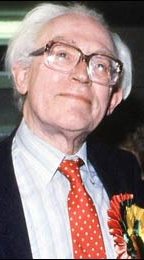
  It may seem odd to write about these two men together, especially when it is a time to mourn the death of one and celebrate the amazing energy and creativeness of the other. But the world would have been a poorer place without Foot’s (left) parliamentary career, his principles, and his idealism, which touched India as well as Britain, and the world would also be poorer if Husain does not feel free enough from India’s religious bigotry to continue to paint his vast canvases.  

Husain has lived abroad since 2006 because of court cases against him that stem from Hindu chauvinism. The cases allege that he has offended the Hindu religion, public decency and Indian nationhood with nude depictions of goddesses and a map of India. Exhibitions of his work have been closed by fanatics, and there is a risk if he returned to India that he and his paintings would be attacked.  

.

 I doubt whether many people in India’s commercial capital of Mumbai, where I am this week, will be noticing Foot’s death. I also sense a more cynical approach to Husain’s (right) plight and Qatar citizenship than is apparent in politically-obsessed Delhi, where television chat shows have been treating the painter’s Qatar move as if it were a national crisis, and opposition parties have been criticising the government for failing to provide him with a safe passage home.  

In Mumbai there are suggestions that he has made the decision partly to keep himself in the news, to bolster the price of his paintings, and to upstage his slightly younger peers at a time when there is more quantity than quality to his art. “He’s really now a court painter,” one collector told me yesterday, picking up on Husain’s commission from Qatar’s ruling family to paint a series depicting the history of the Arab civilisation for a new museum in Doha.  

I interviewed Husain for this blog in London (where he also lives) last summer, and I firmly believe that his main motivation in staying abroad, and anchoring himself in Qatar, is to be able to paint the Arab saga and two other large-scale series (depicting Indian history and cinema) without being diverted by the risk of violence and harassment.  

Husain himself said in an NDTV interview this week: “At 40, I’d have fought [the extremists] but at my age I just want to work”. Though the attacks on him undoubtedly hurt emotionally, he denied feeling rejected by India but added: “It’s impossible for me to work there without disturbance”.  

“He surely wants the Qatar citizenship so that he is not just a vagabond travelling from city to city,” another collector told me.
  
Foot’s relationship with India was also complicated, but in a different way. A strong supporter and admirer of India’s independence movement, he was close to Indira Gandhi and even broke with his political principles to support the State of Emergency that she decreed in 1975. Whether that stemmed from the socialist authoritarian streak that ran through Foot’s Left-wing politics, or whether it was just a case of standing by a friend during a crisis, is not clear.  

Writing yesterday for Tribune, the UK’s left-wing Labour weekly, my old friend and colleague Geoffrey Goodman, who was close to Foot, said: “The great cavalcade of his life was the essence of that word ‘radical’: tempestuous, full of a courageous integrity, which sometimes may have seemed a touch eccentric; unyielding in its moral code and, even in old age, astonishingly vigorous in its execution……..he offered the gift of honest enlightenment to enhance the quality of British political and cultural life.  Goodman also wrote to me, saying that Foot had become “a sort of national treasure”, echoing what he wrote in the Daily Mirror.

I knew Foot when he was Secretary for Employment in the early-1970s Labour Government. He did not take easily to that job, just as he was uncomfortable later as party leader. But his friendliness, sincerity, and allegiance to the cause of strong trade unionism and the protection of workers’ rights, shone through. His oratory sometimes got the better of him – once he was supposed to make an important statement in the House of Commons but got so carried away with his speech that he sat down, forgetting to make the announcement!  

He led his party to a disastrous defeat in 1983 with a manifesto dubbed “the longest suicide note in history” by an unkind colleague. Foot insisted on sticking to party conference resolutions (never wise for any party), and the manifesto called for unilateral nuclear disarmament, abolition of the House of Lords, re-nationalisation of key privatised industries, withdrawal from the European Economic Community, an end to council house sales and a five-year national plan.  

Nearly 20 years later, that list doesn’t look quite so suicidal. Nuclear disarmament would still pull a lot of support. The House of Lords is being radically reformed. There is a strong case for renationalising some industries such as the railways, and virtual withdrawal from the Europe is now a right-wing cause.  

What a pity Foot is not 40. Britain’s coming general election would be the richer if he were. But we do still have Husain, painting his historical series at his main homes in London’s Mayfair and Dubai, and now in Qatar.

Posted by: John Elliott | February 26, 2010

India’s finance minister drives the Opposition onto the streets

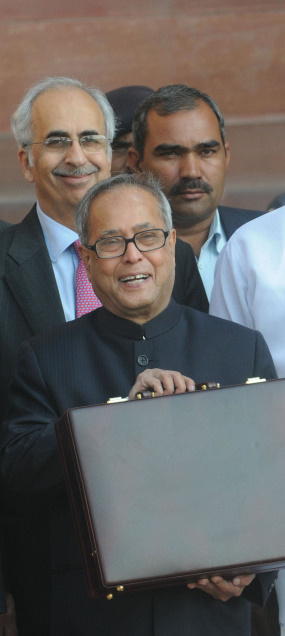
Pranab Mukherjee on his way to parliament

 Pranab Mukherjee, India’s finance minister, has long been recognised as a compulsive politician and the Congress Party’s most able political tactician and fixer. But he could never have imagined that he would score such a hit as he achieved today in his annual Budget speech when he unintentionally flushed out how bereft the opposition, led by the Bharatiya Janata Party, is of constructive ideas and even constitutional etiquette.   

The BJP has been in a mess since it lost the 2004 general election and it lacks policies and effective leadership. But no-one thought it had sunk to the level of walking out of parliament during an annual budget speech. Yet that is what it did today, along with other opposition parties, after noisily trying to drown out the finance minister’s words when he had announced hikes in diesel and petrol excise duties.   

The Congress Party frequently stalled parliament when it was in opposition, lowering the standards as much as the BJP has done in the past. But the opposition went further today, with what was the first ever budget speech walk-out – even though the BJP raised fuel prices many times during its 1998-2004 period in power.   

The parties hope of course that the walk-out will increase the political pressure on the government, which is being widely criticised for recent hikes in food prices that it should have avoided – but this surely was not the way to do it.  

Later in the day, the government announced consequential fuel price increases of 6-7.75% that will fuel inflation and are likely to lead to widespread political protests.

Mukherjee’s budget was otherwise uninspiring. Last July, when he presented his first budget after the May general election, I wrote that he had no apparent reform agenda , and little has changed.   

He announced substantial income tax concessions that benefit lower income earners, and projected recovery of economic growth from the current 7.2% to 9% or more, targeting reductions in the fiscal deficit from the current  6.9% of gdp  to 5.5% in the coming year and around 4% after that.   

But it seemed as if the introduction to his speech had been drafted in a different office from the rest. There have been many calls for Mukherjee to branch out with some sense of vision and reforms, and he began as if he was going to do so.   

He set out his challenges of reverting to high gdp growth, and harnessing that to make “development more inclusive” with rural development and improved education and health facilities. There was a need to tackle “weaknesses in government systems” and the “bottleneck of our public delivery mechanisms” (presumably a reference to corruption and bureaucratic lethargy that blocks development).   

He then wisely said that the Budget “cannot be a mere statement of Government accounts”, but had “to reflect the Government’s vision and signal the policies to come in future”. It also had to be an enabler of “individual enterprise and creativity”, and a supporter of  “disadvantaged sections of the society”. That, he proudly said, was the “broad conceptualisation of the Budget that informs my speech today”.   

It sounded as if he was indeed about to deliver a great speech. But, almost with relief it seemed, Mukherjee’s tone of voice then changed and, for the next 90 minutes or so, he presented the sort of mechanical budget that he used to produce when he was first finance minister in the early 1980s – a style I remember and which television commentators also noted today.   

He announced the tax changes, the unpopular excise duty hikes, and expected boosts for defence and infrastructure spending and farm credit waivers,. But there was little new in terms of financial and structural reforms, apart from welcome plans to licence more banks. Other initiatives such as selling minority stakes in public sector businesses and loosening foreign direct investment rules were far from new. 

He ended with a catalogue of 1980-style special incentives for selected business areas such as two-star hotels and cold storage plants, which will please many vested interests and cement his reputation, as I said at the beginning, as the party’s most able political tactician and fixer.   

But at the end of it all, the stock market was happy, excited by income tax concessions. Opposition politicians were also happy, back on the streets where they seem to think they belong. They are now threatening to stall proceedings, when parliament reassembles after this weekend’s Holi festival, till the excise duty increases are cancelled.

Posted by: John Elliott | February 25, 2010

Elephant hits a thousand centuries

Hi everyone – Riding the Elephant has just passed a total of a thousand centuries – 100,000 hits since I took it over from Fortune.com in August 2008 – the current total is in the column on the right. (Congratulations to Sachin Tendulkar for his double century yesterday!)

So thanks to all of you who followed me here from Fortune.com, and to everyone else who has piled in since then to read the total of nearly 200 (this is the 198th) posts (articles) I’ve written on both sites on current affairs in and around India (and occasionally the UK).

It took a year after August ’08 to clock up the first 50,000 hits (or views as they are called in the blog world), but just seven months to double the figure – which means there are lots of new and more frequent readers. Most of the posts also appear on the Financial Times website’s India page , bringing in readers.

Average views have gone from about 60 a day in August 2008 to 200-250 a day in the past three months. As you’ll see below, it’s not the most serious posts that always generate the most attention – and a mischievous headline can always help.

The busiest single day, with 650 views, was March 24 last year when I wrote a popularly unpopular post on Tata Motors’ tiny Nano car saying “let’s cool the hype”. Interest in  The gun that crippled the equipping of India’s armed forces is ‘innocent’   has led to over 800 hits so far since it went up two days ago.

The bulk of the hits – 33,872 – come to the home page , but the individual post which has attracted most consistent attention with 3,400 views is a piece on Jawaharlal Nehru period photographs. Readers are presumably partly pulled in by a mischievous headline – Nehru was lost for years in a trunk, which wasn’t of course quite true – find out why by clicking here.

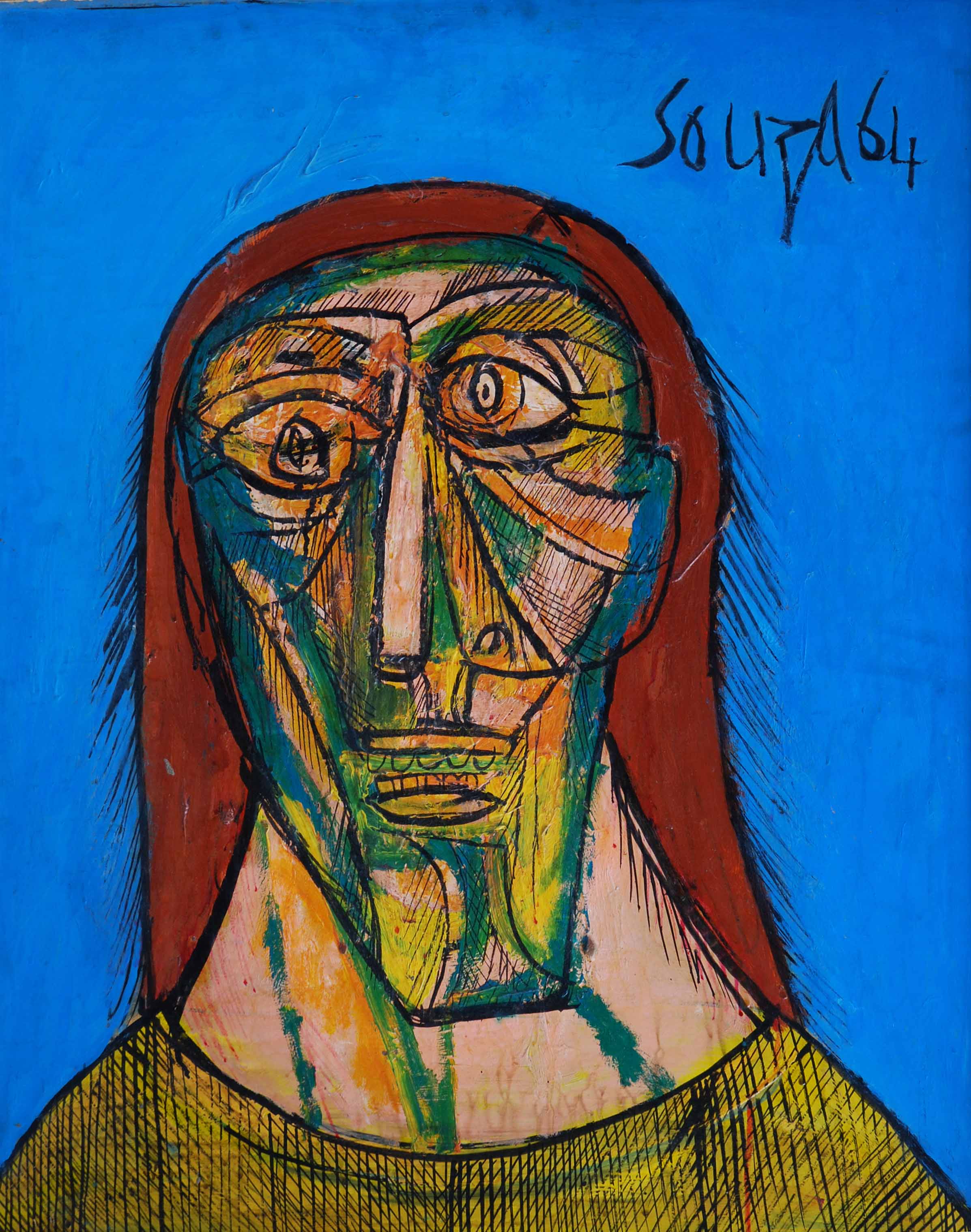
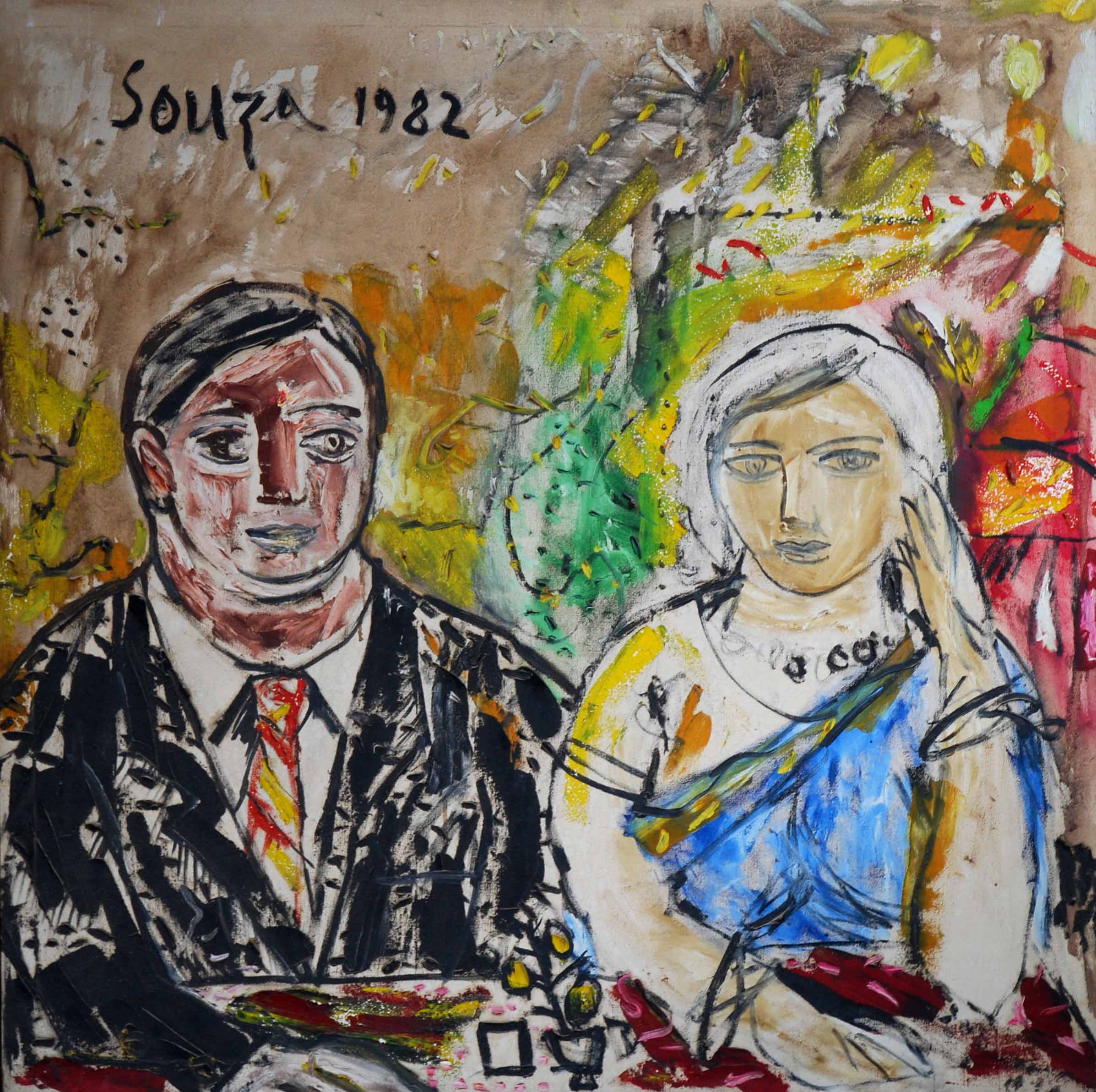
Next with just over 3,000, is a promotional piece I wrote on an anthology of foreign correspondents’ articles that Penguin India published two years ago  to coincide with the Delhi-based Foreign Correspondents’ Club’s 50th anniversary. Following on with 2,700 hits is a post that went on Fortune.com in June 2008 on Tina Ambani, wife of Anil who runs one of India’s two warring Reliance business groups, spending a record $2.5m on a painting by F.N.Souza at a Christie’s auction in London.

So keep coming back……

There’s lots more to write about – just this week (in addition to tomorrow’s Budget) there’s been:

– A ludicrous (funny) railway budget yesterday from Mamata Banerjee, the West Bengal-centric railways (mostly-absentee) minister.

– Environment minister Jairam Ramesh’s much deserved support at a meeting yesterday called by the prime minister on banning “BT Brinjal” (genetically modified aubergine) – Ramesh is winning despite a relentless media campaign against him spearheaded, for some reason or other, by the Indian Express group.

– A probably phoney bid for peace talks from the Naxalites, which home minister P.Chidambaram is fencing with deftly – but, I hope, not too negatively.

– Today’s almost-as-phoney talks in Delhi between India’s and Pakistan’s foreign secretaries on the countries’ differences.

– and, on a different note, the launch in Delhi of a fascinating autobiography, Simply Fly- A Deccan Odyssey, by one of India’s greatest entrepreneurs – Captain Gopinath, founder of cut-price Air Deccan and of a new cargo airline Deccan 360.

All of that, and much else, should generate interest for the next lakh!

“It’s time to understand that the gun is innocent”. That has to be the prize quotation to come out of Delhi’s Defexpo defence show last week. It was made by Anand Mahindra who runs Mahindra & Mahindra, a Mumbai-based tractors-to-software group that is diversifying into defence equipment and is now tendering in India to sell the latest version of a Bofors gun that triggered a major mid-1980s corruption scandal here.  

That scandal has hampered the development and equipping of the country’s armed forces for over 20 years. So Mahindra was presumably trying to joke his way out of the political embarrassment of M&M having a joint venture with UK-based BAE Systems, which now makes Bofors guns following a series of takeovers.  

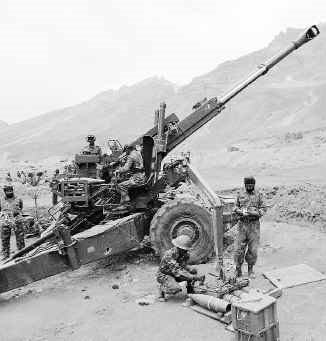
155mm Bofors howitzer on the Pakistan border in 1999 (pic The Hindu)

 In 1986, the Indian government headed by prime minister Rajiv Gandhi, placed a $1.4bn contract with Bofors of Sweden that led to allegations of Rs64 crore (then about $50m) bribes.  

That’s a pitifully small amount compared with today’s massive corruption levels, but the case has reverberated ever since through Indian’s political system and the courts. It contributed to the defeat of Gandhi’s government in 1989 and embarrassed the Nehru-Gandhi dynasty for years after – even though, as Mahindra also said, it has served India well (left, in use during the 1999 Kargil war with Pakistan).  

Defence ministers and bureaucrats have been scared to place large sensitive orders, fearing similar bribe scandals.  

.

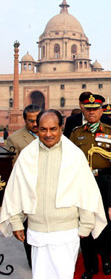
 That fear has reached crisis proportions under the current defence minister, A.K.Antony, (right) a Congress politician who is so scared of losing his clean reputation (and damaging his Leftist image in his home state of Kerala) that he proverbially tilts at windmills every time there is a whiff of corruption, cancelling more big contracts than he has placed in the past six years and blacklisting potential suppliers.  

Mahindra’s remark is specially relevant now because India urgently needs to shake off the Bofors legacy and modernise its armed forces, which are probably the worst equipped of any large country in the world.  

Pallam Raju, the minister of state for defence, said at an army seminar last week that history shows there are hardly any examples internationally “wherein a higher technology military power has been overwhelmed by lower technology power in the long run.”  

“Defences are obsolete”  

Yet a background paper prepared by the Delhi-based PHD chamber of commerce for the army seminar said that “most of India’s ground based air defences are obsolete” and that upgrades of basic artillery equipment were “ten years behind schedule”. The generals attending the seminar didn’t metaphorically blink at such unpatriotic statements – they knew only too well they are true.  

The chief of army staff said recently that 80% of India’s armoured tanks are night blind. “That means like the medieval times you fight morning to evening and take rest at night – Pakistan has 80% of tanks capable to fight at night,” says Rahul Bedi, a defence journalist. “Planning and strategic thinking of the Indian Army’s procurement program is in complete shambles. Bureaucrats and politicians are throttling the procurement
process.”  

A more academic critique headlined “Arming without Aiming” will be coming soon from the America’s Brookings Institution. Co-authored by Stephen Cohen, a south Asia expert, it argues that India’s arms purchasing has “lacked political direction and has suffered from weak prospective planning, individual service-centred doctrines, and a disconnect between strategic objectives and the pursuit of new technology”.  

And Ajai Shukla, a former army officer and now a defence journalist, writing in the Business Standard daily newspaper, this morning estimates that “Antony’s halo” is costing India 125% more than is necessary for half the equipment it buys because of price rises (during delayed contracts) and because tenders sometimes being abandoned in favour of more expensive negotiated deals. 

70% bought abroad  

India is the world’s largest buyer of defence equipment, with expenditure budgeted at least at $40bn over the next four years. Half of that is on capital expenditure and is likely to rise around 15% in the finance minister’s annual Budget speech on February 26 , even though not all of it is ever spent [[Feb 26 insert: the actual budget increase is only about 4%]].  

At least 70% of purchases have been made abroad for decades, mainly because the generally inefficient and moribund public sector-dominated defence establishment cannot deliver even high technology night vision goggles and modern helmets, let alone fighter aircraft or guns. Until recently, the capable private sector was mostly kept out of doing more than supplying minor components because the defence establishment enjoyed the combined benefits of protected jobs, patronage, prestige, and foreign kickbacks – and because Antony instinctively supports public sector trade unions that do not want private sector competition.  

As I wrote last October, the armed forces have been warning the Defence Ministry for years to accelerate orders for urgently needed new equipment that are mired in bureaucratic inertia, corruption, and the manipulations of competing suppliers who trip up each other’s potential orders. (The same applies to equipment needed for the Home Ministry’s internal security).  

The latest 'Bofors' - BAE and M&M's FH77 B05

How Pakistan and China must enjoy watching the self-inflicted  damage that India does to its own war readiness, relishing the thought that they themselves could not do more in a border war.  

Some progress has been made in recent years on improving defence manufacturing, but this has been dismally slow since it was nominally opened up to the Indian private sector in 2002. With a few exceptions such as Tata and Larsen & Toubro obtaining rocket launcher contracts, and L&T building the hull of a nuclear submarine, there have been few major private sector orders.  

This will gradually change following the introduction in the past year of a technology transfer-oriented “Buy and Make (Indian)” policy, and the (long drawn out and muddled) introduction of an offset programme, where foreign arms companies have to spend half the value of an order in India. This is pulling foreign defence companies into tie-ups with Indian business such as M&M’s with BAE, but offset contracts worth only Rs8,200 crore ($1.8m) have so far been signed, half with the Indian private sector.  

Less progress has been made on speeding up urgently needed defence orders, often because potential losers lobby or bribe the government to change tack. Following intense US diplomatic pressure, a $550m a pending order with Europe’s Eurocopter for 197 modern light helicopters that are urgently needed by the Army was cancelled two years ago after America realised its Bell company was losing. Inexplicably, Bell failed to tender when the contract was offered again.  

Europe complains  

Last month, Germany’s ambassador to India, Thomas Matussek, complained publicly after a $1.5bn contract for Airbus A-330 multi-role refueling tanker aircraft, made by Europe’s EADS consortium and favoured by the Indian Air Force, was rejected because the finance ministry said the aircraft were too expensive. Matussek alleged ‘”political reasons”, and one does not have to be too much of a conspiracy theorist to sense America’s hand at work again though a Russian Ilyushin was the runner-up in the 2008 tender.  

Matussek’s complaint had a wider significance at a time when the US, using clout provided by its nuclear supplies deal with India, is trying to supplant Russia as the country’s biggest arms supplier. India has begun negotiating some contracts through the US government instead of using tenders, partly to enable it to select specific equipment such as Boeing’s C-17 Globemaster heavy-lift aircraft where a $1.7bn order is being negotiated, and partly to avoid the risk of corruption scandals on competitive tendering. This sort of negotiated contract has happened for decades with Russia, but the use of America’s FMS (foreign military sales) procedure is new and is worrying European countries such as Germany, France, and the UK because they risk being squeezed out of  key contracts.  

So what does India need to begin to turn itself into a state of at least semi-war readiness to cope with potential border wars with China and Pakistan?  

First, it needs a defence minister who can shake off the Bofors legacy and cope with kick-backs, whether or not he lines his own and his political party’s pockets. He also needs the political skills, standing and determination to push through quick decisions and play diplomatic games constructively with the US, Russia and Europe so that orders are placed, not cancelled.  

Also needed are a prime minister and political leadership who can shake off some of the froth surrounding India’s peace-loving mantra and who are genuinely interested in building up the technological capability, and supporting the manpower, of the country’s fighting forces. Sadly the current dispensation, as it is called in India, does not meet that criteria.  

A slightly shorter version of this post, without the pics, is on the FT.com India page at http://www.ft.com/world/asiapacific/india


Earlier posts on Indian defence:  

India’s lethargy, drift and corruption escalate into crises  Oct 13, 2009
America’s payback for India nuclear deal begins  Sept 11, 2008
Lockheed leads American defense companies into India Feb 6, 2008
Tata joins forces with Boeing, EADS and others  Feb 22, 2008
Lockheed leads American defense companies into India Feb 6, 2008
India to build 10 world-leading manufacturers Oct 26, 2007
India’s defense R&D lacks talent  June 14, 2007
Doors to open for India’s defense industry jewels June 7, 2007
Posted by: John Elliott | February 8, 2010

Rahul shows the Nehru-Gandhi dynasty is firmly embedded………

…….so why airbrush Narasimha Rao out of history? 

Rahul Gandhi’s triumphant foray into Mumbai last Friday, where he successfully challenged the street power of Maharashtra’s chauvinist Shiv Sena politicians, was a significant step forward in his emergence as a national figure. By using local trains instead of a planned helicopter to cross the city, he showed more courage than most of India’s prestige-oriented politicians would contemplate. Together with his message that “India is for all Indians”, this undermined the Shiv Sena’s sometimes violent campaign to exclude north Indians from jobs in booming Mumbai.

This underlined the political standing of the Nehru-Gandhi dynasty, led by the family trio of Sonia Gandhi, leader of the Congress Party and the governing coalition, Rahul, and his sister Priyanka. The strength of this trio, supported by top politicians who now do not dare challenge their dominance, was well illustrated by an intriguing list of the 100 most powerful Indians published on January 31 by the Indian Express newspaper.

.

I was planning to write a post about this 100 list last week before Rahul Gandhi’s Mumbai tour (right) because, though the Indian media regularly produces lists of top people with little apparent research or firm criteria, the Indian Express list is noteworthy – for two main reasons.

One is extent to which the dynasty is embedded, which leads me on to the thought of why the family still apparently feels unable to give Narasimha Rao, Congress prime minister from 1991 to 1996, his rightful place in history – especially as the instigator of India’s 1991 economic reforms, and the initiator of prime minister Manmohan Singh’s political career.

The other noteworthy reason is the absence near the top of the list of foreign policy experts. At number 30, there is political newcomer and star tweeter Sashi Tharoor, a former senior United Nations official and now a  junior minister in the External Affairs Ministry. Then at 36 there is Shivshankar Menon, a former foreign secretary who has just become national security adviser. Neither the foreign minister or foreign secretary are included, which underlines the prime minister Manmohan Singh’s intention to be his own foreign minister, aided by Menon, especially on India’s relationship with Pakistan, where India has just offered talks.

But the absence of any broader-based top foreign policy makers or strategists underlines India’s problem that, while it wishes to have a significant and positive influence internationally, it has had no coherent long-term policies since the fading of the Non-Aligned Movement, nor the necessary diplomatic manpower in the external affairs ministry. More on that another time.

Top slots

Going back to the dynasty or “the family” as it is frequently known, at number 1 in the Express list there is Rahul Gandhi, 39-year old heir apparent to the leadership of India’s Congress Party and thus in line to be prime minister in the not too distant future. Sonia is at number 3, with Manmohan Singh, a family loyalist, slotted in between them. Then there is Rahul’s 38-year old sister Priyanka at 14, and his 31-year old closest aide, Kanishka Singh, at 23 – the latter, it’s worth noting, three slots ahead of the prime minister’s veteran principal secretary T.K.A.Nair.

Rahul has had the No 1 slot for two years. I’d have put Sonia there because of her potential veto power over any government policy though the Express’s senior editorial team, who drew up the list, have however presumably spotted Rahul’s growing influence over what Sonia says and does, and the space that she is leaving for him to occupy. Rahul has sensibly refused to be locked away in a government department and is busy rebuilding Congress’s tattered organization at the grass roots in states such as Uttar Pradesh and Bihar – a good thing to do while he can spare the time before taking on bigger responsibilities – as well as making Mumbai-style forays elsewhere.

Also significant is Priyanka moving up from number 30 to her 14. The Express says she’s there because she is close to her brother, and her influence grows with his. I’d have added her emergence running Rajiv Gandhi Foundation, which focuses on development issues. Founded in 1991, it has also operated as a policy think tank but, along with its stylish modern building in central Delhi, it has decayed and needs reviving. Priyanka’s very active involvement there, along with her organisational activities in Sonia’s and Rahul’s political constituencies, indicates a steadily growing public role.

A hoarding at Congress's 125th celebrations (Indian Express picture)

So why, now the family’s current and future position at the centre of India’s politics is so secure, can’t they acknowledge Narasimha Rao’s important contribution, especially since he neatly filled a dynastic void between Rajiv Gandhi’s assassination and Sonia’s entry into active politics?
 
At the Congress Party’s 125th celebrations just over two months ago, all of India’s Congress prime ministers – those from the dynasty plus Lal Bahadur Shastri and Manmohan Singh – were paraded in pictures and mentioned in speeches, except for Rao. 

Instead, Sonia Gandhi emphasized the role of Rajiv when he was prime minister from 1984 to 1989 and said that he “left his personal imprint on the party’s manifesto of 1991”. While it is correct that Rajiv, who was assassinated during the 1991 general election campaign, expanded the reform path tentatively started by his mother Indira Gandhi, his contribution was far less significant than Rao’s.
 
It was Rao who had the political courage to launch wide-ranging reforms when India was hit by a major financial crisis in 1991, instead of just tinkering enough to keep the international financial community content. He then picked Singh to lead the reforms as his finance minister. He should also be remembered for two important initiatives in foreign  affairs – introducing India’s “look east” policy, and seizing an opportunity to establish diplomatic relations with Israel.

Of course, he also made mistakes – most importantly in the context of this post, not keeping Sonia Gandhi as an ally, or at least making her feel secure. He also failed in 1991 to curb the Bharatiya Janata Party’s yatra that resulted in the demolition of a mosque in the city of Ayodhya, sparking religious riots across the country. And he initiated a self-defeating crisis over corruption and hawala (illegal international money transfers) just before the 1996 general election.

It might be understandable if Rao’s portraits do not stand as high at Congress Party functions as the dynasty’s, and that praise is less fulsome. But the negatives do not warrant his exclusion from the Congress leadership’s version of history.

Surely Rahul Gandhi, who is trying to attract new young talent into a more democratically run Congress Party, will understand this. Recruits might be attracted more if he can show that praise for achievements goes to all Congress leaders, maybe even to critics – and what better way to demonstrate that than to rehabilitate Rao.

Posted by: John Elliott | January 28, 2010

Enthusiastic literary and art events celebrate India’s success

“Every successful economy needs a tangible celebration,” Rajeev Sethi, a leading promoter of India’s arts and artists, told me a few years ago when I was writing an article on the then-booming art market for London’s Royal Academy magazine. He was referring to the huge success being enjoyed by artists old and young, famous and not-yet-famous, in those days of rocketing art prices.

His remark could equally well refer to two major world-recognised cultural events, both run by enthusiasts. They both have an enormous sense of energy, celebrate India’s success, and are open to all.

.

One is the five-day Jaipur Literary Festival (left) that I wrote about a few days ago. It closed on Monday night, having attracted an amazing total of 32,000 to 35,000 people, including hundreds of schoolchildren, to the informal but stylish old ambiance of Jaipur’s Diggi Palace hotel.  That was a huge increase from around 12,000 last year, and there wasn’t enough space, or seating.

The organisers are now planning for even more next year, seating 6,000 people at any one time – this time it was about 2,700. “We want to keep the informal atmosphere but make sure we can accommodate the numbers,” says Sanjoy Roy, whose Teamwork Productions manages the festival.

The other is the India Art Summit that was held in Delhi last August and drew 40,000 visitors to Delhi’s (appalling) Pragati Maiden exhibition grounds. It opened up access for people, young and old, many of whom would be reluctant to walk into the forbidding arena of many art galleries.

There’s a difference of course between these events. The art market boom was mainly driven not by a love of paintings but by a merger of India’s celebratory culture with growing materialism. Art added value, in terms of wealth as well as image, for newly rich Indians abroad and at home. “People want icons that you can show off – you can’t put stocks and shares on your walls,” Sethi sadly told me. “Art is recognised now as a commodity, a product for investment, rather than something in daily life”.

.

But that boom did, before it collapsed, arouse many people’s interest in India’s art and artists, an interest that has grown since prices fell sharply over the past 18 months. That was evident at the Art Summit (right) and no doubt will be again when the event is held next in a year’s time.

Both Jaipur and the Art Summit are notable for their informality and for the way that leading authors and artists mingle with the crowds.

.

Just as artists like Subodh Gupta and Jitish Kallat (left) were around the Art Summit, so were poets and authors such as Gulzar (reading on the opening day below left) , Javed Akhtar and Chetan Bhagat at Jaipur along with important Dalit (scheduled caste) writers specially organised by Namita Gokhale, one of the co-directors, and foreign writers (with a disproportionate number of entertaining Scotsmen – pic below) corralled by William Dalrymple, a Scot and the other co-director.

.

The Jaipur festival’s success means that, while it has become a major event for literary folk and book lovers, it is also now a target in India’s prestige-conscious society for those who regard themselves as leaders of the social elite, especially from Delhi. A few attempts have been made by social society brokers to carve out a role so that they can share in the glory, but they have generally been rebutted and have mostly mingled with the crowds – despite some attempts to secure prominent front row seats for themselves and their friends, and to stage exclusive social events. This is noteworthy in a country where prestige and patronage count for so much and do so much damage.

Once successful, events like the art summit and Jaipur festival also inevitably attract the attention of bureaucrats and politicians eager to benefit in terms of both prestige and other rewards. They also need to be kept at bay because the uniqueness of both events is that they have been conceived and are run by committed enthusiasts – Gokhale and Dalrymple with Roy at Jaipur, while the Arts Summit emerged from an idea by Neha Kirpal, a young marketing and conference organiser and is backed by Sunil Gautam who runs Hanmer MS&L Communications.

Social divide

.

The Jaipur festival’s sessions also highlighted the vast social divide between the horrors of life for the Dalits at the bottom of India’s social strata and the lives and liaisons of royalty and dynasty in Bhutan, India and Britain.

Her Majesty Ashi Dorji Wangmo Wangchuck, queen mother in the remote Himalayan kingdom of Bhutan, who has written “A Portrait of Bhutan”, talked (right) about her life growing up in a remote mountain village milking cows, working in the vegetable garden and learning to weave. Her husband, King Jigme Singye Wangchuck, introduced both the notion of Gross National Happiness (GNH) and democracy before giving way to his son at the end of 2008.

Two Indian authors discussed the difference between writing history and a historical novel in terms of their books on two Indian men who fascinated Queen Victoria. Navtej Sarna, an author and Indian diplomat (currently ambassador to Israel), talked about his novel, “The Exile”, on the life of Maharaja Duleep Singh who became prominent in Victoria’s court when the queen was in her 30s.

Shrabani Basu, a journalist, read from her “Victoria and Abdul”, a biography of Abdul Karim, a servant who became Victoria’s influential and often disruptive adviser on India. Basu said Karim was “a good looking, extravagantly dressed servant ….hated by the Queen’s household both for his race and class”. Basu had multiple sources to draw on for her biography but Sarna had less and, in his historical novel, had to create conversations.

.

Princess Diana’s perhaps most reputable biographer, Tina Brown, former editor of Vanity Fair and The Tatler, who now runs “The Daily Beast” website from the US, discussed her “The Diana Chronicles”. Diana was “always looking for love….but no man could have assuaged her…She would freak them out by stalking them”.

Then Nayantara Sehgal, an author and Jawaharlal Nehru’s niece, hit on a more local controversy when she said that Sonia Gandhi, the Italian-born leader of India’s Congress Party and the Nehru-Gandhi dynasty, was blocking the publication of love letters between Nehru and Edwina Mountbatten, wife of British India’s last viceroy. Sehgal was in conversation with Catherine Clemont, French author of “Edwina and Nehru – a novel”. Whether the Nehru and Mountbatten “really went to bed is pure conjecture” said Sehgal. “No-one really knows about it except them”.

On an even lighter note, four Scottish writers – Andrew O’Hagan, Niall Ferguson, Alexander McCall Smith and William Dalrymple (above) – raised most laughs in a session called “Under the Kilt” with remarks that denigrated their home country (which had controversially donated £10,000 to the festival), as well as Britain and Ireland.

It started with Ferguson, who defended a recent article that dubbed Scotland as “the Belarus of Western Europe” because of its alcoholism, self-pity, and low life. He contrasted that with Scotland’s contribution abroad. “Once you’d left school you’d go and run England and then run the world,” said Ferguson who drew on his best seller “The Ascent of Money” to assert that the Scots were heavily responsible for the world’s financial crash.

What all this had to do with a literature festival in India no one was quite sure, but it was good entertainment – even the British High Commissioner and Irish Ambassador, both of whom were there, kept laughing.

Posted by: John Elliott | January 24, 2010

Books and crowds in sunny Jaipur

If anyone doubts the future of books in the age of dumbing down television and internet with its social media, see what has been happening in India at Jaipur Literary Festival which started on Thursday. Some 15,000 people had by last night checked in during the first three days of the five-day festival, which is in its fifth year and is both Asia’s biggest such event and the biggest free lit fest worldwide.  

The 15,000 inevitably included some of Delhi’s social set who can’t let such an event pass without being seen, but it was dominated by crowds, young (including swarms of schoolchildren) and old, all anxious to hear over 200 speakers – including India’s great novelists and poets, as well as big names from abroad.  

As Namita Gokhale, one of the festival’s two co-directors told Phil Reeves of America’s National Public Radio, “This shows that we are not just argumentative Indians but that people want a relief from the banal stupidity that surrounds what they read in newspapers and see in tv”.  

Diggi Palace's Durbar Hall

This was originally conceived as an Indian festival celebrating local language as well as Indian English writing, but it now also brings in leading international figures – there is a Nobel laureate and Booker and Pulitzer prize winners among the famous names that include Wole Soyinka, Roberto Calasso, Hanif Kureishi, Niall Ferguson, Roddy Doyle, Anne Enright, Tina Brown (who has had a reporting team writing for her Daily Beast website and is in the big pic below), Claire Tomalin, and Michael Frayn.  

Wole Soyinka, the Nigerian Nobel laureate, charmed and captured his audience reading and talking about “The Road”, his novel that seeks some spiritual meaning to life. He’s also a political activist and bemoaned the growth of religious-based terrorism. “It’s no longer a question of ‘I’m right, you’re wrong’ but ‘I’m right, you’re dead’ “, he said, adding jokingly, and to loud applause, that all such religious terrorists should be put into a missile. “Fire them into space and leave us sinners behind”.  

Niall Ferguson, the historian, annoyed many people with blunt Bush-like rebuttal of “Freedom for Sale”, a book on the counterpoints of wealth and democracy by John Kampfner, former editor of the UK’s now-ailing “New Statesman” weekly magazine, but then fascinated a later session talking (above in the Durbar Hall) about the recent financial crisis which is the subject of his best-selling “The Ascent of Money” book.  

The festival organisers have been promoting the work of Dalit (scheduled caste) writers whose powerful literary work reflects their frustrations, pain and anger. Kancha Iliaiah, told how his latest book, “Post Hindu India”, argues that Hinduism is a declining religion because “spiritual fascism is its core value”, based on the inequality and “barbaric treatment” of the caste system. Complementing this was a passionate discussion on Naxalite Maoist rebels and the appalling way that Indian authorities treat the rural poor.  

.

I’ve found myself drawn to a series of sessions linked with royalty and dynasty in Bhutan, India and Britain, including Queen Victoria’s fascination for two very different Indian men and the supposed love (sex?) life of Jawaharlal Nehru and Edwina Mountbatten, wife of India’s first post-independence viceroy. I sadly missed a session on erotica which would have rounded the theme off nicely.  More on all of that in a later post.  

Now this amazing festival, which has become world famous in such a short time, is getting almost too large with twice the number of people turning up than can be seated for the three-parallel sessions that run through the day. In the evening, there’s magnificent Indian and fusion music.  

.

The co-directors are the irrepressible Willie Dalrymple, who’s made Delhi his book-writing home and has just written “Nine Lives”,  and Namita Gokhale, a well known Indian author and publisher (with Penguin) of books translated into Indian languages. Her brilliantly illustrated (and written) “The Puffin Mahabharata” was published a few months ago, explaining the twists and turns of this ancient epic in flowing style. 

There’s a continual twelve-month international ‘v’ local tug of war between them on who should go into the programme (and be flown expensively from abroad) – but it’s constructive tension that ultimately leads to a crowd-pulling balance.

.

This famous old pink Moghul city, the capital of the Indian desert state of Rajasthan, is a good place for such an event, combining the magic of India’s history and all the fun – and chaos – of a modem Indian city as well. The events take place at the Diggi Palace hotel, a charmingly faded pile built in the 1860s as a grand town house or haveli for a rural Rajasthan ruler. The city is full of these old havelis – I’m writing this sitting in my roof top room (right) of the Alsisar, a mini palace on the edge of the old city.

The organisers have learned a tough lesson – if you run a festival in a country which is a terrorism target and has thick fog in winter, prepare for the worst. More than a dozen speakers were held up abroad, and at least two didn’t make it, because of problems obtaining Indian visas, which are becoming more difficult as anti-terrorism measures are put in place. Then, on the day before the opening, about 100 people, both speakers and delegates, were stranded at Delhi airport for several hours, unable to take off the 250kms flight to Jaipur.

As darkness fell and flights stopped, two of the key first-day speakers were still stuck there – Her Majesty Ashi Dorji Wangmo Wangchuck, the queen mother of the remote Himalayan kingdom of Bhutan, who was due to speak at 2.30pm today, and Girish Karnad, a famous Indian playwright, film-maker and actor, who was due to deliver the opening address on Entertaining India.

.

But, while the organisers agonised and worked their mobile phones to organise beds in Delhi (the chaotic careering-truck-ridden Delhi-Jaipur highway is not safe at night), there was a celebration at the nearby Narain Niwas Palace hotel, another rather grand old home of another rural raja.

Fiona Caulfield, an Australian who had a successful career in America as a branding and futurist consultant till she moved to India about six years ago, was launching “Love Jaipur”, the latest in her series of “Love Travel Guides”.

No, these aren’t guides to old maharajas’ harems, nor more modern versions of the same, but what Caulfied describes as “passionately curated guides for the discerning luxury vagabond”, covering everything from the best restaurants to street food hideouts and a host of places to “shop, be pampered, get fit, and explore”. Jaipur follows similar handloom cloth covered guides on Bangalore, Mumbai and Delhi – she’s sold over 12,000 books so far.

Yesterday Tony Wheeler, founder of the iconic Lonely Planet guides, told us how he first visited India in 1972 on the hippie trail and how that led to his ubiquitous series of guidebooks. He sold out a few years ago to BBC Worldwide and he explained how that had sharpened the debate over whether the BBC was going too far beyond its public broadcasting remit – something that is highly topical in the UK today.

.

A final thought from Javed Akhtar (right), a famous Indian poet, that came during a discussion (pic of open air stage above) on the future of books in the world of the internet and on Kindle computers. Navtej Sarna, a novelist (and Indian diplomat) had noted that in John Masters’ famous novel, “The Night Runners of Bengal”, news was spread by the runners who “spread the message of the mutiny by carrying chappatis from village to village”. Now such news would travel in a second on the internet.

Akhtar looked ahead to a time when “knowledge and books will be injected into your brain electronically”, with no need for computers or mobile phones. He thought that was probably a long way in the future – but people talking later wondered if it really was that far off.

Also see: https://ridingtheelephant.wordpress.com/2010/01/28/enthusiastic-literary-and-art-events-celebrate-india%e2%80%99s-success/

India desperately needs charismatic and respected political leaders who can lead coherent policy-based opposition to the Congress Party and its coalition governments.

Only two men have qualified for this statesman role in recent years. One is Jyoti Basu of the Communist Party of India (Marxist), who died yesterday aged 95. The other is Atal Bihari Vajpayee, 85, a former prime minister and leader of the Bharatiya Janata party (BJP), who is in ill health and is no longer politically active.

Both Vajpayee and Basu (below) could have ranked alongside earlier leaders such as Jawaharlal Nehru and Indira Gandhi, but they never managed to achieve the same stature because they were held back by their parties’ limitations.

.

Vajpayee provided the Hindu-nationalist BJP with an acceptable friendly face, fudging and slowing down its harsher policies and leading a coalition government from 1998 to 2004.

But, though he undoubtedly had statesmen status and is sorely missed by the now-directionless BJP, his party’s lack of nationwide-acceptability limited his role. (His colleague at the top of the BJP,  Lal Krishna Advani, 82, never gained the same level of respect as a statesman and is now sidelined).

Basu was similarly hemmed in by the CPI(M) which threw away an historic opportunity to grow and lead the country when it refused in 1996 to allow him to become prime minister of a coalition government that was then being formed. (The job went to two far less significant politicians, each for a year – Deve Gowda from Karnataka and then Inder Kumar Gujral from Punjab). That confined Basu to his base in West Bengal, where he was chief minister for 23 years till he retired in 2000, remaining active in party politics till recently.

The political development of India’s Left, and indeed of the country’s whole political landscape, could have been different if the CPI(M) polit bureau had allowed Basu to take the job. Basu later described it as a “historic blunder” because the opportunity would not be repeated, adding “We thought that even if we last for (just) one year in that coalition, with myself as prime minister and our party joining it, then people would understand……what we are all about”.

 Many people might think that India was lucky to be spared learning what the CPI(M) was “all about”, but the country needs a coherent national Leftist party or grouping and does not currently have one. The Congress is proud of parading what it regards as its socialist roots, but the party haphazardly pushes economic liberalisation and other policies that are often geared more to pleasing vested interests and filling the politicians’ pockets than following a constructive socialist agenda.

As Nobel Laureate Amartya Sen, who knew Basu well, said yesterday, making him prime minister would have helped that to integrate the CPI(M) with India’s national politics. He added that Basu would have been a “good leader” – a point made by many commentators in the last couple of days. Other friends who knew him talk of a charming companion with a dry sense of humour, a love of whisky – and of PG Wodehouse.

The popular image of the CPI(M) led-Left at the time was of a Luddite party that blocked economic reforms and foreign investment, and encouraged labour strife. But Basu was leading West Bengal into a new phase of co-operation with capitalism and foreign investment, and curbing militant trade unionism. That is the approach he would have brought to Delhi – where the Left continues to oppose economic reforms because it is not in power. (Elsewhere its only power base is in Kerala where it plays a largely negative role in state politics).

While he was West Bengal’s chief minister, Basu introduced important reforms to help the poor, especially land reform and the development of panchayats (local village councils). That helped the CPI(M) and its allies to stay in power – buttressed by extensive ballot-rigging and repressive and often violent power tactics that have become evident over the years – especially in crises over use of agricultural land for industry and in last year’s general election campaign.

The Left’s failure to govern effectively in recent years has also allowed a Maoist-inspired Naxalite rebellion, which covers over a third of India’s administrative districts, to regain a hold over parts of West Bengal where it began as a peasant revolt 40 years ago. 

Basu’s gradual withdrawal from politics in the past few years has left a gap at the top of the CPI(M) that his successor, Buddhadeb Bhattacharya, has proved himself unable to fill. The Left is rapidly losing support and will find it hard to hold onto power in state assembly elections next year – especially because, for the first time for decades, it will not have Basu to lean on.

Basu’s legacy – dictated by his party and his successors – is sadly therefore one of lost opportunities: the prime minister who never was; the party leader who was not able to build a national base; and a West Bengal government whose failings have opened the way for a violent rebellion. But he will still be remembered as one of India’s great politicians.

Posted by: John Elliott | January 7, 2010

Tata bids for leadership of India’s auto industry

India’s emergence as a significant player as both a customer and manufacturer in the world’s autos industry has been confirmed this week at Delhi’s 10th Auto Expo, where over 2,000 companies from 30 countries are displaying their wares. They include most of the world’s car manufacturers, several of which have launched new models in the past couple of days with all the hoopla of such events.

Ratan Tata this week

The Expo also marks the emergence – albeit somewhat precariously – of Tata Motors as India’s broadest-based and most interesting auto manufacturer, with products that range from buses and trucks through smaller commercial vehicles and conventional saloon cars to stylish models from Jaguar and Land Rover (JLR), and the tiny Nano that was first displayed at the last motor show two years ago.

India’s market leader for cars is Maruti Suzuki, which was founded 26 years ago as a joint venture between Maruti, then Indian government owned, and Suzuki of Japan.  That link-up made Maruti Suzuki the catalyst for the development of the Indian auto industry that is on show this week.

But, when I toured the show two days ago, it was clear that it is Tata Motors that is gearing up to mark out the future.

Maruti has a large stand near the entrance and all its cars were on display, backed up when I was there with a lonely-looking but entertaining jazz band on a stage overlooking jazzed up versions of its models. Walking through the exhibition grounds, international motor manufacturers such as Chrysler, BMW, Toyota, and Volkswagen were launching new models and concept cars.

A Nano-style taxi

But it was Tata that dominated with an amazing array of products that included a new Jaguar’s JX , launched elsewhere last year. There was also a Nano-like mini-taxi called Magic Iris, due to launch within the next year, with a passenger door on only one side and flap-down passenger windows.
.
This is impressive for a long-established truck company (now the world’s fourth largest) that was mocked by other Indian auto manufacturers when it first started making cars in the 1990s, was criticised for the poor quality and unreliability of its small Indica saloon in 1998, was harried by setbacks on the Nano, was reported to have mishandled its relations last year with the UK government over aid for JLR, has been pilloried in recent weeks for its low-slung buses that keep catching fire on Delhi roads, and has only a 13.6% share of India’s car market compared with Maruti’s 50% and Hyundai’s 16%.

Ratan Tata, head of the Tata group, and chairman of Tata Motors, acknowledged the reputation for poor quality when he was asked at a press conference on Tuesday about a products needing “heavy maintenance”. He suggested the reputation came partly from “vested interests” (competitors) and “people who use (the cars) less”, explaining that taxi drivers plying the Indica and Indigo models do 100,000 kms or more a year and seem content.

He also said that Japanese manufacturers were similarly criticised when they started making cars – rather an unfortunate comparison, given the appalling reputation that Japanese cars had a few decades ago.

“We are a fairly new company trying to establish ourselves in as many (segments) as possible,” said Tata, who is more personally involved with Tata Motors than any other group company. He could have added that, despite generating $14bn revenues (2008-09), the company has a heavily bureaucratic and hierarchical management that still does not always recognise the need for quality, despite the efforts of Ravi Kant, the vice chairman who has run the business for Ratan Tata for several years, and other top executives.

Ratan Tata now has three main challenges – to build a popular car brand with the cachet of Hyundai and the customer loyalty of Maruti, to turn round JLR, and to make a success of the delayed Nano.

Arguably, he should never have bought loss-making JLR from Ford in 2008 because the once-iconic brands had defied would-be rescuers for years.  Apparently, he did not have many supporters within his company for such a risky buy but, seeing them at the show this week, it began to make sense.

There seemed to be a constructive synergy between him and JLR management at the show, with both talking about what Tata called the once iconic models “making their own destinies…..rekindling their roots”. Tata also seemed willing to ride out losses because “in this part of the world you buy (a company) to live with it and develop it into something”. JLR had been bought not just as a short-term ploy, nor just “to add to turnover or egos”, but also for its potential and what could be gained in terms of “enormous skill and capabilities”.

I wasn’t a Nano fan when it was launched in March last year, and I still am not. I’ve only see one on the cluttered roads of the Delhi and it looked not only tiny but also desperately vulnerable – which it is measured when against US safety standards. Only about 20,000 have been delivered to dealers, and production has yet to start at the main factory in Gujarat that has been built since local opposition led Tata to abandon its plant in West Bengal.

Ratan Tata, who is 72 and due to retire in a couple of years, also has to name a successor. The current favourite is Noel Tata, a shy and little-seen cousin who runs Tata’s retail stores. The choice is important of course for the entire group, but it is vital for Tata Motors where Ratan Tata personally binds the business together and has been the inspiration for its growth – especially buying JLR and developing the Nano that have yet to prove themselves. And on that depends the future role of Tata Motors as the leader of India’s auto industry.

« Newer Posts - Older Posts »

Categories