Posted by: John Elliott | October 21, 2009

Goldman Sachs backs vast inequality to boost prosperity

“We have to tolerate the inequality as a way to achieve greater prosperity and opportunity for all”

This astonishing remark was made today in London (where I’m visiting) by Lord (Brian) Griffiths, vice chairman of Goldman Sachs International. He was defending massive bonuses in financial services that are estimated to be exceeding £6bn this winter in Britain, despite the recent international banking collapse and government-funded rescues.

Maybe the statement’s not surprising, coming from Goldman Sachs which has just produced massive profits of $3.2bn in the third quarter of the current year, and is reported to be on track to pay its 31,700 employees salaries nearing an astonishing $700,000 average this year.

But Griffiths has a wider brief than just making money, or so it would seem, because he is also chairman of Christian Responsibility in Public Affairs, as well as the Archbishop of Canterbury’s Lambeth Fund. So he’s a leading figure in the Church of England as well as a banker. Less surprisingly, he was also once a top adviser to Margaret Thatcher, one of Britain’s most socially uncaring prime ministers.

But is it Christian to defend inequality in Griffiths’ terms? Do the large cheques received by him and his colleagues and other bankers really create wealth And, in any case, is it acceptable in any religion, stated as blatantly as this?  Surely it is it even more indefensible when the gaps in wealth are as huge as they are now between financial services and other equally stressful but often more productive occupations.

Stephen Green, Chairman of HSBC and a Church of England priest, has shown more Christian consciousness. He has said banks owe what he called the “real world” an apology for the past year’s crisis. Banks, he said recently, need to “learn the lessons” related to “governance and ethics and culture within the industry” – and that included the way that banks award and control bonuses.

Even in India, international banks have been paying relatively astronomic salaries in recent years to people ranging from top executives to new recruits from management colleges. Top Indian businessmen have been debating salary levels, having been urged by prime minister Manmohan Singh to curb them at the top.

But only one, Mukesh Ambani of Reliance International (RIL), has volunteered to cut his salary – by 66% to $3.2m (in 2008-09) which itself is astronomic for India and totally unnecessary in terms of giving enough headroom for his top executives to be well rewarded. And his gesture was probably just that, aimed at polishing his image.

Of course, it is inevitable that any push for economic growth will create riches for some while leaving others behind. That has been increasingly evident in India since the 1991 economic reforms boosted unequal growth. The social price of this growth are vastly widening the gaps that are developing between the rich and the poor and that are beginning to show up in violent social and political rifts across South Asia.

One would not of course wish the Naxalites on Griffiths and his colleagues, but his arrogant remarks today in London surely deserve to be dammed internationally.

Posted by: John Elliott | October 17, 2009

Happy Diwali

Happy Divali

everyone

cheers

John

Posted by: John Elliott | October 13, 2009

India’s lethargy, drift and corruption escalate into crises

“For Delhi, every day is pivotal and every hour is vital”

Living in India as a reporter for a total of nearly 20 years, I have always been curious about why problems are left to fester till they escalate into crises instead of being tackled before they do serious damage, and why everyone assumes that, to use an English theatre expression, “it’ll be alright on the night”.

Current events make this not just an academic question that can be left, like the problems, for another day, or month, or year, but one of immediate importance.

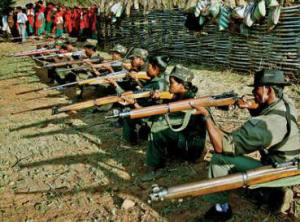
20070406001609101 trimmedInefficiency, lethargy and corruption have come to haunt the country and dominate the news this week on two quite different issues– the alarming spread of Naxalite violence (right), and the inadequate preparations for the Commonwealth Games that are to be staged in Delhi a year from now. That’s leaving aside, for a moment, India’s appallingly inadequate defence readiness in Arunachal Pradesh and elsewhere on its north-eastern borders with China where tensions are rising.
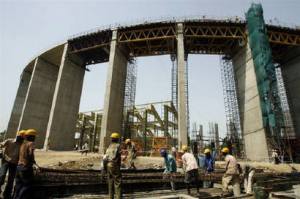
Talkatora Stadium, one of the Delhi games venues

Talkatora Stadium, one of the Delhi games venues

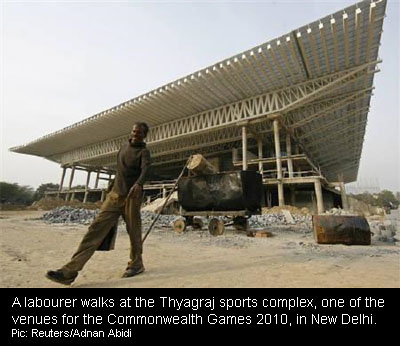
“For Delhi, every day is pivotal and every hour is vital,” Mike Fennell, the Olympic Games Federation’s president said in Delhi yesterday at the end of a week’s visit to the capital that exposed serious delays on both construction projects and operational systems. And so it is across a whole raft of issues that require action.

Palaniappan Chidambaram, the home minister, has been issuing that message to States increasingly besieged in recent weeks by Naxalite rebels, but his strong warnings about the need for immediate action have been diluted by a pathetic debate about whether or not the primary focus should be on economic development in Naxalite areas (of course it should, long term), and whether the Indian Air Force should fire on rebels in self defence (obviously, what else should it do!).

The armed forces have been issuing Fennel’s warning in different words to the Defence Ministry for years to accelerate orders for urgently needed new equipment ranging from guns to helicopters and training jets that are mired in bureaucratic inertia, corruption, and the manipulations of competing suppliers that trip up each other’s potential orders. (The same applies to equipment needed for internal security such as tackling the Naxalites). How Pakistan and China must enjoy watching the self-inflicted  damage that India does through all this to its own war readiness – could those two countries themselves do more damage in a border war?

Cgames_0That all is not well with preparations for the Commonwealth Games has been apparent for months. There are various reasons for this, but they basically come down to political and bureaucratic inefficiency that frequently stems from individual ambitions to gain in terms of personal patronage and financial gain rather than to get a job done.
Well-founded gossip about massive extortion on every games contract has been swirling around Delhi, and about how that extortion is not just making those involved richer but is also disrupting progress on contracts and on the hiring of much needed foreign help (a point made by the Olympic committee in the past week).

Sometimes the lack of action on potential crises is intentional, stemming from a belief that some blood-letting is needed before a major issue can be tackled. I first came across this when I was part of a Financial Times interview with Indira Gandhi, then the prime minister, shortly after 6,000 people had been killed in riots in Assam. We asked Mrs Gandhi why she had not acted earlier to stem the killings, and she replied that one had to let such events take their own course before stepping in.

I remember how horrified I was by her answer, though I now understand (but don’t accept) the logic. The same probably applied in a slightly different way to the Khalistan movement in then Punjab that she allowed to escalate into a crisis that led to her putting troops into Amritsar Golden Temple, and later to her assassination.

Then there are the Naxalites, who have been threatening areas of India since they started as a peasant revolt in West Bengal 40 years ago. The government assumed they would slowly fade away or, at worst, remain virtually out of sight in remote forested tribal areas where they have operated since the 1960s.

0508_mz_naxalite_YwyPa_17466 trimmedThree months ago, on this blog, I asked “What must Naxalites do to rate as a real threat to India?” I wondered whether Delhi was in denial about the approaching crisis, along with the rest of the world, because the Naxalites had not assassinated a top leader.
Since then the rebel atrocities have escalated, and it is now clear that they intend to threaten urban centres in the coming years, not just where the tribal forests. They are already active in more than 223 of India’s 600-plus districts (see map) across 20 states. Between January and August, they were involved in more than 1,400 violent incidents, and the killing of nearly 600 civilians, according to official records.

In the past few days, widespread attacks have included killing 17 police, blowing up mobile phone towers and stretches of railway tracks and disrupting power supplies, not just in their home areas of Bihar, Jharkhand and West Bengal in eastern India, but in Maharashtra on the borders of the west.

So why is it that India waits for crises before acting? Maybe the country is just too big and complex, its borders too long, and its peoples too varied for any government to govern effectively. Maybe centuries of repressive foreign occupation, plus the debilitating shortages of 45 years of economic controls after independence, have bred an acceptance of things as they are.

That of course does not fit with the new international image that India has of itself as a big (almost super) economic and diplomatic power. Sadly that image is not sustainable. China’s recent 60th anniversary celebrations show the gap between the two countries, as does a comparison of last year’s Olympic Games in China with India’s stumbling towards next year’s events.

UPDATED INTRO SEPT 28:    What a disastrous start for Arvind Jadhav, the new chairman and managing director of Air India, who has firm ideas of what he wants to do to turn round the country’s financially destitute national airline. a senior member of India’s civil service, he’s been in charge since May and last week announced productivity pay cuts of 25-50%, starting last month, for top pilots and management personnel.

That brought pilots out on strike-oriented “sick leave” over the weekend, stopped flights,  and led the management immediately to set up a committed to re-examine the decision.

This does not bode well for Jadhav’s new regime. The AI board should have foreseen trouble when it reach its decision on the cuts on September 23 and should have approached the cuts more cautiously.

Brashly announcing tough decisions and then having to retract them is bad management – and smacks of the weak Indian governments a few years ago where ministers of finance would allow opponents to hack away at their annual Budgets within days of announcing them!

Arvind Jadhav

Arvind Jadhav

I spent an hour with Mr Jadhav a few days ago, following my recent post on how Praful Patel, India’s aviation minister since 2004, failed to implement change after he nominally merged Air India with Indian Airlines last year into the National Aviation Company of India (NACIL) and an airline called Air India.

Jadhav’s job is to pick up the pieces with a three-year $1bn rescue plan. He wants to:

–   Hive off by next March more than half the airline’s operations into four separate engineering, ground handling, cargo, and training NACIL subsidiaries that will take 18,000 to 20,000 of the 32,000 current employees and do contract work for other airlines as well as for AI, thus cutting costs and increasing revenues.

–   Cut out unprofitable routes – maybe 20% of the total 246 – and build customer loyalty by boosting flight frequency on routes that make money.

–   Restructure flight schedules and ease airport transfers through the main hubs of Delhi and Mumbai so that both domestic and international travellers want to use the airline, especially at peak times.

–   Retrench staff, and restructure salary levels which, says Jadhav, are currently 20% to 200% above general market levels, and cut and change productivity payments (this has already started with 25%-50% cuts announced on September 23 –  and now challenged – for pilots and other senior staff) so that they reward achievement not just hours worked.

–   Move towards a lower-price airline, with some single-class aircraft, once costs have been cut – and complete the actual merging of operations (which has scarcely begun) so that it AI works as one, not two, airlines.

“If you want to sort out a problem, disaggregate it and tackle it at the first point where it occurs,” says Jadhav. Then “monitor and incentivise on the right parameters”, and question teams that regularly fail to meet targets. He gives, as an example, how he has tightened up timings for closing passenger check-ins and shutting aircraft doors so that flights are ready to leave terminals for departures on time.

In a Business World interview, which I mentioned in my earlier post, Jadhav mentioned how 750 business class meals used to be ordered for flights from Delhi when there were only 400 travellers – and that “no-one knows” where the other 350-400 meals went. The answer of course, is that they were presumably eaten or taken away by staff. Jadhav says the meals provided have now been cut to 2% above seat bookings, but the staff “are not very happy about it”. I asked if there were many other examples of unaccounted expenditure – “you bet……everywhere – it requires tight monitoring”, came the answer.

This all means overcoming massive staff resentment and lethargy. “There’s opposition from NACIL employees because they think the merger was not the right thing to do,” says Jadhav. That opposition is stronger – as many commentators said it would be– from old Indian Airlines employees, who resented being subsumed into Air India that was in a far worse state.

As Jadhav said in the Business World interview, “had this merger not happened, Air India would have died” – and he didn’t mean the newly merged entity, he meant the old elite and doomed international player that few travellers wanted to fly.

Old Air India dominates

So in addition to inevitable resistance to change, job shedding and salary cuts, there is a culture problem that stems from the old badly run Air India regarding itself as superior to the more efficient Indian Airlines, and having its name used after the merger. On the airline’s website there’s a page called the Air India Brand, which lists all the former chairman of the old Air India. Nearby are other details such as aircraft flown down the years. No-where is the history of Indian Airlines similarly recorded, and an Indian Airlines webpage morphs itself into AI. If I was an Indian Airlines executive, I’d resist being subsumed by such a merger implemented at the insensitive diktat of Patel’s aviation ministry.

The plan to hive off the engineering operations into a separate revenue-earning subsidiary, which will have joint ventures with Boeing and Airbus, illustrates the potential that Jadhav sees to cut losses. Currently there are 7,500 engineering and other technical personnel in maintenance teams for each of the combined airline’s eleven aircraft types. This costs Rs2,000 crore (approx $400m) a year, including a Rs750 crore ($150m) wage bill, but is only servicing about 100 or so aircraft, even though it could do 200. Servicing 100 aircraft from other Indian carriers that currently send their fleets to high-cost operators in South East Asia, the Gulf and Europe for major overhauls could, Jadhav hopes, save half the wage bill and bring in Rs1,500 crore ($3.75m) annual revenue.

This, and the other hiving-off plans, were put to staff and unions two months ago. “They see the advantages,” says Jadhav. He believes there is a will to survive inside the airline. “I’m saying ‘do you have a choice?’ They agree there is no choice but are not agreeing to the size of the (productivity) cuts because they are not yet confident the government will support them”

The airline is hunting for a chief operating officer – but with what seems to be to be a rather forbidding advertisement that doesn’t give the impression of a constructive environment. And is not being backed up by an executive search firm, which surely is essential for such a challenging job.

Many of Jadhav’s ideas have of course been aired before, and drip-fed as sound bites by Patel to a largely unquestioning media. Now Jadhav is determined to implement them. He seemed, in my hour with him, to mix sufficient charm, toughness and analytical logic to know what he wants to do and to have a chance of seeing it through.

His career in the Indian Administrative Service has been based in the state of Karnataka, where he was principal secretary in charge of sorting out Bangalore’s creaking infrastructure among other things for a year before joining AI. Aged 53, he was previously chief vigilance officer at GAIL, the government’s successful gas corporation, which gave him experience of how public corporations operate, and before that spent several years in the power ministry. In the mid-1990s, he ran a state minerals company in Karnataka.

Past airline chairmen have of course been just as able, but have been tripped up by self-serving motivations of the aviation establishment, as well as internal intransigence and opposition. Unlike many of his predecessor however, Jadhav has not spent years dealing with aviation, so brings a fresh mind uncluttered with close-knit egos, loyalties and favours that need servicing.

There’s an added advantage that monitoring is no longer under Patel and his ministry, but a broader-based committee chaired by the cabinet secretary.

Incidentally, the AI website calls the airline “India’s finest flying Ambassador”, which of course is rubbish. Private sector Jet Airways deserves that title, with Kingfisher Airlines as a runner up. Jadhav’s job is to win back the title.

Posted by: John Elliott | September 21, 2009

Twittish tweets and false economies in India’s silly season

In Britain it’s known as the ”silly season”, when large numbers of news-makers are on holiday and the media follows silly and often embarrassing stories of little importance. I’ve never heard the phrase used here in India, but it’s certainly been the silly season for the last week or two, with a media feeding frenzy focusing on a twittish tweet by a over self-confident and inexperienced ministerial tweeter, and on a load of false economies foisted on unwilling ministers by Pranab Mukherjee, the finance minister, and the ruling Gandhi dynasty.

Let’s deal with the tweets first. When author Shashi Tharoor (below), the United Nation’s communications chief, failed to get himself promoted last year to the secretary general’s job, he retreated to India and his long-forgotten home state of Kerala where he successfully became an MP in April’s general election. Even though he had absolutely no experience of Indian politics, he was immediately made a minister of state in the Ministry of External Affairs and became a much publicised tweeter, telling his followers – there are now 197,778 of them (click here) – his frequently irreverent thoughts.

Shashi TharoorHis ministerial bungalow was not ready when he was appointed in May, so he stayed in Delhi’s upmarket Taj Mahal hotel while, coincidentally, the new foreign minister S.M.Krishna, stayed for the same reason in a suite in the even more expensive ITC Maurya ($400-$2,000 walk-in rates for suites).

Two weeks ago, Mukherjee suggested – and announced he had done so – that they should move out of their hotels, even though they said they were paying for themselves (presumably with hefty discounts). They both did move, Tharoor into a no doubt very comfortable Indian Navy guest house, after protesting he had needed the Taj for its “gym and some privacy”.

Mukherjee then lectured the cabinet on austerity economies that ministers should introduce at a time when many parts of India are suffering a serious drought. There are precedents for governments calling for austerity measures during earlier droughts, and Mukherjee – presumably backed by Sonia Gandhi who heads the Congress Party – may have been trying to assert the sort of central authority that former prime minister Indira Gandhi, Sonia’s mother-in-law, used to exert years ago.

That leads me to a thought that perhaps the most significant – and under-reported – point to have arisen from all this is the authority that Mukherjee has over his fellow-ministers. He spoke, and his colleagues fell in line, some quietly and others after complaining a little. He has for years been regarded as the government’s leading politician and problem-solver, and he now seems to carry more personal clout than Manmohan Singh, the prime minister, whose edicts are always on target but rarely lead to action.

Mukherjee got some grumblings – Sharad Pawar, the agriculture minister,  is reported to have initially said he was too large to fit into an economy seat. But Ministers quickly scuttled to airlines’ economy class or switched to trains, and flew abroad on regular flights instead of taking government planes. Sonia Gandhi and her son Rahul, who is a general secretary in the party, did so too – Rahul to a train that was stoned by some youths and generated additional expenditure on special security protection.

Cattle-class and holy cows

The irrepressible Tharoor however couldn’t resist replying, when asked by a tweeter how he was travelling, “in cattle-class out of solidarity with all our holy cows”.

Well, cows are regarded as holy in India but that does not mean people like to be told they travel cattle-class, and uproar broke out with sanctimonious allegations that his remarks were “not in tune with the party (Congress) culture”. It looked as though he might have to resign – I reckon he should have offered to do so, but maybe he feared it would be accepted and he’d be jobless again. Anyway, the row now seems to have blown over, and he’s been tweeting responsibly from Liberia, where he has been on an official visit.

But the economies are false, as was a suggestion by Sonia Gandhi last month that party MPs and officials should donate 20% of their salaries to drought-relief. It made a good headline, and some donations may have been made, but most will surely have been recouped in the way that public figures usually supplement their incomes.

Ministers are used to demanding luxuries in their offices – ranging from Spanish tiles and Italian porcelain to wooden panelling and other adornments – and an (inexplicable) toilet demanded by a lady minister “on the back side of her seat” in keeping with Vaastu (Indian feng shui) . (Sounds like a colonial hangover – click here for British MPs expecting to have their little luxuries – including moats round their houses – paid for).

This morning the Indian Express is reporting that the prime minister has told government departments to stop requiring corporations they control to provide freebies that range from cars, air fares and hotels to mobile phones and laptop computers.  This is something that ministers and bureaucrats have done for years, tapping corporations for personal and family luxuries as well as work-related items.

The prime minister is again on target with a sensible idea, but he has apparently been trying to enforce this since May and has only just got cabinet secretariat support. Let’s see what happens – and how long it all lasts.

Posted by: John Elliott | September 9, 2009

Is Patel crying ‘Wolf’ on Air India or is he for real this time?

At last it looks as if the government might be making a genuine effort to sort out the problems of its ailing Air India airline. A rescue plan is being finalised by ministers involving Rs5,000 crore ($1bn-plus) new equity that would be paid in tranches over three years.

“This is a fundamental call (to Air India) that there must be a turnaround or the government is not going to support you – it is not a carte blanche,” Praful Patel, India’s aviation minister, told me a few days ago. The airline must, he said, cut costs and increase revenue or it would not get the rescue package that will probably be paid in tranches over three years.

How many times have we heard that before! Is Patel crying “wolf” or is it for real? I should maybe have written “surely not again”, instead of be “at last”, in the first paragraph because there have been many failed rescue attempts over more than 20 years. I remember Ratan Tata and Rahul Bajaj (who head broadly successful business groups bearing their name), being put in charge of what were then two airlines in the 1980s by an over-optimistic Rajiv Gandhi, then the prime minister.

There have been odd spurts of success since then, but now there are heavy losses – Rs5,000 crore ($1bn-plus) in the year to last March, and a similar figure is expected for this year unless savings are made. Patel has said he’d like to sell the airline, but has been told by the government to keep it flying.

aviation minister Praful Patel and Arvind Jadhav of AI (Business Standard graphic)

aviation minister Praful Patel and Arvind Jadhav of AI (Business Standard graphic)

Air India is notionally India’s national carrier, but its real role for decades has been to line the pockets and make life comfortable for those directly involved in its affairs – from ministers and bureaucrats, who get kickbacks on aircraft and other orders and benefit from freebies and powers of patronage, to top executives, pilots and other staff who often don’t work but do block change.

If the airline also carries non-government passengers, that is a bonus for India, but it is not the real reason that those in charge want it to continue flying.

There has been little progress in the past four years or so, except for a flawed and incomplete merger of the old Indian Airlines national and regional carrier and the international Air India under a new National Aviation Company of India (NACIL).

Patel painted the merger two years ago as the solution for the two airlines’ problems, but total losses since it was implemented have rocketed to Rs7,000 crore. He’s  been aviation minister since 2004, and I’ve been blunt, some might say unkind, about his record in the past on this blog – see Bed and Bhai Runs Indian Aviation and (on ministerial jobs after the recent general election) , so I went to see him last week. I thought I should hear his views about why the merger has been such a failure, and what can be done now.

“The people in the system have worked to defeat the merger – the unions and directors and levels of management,” Patel told me. There were “vested interests in the unions and the management – up to general managers and executive directors”.

Patel is the most urbane and unflappable of India’s ministers, and is also a wealthy businessman. He owns one of India’s biggest bidi and tobacco derivative operations, based in his home state of Maharashtra where he packs political punch alongside Sharad Pawar, a veteran top politician who runs the National Congress Party and is agriculture minister. So he knows how to run things.

He is credited with reforming aviation by creating NACIL’s merged Air India, authorising its purchase of 111 aircraft, allowing foreign airlines massively increased access to Indian airports, rapidly increasing the number of domestic airlines and available seats, and pushing through the privatisation of Delhi and Mumbai airports.

Sadly the record of implementation is not so good. Air India has not really been merged, and it does not now (and some say never did) need 111 new aircraft to replace its ageing fleet, especially when it faces massively increased competition from the foreign airlines that Patel allowed in.

Most airports in the country are nowhere near ready to cope with the increased traffic that has been allowed. The airport privatisations were swamped in tendering controversies and ended up with real estate and land developers grabbing the franchises – and the construction of a glamorous but faulty new domestic terminal in Delhi, parts of whose roof blew off in a gale recently after earlier leaks.

Patel understandably makes the point that airlines all over the world are bleeding so neither Air India, nor he, should not be picked out for special blame. That is partly true, but those airlines that aren’t being forced to close by the world’s economic crisis are taking dramatic steps to cut costs and improve efficiency, whereas till now Air India has done virtually nothing, despite the merger. It is therefore fair to criticise Air India and the government for not implementing change.

For a start, I (like many other people) haven’t understand how Patel could imagine that merging two failures without changing the ownership or top management would achieve anything except compound failure. When I asked Patel about that two years ago at a Delhi conference, he dodged the question and said he was confident that there would be advantages 

He now admits that not enough has been done, and primarily blames the airline’s staff (as the quote above shows). He says that the government has not had the power to make things happen and claims that the government can only give “macro directions” – and that, indeed, is all that seems to have been done, though Patel could have used much more muscle if he had bothered or wanted to.

There have been some economies – cutting back on duplication of routes, manpower and assets, says Patel. But internal opposition has blocked merging the information technology systems and the airline still has two airline codes – IC and AI. Plans to halve a productivity bonus have also been opposed.

A new chairman and managing director was appointed in April last year but, as has happened many times before, he came from the Ministry of Civil Aviation so did not bring a fresh approach. He was removed after a year in the job and a new chairman and managing director, Arvind Jadhav, has been appointed.

Jadhav is also a bureaucrat but not from the aviation ministry, so can take a more independent fresh look at the problems. He is advertising internationally for a chief operating officer, hoping to hire someone who can transform this ailing airline.

But he has a huge task as he showed in an interview in India’s Business World weekly magazine last month, The Time For Talking Is Over, Jadhav where he spelt out the problems – here are some of them:

–   Air India has 32,000 employees compared with 12,000 “in any like-to-like company”.
–   Employees are not conscious of working for a business in crisis.
–   Pilots “sitting at home” are paid “80 hours of flying allowances”.
–   Despite a freeze on recruitment, “we have recruited”.
–  “There is a duplication of every activity and no single chain of command”.
–  “Revenues are 14,000 crore and costs are Rs19,000 crore” (approx $2.9bn and $3.9bn)
–  “We have 22 offline stations where we no longer fly”.
–  “We have an alarming number of aircraft (25) and engines (33) on standby”.
–   For 800 business class seats from Delhi, 750 meals are ordered but there are only 400 travellers – “no-one knows” where the other 350-400 go.

Is there any chance of such an array of problems being sorted? The government’s rescue package is based on six months of survival, with recovery starting in the next nine months, followed by profitability being achieved in the second half of the three years. Monitoring progress will be done not by Patel and his aviation ministry, but by a government committee chaired by the cabinet secretary.

I hope to meet Jadhav soon to discover how he plans to meet these targets – more on this blog then.

The life – and tragic death in a helicopter crash on September 2 – of Y.S.Rajasekhara Reddy, the Congress Party’s chief minister of Andhra Pradesh, have captured some significant facets of modern political life in India, especially corruption and unbridled dynastic ambition.

YSR, as he was known, was chief minister for five years and worked effectively for the state’s overall development and the rural poor. He gained widespread respect and loyalty, despite allegations of significant family corruption that involved high profile cases such as the scam-ridden Satyam software company.

He was a skilful regional politician. Born a Christian, he knew how to build an unassailable regional power base and combine that with loyalty to the Gandhi dynasty that runs the Congress Party.

Mourners pay respects to YSR (AFP picture)

Mourners pay respects to YSR (AFP picture)


Now YSR’s coterie is trying to create a new dynasty in his memory by making his 37-year old son, Y.S.Jaganmohan Reddy,  (pic below) the chief minister.

As many tens of thousands of people gathered before YSR’s Christian funeral and burial on September 4 – with reports of suicides and heart attacks – the state government’s cabinet and other sycophantic supporters openly campaigned for the politically inexperienced Jaganmohan, who became an MP for the first time only five months ago.

A veteran politician has been given the job temporarily by Sonia Gandhi, who heads Congress nationally. But Jaganmohan – known as Y.S.Jagan – is still being projected as the future chief minister – with support from the family’s business friends and their political contacts who stand to gain from a dynastic succession that would continue favours arranged in YSR’s time.

(On a different note, there must have been fears that the unexpected disappearance of YSR’s helicopter could become linked with Naxalite terrorists who are active in the remote forested area where his aircraft disappeared. I wondered two months ago in a post on this blog what the Naxalites must do to rate nationally as a real threat to India’s security.  I suggested that the reason for many years of complacency is that they have never seriously attacked a centre of power – which they could have done if they had got to the helicopter before government rescue teams and had found YSR alive and made him a hostage. The speed and scale of the search for the aircraft suggests that this was a real fear in Delhi.)

ysjagan_photo

There were many reports of deals being done for the personal gain of the family, including contract awards and links with big companies and projects. That was in addition to substantial collection for, and payments to, the Congress Party ahead of the last general and state elections – the side of corruption which is generally tolerated in India because it is accepted that parties need funding.

Jaganmohan built up media, cement and mining (the family’s original business area) companies – including Sakshi TV, Sandur Power, Jagathi Publications, Bharathi Cement and Raghuram Cement – with the help, it is widely acknowledged, of his father.

Yet none of this seems to matter, judging by the huge mass of mourners – from Sonia Gandhi and prime minister Manmohan Singh to the poor – who gathered to pay their last respects.


tens of thousands thronged the streets for the funeral procession

tens of thousands thronged the streets for the funeral procession

Posted by: John Elliott | August 25, 2009

Big sales and big attendance at India’s Art Summit

Hanuman and Obama (see below)

Hanuman and Obama (see below)

An art fair held in Delhi at the end of last week was, by any measure, a success. The organisers of the India Art Summit logged a total of just over 40,000 visitors and said that sales totalled Rs260m ($5.4m, £3.3m).

Sceptics have inevitably queried the figures, but the visitors’ seem genuine because they were based on a count at the entrance gates.

The sales figures are less reliable because they are based on what the galleries told the organisers, and no doubt include potential sales and a bit of optimism – negotiations are still in progress on many works around Delhi as I write. One contact has suggested the figures may also have been under-stated because of large cash payments that are likely to have been made.

But whatever the eventual sales, there was enough buying activity to indicate that the market for Indian modern art – and maybe contemporary art too – has bottomed out in the past two months and that serious collectors are now buying at prices that are often 30%-40% below the peak levels last year, and sometimes far more.

Friends tell me that serious collectors buying at the fair included Preeti Ambani of Tina Ambani’s Harmony Art Foundation (who paid a record $2.5m for an F.N.Souza oil at a Christie’s London auction in June last year at the peak of the market); Malvinder Singh, who must be flush with cash after selling his family’s Ranbaxy pharma company to Daiichi of Japan and owns the Religare Arts Initiative and gallery (and is in the news today buying ten hospitals); and Kiran Nadar, wife of Shiv Nadar who controls the HCL IT company.

Anish Kapoor sculptures (see below)

Anish Kapoor sculptures (see below)

I also saw Rajeev Sethi, Delhi’s arts doyen who runs the Asian Heritage Foundation, and Suhel Seth, an irrepressible marketing personality who’s on the board of British Airways, clinching deals.

For an entrance fee of Rs200, people had direct access to the stands of 55 art galleries, including 17 abroad – from the US, UK, Germany and elsewhere including even Latvia and the Philippines. And there was more than just the galleries. There were shows by young artists and children, and more exclusive seminars.

“There are good vibes, things are happening,” said Anders Peterson of ArtTactic, a London based analysis firm, who believes the market has bottomed out.

At the seminars, the successes as well as the fault lines of the Indian art market were discussed. Why is it for example that India has so many art investment funds – more than 12, and probably more than any other country, suggested Maithili Parekh of Sotheby’s. The Indian stock market watchdog SEBI is supposed to regulate them, but has done little, despite questionable links between funds and some galleries and auctioneers.

Amrita Jhaveri, an art consultant, talked about such conflicts of interest, saying “it’s an extremely cosy world based more on co-operation than competition”.

Anupam Poddar trimmedOther speakers included big collectors such as Anupam Poddar (left) of the Devi Art Foundation,  gallery owners such as Peter Nagy of Nature Morte, and top artists such as Subodh Gupta, all of whom who were accessible walking round the exhibition halls.

Galleries are shy about revealing exactly what they had sold, but everyone I spoke to was happy with the outcome, and several from abroad said it far exceeded their limited expectations.

London’s Lisson Gallery was rumoured to have reported sales of £1m (nearly Rs80m), which included one, or maybe two, works thought to be priced at £400,000-500,000, by Anish Kapoor, an Indian-born British sculptor who has an exhibition opening in September at London’s Royal Academy (pic with two of his works above).

Beck & Eggeling of Düsseldorf had a striking oil on canvas (below – and trimmed upside down above right) by Viveek Sharma of Barack Obama standing on his head on a chess board, supported by the Hindu monkey god Hanuman – presumably a metaphor for Obama taking on the problems of the world with the help of Hanuman, who once carried a mountain on his shoulders to help save the life of his master’s brother. The gallery sold that work for approaching $15,000 (Rs730,000) and also a small Picasso drawing for $25,000.

'Deep' by Vivek Sharma - Beck & Eggeling

‘Deep’ by Vivek Sharma – Beck & Eggeling

Among Indian galleries, the Delhi Art Gallery said it sold 15 works priced between Rs50,000 and Rs50 lakhs ($1,030–$103,000) including works by leading artists such as Souza, S.H.Raza. and Sohan Qadri, while the Dhoomimal Gallery sold works by H.A.Gade and Satish Gujral.

There were, of course, no M.F.Husain works available – they were excluded from the show for fear of vandalism.

The event was organised by Mumbai-based Hanmer MS&L Communications, which has no connections with the incestuous art world (that must be a good thing!).

It was a success beyond the figures and sales because it opened up India’s art market to people – young as well as old – who would be reluctant to walk into the forbidding arena of many art galleries. Many of them will be future buyers.

The exhibition halls were packed, especially on the last day, and looked, said Ashish Anand of the Delhi Art Gallery, “more like a trade fair’s public day than an art event”.

'Holy Bread' by Anita Arbidane - Ivonna Veiherte Art Gallery, Latvia

‘Holy Bread’ by Anita Arbidane – Ivonna Veiherte Art Gallery, Latvia

 For more art posts, click on Indian modern art below or in the Subjects (categories) drop-down box in column on the right


      IMG_4162 trimmed              

India’s first large-scale international art fair opened today in New Delhi, but works by M.F.Husain, the country leading and oldest modern artist, are not on show because of fears that they might be attacked by right wing Hindu fanatics.

The fair organisers cannot afford the insurance, and the Indian government has failed to provide special police protection.

I talked to Husain, who is 94 next month, about this recently in London, where he lives and paints in a Mayfair flat every summer (above). In winter he is based at his other home in Dubai. He stays away from India because of court cases against him, and because of the risk that he and his works would be attacked.

Not having his works at the four-day India Art Summit only gives publicity to his critics, he says, adding that he also benefits because the publicity leads to more people seeking out his works than might otherwise do so: “Picasso said any adverse comment is better for an artist than praise because people become converts”.

Husain's BharatMataHe says that there are some 900 cases or complaints in India against his works, mostly alleging that he has offended the Hindu religion with nude depictions of goddesses, or of offending public decency and Indian nationhood.

“They have said I am traitor because I painted the map of India in the shape of a woman,” he says (picture left).

He is just one of several artists and writers whose work has been criticised and attacked on many occasions in recent years by Hindu extremists seeking publicity, with the encouragement from hard-line wings of the Hindu-nationalist Bharatiya Janata Party (BJP).  Exhibitions of his work have been attacked and closed down in many parts of India, making them high risk.

“It’s purely party political – not a single religious head has spoken a word against me,” says Husain. “They are extremists who want an agenda”.

He says he has been used to opposition and criticism from the time when he and other members of the 1940’s Progressives group such as F.N.Souza and Tyeb Mehta “were not allowed to meet students because it was said we were a foreign influence”. The critics “wanted us to paint like the Bengal school” instead of breaking from tradition into new styles.

IMG_4158 trimmedThere are six main legal cases against him. Three of them, alleging the India map painting is obscene, were dismissed 15 months ago by the Delhi High Court in a landmark judgement that was reinforced last September when the Supreme Court refused to hear an appeal. Three more cases are pending, one of which is being slowly investigated by the police.

The Delhi judge noted that nudity is part of contemporary art and plays a significant role in India’s rich cultural heritage. Husain picks up on that point and says that the buxom 9th to 12 century Chola bronzes from south India “formed the base for my depiction of the human form”.

The Delhi judge also significantly said that India should resist conservative extremists misusing the law to harass artists, and called on the government to legislate against this. Unsurprisingly, the government has done nothing, just as it was apparently not prepared to help when the Art Summit went to the Home Ministry and to Sheila Dikshit, the Delhi chief minister.

Neha Kirpal, the organiser, says was told by the Home Ministry’s security chief that it was not possible to provide special police protection for Husain works – it was the police’s job to reduce risk, not increase it with the painting on show. “We were shunted around everywhere and received no help”, said Kirpal. Today however P. Chidambaram, the home minister, told a delegation of artists that he had not ;personally been askwed for help.

This lack of government action goes to the core of the problem. Indian politicians do not dare to risk offending extremists for fear of reprisals, and the government has other more pressing priorities. Husain had hoped that the new Indian government, elected earlier this year, would do something to help, but that has not happened. “I’ve had tremendous support from the artists’ community but nothing from the government,” he says.
 
He is currently painting three series of works, some of them as large as 12ft x 4ft. A history of “Indian civilisation from the Maharabharata to Manmohan Singh” will, says Husain, take two years to complete. Reports suggest – though Husain refuses to confirm it – that this is being sponsored by Lakshmi Mittal, the Indian-born London-based steel tycoon, who will also build a new museum for the collection. Next are paintings on the Arab civilisation commissioned by the ruling family of Qatar for a new museum in Doha, and then there is a history of Indian cinema.

That’s a massive programme for any artist, but Husain works fast, sketching a new work in a few hours and colouring equally quickly – completing, he says, a 6ft x 4ft painting in less than a day, “though not every day”. Explaining the speed, he says that “after 50 or 60 years experience, my vision is there and I know what I want to paint” .

He would no doubt like to return to India, but not with the risk of attacks and criticisms on his work. “At this age, I’m happy and I’m working. What I plan to do is not possible in India….If I was 40, I’d have fought, but at my age I have an urge to create, so let them do what they like.”

       IMG_4168


Posted by: John Elliott | August 13, 2009

China aims to block India’s place in the sun

It’s probably the tip of the iceberg of China’s ambitions to thwart India’s emergence as a significant economic and maybe diplomatic and military power. I’m referring to what might appear to some to be a crazy article on a Chinese strategic issues website, which claims that China could “dismember the so-called ‘Indian Union’ with one little move”. 

The writer has argued that India’s national unity is weak and that China could exploit this by supporting separatist forces, such as those active in India’s north-east state of Assam, and split the country into 20 or 30 sovereign states.

“There cannot be two suns in the sky. China and India cannot really deal with each other harmoniously,” said the article. That almost certainly reflects Beijing thinking, even though the founder of the website has claimed the anonymous writer has no known government links.

The article was posted last Saturday and was publicised in India yesterday, prompting the Indian foreign ministry to say it appeared to be “an expression of individual opinion and does not accord with the officially stated position of China on India-China relations conveyed to us on several occasions”. But what else could India say – especially since the article coincided with apparently cordial talks between the two countries on their border that has been disputed since China defeated India in a brief 1962 Himalayan war.

It is not unusual for China to fly such extreme kites. Philip Bowring of the Hong Kong-based Asia Sentinel website pointed out in a New York Times article two days ago that the arrest last week of two Rio Tinto executives in Beijing for alleged theft and corruption followed an internet article written by an official of China’s National Administration for the Protection of State Secrets, which accused Rio of  commercial “spying” that had cost the nation $100bn in higher iron ore prices – an accusation says Bowring that “does not stand up to the most casual scrutiny of trade data”. Bowring then points out that “although the article is no longer on the website, its claims have not been corrected and its imprint on Chinese minds will not disappear”.

The imprint of the India internet article will also not disappear because, whatever the two countries may say officially, it sums up what has been happening for years.

As James Lamont and Amy Kazmin explained a month ago in an excellent FT round-up of the two countries’ tortuous relations, China has been encircling India by developing influence and outposts in Pakistan, Nepal, Myanmar, and Sri Lanka, and wants to usurp India’s major role in controlling the Indian Ocean and Arabian Sea.

Pakistan, which China has armed and helped become a nuclear power, has been destabilising India first in Punjab (in the 1980s) and then in Kashmir. China has also for years been encouraging separatist forces in India’s north-eastern states, including Assam, and will no doubt use its growing clout in Myanmar – and Bangladesh – to increase those activities. In the future it could perhaps use its growing influence in Sri Lanka – where it is developing a naval base and advised the government in the recent defeat of the Tamil Tiger separatists – to cause unrest among linked Tamil communities in southern India.

It has also strengthened its border claims – for example by opposing a $3bn Asian Development Bank aid project in Arunachal Pradesh, an Indian border state that China claims as “south Tibet”. And it tried to block international approval of the recent India-US nuclear deal with the US.

This is of course a dangerous game and sometimes India has to respond – recently for example by moving fighter jets to the China border and, of course, by meddling in other countries, as a comment by Abhyaan (below) explains.

I have heard a former senior Indian bureaucrat argue privately that China’s basic – and permanent – aim is to force India to focus on domestic issues and thus thwart it becoming a future international rival.

China, according to this view – which is surely correct  – is determined to be the world’s sole superpower after America, and does not want that status to be upset by a strong and democratic India backed by the US and Europe. Its tactics have become more insistent in the past two years as it has become irritated by India’s growing links with the US, culminating in the nuclear deal.

Everything that China does in relation to India therefore has to be seen through that prism. India will not fragment into 20 or 30 pieces – it is far too unified for that – but there is no prospect of permanent peace and co-operation between the two countries because, as the internet writer has said, “there cannot be two suns in the sky”.

This post is also on the FT’s http://www.ft.com/cms/s/0/26b241ba-8809-11de-82e4-00144feabdc0,dwp_uuid=a6dfcf08-9c79-11da-8762-0000779e2340.html

and Hong Kong-based http://www.asiasentinel.com/index.php?option=com_content&task=view&id=2006&Itemid=422 – see comments below

« Newer Posts - Older Posts »

Categories