Posted by: John Elliott | March 15, 2009

Campaign aims at “no criminals” in Indian politics

At last some leading public personalities are attempting to clean up India’s crime-ridden political system.  For years people have metaphorically wrung their hands in horror and frustration as criminals have tightened their grip on politics, especially in the poorest and roughest states such as Uttar Pradesh and Bihar.

These criminals enter parliament and state assemblies and work closely with other corrupt politicians, the police, judiciary and bureaucracy who all help them run their gangs and fix government decisions and contracts.

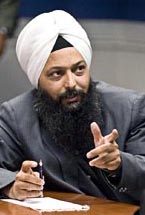
This trend is now being attacked by a campaign called the Forum for Clean Politics, which is being run by the Public Interest Foundation, which in turn is headed by Bimal Jalan, a former governor of the Reserve Bank of India and a top finance ministry bureaucrat, who is now a member of the Rajya Sabha (upper house of parliament).

Bimal Jalan

Bimal Jalan

Figures on the forum’s www.nocriminals.org website show that one in five Members of Parliament elected in India’s 2004 general election had pending criminal cases against them, either awaiting trial or on appeal after conviction.  About half the cases are for murder, violent robbery or rape.

Those involved include 19 (40%) of 48 Maharashtra’s MPs, 13 (35%) of Bihar’s 37, and 23 of UP’s 80. Bihar’s list includes Lalu Prasad Yadav, the railways minister, who was the state’s chief minister till he had to resign over corruption charges.

Even more surprising and shocking is that  five out of nine MPs (56%) in the Maharashtra-based Nationalist Congress Party (NCP), which is headed by agriculture minister Sharad Pawar and aviation minister Praful Patel, have criminal cases. 

Similarly, 42% – eight out of 19 – from the UP-based Bahujan Samaj Party (BSP), which is run by Mayawati, UP’s chief minister, are in the list.

Mayawati and Pawar are among the country’s most important politicians and they are both possible candidates to be prime minister, if neither the Congress Party nor the Bharatiya Janata Party (BJP) win enough seats in the coming general election to lead a coalition.

I spoke to Jalan yesterday and he made the point that, bad though it was, a few criminals in politics did not matter so much when India’s parliament was dominated by the major parties. Now however, with the growth of coalition governments at both national and state level, small parties and their MPs exercise considerable influence.

“Governments have a lot of power over things that criminals want such as land rights and allocation of land, property rights, mining rights and environmental decision,” he says.

The figures show that MPs and candidates with criminal records are more common in regional parties like the NCP and BSP than in Congress and the BJP, where the percentages drop to around 20%. Analysts say that this is because regional party leaders and criminals are mutually useful to each other – criminals provide party finance and muscle power, and receive favourable decisions in return.

The statistics are based on returns that election candidates have to file with information of cases pending for more than two years. They are allowed to stand and be elected when they have either not been convicted, or are on appeal, because they can claim that they are innocent – though in many of the cases their guilt is beyond question. In India’s often corrupt judicial system, it is easy to delay and even fix cases so as to avoid a final decision.

Jalan is not sure how much impact the campaign will have, but he is sure that “parties will be much more reluctant to nominate people with criminal records”. Other foundation members include Naresh Chandra, former cabinet secretary and ambassador to the US, Tarun Das of the Confederation of Indian Industry, and Suresh Neotia, chairman of Ambuja Cement whose Neotia Foundation has provided the finance.

The campaign is being supported by some newspaper groups, including the Times of India, and other organisations. It is using mobile phone text messages to encourage voters to ask questions about candidates’ past histories, plus  You Tube (two films click here and here), and has gathered 4,000 members on its Facebook entry for No Criminals in Politics. There is also an advertisement campaigns on tv and in newspapers encouraging people to vote with slogans like “keep religion out of politics and politics out of religion”.

Other public figures including Ratan Tata, head of the Tata group, and E, Sreedharan, who runs the highly successful Delhi Metro, last year launched the Foundation for Restoration of National Values. This is reported to be taking legal action over the vast numbers of government advertisements that appeared two weeks ago just before the general election was announced.

All this may not have much effect on the coming election, but it is a beginning. India’s greatest strength is its democracy and it is time it was wrenched free of criminals and their political friends.

“ENOUGH – CLEAN UP PARLIAMENT” – in Italy – a current campaign to oust Italian MPs who have criminal convictions – see an Italian blog (in English)  http://www.beppegrillo.it/eng/condannati_parlamento.php

___________________________________________________

this post is also on the FT India page http://www.ft.com/cms/s/0/7fb849ce-1227-11de-b816-0000779fd2ac,dwp_uuid=a6dfcf08-9c79-11da-8762-0000779e2340.html

__________________________________________________________

Posted by: John Elliott | March 8, 2009

Musharraf walks a Delhi tightrope – in a time warp

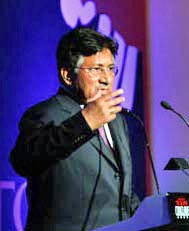
030809123617_mg_1174_editedIt was like being in a time warp when Pakistan’s former president, General Pervez Musharraf, spoke at an India Today conference in Delhi last night (March 7).
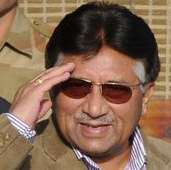
His focus was on past peace efforts between India and Pakistan, and why they had failed – and what he had done as president to try to make them work. His theme was that a peace deal on the two countries’ disputed Jammu & Kashmir border was essential, and that India needed to change more than Pakistan to make that possible.

But he said virtually nothing on major events of the past year or so – from the assassination of Benazir Bhutto, to the terrorist attack on Mumbai  that killed 170 people last November and last Tuesday’s attack on the Sri Lankan cricket team in Lahore – nor the worrying Sharia law agreement reached by Pakistan with Taliban extremists in Swat, just 100 miles north of Islamabad.

It was almost as if these events hadn’t happened, and the Taliban crisis hadn’t escalated in Pakistan, which Palaniappan Chidambaram, India’s home minister, described last week as “not a failed state but……threatening to become one”.

Surprisingly, Musharraf also made scarcely any mention of semi-formal “back channel” negotiations between India and Pakistan during his time in power. Good progress on ways to soften the disputed Jammu & Kashmir border, and solve some specific border issues such as the disputed Siachen Glacier, were being made but the initiative died when Musharraf’s power declined and he lost the presidency.

Musharraf salutes as he arrives in Delhi from Pakistan

Musharraf salutes as he arrives in Delhi from Pakistan

As he arrived last night and walked through the crowd outside the banqueting hall, Musharraf looked less substantial and confident than when he was Pakistan’s military ruler. But he soon smartened up on stage, saluted the audience several times, and then settled down to the mixture of battle readiness and ardent peacenik that we grew used to during his presidency.

He was on the stage for well over two hours, till around 11pm, making his speech and answering questions – some far from friendly – from the audience as well as from Arun Poorie, founder and head of the India Today media group.

His biggest admission was that India and Pakistan had done “a lot of meddling” in each other’s internal affairs. “Your RAW does exactly what the ISI does, and the ISI does exactly what RAW does,” he said, referring to both countries’ secret services, which encourage unrest – and, allegedly, terrorist attacks – on each other’s territory.

“Let us tell RAW and ISI to stop their confrontations,” he said teasingly, adding later: “The past has been dirty….the past has been bad, but don’t put the blame on Pakistan…You correct your house so that terrorism in Pakistan decreases”.

In people’s minds as he made these remarks was India’s belief, shared by the US, UK and other countries, that the terrorists who carried out the Mumbai  attack came from Pakistan. There have also been amazing allegations from Pakistan that India’s RAW was behind the Lahore cricket attack. But Musharraf steered clear of specific cases.

His biggest departure from the truth was that “the ISI and [Pakistan] Army is totally on board with bringing peace with India….totally on board with my talks with Atal Bihari Vajpayee and Manmohan Singh”. That drew sighs of disbelief verging on jeers from the audience.

His biggest accusation against India was: “Terrorists in Afghanistan visit here [Delhi] and I’ve seen pictures of them…..I know of [name unclear] terrorist sitting in Kabul who comes here and is welcomed by your organisations……I will give you a list of people who come here [from Kabul]”.

Though occasionally rattled, he showed throughout that he has lost none of his skills as a public performer on a political and diplomatic tightrope. He said nothing that would upset the government in Pakistan, which he depends on for his freedom, and made enough constructive remarks to satisfy his hosts.

At the end, he got a standing ovation – for effort if not for content.

 Gandhi ji advocated Prohibition, but we needed a liquor Baron to bring back his things to India! JAI HO for the craziest place on earth – says a text message doing the rounds in Delhi this morning.

the auction items

the auction items

What a lovely diversion it’s been for Vijay Mallya, chairman of the ailing UB liquor group and Kingfisher Airlines, to be able to buy Mahatma Gandhi’s memorabilia for a vastly inflated $1.8m in a New York auction yesterday, instead of worrying about from the miseries of his businesses.

UB group and Kingfisher are so broke that Mallya is considering selling stakes of 15% upwards to international liquor companies such as Diageo – who presumably would not agree to have less than 26% because they would want to have some control under India’s company law. Mallya is also trying to persuade the Indian government to allow foreign airlines to invest in Indian carriers so he can sell 26% of Kingfisher abroad

These sales really would be parting with the family silver! Should someone organise an auction to save UB and Kingfisher for India?

Vijay Mallya

Vijay Mallya

Mint newspaper dealt with the Mallya purchase rather neatly in a front page editorial this morning: 

“There is rich irony in the fact that a liquor baron, who is described as the king of good times, has bought the sandals, glasses and other personal belongings of Mahatma Gandhi, a frugal and abstemious soul.

“Vijay Mallya paid $1.8 million (Rs9.27 crore) for Mahatma memorabilia—and has been swamped by affectionate praise from ordinary Indians. What Mallya does with his money is really nobody’s business, but we cannot but help wonder whether he overpaid for no fault of his.

”India’s cultural affairs minister Ambika Soni said she had been instructed by prime minister Manmohan Singh to do ‘whatever possible’ to ensure that the Gandhi items were brought back to India. There was enough national debate to tell the outside world that India was desperate to win the bid.

“Was that sensible strategy? The reserve price of the items was $20,000-30,000, far less than the final sale price. You do not need a game theorist to know that India sent the wrong signals and helped push up the final price. A collective poker face would have helped.”

The Indian Express says in an editorial headed Buying and selling eyeglasses sans perspective:

“The auction of Gandhi-related memorabilia in New York brought out the most delightfully hubristic side of everyone concerned………..the Indian government seems to have decided that anything that Bapu ever touched was the Patrimony of the Nation, and having it in the possession of icky, capitalistic foreigners (imagine, selling a used pair of glasses for a profit!) would mean trampling, unacceptably, on Indian sovereignty. Then there is the Delhi High Court, which, given the universality of Justice, issued a stay order on the auction of things physically outside India by an auction house outside India on behalf of a seller outside India……..

“And how did all this end? In properly Indian manner, with competitive chaos: Tushar Gandhi using Dilip Doshi to bid against Vijay Mallya, who may or may not have been the state’s representative. If anyone thinks that the spectacle of a liquor baron bidding for the used crockery of a man who was not the world’s biggest alcohol fan was blasphemous, they’re clearly moralistic killjoys that don’t understand Gandhism.

“What more agreeable spectacle than Vijay Mallya, the buyer of Tipu’s sword, now buying slightly less violent relics? (And wasn’t he complaining the other day Kingfisher had no money?) Or than the government, which first disdained then took credit for Slumdog, now trying to take credit for another Indian Victory Abroad?”

Is what the Express calls Indian hubris going to lead to frenetic campaigns to save every piece of Gandhi memorabilia?  And would it have happened if it hadn’t coincided with the coming general election, thus making such hubris almost a political necessity for the government?

As Sam Miller, a BBC journalist, points out in his excellent new book on Delhi, Adventures in a Megacity , there are already two Gandhi watches in different Delhi museums, both assumed to be the one he wore when he was killed. Looks like an expanding market.

India’s general election juggernaut is on the move with polling, announced yesterday, on five days from April 16 to May 13, and vote counting on Saturday May 16. So India should have a new government by the middle-end of May. It’s a massive task with 714m potential voters (far more than three times America’s 210m), 170m of them aged under 35, and nearly 830,000 polling centres.

No-one can sensibly forecast who will win. The result will probably be dictated more by regional parties, which join national coalitions, than by the two main national Parties – Congress and the Bharatiya Janata Party (BJP). In 2004, the BJP-led National Democratic Alliance was expected to win but lost, mainly because its regional allies were defeated, notably in Andhra Pradesh and Tamil Nadu.

The final shapes of the coalitions are not yet known because national and regional parties are negotiating how many seats each should allocated to contest in an alliance. For example, in Uttar Pradesh (UP), Congress is arguing with the local Samajwadi Party about how many seats each should have. In some cases, notably Tamil Nadu, who links with who could depend on how those seat negotiations turn out.

Women Politicians

They are often best avoided because they are wilful, unreliable and temperamental. That of course is a hugely inaccurate and horribly chauvinistic allegation, but it is entirely true about the three women regional politicians who matter most in this election:

MAYAWATI, the low caste Bahujan Samaj Party (BSP) chief minister of UP, who wants to be prime minister one day. She continually proves herself an unstable and unreliable partner, and seems more interested in her extravagant personality cult than sustaining coalitions.

JAYALALITHA JAYARAM, a former flamboyant AIADMK chief minister of Tamil Nadu, who also has prime ministerial ambitions. She is most important because she could deliver a sizeable block of seats to whichever national coalition she joins.

MAMATA BANERJEE, whose tantrums as leader of the Trinamool Congress in West Bengal drove Tata Motors’ Nano plant out of the state last year and killed a chemicals’ industry special economic zone. While fighting those projects, she exposed the rough Stalinist tactics of the ruling Left Front, led by the CPI(M). The question now is whether her Tata and SEZ “victories” will lead people to desert her because she drove away jobs, or support her because they are tired of the Left Front.

Dynasties

They are also best avoided but it’s not possible to do so in modern India. There are far too many of them, with seemingly endless lists of sons and daughters being brought into politics, as successors, by their parents and other relatives.

Dynasties generally have a negative impact on politics because they block a party’s development. They did however produce some impressive young MPs in the 2004 election, such as Sachin Pilot, Jyotiraditya Scindia, Manvendra Singh, Omar Abdullah (now chief minister of Jammu and Kashmir), Milind Deora and, of course, Rahul Gandhi – so they are not all bad.

States to Watch

It is fashionable in Delhi, and in India’s national media, to say that the huge northern state of UP is the most important state to watch in a general election. That used to be true when Congress ruled alone, and its ups and downs against the BJP could be gauged in UP. Now the voting in this state is so splintered, with Mayawati’s and other regionally-based parties gaining strength, that it is not so significant as a litmus test of the final result.

Tamil Nadu and Andhra Pradesh, in southern India, have been much more decisive in the past two elections – especially Tamil Nadu where there are basically only two voting blocks led by the DMK (now ruling the state) and Jayalalitha’s AIADMK.

Prime Ministers – there are several candidates, led by:

Manmohan Singh, the current of Congress prime minister, assuming he recovers sufficiently from his recent heart surgery – he is 76. If Congress wins and he is not fit enough, Sonia Gandhi, the Congress president, would have to decide whether to become prime minister herself (which she declined to do in 2004), or put her heir-apparent son, 38-year old Rahul Gandhi, into the job, or (less likely) select a non-family politician whom she trusts not to stand in Rahul’s way later.

Lal Krishna Advani, 81, who leads the BJP now that former prime minister Atal Bihari Vajpayee, has retired.

If neither party wins enough seats to lead a coalition, or if it has to give way to a coalition partner in order to win its support, the candidates include: Mayawati; Nitish Kumar, chief minister of Bihar and leader of the Janata Dal (U), he is a former railways minister; Lalu Prasad Yadav, a former Bihar chief minister and now railways minister; and Sharad Pawar, a powerful veteran politician and now the agriculture minister, he is a former defence minister and chief minister of Maharashtra, and leads  the regional-based Nationalist Congress Party.

Policies

It may seem odd to write this 900-word column without mentioning policies, but that is how it is with modern Indian politics.

There is of course the sharp divide between Congress and the BJP over the BJP’s arch Hindu-nationalism, which will dictate how tens of millions of people vote even though its nationalism would be restrained in a coalition.

The current poor state of the economy, and recent terrorist attacks, may count against Congress, but there seems little to choose between the parties on these subjects.

The main thing India needs is stability to open up the economy further and resist terrorism, so it needs a stable coalition government. The risk is that it might not get it.

This post is also on the FT website – http://www.ft.com/cms/s/0/eeb43778-07de-11de-8a33-0000779fd2ac,dwp_uuid=a6dfcf08-9c79-11da-8762-0000779e2340.html

FOR MORE POSTS ON INDIA’S GENERAL ELECTION TYPE General Election IN THE SEARCH BOX – OR CLICK General Election BELOW

Posted by: John Elliott | March 1, 2009

India’s government goes on a “Pre-Poll Sop Spree”

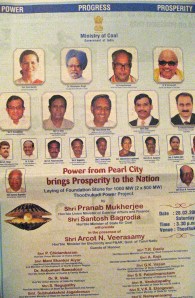
img_3452_edited2It’s election time folks – the dates are about to be announced for India’s general election to be held next month and in May. How do we know? Because government ministers have been rushing round the country inaugurating projects and laying foundation stones for the past few days before the announcement stops such publicity.
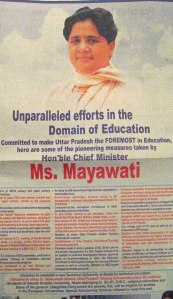
 

Along with the visits, there has been a massive number of full and half-page advertisements that have appeared in Indian newspapers this weekend proclaiming the great successes of various ministers and their departments.

It might be reasonable to assume that modern India would have outgrown this third-world sort of behaviour, where politicians get kicks by inaugurating projects and seeing their photos in newspaper advertisements, but I suppose it is all part of general election politics.

Advertisements in this weekend’s newspapers have lauded the following visits by politicians:

– Sonia Gandhi, Haryana water supply project and women’s medical college,
– Pranab Mukherjee, foreign (and acting finance) minister, Tamil Nadu power project,
– Kapil Sibal, science and technology minister, National Science Day (yesterday),
– Lalu Prasad Yadav, railways minister, railway line on a Maharashtra pilgrim route,
– Praful Patel, foundation stone and a new building at Sikkim and Assam airports,
– Sharad Pawar, agricultural minister, food park in Pune,
– Oscar Fernandez, labour minister, a medical college in Kerala,
– Prem Chand Gupta, corporate affairs minister, Corporate Bhavan in Jaipur,
– Jaipal Reddy, urban development minister, a statue in Delhi
– Sheila Dixit, Delhi chief minister, a flyover in Delhi
– Even India’s President Pratibha Devisingh Patil – a health care workshop in Delhiimg_3453-brightened_edited3                                                                                                                                                  

The government’s most public relations-conscious politician, aviation minister Praful Patel, has scored highest on visits, launching modernisation projects and inaugurating airport buildings at ten cites since February 20, according to a Mail Today article yesterday (click here and go to page 14) headlined “Pre-poll sop spree”. I wonder how many of the projects where work has not yet started were included in a mind-boggling series of architects’ drawings and pictures of shiny new buildings, with which he mesmerised journalists at a press conference about four years ago.

Challenging him for effort, Ram Vilas Paswan, minister for chemicals, fertilisers and steel, laid foundation stones and launched ten projects including chemists’ shops.

The most unlikely of the advertisements was one from the Ministry of Corporate Affairs headlined “Building People” with a picture of two jockeys racing horses. Patel’s Aviation Ministry boasted that charter airlines catered for people where “every minute counts”, neatly forgetting that his term at the ministry is ending with a plethora of loss-making airlines, inadequate ground support, and regular flight delays of an hour or more.

Now the Hindustan Times this morning, under a headline, “Last Minute Largesse” says that the government will announce, before the election dates are proclaimed, the creation of six new Indian Institutes of Management (IIMs) and a $2bn integrated child development scheme. The newspaper reported that as many as 60 proposals are on the cabinet’s agenda.img_3448-full-pic-brightened_edited

Not to be outdone, Mayawati, the prime ministerially-ambitious chief minister of Uttar Pradesh, has her own page advertisements proclaiming achievements in UP, showing she knows how Delhi works even before she arrives.

I have tried to find out the point of all the government’s advertisements which, I discovered, are placed by the Information Ministry’s Department of Audio Visual Publicity. Signficantly the Ministry announced two days ago that it is raising the advertisement rates it pays, and waiving its 15% agency commission, till June 30

 Surely, Sonia Gandhi cannot be pleased to see her picture used on such blatant wastes of money. And surely they are not supposed to win votes because they often reveal what the government has failed to do in the past five years!

Newspaper readers I have met over the weekend are laughing rather than taking the messages seriously.

So maybe the main aim is simply to reward loyal newspapers by boosting their advertising incomes – and to keep them loyal with the increased rates and reduced commissions that apply till the election is over.

Unsurprisingly, the Times of India and Economic Times get most advertisements – there are 12 in the Times today, some repeating ones that appeared in the paper yesterday.

The most intriguing story of the weekend was on the rediff.com website. It suggested that Navin Chawla, one of three Election Commissioners who is widely accused of favouring Congress (which he denies), suddenly took two days’ leave last week. His aim, the report suggested, was to delay the three-man commission announcing the poll date and bringing down the curtains on all the travelling and advertisements. It’s probably not true but, in modern India, is entirely believable.

Sadly governments do not seem to like carrying out projects launched by their predecessors. That has been only too clear since 2004 with the current government’s appalling record on the Golden Quadrilateral and other national highways projects that were started and built so successfully by the previous government led by Atal Bihari Vajpayee. I wonder what will happen to those in the lists above if Congress does not get back!

Posted by: John Elliott | February 23, 2009

Slumdog’s eight Oscars are a win in India’s success story

Flying into Mumbai, many visitors’ first view of India is of a mass of corrugated-roofed slums on the approach to the airport. For decades that has been seen as an example of the miserable and hopeless side of Indian life – the grinding poverty and class and caste-riven society that defies success and keeps perhaps two-thirds of the population poor.

But this has always been an inaccurate image because Dharavi, one of two slums near the airport, is Asia’s largest and has grown over 60 years into a vast centre of entrepreneurial success with some 600,000 people in 500 acres.

Now Dharavi has become India’s latest hit with the film Slumdog Millionaire sweeping the Oscars this morning (India time), winning eight awards including the prize for best picture about a poor Indian boy who defies poverty and corruption to compete on a TV game show for money and love. The film is not specifically about Dharavi, though the place provides the location for many of the scenes.
Watching the Oscars on tv in the Garibnagar slum where two child actors in the film live - pic from AFP

Watching the Oscars on tv in the Garibnagar slum where two child actors in the film live - pic from AFP


As I write, reporters and commentators on every India tv news channel are tumbling over themselves in an ecstasy of superlatives as they try to match the success with words. Television sets are on all over India, including in Dharavi and Garibnagar (see pic), whipping up a mood of national celebration that is usually reserved for cricket victories against Pakistan

Inevitably the tv commentators have gone overboard, claiming the film puts India’s Bollywood film industry on the map when in fact it is a British film (a nice post-colonial contribution to India’s success!).

That is a point made by Indian film people such as Amitabh Bachchan, India’s top film actor – that the West only rewards stories about India’s poor when a film is made by the West. Whether that is true or not, the combination of Indian and British talent has brilliantly brought to international focus the massive sense of self-confidence and hope that forms the basis for the India’s growing international importance and success.

As A.R.Rahman, the Indian composer, who won two Oscars for the best score and for his hit song Jai Ho, said after receiving his award, Slumdog is all about “optimism and the power of hope in our lives”.

And that is the mood of Dharavi and of India’s millions of budding success stories. I visited Dharavi in 2005 and reported how alleyways a few feet wide lead to bakeries, metal workshops, and sheds that recycle discarded plastic goods ranging from medical syringes to telephones. Pottery kilns burn wood and other polluting garbage including tyres. Lorries crammed with buffalo, goat and other skins collected from abattoirs push through narrow lanes to grimy tanneries.

Workers – including under-age children – spray-paint, cut, and press strips and sheets of leather and vinyl that eventually finish up as cheap wallets and bags plus, in some cases, up-market luggage (often fake international brands) that are exported all over the world. Families live in over-crowded lofts over the tiny workshops, and few workers earn more than $2-$4 a day.

Success and Protest - slum children protest at the film's title - pic from huffingtonpost.com

Success and Protest - slum children protest at the film's title - pic from huffingtonpost.com

Much of this is not a pretty sight, and much in the film is more ugly than happy, but then so is the life of the poor.

Perhaps inevitably, Slumdog has been widely criticised in India because the flip side of all the success is a national unwillingness to accept anything that is even slightly negative or critical (as I have often discovered on this blog). So both the words slum and dog have been attacked, as has the portrayal of the uglier side of Indian life.

But that is now being overtaken and India is in party mood. Rajeev Sethi, a leading promoter of India’s arts and artists, once said to me (talking about modern Indian art) that “every successful economy needs a tangible celebration”.

Today Slumdog, and its story of India’s poor children, is the tangible celebration.

Posted by: John Elliott | February 18, 2009

India’s FDI changes reveal weaknesses in industrial policy making

One of the biggest weaknesses affecting India’s  economic liberalisation is the way that industrial and allied policies are made. Changes affecting industries that range from telecoms and banks to aviation and retail stem far more from the pressures of vested interests and lobbies than from reasoned analysis and debate.

Foreign or domestic companies push for changes, which are then resisted by rivals, supported, if opposition to foreign investment is involved, by leftist parties that often reflect vested interests as well as their own creeds. Ministers and bureaucrats are persuaded to tilt one way or another, sometimes nudged by various inducements and sometimes by legal action. Eventually someone wins and reforms are introduced – or aren’t.

This has been glaringly evident since the government announced on February 11 that it was introducing major changes to its rules on foreign direct investment (FDI) and other forms of foreign equity.

Sectional interests dictate norms

There was little open discussion (apart from a series of confusing newspaper leaks) before the announcement, and the changes are so complicated and confusing that The Economic Times newspaper dubbed the policy “irrational”, adding “don’t let sectional interests dictate norms”. It pointed out that even ardent supporters of FDI are “asking only one question – for whom is the government doing this?”

A friend, who has long watched companies bend policy rules, emailed me last weekend: “First this is meant to recycle politicians’ and bureaucrats’ money. Second, it is to fund elections. Third it is short sighted – rather then curbing the black money [used in FDI] it is only going to bring more unknown money, leading us to a spiralling downward whirlpool”.

The Business Standard last week said, when the announcement was first made, that “critics will …. question the propriety of reforms by sleight of hand” because “definitional loopholes are being used to change foreign investment by executive order” in sectors previously regarded as controversial. It then dismissed “the manner and timing of the decision” as “side issues”, and said it was more important to ask whether the changes were beneficial.

Why do it now – and make it so complicated?

The questions that need to be asked are why the government has suddenly introduced what potentially are the most far-reaching FDI rule changes for several years and why, as several critics have said, do it at the “fag end of the government” – and in such a complex way.

The changes broadly allow an Indian majority-owned and controlled holding company, which is 49% (ie minority) foreign owned, to invest in a “downstream” subsidiary or associate company without the 49% counting against the new company’s FDI limit – which enables more FDI to go in. In FDI jargon, the restriction on cascading investment has been removed. That looks like good sense, but there is a widespread suspicion – illustrated by the comments above – that foreign companies intend to use it as a loophole to exceed permissible holdings.

The other major change is that various forms of foreign investment are to be merged for assessment purposes. This means that funds from foreign financial institutions (FFIs), foreign stock markets (in the form of depository receipts – ADRs and GDRs) and bonds, and non-resident Indians (NRIs), are all counted together with FDI instead of being assessed separately under different headings. That is also sensible, except that it will lead to countless complications, and therefore loopholes, as existing permissions and investments are re-scrambled.

Doubts about the effects

There is doubt about what the net effects will be. It appears that many limits on foreign investment will disappear in various sectors, barring defence where a 26% (but variable) FDI limit will be maintained for some time, and insurance where legalisation is needed to change the 26% FDI cap.

But many government officials seem unsure, or are not admitting that they are sure, what will happen for example to:

– the ban on FDI in multi-brand retailing such as supermarkets,
– the 74% cap on telecom (for years a tortuous rule bender),
– the 26% cap on foreign newspaper companies (though 100% FDI was approved on February 14th for facsimile editions of foreign newspapers in a nice Valentines Day present for the well-connected Wall Street Journal that will soon appear in India).

Will currently banned investments creep in – for example could foreign companies owning 49% in an Indian holding company take a large stake in the operating subsidiary of an airline, newspaper, or supermarket chain?

There are also problems for companies that are already foreign owned when FDI and FII investments are assessed together. Two Indian banks – ICICI and HDFC – for example come into this category and are looking for ways to remain Indian.

There are three possible reasons why the government has created this muddle:

One is genuinely to open up FDI, especially in areas such as retail and the media, now that the government is no longer constrained by the communist-led Leftist parties that blocked such changes until the end of last year.

FDI inflows totalled over $21bn in the nine months of the current financial year to the end of December, but have been declining since that month, so it might be logical for the government to try to revive the inflow. But, in the current world financial crisis, little extra FDI is likely to come in, however far the rules are relaxed, so that is not a very good reason.

In any case, if that is the aim, why not say so and keep the changes simple, instead of issuing (as the Industry Department has done) ten pages of unintelligible officialese in two “press notes” that refer to so many other press notes and laws and regulations that it is impossible to work out what is intended.

The second also laudable but surely misdirected reason, is to enable companies that are strapped for cash in the current economic crisis to bring in equity from abroad. Fair enough, but should industrial policy be permanently changed to meet individual companies’ short-term financial problems?

The third possible reason is to help foreign companies that want to gain bigger FDI stakes than are currently allowed – but that will not happen quickly.

Whatever the reason, it is surely wrong for the government to have allowed such negative media speculation – and party gossip – to grow in the past week.

The announcement first came as a press release and statement after a cabinet meeting. That was followed by a not very clear statement from Kamal Nath, the commerce and industry minister. Then came the two “press notes”, one of three pages and one of seven pages, which are indecipherable to nonprofessionals, and further explanations yesterday. (Curiously, the government has issued FDI policy change since 1991 as “press notes”, not official regulations).

Why I wondered, talking to a contact, was it all made so impenetratable. He replied: “This isn’t for public understanding but is designed as fertile ground for specialists and lobbyists who will know exactly where the loopholes are”.

This post is also on the Financial Times‘ website – http://www.ft.com/cms/s/0/60936f90-fd8e-11dd-932e-000077b07658,dwp_uuid=a6dfcf08-9c79-11da-8762-0000779e2340.html

Barack Obama appears to have scored his first international policy success as America’s new president (though, see a comment below added Feb 16, the Taliban has won a worrying peace-deal agreement for Sharia law in the Swat area, just after President Zardari said it was trying to take over the country).

After more than two months of see-sawing denials and prevarications, Pakistan has today admitted that at least part of the planning of the November 26 terrorist attacks on Mumbai was done in Pakistan.

“Some part of the conspiracy has taken place in Pakistan,” Rehman Malik, Pakistan’s interior minister, told a press conference in Islamabad this afternoon. He said that six suspects were in custody and were being charged, and two more were being sought.

The admission came a day after Richard Holbrooke, Obama’s special emissary to Pakistan and Afghanistan, had his first talks with the country’s leaders.

Obama also spoke yesterday by phone to Pakistan’s president, Asif Ali Zardari, and the two men agreed “to start an active engagement for the resolution of problems facing our region through a holistic strategy,” according to a Pakistan foreign ministry statement.

It seems likely that the first step in that “engagement” had to be Pakistan admitting that the Mumbai attacks had been planned on its territory, which it had been avoiding till now despite repeated demands from the US, India and elsewhere.

This is the first time that Pakistan has admitted that a foreign terror plot was planned in the country and it raises questions about the relative importance now of Pakistan’s three rulers – Zardari, who appears weak and vacillating, Yusuf Raza Gilani, the prime minister who is not much more impressive, and top officials of the country’s Inter-Services Agency (ISI) equivalent of the CIA who have been dictating the hard-line policy.

It now has to be seen whether today’s announcement marks a decline in the power of the ISI and the army, many of whose senior officers take a militant line on India and are soft on the Taliban that they helped to create.

The army has generally wielded its power over civilian (and military) governments with the blessing of America, especially under President George W. Bush who was conned by Pakistan’s former President Pervez Musharraf into believing that Musharraf was doing his bidding in curbing terrorism. It now looks as if Obama has successfully broken with the past and is demanding that the ISI and Army change tack on Afghanistan and India.

Pakistan has handed its information over to India which will be responding later. Underlining that India also shares some of the responsibility for the attacks which led to the killing of approaching 200 people, Pakistan has asked how the terrorists managed to obtain local mobile phone cards, and why the boat carrying them to Mumbai’s waterfront had not been apprehended before it landed.

Malik said the announcement “proves our sincerity and we have gone an extra mile”. He said to India: “We are with you and we have proved that we are with you”.

That sounds good – though it will not have pleased Pakistan’s hard-liners.

Will Sri Lanka’s President Mahinda Rajapakse replicate George W.Bush’s famous 2003 “Mission Accomplished” aircraft carrier performance and declare “victory” when his forces finally defeat the last of the Tamil Tiger rebels?

Does he, like Bush after the Iraq invasion, assume that a victory by the military will be the end of the story, and that the great mass of the Tamils will quietly go about their daily lives, causing no problems for the majority Sinhalese who run the government?

President Mahinda Rajapakse

President Mahinda Rajapakse

It looks as though he does, judging by his virtual silence and that of his brother, defence secretary Gotabhaya Rajapakse, about what will follow a military victory – and their lack of concern for the plight of Tamil civilians caught in what looks like the last stages of the fighting. If that is so, there will only be a temporary victory.

One must however give the Rajapakse brothers credit for what they have achieved. It looks as if they are on the brink of defeating the Liberation Tigers of Tamil Eelam (LTTE) which has waged a guerrilla war and launched terrorist attacks for just over a quarter of a century since the Tamils’ campaign for some sort of autonomy or independence in the north and east of the island escalated in July 1983.

When I was last there 13 months ago this victory seemed almost impossible, but that was because, like others, I under-estimated the government’s determination and the dramatic improvement in its military capability.

With military success in sight, it is not surprising that the government has ignored most of the pleas from the West for cease-fires that would give tens of thousands of Tamil people a chance to escape from the final battle areas. Too often in the past 25 years, potential military success has been undermined by cease-fires, the last of which ended in 2006. It is logical therefore for the Rajapakse brothers to continue the fighting until they have wiped out the rebels.

But sympathy and understanding for what the government is doing can go no further than that.

There is a huge humanitarian crisis in the areas where the final battles are being fought. More than 15,000 civilians are reported by the government to have fled from the war zone in the last three days.

Aid agencies have claimed that more than 200,000 civilians are trapped by the fighting in the area. The government disputes those figures and accuses the Tigers of preventing the non-combatants from leaving, and of using them as human shields.

V.Prabhakaran

V.Prabhakaran

Rivalry had been simmering for years before 1983 between the minority mostly-Hindu Tamils, who had been favoured under British rule that ended in 1948, and the Sinhalese majority who regard their island as a sacred Buddhist homeland.

Velupillai Prabhakaran, the reclusive and powerful leader of the Tigers, began a militant campaign in the early 1970s. In 1983,  Tamil Tigers killed 13 Sinhalese soldiers in the north, and Sinhalese rioters retaliated by burning and looting carefully selected Tamil homes and shops in Colombo.
I was there soon after, reporting for the Financial Times, and wrote that “troops and police had either joined the rioters or stood idly by” . A few days later, the then President Junius Jayawardene told me that “everything is back to normal”. But it wasn’t. Weeks of ethnic clashes followed, and then the years of guerrilla war that has led to over 70,000 people being killed.

It should have been possible to broker peace several times in the past quarter century, but efforts have repeatedly failed because of two seemingly immovable forces.

On one side has been Prabhakaran who wants nothing less than independence and only agreed to ceasefires when he needed to regroup and rebuild his forces. He whereabouts are now not known, but he no doubt hopes to fight back some time in the future with renewed attacks.

On the other side, Sinhalese self-serving and competitive politicians have tripped each other up over possible peace deals. They have seemed unable to resist hard-line anti-Tamil Buddhist monks whose backing for a military victory belies their religion.

No doubt the monks and other hard line Sinhalese will now celebrate the military success, and will be in no mood to concede anything to the Tamils in terms of autonomy.

This means that there is an urgent need for the government to take the lead and map out a constitutional future that will give the Tamils at least some form of regional autonomy. President Rajapakse has set up a commission to look into devolution possibilities and has talked of Tamils being given “equality and all rights”, but that will not be enough.

He should learn from Bush’s mistakes, and be ready to work for peace when a war is won.

This post is also on the Financial Times’ website – http://www.ft.com/cms/s/0/16a2238a-f75e-11dd-81f7-000077b07658.html

Chetan Bhagat speaking in the Diggi Palace's Durbar Hall

Chetan Bhagat speaking in the Diggi Palace's Durbar Hall

I was talking at the Jaipur Literature Festival  to Chetan Bhagat, the 34-year old Deutsche Bank executive who has become one of India’s best-selling authors by writing about modern India in an easy provocative style way that strikes a chord with young readers.

Chetan Bhagat

Chetan Bhagat

While we were chatting in a quiet corner of Jaipur’s Diggi Palace that Bhagat had discovered as a retreat from autograph-hunting schoolchildren, two young guys aged about 18 discovered us and asked him to sign copies of his three books. They were not new copies bought from the festival’s bookstore, but were well thumbed and had been passed round friends and families.

One of them, Priyansh Sharma, said he had read One Night @ The Call Center, Bhagat’s most famous book which has been turned into a film, 100 times. They both said their copies had been read by ten or more people.

Multiply that by the one million copies that Bhagat claims have been sold of his first book, Five Point Someone (written when he was 29), and the near one million claimed for both Call Center and his third book, The 3 Mistakes of My Life that was published last year and is also to be filmed, and you have an idea of his reach. 

Some people in the book trade say his figures are exaggerated, but the popularity of this cheerfully unassuming and approachable writer among the young , in a country where half the population is below 25, is beyond doubt and was evident at Jaipur.

Attended by 10,000 or more people over five days, the festival (which ended on January 25) was open to anyone and has now become a significant event on the international literary calendar. It drew names such as the historian Simon Schama, editor and writer Tina Brown (who has just launched the Daily Beast news website), and Vikas Swarup, an Indian diplomat who wrote the book Q&A that has become the award-winning and Oscar-nominated Slumdog Millionaire film.

Bhagat had never ventured into this literary world before because he did not expect that he or his books would be taken seriously. Namita Gokhale, an author and publisher who is one of the directors of the festival, persuaded him not to be so shy, and he amazed himself by drawing crowds that almost outdid those mobbing India’s top film actor, Amitabh Bachchan.

V.K.Karthika, the head of Harper Collins in India, told Bhagat that he had “created many more books”through his writings. “He has struck a chord,” she told me later. “People who were waiting and wondering whether to write have started to do so”.

But Bhagat wants to do more – not for the money because he earns well as a banker – but to change Indian society. He aims to make the young break free of traditional restraints, and to encourage them to widen their horizons.

He wants to move “beyond the 10% who get into ok colleges and the 2% who get into the best”, and appeal to the “aspirational values” of the rest who get into medium colleges or disappointing jobs. He says they find in his books “a world where people can do what they like”. He’s telling them “to question Indian norms” and “to make things change by standing up against parents and the bosses”.

He hasn’t thought this through fully yet, and he admits he is still in an “analysis mode” as to why he is having such appeal. “We have 75-year olds running the country – how do they know what 25-year olds want?”

But even though he aims to sir up his readers’ emotions, he makes sure all his books “have happy endings”. He can’t, he says, “make everyone successful”.

Bhagat wrote the first two books while working for Goldman Sachs bank in Hong Kong and the third in Mumbai, where he deals (topically) with distressed debt at Deutsche – Reserve Bank of India officials come seeking his autograph for their children when they visit on inspections.

The books sell in paperback for just Rs95 ($2), which is about a dollar or so below what one would expect. That partly explains the massive sales. Aravind Adiga’s Booker award-winning The White Tiger (also set around a call centre theme but too critical and less reader-friendly for many Indians), is Rs395 in hardback. It has sold something over 100,000 copies.

Bhagat has very long term dreams of emulating India’s best-selling author, the late Mahatma Gandhi, father of the country’s independence movement, because of his ability to generate change.

He says that over five million people read each of his books. “The day it gets to 50m, then you can make change happen,” he declares. “My ambitions are changing – I’ve had the thrill of best sellers – maybe it’ll be politics long term.

« Newer Posts - Older Posts »

Categories