Posted by: John Elliott | January 27, 2009

India raised Ulster when rebuking Miliband on Kashmir

It is now nearly two weeks since Britain’s foreign secretary, David Miliband, upset senior Indian ministers with both the content and style of his behaviour while he was in Delhi. I am writing about it now partly because I was busy on other subjects while he was here, but mainly because of something I have just heard from a highly reliable source.
David Miliband in a north India cowshed - PTI pic

David Miliband in a north India cowshed - PTI pic


I have been told that a very senior government official was so outraged by Miliband’s lecturing on how India should handle the Kashmir issue that he said, in a very quiet but stern voice, “We did not tell you how to handle Ulster and I do not expect you to tell me how to handle Kashmir”.

In diplomatic terms, that was one of the bluntest remarks made to a visiting dignitary for a long time, and Miliband and his misguided advisers from London should not have ignored it.

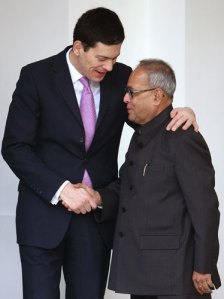
Miliband and Pranab Mukherjee

Miliband and Pranab Mukherjee

At the end of last week, a Foreign Office spokesman in London said that Miliband was “not off message” when he urged that the Kashmir problem should be solved so as to reduce the incidence of terrorism in India. Miliband delivered this line in both an article in The Guardian newspaper and when he was in Delhi.


But he was clearly off-cue when he wrote: “……resolution of the dispute over Kashmir would help deny extremists in the region one of their main calls to arms, and allow Pakistani authorities to focus more effectively on tackling the threat on their western borders……”.

To describe Kashmir in that context is wrong – but it is in line with propaganda that Pakistan deployed to influence Barack Obama’s advisers as they prepared policies before his inauguration a week ago. The fact that Obama has not included India in the Pakistan-Afghanistan brief given to Richard Holbrooke, his special envoy to the region, shows that the US has realised that it is counter-productive to approach India and Kashmir on the Miliband line.

But as I understand what happened, it was not so much the Miliband’s broad statements that infuriated Delhi and provoked the personal rebuke, but the arrogant insensitive way in which this wet-behind-the-ears politician delivered his message – first by writing the Guardian article just as he was about to arrive, and then by his personal and disrespectful style in Delhi.

Miliband and Rahul Gandhi on their rural tour

Miliband and Rahul Gandhi on their rural tour

Publicity on what happened was partially overshadowed by the village sleepover organised for him by Rahul Gandhi in rural Uttar Pradesh – presumably two guys who both expect to be prime ministers one day doing some advance bonding, having first met when Gandhi was living in London.

However, the event is still erupting in the newspapers. the Mail Today on January 24 had an article by its editor, Bharat Bhushan, on “The damage we inflict on ourselves”, complaining that India’s diplomacy has failed to such an extent “that everybody and his dog can come and do as they please in Delhi”.

“David Miliband demonstrated that he was yet to be house trained when he let loose a peremptory lecture to the prime minister of India,” wrote Bhushan.

There is also an odd story doing the rounds about a letter that Manmohan Singh was reported to have sent to Gordon Brown, Britain’s prime minister, complaining about Miliband’s “behaviour and comments”. The prime minister’s office (PMO) denied that such a letter had been sent, but I understand that it was sources in the PMO who first alerted Indian journalists to the letter. Presumably, such a letter was sent, but not quite in the strident terms deployed by the over-eager PMO sources.

As soon as Miliband left, Lord (Peter) Mandelson, Britain’s political-accident-prone business and enterprise secretary, flew in and behaved badly at a CII conference. He made his speech and then left before Pranab Mukherjee, India’s foreign minister, and Kamal Nath, the commerce and industry minister spoke, without making any public apology or speaking quietly to them on the platform. He apparently had an important engagement to do with British firms trying to sell nuclear wares to India, and officials say he had told the CII and Kamal Nath – but that does not excuse the insensitivity of his departure from the conference.

Miliband and Mandelson are clearly supremely self-confident British ministers. They are also supremely insensitive, and Miliband should be seen historically alongside the late Robin Cooke who, as British foreign secretary in 1997, helped to make a hash of the Queen’s visit to celebrate India’s 50 years of independence – again by clumsily trying to tell India off over Kashmir.

Representatives of such a former colonial power need to adjust to the times. It is of course correct to say that India should do more on Kashmir – not least on granting it more autonomy – but not in the context of the Miliband message.

See also my article on The Daily Beast website, which expands on the US-India aspects of Obama’s presidency http://www.thedailybeast.com/blogs-and-stories/2009-01-29/india-scores-with-obama/full/ 


Manmohan Singh’s heart operation today raises questions about who will emerge as prime minister if the Congress Party leads the next coalition government after the general election due by April.

People can make full recoveries from this sort of triple bypass, but the prime minister’s 76 years, and the fact that he had bypass surgery some years ago, complicates matters.

He is likely to be away from fully active work for more than the two weeks that are currently being forecast – that is the minimum and it could be more like a month or even longer.

This will give Pranab Mukherjee, the highly capable foreign minister who is the acting finance minister, and in effect the unofficial acting prime minister, time to display his abilities, and his loyalty to the Gandhi dynasty’s current leaders Sonia Gandhi, the Congress leader, and her late-30s son Rahul, who is seen as a future prime minister.

But will Manmohan Singh want to serve again as prime minister after the elections? If he is fit enough, the answer is certainly yes. But if his health is ailing, he might want to opt for retirement, much as he would like to remain in office till Rahul Gandhi is ready, perhaps in two years time, to be prime minister.

So who would Sonia choose? Probably not Mukherjee because the dynasty would worry that, like Narasimha Rao who became prime minister in 1991 after the assassination of Rajiv Gandhi, he would emerge as a strong wilful prime minister reluctant to hand over to Rahul.

Dynasties don’t trust outsiders unless, like Manmohan Singh, they have no personal career ambitions.

Who then? Could it be that Sonia herself would take over, with Rahul at her side? Or would Rahul step in? Time will tell!

Two of India’s leading high tech entrepreneurs have both made the same point about good corporate governance in the past few days – it is either in a company’s culture and DNA, or it is not. The inference of their remarks is that it was not in Satyam Computer Services, the leading Indian software company whose founder and chairman, B. Ramalinga Raju resigned on January 7 and admitted to years of fraud.

One of the entrepreneurs was Narayana Murthy, chairman and a founder of Infosys, probably India’s most admired software company, who I have just spoken to for an article on Fortune.com about the longer term significance of the Satyam crisis. He says that corporate governance “is a mind set, not a check list – it’s about culture, aspirations, transparency, and striving for respectability”.

The other was Kiran Mazumdar-Shaw, founder chairman of Biocon, India’s best known biotech company. In an article in the Times of India on January 15, she wrote that it was important to check a company’s DNA rather than just relying on official regulations:

“Investors and observers need to be able to assess the DNA of the company to establish the real state of governance and resultant assurance that evolves from this……..I believe the answer lies in decoding the good and bad genes that make up the DNA of any company.

“Once this understanding is obtained, the defence against these potential temptations lies in the DNA of the company. This includes the underlying governance principles, the integrity of the board and the senior team, and the values of the organisation which are embedded in the decisions taken. 

“Many boards today are cosmetic boards with directors that add little value and are irrelevant to the specific field of the company. The Satyam board certainly had familiar well-known names that were seen to lend credibility, but failed to navigate Satyam into clear waters”.

Narayana Murthy believes businesses have generally been “evolving towards better governance and transparency and a realization that good governance is in your own interest”. Satyam’s scam however illustrates that the evolution is slow and India’s culture is a long way off what Murthy calls “corporate democracy, pluralism and transparency”.

Raju gathered in his board room impressive names who included a former top bureaucrat (a cabinet secretary), a management school dean, and a US-based IT specialist, and also floated the company in New York which is regarded in India as another badge of respectability.

He ticked the items on the good governance check list and even won awards for what he was doing, but clearly did not have the culture.

And with all respect to the bureaucrat involved, no company in any country hires such a person in order to care for the interests of the shareholders or good governance – he is hired for his government contacts and potential as an influence peddler.

Murthy says that companies in India have come to realise in the past ten years “that if you fiddle your accounts you can get away with 100 crore rupees ( approx $20m), but if you make your company stronger and have good governance you may get 1000 crore rupees – good governance is in your own interests”.

He is proud of the way that Infosys shares information. “When we review progress there are 20 people in the room, then we consolidate the information we gather so no one person can decide what the revenue for the last quarter has been”.

What we still don’t know of course is how many people there were “in the room” when Satyam did its figures. Just the Raju family? Plus one or two top executives, and/or the non-executive board members, and/or the business heads? How many people are culpable?

The question now is whether the Satyam scam is enough of a watershed to propel India into the sort of reforms that are needed – most importantly transforming the ethics of (mostly) regional politicians who invested in Satyam, protected it, and helped it and the Rajus’ Maytas infrastructure and construction companies to obtain business.
 
I suspect not because there is no moral outrage in India about what has happened, and because the existing partnerships between corrupt politicians, bureaucrats and businessmen is too good a gravy train to stop.

Sadly, I believe life will go on as it has in the past, with some companies following genuine good governance but many family controlled companies continuing with Satyam’s DNA and culture.

See also on this blog:
https://ridingtheelephant.wordpress.com/2009/01/12/satyam-rebuilding-begins-but-indian-corporate-fraud-runs-deep/
and
https://ridingtheelephant.wordpress.com/2009/01/07/satyam%e2%80%99s-raju-lifts-the-lid-on-indian-corporate-fraud/
and
https://ridingtheelephant.wordpress.com/2008/12/17/markets-kick-satyam-into-line-%e2%80%93-but-india%e2%80%99s-reputation-for-corporate-governance-is-hit/
and
https://ridingtheelephant.wordpress.com/2008/09/22/%e2%80%9cfamily-silver%e2%80%9d-at-risk-on-hyderabad-metro-project/

Posted by: John Elliott | January 12, 2009

Satyam rebuilding begins – but Indian corporate fraud runs deep

At last some progress is being made to sort out the future of Satyam Computer Services, the Indian software company that was rocked last week when its founder and chairman, B.Ramalinga Raju, resigned and admitted fraud that started several years ago and exceeded $1bn in recent months.

Raju and his brother have both been arrested and the company’s chief financial officer is being questioned by investigators. But these moves happened slowly after last week’s revelations, indicating that the Rajus’ political and  bureaucratic friends were trying to protect the two men and slow down investigations – as they will no doubt continue to do for many months and years.

Even now Raju is being treated as a hero by supporters who rallied round a magistrate’s house when he was being detained. DNA, a Mumbai-based daily newspaper, reported yesterday that they included dozens of Satyam employees, plus people from the large Raju clan. “Raju is not a cheat. he has not defrauded anyone. We don’t know why he is being shown as a fraudster,” said one of them. Others blamed the media for over-stating what  has happened – an accusation that was thrown at this blog in several comments when I first wrote about Satyam’s problems last month.

This afternoon three new board directors, appointed over the weekend by the government, met in Hyderabad, the south Indian high-tech city when Satyam is based. Led by Deepak Parekh, one of India’s most respected bankers and finance industry leaders, the three took over responsibility from the previous board which has been dismissed. They decided to appoint a new accounting firm, plus a new ceo and chief financial officer. More board directors will be appointed soon and the full board will then take over running the company – maybe with the help of government funding.

Many questions have to be answered. How many people inside and outside Satyam were complicit in the fraud? Did top non-family management know what was happening? Did top managers realise that Satyam’s publicised results far exceeded the work that their businesses were carrying out? What was the role and culpability of PwC, the auditors who approved accounts, which should have been questioned because of massive and unaccounted cash holdings?

But the tentacles of this crisis go far wider than Satyam and its software business and, as I wrote last week post in a post titled Satyam’s Raju lifts the lid on Indian corporate fraud, this story illustrates much that is wrong with companies in India (and many other countries).

I have been talking to friends and contacts over the past few days about how many family controlled groups switch funds between businesses, and how this is practiced by some of India’s best known groups. “Everyone knows that,” I was told, “they’ve always done it!”, when I mentioned one famous name that obviously cannot be written here.

A large software company (not one of the big three) was also mentioned as having well known fraudulent practices.

But where Raju seems to have exceeded his peers is in the scale of his cooking-the-books. Not only did he brazenly switch funds, but – as he admitted last week – he massively inflated earnings figures in order to keep Satyam ranked as India’s fourth largest software business.

There has been concern for many years of the Rajus’ deals but, as happens in India (and elsewhere), nothing was done by regulatory authorities, presumably because of close political connections.

The Raju family runs other companies, notably Maytas which has large-scale infrastructure and construction businesses. Maytas finances are closely inter-linked, privately, with publicly-quoted Satyam, even though there was no public declaration of those links.

Both companies have extensive political and bureaucratic contacts in Delhi and in the state of Andhra Pradesh, where Hyderabad is the capital. Rajus’ close contacts include Chandrababu Naidu, the state’s last high profile and tech-savvy Telegu Desam chief minister who was in power during Satyam’s main growth period, as well as Y.S.Rajasekhara Reddy, the current Congress Party chief minister.

Often when such companies grow quickly, and especially when they have activities in industries such as infrastructure, their equity investors frequently include regional and national politicians, who always need somewhere to park the massive bribes that they gain while in office. The politicians usually choose companies that will produce good returns, which can be used to fund political and other activities.

But  the politicians do not expect their money to decline in value. Business World, an Indian business weekly magazine, reported this weekend that a politician with a stake in Maytas told Raju to “make up for the fall in the value of his equity with cash”.

This story has a long way to run…………..

Posted by: John Elliott | January 7, 2009

Satyam’s Raju lifts the lid on Indian corporate fraud

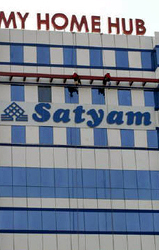
Satyam's offices - a Reuters photo

Satyam's offices - a Reuters photo

I have often mentioned to businessmen visiting India how remarkable it is that many of the appalling business practices of the country’s traditional old family-controlled companies do not seem to have spread to the booming software sector – and then add that I wonder whether there are some skeletons in unopened IT cupboards.

If I am talking very privately, I have mentioned Satyam, rated till today as India’s fourth biggest software and outsourcing company, as one whose governance has been frequently questioned.

This morning’s resignation and confession of fraud – vastly inflating company results for “several years” – by  Ramalinga Raju, Satyam’s founder chairman, means the company can now be openly named for dubious business practices that have concerned (some) investors in the past. (It also means that Satyam is presumably not India’s fourth largest IT company and should not have been rated along with the other market leaders Infosys, Wipro and TCS.)

Raju has admitted inflating the figures – for example by well over $1bn in September – and has admitted that his attempt to merge the family’s Maytas construction companies into Satyam last month “was the last attempt to fill the fictitious assets with real ones“. (The Maytas attempted merger, aborted after about ten hours triggered a series of events that culminated in today’s news).

B.Ramalinga Raju

B.Ramalinga Raju

It was, wrote Raju, “like riding a tiger, not knowing how to get off without being eaten.”

This raises the question, not only about the software industry, but about how many other Satyams there are lurking in India’s hugely corrupt and politically-linked corporate world, its manipulated stock markets, and sometimes dubious auditing practices.
Raju’s is most certainly not the only family behaving in such a corrupt and fraudulent way.

How far up the league table of India’s top companies are such practices prevalent?

And how many of the family-controlled busineses that make up about half  the top 20 or 30 biggest Indian companies could one definitely rule out of the list of possible culprits? Not many, I guess! Even the Confederation of Indian Industry has today shown itself to be worried.

The Raju’s, for example, have close connections with politicians, as do many other groups, especially those in the power and construction industries. The Raju’s are very well linked in their home state of Andhra Pradesh. This was most recently visible with the chief minister, Y.S.Rajasekhara Reddy, defending the award of a Hyderabad metro railway contract to the Raju’s Maytas construction company after the award had been criticised last September by E. Sreedharan, who heads the Delhi Metro Corporation (DMRC).

Today’s astonishing confession by Ramalinga Raju stated that (this is a quote from the letter courtesy of Reuters click here for the full letter) :

“ 1.  The Balance Sheet carries as of September 30, 2008
           a. Inflated (non-existent) cash and bank balances of 50.40 billion rupees ($1.04 billion) (as against 53.61 billion reflected in the books).
          b. An accrued interest of 3.76 billion rupees which is non-existent.
          c. An understated liability of 12.30 billion rupees on account of funds arranged by me.
         d. An overstated debtors position of 4.90 billion rupees (as against 26.51 billion reflected in the books).

”  2. For the September quarter (Q2) we reported a revenue of 27.00 billion rupees and an operating margin of 6.49 billion rupees (24 pct of revenues) as against the actual revenues of 21.12 billion rupees and an actual operating margin of 610 million rupees (3 percent of revenues). This has resulted in artificial cash and bank balances going up by 5.88 billion rupees in Q2 alone. ”

As commentators today are saying, this is India’s Enron. It is also an unexpected result of the world financial crisis that is making foreign investors curb their irrational over-excitement about Indian stocks and query business practices. This raises many questions – most notably:

–      Can India’s slow and corruptly-infuenced legal system cope adequately and punish such fraud, or will the case drift away with fading memories? 

–     Where will the Raju trail lead, and who else will be implicated?

–     How implicated are company non-executive directors – who on Satyam’s board (as is often the case) include a former top bureaucrat – and auditors (PwC for Satyam)?

–     Which other company will be exposed next? There must be many candidates.

Sheila Dikshit has surely got it wrong. What a pity, right at the beginning of her record-breaking third term as Delhi’s chief minister after a resounding victory in the state assembly polls, she took a ride along Delhi’s appallingly inefficient Bus Rapid Transit (BRT) System and declared it a success.

But she drove along it at midday when the traffic is light and there are few jams – I also went along the system on Christmas Eve and also found no problems. According to newspaper reports, she also broke the rules by driving down the bus lane, with all traffic lights turned to green.

Bogota's efficient BRT with wide 3-lane roads and passenger overbridges

Bogota's efficient BRT with wide 3-lane roads and passenger overbridges

But the idea of such a system is that it should function well at peak hours when traffic builds up. At such times, the BRT has been a clear disaster ever since it opened with crippling traffic jams, chaos, many accidents and deaths. Buses of course have generally speeded down their designated lanes, but have not proved successful in persuading people to switch from cars.

Apart from bus passengers, the main people who seem to have gained are the contractors and, presumably, officials in the Delhi government or one of the municipal agencies who must have got the kickbacks on the contracts.

(I have always wondered who the officials are who benefit from the frequently useless road equipment that it is regularly installed along the city’s roads – rubber flaps and mini-pylons marking lanes that quickly get snapped off by passing traffic, useless reflectors along central-reservation kerbs, roadside railings that are not needed, and now new street signs in Lutyens Delhi (and maybe elsewhere) that are twice as big as they need be).

The problem with the BRT is that the initial Ambedkar Nagar-Moolchand stretch was ill thought out and was the result, I suspect, of the battle that one of its advisers, Prof Dinesh Mohan of the Indian Institute of Technology, waged against the highly successful Delhi Metro train system.

He has persistently argued that the Metro is a waste of money because there are not enough trains and passengers, and pushed the BRT instead. The BRT was then rushed and introduced without a detailed study, as officials are now admitting publicly.

It was started on a stretch – from south of the Oberoi Hotel to the outer ring road – that was not even wide enough for existing traffic, and was inevitably far too narrow when regular traffic was restricted to two lanes. That view was endorsed by a parliamentary standard committee  a few days before Dikshit endorsed the project after her ceremonial drive.

I can also vouch for it being too narrow and appallingly designed, having this summer seen a highly efficient BRT in Bogotá, the capital of Colombia, where I was visiting on holiday. There the roads are very wide and there are pedestrian bridges for bus passengers to cross the traffic lanes. The project is efficiently run by private sector contractors who built it and are responsible for collecting the fares and running the stations and bus services.

Nothing so well ordered has happened in Delhi, even though some officials visited Bogotá to study the system (on a presumably expenses paid trip). Here the roads are too narrow, there are no over bridges, and there is a total lack of safety – even Delhi officials are now admitting that three lanes in each direction for traffic are essential.

Now it is being reported that the system is to be extended, but with variations – what officials are reported to be calling “Flexi-BRT”. In some locations, the bus corridor will move from the centre of the highway to the left, and sometimes there will be a break and all the traffic will move together. That is surely a recipe for chaos at the junctions of the different layouts.

Having lived in India for many years, I admire how this country thrives on turning muddle and adversity into success. But what will happen when that muddle is designed, and is not the result of  happenstance? Presumably, even greater muddle.

Posted by: John Elliott | December 31, 2008

Happy New Year – some possible 2009 events……..

………….and may 2009 not be as bad as seems likely!


Here are ten thoughts on what might, or might not, happen during the year:

Wouldn’t it be good for South Asia if…………

1. Omar Abdullah, the new 38-year old chief minister of Jammu and Kashmir, is allowed to bring a fresh approach to Kashmir. Rahul Gandhi, son and heir to Congress Party leader Sonia Gandhi, who knows Abdullah well, can help by persuading the old guard in his party to work with J&K’s youngest-ever chief minister, instead of trying to upstage him and block his initiatives. India needs to start giving Kashmir the greater autonomy that it has demanded for years. This is part of Abdullah’s election platform and should be actively supported by Rahul Gandhi and Congress.

2. Rahul Gandhi becomes India’s deputy prime minister if Congress leads a new coalition government after the April-May general election. Manmohan Singh could continue as prime minister for perhaps two years and then hand over to Gandhi. As readers of this blog will know, I am no fan of dynasties, and believe they do more harm than good to democratic transparency and development. But Rahul Gandhi is going to take over the Congress leadership one day, so the sooner the better because Sonia Gandhi is not a political leader and Rahul could be – his first test could come on how he gets Congress to handle the Kashmir issue.

3. Sheikh Hasina, Bangladesh’s newly elected prime minister (also a former prime minister and previously held on murder and corruption charges), manages to rise above her past political failings and lead the country into a new era of political stability and economic development. That means that her leading political opponent, Khaleda Zia, should put an end to the tit-for-tat politics that she and Sheikh Hasina have indulged in for years, and allow the government to govern.

4. Sri Lanka emerges from the current war between its Sinhalese-led government and the Tamil Tigers with a lasting peace deal that enables Tamil activists to feel they have won something in terms of regional autonomy.

And some 2009 forecasts …….

………….on Pakistan and Afghanistan

5. Pakistan will be have another  military coup, rationalising the current chaotic leadership of the country.

6. Barack Obama will, as America’s new president, declare Pakistan a terrorist state.

7. America and Britain will tragically continue to waste young soldiers’ lives in their futile Afghanistan army campaigns which serve no useful purpose.

…………and economies in crisis

8.  The world’s economy will fail to recover, and it will gradually be realised that the current crisis could affect how people live for a generation or more. There is a lot more bad news to come on bank and company closures, especially in the US and Europe – and China has yet fully to feel the collapse of world-wide demand for its products. Then countries like the US and Britain will have to pay the price for their governments’  banking and other company bail-outs.

9.  India, which continues to be primarily an inward looking economy, will fare less badly than most others, though it will find economic growth declining more than currently forecast – and there will be more unexpected spin-offs like the governance lesson currently being learned too late by Satyam, the software company.

10.  Gordon Brown, Britain’s prime minister, will resist temptations to call a general election later in the year, when he could claim that he and his Labour Party are what the UK needs to be steered through its dire economic crisis. He’d be on shaky ground because he presided as finance minister over the boom that he famously declared would not turn into “a bust”. Brown’s New Year wish must be that predictions of Britain becoming an Iceland-style economic bankrupt are proved wrong.

Posted by: John Elliott | December 27, 2008

Pakistan’s army is in charge – and forcing a crisis

The most worrying trend in Delhi, as India-Pakistan tensions escalate, is a growing belief that the Mumbai attacks were not just condoned, but were actually commissioned by Pakistan’s army – not just by the usual suspect, the ISI (Pakistan’s CIA).

Reading the newspapers, and talking to well informed friends and contacts on the Christmas party circuit in Delhi in the past few days, I have been amazed by how many people are arguing this. These are not conspiracy theorists but people who, through their past or present careers, are closely linked with India’s foreign affairs and security circles.

Three of the reasons behind the theory were set out in yesterday morning’s (Dec 26) Indian Express which asserted that the Mumbai attacks had been “sanctioned” at the “highest levels” of the Pakistan army.

The reasons, which have appeared in varying forms in other papers in the past few days, were: to make the West (ie the US) realise it can’t take for granted Pakistan army’s presence (fighting the Taliban) on the Afghan border; to reinstate the army’s institutional credibility following President (General) Pervez Musharraf’s exit from the scene; and to reassert the army’s supremacy over the civilian government on security issues.

There is another more devious theory. It is that the army is tired of losing battles on its western border with Afghanistan, and would like an excuse to shift its battalions to the eastern Indian border, leaving the lawless Afghan border to the Taliban and the Americans to slog it out.

Linked with that is a view that President-elect Barack Obama must learn that the Pakistan army does not like having to fight the Taliban (which it helped create) on America’s behalf, so should soften his approach when he becomes president. Obama should also not put pressure on Pakistan’s civilian government.

It is now clear that the army – led by its new chief, General Ashfaq Kayani  – is running Pakistan’s civilian government. It has long been evident that President Asif Ali Zardari is more of a joker than even a cipher – and that, one year after his wife, Benazir Bhutto, was assassinated last December 27, has no real power.

Now Nawaz Sharif, the former prime minister, is following the army’s line by denying that anyone from Pakistan was involved in the Mumbai attacks, having initially taken the opposite view.

This surely illustrates why it is best to have a general at the top of Pakistan’s government. The current  muddle about who is in charge was partly created by the west, which encouraged the ousting of Musharraf from his post of army chief.  One day western governments – led by the US and UK – which bleat endlessly about the need for a democratic government in Pakistan, will realise that the army is always in charge so it is much better to have it out in the open occupying the presidency.

Some of my Delhi-based foreign correspondent colleagues gloated as they reported Musharraf’s decline as if he was some evil monster. He may have done all sorts of things wrong – most national leaders do – and grossly misled outgoing-US president George W. Bush (not a difficult thing to do), but at least India and the west knew who to deal with. Now they don’t.

The army has over-ruled the civil government’s wish for peace with India. What should have been an inquiry into who was responsible for the Mumbai attack, with terrorist camps in Pakistan being closed down, has been turned into a dire India-Pakistan crisis.

The world has become more concerned about the risk of a war between the two nuclear powers than about dealing with the Mumbai terrosts, which is exactly what the Pakistan army wanted.

India is partly to blame for this because some of its muddled messages over the past month have appeared to be threatening to attack Pakistan if action was not taken against terrorists based there. That enabled the Pakistan army to whip up nationalist opinion and pursue the strategy outlined above.

I stick to my view of December 23 that India will not attack Pakistan – but, alongside that, it now seems that the chances of Pakistan-based terrorists being dealt with by Pakistan are now slim. And when the next terrorist attack takes place, I believe India might well respond. Then the Pakistan army will, according to current Delhi informed opinion, have achieved its aim.

Posted by: John Elliott | December 24, 2008

Merry Christmas !


Merry Christmas  


Christmas Tree in Istanbul - photo Reuters/Osman Orsal

Christmas Tree in Istanbul - photo Reuters/Osman Orsal


 to all of you who have logged in to this blog in the past year, both on Fortune.com and here  


Have a great holiday and come back again soon


cheers

John

Posted by: John Elliott | December 23, 2008

India won’t attack now, but it could next time – quickly!

India’s Mail Today newspaper this morning splashes across its front page the headline “War Panic in Pak as India Talks Tough”, and reports that Pakistan “scrambled its fighter jets over nearly all major Pakistani cities” yesterday. 


Yet I have met no-one who thinks India will attack terrorist camps – or any other sites – in Pakistan, despite the noise that has been building up between the two countries since the Mumbai terrorist attacks last month.


Many people are of course wondering whether India will strike– and worrying that it might – but they can’t quite see it happening. I am sure India won’t, not this time anyway.


Why am I so sure? Because of the consequences. Pakistan would strike back. India would be blamed as the aggressor. Nuclear war fears would escalate, foreigners would evacuate, and the missiles would have done little or no real damage to the capabilities of Pakistan-based terrorists.


Furthermore, the strikes would not be a vote winner in next March-April’s Indian general election because a majority of voters would not thank the Congress-led government for putting their lives and the already-declining economy in jeopardy – possibly with lives being lost in a Pakistan counter-attack.


There is an alternative view that the country would applaud the government’s courage, but I doubt it. This is not the same situation as George W. Bush hitting at Afghanistan after 9/11 or Maggy Thatcher invading the Falkland islands in 1982. Both these actions were vote winners because troops were sent to the other side of the world and there was no chance of return attacks on the US or UK – apart from possible terrorist strikes in the US which could be blamed on the aggressors, not Bush.


India on the other hand would be hitting at its neighbour and recrimination would be instant, with all the down sides I’ve just mentioned.


So, in practical terms, is it silly of India – backed by the US – to be indulging in implicit threats of attacks on Pakistan, demanding “action” by Pakistan “or else” ?


Possibly so, though it has no option with the general election looming. Even though I believe there are few votes in a strike, Congress would certainly lose votes if it was seen to be soft on Pakistan and therefore on terror. That would open doors for voters to flood to the potentially tougher Bharatiya Janata Party and maybe even its strongman Narendra Modi


But the fact that it is bluff  is exposed by the way India’s message and threats vary day by day, while Pakistan fails to curb the freedom of leading terrorists despite international pressure to do so.


The Times of India, illustrates India’s soft approach this morning with a headline saying says “Patience Wearing Thin – Pranab Tells Envoys Will Have to Deal With Pak On Our Own”. That refers to foreign minister Pranab Mukherjee, who spoke yesterday to 122 Indian ambassadors called to India for briefings. (They have come for a meeting planned for months but finally arranged a week or so ago as part, it appears, of the current war of words with Pakistan)


Kanwal Sibal, an unusually outspoken former Indian foreign secretary, wrote in the Mail Today last week that the government’s “feeble response” was “baffling”, prompting the editors to put up a headline saying “Irresolution Masked as Restraint” – (click here and go to page 10).


Recognising that limited military action might not be favoured, he argued for “politically meaningful measures” centred around breaking off all ties with Pakistan. This he suggested would strengthen India’s diplomatic hand and saved it from relying on others such as the US.


So what is likely to happen now? Possibly what Sibal suggests, plus a ratchetting up of the confrontation, with troops moving near both sides of the border – which would frighten the world about a potential conflict in the same way as happened in 2001-02 when there was a confrontation.


Then tempers will cool and life will slowly return to normal – till next time.


Is there an alternative to this perennial play acting? Possibly, if India dared do it and resisted the temptation to warn the world in advance.


After the current crisis has passed, it could position missiles aimed at two or three known significant terrorist targets in Pakistan (well away from military establishments and urban areas,) and fire them – without any warnings or threats – as soon as evidence points next time to terrorists coming from Pakistan. It would have to decide the level of terrorist activity that would trigger such a response and leave the firing decision to three top ministers.


As the missiles went, India would telephone Pakistan and the US and say there would be no more attacks, and would also go on world television within minutes and repeat the message.


That might, just, move the goal posts and change the balance of the diplomatic games– and it would be a vote winner because the US and other countries would surely stop Pakistan responding.


High risk, of course. Any other ideas?

« Newer Posts - Older Posts »

Categories