I asked Lord (Chris) Patten, the former British Conservative Party politician, European Commissioner, and Hong Kong governor, when he was in Delhi last week, what he thought made a country a superpower. He had said in a speech that, whatever its current (Iraq) horrors and other (economic) problems, America was still a superpower because, among other things, it is “the only country that matters everywhere”.
Tempting him to state the obvious – that India wasn’t there yet – I asked for his definition. I mentioned that Penguin (publishers of his new book What next? Surviving the 21st Century) had also just issued a very upbeat work on India by a BBC journalist colleague, Daniel Lak, with the rather over-egged title, Indian Express – the future of a new superpower.
Lord Patten said that a super power was a country that “had the clout, and was prepared to use and throw it around across cultural, military, economic, commercial and educational fields”. India, he said gently, wasn’t there yet, despite its growing importance internationally
I’ve now thought of another essential criteria – or pre-requisite – that bars India from super power status, and is likely to do for many many years to come. It is that a large minority (or more) of a country’s politicians need to care about policy and the future of their country, instead of just serving their personal and political ambitions. In India such a large minority does not exist, so the country lacks effective leadership.
I know of course that many US politicians do not individually meet this criteria, and that political and commercial corruption and self-serving deals and pay-offs go to the top of the current administration, as they have in the past. But there is surely a large minority of politicians who care, as there are in the UK and many other countries.
In India however this is rare, as the behaviour of three prominent Indian politicians over the past couple of weeks demonstrates.
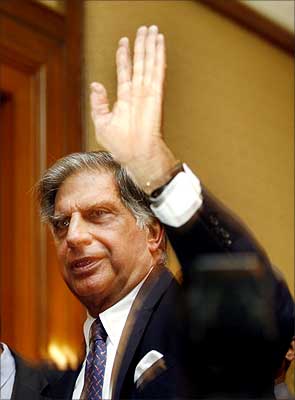
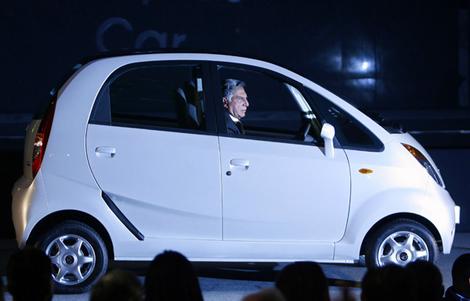
Mamata Banerjee, for her own narrow political goals, effectively drove Tata Motors out of its Singur factory in West Bengal and into Gujarat and the hands of Narendra Modi – a controversial chief minister , who is regarded as a Hindu nationalist tyrant by many critics but at least knows how to develop his state and improve the lot of the people who live there. Whatever his faults, he serves the people in terms of economic and social development
Praful Patel, the Aviation Minister, who has hubristically presided over an irrational rate of growth in Indian aviation, and Murli Deora, the powerfully-connected Minister for Petroleum, are the other examples. Their treatment last week of Jet Airways, when its founder-chairman, Naresh Goyal, announced 800 instant (and 1,100 planned) redundancies among his loss-making airline’s staff, makes my point.
Jet is based in Mumbai, the capital of Maharashtra, so it was perhaps not surprising that Raj Thackeray, leader of one of the two factions of the Maharashtra-chauvinistic Shiv Sena political movement, said that no Jet Airways aircraft would take off from Mumbai if anyone lost their job. Mr Thackeray spoke as the leader of the Maharashtra Navniram Sena political party, which is known for use brutal gangs to enforce its will (on October 21 he was arrested for inciting rioting and assault on north Indians working in Maharashtra).
Instead of trying as Aviation Minister to calm a developing crisis, Mr Patel, a leader of the Maharashtra-based National Congress Party, then played to his local constituency . He condemned the redundancies and said they should be cancelled – apparently determined not to be outgunned by Mr Thackeray.
Next, Mr Deora stepped in and took the same line. He was not speaking as Minister for Petroleum, but as an important Mumbai politician with a political base he felt he had to protect, even if it meant undermining Jet Airways.
Both men ignored their ministerial portfolios and attacked Jet and Mr Goyal and, together with Mr Thackeray, forced him to cancel the redundancies.
Mr Goyal handled his airline’s lay-off announcement disastrously and arguably deserved the angry staff and trade union protests that erupted. But he did not deserve, with his airline facing a financial crisis, to be publicly crippled by two cabinet ministers who showed more interest in regional power politics than in solving the country’s problems.
That’s not how a super power is made.





 Nov ’09: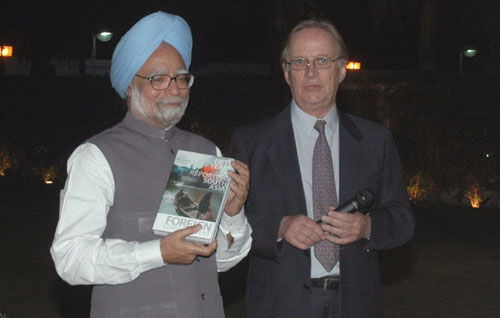
 Riding the Elephant
Recent Comments