Record prices include Tyeb Mehta in a one-lot selected bidders’ auction
Peter Nagy of Nature Morte remembered at Frieze Master and London openings
It’s been a dramatic summer and autumn for modern Indian art with a growing focus on London, including international Frieze exhibitions, while sales have topped $125m since September at auctions based in Mumbai, New York, and Dubai as well as London. The Dubai auction by Volte Una was the first to offer just one work of Indian art with selected bidders. It produced a Tyeb Mehta record rupee price.
This week, while attention moves to India’s commercial capital for the fourth Art Mumbai jamboree, the drama in London is continuing at a small but focussed and overwhelmingly black exhibition at London’s Serpentine North gallery in Hyde Park, as well as at a stunningly colourful display by Anish Kapoor at the Hayward Gallery.
At the Serpentine, perhaps more memorably than much else that has been on show, Amar Kanwar, a Delhi-based moving image artist, explores historical memories and moving personal impressions. Located in a building that was a gunpowder store in the early 19th century Napoleonic Wars, the entrance leads you into complete darkness till adjustment reveals digital images around the walls.
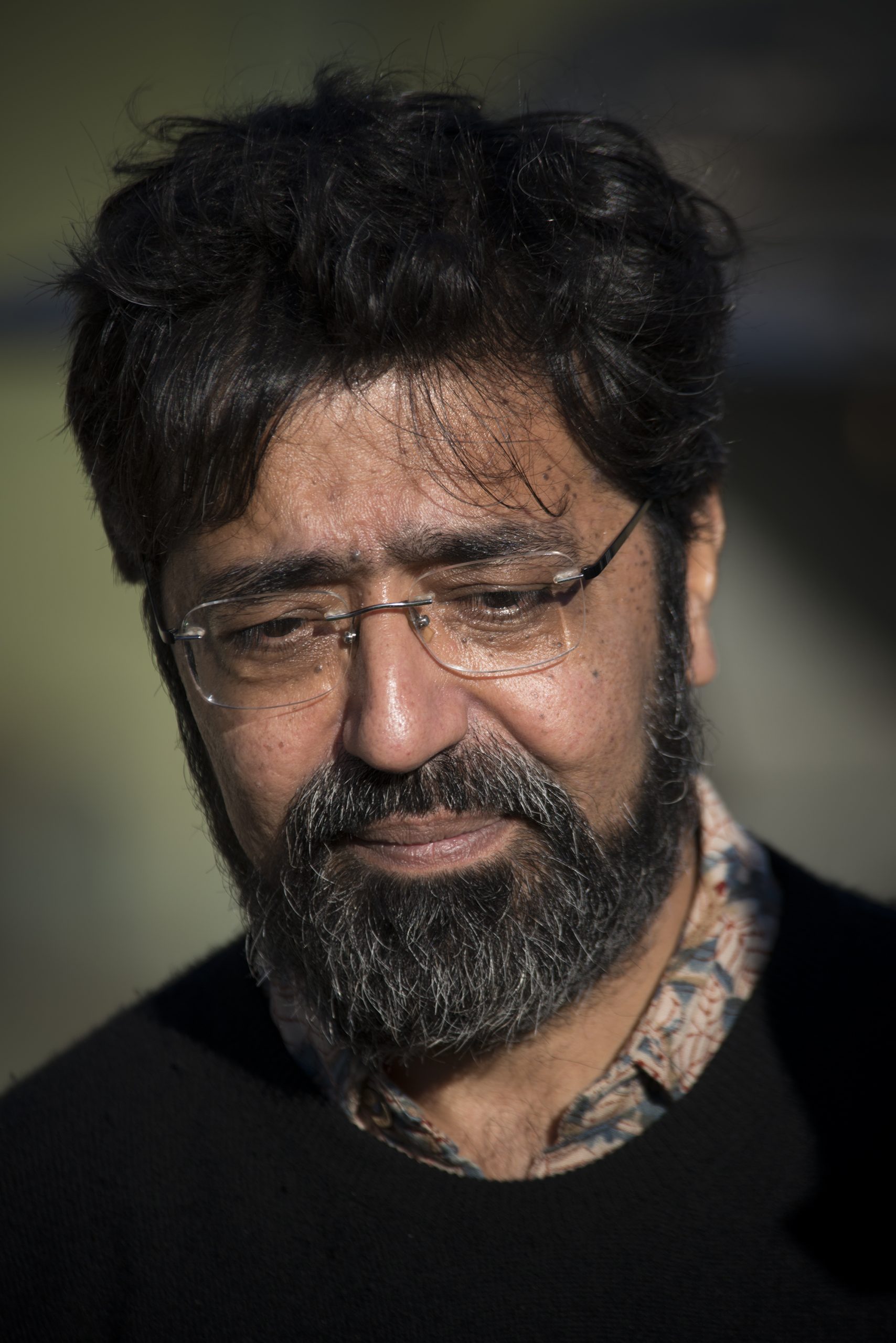
There are three digital video installations including The Charcoal Man, a new 2026 seven-screen film that runs in a darkened studio for over 60 minutes mixing fact and fiction. It follows on from Kanwar’s The Peacock’s Graveyard(2023) that is also on show.
With a play between images and words, Kanwar explores how people’s lives in India are affected by history, political conflict, violence and other events beyond their control. The focus includes the misery, suffering and the legacy of Partition in 1947, when the artist’s family fled from Pakistan to Delhi, and the assassination of Mahatma Gandhi.
”We are all now avenging every single real, personal, historical, fictional and mythical murder,” says Kanwar. “Revenge – actual or imagined – now has religious, legal and constitutional impunity….the desire for vengeance masquerades in a dozen ways.…The Charcoal Man emerges from this relentless loop of betrayal and vengeance”.
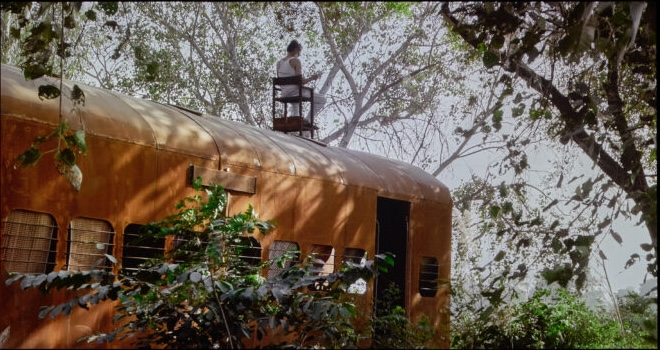
A third film, Such a Morning (2017-19), tells the fictional story of a professor who suddenly retires and seeks refuge in an abandoned carriage (above) in a forest and writes letters that examine 49 types of darkness. Kanwar explains that he “wanted to enter the zone of discomfort” created by the professor’s withdrawal from daily life. The specially built train carriage remains in Delhi at the warehouse of the Kiran Nadar Museum of Art that was one of the main sponsors of the film. “It’s a memorial to the professor who refused to conform, stepped off the tracks and wandered into the wild,” says Kanwar.
The exhibition catalogue is a splendidly presented 468-page book designed by Sherna Dastur. It reproduces the three films with masses of images and text, along with a revealing lengthy conversation between Kanwar and the Serpentine’s director Hans Ulrich Obrist.
$125m auctions
Volte Una’s novel form of auction, with just one work and selected bidders, was staged by Dubai-based Tushar Jiwarajka.
The one-hour online auction produced a record rupee price of Rs69.1 crore for Rickshaw Puller, a 59x36in acrylic on canvas painted in 2002 by Tyeb Mehta, a leading member of the Bombay-based Progressives group. That equalled $7.15m, which was not however a dollar record because it was less than the $7.27m (Rs 61.80 crores) achieved for Mehta’s 1956 painting Trussed Bull at Saffronart in April 2025
(A book on Mehta’s life, My Tyebi: A Memoir, which is written in the voice of his wife Sakina Mehta and worked on by their daughter Himani Mehta Dehlvi and Nusrat F Jafri is being released this week at Art Mumbai)
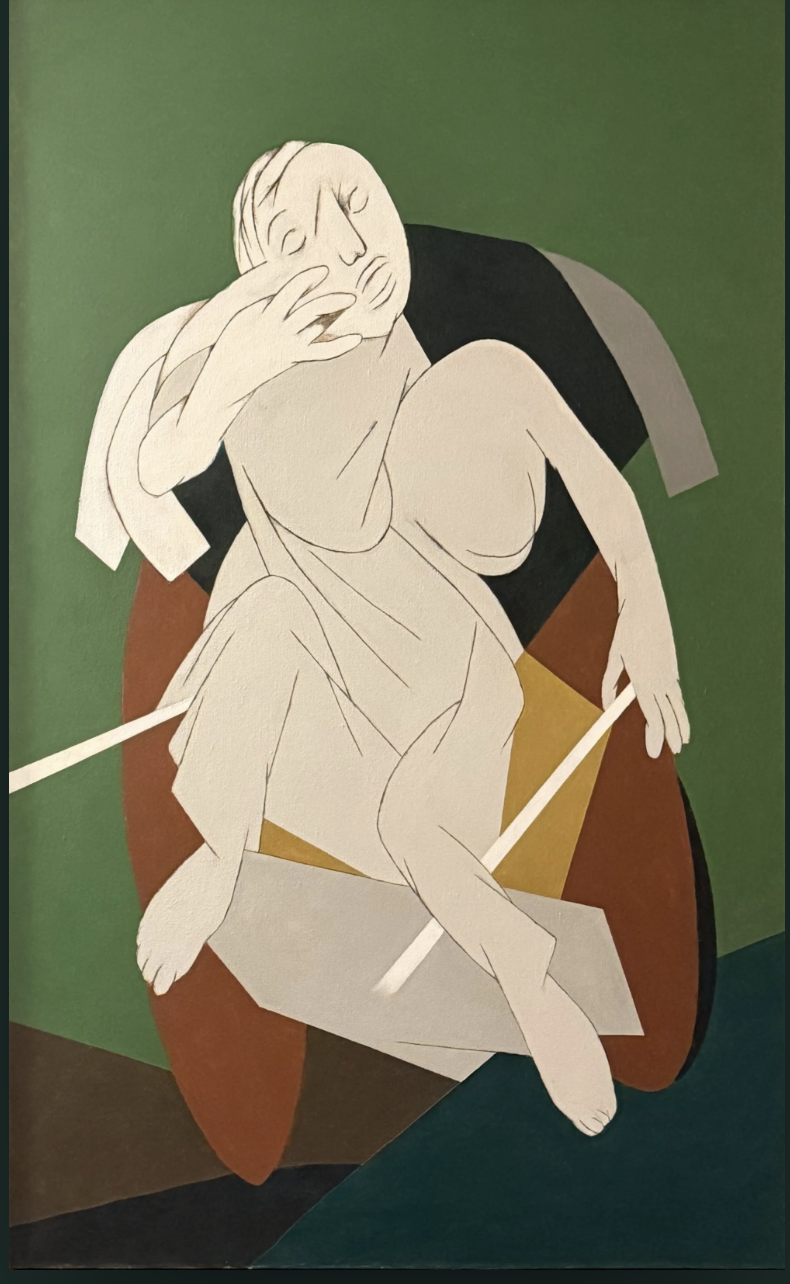
Jiwarajka says he plans seven or eight of these auctions a year. The next one will offer an M.F.Husain painting from the America’s Herwitz Collection and will be held next month or in January with a Volte app and WhatsApp bidding.
He is, he says, dealing with “all the eight to ten buyers at the top end of the market”. Costs are far lower than a traditional 70-100 lot auction, which means sellers are not charged a commission, only the buyers. “The fact that there is no clutter allows the top buyers to focus on only this lot. More attention means higher prices”, he adds.
Eventually he plans to expand into other categories such as jewellery, antiquities and miniatures, with “rare masterpieces, one lot at a time”. Potential bidders have to “provide proof of funds, auction house references, previous buying history etc.”
Sales by the leading auction houses in Mumbai, London and New York totalled a record $118m over two weeks around the end of September. They were led by Mumbai-based Pundole at $27.57m, which included a dramatic £2.13m record prices for Jangarh Singh Shyam, a leading Gond tribal artist.
It was followed by Sotheby’s totalling £19.8m ($26.6bn), its highest ever in 30 years of London auctions, beating last year’s $25.5m total with almost 90% of lots sold above the high estimates.
The auction was dominated, as almost always, by members of the Bombay based Progressives group such as S.H.Raza and M.F.Husain, a Raza reached £3.75m ($4,97m), ten times its high estimate for Paysage Rouge , a 35in x 45in oil on canvas.
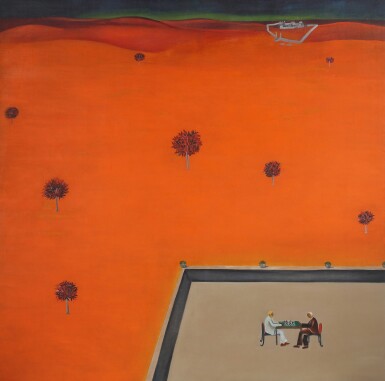
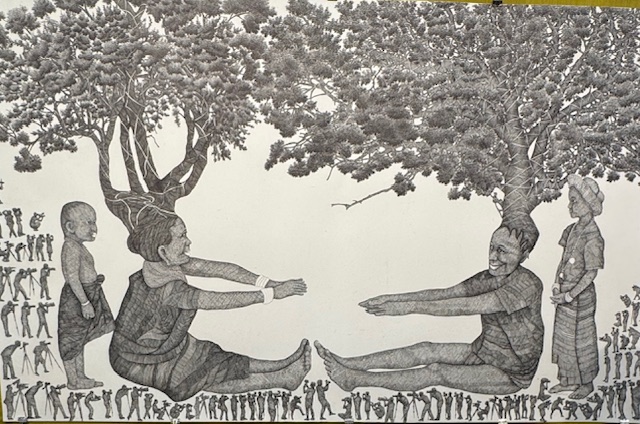
But Bhupen Khakhar, India’s best known gay painter, broke through with a record £3,14m ($4,16m) for Old Men Playing Chess, a dramatic 70in x 68in oil on canvas (above).
Mumbai-based Asta Guru had a $15.25 auction at the end of September that included La Provence Noir, an 80in x 72in acrylic on canvas by another Progressive, S.H.Raza, that sold for $5.23m.
London’s Frieze
More than a dozen galleries dealing in modern South Asian art were showing at London’s two Frieze exhibitions in October and there was also a spread of Indian art during the Asian Art in London week from the end of the month.
The Frieze openings however were overshadowed by the sad death of Peter Nagy who opened up New Delhi to contemporary art at his Nature Morte Gallery.
“Peter created space for contemporary art to move into India and shook the Indian art world in a really good way”, the artist and sculptor Bharti Kher told me, standing in the Nature Morte booth the day after he died. Kher, along with her husband Subodh Gupta, Jitish Karat and other contemporary artists were all discovered by Nagy and recognise that they owe their success to him.
There has been more sad news since then with the death of Arpita Singh, whose work showed at the Serpentine Gallery last year, and Jogen Chowdhury, both famous and respected artists.
At Frieze London, Indian galleries including Chemould, Experimenter and Vadehra Art Gallery talked about good sales.
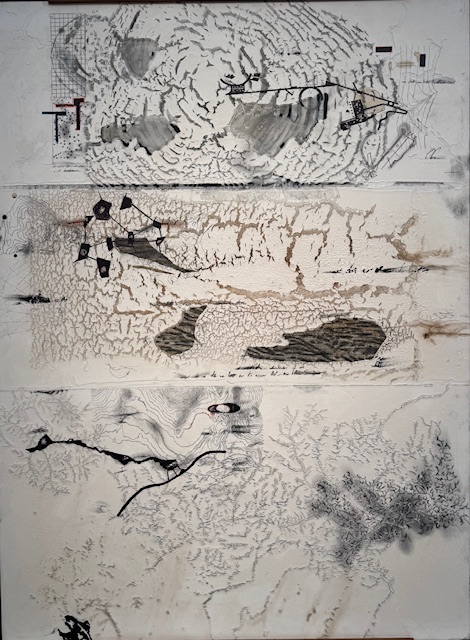
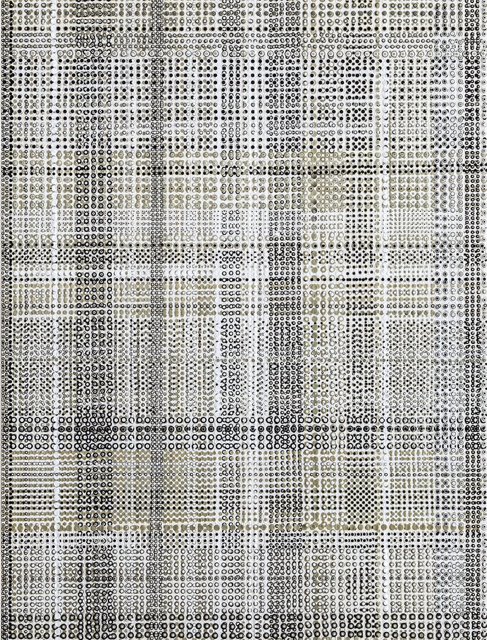
At Frieze Masters, galleries focussed away from the Progressives with Mumbai-based Jhaveri Contemporary showing Anwar Jalal Shemza and indigenous art by Joydeb Poaja (above) , while Akar Prakar from Calcutta had abstract landscapes by Ganesh Haloi. London’s Grosvenor Gallery showed paintings and works on paper from the 1960s by the Pakistani artist Syed Sadequain.
Reports talked of satisfactory sales, though one gallery owner described the Frieze as a “slow burn”.


Leave a Reply